Kraljičina Plaža Nin: Croatia's Longest Sandy Beach
Profile
Kraljičina Plaža, Nin: Croatia’s Longest Sandy Beach and the Healing Mud of the Nin Lagoon
Croatia | Nin | Northern Dalmatia
Nin is a town that carries its history in its geography. The old town occupies a small island connected to the mainland by two stone bridges, its streets laid out within the oval of medieval walls that follow the outline of the original Roman settlement of Aenona. The Church of the Holy Cross — a pre-Romanesque structure from the ninth century, small enough that some describe it as the smallest cathedral in the world — stands in the centre of that old town as the most complete surviving monument to the period when Nin was the first capital of the medieval Croatian kingdom. That history, dense and specific, is the context in which Kraljičina Plaža sits. The beach named for the queen of the first Croatian king does not sit adjacent to an anonymous stretch of coast but beside a town whose royal identity is expressed in the architecture, the salt pans, and the legend that gave the beach its name.
The beach was named after Queen Jelena — the wife of the first Croatian king — who according to legend regularly came to the Nin lagoon shore and covered her skin with the black mud from the closed lagoons, improving her health and beauty. The legend has the specific quality of a story that attaches itself to a place because the place itself is remarkable enough to require an explanation. Kraljičina Plaža is the longest sandy beach in Croatia — a genuine rarity on an Adriatic coast that is otherwise almost entirely pebble and rock — and the peloid mud that backs it has been used therapeutically since the twentieth century in a tradition that the legend describes as ancient.
Getting There: North from Zadar on the Road to Nin
Nin sits approximately 15 kilometres northwest of Zadar along the coastal road that follows the northern Dalmatian shore. By car from Zadar, the drive takes around twenty minutes, with clear signage for Kraljičina plaža directing traffic to organised parking areas at the beach entrance. Those car parks are large and directly adjacent to the beach — unlike many Croatian beach locations where parking requires a significant walk — which makes arrival straightforward even with young children and beach equipment.
The Liburnija bus line 101 from Zadar main station runs frequently to Nin, with a ten-minute walk from the bus stop through the old town to the beach. That walk through the Nin historic centre — past the Church of the Holy Cross, across the stone bridge, along the walls — is worth building into the visit as a matter of course rather than treating as an inconvenience. The old town and the beach are complementary rather than separate destinations, and the combination of a morning in the historic centre and an afternoon on the sand covers the full range of what Nin offers.
By bicycle, a marked cycling path connects Zadar to Nin, following a route that passes through the landscape between the two towns and arrives at the lagoon. For visitors based in Zadar who want to combine cycling with a beach destination, Nin is the natural choice — the distance is manageable, the terrain is flat, and the destination justifies the effort in a way that a shorter ride to a standard beach does not.
The Shore: Three Kilometres of Fine Sand in the Nin Lagoon
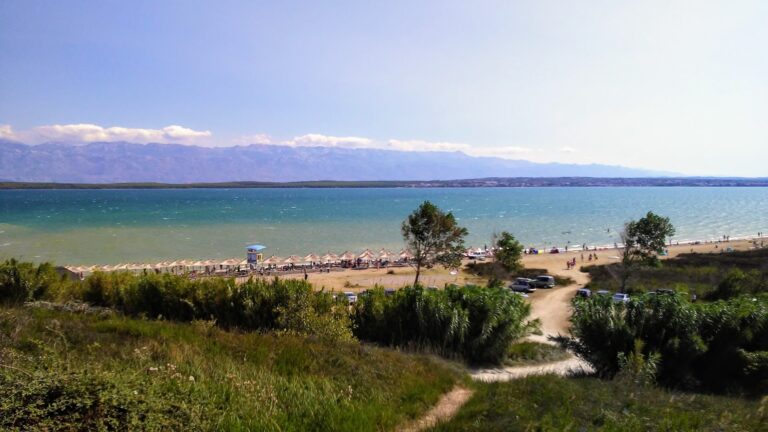
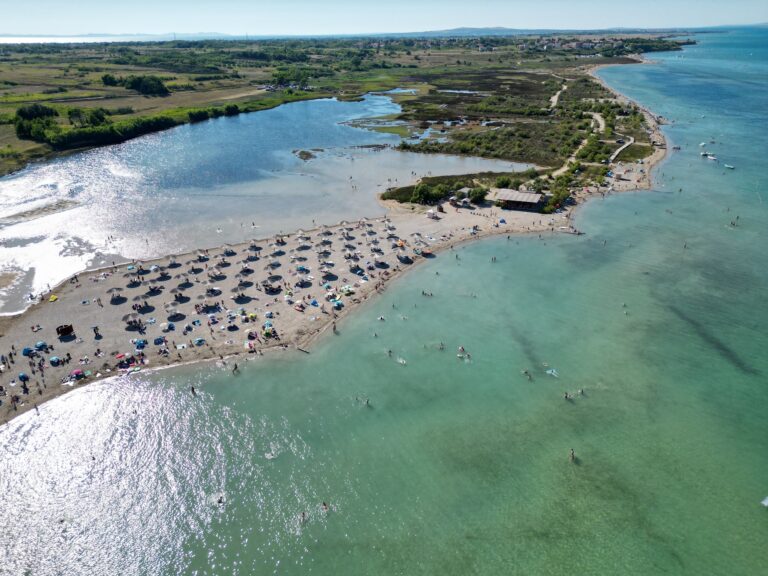
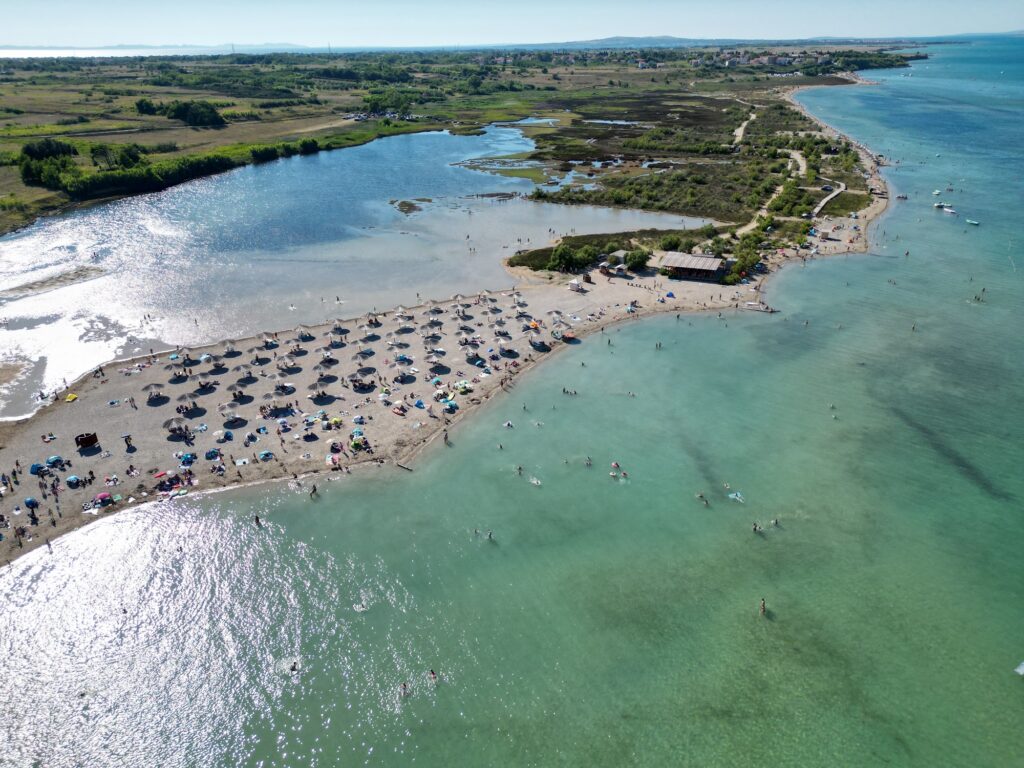
Kraljičina Plaža is Croatia’s longest sandy beach — a distinction that carries real weight on a coastline where sand of this extent and quality is genuinely unusual. The beach stretches more than 3 kilometres along the western end of the lagoon, with the broader sandy belt around Nin extending toward Sabunike to reach up to 8 kilometres of sand in total. The sand is fine and soft underfoot — no water shoes required, no careful navigation of stones — and the shore is entirely free of the pebble and rock that characterises almost every other beach in the Zadar region.
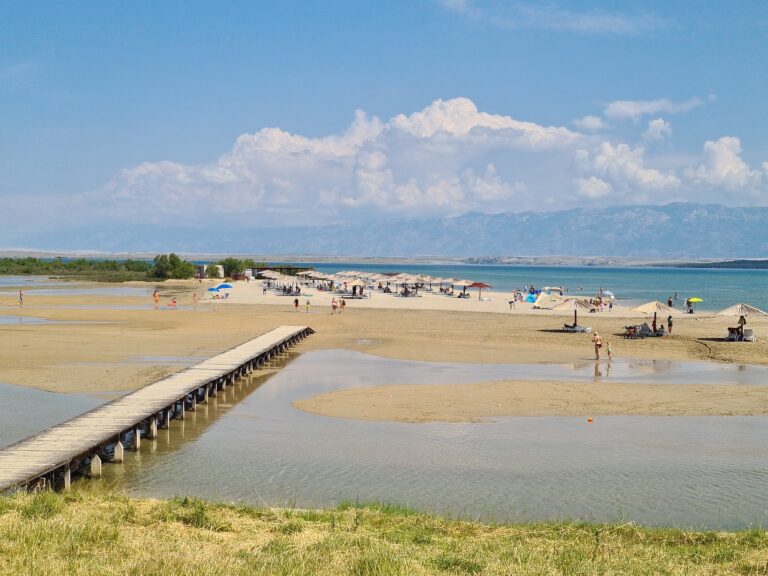
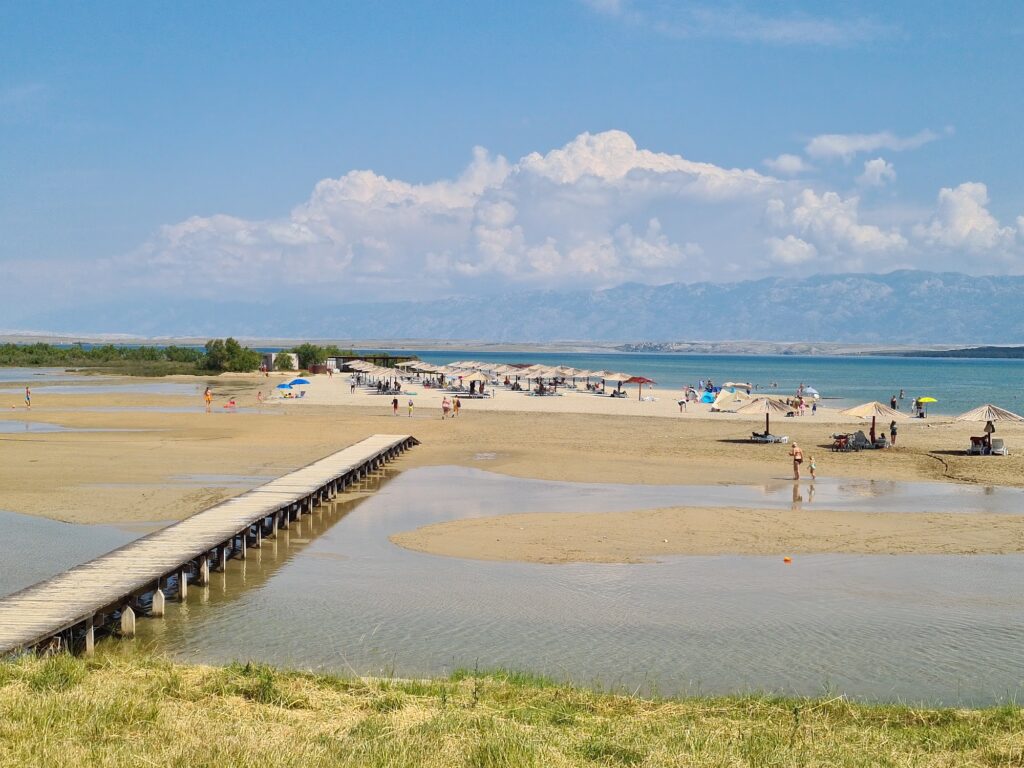
The Nin lagoon position shapes every aspect of the swimming conditions. The lagoon acts as a natural solar collector: the shallow, enclosed water warms significantly faster than the open Adriatic, reaching temperatures through July and August that are noticeably higher than the channel beaches of the islands. The depth increases so gradually from the shore that visitors can walk hundreds of metres from the waterline with the water still below knee height. That combination — warm, shallow, sandy — is what makes Kraljičina Plaža the definitive family beach in the Zadar region and one of the most family-suited beaches on the entire Croatian coast.
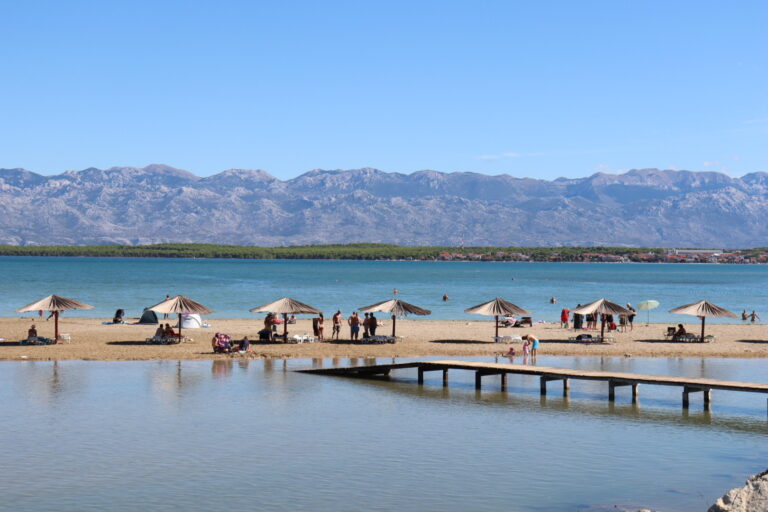
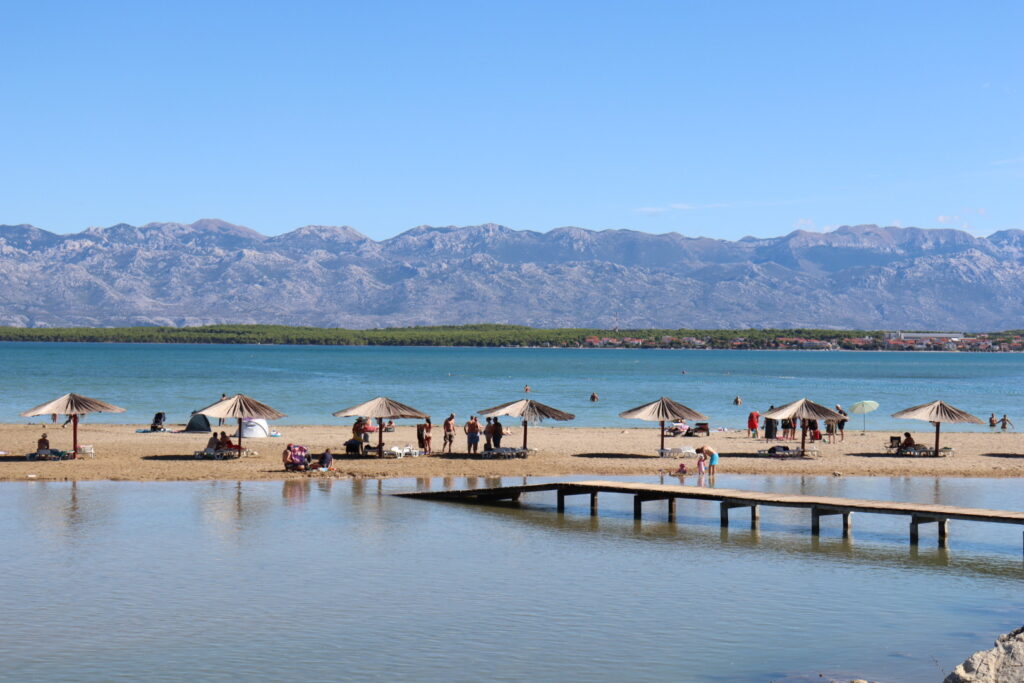
The Velebit mountains are directly visible from the beach on the eastern horizon — the same massif visible from the Pag channel beaches and the Paklenica coast, here seen from the Nin lagoon in the specific combination of salt flat, shallow water, and distant mountain scale that is particular to this section of the northern Dalmatian coast. The flatness of the lagoon landscape gives the Velebit view an unobstructed quality that the hillier sections of the coast do not provide.
The Peloid Mud: Therapeutic Tradition Since 1960
The feature that distinguishes Kraljičina Plaža from every other sandy beach in Croatia is the peloid mud located immediately behind the beach in the lagoon. Organised therapy in Nin has been carried out since 1960, and the peloid site is located in an ecologically preserved environment away from industrial zones and major roads. The mud is mineral-rich, dark, and pungent in the way that naturally therapeutic muds tend to be — its smell is part of its identity and a reliable indicator that the mineral content is genuine rather than decorative.
The application is straightforward: visitors cover themselves in the mud from the lagoon bed, allow it to dry on the skin in the sun for a period, and rinse off in the sea. The process is free, unstructured, and practiced by everyone from young children to elderly visitors undertaking formal treatment courses. Modern research has confirmed that the Nin peloid restores the skin’s pH to normal, cleanses subcutaneous tissue, tightens the skin, and significantly improves the condition of skin affected by psoriasis. The formal therapeutic programme — seven to ten day treatment courses — runs through July and August under medical supervision for visitors with rheumatic and skin conditions who come specifically for that purpose rather than for the beach. Both uses of the mud coexist without conflict on the same lagoon shore.
The mud experience is the specific thing that marks a visit to Kraljičina Plaža as different from any other beach day in the region. The photographs it produces — groups of people covered in black mud against the pale turquoise lagoon and the Velebit backdrop — are the visual signature of Nin summer tourism and worth the experience for their own sake, quite apart from the therapeutic dimension.
Water Quality and Swimming at Kraljičina Plaža
The water quality at Kraljičina Plaža reflects the lagoon’s enclosed, ecologically managed character. The shallow sandy bottom and the absence of industrial activity in the Nin area maintain the clarity and warmth that the beach is known for. The water is pale turquoise over the sandy bed — a different colour quality from the deeper, clearer blue of the open channel beaches — and the visibility is sufficient to see the seabed throughout the shallow wading zone.
The lagoon conditions are suited to long, leisurely swimming and wading rather than the deep, open-water swimming that the channel beaches provide. The warmth and shallowness are the defining advantages, and they come with the specific character of enclosed lagoon water rather than the circulation quality of the open Adriatic. Visitors whose priority is the clearest possible water for snorkelling or deep swimming will find the open channel beaches around Zadar — including Kolovare Beach Zadar — offer different conditions. Kraljičina Plaža is where you come for the sand, the warmth, the shallows, and the mud.
Wooden boardwalks cross sections of the dune and lagoon area behind the beach, protecting the plant communities of the dune ecosystem — glasswort, sea rocket, and the halophyte vegetation that colonises the saltmarsh margin. The boardwalks are the visible sign of the environmental management that maintains the ecological integrity of the site and that separates the beach from the surrounding sensitive terrain without restricting access.
Facilities at Kraljičina Plaža
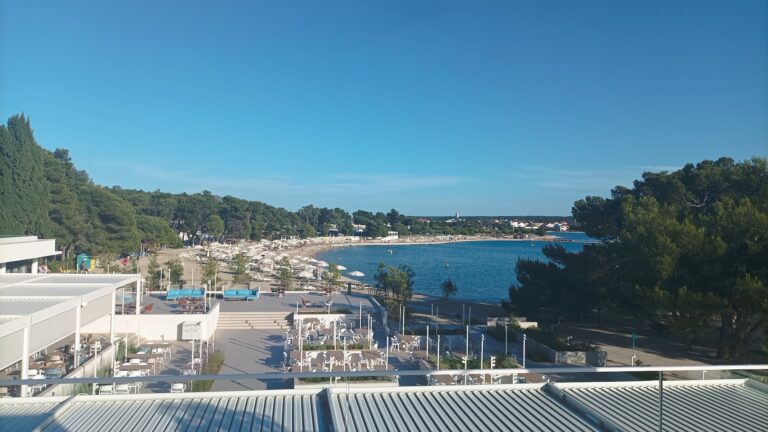
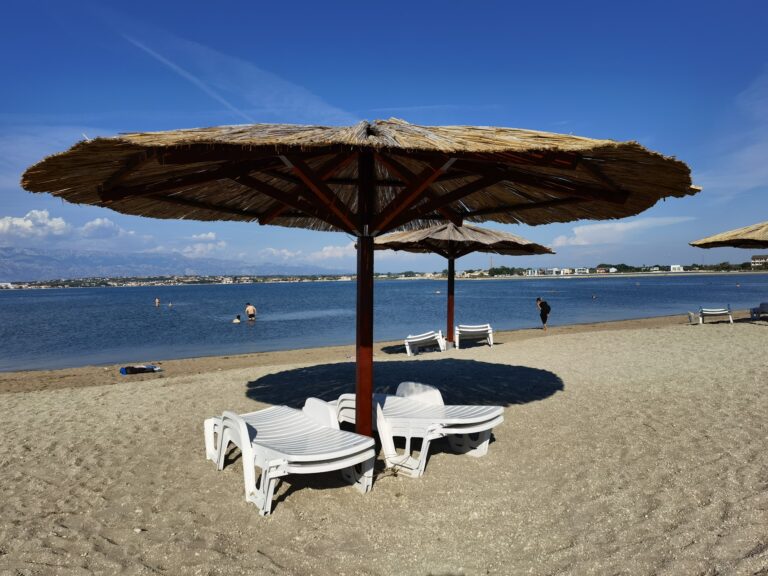
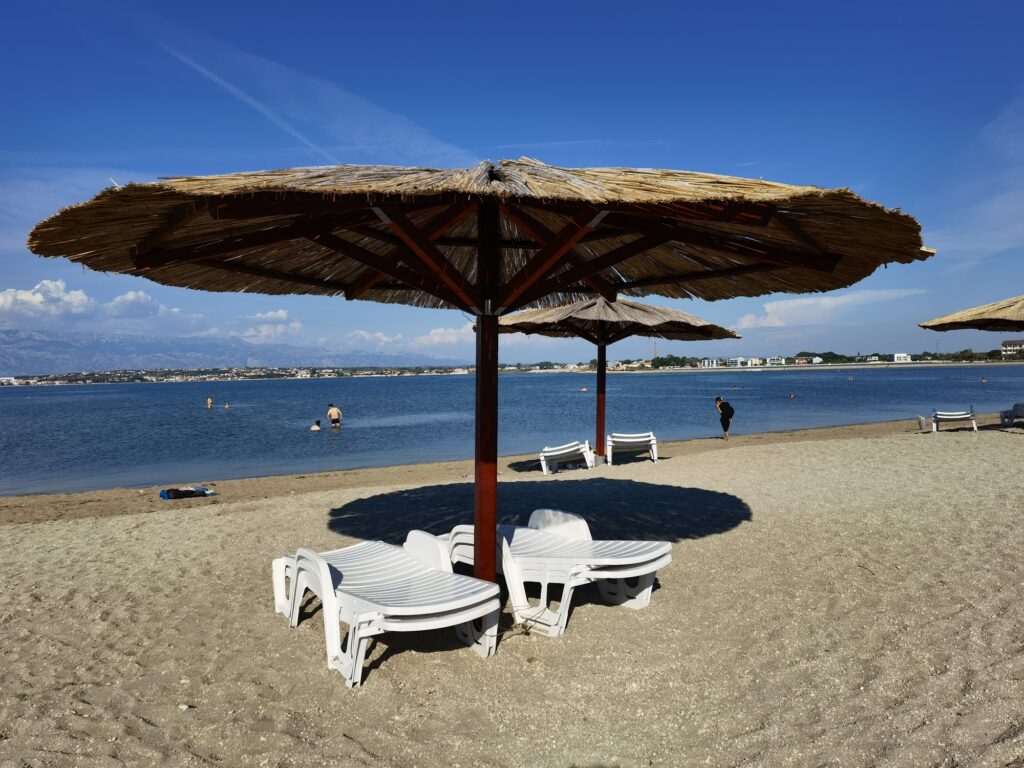
The facilities at Kraljičina Plaža are well-provisioned for a beach of its scale and visitor numbers. Freshwater showers and changing cabins are distributed along the shore. Sunbed and umbrella rental is available. Lifeguards are on duty through the peak season. Beach volleyball courts provide the active recreation option. Pedalo rental serves the visitors who want to explore the lagoon from the water rather than on foot.
Windsurfing and kiteboarding schools operate from Zdrijac Beach — the adjacent beach on the spit of land connecting the Nin old town peninsula to the mainland — where the consistent lagoon winds provide reliable conditions for both sports. The proximity of Zdrijac to Kraljičina Plaža means both beaches are accessible from the same visit without additional transport.
The food provision at the beach is modest relative to the size of the site — beach bars serving the standard Croatian beach menu of drinks, snacks, and simple food. For a full meal in the Dalmatian tradition, the town of Nin a ten-minute walk away carries the restaurants and tavernas that serve fresh fish, seafood, and the local specialty that reflects Nin’s most historically significant industry: the salt pans.
Nin’s Salt and the Old Town: The Context That Makes the Beach
Nin has produced salt using traditional methods for over a thousand years. The Nin salt pans — active today and visible from the road approaching the old town — still harvest salt by evaporation in the traditional way, and the Nin salt itself has a specific mineral character that reflects the lagoon water from which it comes. It appears on menus in the old town’s restaurants as an ingredient in its own right rather than a generic seasoning, and the pasta dishes seasoned with Nin salt are the specific culinary expression of what the lagoon produces.
The Church of the Holy Cross in the old town — the ninth-century pre-Romanesque structure that is Nin’s most visited monument — is a ten-minute walk from the beach through the old town streets. The combination of the archaeological museum with its holdings from the Roman and early Croatian periods, the church, the salt pans, and the beach constitutes a day in Nin that covers the full range of what the town offers: the ancient, the natural, and the specifically rare.
Kraljičina Plaža in Nin earns its reputation through the accumulation of specific and genuine qualities: the sand that is rare on this coast, the warmth of the lagoon water, the shallows that extend further than any comparable beach in the region, the peloid mud with its documented therapeutic properties, and the Velebit mountains on the horizon behind it all.
Drive north from Zadar. Walk through the old town to the shore.
Cover yourself in the black mud. Rinse off in the warm lagoon.
The Velebit will still be there when you look up.
Map
Sorry, no records were found. Please adjust your search criteria and try again.
Sorry, unable to load the Maps API.
Near by places: