Vecka Kula Beach Starigrad: Tower on the Shore
Profile
Vecka Kula Beach, Starigrad-Paklenica: Swimming Beside a 16th-Century Venetian Tower on the Velebit Channel
Croatia | Paklenica Riviera | Northern Dalmatia
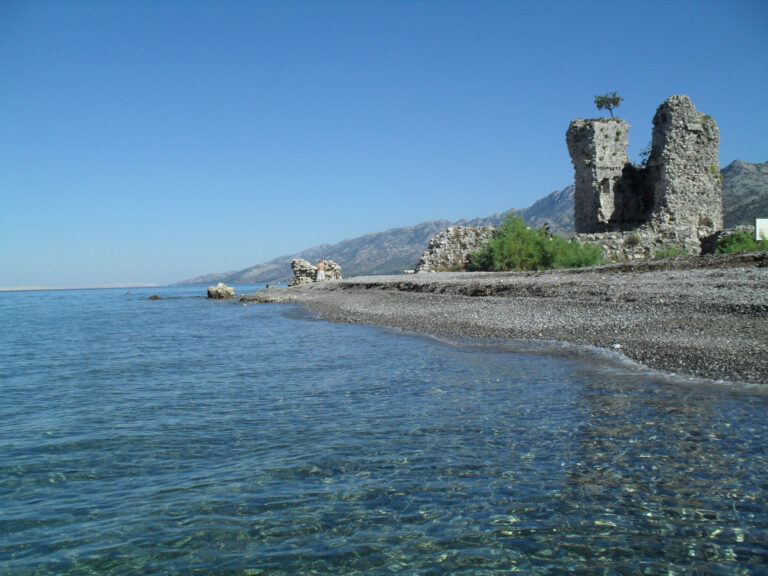
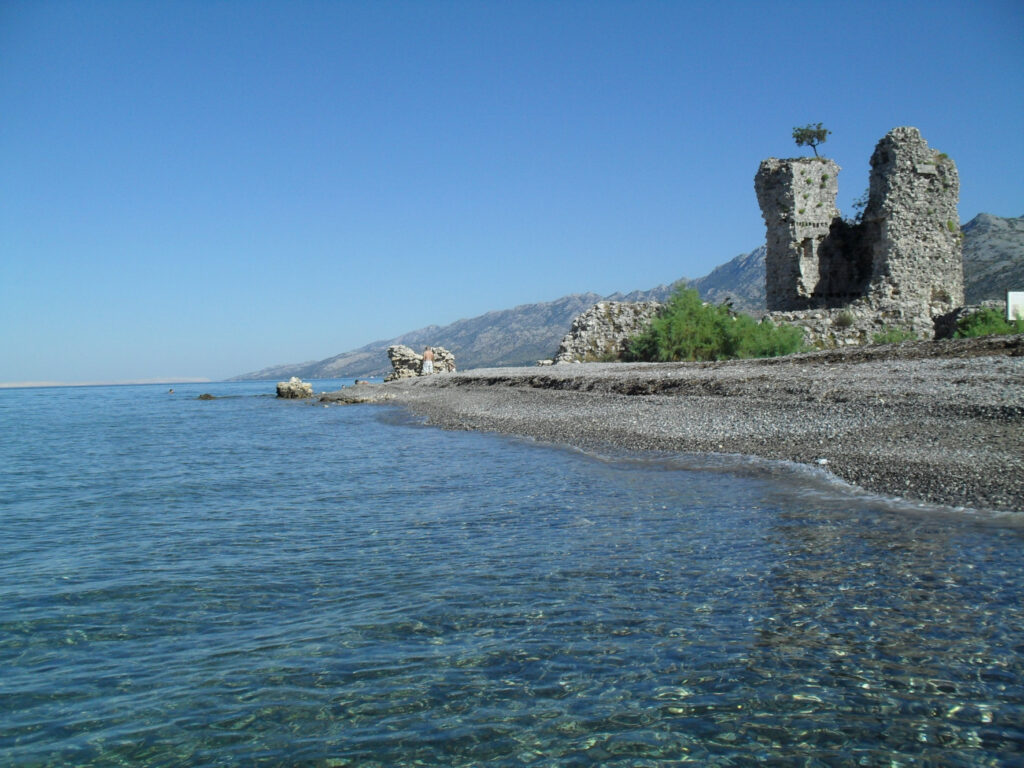
There are not many places on the Adriatic coast where you can swim within metres of a fortification that was actively garrisoned against Ottoman incursion. Vecka Kula Beach in Starigrad-Paklenica is one of them. The tower — Večka kula — stands at the edge of the Kulina beach pebble shore, its stone walls partially inundated by the sea at their base, its upper floors open to the sky where the wooden beams that once supported them rotted away centuries ago. The narrow embrasures through which the Venetian garrison once watched the Podvelebitski Channel for Turkish ships are still visible in the surviving masonry. The tower has been standing in this position since the 16th century, and the beach has been forming around it ever since.
The historical record is specific. Večka kula was built by Venetians in the 16th century as part of a fortification system designed to protect the Podvelebitski Channel from the Turks, positioned at the edge of Večko polje — the field of the same name — from which it was possible to observe sea traffic in the channel below the Velebit mountains. The tower is presumed to have been connected to the village of Veče, first mentioned in written sources in 1508 and of which no physical trace survives today beyond the tower itself. The Romanesque church of St. Peter nearby belonged to the same settlement. What remains on the shore is the tower, the pebble beach around it, the Velebit range rising directly behind the town, and the Pag channel view to the west.
Getting There: North Along the D8 from Zadar, or on Foot from Starigrad
Starigrad-Paklenica sits on the Velebit Channel coast approximately 45 kilometres north of Zadar on the D8 coastal road — the main road that connects Zadar to the Kvarner coast. The drive from Zadar takes approximately 45 minutes under normal conditions, with the Velebit massif growing steadily more present on the eastern horizon as the road approaches Starigrad. The town is the gateway settlement for Paklenica National Park, and the combination of national park access and coastal location means the D8 carries significant summer traffic through July and August — arriving before mid-morning or after five in the afternoon reduces the road pressure considerably.
Vecka Kula Beach sits approximately one kilometre southwest of the Bluesun Hotel Alan, reachable from the centre of Starigrad by a fifteen-minute walk along the seaside promenade heading toward the prominent stone tower. The promenade is paved and flat, connecting the beach to the town centre without requiring a car. Cycling paths parallel the shore through this section of the Paklenica Riviera, and the flat coastal terrain between Starigrad and the beach makes the route accessible by bicycle as well as on foot.
From Seline, the neighbouring settlement to the south, the tower is within easy walking distance along the same coastal path — a detail worth knowing for visitors based in the quieter accommodation of Seline rather than Starigrad itself.
The Tower: Venetian Fortification on the Podvelebitski Channel
The Večka kula ruins are the defining feature of the beach and the reason the shore is known beyond the immediate area. The tower was part of the Venetian network of coastal fortifications that ran along the eastern Adriatic through the 15th and 16th centuries — a system of watchtowers positioned to give early warning of Ottoman naval movement through the enclosed channels between the islands and the mainland coast. This section of the Velebit Channel, between the island of Pag to the west and the Velebit coast to the east, was a significant corridor for both trade and military movement, and the tower’s position at the edge of Večko polje gave it a clear line of sight across the full width of the channel.
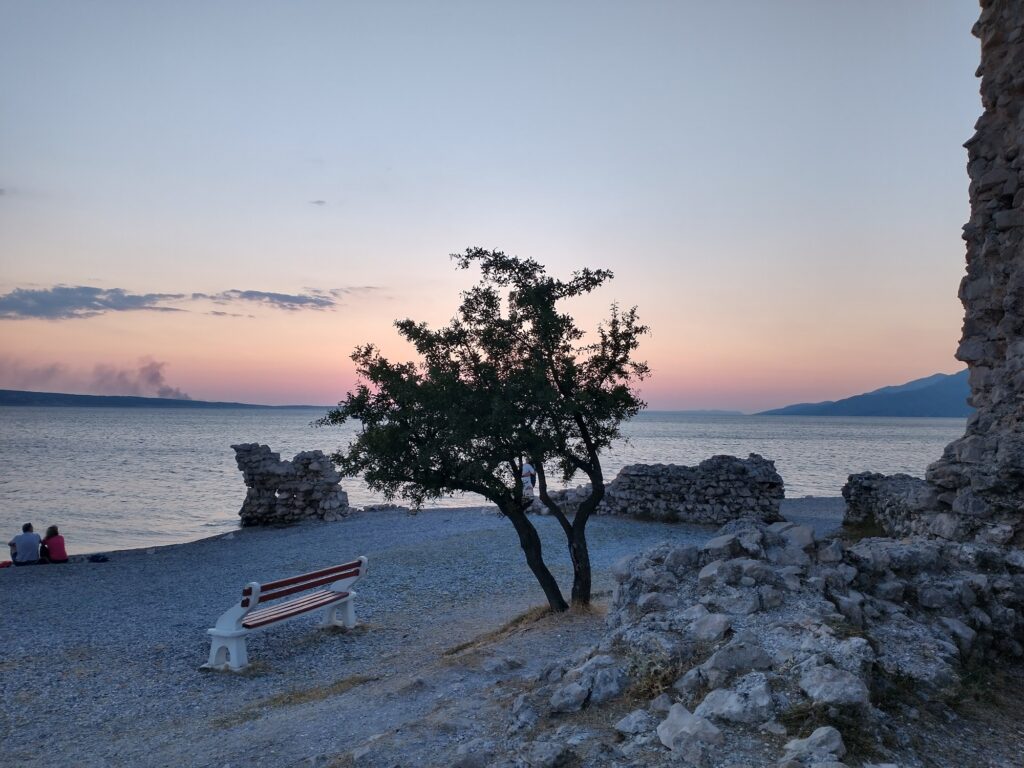
What survives is the tower shell — the walls standing to a substantial height, the interior open and partially visible, the rectangular courtyard that once surrounded the structure now partially inundated by the sea at the waterline. An information board at the site provides the historical account in Croatian, English, and German, including the local legend of King Pasoglav — the mythical dog-headed king said to have once inhabited the tower — which circulates among older residents of the area and has no historical basis but considerable local persistence.
The ruins are freely accessible. There are no gates, no entrance fees, and no guided provision — the tower stands on the beach as it has stood for five centuries, and visitors move around and near it at their own discretion.
The Shore and Water Quality at Vecka Kula Beach
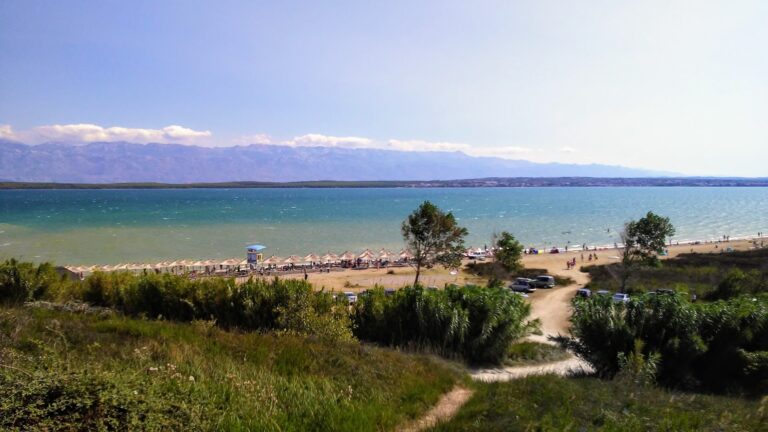
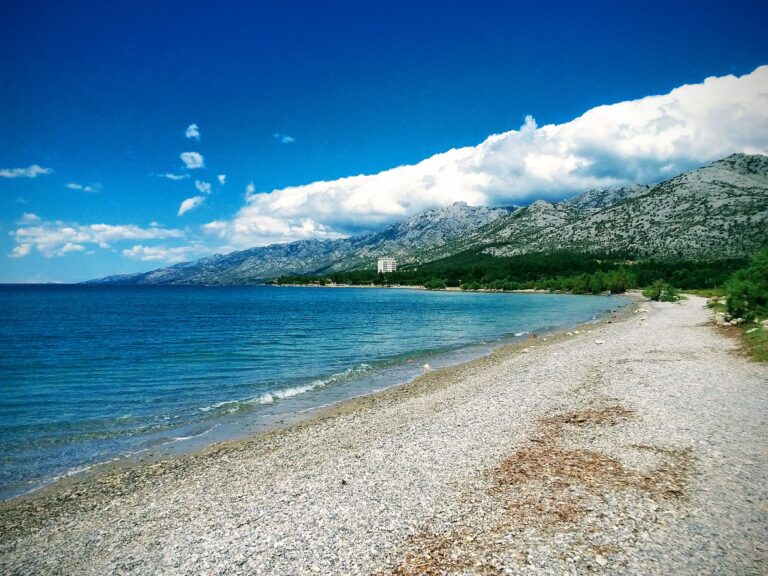
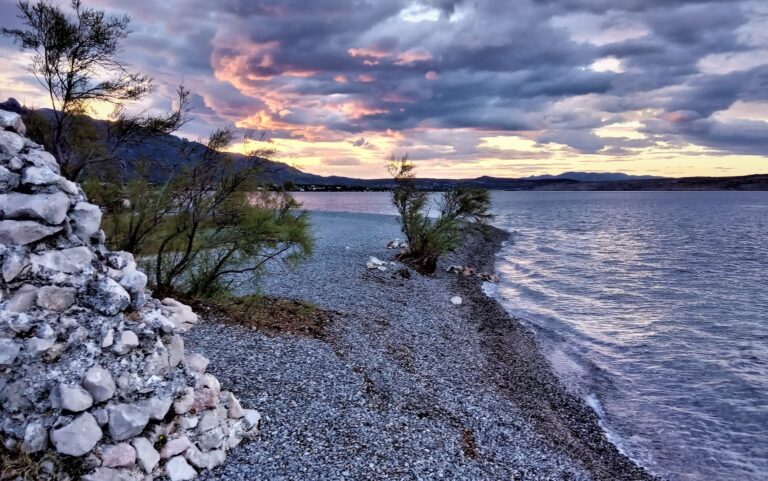
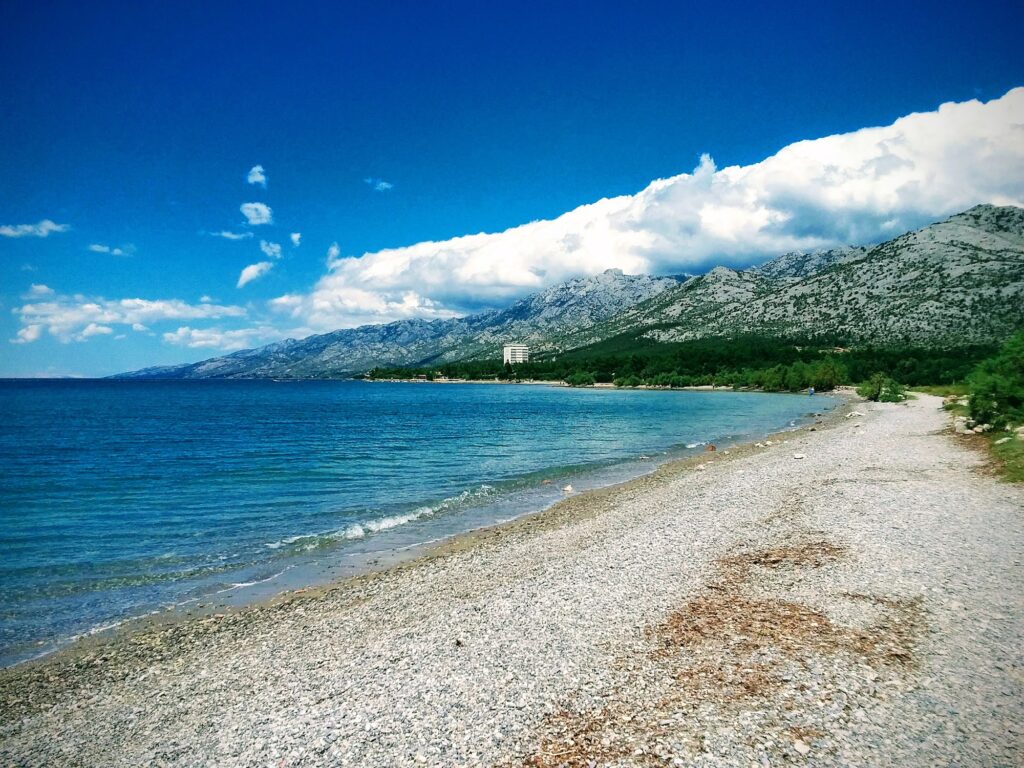
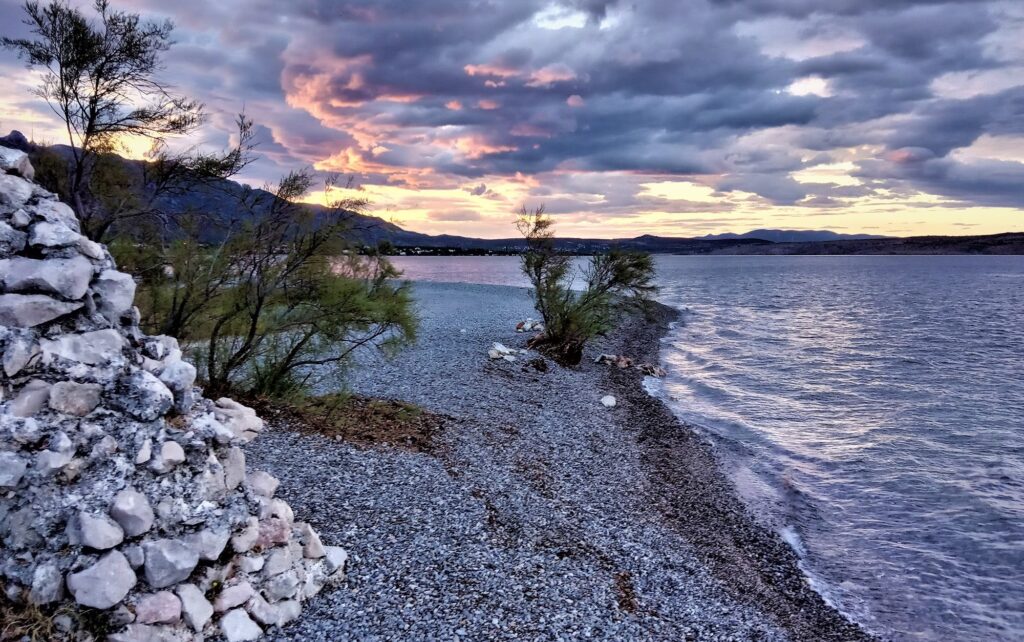
The beach at Vecka Kula — formally known as Kulina beach — is pebble along its full length, with the natural stone rounded to the smooth consistency characteristic of the Velebit Channel shore. The water entry is relatively gradual in the pebbled sections, giving the beach a degree of accessibility for families with children that the more abrupt rocky entries at some Dalmatian beaches do not offer. The shore faces west across the Podvelebitski Channel toward the island of Pag, which is visible on the horizon — the same long, bare limestone ridge visible from the Pag shore beaches on the opposite side of the channel, here seen from the mainland perspective.
The water quality in the Velebit Channel reflects the enclosed nature of the waterway and the absence of significant industrial or harbour activity in the immediate vicinity of Starigrad. The transparency is high — the rocky seabed clearly visible from the surface in the shallows, the colour the pale emerald-to-sapphire progression characteristic of clean, well-circulated channel water in direct Adriatic light. The visibility around the partially submerged base of the tower makes the area immediately adjacent to the ruins particularly productive for snorkelling — the stone foundations carry marine encrustation and the associated small fish populations that gather around submerged structures.
The Velebit Backdrop: Mountain Scale at the Waterline
The Velebit mountain range that rises directly behind Starigrad-Paklenica is the largest mountain range in Croatia — a continuous limestone massif that runs for approximately 145 kilometres parallel to the coast, rising to over 1,750 metres at its highest point and dropping almost vertically toward the sea in the Paklenica section. From Vecka Kula Beach, the full scale of that proximity is immediately readable: the mountain does not appear as a distant backdrop but as a wall that begins essentially at the edge of the town and defines the entire eastern horizon.
Paklenica National Park — the gorge system carved into the southern Velebit by the Velika and Mala Paklenica canyons — is accessible from the centre of Starigrad on foot, with the park entrance a thirty-minute walk from the town. The combination of a beach day at Vecka Kula and a morning or afternoon walk into the Paklenica gorges is the standard day structure for visitors to Starigrad who want to use both the coastal and mountain environments the town’s position makes available. The canyons cut several hundred metres into the Velebit limestone, with cliff faces used by climbers and hiking trails that range from accessible short walks to full-day routes into the high plateau.
That dual access — the Adriatic in front and the national park immediately behind — gives Starigrad-Paklenica a range of environment within a small geographic area that very few towns on the Croatian coast offer, and Vecka Kula Beach sits at the coastal end of that range.
Facilities at Vecka Kula Beach
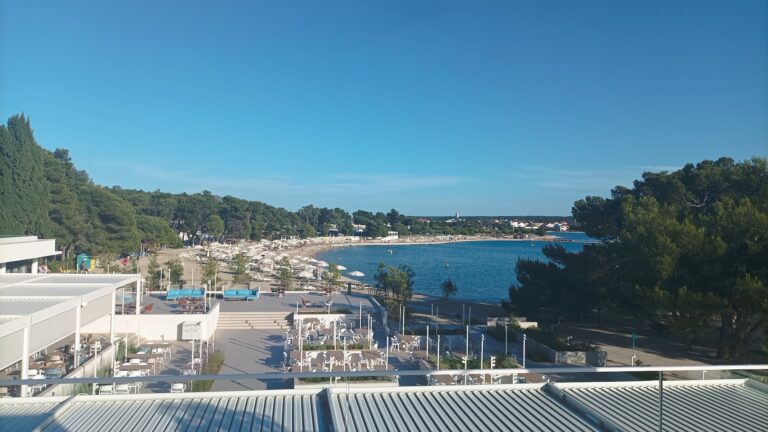
Vecka Kula Beach maintains a minimal infrastructure in keeping with the character of the site. Basic freshwater shower facilities are available along the coastal path. There is no permanent lifeguard station, and no commercial sunbed or umbrella rental operation on the beach itself — visitors bring their own equipment. The beach is maintained to a consistent standard of cleanliness by the local community, and the absence of commercial infrastructure is the direct reason the tower ruins retain their presence on the shore without the visual competition of resort facilities around them.
A beach bar near the site provides the basic social provision — coffee and drinks within short walking distance of the beach. For more comprehensive facilities, the Bluesun Hotel Alan approximately one kilometre to the northeast operates a beach zone with full resort infrastructure, including a spa that is open to non-hotel guests — the Mount Velebit aromatherapy treatment, derived from the mountain’s wild herb cover, being the spa’s signature offering for visitors combining the beach day with a wellness element.
For families who want full lifeguard supervision and resort amenities alongside the historical site visit, the Bluesun Alan beach zone provides those provisions within the same kilometre of coastline.
Food and Drink: Velebit Lamb and Adriatic Calamari in Starigrad
The restaurants and tavernas in Starigrad serve the food the landscape produces. Velebit lamb — janjetina from animals that graze the mountain pasture above the town — carries the specific flavour of high-altitude herb grazing in limestone terrain, and it appears on menus here as a matter of local identity rather than culinary positioning. Fresh Adriatic calamari from the channel, finished with local olive oil, is the seafood counterpart. The combination of mountain meat and channel seafood on the same menu is the particular quality of Starigrad’s food offer — a town that sits precisely at the junction of those two environments and whose kitchen reflects both.
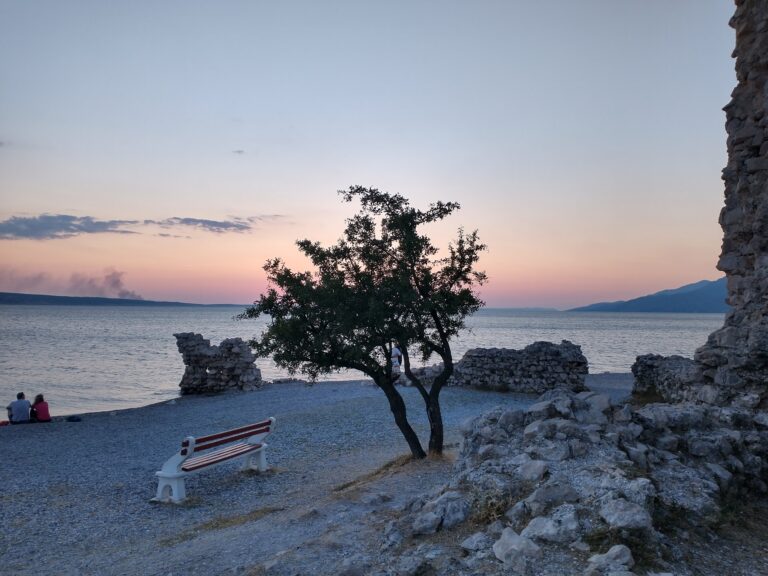
Dining with the tower visible from the terrace as the Velebit mountains darken to purple in the evening light is the specific version of the Starigrad dinner experience that the town’s position makes available. That combination — the 16th-century Venetian ruin, the Adriatic channel, and the limestone massif turning colour behind the town — is not available anywhere else on the Croatian coast in quite the same configuration.
Vecka Kula Beach and the Paklenica Riviera
The Paklenica Riviera stretches along approximately twenty kilometres of the Velebit Channel coast between Starigrad-Paklenica and the surrounding settlements of Seline and Tribanj. The beaches of the riviera share the pebble-and-channel character of the broader coastline, with the Velebit range as the constant eastern backdrop and the island of Pag defining the western horizon across the water.
Within that stretch, Vecka Kula Beach occupies a unique position by virtue of the tower alone — no other beach on the riviera has a 16th-century Venetian fortification at its waterline. For visitors who want the historical dimension alongside the swimming and the mountain backdrop, the beach has no equivalent on this section of the coast. For those primarily focused on resort infrastructure and full facilities, the longer pebble and sand beaches closer to the Starigrad town centre — including the Bluesun Alan beach zone and the main town shore — provide those provisions within easy reach of the same Velebit and Pag channel views.
The Banj Beach Šibenik approach of combining a historically significant shoreline with accessible water and town proximity has an interesting parallel here — Banj Beach Šibenik is the better-known example of a beach defined by its proximity to a major historical site, but Vecka Kula carries the distinction of having the fortification not behind or above the beach but physically on it, its foundations in the water.
Seasonal Timing at Vecka Kula Beach
The Paklenica Riviera in July and August receives the visitor numbers associated with a national park gateway town during peak Croatian summer season. Vecka Kula Beach, being slightly removed from the main town beach concentration and minimally facilitated, draws a lower visitor density than the main Starigrad shore during those weeks — the absence of sunbed rental and organised facilities self-selects for visitors who come specifically for the tower and the swimming rather than for resort comfort.
September and October are the months when Paklenica is particularly recommended for the national park itself — the summer heat has moderated, the hiking conditions in the canyons are more comfortable, and the sea temperature remains high enough for swimming through much of September. The combination of the beach at Vecka Kula and the Paklenica gorge trails in those months is the most complete version of what Starigrad-Paklenica offers, without the July-August crowd pressure that the national park entrance draws.
The Bura wind — the cold, dry north-easterly that descends off the Velebit with particular force in this section of the coast — is a winter and early spring feature rather than a summer one, but it is worth knowing as context for the landscape: the force with which the Bura strips the Velebit of moisture shapes the bare, dramatic quality of the mountain terrain that defines the view from the beach.
Vecka Kula Beach in Starigrad-Paklenica is a beach where the historical and the geographical converge at the waterline in a way that is genuinely unusual on the Adriatic coast. The Venetian tower in the water, the Velebit rising directly behind the town, the island of Pag across the channel, the Paklenica gorges thirty minutes’ walk away — the density of significant landscape within a small radius is remarkable, and the beach sits at the centre of it.
Walk west from the Starigrad promenade. The tower is visible before you reach the pebbles.
Stand at the waterline and look in both directions: the mountain and the channel, the 16th century and the present, occupying the same small bay simultaneously.
Map
Sorry, no records were found. Please adjust your search criteria and try again.
Sorry, unable to load the Maps API.
Near by places: