Banj Beach Šibenik: Swim Beside a UNESCO Heritage City
Profile
Banj Beach, Šibenik: Swimming in the Shadow of a UNESCO World Heritage City
Croatia | Dalmatia | Šibenik Travel Guide
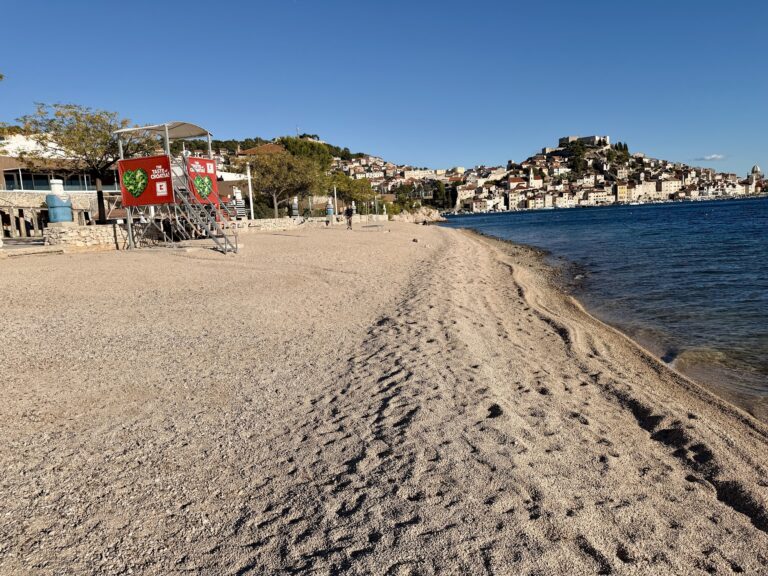
Most beaches ask you to leave the city behind. Banj Beach in Šibenik asks you to bring it with you — and what it places in front of you in return is one of the most extraordinary urban views in the Mediterranean. Lying on the pebbles at Banj, looking across the water at the honey-coloured stone of St. James Cathedral and the fortresses that crown the hillside above the old town, you become acutely aware that you are swimming in a place where the sea and several centuries of Dalmatian history occupy the same field of vision simultaneously. It is an experience unlike any other beach I have visited in Croatia, and it has stayed with me in a way that is difficult to attribute to the water or the facilities alone.
I arrived on a Tuesday morning in late June, walking west along the waterfront from the cathedral square — a fifteen-minute promenade that serves as an unexpectedly effective transition between the medieval stone lanes of the old town and the open light of the beach ahead.
The Setting: Where Urban Design Meets Dalmatian Heritage
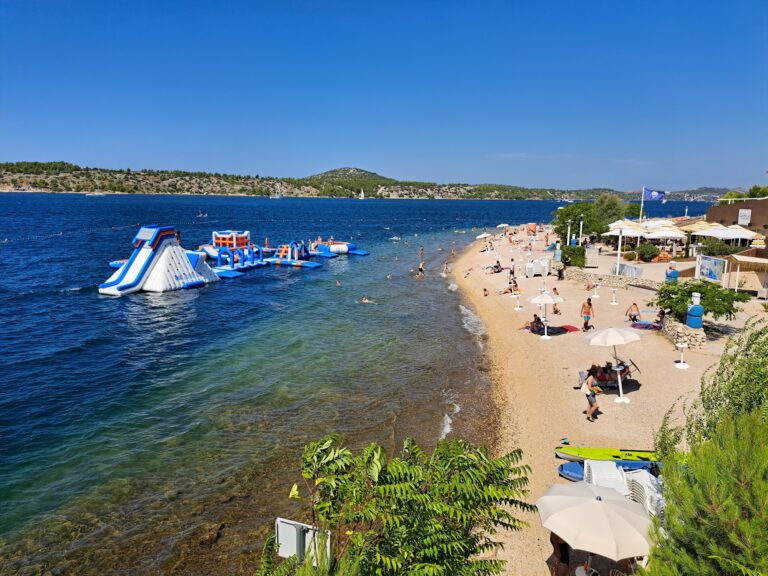
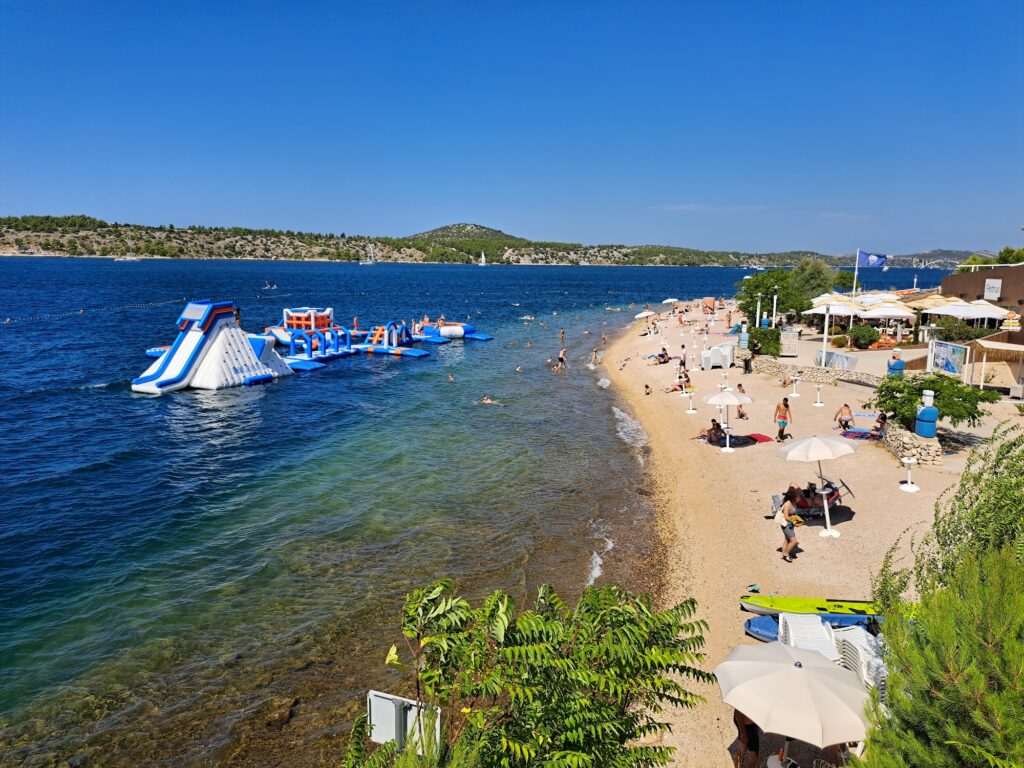
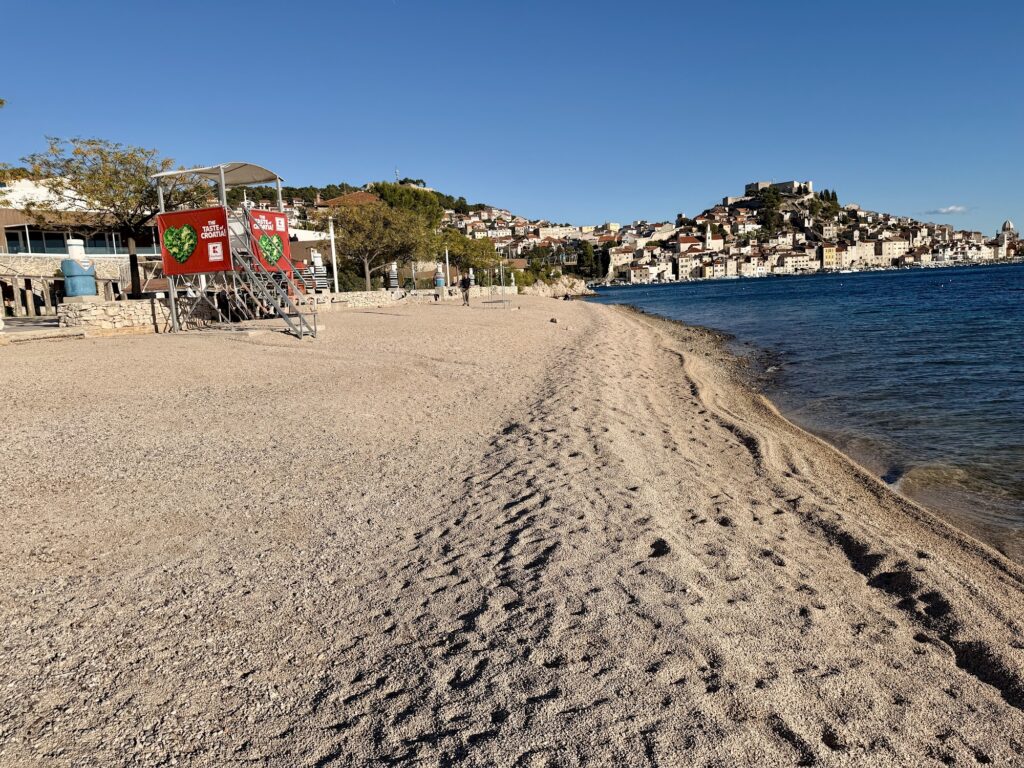
Banj Beach Šibenik is, by any honest account, a designed and constructed beach rather than a natural one. The pebble shore was created as part of a deliberate waterfront regeneration effort, and it shows — in the best possible sense. The layout is considered and generous, the promenade that borders it is well-maintained and properly scaled, and the overall aesthetic is one of a city that has thought carefully about how its coastline should relate to both its residents and its visitors.
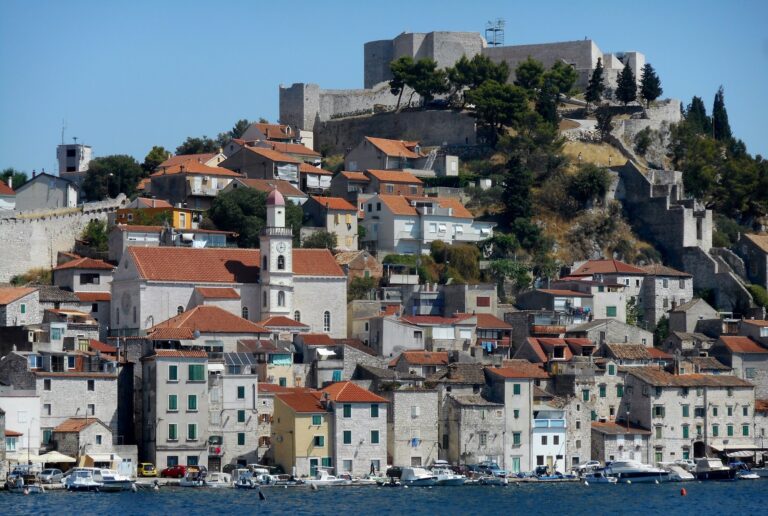
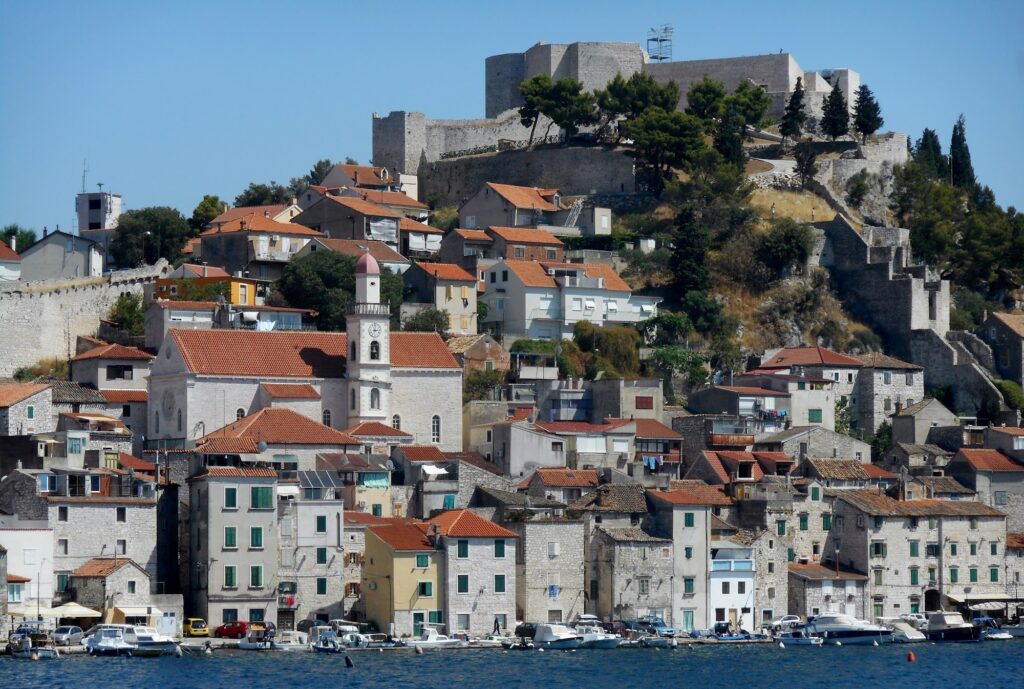
What no amount of urban planning could manufacture, however, is the view. From virtually any point along the beach, the UNESCO World Heritage Site of Šibenik old town is directly across the water — the cathedral’s distinctive scalloped dome rising above the roofline, the Barone and St. Michael’s fortresses visible on the ridge above, the entire composition reflected in the still water of the channel on calm mornings. I have photographed this view at different times of day across multiple visits and have not yet produced an image that captures it adequately. The experience of actually being there, in the water or on the pebbles with that skyline in front of you, is categorically different from any photograph.
The Water: A Meeting of River and Sea
The water at Banj Beach has a quality worth understanding before you arrive, because it is genuinely unusual. Šibenik sits at the point where the Krka River meets the Adriatic, and the channel in which Banj is located receives a mixture of fresh river water and open sea. The practical effect is a water temperature and texture that many swimmers describe as particularly refreshing — softer and slightly cooler than a purely open-sea beach, with a clarity that reflects the cleanliness of the Krka rather than the turbidity of an estuary.
The water quality at Banj Beach is consistently monitored and regularly rated among the highest in the Dalmatian coastal zone. The seabed slopes gradually from the shore, which extends the usable shallow area considerably and makes entry and exit easy and comfortable. The stone embankments along the edges of the beach offer some interesting underwater structure for anyone inclined to snorkel, though Banj is primarily a swimming and sunbathing beach rather than a snorkeling destination.
On the morning of my first visit, I swam out far enough to tread water and look back at the old town from the sea — a perspective on Šibenik that very few visitors think to seek and that rewards the modest effort required to reach it enormously.
Facilities: A Beach Built for Everyone
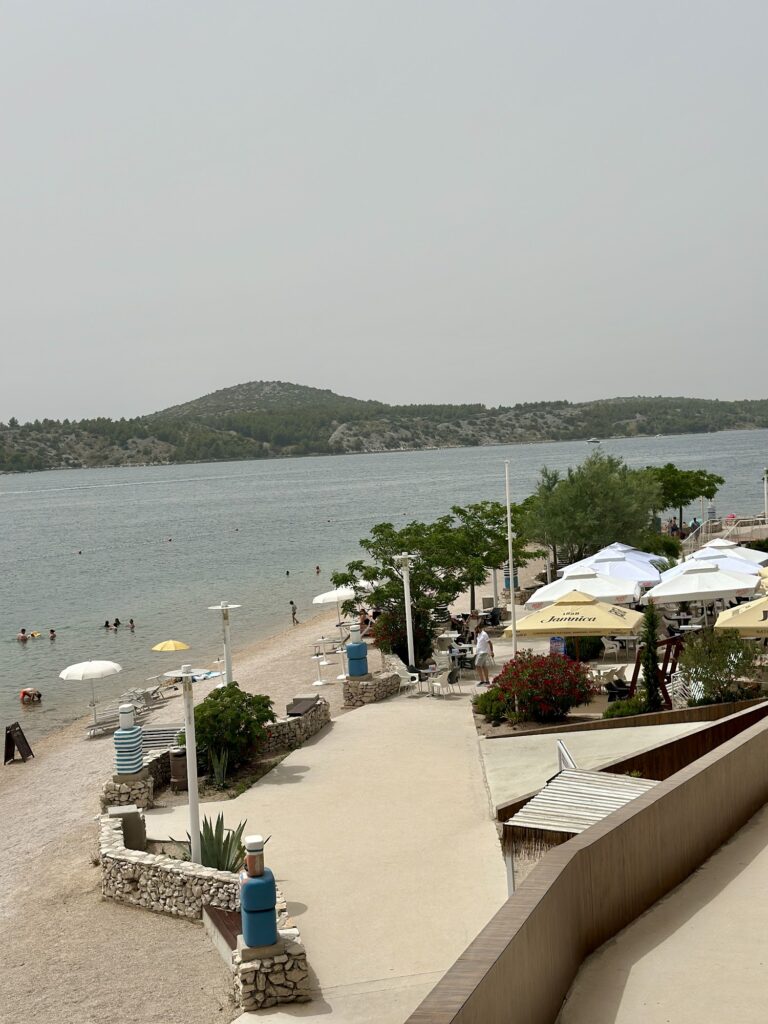
Banj Beach facilities reflect the ambition and the investment of the waterfront regeneration project that created it. Freshwater showers and modern changing cabins are positioned at sensible intervals along the promenade. Certified lifeguards monitor the swimming zones from elevated stations throughout the official season. Well-maintained public restrooms are available and easy to locate. The entire beach was designed with accessibility in mind from the outset — paved ramps and level access throughout make it one of the most genuinely inclusive accessible beaches in Croatia, a detail that is easy to overlook but reflects a considered approach to public space that deserves acknowledgement.
The active infrastructure at Banj is also worth noting. A street workout park at Banj Beach, basketball court, and beach volleyball court sit adjacent to the shore, giving the beach a lively, energetic character during the morning and early evening hours that contrasts pleasantly with the more languid midday atmosphere. On both of my most recent visits I watched a group of local teenagers running a volleyball game with sufficient seriousness to suggest a long-standing arrangement, while fifty metres away a family with small children was completely undisturbed in the shallows. The beach accommodates both realities comfortably.
The Atmosphere: Urban Energy, Coastal Calm
What strikes me most consistently about Banj Beach is the particular social character it sustains — distinctly urban in a way that no remote cove or rural beach can replicate, yet genuinely relaxed in a way that many city beaches fail to achieve. The people who come here are a genuine cross-section of Šibenik life: local families who have been using this waterfront for years, visitors from the old town hotels who have walked along the promenade on a whim, athletes using the workout equipment before the heat of the day sets in, couples occupying the quieter stretches of the pebbles in the late afternoon.
The pedestrianised setting means there is no vehicle traffic anywhere near the beach, which gives the entire waterfront a quality of ease and safety that urban beaches adjacent to busy roads simply cannot match. The Banj Beach promenade connects seamlessly to the broader Šibenik waterfront, making it entirely natural to drift between beach and city over the course of a day — an hour in the water, a walk up into the old town to visit the cathedral, lunch back on the terrace, another swim in the afternoon. It is a rhythm that Šibenik as a city is particularly well-suited to supporting.
For Families
Banj Beach with children works exceptionally well, and for reasons that go beyond the gentle slope of the pebbled shore into the water — though that is a genuine practical advantage for parents of younger swimmers. The pedestrianised environment eliminates the anxiety of vehicle traffic entirely. The proximity of the city centre means that pharmacies, mini-markets, and medical services are within five minutes on foot — a consideration that sounds minor until the moment it becomes relevant.
The range of activities available alongside the swimming — volleyball, basketball, the workout park — gives older children and teenagers something active and engaging to pursue that does not require them to simply continue swimming indefinitely. The short walk to the old town opens up the possibility of combining a beach morning with an afternoon exploring the cathedral and the fortress, which provides a genuinely educational dimension to a family day that most beach destinations cannot offer. Family beaches in Šibenik are not numerous, and none of them offer the combination of facilities, safety, proximity, and cultural context that Banj provides.
Food and Drink: The Petrus Experience
The Petrus beach bar and restaurant Šibenik at Banj is the social and culinary centre of the beach, and it earns that position. The terrace occupies one of the finest vantage points on the entire Dalmatian coast — directly facing the old town across the water, positioned to catch both the morning light and the evening sun as it descends behind the city. I have sat there at different hours across different visits and found it equally compelling at each.
The food is serious Dalmatian cooking rather than generic beach snacks — fresh Dalmatian seafood, local wines from the Šibenik hinterland, and Mediterranean preparations that reflect genuine regional identity. The transition from morning coffee to lunch service to evening cocktails happens seamlessly and without the forced atmosphere that beach bar dining sometimes generates. On my most recent visit I stayed for both lunch and a late afternoon drink, watching the light change across the cathedral facade from the same table, and felt no particular urgency to be anywhere else.
How to Get to Banj Beach
Getting to Banj Beach Šibenik could hardly be more straightforward for visitors already in the city.
On foot from the Šibenik old town, the walk west along the Riva waterfront promenade takes between ten and fifteen minutes and is pleasant enough that it functions as a worthwhile experience in its own right rather than merely a means of transit. This is the approach I would always recommend to first-time visitors.
By car, a dedicated public parking area sits directly above the beach. It fills quickly during July and August, and arriving before mid-morning on peak summer days is strongly advisable. A number of taxi boats operating in Šibenik bay connect various points around the water to the Banj pier during the summer season — a useful option for visitors staying on the opposite side of the channel or arriving by water.
I have visited a considerable number of Croatian beaches over the years, and Banj Beach Šibenik occupies a category of its own among them. Not because it is the most remote, or the most ecologically pristine, or the most dramatically situated — other beaches on this coast hold those distinctions. What Banj offers is something different and in its own way rarer: the experience of swimming in a genuinely beautiful sea while one of the finest examples of medieval urban architecture in Europe sits directly across the water from you, close enough to see the detail of the stonework, far enough to take in the full composition.
It is a beach that rewards the traveler who values context as much as coastline. If your summer plans include time in central Dalmatia, build a morning at Banj into your Šibenik itinerary. Walk along the promenade from the cathedral, swim out far enough to look back at the city from the water, and have lunch on the Petrus terrace. It is, I would argue, one of the most complete single experiences the Croatian coast has to offer.
Map
Sorry, no records were found. Please adjust your search criteria and try again.
Sorry, unable to load the Maps API.
Near by places: