Marathias Beach Elis: Dunes Near a Sunken Port
Profile
Marathias Beach: The Sand That Buried a Homeric Port
Greece | Peloponnese | Elis | Ionian Coast
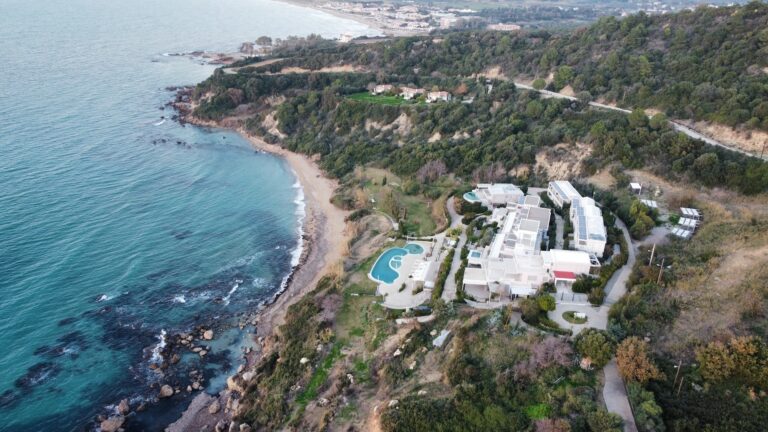
Homer mentions a port called Pheia in the Iliad, placing it near a mountain torrent on this stretch of the Peloponnesian coast, and the ruins of that same port now sit submerged in the bay at Agios Andreas, a short drive from Marathias. An earthquake and tsunami destroyed the town sometime around the sixth century AD, and archaeologists have since found walls and quays resting several meters underwater. I hadn’t expected a beach known mainly for its length and its dunes to sit this close to something Homer himself referenced, but the whole coast around Katakolo seems to carry that kind of buried weight beneath an otherwise straightforward stretch of sand.
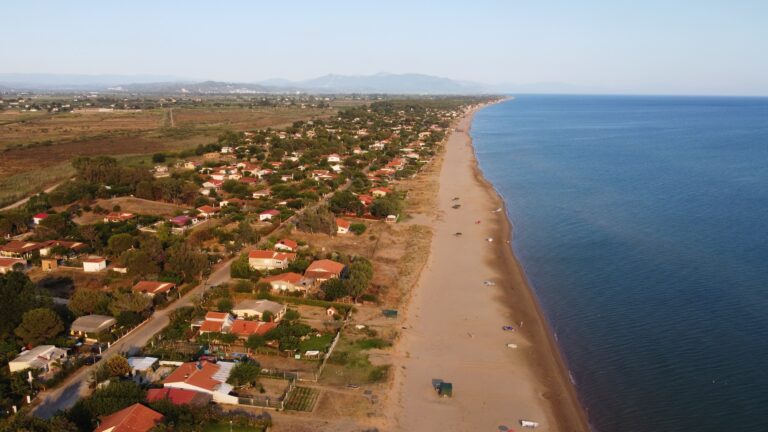
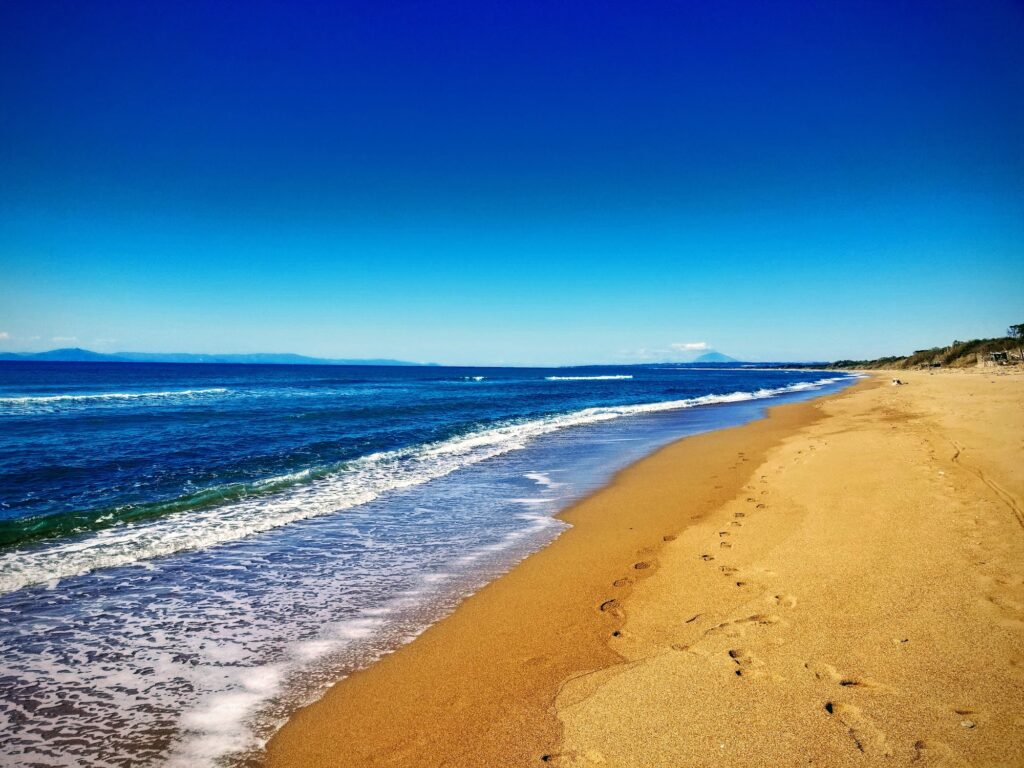
Marathias itself runs long enough that it’s counted among the longer continuous sandy coastlines in Europe, and the scale changes how a day here unfolds compared to the more compact beaches I’ve visited elsewhere on this coast.
Water Clarity Along a Gradual Sandy Entry
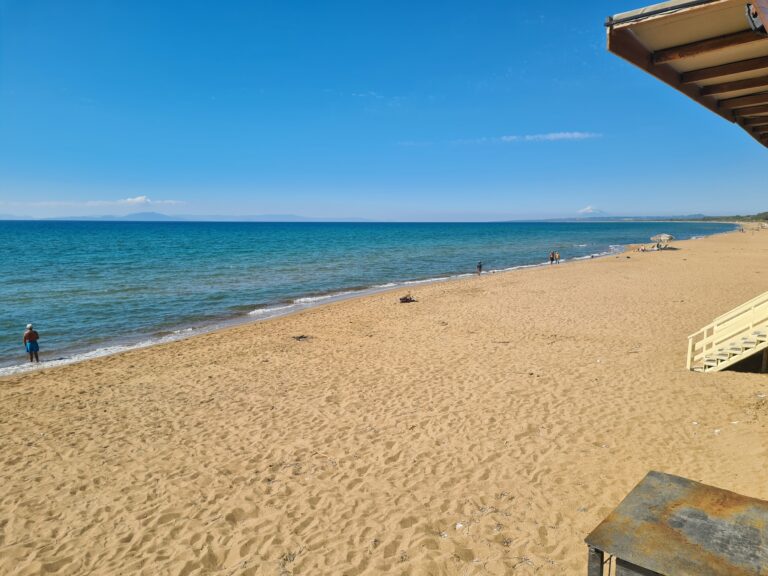
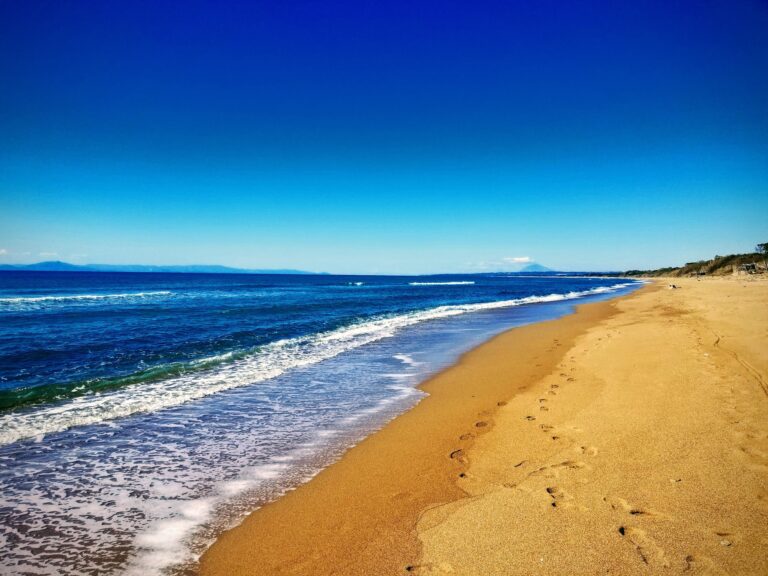
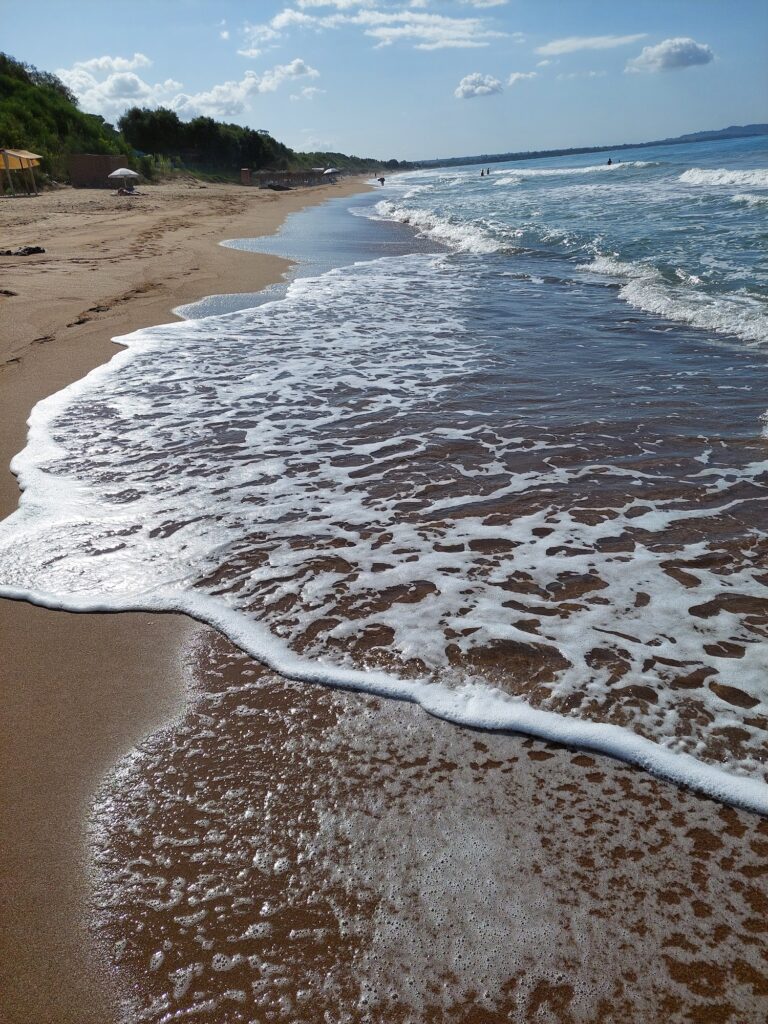
The water at Marathias carries the same turquoise-to-indigo gradient I’ve come to expect from this stretch of the Ionian, and I found the clarity consistently good across multiple visits, helped by a genuinely sandy seabed rather than the rockier bottoms I’ve encountered further along the Peloponnese coast. The entry stays gradual for a considerable distance, gentle enough that I watched swimmers of every skill level, from children wading cautiously to more confident adults heading further out, all sharing the same stretch of shallow water without any real hazard.
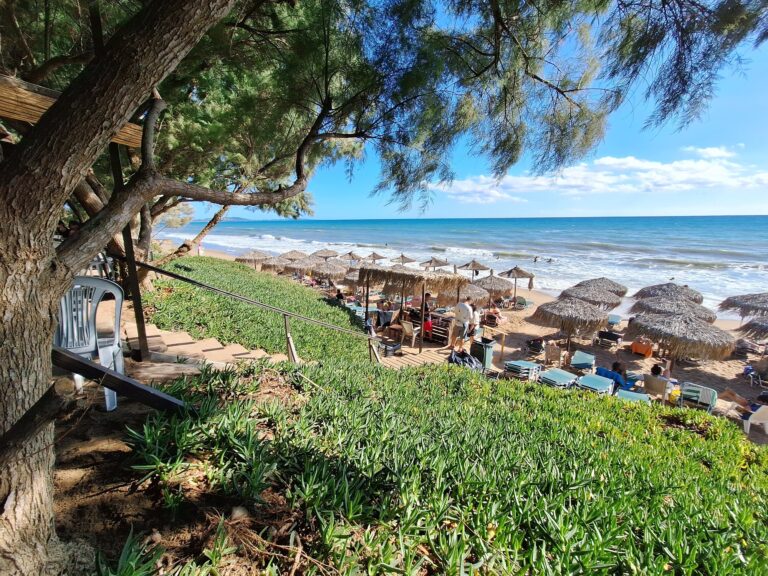
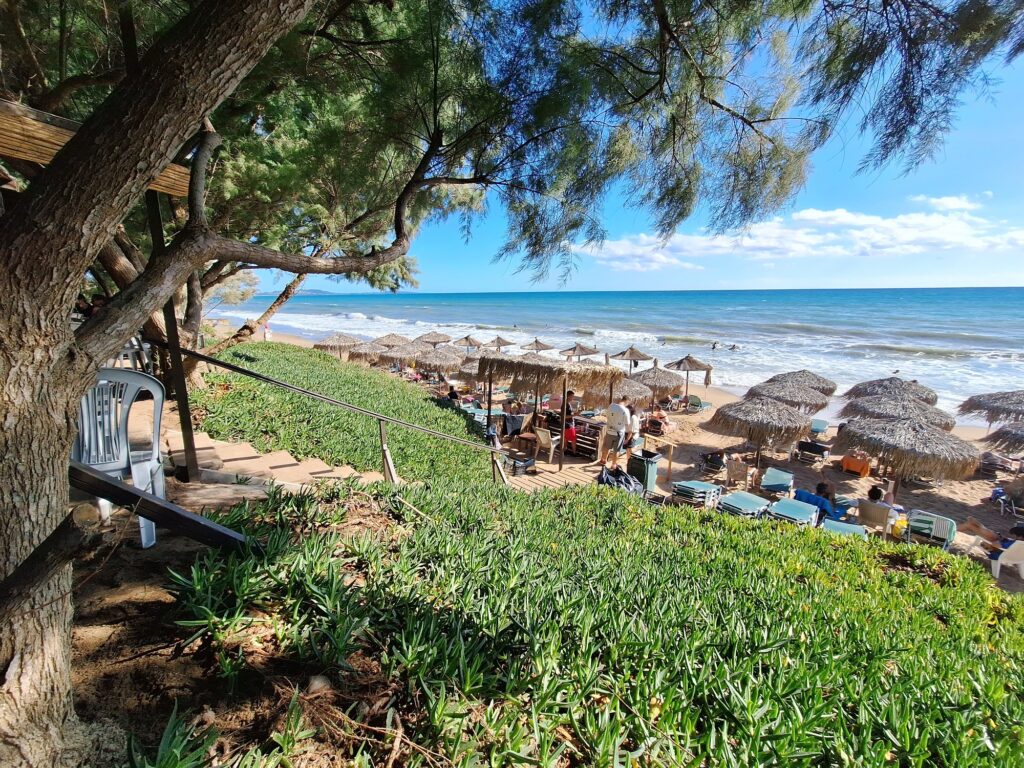
Low coastal dunes and pine trees run behind the beach, creating enough of a natural buffer that the sand itself feels wilder than its proximity to Pyrgos would suggest, and I found genuine stretches of open, unclaimed shoreline even during a busy midsummer visit, simply by walking a short distance from the more organized central sections.
Beach Bars in the Center, Empty Sand at the Edges
The central portion of Marathias has a modest cluster of beach bars and seasonal cafés, offering sunbeds and umbrellas with the kind of friendly, unhurried service I found consistent across two visits. Outdoor showers and changing cabins cover the basics, maintained by the same beach bars rather than any separate municipal operation. Beyond that central stretch, though, the sheer length of Marathias means unclaimed sand is easy to find, and I noticed families bringing their own umbrellas and setting up well away from the organized section, treating the beach’s scale as an invitation to spread out rather than cluster together.
Given how much of Marathias remains genuinely unorganized, dogs face no particular restriction on those stretches beyond the standard Greek rule requiring a leash once out of the water, though I’d expect the central, beach-bar-managed section to require the same explicit permission that applies at any organized Greek beach.
Olives, Tomatoes, and Fresh Catch in the Settlement
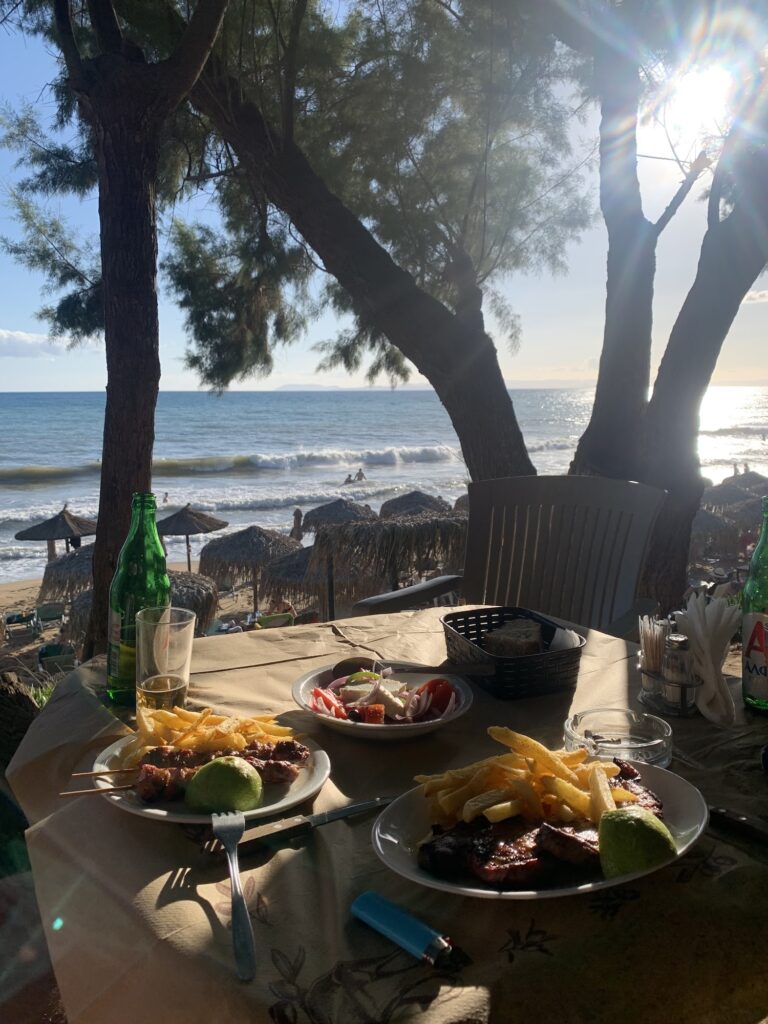
The Marathias settlement behind the beach is small, built around agriculture as much as tourism, and the tavernas and grills there lean heavily on the region’s own produce, olives and tomatoes that Elis is genuinely known for across Greece, alongside fresh seafood brought in by local fishermen. I ate well at more than one of these tavernas, finding the cooking straightforward and clearly reliant on what the surrounding fields and the sea itself were actually producing that week, rather than anything trucked in from further afield.
Watching the Sun Drop Directly Into the Ionian
Because Marathias faces due west, it offers one of the more reliably dramatic sunsets I found on this coast, the sun sinking directly into open water rather than dipping behind any headland or hill. I timed at least one evening walk specifically around this, and found the beach’s width worked in its favor here too, plenty of space to walk along the tideline without competing with anyone else for the same view.
The Sunken Port of Pheia Near Katakolo
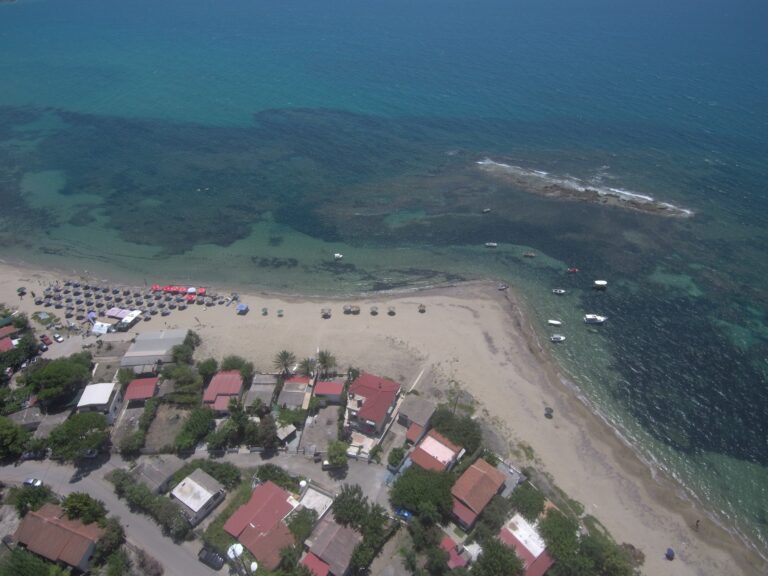
A short distance from Marathias sits Katakolo, the region’s cruise port and the modern name for what was once ancient Pheia, a working harbor for the city-state of Elis and a key transit point for athletes and spectators traveling to the Olympic Games at nearby Olympia. Thucydides recorded an Athenian raid on the town during the Peloponnesian War, and the settlement continued in some form until the earthquake and tsunami that eventually submerged much of it. I found the underwater ruins impossible to see clearly without diving gear, but simply knowing they were there, resting a few meters below the surface of an otherwise ordinary bay, gave the whole area a different weight than a cruise port typically carries.
Getting There: Twenty Minutes From Pyrgos
Marathias sits roughly 15 kilometers from central Pyrgos, a drive of about twenty minutes following the road toward Amaliada or the coastal route toward Katakolo and Spiantza, with signs marking the turn toward the Marathias settlement itself. I found the drive straightforward, the road well maintained the entire way.
A Cool-Down Stop After Ancient Olympia
For anyone combining a beach day with the archaeological site itself, Marathias sits about 35 kilometers from Ancient Olympia, roughly a forty-minute drive, and I found this pairing worked naturally, ruins in the cooler morning hours and a swim once the afternoon heat set in properly.
Buses From Pyrgos During the Summer Season
Local KTEL bus services often run routes from the Pyrgos central station out to the Marathias settlement during summer, and I used this option once, finding it a reasonable way to reach the beach without needing a rental car for what amounts to a short regional trip.
Parking Along the Coastal Road
Parking runs along the coastal road itself and in open lots near the main beach entrances, plentiful enough that I never struggled to find space, though arriving before eleven gave me a spot shaded by the coastal trees, a genuine advantage once the day’s heat built up over the open sand.
Comparing Marathias to Other Long Greek Beaches
For sheer scale, Marathias invites comparison with Kalo Livadi Beach Mykonos, another beach long enough to hold both organized sections and genuinely open sand, though Marathias trades Mykonos’ beach-club energy for a quieter, more agricultural backdrop. Closer to home, Kourouta Beach Elis offers a useful contrast within the same region, its evening promenade and nightlife standing in sharp relief against Marathias’ more understated, dune-backed character.
For a beach where local produce shapes the dining experience as directly as it does here, Pili Beach Evia makes for an interesting parallel too, though its harbor and river estuary give it a distinctly different physical character from Marathias’ long, open dunes.
Walking the Dunes as the Light Fades
By the time I made my last evening walk along Marathias, the beach bars in the central section had begun quieting down, and I continued past them toward the emptier stretches of dune and pine, the sun dropping steadily toward the Ionian horizon, somewhere beneath that same water, the walls of a port town Homer once wrote about still sitting exactly where the sea eventually put them.
Map
Sorry, no records were found. Please adjust your search criteria and try again.
Sorry, unable to load the Maps API.
Near by places: