Spiantza Beach: Pyrgos' Own Stretch of Sand
Profile
Spiantza Beach: The Sand Pyrgos Built Itself Beside
Greece | Peloponnese | Elis | Ionian Coast
Pyrgos means tower in Greek, and the city carries that name because of a story involving a villager, a well full of gold coins, and an Ottoman sultan who rewarded honesty with land. Sometime in the 1510s, a man from Kalavryta moved into what was then uncultivated ground near here, found a substantial cache of ancient gold coins while digging, and turned them over to the authorities rather than keeping them. Sultan Selim I made him ruler of the surrounding territory in gratitude, and he built a tower on a hill to watch over his new fields, giving the settlement that eventually grew around it its name. Spiantza sits close enough to that same city that it functions almost as Pyrgos’ own beach, the coastal edge of a town whose entire identity traces back to a moment of returned treasure.
I hadn’t expected a regional capital’s founding myth to sit this close to a stretch of dunes and open sand, but the connection between Pyrgos and Spiantza felt more direct than the distance between most Greek cities and their nearest beach.
Sandy Water With a Gradual, Family-Friendly Entry
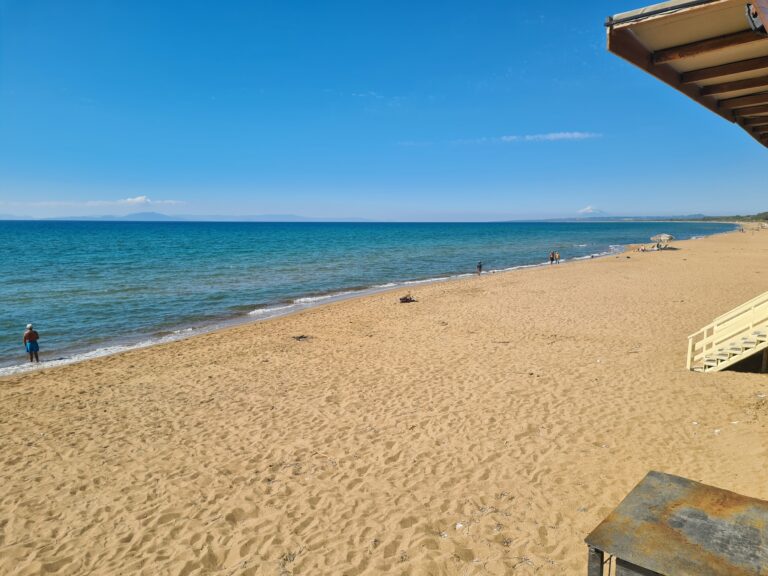
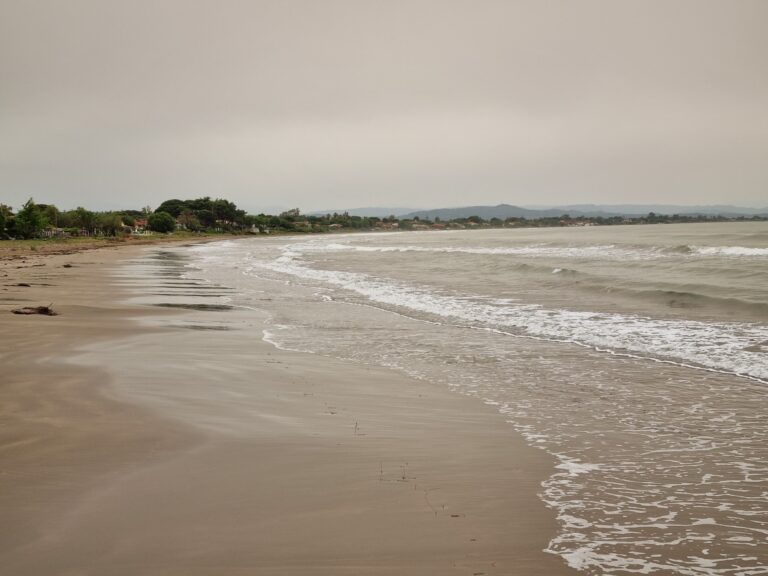
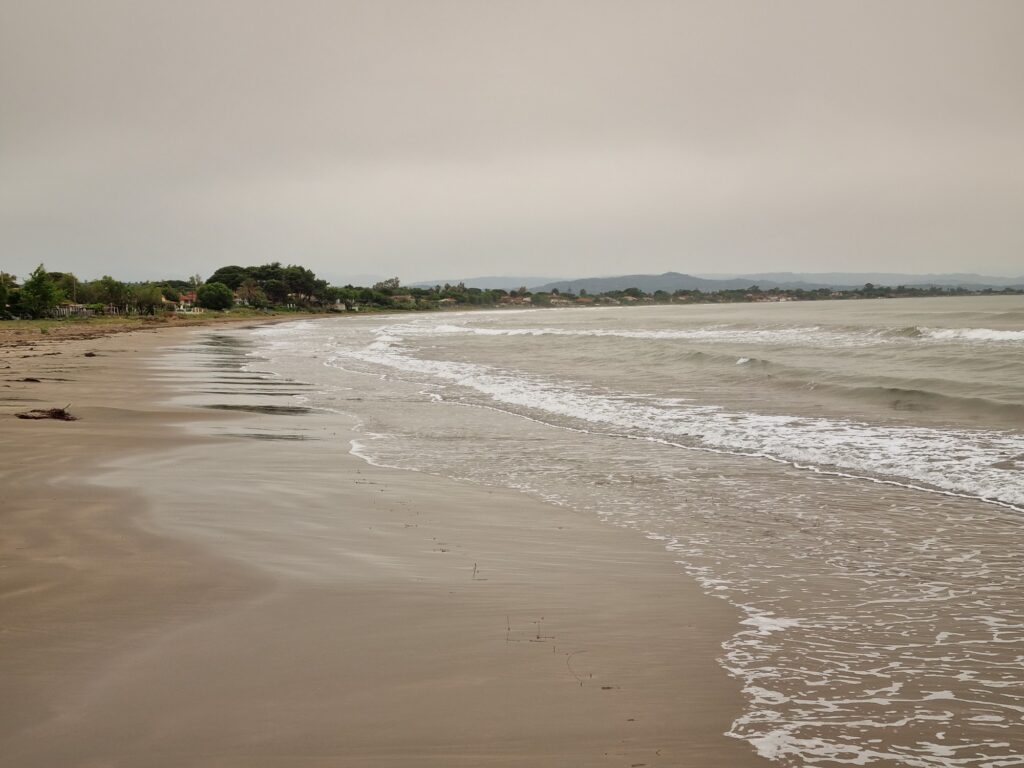
The water at Spiantza carries the same turquoise-to-indigo gradient common along this stretch of the Ionian, and the sandy seabed keeps the entry gradual enough that I watched families wade in with young children without any real hesitation. Visibility held up well across multiple visits, and I found the swimming here consistently gentle, closer in character to the calmer beaches I’ve found further south on this coast than to anything requiring particular caution.
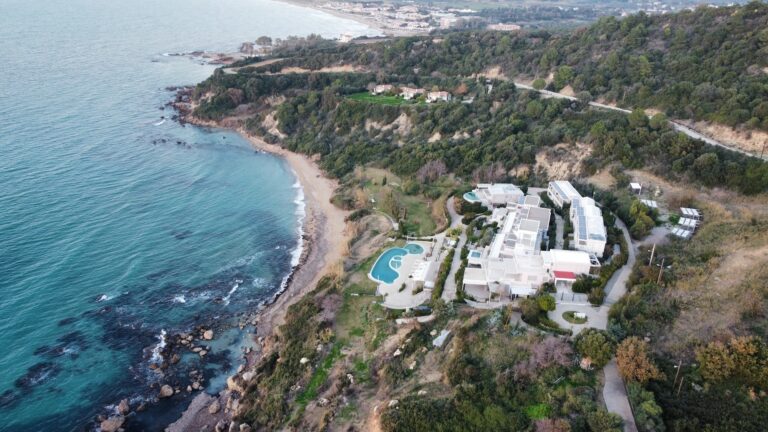
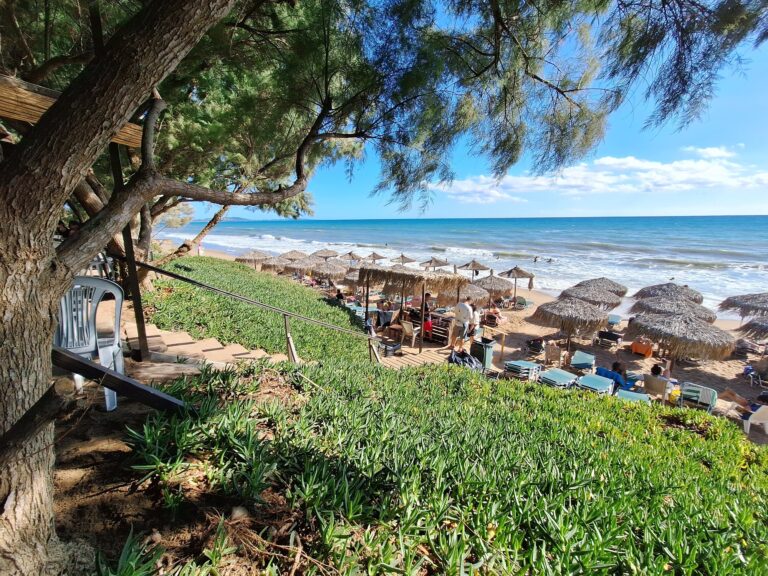
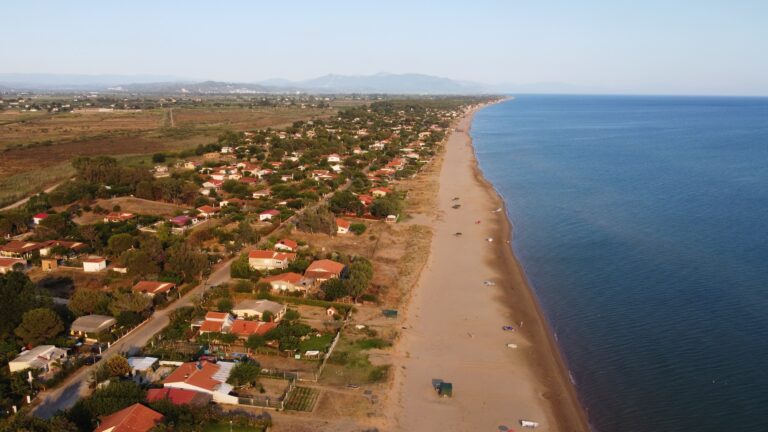
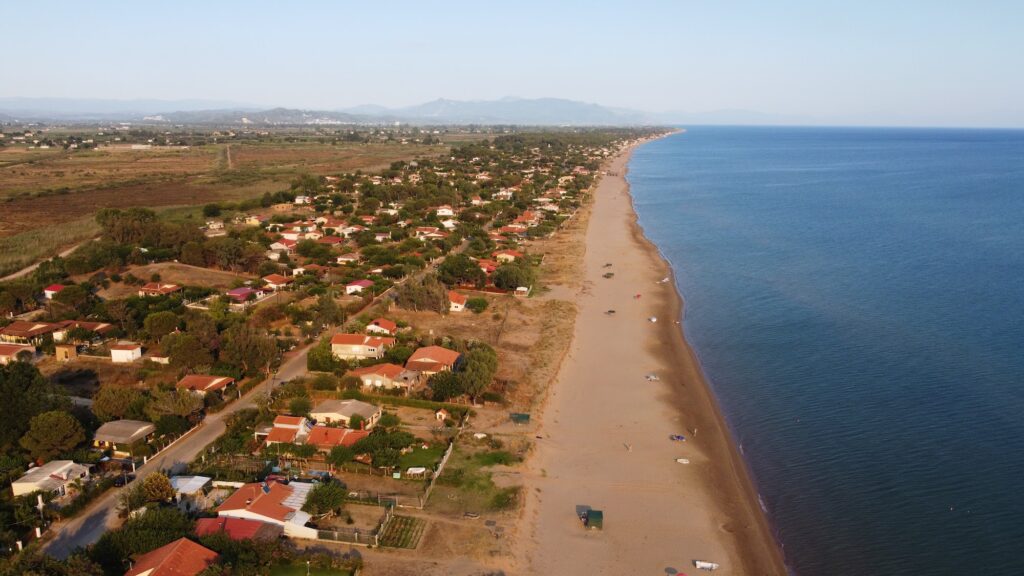
Low coastal dunes run behind the shoreline, and tamarisk trees provide natural shade in patches along the sand, useful given how open and exposed the beach otherwise is to direct sun through the middle of the day.
Beach Bars Near the Settlement, Open Sand Beyond
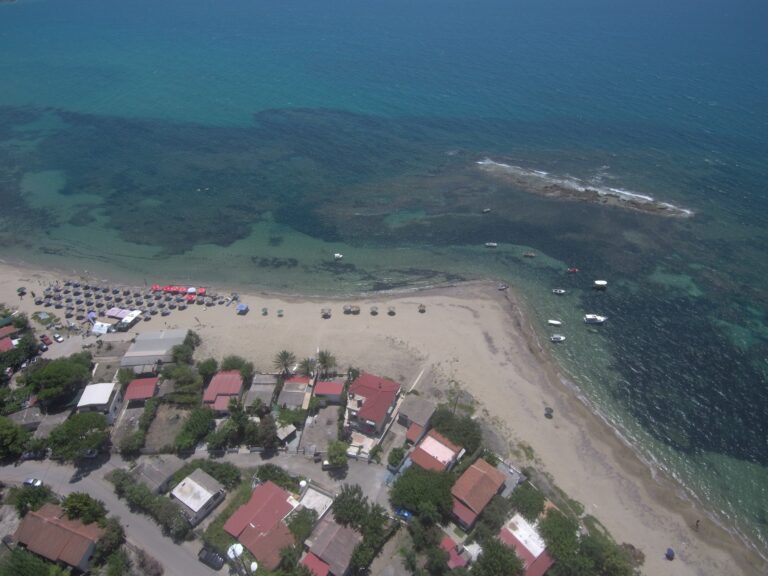
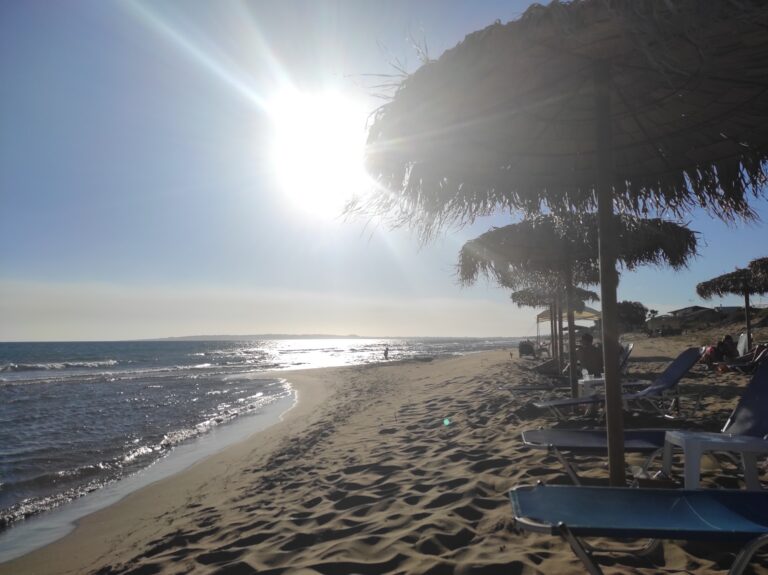
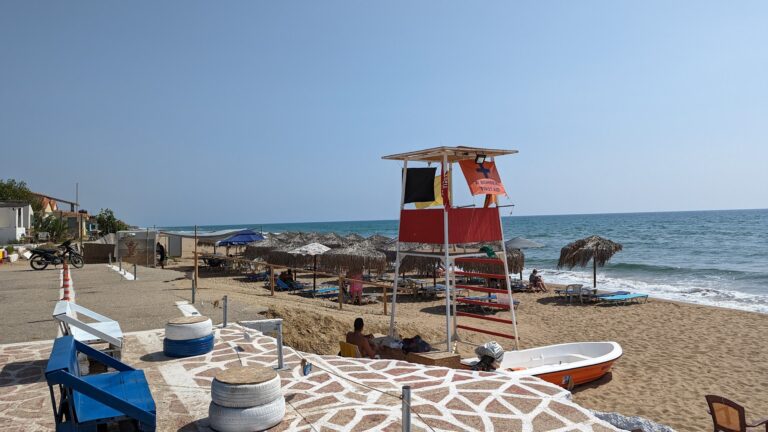
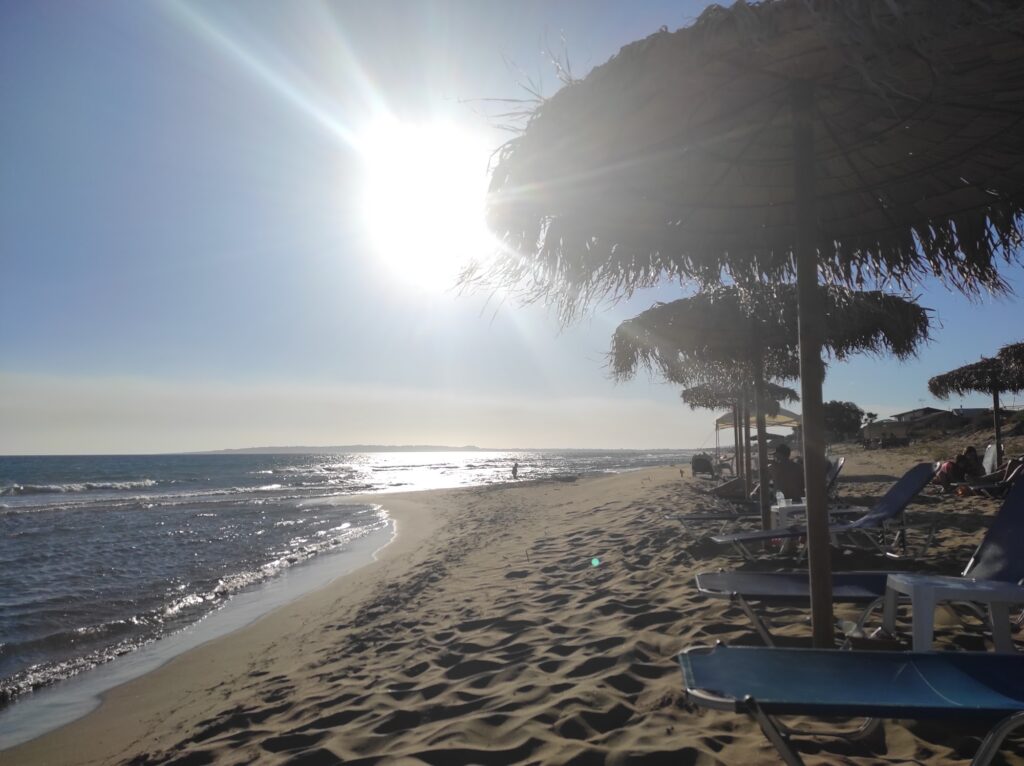
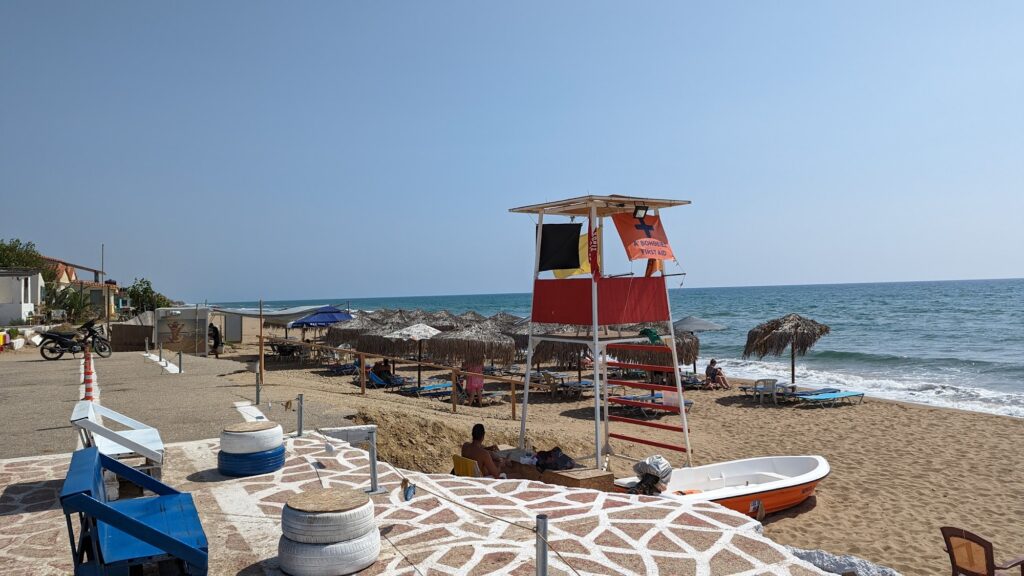
The central section near the Spiantza settlement carries a modest cluster of beach bars and seasonal cafés, sunbeds and umbrellas managed with the kind of relaxed, friendly service I’ve come to expect from this part of the coast. Outdoor showers and changing cabins cover the basics, and lifeguard towers appear along the central stretch during peak summer months, a reassurance I noticed parents nearby clearly appreciated. Beyond that organized core, the beach’s length makes finding genuinely open, unclaimed sand easy, and I brought my own umbrella more than once specifically to take advantage of that space.
Given how much of Spiantza remains unorganized beyond the central settlement, dogs face no particular restriction on those open stretches under Greek law beyond the standard leash requirement outside the water, though I’d expect the beach-bar-managed section to require the operator’s explicit permission, as with any organized Greek beach.
Local Produce and Fresh Catch in the Settlement Tavernas
The tavernas and grills in Spiantza settlement lean on the region’s own agricultural output, the same fertile plain that makes Elis one of Greece’s more productive farming areas, paired with fresh seafood brought in by local fishermen. I ate well here on more than one visit, the cooking straightforward rather than elaborate, clearly built around whatever the surrounding fields and the day’s catch actually provided.
A Sunset That Drops Straight Into the Ionian
Facing due west, Spiantza offers an uninterrupted view of the sun setting directly into open water, and I timed an evening walk here specifically for that reason, the beach’s width giving plenty of room to walk the tideline without competing with anyone else for the same stretch of sand.
Getting There: Ten Minutes From Central Pyrgos
Spiantza sits only 5 kilometers from central Pyrgos, a drive of about ten minutes along a well-paved road heading toward the coast, making this the closest proper beach to the regional capital itself. I found the route simple enough that I never needed directions beyond the initial signage pointing toward Spiantza and Katakolo.
A Short Cool-Down After Ancient Olympia
For anyone visiting Ancient Olympia, Spiantza sits about 25 kilometers away, roughly a thirty-minute drive, and I found this one of the more convenient pairings available on this coast, ruins in the morning and a swim well before the afternoon had fully set in.
Buses From the Pyrgos Central Station
During summer, local KTEL buses run routes from the Pyrgos central station out to the Spiantza settlement, and given how close the beach sits to the city, I found this one of the easiest bus connections to rely on anywhere along this stretch of coast.
Parking Along the Coastal Road
Parking runs generously along the coastal road and in open lots near the main entrances, and arriving before eleven gave me a spot shaded by the tamarisk trees, worth the earlier start once the midday sun settled fully over the open dunes.
Comparing Spiantza to Other Elis Beaches
Spiantza’s proximity to Pyrgos sets it apart most clearly from Marathias Beach Elis, a similarly long, dune-backed stretch further from the city center and closer instead to Katakolo and the submerged ruins nearby. For anyone based in Pyrgos itself without much time to travel, Spiantza offers the same open, unhurried character within a considerably shorter drive.
Against Kourouta Beach Elis, Spiantza reads as the quieter option, without the evening promenade or nightlife that defines Kourouta’s character, and against the more intimate Leventochori Beach Elis, it trades rocky coves and snorkeling for open sand and sheer distance to walk.
Watching Pyrgos’ Tower From a Distance
On my last evening at Spiantza, I found myself thinking again about that tower on the hill above Pyrgos, built by a man who’d chosen to hand over a fortune rather than keep it, and how the wide, unclaimed stretch of sand in front of me, still catching the last of the sunset, sat just far enough from that hill to feel like its own separate reward.
Map
Sorry, no records were found. Please adjust your search criteria and try again.
Sorry, unable to load the Maps API.
Near by places: