Kourouta Beach: Golden Sand Near Ancient Elis
Profile
Kourouta Beach: Where the Coast Meets the Birthplace of the Olympics
Greece | Peloponnese | Elis | Ionian Coast
Ancient Elis, the city that organized the original Olympic Games, sat on the banks of the Pineios River not far from where Kourouta’s sand now stretches toward the horizon. I hadn’t planned to think about ancient athletics on a beach day, but driving in from Pyrgos, passing signs for both Ancient Olympia and the coast within the same short stretch of road, made the connection hard to ignore. This part of Elis has spent millennia hosting people who came for one specific reason and then found something else worth staying for.
Locals call Kourouta the “Mykonos of the Peloponnese,” a nickname that oversells the comparison somewhat but does capture something real about the beach’s scale and its evening energy, a genuinely social stretch of coast that feels considerably livelier after dark than the quieter agricultural region surrounding it.
Blue Flag Water Along an Enormous Stretch of Sand
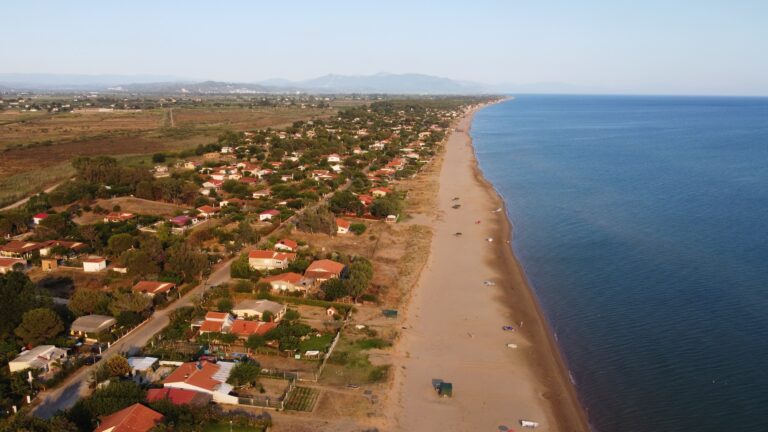
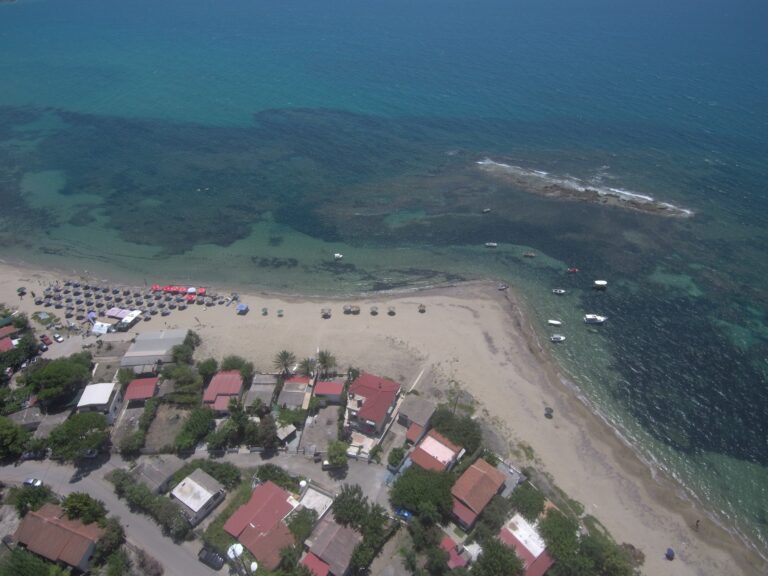
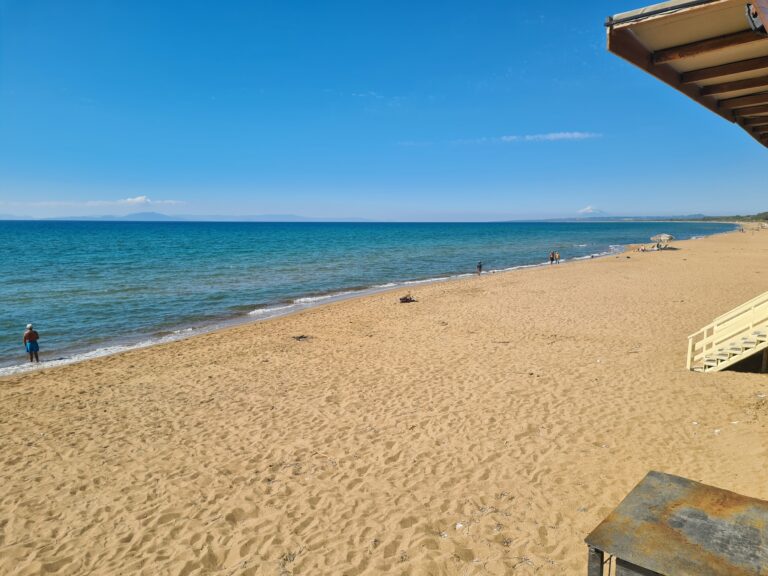
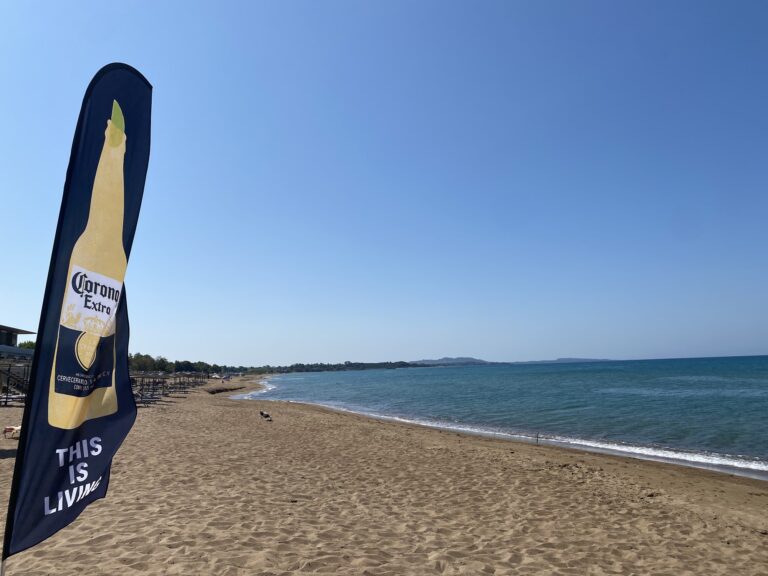
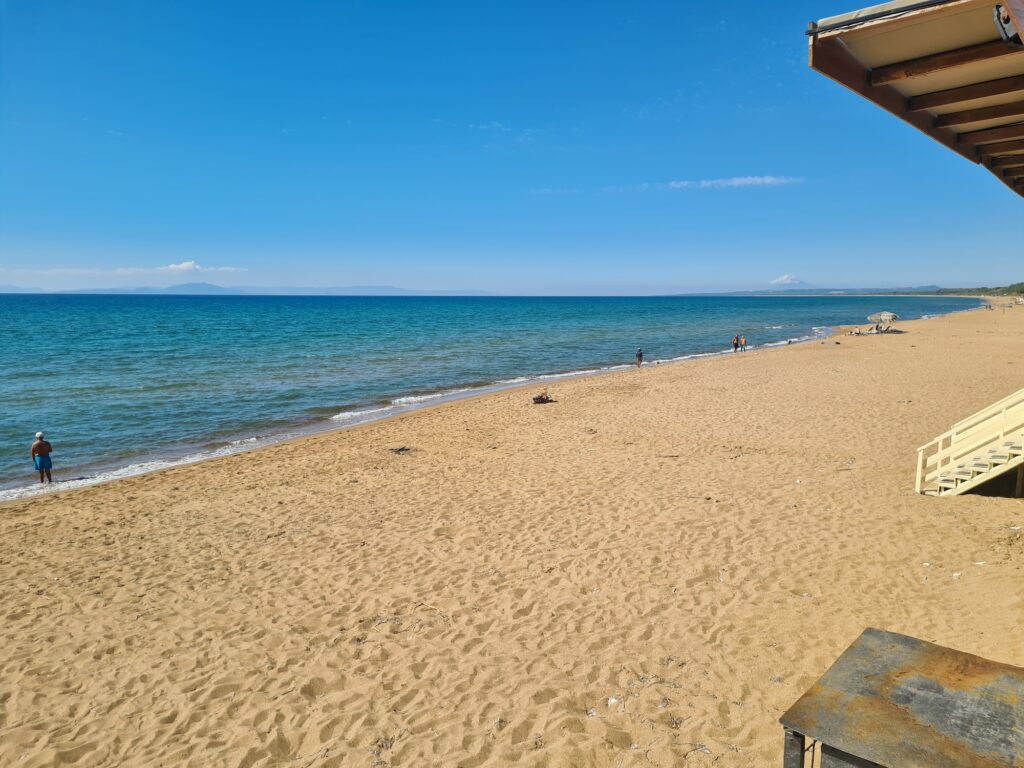
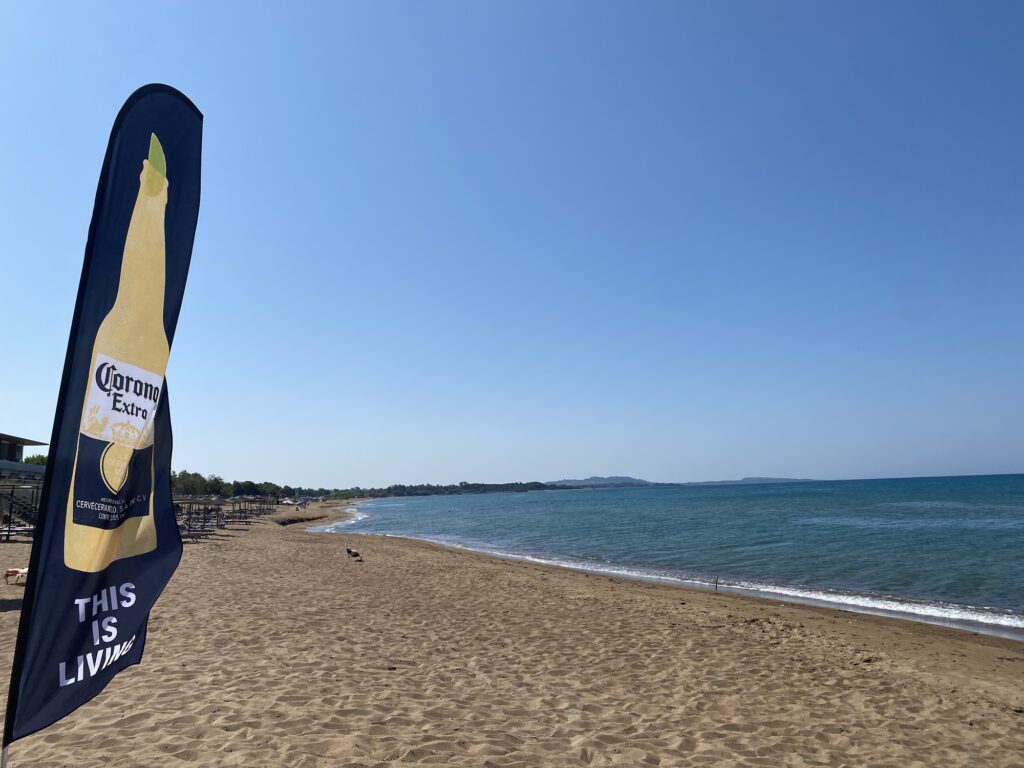
Kourouta has held Blue Flag certification consistently, and the water quality reflects it, clear and clean along a shoreline so long that I never felt crowded even during the busiest hours of a summer afternoon. The sand runs fine and deep, genuinely golden rather than the grayer tone I’ve found at some beaches further south on this coast, and the entry into the water stays gradual enough that I watched families with quite young children wading in confidently, the depth building slowly rather than dropping away underfoot. Lifeguards are stationed at regular intervals through the summer season, which added a level of reassurance I noticed parents around me clearly appreciating.
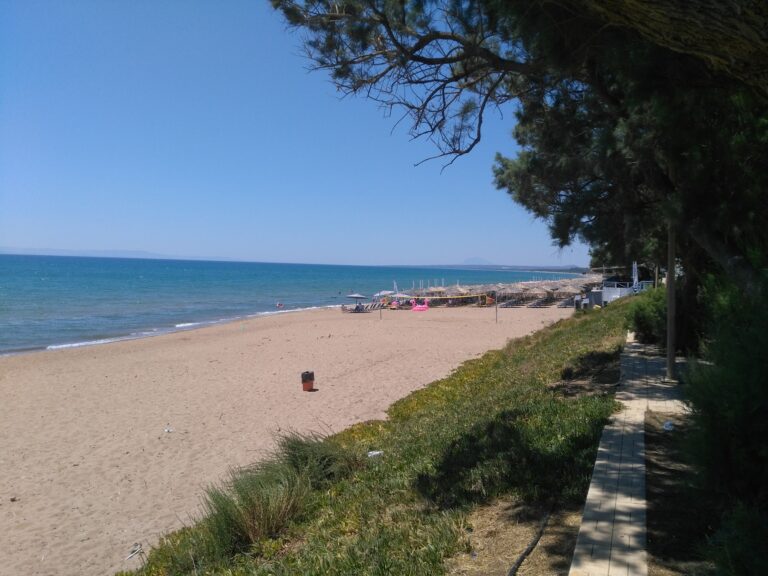
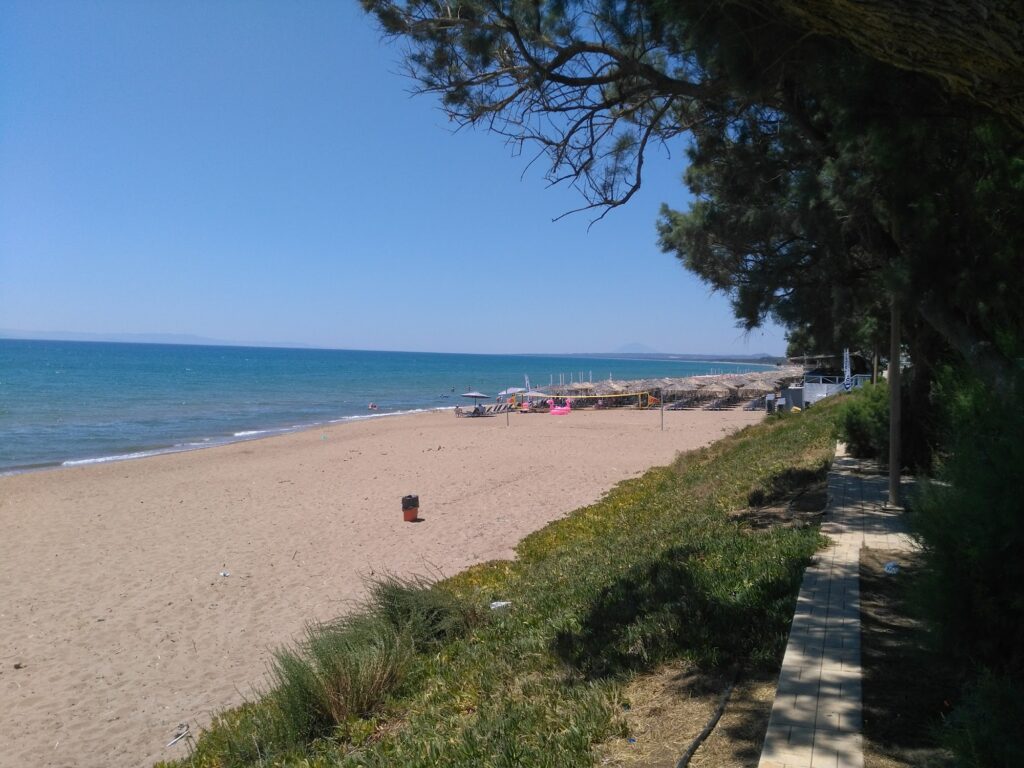
Coastal pine forest flanks parts of the beach, and I found the combination of salt air and pine scent a pleasant surprise on a stretch of coast I’d expected to be purely open sand.
Thousands of Sunbeds and a Beach Built for Groups
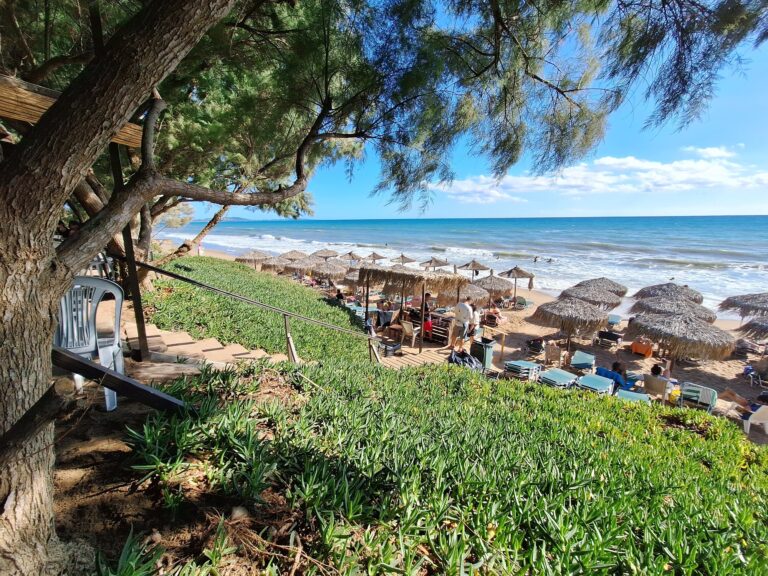
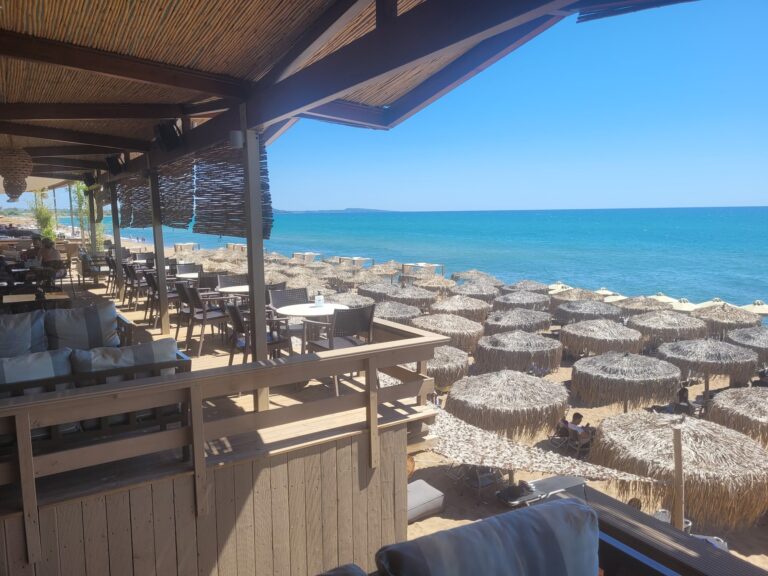
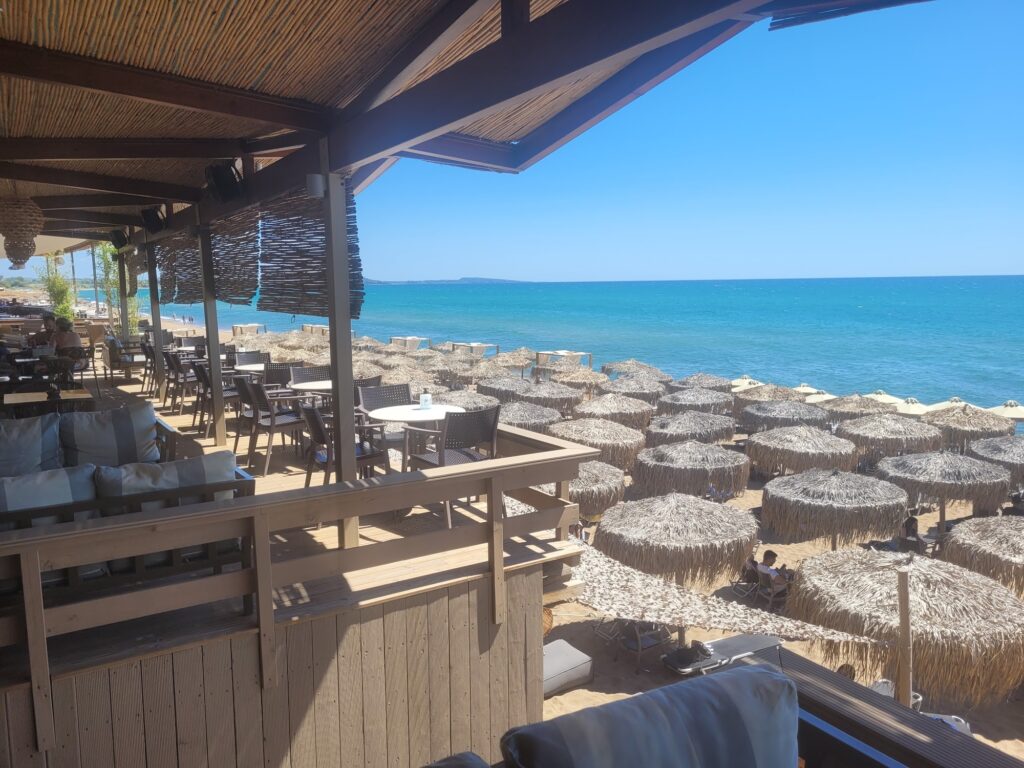
The organized sections of Kourouta run to genuine scale, thousands of sunbeds and umbrellas managed by beach bars stretching along the shore, and I found service consistently attentive even during peak hours, drinks and snacks arriving without much delay despite how busy the beach gets. Changing cabins, showers, and restrooms are all well maintained, and the wide sand gives room for beach volleyball and racket games without crowding out anyone simply looking to sunbathe undisturbed. Given how commercially organized most of this shoreline is, I’d expect dogs to require explicit permission from whichever beach bar manages a given stretch of sand, since Greek regulations restrict pets on organized beaches unless the operator has posted clear signage allowing them.
The Pedestrian Promenade and the Evening Volta
Behind the sand runs a genuinely lively, car-free promenade, lined with tavernas, bistros, and cafés that fill steadily through the evening. I joined the volta here more than once, the golden hour stroll that seems to draw out most of the visiting crowd at once, music drifting from more than one beach bar as the sun dropped. This promenade is really the social heart of Kourouta, and I found the atmosphere here shifted noticeably from the daytime beach scene, less about sunbathing and more about simply being seen and seeing everyone else out for the evening.
Ancient Elis and the City That Ran the Olympics
The archaeological site of Ancient Elis sits within reach of Kourouta, and I made the short trip inland one afternoon specifically because of how directly this city connects to the games now held every four years on a global stage. Elis served as the capital of the ancient Elean kingdom and carried the specific responsibility of organizing the Olympic Games at nearby Olympia, athletes reportedly training in Elis itself for a month before competition began. Standing at the site, with the Peneios river running nearby, gave me a very different sense of this stretch of coast than the beach clubs closer to the water had offered.
The Pineios Dam and the Largest Lake in the Peloponnese
Further inland, the Pineios Dam, built in the 1960s, created an artificial lake now considered the largest in the entire Peloponnese, built primarily to irrigate the fertile plain surrounding Amaliada. I didn’t visit the lake itself during my stay, but knowing it sits just north of the coast added another layer to how this region manages its relationship with water, ancient irrigation concerns sitting alongside a modern beach economy built for a very different kind of visitor.
Amaliada: A Town Named for a Queen
The town nearest Kourouta, Amaliada, took its name from Queen Amalia in the 1830s, formed from the merger of older communities in the area. I found the town itself considerably quieter than the beach a short drive away, its central square shaded by pine trees and centered on a fountain, a useful contrast to the more concentrated energy along the coast.
Getting There: Twenty-Five Minutes North of Pyrgos
Kourouta sits roughly 20 kilometers north of Pyrgos, the regional capital, a drive of about twenty-five minutes along the E55 toward Patras before a clearly marked exit toward Kourouta and Amaliada. I found the road easy enough to navigate even without much local knowledge, the signage consistent the whole way.
A Coastal Reward After Ancient Olympia
For anyone combining a visit with Ancient Olympia itself, Kourouta sits about 40 kilometers away, roughly a forty-five minute drive, and I found the sequence worked well in either order, ruins in the morning and sand in the afternoon, or the reverse depending on when the light suited each stop better.
Buses From Pyrgos and Amaliada
Regular KTEL bus services run from both Pyrgos and Amaliada directly to Kourouta, and I used this option once, finding it a genuinely convenient way to reach the beach without needing a rental car for what amounts to a short regional hop.
Parking at the Northern and Southern Entrances
Large parking lots sit at both ends of the pedestrian zone, and arriving before eleven gave me an easier choice of spot closer to the main promenade, well ahead of the midday crowd that builds steadily through the late morning.
Comparing Kourouta to Other Organized Family Beaches
Kourouta’s evening promenade and volta culture put it in similar territory to Politika Beach Evia, though Kourouta operates on a considerably larger scale, both in beach length and in the sheer number of sunbeds and beach bars competing for space along the sand. For families weighing an organized beach with genuine historical weight nearby, Eretria Beach Evia offers a comparable pairing, ancient ruins a short walk from calm, family-friendly water, though Eretria’s connection is to an ancient rival city rather than the birthplace of the Olympics.
Further afield in the Ionian, Plaz EOT Zakynthos shares Kourouta’s family-friendly, well-supervised character, albeit at a considerably smaller scale and without anything resembling Kourouta’s nightlife.
Watching the Promenade Fill as the Sun Drops
By the time the sun began dropping into the Ionian on my last evening, the beach bars along Kourouta’s shore had shifted their music louder, the promenade filling steadily with the evening’s volta crowd, and I sat with a drink watching the sky do exactly what the tour guides in Ancient Elis, a short drive inland, would have described to visitors arriving for games held in a completely different context, over two thousand years before anyone thought to put a sunbed on this sand.
Map
Sorry, no records were found. Please adjust your search criteria and try again.
Sorry, unable to load the Maps API.
Near by places: