Vama Veche Beach Romania: Bohemian Shore at the Border
Profile
Vama Veche Beach, Romania: Romania’s Southernmost Resort, Where the Intellectuals Came When Ceaușescu Ran Everything Else, and Where the Reputation for Bohemian Freedom Now Coexists With Summer Crowds
Romania | Vama Veche | Constanța County, Dobruja
Vama Veche means Old Customs in Romanian. The village sits less than 5 kilometres from the Bulgarian border on the Black Sea coast, and the name comes from its historical function as the checkpoint at what used to be the frontier — before the 1940 border change moved the Cadrilater region, including the fashionable resort of Balchik, to Bulgaria. The Romanian artistic and political elite who had summered in Balchik needed somewhere else to go. They found the small village on the wrong side of the new border and began using it as a modest substitute. The village’s Gagauz founders in 1811 had named it Ilanlîk. The subsequent waves of Romanian intellectuals renamed it by habit and the name stuck.
Under Ceaușescu, the isolation of the village — its location near a restricted frontier zone requiring special permits — inadvertently protected it. The regime tolerated what it could not easily police: poetry readings, rock music, nudism, political conversation. Professors from Babeș-Bolyai University in Cluj-Napoca were among the regulars. The word spread. By the 1980s, when extreme rationing and censorship were at their peak elsewhere in Romania, Vama Veche remained a pocket of relative freedom. The Romanian Revolution of 1989 removed the restrictions without removing the character, and for a decade after it was genuinely, rather than mythologically, exceptional.
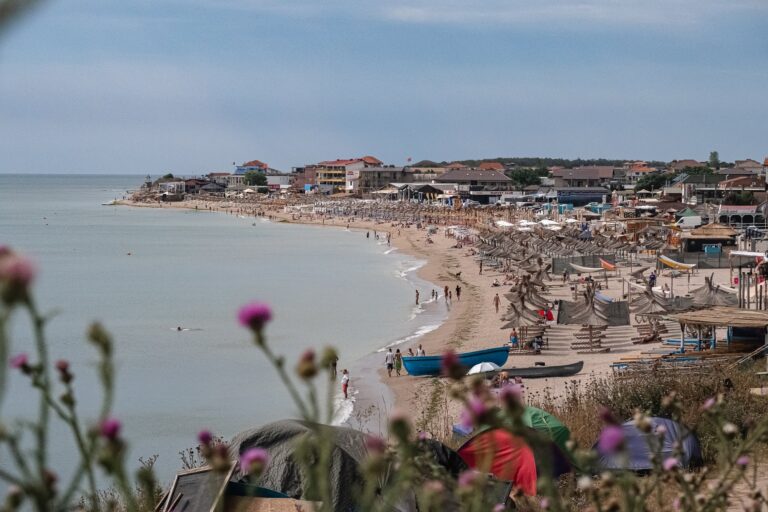
The honest current assessment: regular visitors describe the present-day Vama Veche as significantly more commercial and crowded than the place they remember. The bohemian reputation is partly sustained by mythology. The beach is busy, the bars are loud, the prices have climbed, and the trash management on peak weekends falls short. Come during the week to experience what the reputation is based on. The weekends in July and August are a different proposition.
Getting There: 50km South of Constanța on the DN39, Train to Mangalia Then Maxi-Taxi, or Walk From 2 Mai
By car from Constanța, follow the DN39 coast road south through Mangalia for approximately 50 kilometres. The road leads directly into the village; free parking is available on the approaches. By train from Constanța Central Station, the regional service runs to Mangalia — the terminus — in approximately one hour. From Mangalia station, frequent minibus services reach Vama Veche in under 15 minutes. From Bucharest, the A2 motorway to Constanța takes approximately 2.5 hours, then the coast road south.
The village of 2 Mai is immediately north of Vama Veche, connected by a flat coastal path that takes 20 to 30 minutes to walk.
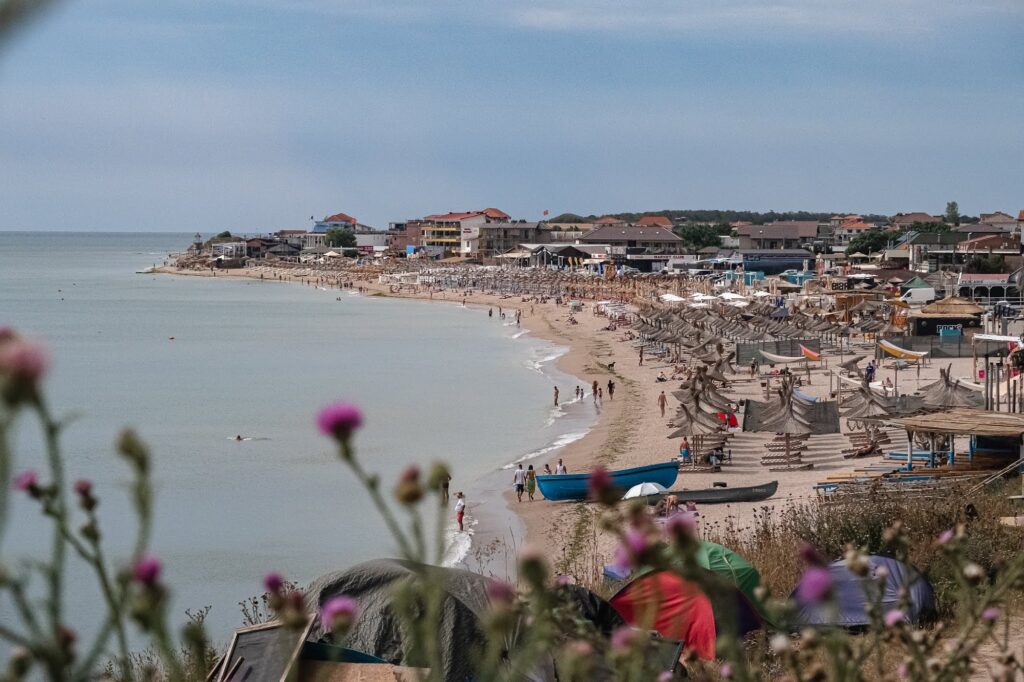
The Beach: Wide Sandy Shore, Gradual Entry, Nudist Section 1km South, Mixed Commercial and Free Zones
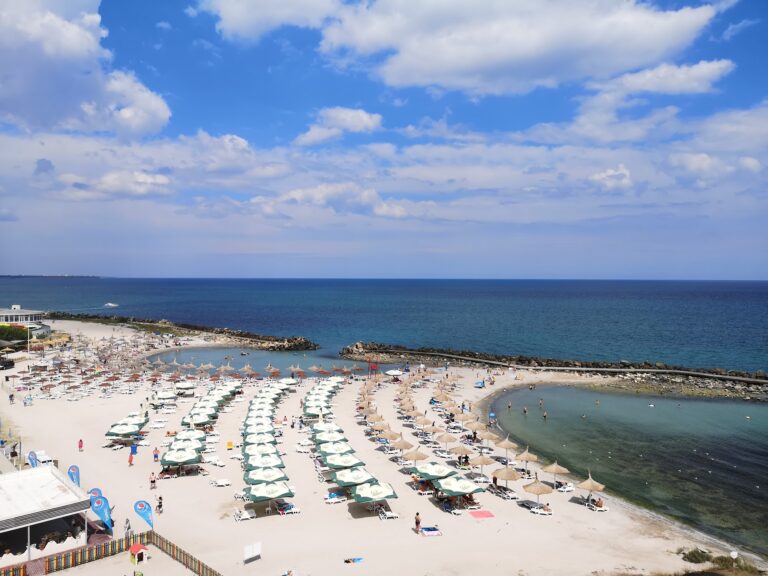
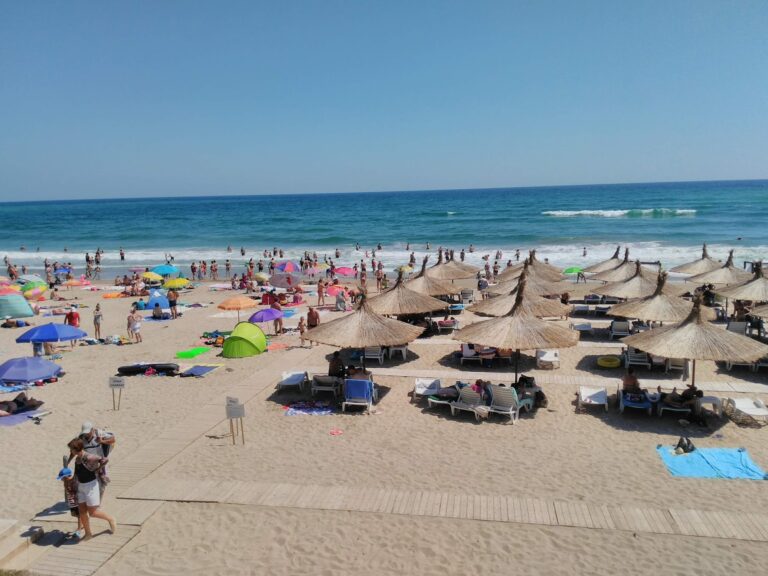
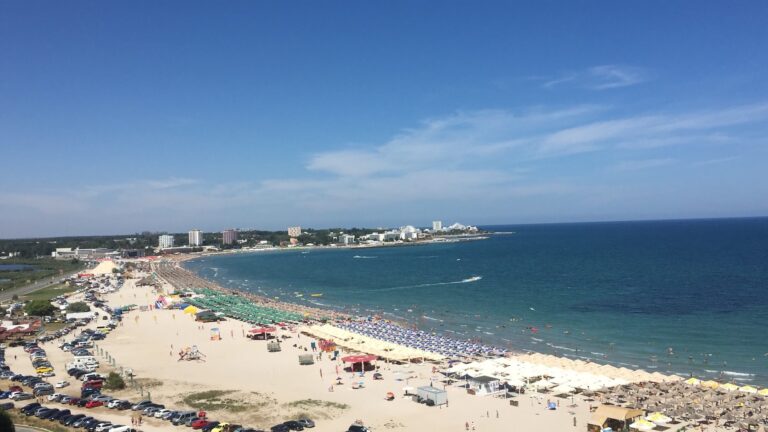
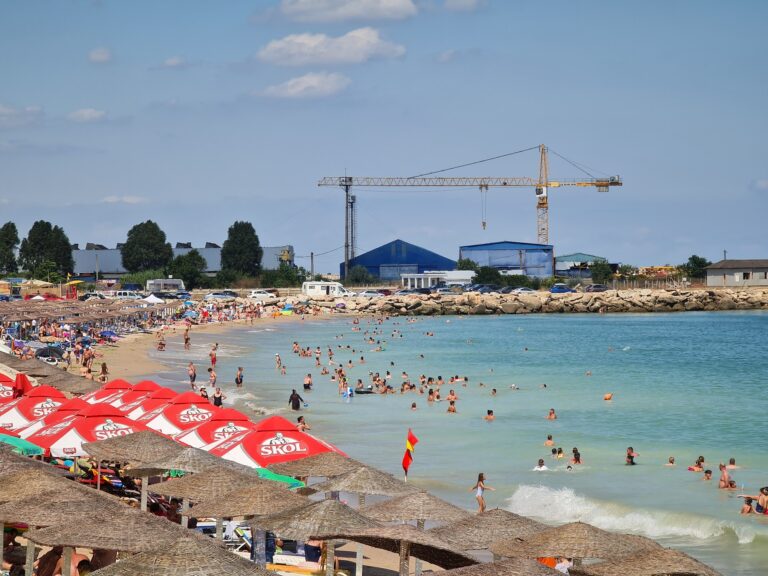
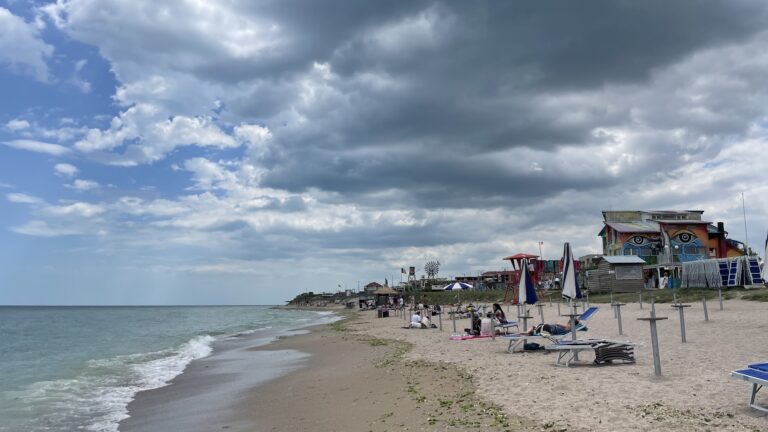
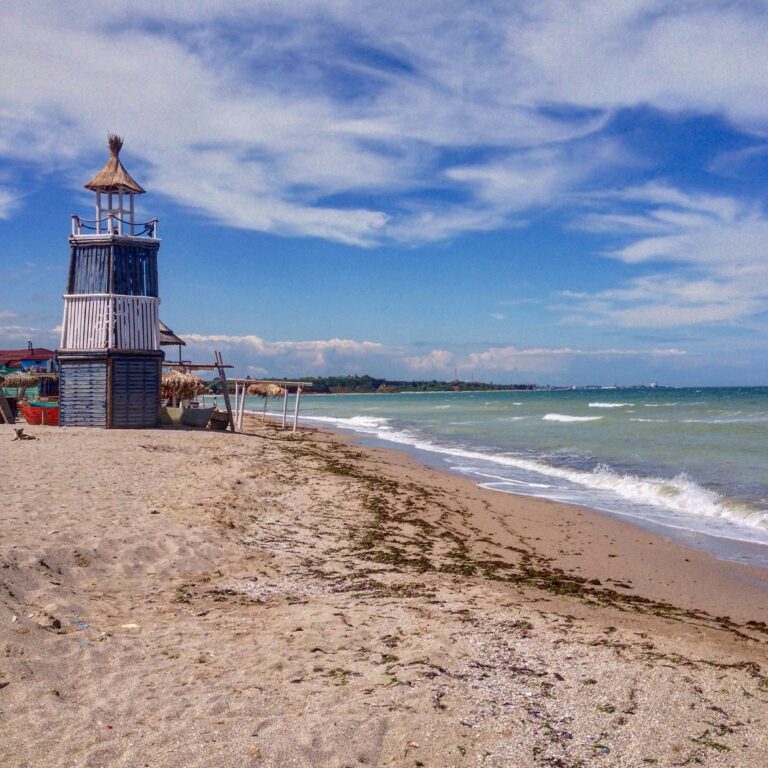
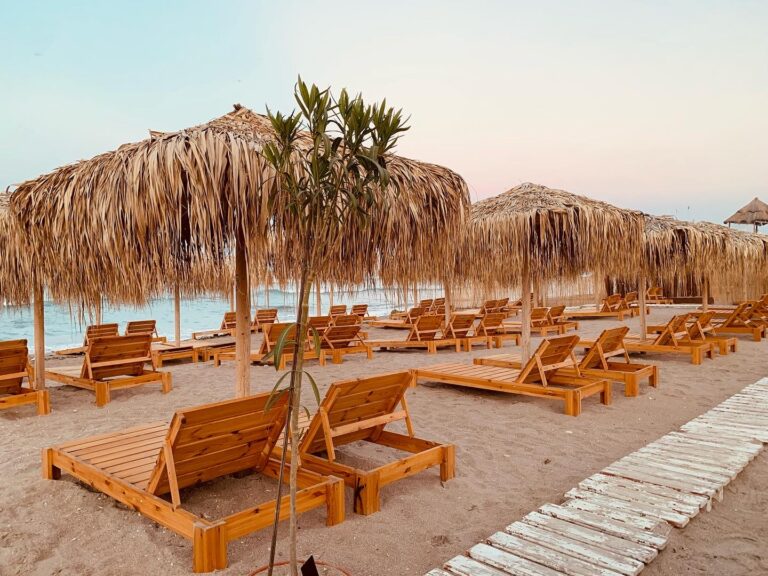
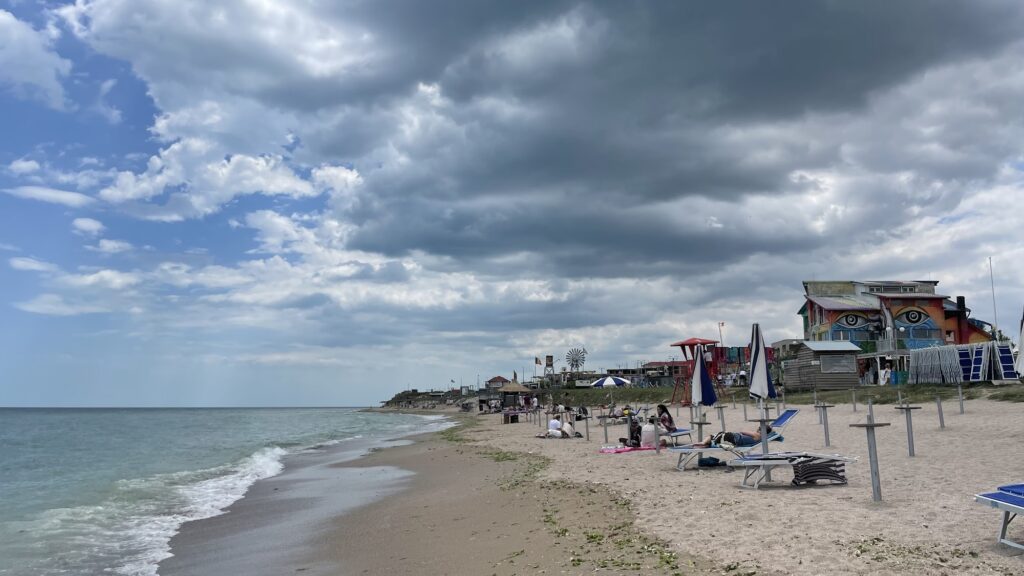
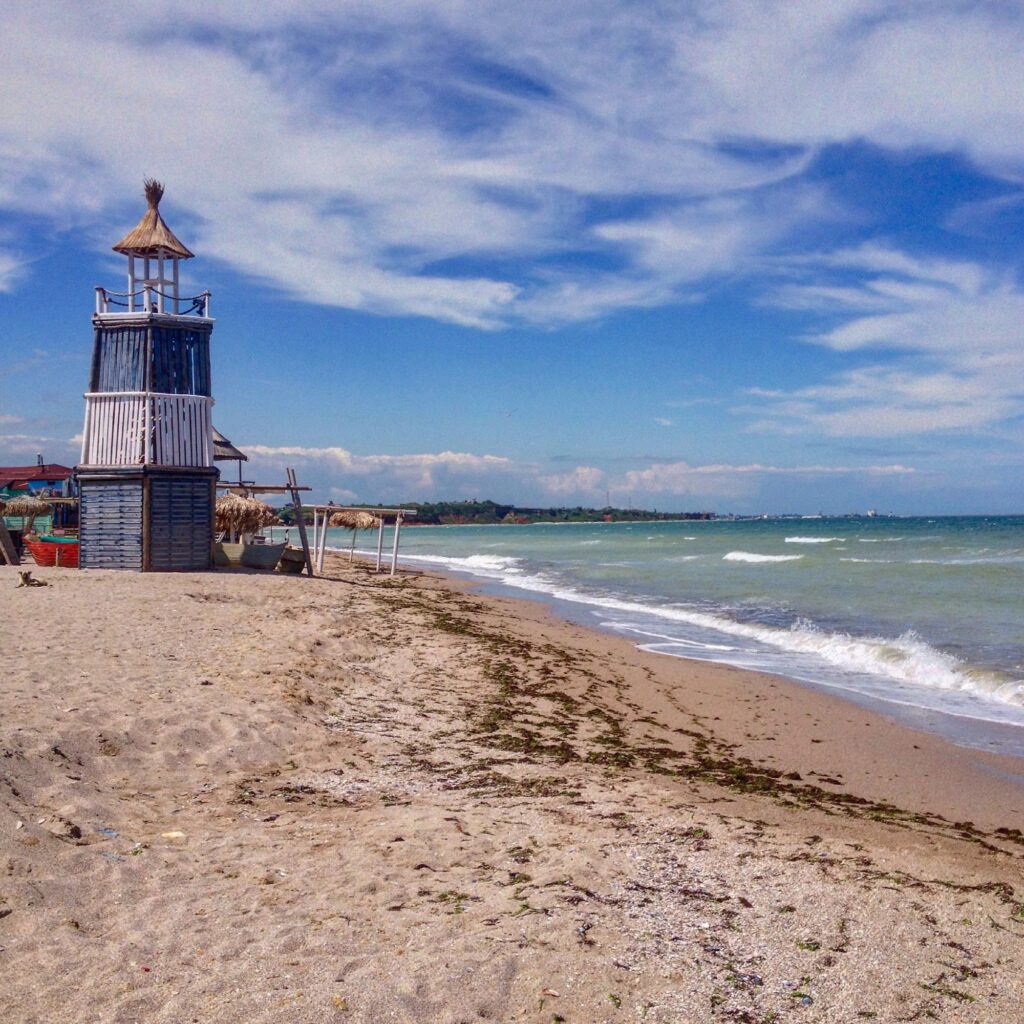
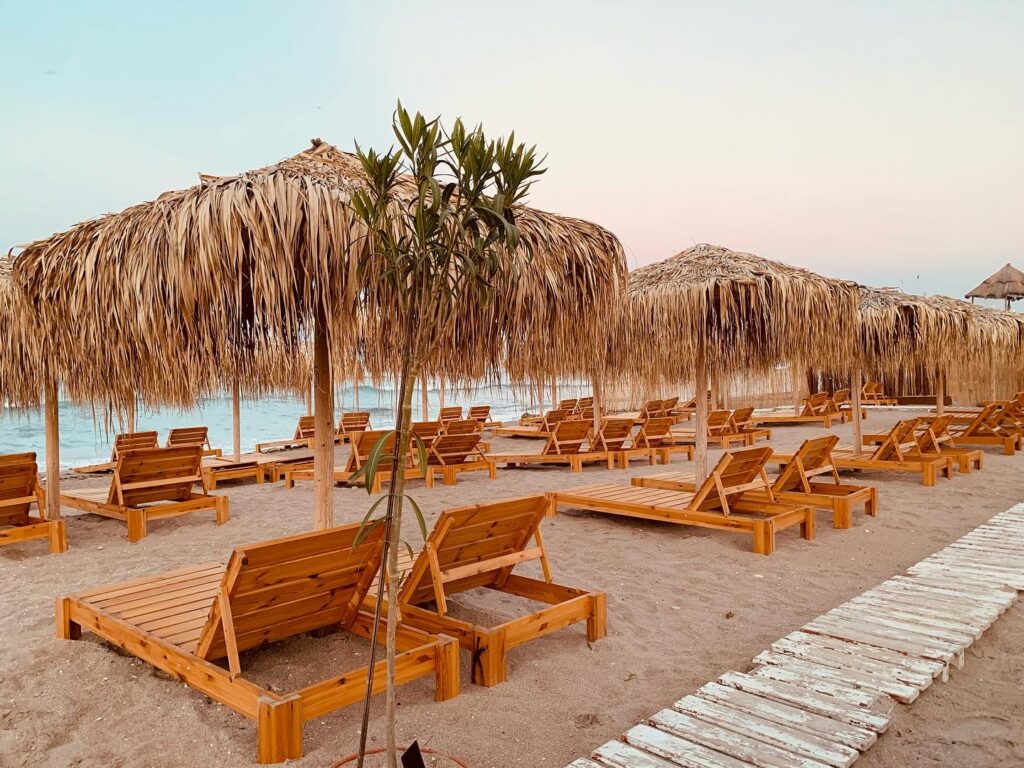
The main beach is wide with fine sandy shore, gradual sea entry, and space even in peak season. Free zones exist alongside the organised sections with sunbed hire. The nudist beach section is approximately 1 kilometre south of the main village beach — an established part of Vama Veche culture since the communist era, still in active use.
Lifeguards are present on the organised sections. The beach at its edges during peak weekends accumulates litter from the overnight crowd — the midweek version is considerably cleaner.
The Bars: Stuf, Amphora, Expirat — The Names That Built the Reputation
Stuf, Amphora, and Expirat are the beach bars that shaped Vama Veche’s post-1989 reputation as a music destination. Rock, reggae, electronic — the music runs through the night on weekends and the beach effectively becomes an open-air concert venue from dusk to dawn. For the nightlife specifically, Vama Veche remains genuinely distinctive on the Romanian coast. For sleep, it is not the right base on a summer weekend.
The fish restaurant culture — hamsii (Black Sea anchovy), grilled turbot, fish soup at the waterfront cherhana — is the daytime culinary complement to the nighttime bar scene.
2 Mai: The Quieter Bohemian Village to the North
2 Mai village, the immediate northern neighbour, is the quieter alternative that many former Vama Veche regulars have migrated to as crowds increased. It has small guesthouses, fewer bars, no nightlife, and the same Black Sea coast — a specific choice for people who want the south Dobruja atmosphere without the festival density.
Vama Veche Beach in Romania is the southernmost resort on the Romanian Riviera — founded by Gagauzes in 1811, became a counterculture refuge under Ceaușescu when artists and intellectuals gathered near the border checkpoint where surveillance was loose, the bohemian reputation now coexisting with summer crowds and commercial prices (come midweek), nudist beach 1 kilometre south, Stuf, Amphora, and Expirat bars for the nightlife, hamsii anchovy and grilled turbot at the waterfront tavernas, the actual Bulgarian border 5 kilometres south, and 2 Mai village 20 minutes north on foot as the quieter alternative.
Drive south from Constanța. Arrive on a Tuesday. Stay until the bars close.
Map
Sorry, no records were found. Please adjust your search criteria and try again.
Sorry, unable to load the Maps API.
Near by places: