Mangalia Beach Romania: Shore Over a 2600-Year-Old City
Profile
Mangalia Beach, Romania: The 600m City Beach Built Over Romania’s Oldest Continuously Inhabited City, Where the Only Papyrus Found in Romania Came From a 4th-Century BC Tomb
Romania | Mangalia | Constanța County, Dobruja
Mangalia is Romania’s oldest continuously inhabited city — older than Rome, as local guides are fond of pointing out. It was founded as Callatis around 600 BC by Dorian settlers from Heraclea Pontica on the Black Sea, making it the southernmost of the Greek colonies on what is now the Romanian coast. The ancient harbour and a significant part of the original city are currently below Black Sea level — the sea has risen and the land has subsided enough over 2,600 years to submerge the harbour that made the colony viable. What remains above water is excavated, studied, and displayed in the Callatis Archaeological Museum in the city centre, 10 minutes’ walk from the beach.
The museum holds the only papyrus found in Romania — a document discovered in a 4th-century BC tomb in 1959, written in Greek, now housed in the main exhibit alongside Hellenistic coins, amphorae, funerary steles, jewellery, and architectural fragments from the Greek, Roman, and Byzantine periods. The papyrus tomb itself, covered by stone plates, can still be seen at the site.
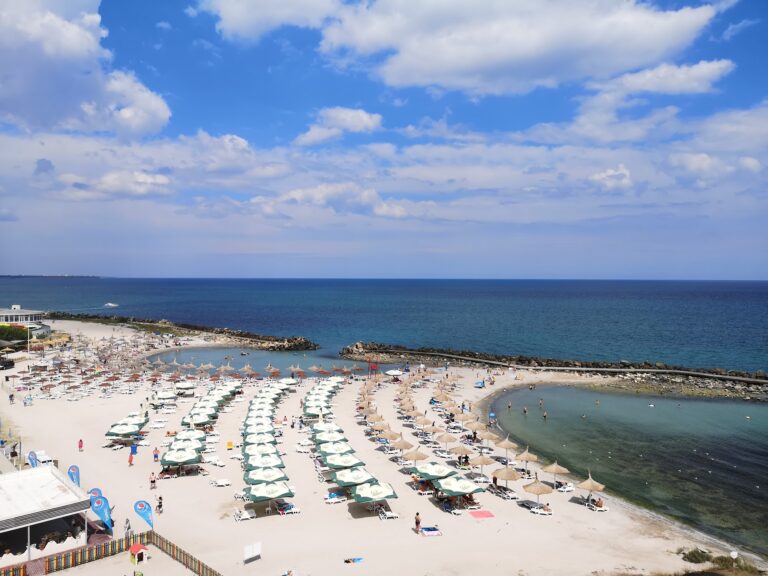
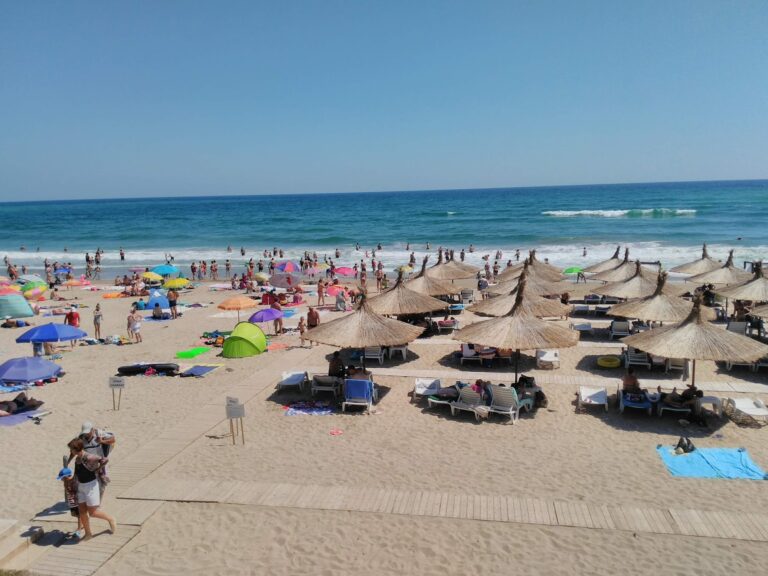
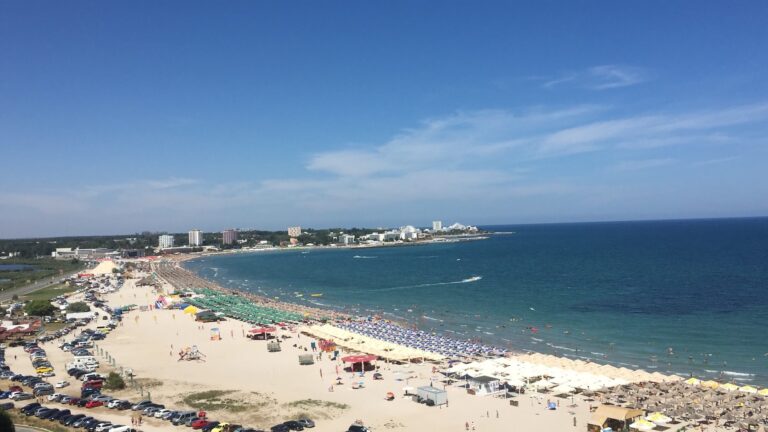
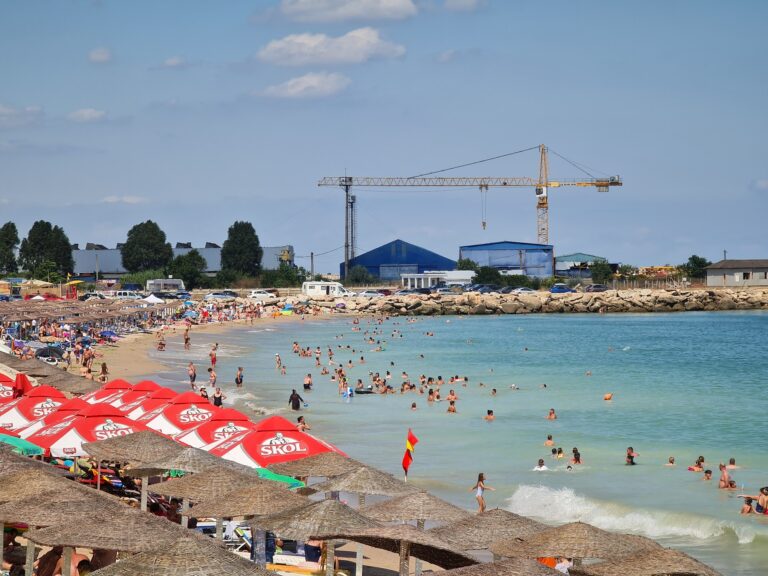
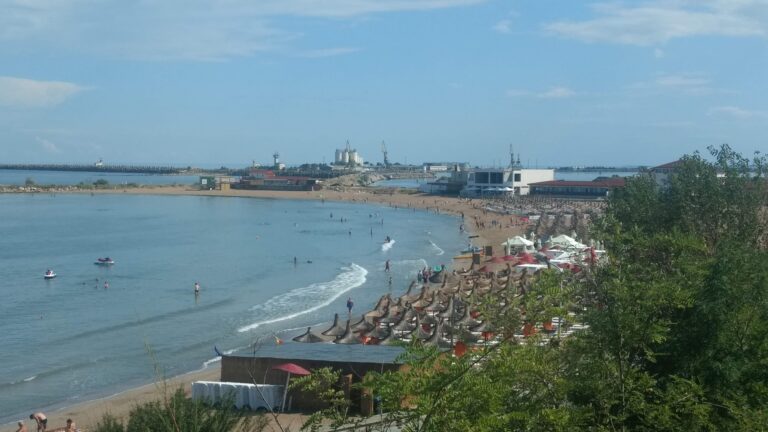
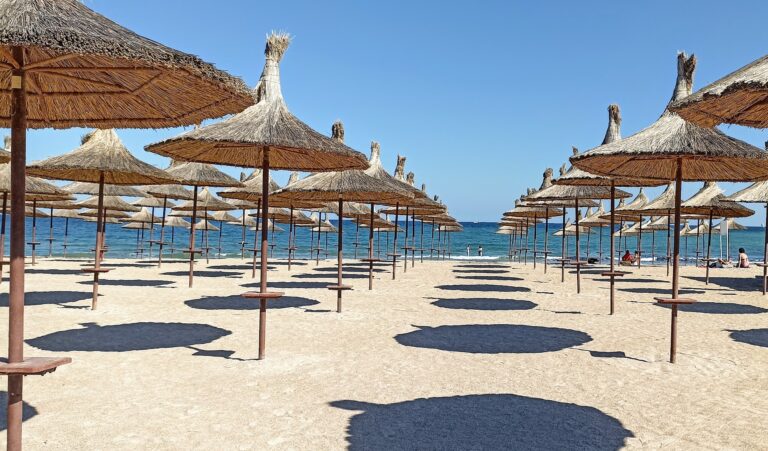
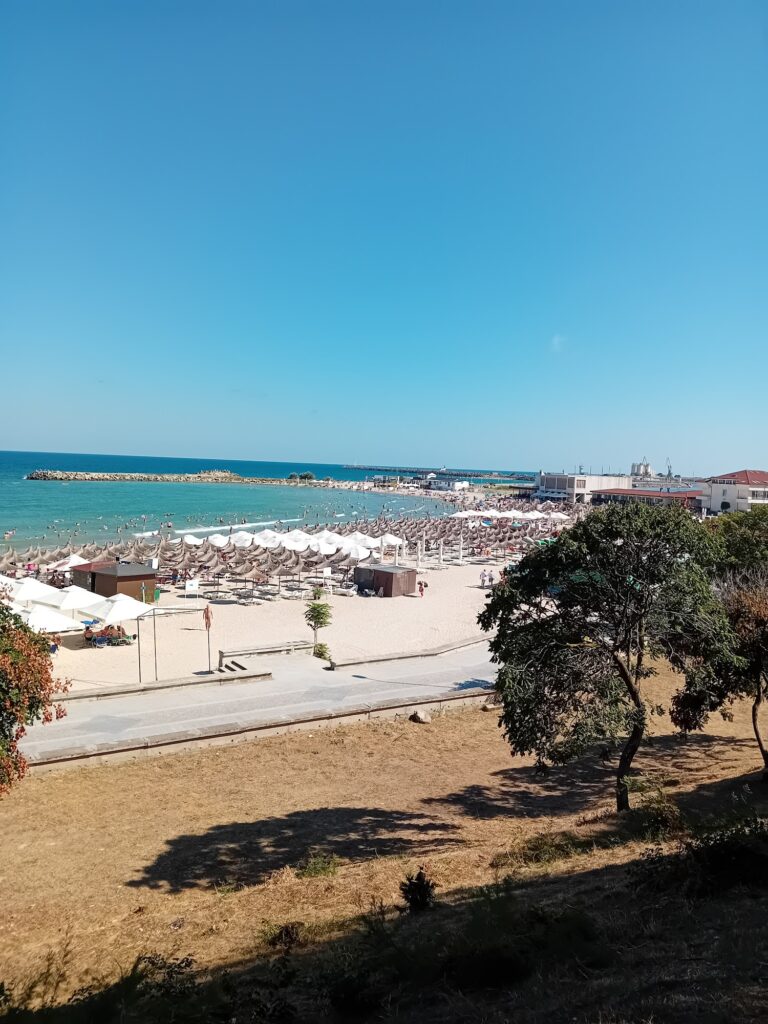
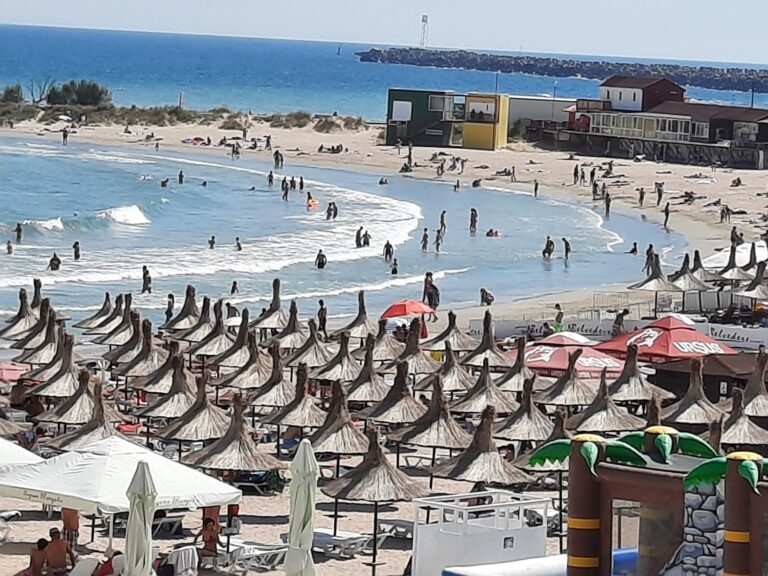
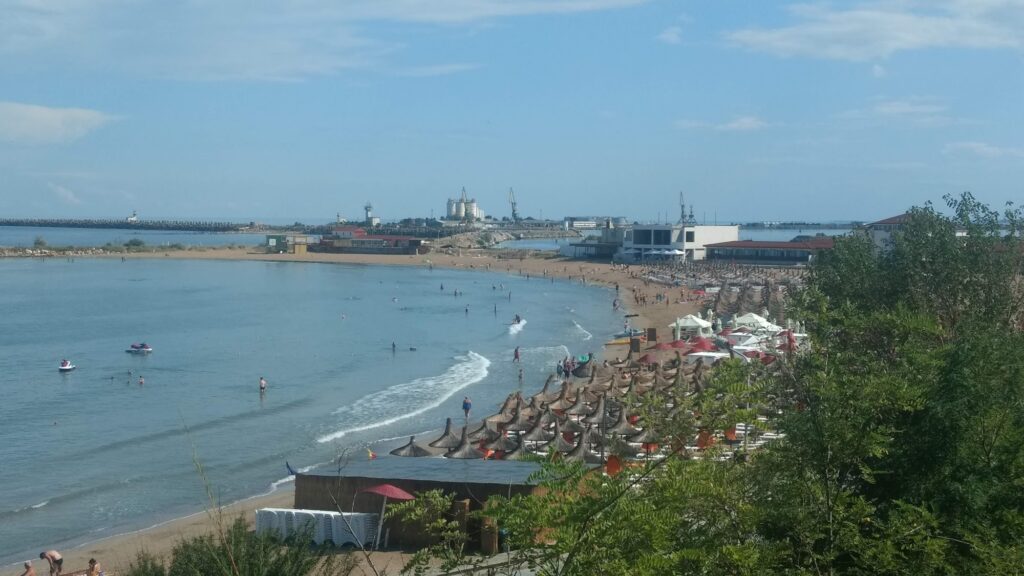
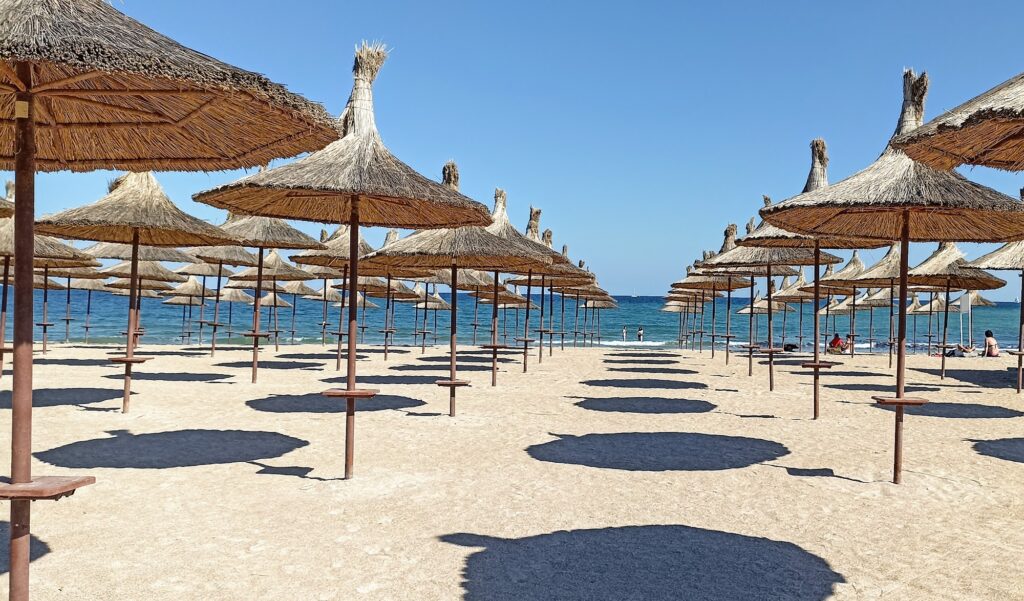
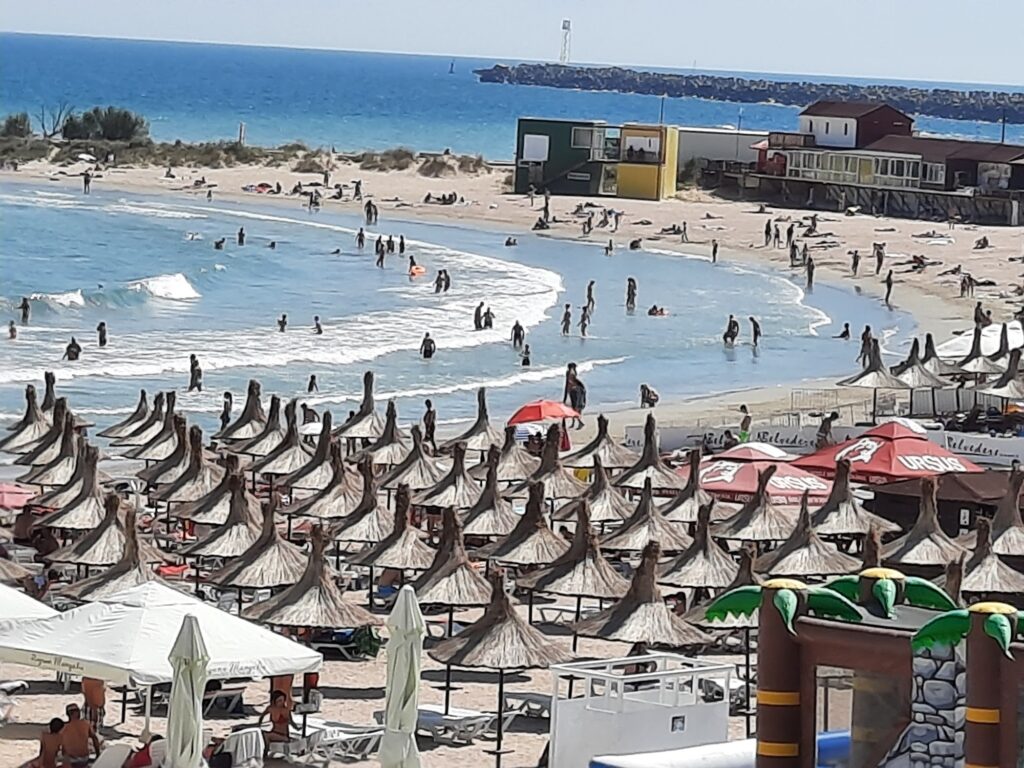
The beach in front of this layered city is 600 metres long and 50 to 150 metres wide, protected by breakwaters, shallow for a considerable distance, with calm water throughout. The combination of fine sand, shallow entry, and full urban infrastructure immediately behind the beach makes it one of the most family-complete beach settings on the Romanian Riviera — and the archaeology makes it one of the most culturally specific.
Getting There: 44km South of Constanța on the DN39, Train Seven Times Daily, Mangalia Is the End of the Line
By car from Constanța, follow the DN39 coast road south for 44 kilometres. Mangalia is the southernmost city on the Romanian Riviera and the final station on the regional railway line — trains run seven times daily from Constanța Central Station, starting at 5:30am, with the last departure at 7:30pm. From the station, the beach is a 10-minute flat walk through the city centre.
From Bucharest, the A2 motorway reaches Constanța in approximately 2.5 hours; the coast road south to Mangalia adds a further 45 minutes.
The Callatis Archaeological Museum: 10 Minutes From the Beach, the Only Papyrus in Romania
The Callatis Archaeological Museum is 10 minutes’ walk from the beach — the specific nearby cultural visit that makes Mangalia different from every other beach town on the coast. Columns, capitals, amphorae, coins, and the papyrus tomb are the main exhibits. The Callatis Citadel archaeological site near the museum has the excavated Roman-Byzantine building and its limestone-tiled street — multiple civilisational layers visible in a single walkable site.
The Esmahan Sultan Mosque: 16th-Century Ottoman, One of the Oldest Mosques in Romania
The Esmahan Sultan Mosque in Mangalia, built in the 16th century, is one of the oldest Ottoman mosques in Romania and reflects the city’s Turkish and Tatar minority heritage. It is active and accessible to visitors. The Turkish district around it has traditional architecture and Tatar and Turkish restaurants.
The Sulphurous Mineral Springs: Therapeutic Water in the Northern Part of the City
The sulphurous mineral springs in the northern part of Mangalia — in the area between Saturn and Venus resorts — are mesothermal, meaning they emerge at 21–28°C. The springs are sulphurous, chlorinated, bicarbonated, sodic, and calcic. They contribute to the city’s balneotherapy offer alongside the sapropelic mud from Techirghiol Lake available at specialised medical centres. Mangalia has been a health resort as well as a beach resort for decades.
The Six Satellite Resorts: Saturn, Venus, Jupiter, Cap Aurora, Neptun, Olimp
Six resort stations fall under the Mangalia municipality: Saturn, Venus, Jupiter, Cap Aurora, Neptun, and Olimp. These are the communist-era purpose-built resort compounds north of the city — now partly retro-cool, partly still operating as all-inclusive hotel complexes. Neptun and Olimp are the largest. Each has its own beach section connected to the others by promenade.
Mangalia Beach in Romania is the 600-metre shallow Black Sea city beach at the end of the Romanian Riviera — built over Callatis, a Greek colony founded around 600 BC, the only papyrus found in Romania discovered in a 4th-century BC tomb here (now in the Callatis Archaeological Museum 10 minutes from the beach), the Esmahan Sultan Mosque one of Romania’s oldest, sulphurous mineral springs in the northern city, six satellite resorts to the north, train from Constanța seven times daily (end of line), and Vama Veche 5 kilometres south.
Take the train from Constanța. Walk to the museum first. Then the beach.
Map
Sorry, no records were found. Please adjust your search criteria and try again.
Sorry, unable to load the Maps API.
Near by places: