Neptun-Olimp: Ceaușescu's Villa Still Stands Here
Profile
Plaja Neptun-Olimp: A Forty-Room Marble Villa Stands Behind a Fence the Public Still Can’t Always Enter
Romania | Neptun-Olimp | Constanța County, Dobrogea
I want to be direct about something that complicates the resort’s reputation as an unbroken architectural showpiece: Nicolae Ceaușescu’s actual summer villa still stands here, his favourite retreat, where he spent a month every year. The building holds roughly forty marble- and gold-encrusted rooms, complete with fountains, a private marble lighthouse, and its own fenced and guarded beach a short distance from the main resort — and as recently as the early 1990s, several hundred tourists who had paid to see the property were turned away by officials reportedly because senior government figures and opposition politicians were using it themselves that same week. The villa remained state property for years afterward, and though private investors have since converted some of the protocol villas in the surrounding Comorova Forest into hotel accommodation — complete with the original private lift once reserved for VIP guests — the core complex’s history as a dictator’s seaside retreat is not something the resort’s promotional language tends to volunteer.
I also want to correct a detail several glossier descriptions of Neptun-Olimp get wrong by omission. The resort’s celebrated 1972 modernist hotels — Amfiteatru, Panoramic, and Belvedere, designed by architect Aron Solari-Grimberg, the same man responsible for Ceaușescu’s far more extravagant Spring Palace in Bucharest — are, by the account of a dedicated architectural preservation organisation, now in genuine decay: broken windows, deteriorated exterior plaster, water infiltration, decaying woodwork, and parasitic vegetation growing across terraces and façades. Neptun, developed slightly earlier from 1962 and entering the tourist circuit in 1967, fares similarly; one visitor account from recent years describes the landmark Hotel Neptun itself as half-abandoned, though the original typography and abstract wall decorations apparently survive intact for now. I’d treat any description promising flawless, immaculate infrastructure with real caution given how consistently this decay is documented across independent sources, even while newer hotels elsewhere in the resort remain genuinely well kept.
The resort sits within what was once the Comorova Forest, and three lakes run along the coast within the wider complex. Neptun and Olimp function as adjoining but distinct sections — Neptun to the south, busier and more populated; Olimp, completed in 1972 with the Amfiteatru, North Olimp, and smaller city-named hotel ensembles, quieter, with beaches stretching over a kilometre north and, by at least one account, areas favoured by naturists.
Getting There: 38 Kilometres From Constanța, Dedicated Summer Rail Stations
The drive south from Constanța along DN39 covers roughly 38 kilometres, passing through Eforie before reaching the well-marked Neptun or Olimp turn-offs, with parking available near the beachfront. During the summer season, direct trains from Constanța or Bucharest stop at dedicated Neptun or Olimp stations, each a roughly fifteen-minute walk through shaded forest paths to the beach promenade. Regional minibuses also run frequently from Constanța’s main station plaza, and a local minibus service connects Neptun-Olimp south through Jupiter, Venus, and Saturn to Mangalia in around half an hour.
The Beach: Wide Golden Sand, Piers Dividing the Shore, Fish Restaurants on the Water
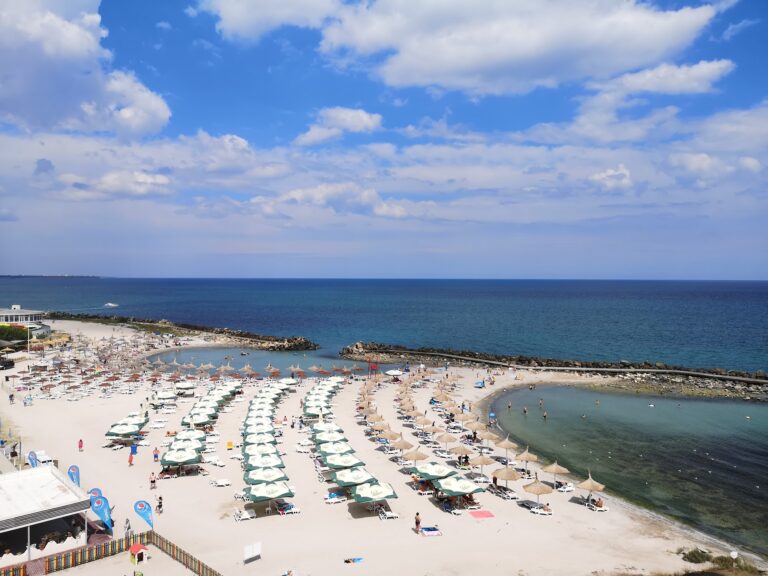
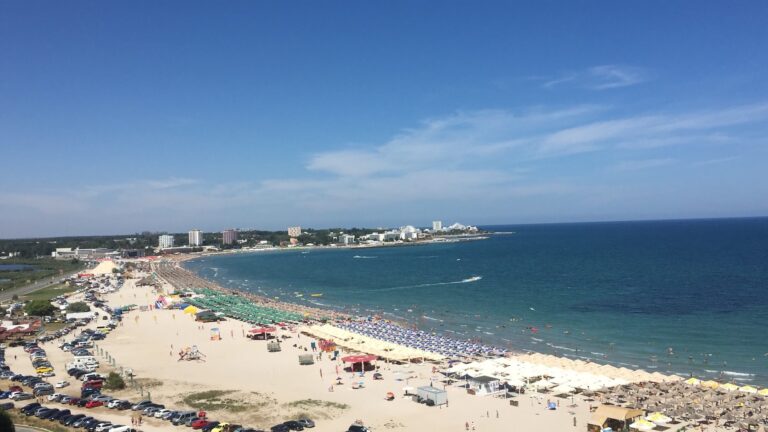
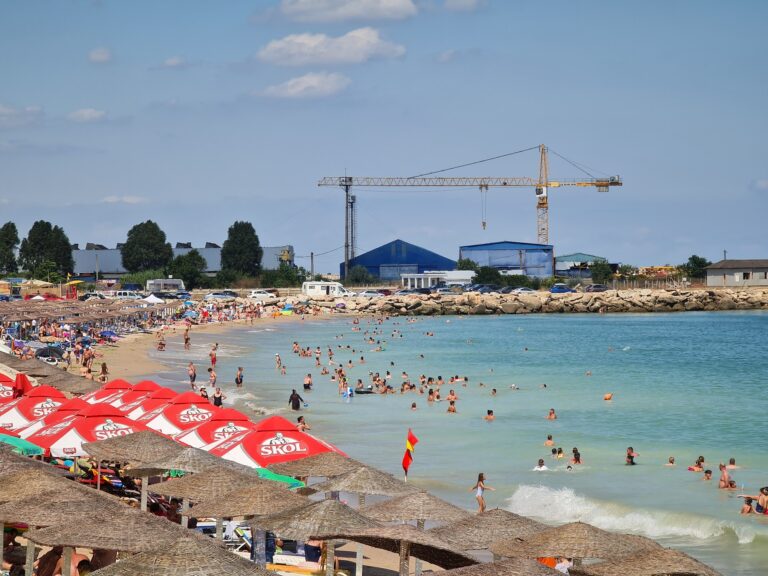
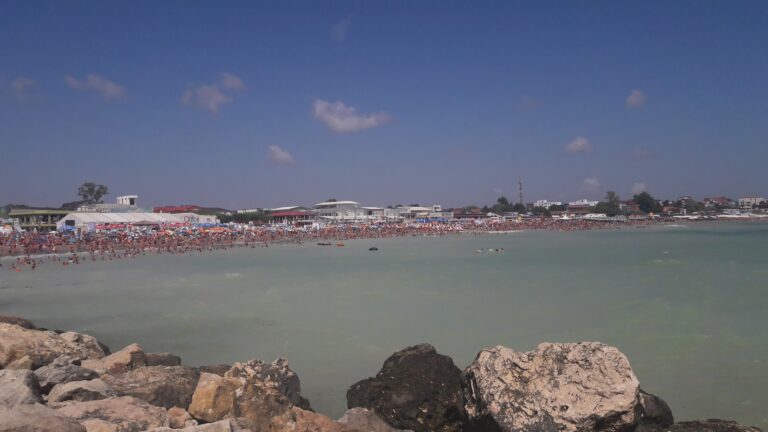
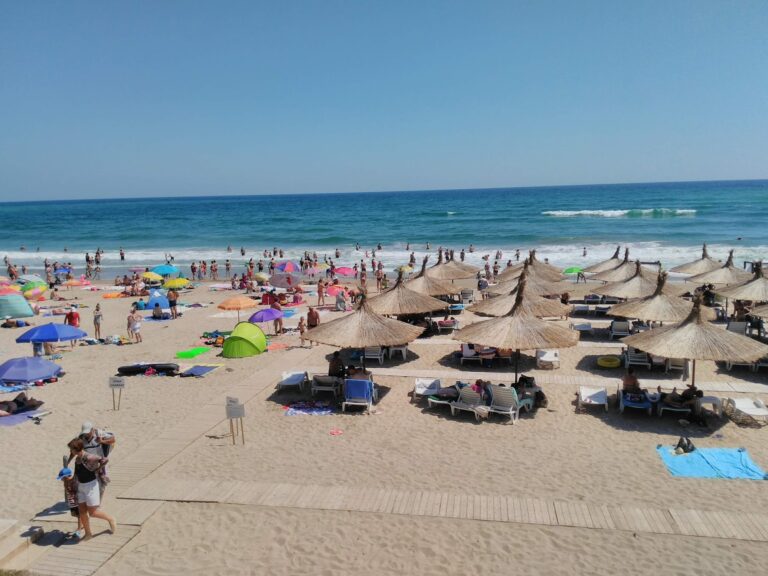
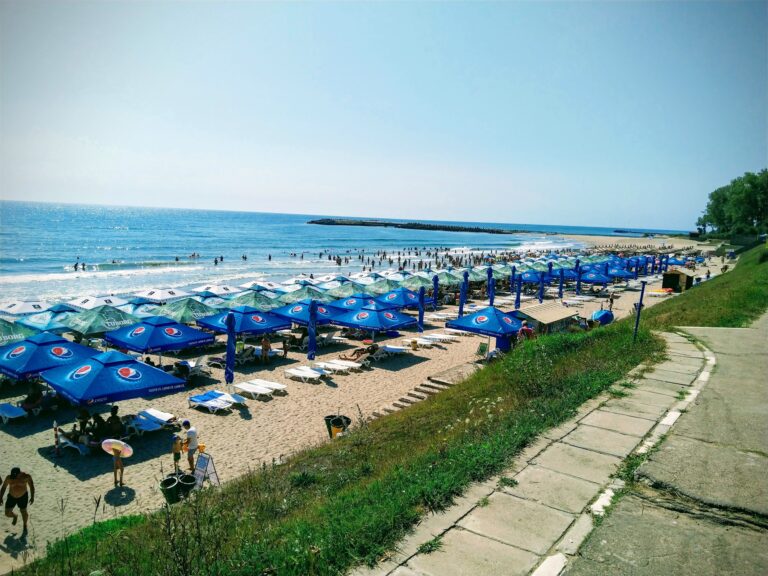
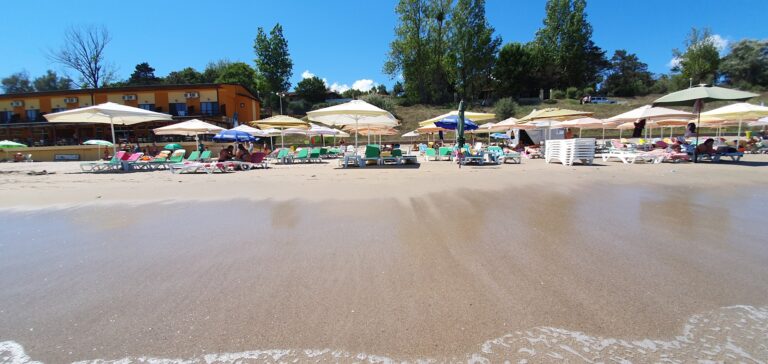
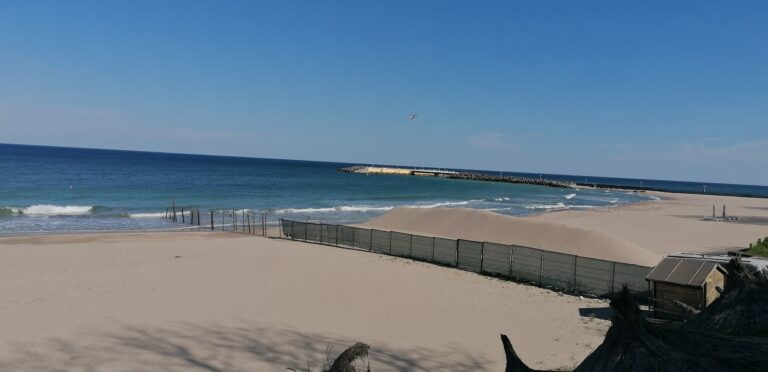
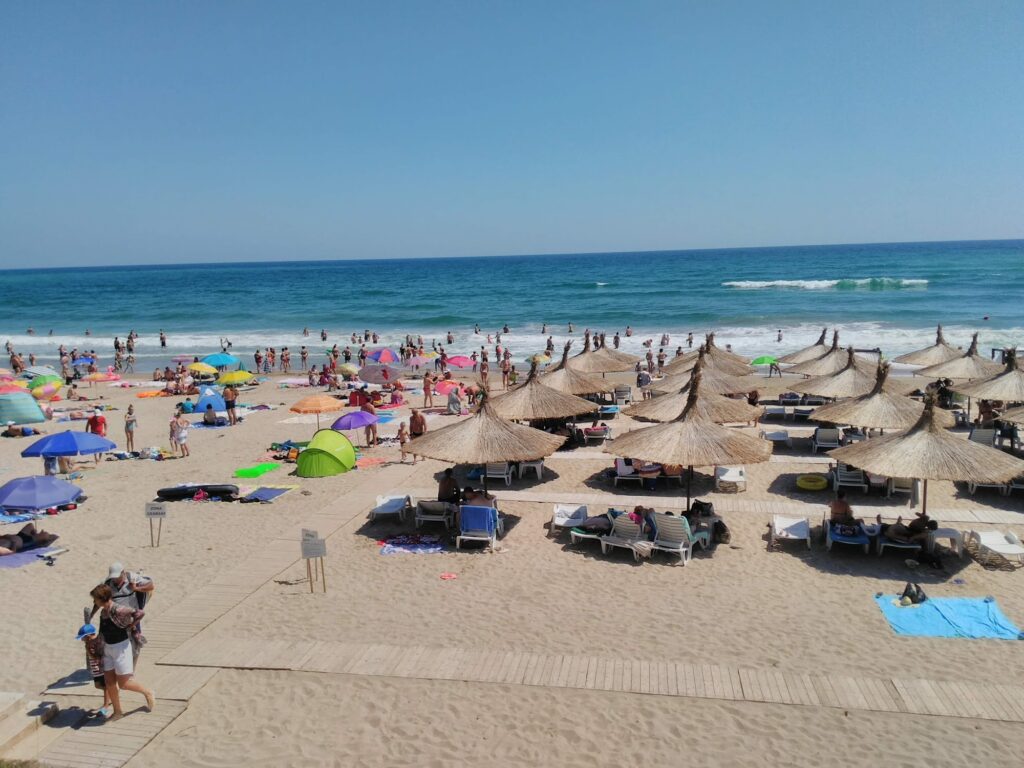
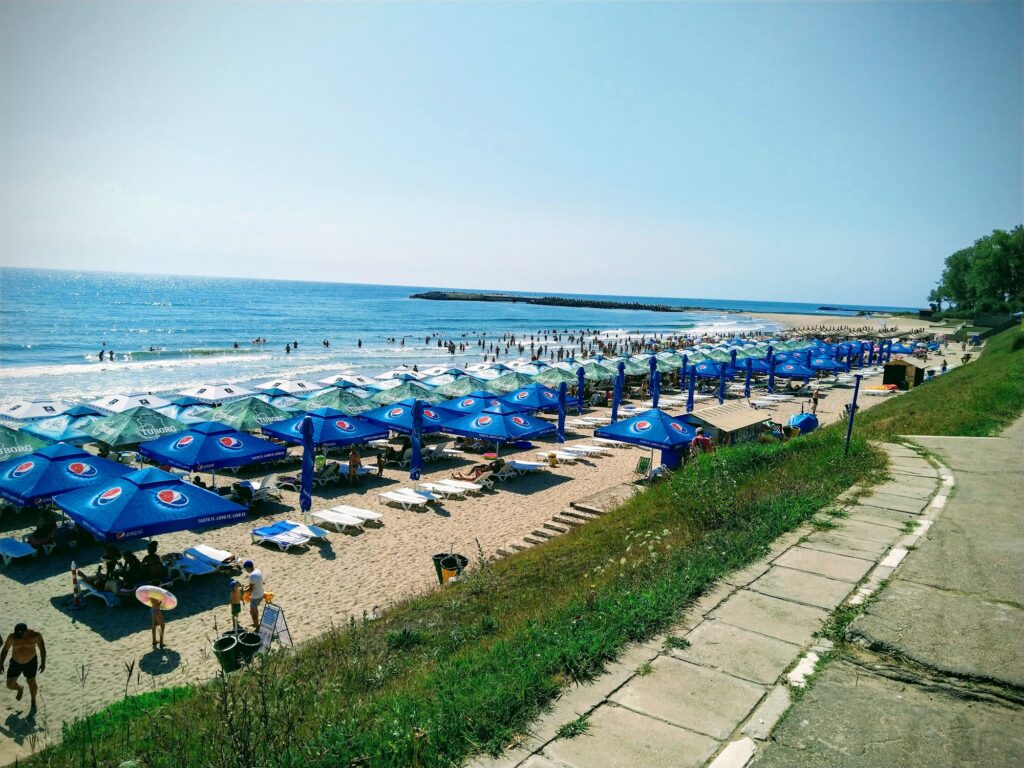
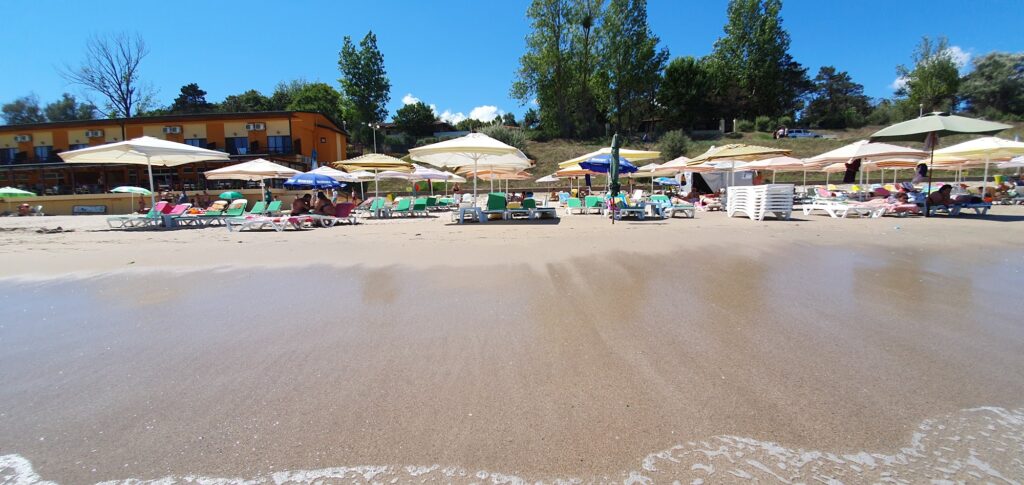
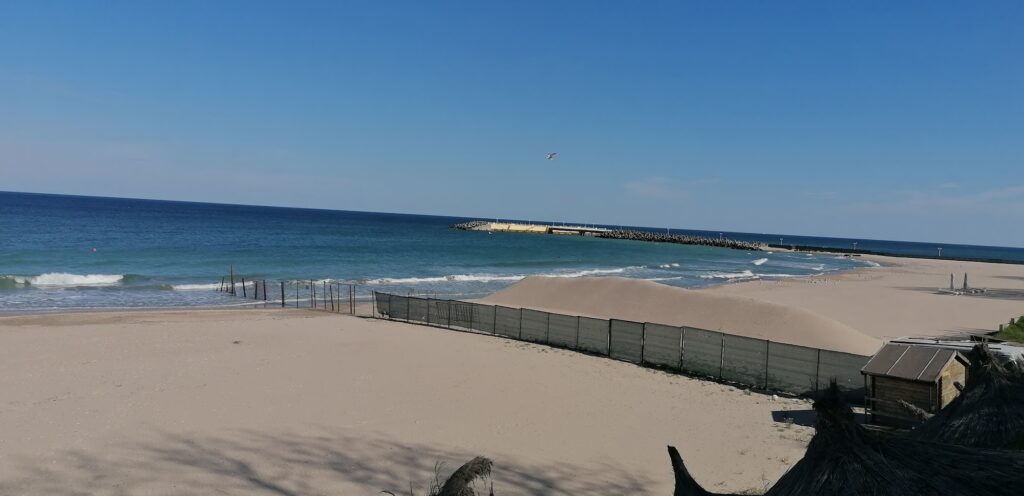
The beach itself is consistently praised regardless of the buildings behind it — fine, soft sand free of rough pebbles, divided into bays by stone piers that double as evening promenades and fishing spots. Olimp’s beaches in particular stretch over a kilometre to the north, generally quieter and less crowded than the busier central sections of Neptun. Sunbeds and umbrellas rent for a modest few euros, and the seabed slopes gently enough for confident wading well out from shore.
Two specific restaurants come up repeatedly in independent accounts: Insula (the Island), in the centre of the resort, and Popasul Pescarilor (the Fishers’ Stopover), on the beach north of Olimp — both built directly on the water and serving freshly caught fish. A small amusement park operates at the southern end of Neptun, with a mini-train, horse carriages, and tandem bikes for rent.
Plaja Neptun-Olimp, in the former Comorova Forest, was developed from 1962 as a showpiece resort that became Nicolae Ceaușescu’s preferred summer retreat — his roughly forty-room marble villa, private lighthouse, and fenced beach still stand, occasionally closed to paying tourists while officials use the grounds themselves. Several of the resort’s celebrated 1972 modernist landmark hotels are now documented as genuinely deteriorating, a detail worth weighing against any promise of flawless, immaculate facilities. The beach itself remains wide, sandy, and divided by piers into evening promenades, with fish restaurants built directly over the water and quieter stretches north of Olimp. Thirty-eight kilometres from Constanța via DN39, with dedicated summer rail stations at both Neptun and Olimp.
Drive via DN39 from Constanța, or take the summer train to either station. Ask locally whether the Ceaușescu villa tour is currently running before planning around it. Head north past Olimp if you want the quieter stretch of sand.
Map
Sorry, no records were found. Please adjust your search criteria and try again.
Sorry, unable to load the Maps API.
Near by places: