Spiaggia di Pegli: Genoa's Western Beach Town
Profile
Spiaggia di Pegli: The Beach Above the Apartment Where a Singer Was Born
Italy | Liguria | Genoa | Ligurian Riviera
Fabrizio De André was born at noon on February 18, 1940, in a first-floor apartment above what was then called Bar Milano, in the Pegli district of Genoa, and a commemorative plaque now marks the spot. He rarely spoke about the connection later in life, and the family moved away during the war, the Pegli flat eventually becoming little more than the household’s seaside retreat rather than anywhere he associated closely with his own identity. I found that detail oddly moving walking the promenade here, a beach town that produced one of Italy’s most beloved songwriters almost by accident, a fact he himself seemed content to let fade.
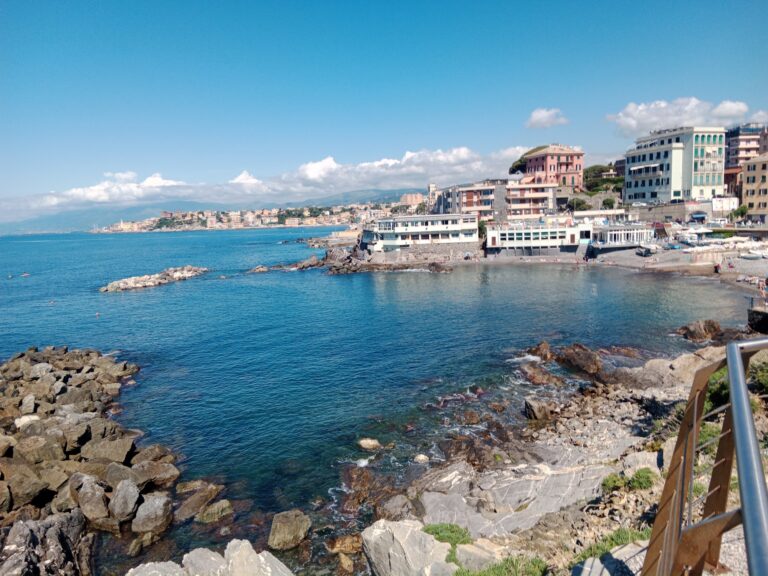
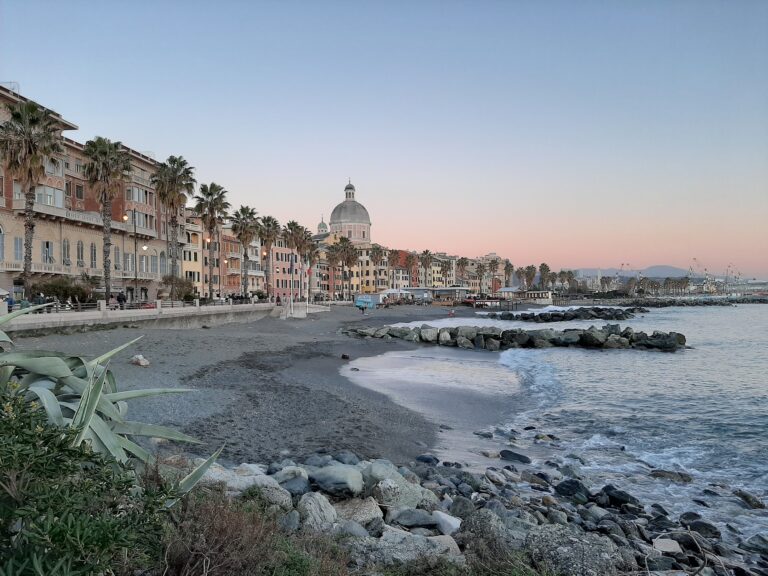
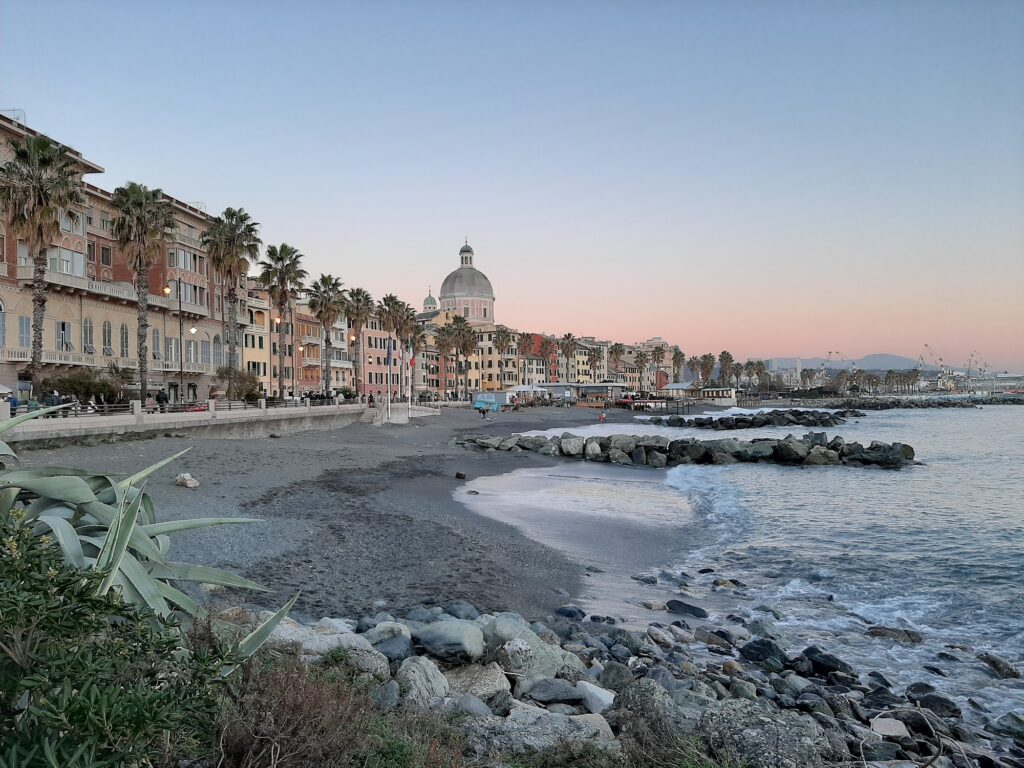
Pegli sits on Genoa’s western Ponente coast, considerably different in character from the tight, cliff-bound coves of the city’s eastern Levante side, opening instead into a wide, flat, genuinely residential stretch of sand and pebble that locals treat as an extension of their own front yard.
A Wide, Gentle Shore Built for Everyday Use
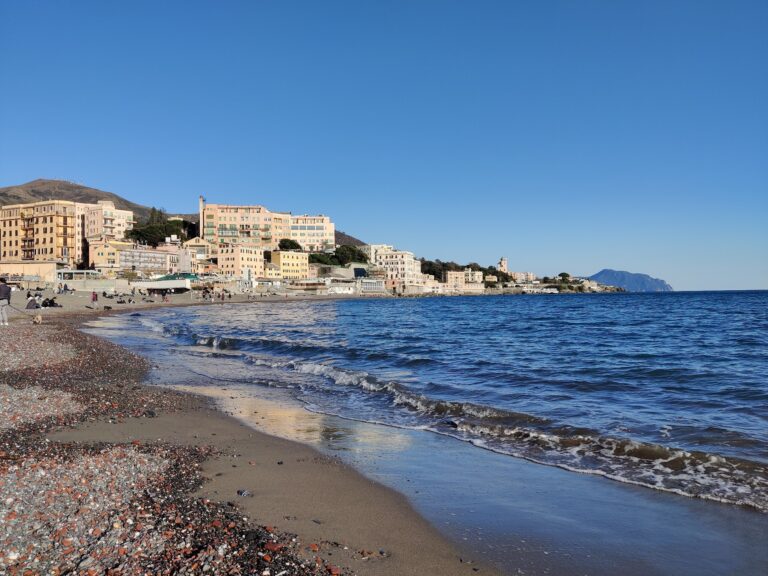
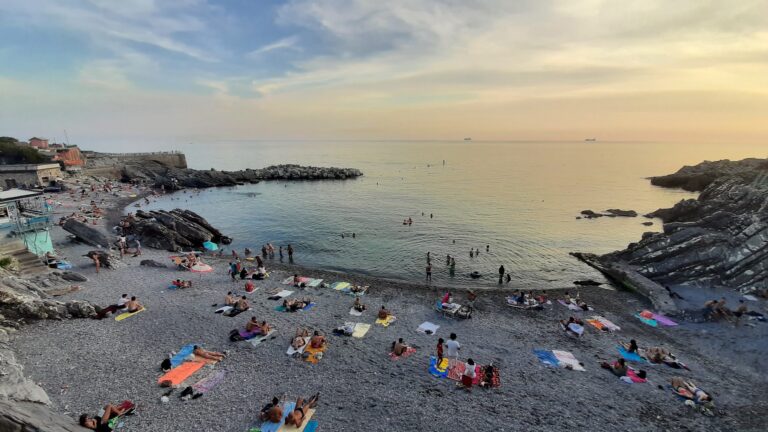
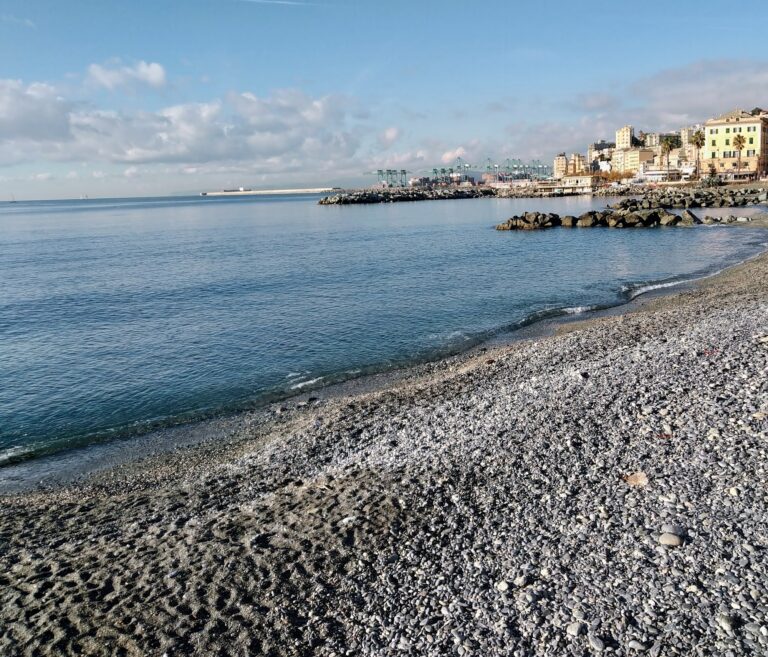
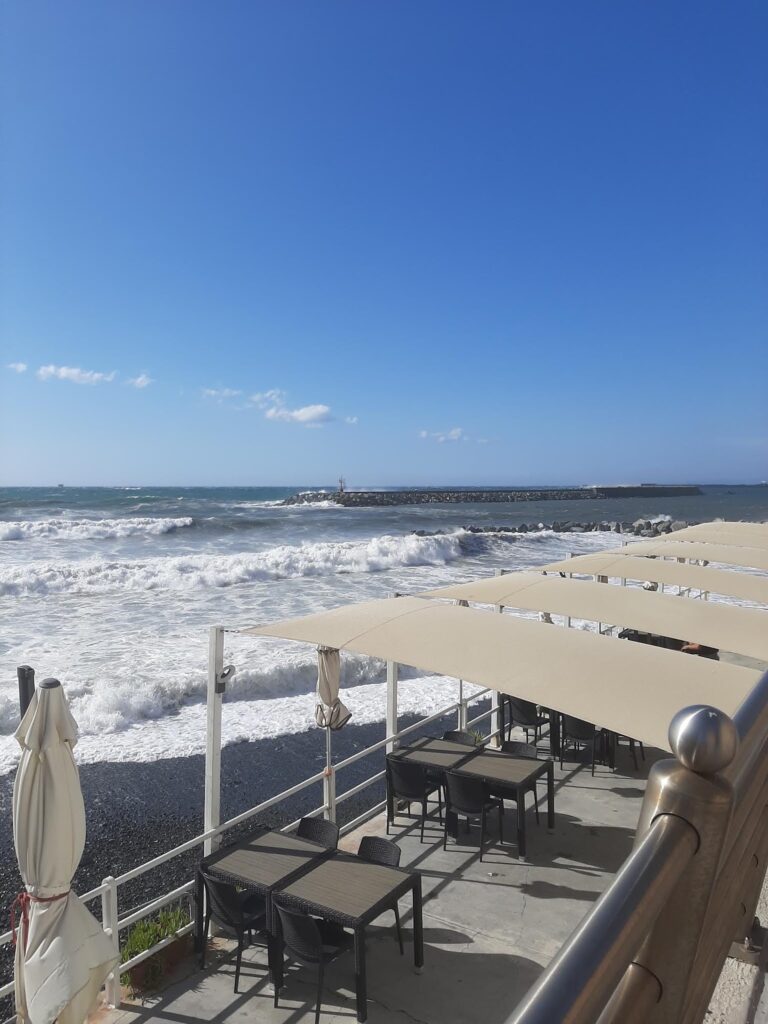
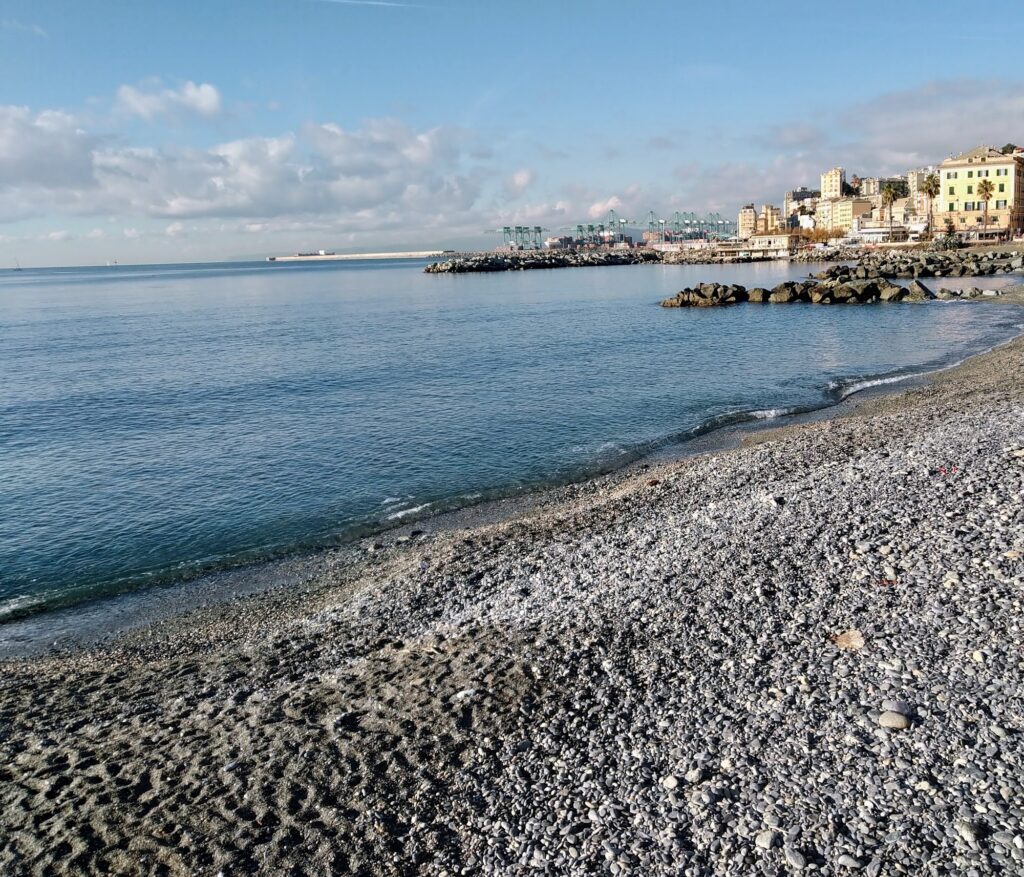
The beach here runs flat and spacious, dark fine-grain sand blended with smooth grey pebbles, protected by rocky jetties and stone breakwaters that keep the surf gentle and the water calm. I found the clarity good on quiet days, the gradual slope of the seabed keeping sediment from clouding the shallows, and the whole stretch felt less like a destination beach and more like a genuine neighborhood commons, retirees with folding chairs, toddlers wandering the flat sand, none of the performed atmosphere I’d found at some of the more photographed coves further east.
Real Accessibility Infrastructure, Not Just a Ramp
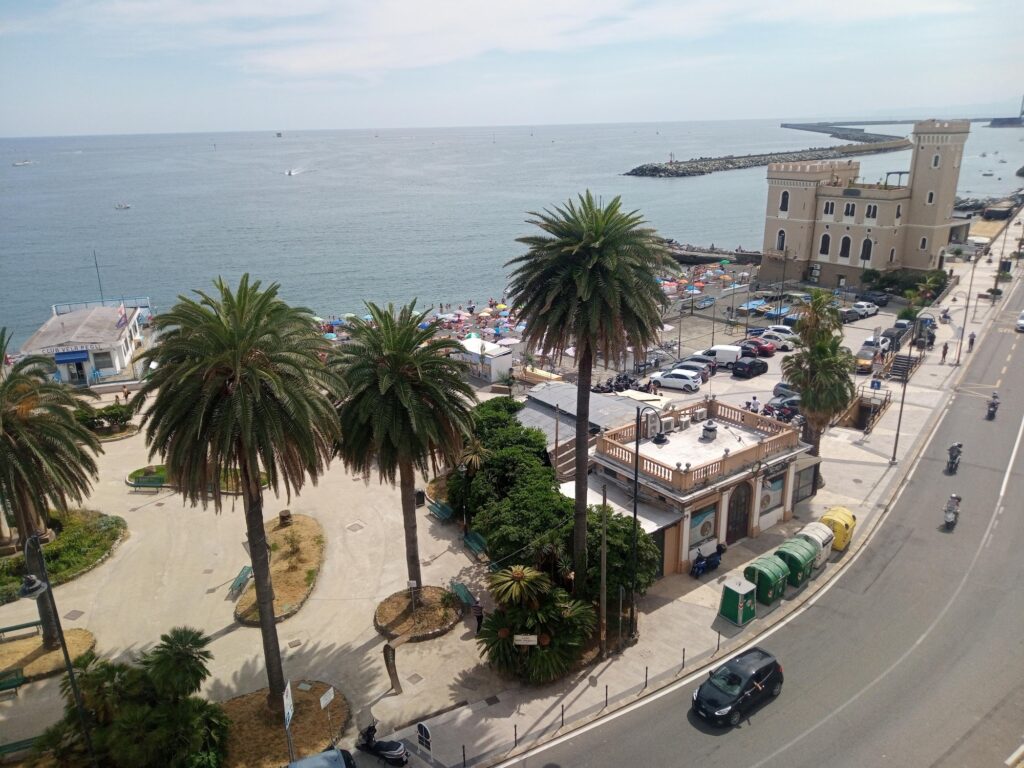
Pegli has invested seriously in inclusive access, dedicated ramps and specialized boardwalks designed to carry strollers and beach wheelchairs directly to the shoreline, a level of commitment I found genuinely comprehensive compared to some of the token gestures I’d seen elsewhere. Public showers run along the beach walls, and while extensive free sections dominate, a handful of seasonal bagni offer sunbeds and umbrellas for anyone who’d rather not bring their own. Lifeguards monitor designated family swimming areas through peak season, and I’d expect dogs to need explicit permission at any managed bagno section here, consistent with organized Italian beaches generally, while the wide free stretches likely follow the standard leash rule outside the water.
An Esoteric Garden Built as a Three-Act Play
A short walk from the beach, the park of Villa Durazzo Pallavicini occupies nine hectares of hillside, commissioned by Marquis Ignazio Alessandro Pallavicini between 1840 and 1846 and designed by Michele Canzio, chief stage designer at Genoa’s Carlo Felice opera house. Canzio built the whole garden as a theatrical journey in three acts, laced with Masonic and esoteric symbolism, lakes, grottoes, and a temple to Diana positioned to create a deliberate visual conversation with the nearby parish church’s bell tower. Donated to the city in 1928, it now houses the Museum of Ligurian Archaeology and was named Italy’s most beautiful park in 2017, a genuinely serious detour for anyone splitting a beach day with something more contemplative.
A Flat Approach That Actually Suits Toddlers
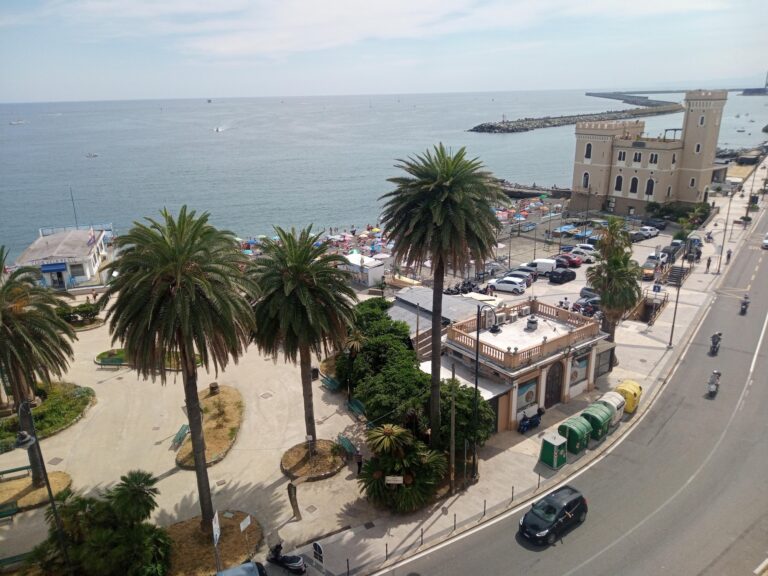
Families with young children will find Pegli considerably easier to manage than the eastern coves I’ve covered elsewhere in this city, no stairs, no cliffside scramble, just a completely flat walk from the main promenade straight onto the sand. The protective jetties keep the water shallow and predictable, and a children’s playground sits directly on the promenade overlooking the beach, letting parents shift between sandcastles and swings without losing sight of the sea.
English Aristocrats, a Doria Hunting Ground, and Fresh Focaccia
Pegli spent much of the eighteenth and nineteenth centuries as a favored retreat for English aristocrats, and the aristocratic Doria family once used the land behind the modern town as a hunting ground, now the separate Villa Doria park with hiking trails. Along the promenade today, pizzerias and gelaterias serve fresh Ligurian focaccia and frittura di paranza, and I ate well at more than one table without needing to venture far from the sand.
Getting There Across the City
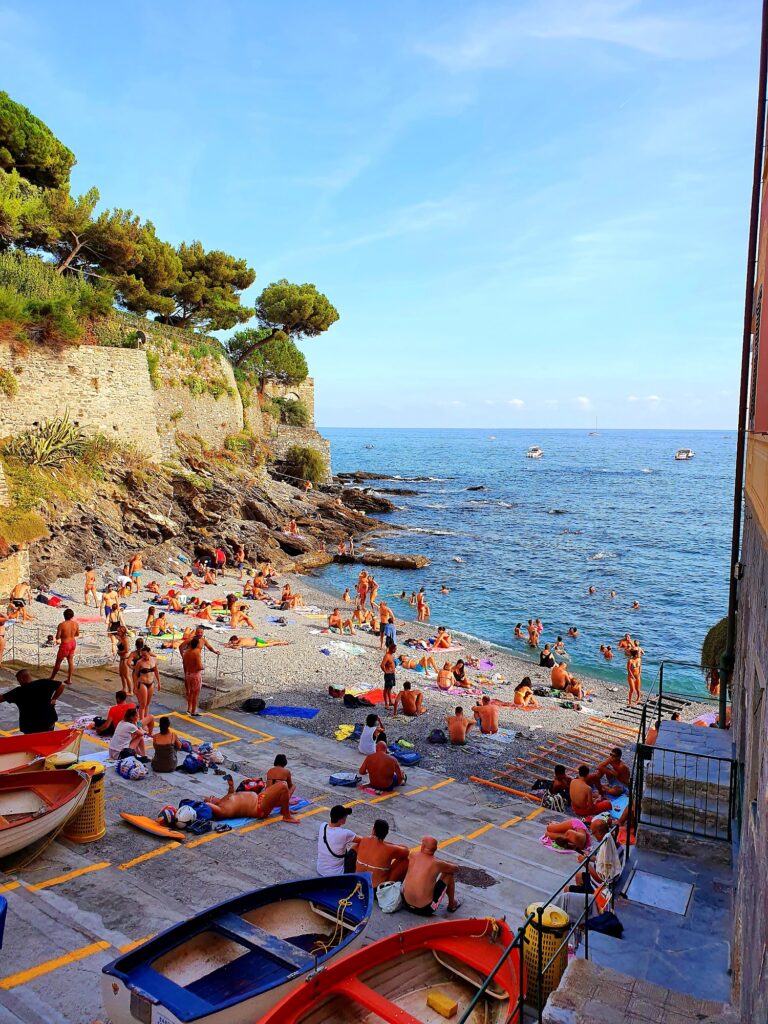
Pegli sits directly on the regional rail line, a completely flat two-minute walk from Genova Pegli station to the promenade and beach entrance; the Navebus public ferry runs from Genoa’s Porto Antico in about thirty minutes, offering a genuinely scenic harbor view before docking near the sand, and AMT bus line 1 connects the district to the city center along the coastal avenues. For visitors curious how differently Genoa’s two coasts behave, the eastern coves of Boccadasse Beach Genoa and Vernazzola Beach Genoa sit on the opposite side of the city entirely, tight pebbled inlets a world away from Pegli’s flat, open sand, worth comparing if a full day of exploring both coastlines fits the itinerary.
Standing Below the Plaque as the Evening Settles In
By the time I finished my last walk along Pegli’s promenade, I found myself back near the small plaque marking De André’s birthplace, an ordinary apartment above an ordinary bar, nothing about it suggesting the songs that would eventually come out of a man born there almost as an afterthought to a family more interested, at the time, in a modest seaside flat than in the writer their newborn son would eventually become.
Map
Sorry, no records were found. Please adjust your search criteria and try again.
Sorry, unable to load the Maps API.
Near by places: