Boccadasse: Genoa's Cove That Named La Boca
Profile
Boccadasse: The Cove That Named a Neighborhood in Buenos Aires
Italy | Liguria | Genoa | Ligurian Riviera
Genoese emigrants who settled in Buenos Aires in the 1830s named their new neighborhood after this exact cove, and in 1882 the residents of that Argentine barrio, called La Boca, went so far as to raise the Genoese flag and briefly declare themselves an independent Repùblica de la Boca, an act of defiance eventually put down by General Julio Roca. I hadn’t expected to find a thread connecting a small, pebbled inlet on Genoa’s eastern edge to a short-lived South American republic, but Boccadasse has a habit of turning up in places its physical size would never suggest, its name, its rebellious spirit, and its houses’ colors all echoed a continent away.
The cove itself is said to have been founded around the year 1000 by Spanish fishermen driven ashore by a storm, their captain’s name, De Odero or Donderos, eventually giving rise to Dodero, still a common surname in the neighborhood today. Whether that founding story holds up to strict scrutiny or not, Boccadasse has clearly been a working fishing village for a genuinely long time, and it remains one even now, wedged into Genoa’s urban coastline without ever quite surrendering to it.
A Steep Pebble Arc Still Doubling as a Harbor
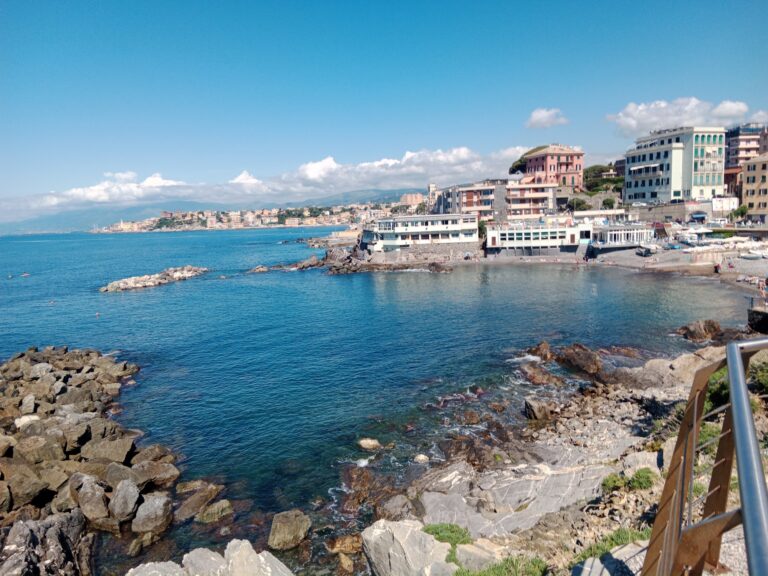
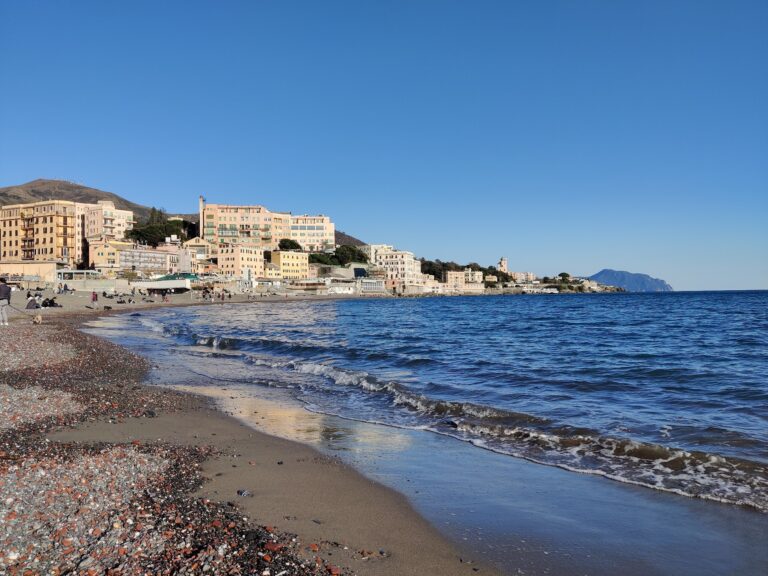
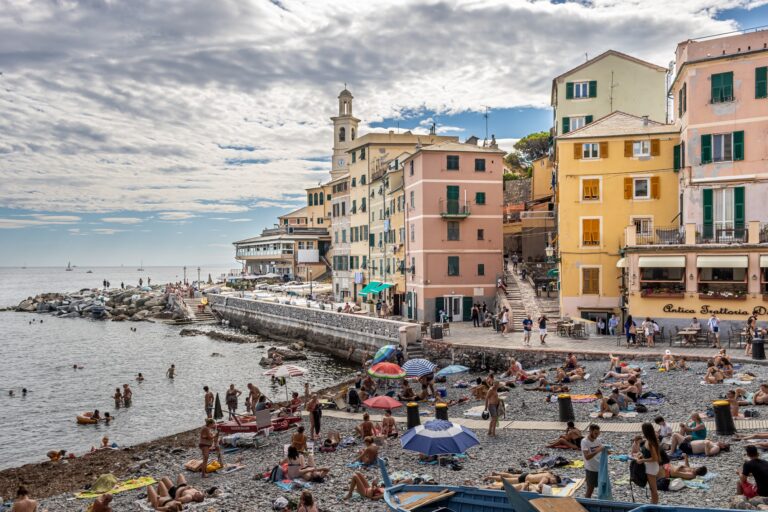
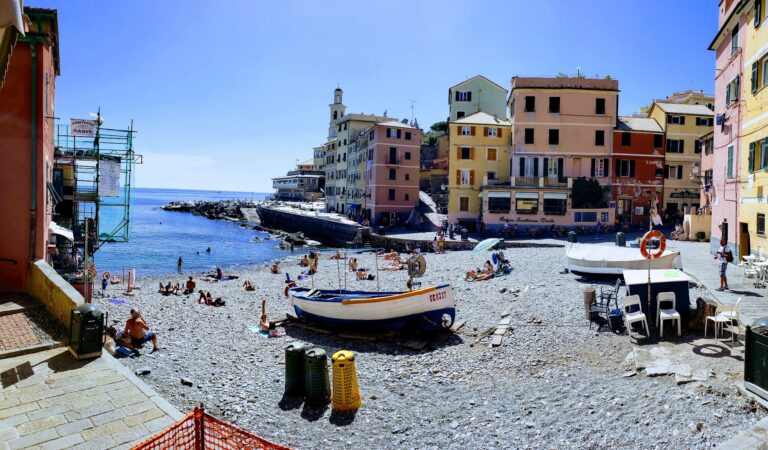
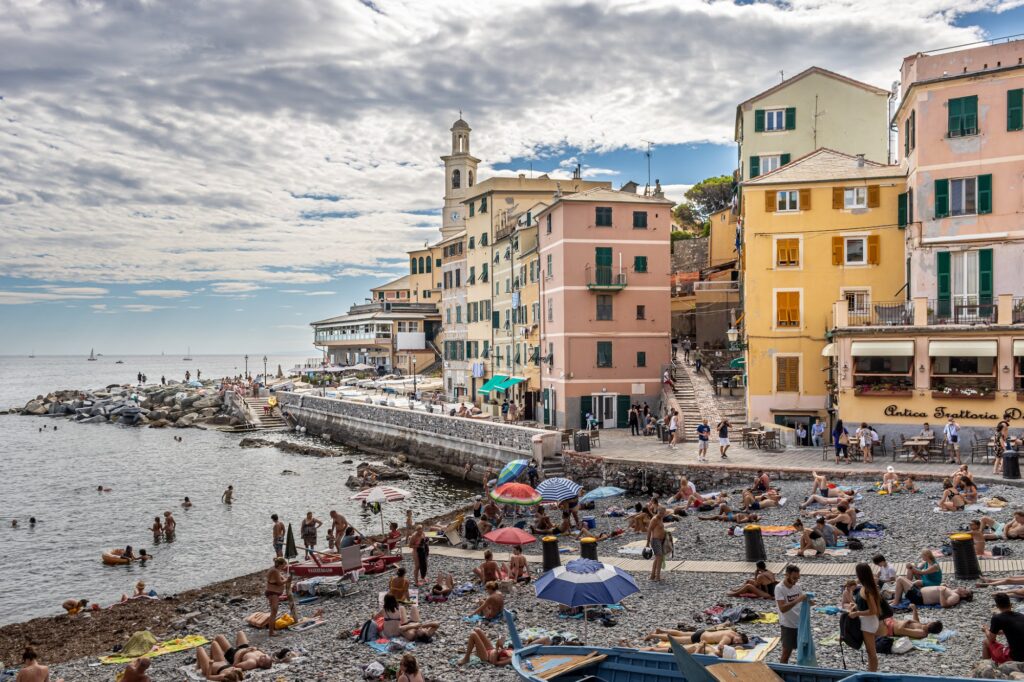
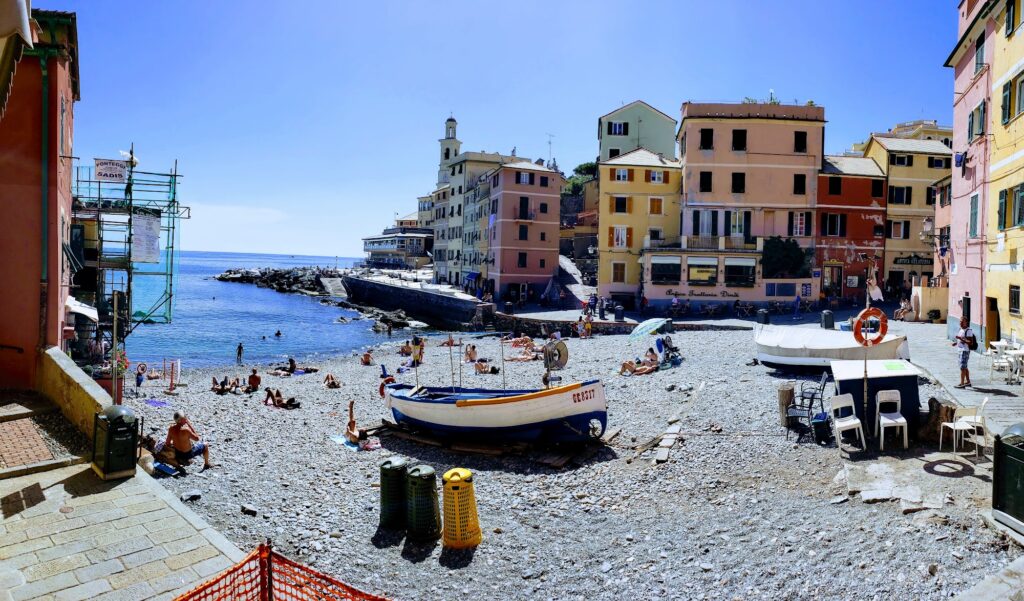
The beach itself is a tight, dramatic crescent of dark grey river pebbles and weathered stone, and the upper section functions as an active slipway where local fishermen still park their gozzi boats among the sunbathers. I found the water genuinely clear for an urban cove this close to a major port, dark aquamarine shifting to deep sapphire as the pebble shelf dropped away quickly into open water, and a simple snorkel mask was enough to trace the rocky edges of the cape and watch small crabs working the underwater boulders.
No Sunbeds, No Lifeguard, and That’s Deliberate
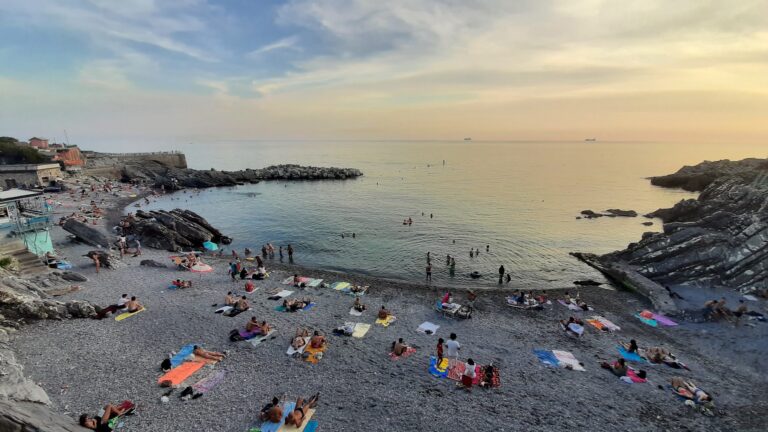
Boccadasse has resisted commercial beach development entirely, no rental umbrellas, no motorized water sports, no lifeguard tower watching the water. Visitors simply sit on the stones the way locals always have, and I found the absence of infrastructure part of what kept the place feeling genuinely lived-in rather than staged for tourists. Given the completely unorganized, historic character of this beach, dogs would likely be fine here on a leash, following the standard rule for Italy’s free public beaches, though I’d keep a close eye on footing given how uneven the stones get.
A Steep Entry That Rewards Older Kids More Than Toddlers
The water here deepens within just a few steps of the shoreline, and I’d flag this clearly for anyone traveling with young children: the moving pebbles make footing tricky for toddlers, and strollers simply can’t cross this terrain. For older kids and teenagers, though, the flat-topped rocks flanking the eastern side of the bay make genuinely good platforms for scrambling and sunbathing, and the immediate proximity of some of Genoa’s best gelaterias means there’s always an easy reward waiting a few steps up from the water.
Where a Singer-Songwriter Found His Genoa
Fabrizio De André, the Genoese singer-songwriter whose funeral drew ten thousand mourners in 1999, found real inspiration in Boccadasse’s narrow lanes and waterfront, and the wider “Genoa school” of cantautori that included Gino Paoli and Luigi Tenco treated this stretch of coast as something closer to a shared muse than simple scenery. The poet Edoardo Firpo wrote a poem about the village too, its opening lines still carved into a plaque on the western wall of the Church of Sant’Antonio, and the crime novelist Andrea Camilleri chose Boccadasse as the fictional home of Livia, the long-suffering girlfriend in his Commissario Montalbano series, none of it ever visited in the books, but real enough on the page that readers still ask locals where exactly her apartment is.
Fried Squid, Focaccia, and an Evening Aperitivo on the Stones
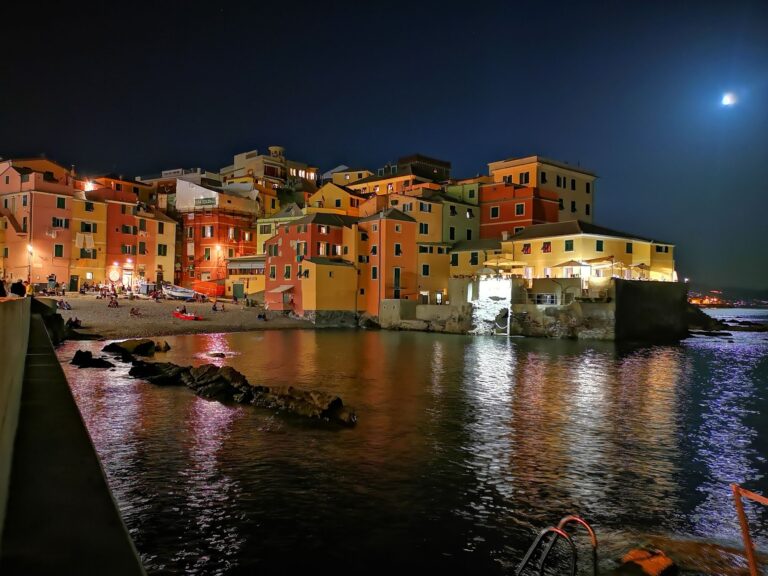
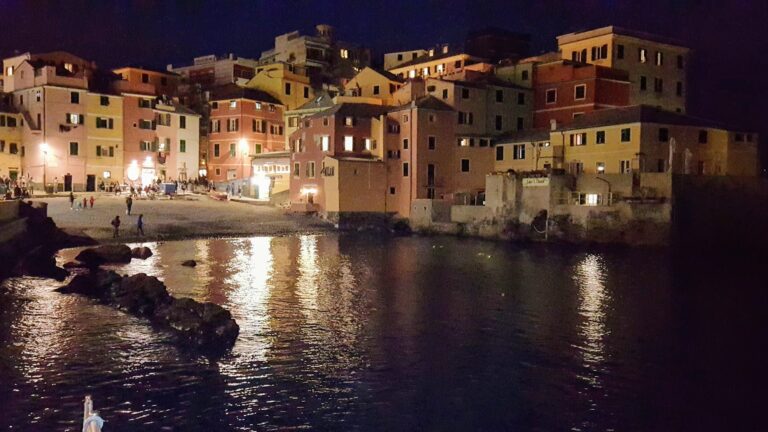
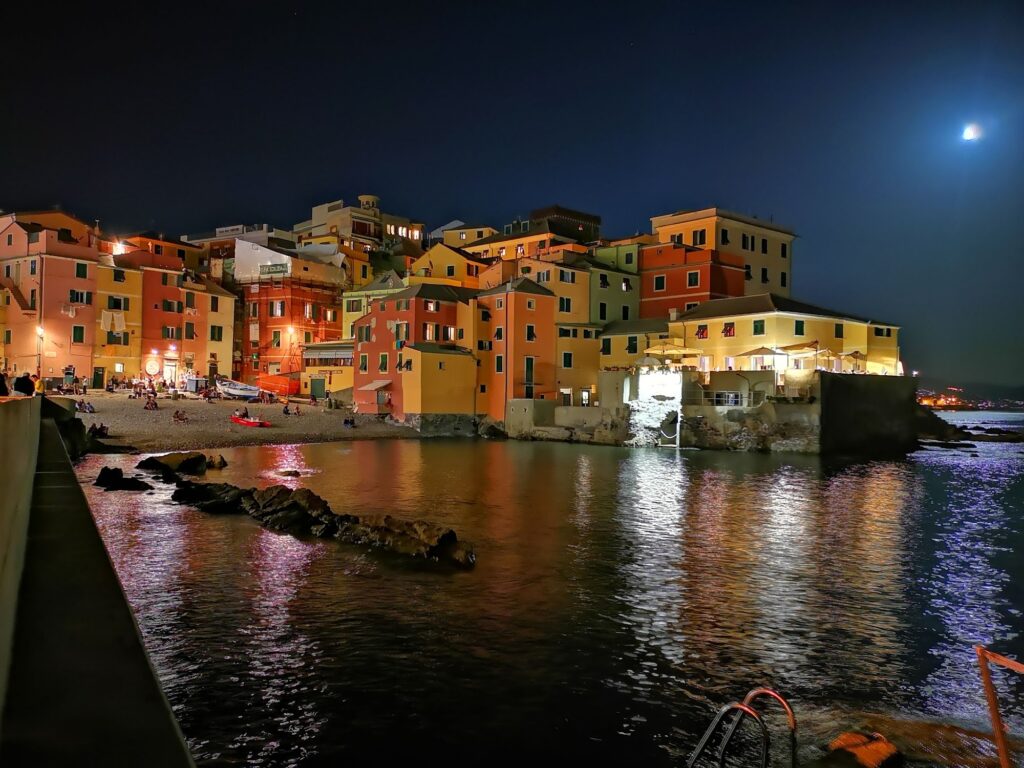
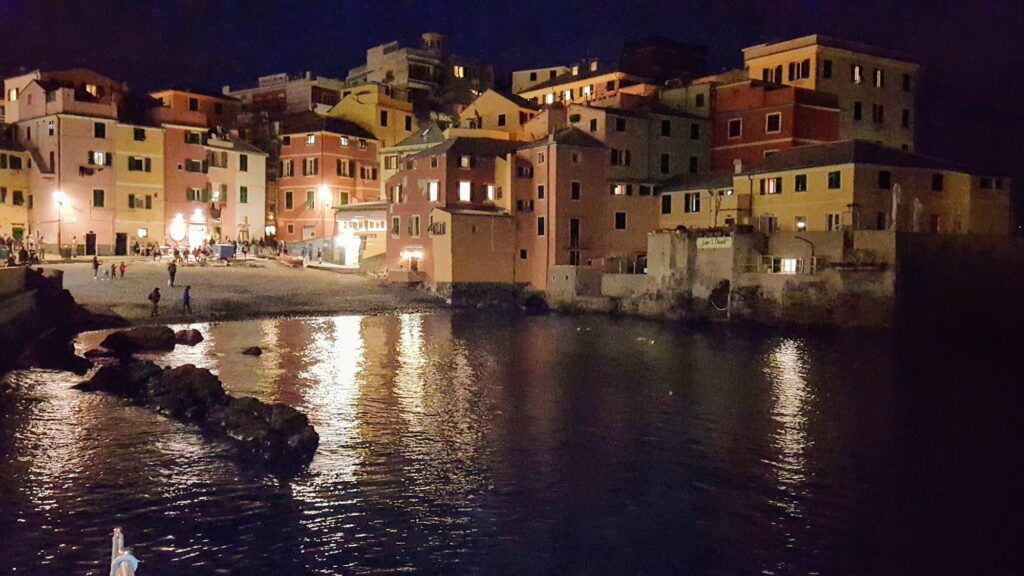
Piazza di Boccadasse and the lanes around it hold a genuine concentration of good, unpretentious food, and I made a habit of ordering a cartoccio of fried squid, shrimp, and anchovies from a corner friggitoria, eating it standing at the harbor wall the way I noticed most locals doing the same. As evening settled in, the beach itself filled with people sitting directly on the stones, wine in hand, the village lights coming on gradually against a darkening gulf.
Getting There and Making the Walk Count
The most rewarding approach is on foot, following the roughly three-kilometer Corso Italia promenade east from central Genoa, the walk itself offering sweeping sea views before ending at the stone staircase down into the cove; AMT bus 31 runs directly from Genova Brignole station to the Boccadasse stop, leaving only a two-minute walk through the alleys to the water, while travelers coming from further along the coast can disembark at Genova Sturla station for a flat ten-to-fifteen-minute walk south, and anyone continuing east afterward toward Portofino will find Spiaggia Libera Santa Margherita Ligure a reasonable next stop, a considerably more open, sandy contrast to Boccadasse’s tight pebbled arc.
Watching the Fishing Boats Rest as the Village Lights Come On
By the time I left on my last evening, the gozzi had been pulled fully up onto the slipway for the night, the pastel facades holding their color a little longer than the sky around them, and I thought again about that flag raised in Buenos Aires over a century ago, a small act of stubborn pride from people who’d carried this exact cove’s name across an ocean and apparently never quite let go of what it meant to them.
Map
Sorry, no records were found. Please adjust your search criteria and try again.
Sorry, unable to load the Maps API.
Near by places: