Quinto al Mare: Genoa's Fifth Milestone Village
Profile
Quinto al Mare: The Village at Rome’s Fifth Milestone
Italy | Liguria | Genoa | Ligurian Riviera
Quinto takes its name from something entirely unglamorous: it sat, in Roman times, exactly at the fifth mile marker, ad Quintum milium, along the ancient coastal road running east out of Genoa, precisely as its immediate neighbor Quarto marked the fourth. It’s worth being clear about that neighbor, because the two names get confused constantly. Quarto, a short distance west, is where Garibaldi’s Expedition of the Thousand actually departed in 1860, a famous, well-documented embarkation with its own monument and annual reenactment. Quinto had no part in that particular story, and visitors hunting for Garibaldi’s rock occasionally find themselves, mistakenly, one village too far east.
What Quinto does have, contested by actual historians but genuinely believed by some locals, is a claim that Christopher Columbus was born here, at a villa in the Terra Rossa district on the slopes of Monte Moro, rather than in the more commonly accepted version of events closer to central Genoa. I wouldn’t repeat the claim as settled fact, but a fresco inside the parish church of San Pietro depicts him anyway, evidence of how seriously at least some residents have held onto the story.
A Jagged Shoreline of Small Pebble Coves
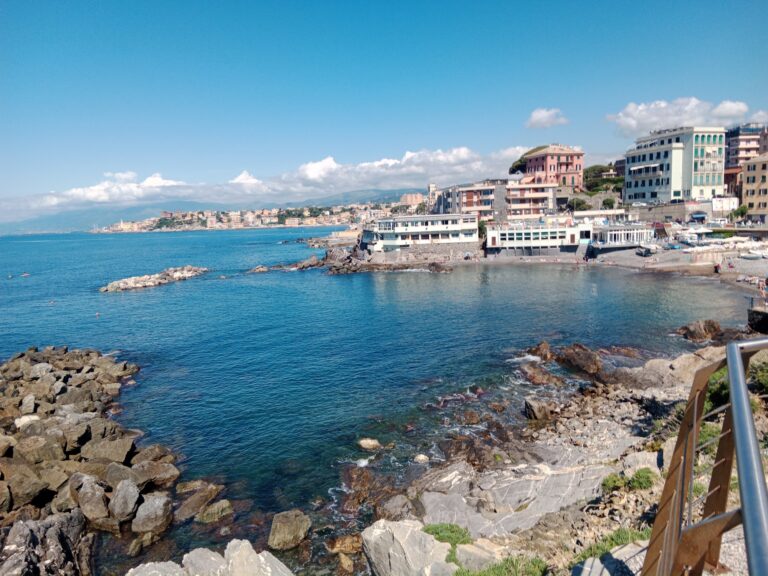
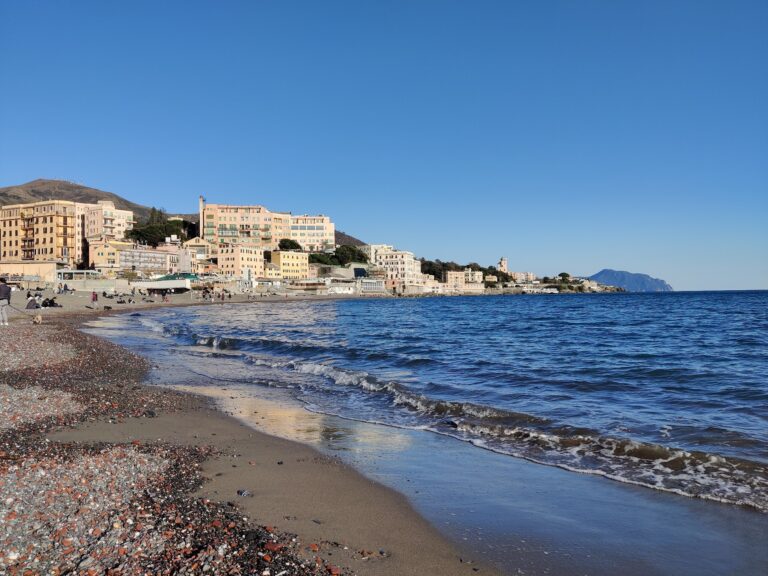
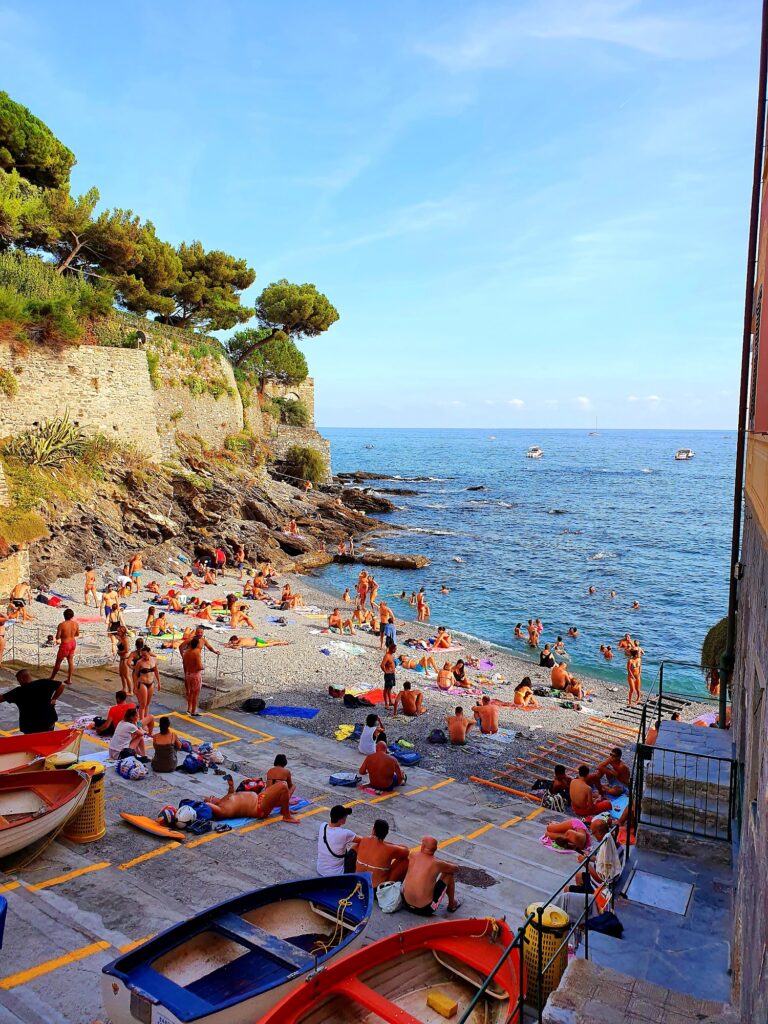
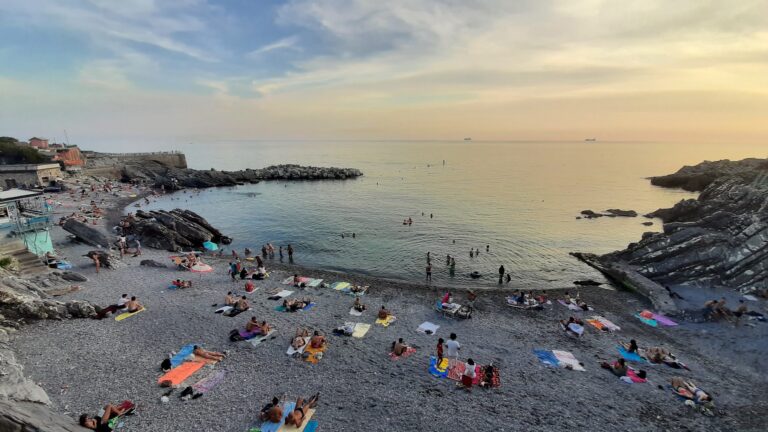
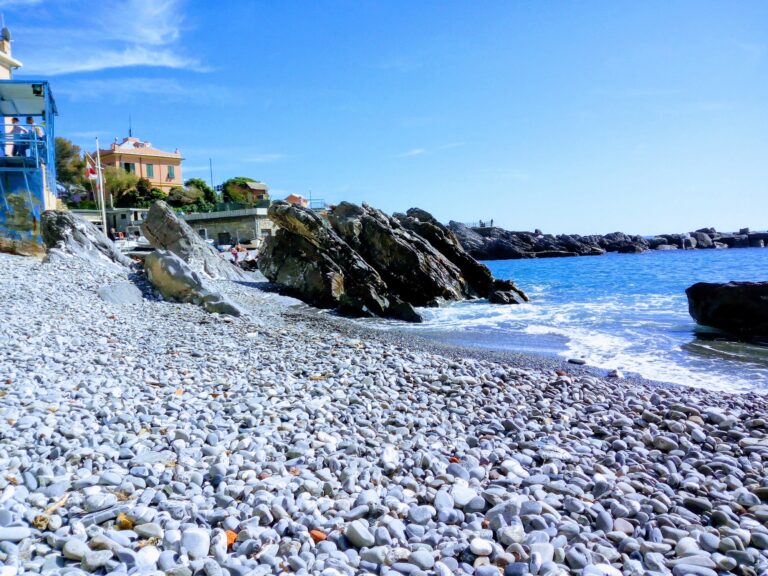
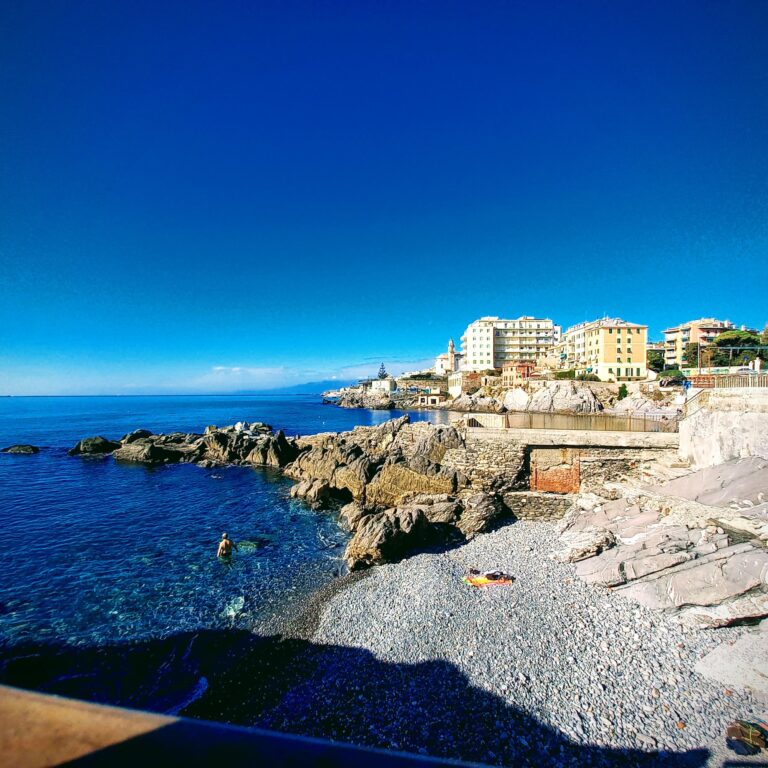
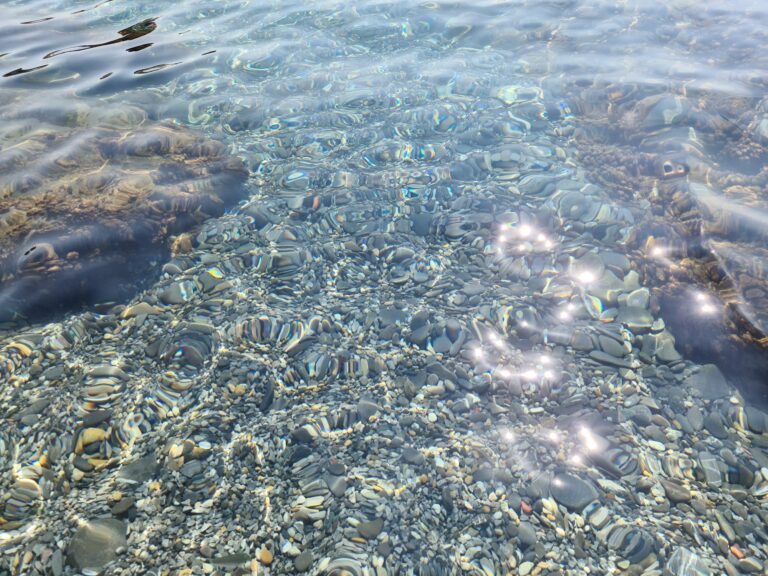
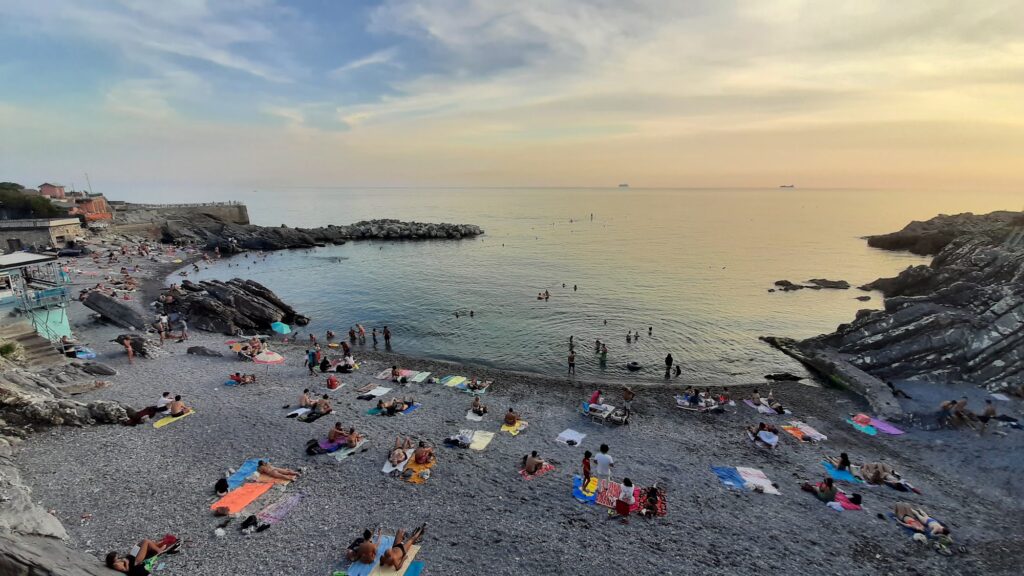
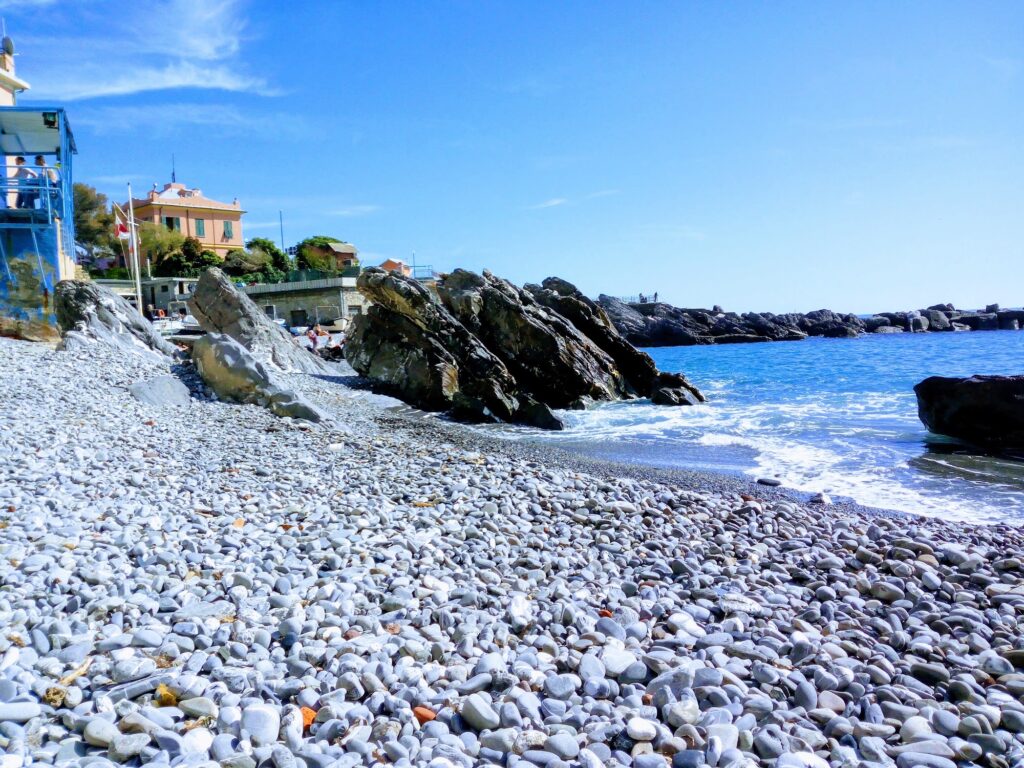
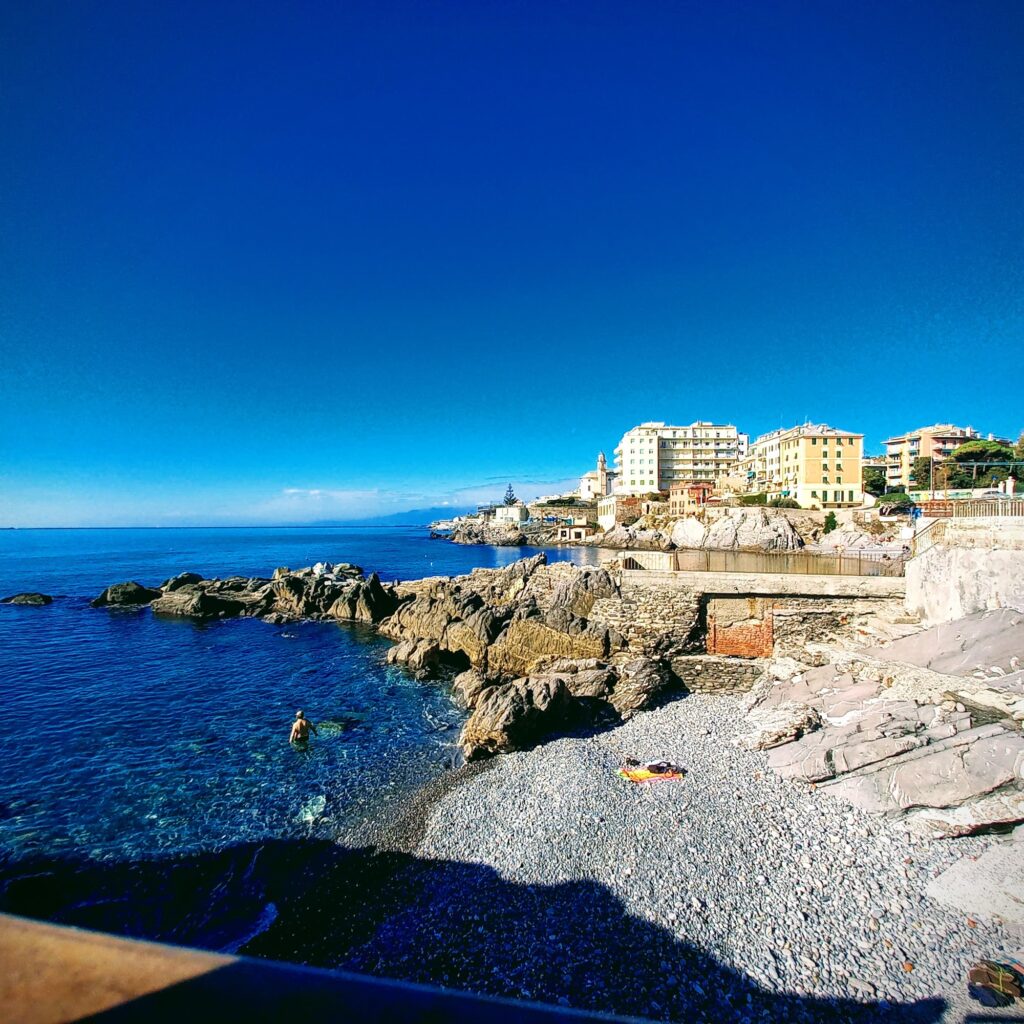
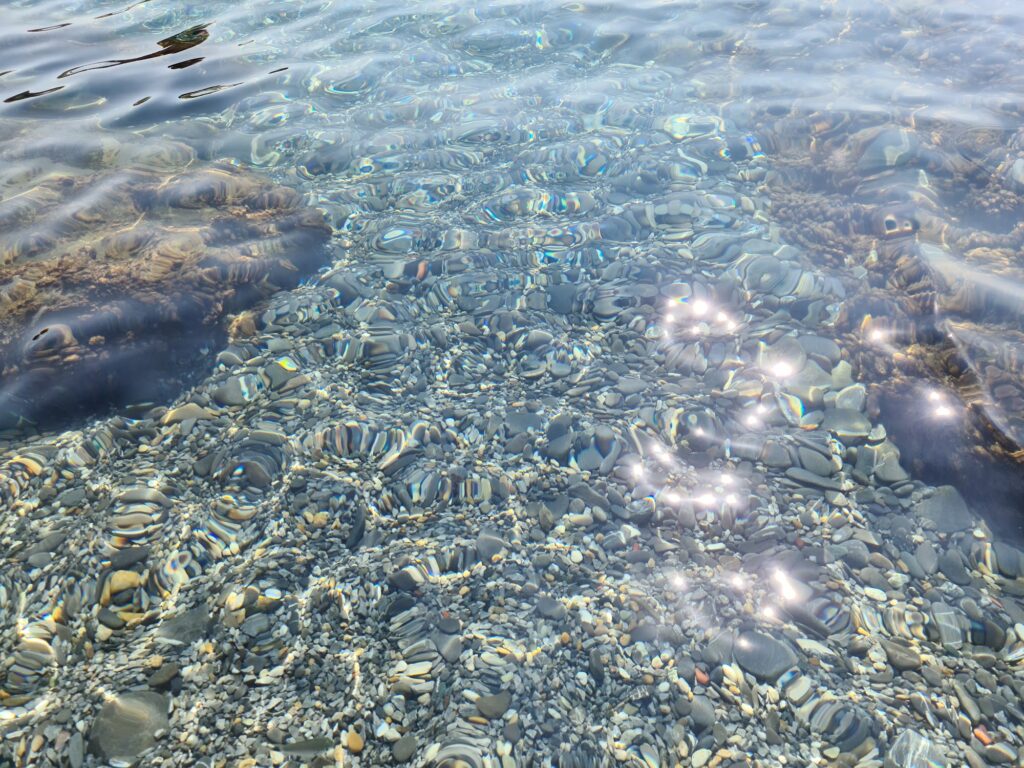
Quinto doesn’t offer one single beach so much as a scattering of small pebble-and-sand coves along a genuinely jagged stretch of coast, the water dropping into real depth within just a few meters of shore at most of them. I found the clarity excellent throughout, deep open-sea currents keeping the water constantly refreshed, turquoise near the rocks deepening quickly to jade and royal blue. The rocky outcrops flanking each cove function as natural sunbathing platforms, and snorkeling along the stone reef walls turned up genuinely active marine life.
A Fortress That Saw a Massacre Before the English Navy Finished It Off
A fortress once stood here specifically to defend against Saracen raids launched from Corsica, and toward the end of the fourteenth century it became the site of a brutal clash between the Fieschi family, allied with the Guelph faction, and their Ghibelline rivals the Adorno. The Fieschi broke through and killed everyone they found inside. The fortress itself didn’t survive much longer than its garrisons did, destroyed by English naval bombardment in 1746 and again in 1814, its ruins eventually replaced by the so-called Casa dei Capitani in the mid-nineteenth century, a name that nods to Quinto’s long tradition of supplying galley captains to the Republic of Genoa’s fleets.
No Wide Sand, Just a Quick Drop Into Deep Water
Given how quickly the seabed deepens at most of Quinto’s coves, I’d steer families with toddlers toward the wider, more gradual beaches elsewhere on this coast; older children and confident swimmers, though, found real appeal in diving off the rock jetties and exploring the reef walls, and the flat pedestrian access from the coastal sidewalk at least spares parents any cliffside staircase. Free public access covers the entirety of the shoreline, no entrance fees or private enclosures, and given how thoroughly unorganized this stretch remains, dogs would likely be fine on a leash following Italy’s standard rule for free public beaches, though I’d still watch footing carefully on the looser pebbles.
Sant’Erasmo, Patron of Sailors, on the Rocks Above the Water
Right at the water’s edge stands the Oratory of Sant’Erasmo, a sixteenth-century chapel dedicated to the patron saint of sailors, its simple barn-shaped facade dramatically positioned on the rocks. I found it a fitting landmark for a village that spent centuries sending its own sons out as ship captains, a small, working piece of maritime devotion rather than anything built for tourists.
Focaccia, Farinata, and an Evening Aperitivo on the Pebbles
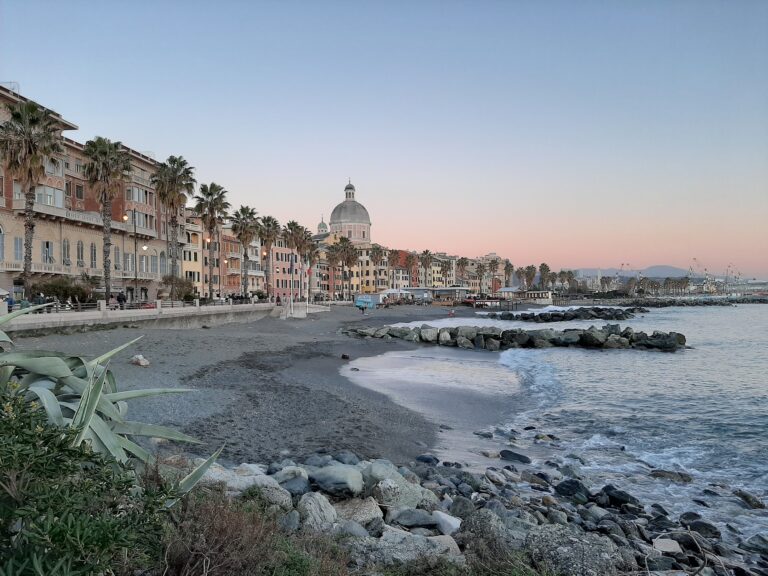
The neighborhood behind the beach holds genuinely good independent bakeries and gelaterias, and I picked up farinata, the savory chickpea pancake, more than once to eat right on the rocks. As evening settled in, beach bars filled with the usual Aperol Spritz crowd, a front-row seat to a proper Ligurian sunset.
Getting There and the Case for Arriving Early
Genova Quinto station sits about 250 meters from the beach, a genuinely short walk regardless of which cove you’re heading toward, AMT buses 15, 17, and 515 connect the district to central Genoa along Corso Europa, and drivers exiting the A12 at the Genova Nervi toll booth will find themselves under three kilometers from the water, free parking available along Via Giannelli and Via Quinto for anyone willing to circle a bit during peak summer weekends. Anyone continuing east along this same stretch of coast will find Capolungo Beach Nervi Genoa a short distance further on, a genuinely different kind of cove with its own layered history worth the extra walk.
Standing Where the Fortress Once Held the Coast
By the time I left on my last evening, the small chapel of Sant’Erasmo had gone quiet against a darkening sky, and I thought about how little remains visible now of the fortress that once stood somewhere near this exact stretch of coast, burned, bombarded twice, and finally replaced by an ordinary building bearing nothing more dramatic than the name of the captains who’d once called this unassuming village home.
Map
Sorry, no records were found. Please adjust your search criteria and try again.
Sorry, unable to load the Maps API.
Near by places: