Hovolo Beach Skopelos: Telegraph's Most Beautiful Shore
Profile
Hovolo Beach, Skopelos: The Telegraph’s Most Beautiful Beach in Greece, 650m From Neo Klima Village, Reached by Wading Around a Rock at Low Tide, With Pine Trees Growing From White Cliffs
Greece | Neo Klima–Elios | Skopelos, Northern Sporades
The Telegraph included Hovolo in its list of the 17 most beautiful beaches in Greece in 2016, which is the kind of recognition that arrives from outside and changes the number of visitors a place receives. Before that point, Hovolo was primarily known to people who had spent time on Skopelos and worked their way along the west coast road to the end of Neo Klima village. It is still not easy to reach in the conventional sense — no bus drops you at the sand, no car park delivers you to a beach bar. Getting to Hovolo requires wading through shallow water around a large rock, and the best section of the beach is on the other side of that rock, not visible from the car park.
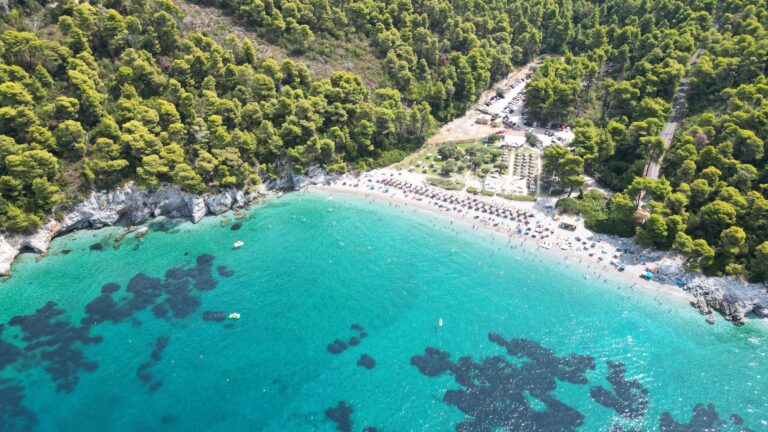
Neo Klima–Elios is a village on the west coast of Skopelos, 18 kilometres from Skopelos Town by road and 7 kilometres from Glossa village. Its western orientation gives it sunsets over the sea rather than over the island interior, and the green mountains behind it covered in pine forest provide the backdrop that the white cliffs in front mirror. Hovolo beach is at the south end of the village, where the road ends at a small free car park.
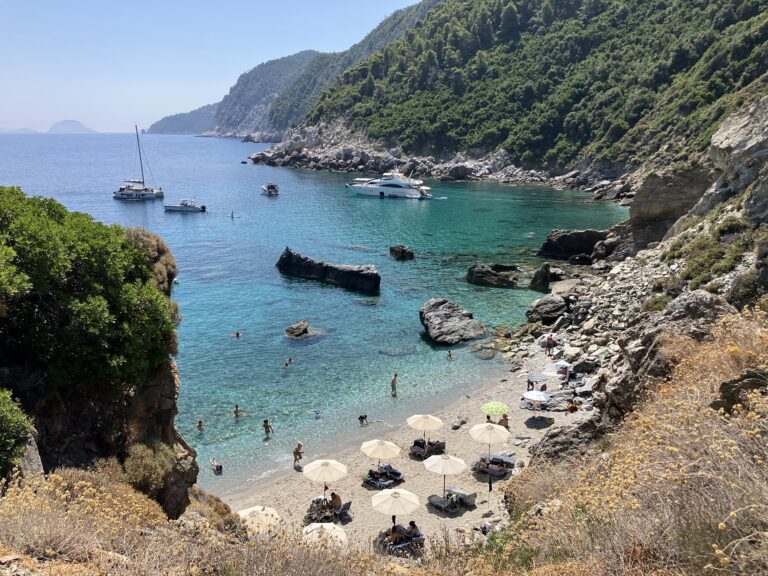
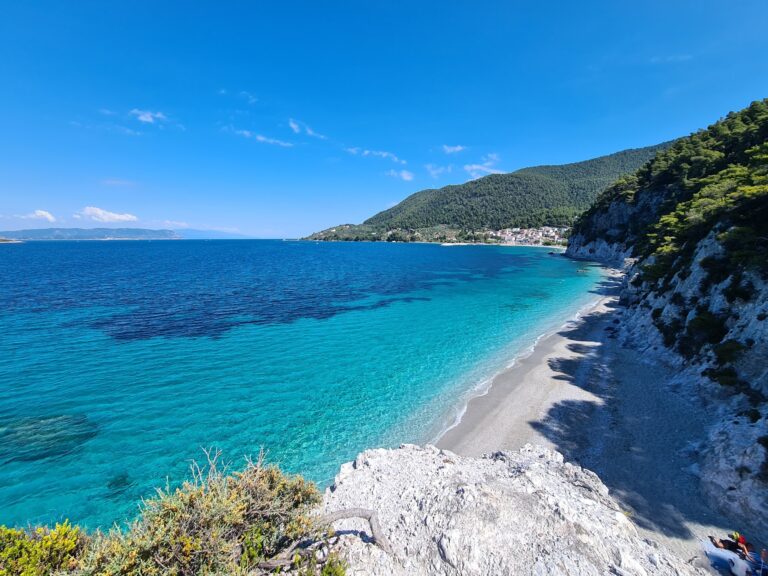
The beach itself is a sequence: you park, you see a small pebble bay next to the harbour with high rock formations on one side — some consider this the beginning of Hovolo, others treat it as the Neo Klima village beach. You then take the path south for a few hundred metres and at a specific point the path crosses into the sea. You wade around the large rock. The water is shallow — ankle to knee depth in calm conditions — but at high tide it is deeper, and the wading requires more commitment. Water shoes are not optional here; the rock crossing is not comfortable barefoot and the pebbles throughout the beach are best navigated with footwear. On the other side of the rock, 2 to 3 small bays open up under the white cliffs before the main Hovolo beach appears at the far end.
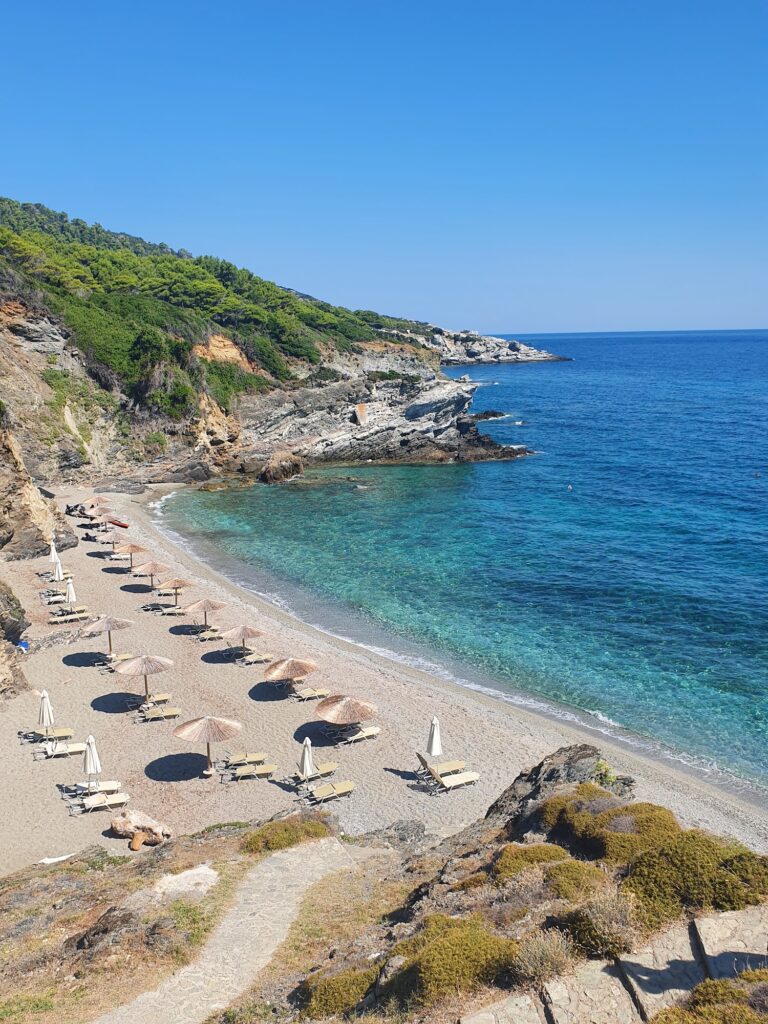
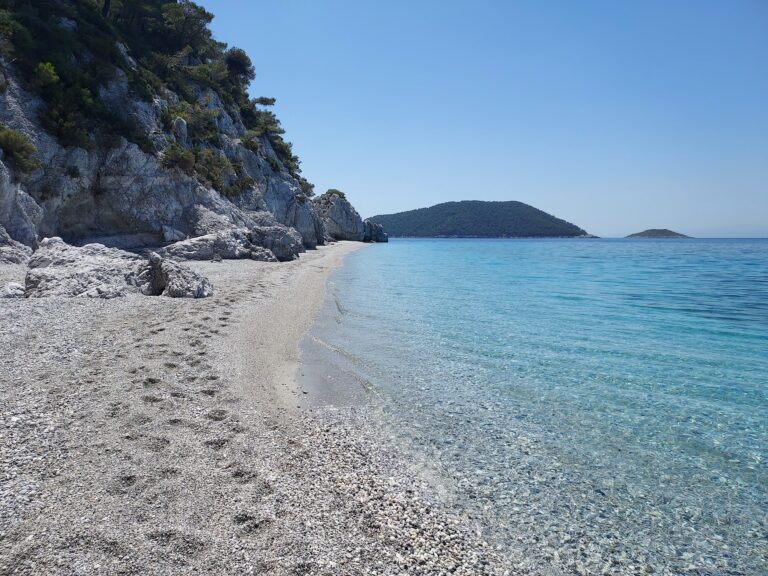
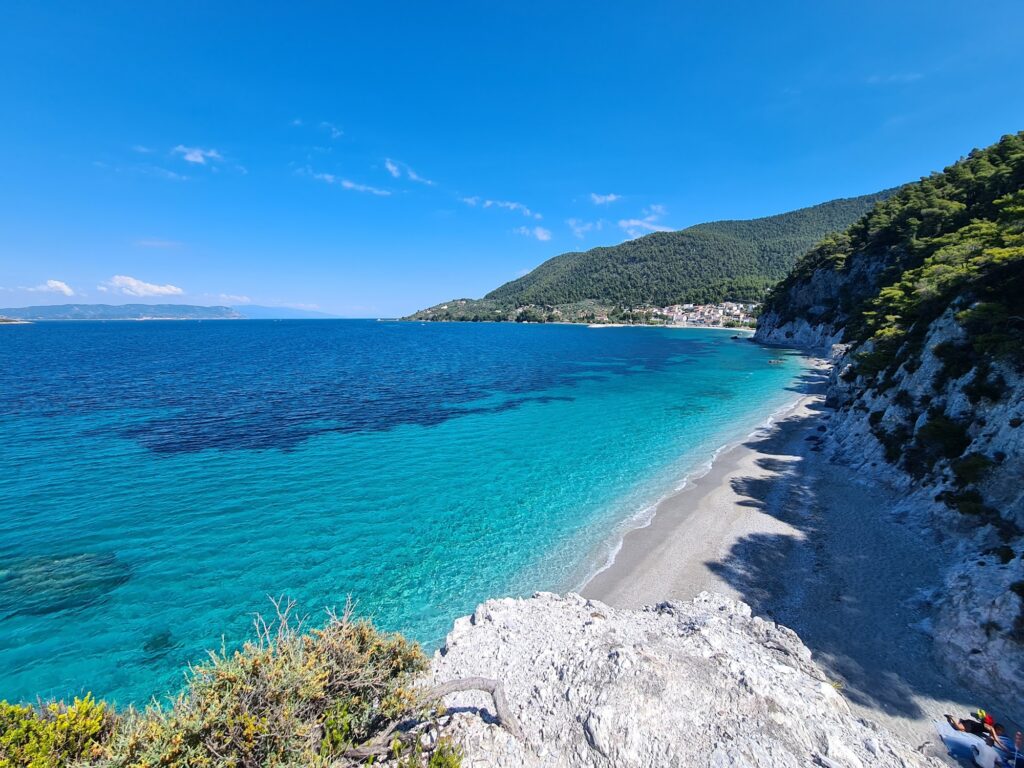
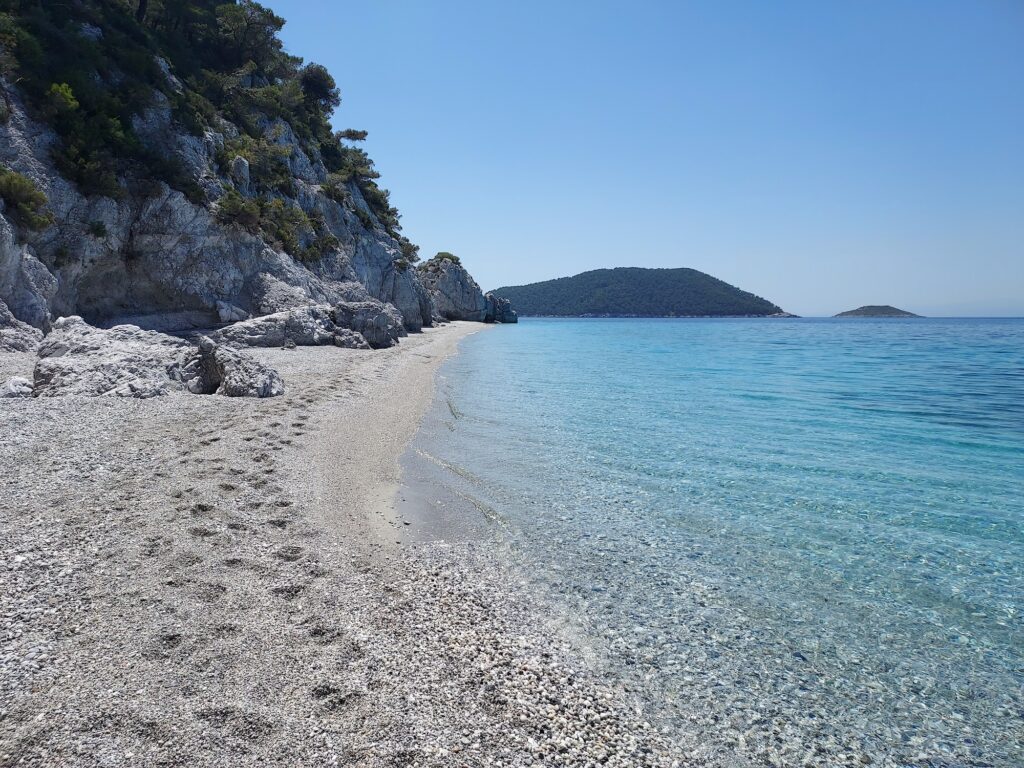
The main beach is covered with fine white pebbles and some sand. Tall white limestone cliffs enclose it, with pine trees rooted directly in the rock face above. The effect is the specific visual that the Telegraph responded to: the bright white cliffs reflecting light through the turquoise water, the green of the pines above, the absence of any commercial infrastructure. The waters are crystal clear and increasingly beautiful the further into the beach you go.
Getting There: 18km From Skopelos Town, 26 Minutes by Car, Signs for Neo Klima, Park at the End of the Road, Wade Around the Rock
From Skopelos Town (Chora), follow the main island road heading west. The route passes through Stafylos, Agnontas, and Kastani before reaching Neo Klima after approximately 18 kilometres. Signs for Hovolo appear in the village. Follow them to the southern end, where the road ends at a small free car park near the sea. From the car park, the walk to the main Hovolo beach takes approximately 10 minutes, including the rock-crossing section.
By bus, the island service stops at Neo Klima–Elios village. From the bus stop, the walk to the beach is approximately 10 minutes.
From Glossa village, Hovolo is 7 kilometres south — a 12-minute drive.
Important: watch the tide before wading. At low tide, the rock crossing is shallow and easy. At high tide, the water level rises significantly and the crossing requires more care. In rough weather, the crossing can be difficult or unsafe. In calm summer conditions it is straightforward for any reasonably active adult.
The Beach: Completely Unorganised, Fine White Pebbles, Water Shoes Throughout, Mandalaki Cafe 700m Back, No Lifeguard
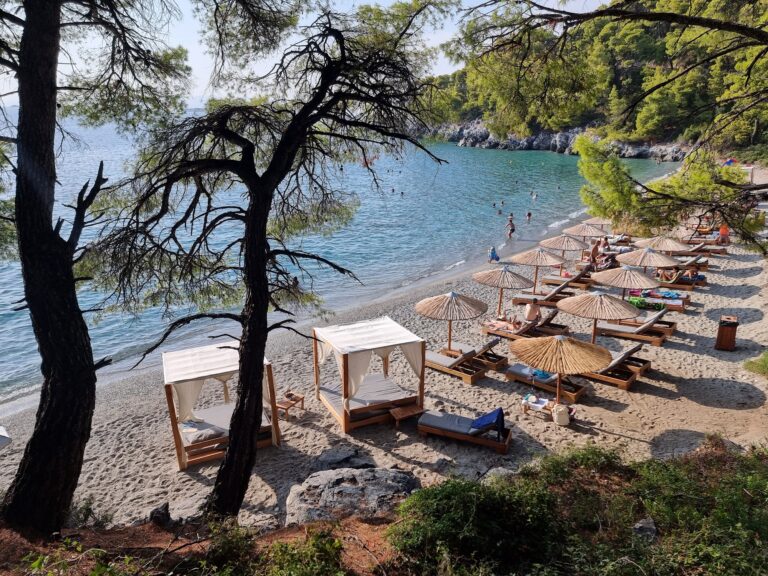
Hovolo is completely unorganised. No sunbeds, no umbrellas, no beach bar on the sand. Bring water, food, sun protection, and your own shade. Mandalaki Cafe is approximately 700 metres back at the start of the path — it is the only on-site refreshment option and the nearest facility to the beach.
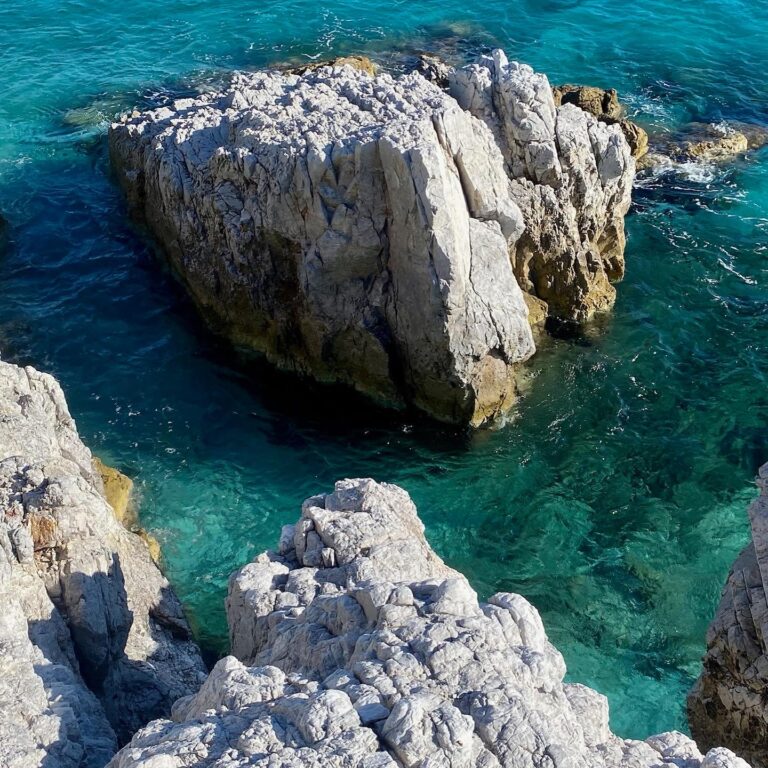
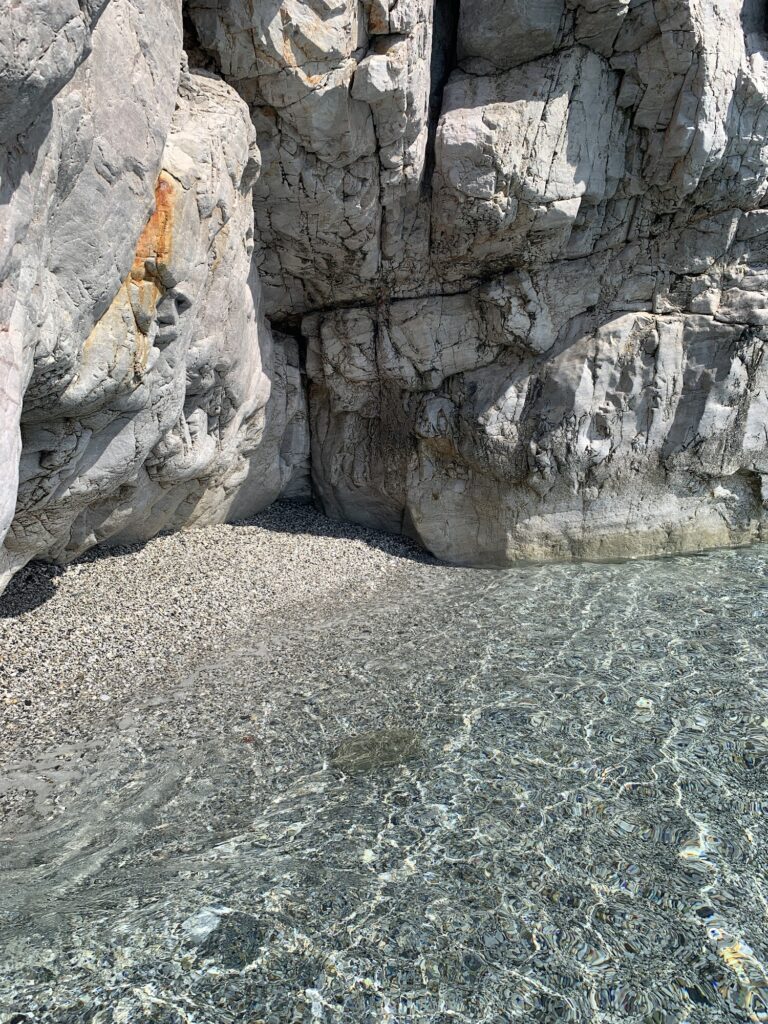
The snorkelling at Hovolo is consistently described as exceptional — the rocky seabed in the deeper sections beyond the initial entry, the sea caves carved into the cliff base, and the visibility through the clear water make it one of the better snorkelling locations in the Northern Sporades. Bring a mask.
A kayak hire centre operates along the path to Hovolo. Sea kayaking the coastline from Hovolo southward along the white cliff face — the same landscape you see from the beach but from the water level — is the specific activity that provides the cliff-base perspective impossible to get from the shore.
The White Cliffs and the Pines: The Specific Visual
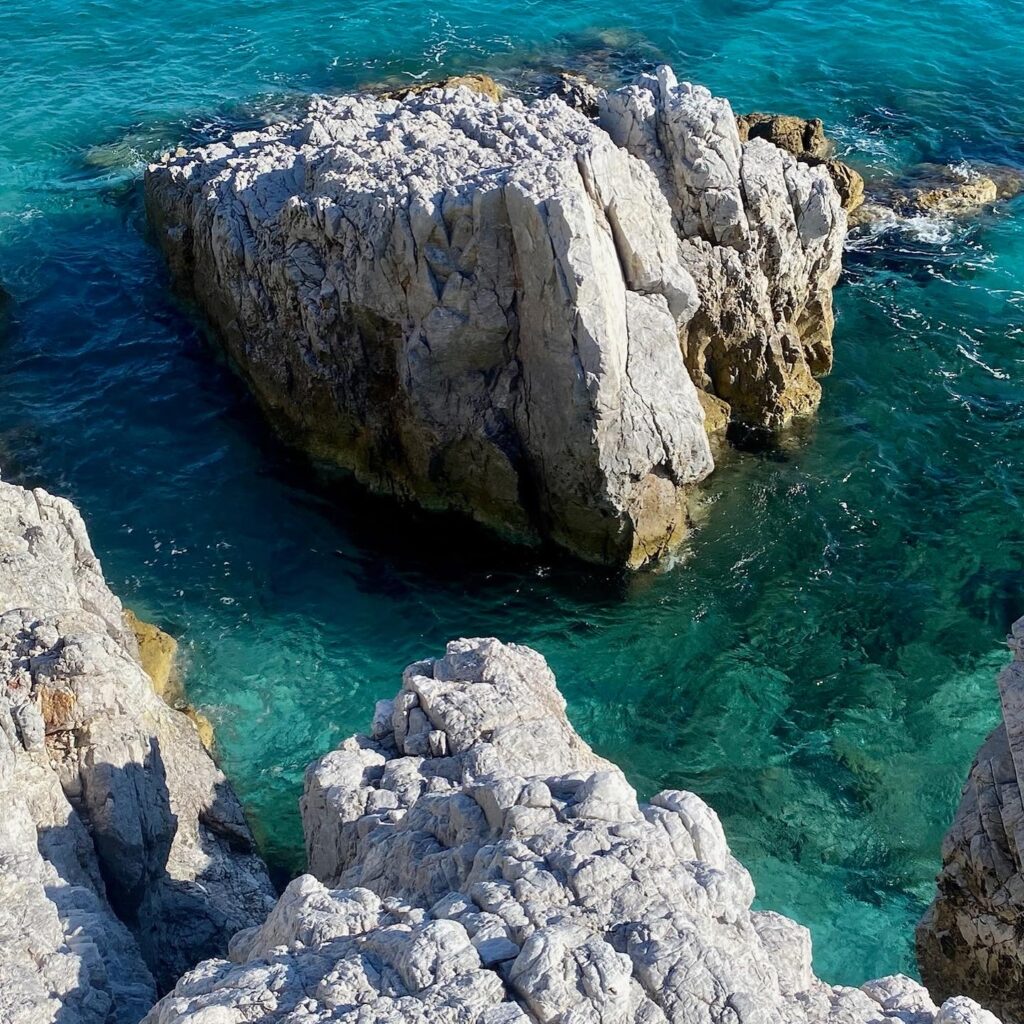
The cliffs at Hovolo are white limestone, and the pine trees rooting directly in the rock face above them — their roots visible in the cliff, their trunks leaning out over the water — are the image that appears in every photograph of this beach. The combination of bright white rock and deep green pine against turquoise water is genuinely unusual. Most Greek cliff beaches have limestone without significant vegetation, or pine forests that stop well back from the water. At Hovolo, the two elements are inseparable from each other.
The cliffs provide shade in the morning and early afternoon from the western approach, when the sun has not yet cleared the cliff top. By mid-afternoon the beach is in full sun. The western orientation means sunsets at Hovolo are directly over the sea, with Skiathos island visible on the horizon in clear conditions.
Neo Klima–Elios Village: Full Facilities 650–700 Metres Away
Neo Klima–Elios has the facilities that Hovolo itself lacks — tavernas serving the island’s famous Skopelos cheese pie (strifti), fresh seafood and octopus, cafes, a supermarket, a port, and shops. The distance from the beach car park to the centre of the village is walkable in 10 minutes. For a full day at Hovolo, the pattern is straightforward: arrive early, spend the morning at the beach, walk back to the village for lunch, return in the afternoon.
Kastani — the beach immediately north of Neo Klima on the same west coast road, with its famous taverna and the view that inspired a scene in the Mamma Mia filming locations on Skopelos — is a few kilometres north on the same road.
The Mamma Mia Connection and the Rest of Skopelos
Skopelos is the island where the Mamma Mia film was shot in 2007 (not Skiathos, despite the airport connecting most visitors to the region). The church of Agios Ioannis above the sea near Glossa — the cliff-top chapel reached by 203 steps that appears in the film’s climactic scene — is 7 kilometres from Neo Klima. The Hovolo day and an afternoon drive to Agios Ioannis for the sunset from the chapel steps is the natural west coast Skopelos programme.
Skiathos — the neighbour island visible from Hovolo on clear days — has its own series of beach articles in this series. Big Aselinos Beach Skiathos Greece, on the northwest coast of Skiathos, is the beach on the Skiathos side of this stretch of the Aegean. Tsougrias Beach Skiathos Greece, the uninhabited islet south of Skiathos Town, is reachable from the Skiathos port that ferry passengers from Skopelos pass through.
Hovolo Beach on Skopelos is the Telegraph’s top-17 most beautiful beach in Greece — completely unorganised, fine white pebbles under white limestone cliffs with pine trees rooted in the rock face, water shoes essential (rock-crossing to reach it, check tide before wading), the best section beyond 2–3 smaller bays, 18 kilometres from Skopelos Town and 7 kilometres from Glossa, free car park at the end of Neo Klima’s south road, Mandalaki Cafe 700 metres back, kayak hire at the path, snorkelling exceptional, no lifeguard, full village facilities 650 metres away for food and supplies.
Drive to Neo Klima. Park at the end of the road. Wade around the rock at low tide. The main beach is on the other side.
Map
Sorry, no records were found. Please adjust your search criteria and try again.
Sorry, unable to load the Maps API.
Near by places: