Ftelia Beach: Below a Village That Relocated
Profile
Ftelia Beach: The Cove Below a Village That Had to Move
Greece | Skopelos | Sporades | Aegean Sea
The village nearest Ftelia Beach, Elios, wasn’t always where it sits today. On the night of March 9, 1965, a magnitude 6.3 earthquake struck offshore near neighboring Alonissos, damaging the mountain village of Klima badly enough that continuing landslides eventually made the old stone houses unsafe to live in. Residents didn’t rebuild on the same spot. Instead, the Greek government helped construct an entirely new, purpose-built settlement closer to the coast, and in 1981, sixteen years after the earthquake first struck, the move to what’s now called Neo Klima, or Elios, was finally complete. Palio Klima, the abandoned original village, still stands a few kilometers inland, some houses restored as rentals, others left as ruins among olive trees and vineyards, a genuine ghost town within easy reach of a beach most visitors never think to connect to it.
Ftelia itself sits along the same stretch of western coast, tucked between the more popular shores of Hovolo Beach Skopelos Greece and Kastani Beach Skopelos Greece, close enough to Elios that the earthquake’s long aftermath quietly shaped the whole surrounding coastline, not just the village that eventually rebuilt itself beside it.
A Cove the Pines Keep Almost Hidden
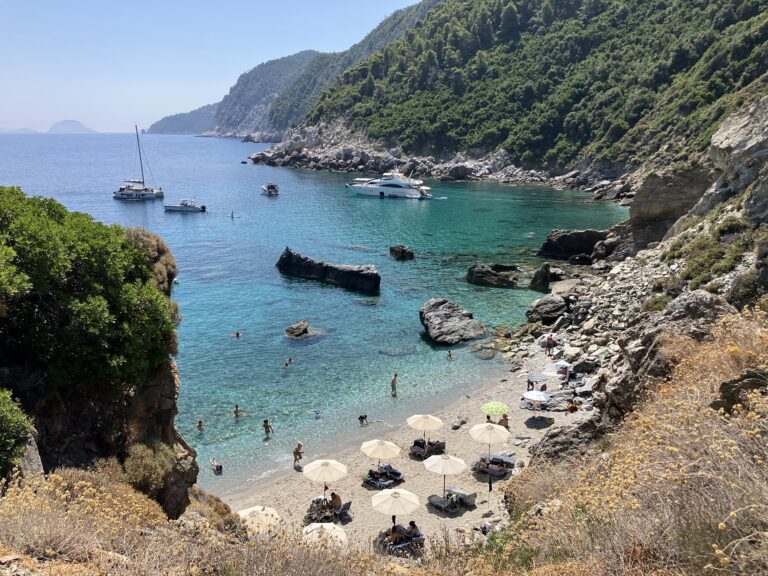
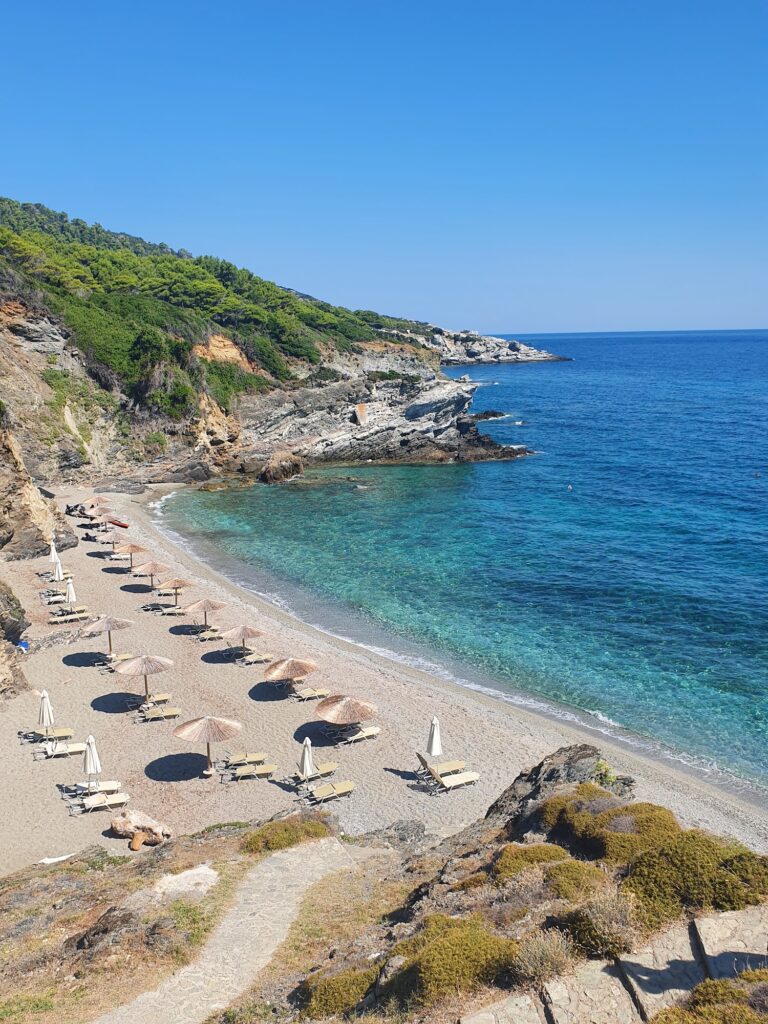
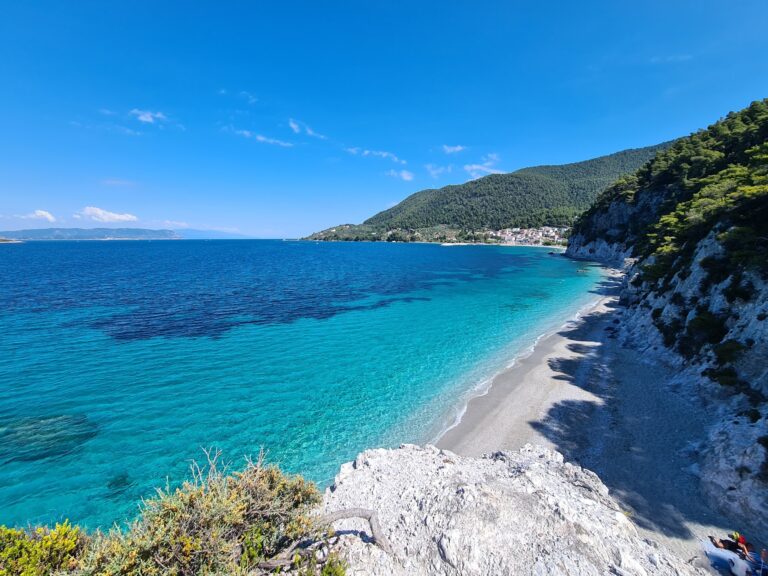
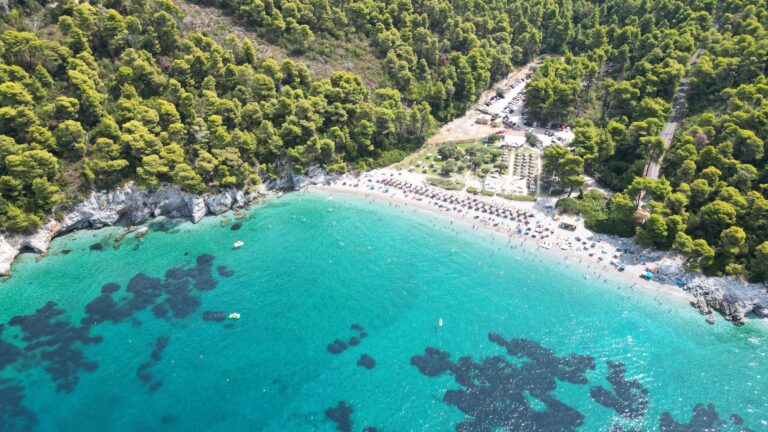
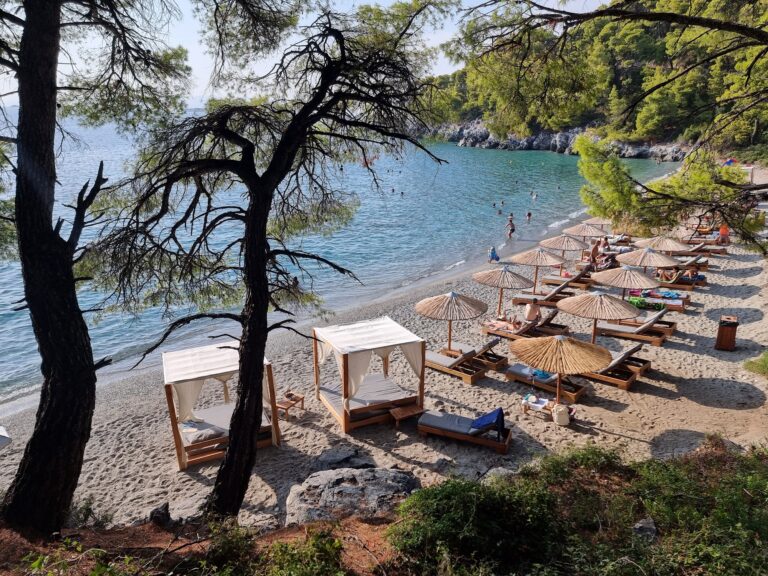
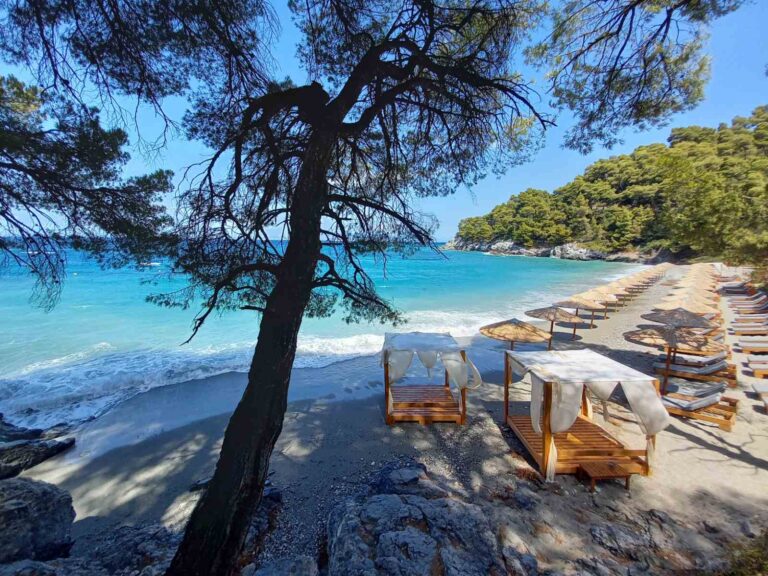
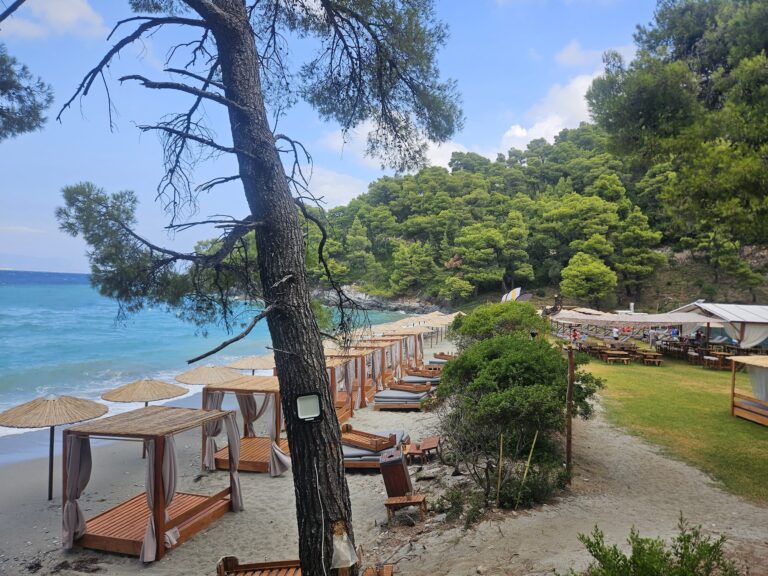
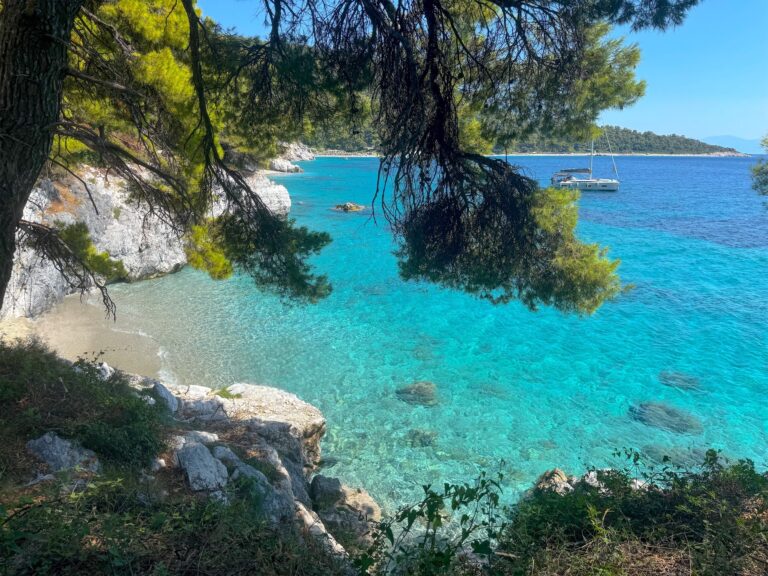
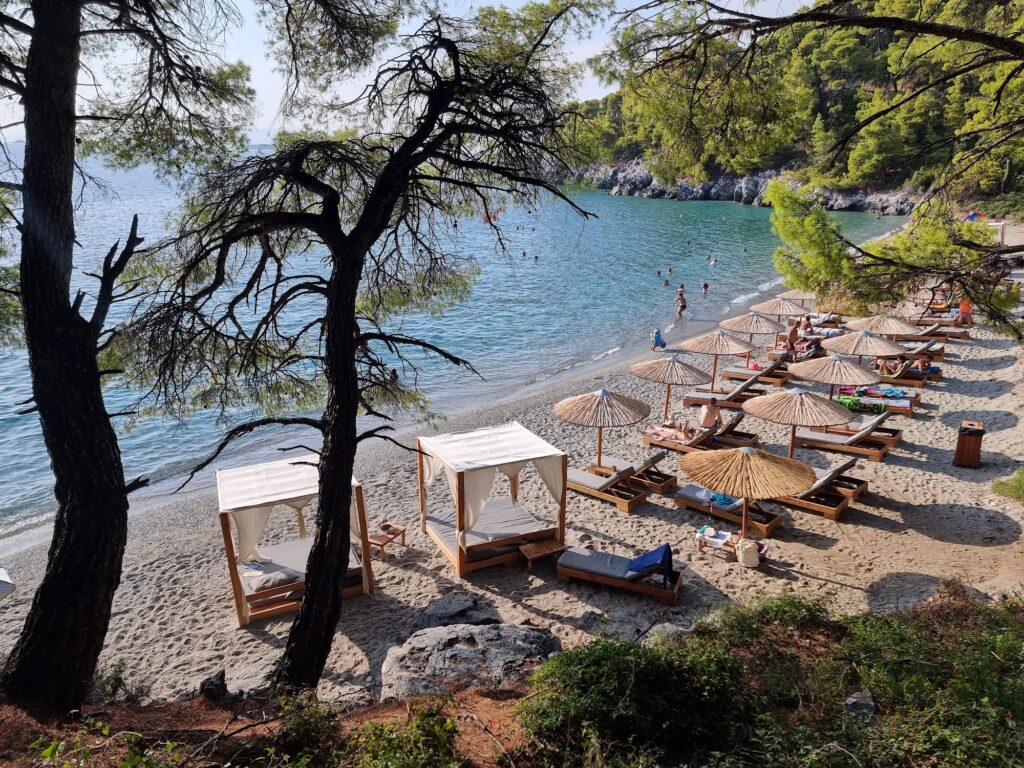
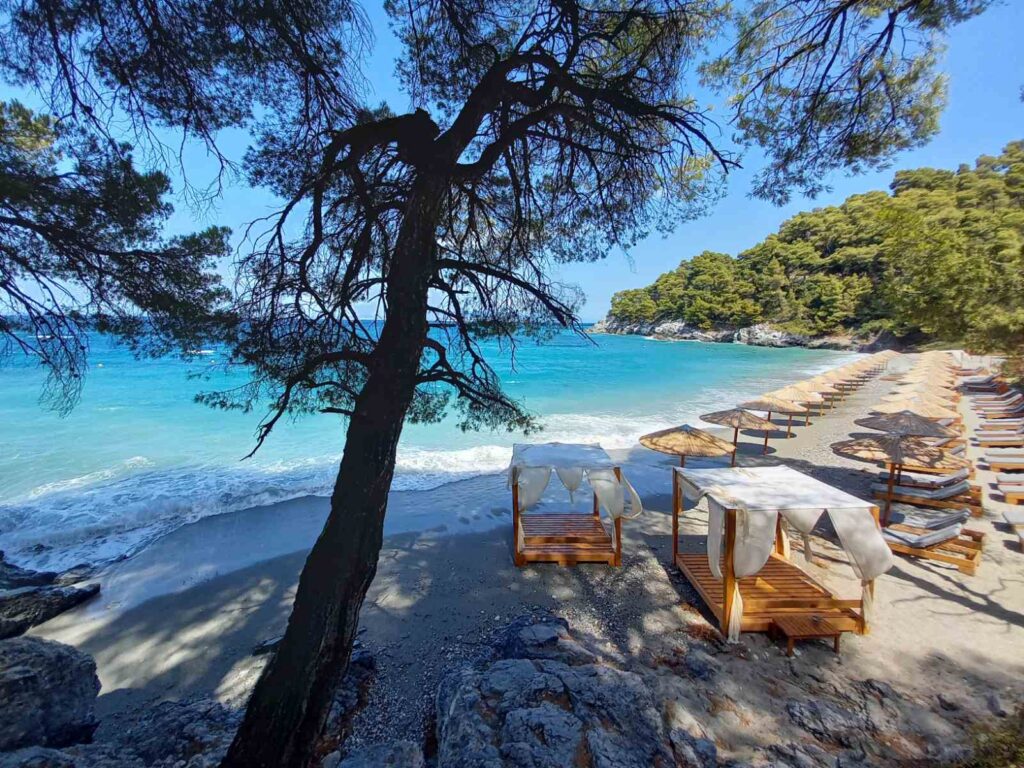
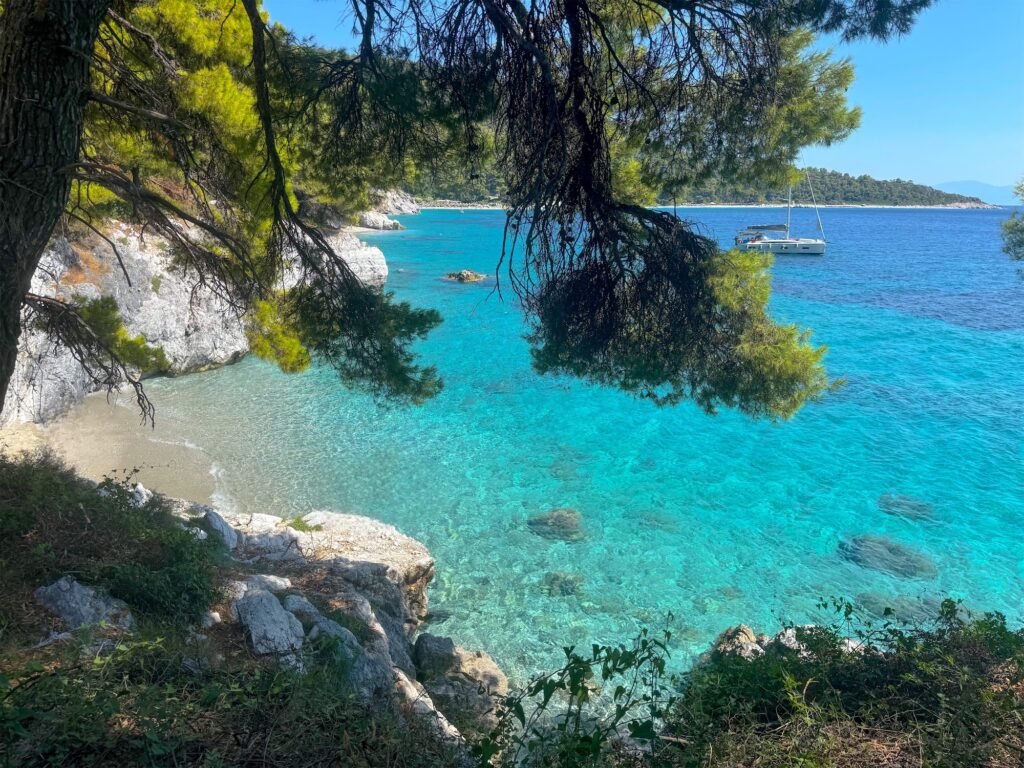
Ftelia offers a genuinely small, enclosed bay, dense pine forest clinging to white limestone cliffs that wrap around the water and give the whole cove a feeling of being tucked into its own private room. I found the water held the same striking clarity Skopelos is generally known for, turquoise near the shore deepening into a genuinely intense blue further out, the mixed sand-and-pebble seabed keeping visibility sharp enough for rewarding snorkeling along the rocky edges.
Genuinely Empty, Even in August
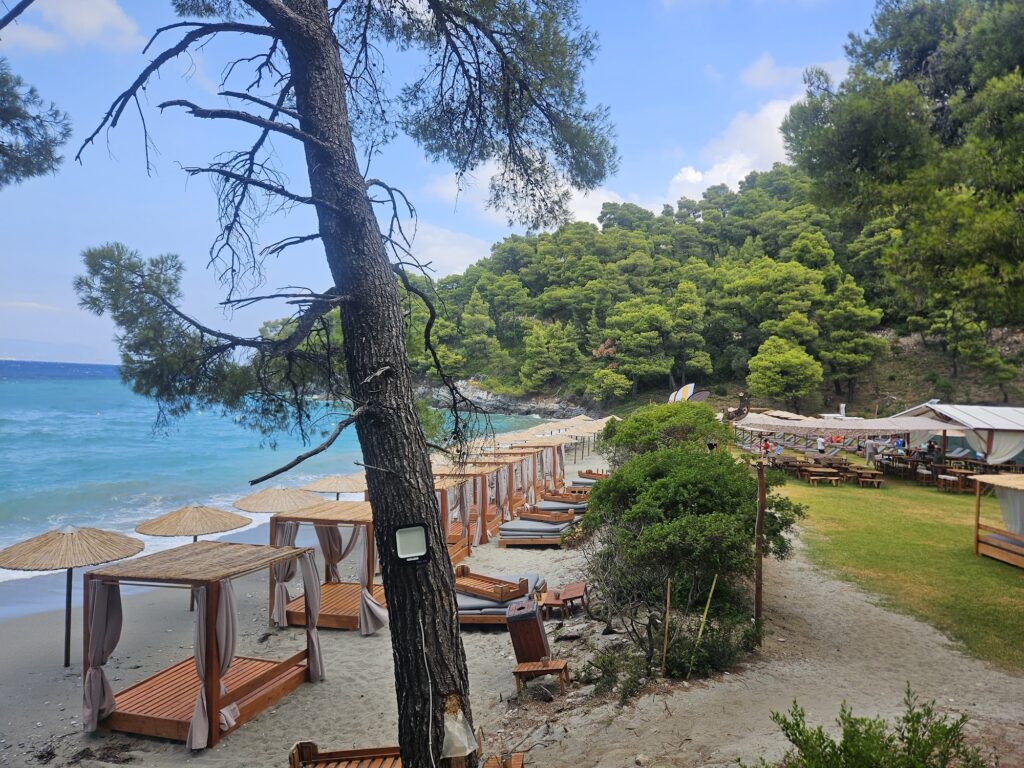
What sets Ftelia apart from Skopelos’ more famous, Mamma Mia-adjacent beaches is simply how quiet it stays. I found real solitude here even during the height of summer, no permanent structures, no rented sunbeds, just pine needles rustling and the ordinary sound of small waves. Given how thoroughly unorganized this cove remains, dogs would likely be fine here on a leash following the standard rule for Greek beaches, and I found the whole atmosphere suited quiet, unhurried visits far more than anything resembling a typical beach day.
Caves and Rock Formations Worth the Extra Effort
The rocky edges of the bay hold small caves and formations that sheltered genuinely active marine life, and I found every swim here doubled as a small exploration, worth the extra effort of bringing a mask rather than simply floating in the open water.
Getting There Down a Dusty Path From the Coastal Road
Ftelia sits roughly 14 kilometers from Skopelos Town and about 5 kilometers from Elios, reached by following the main coastal road toward Glossa and watching for the stretch between Hovolo and Kastani; there’s no paved road down to the sand itself, so I parked safely off the asphalt and followed a short, occasionally steep dirt path through the pines, sturdy shoes genuinely necessary rather than optional. Renting a small motorboat from the harbor at Elios or Agnontas offers a considerably easier alternative, approaching the cove from the water and anchoring wherever the color looks best.
Standing Where a Landscape Quietly Rebuilt Itself
By the time I climbed back up from Ftelia on my last visit, I found myself thinking less about the beach itself than about Palio Klima somewhere up in the hills behind me, an entire village abandoned within living memory, its residents choosing the sea over the mountain they’d called home for generations, this quiet, empty cove simply continuing on nearby, entirely unaware of how much upheaval had shaped the coastline around it.
Map
Sorry, no records were found. Please adjust your search criteria and try again.
Sorry, unable to load the Maps API.
Near by places: