Kastelokampos Beach Patras: 10-Min Train, Bridge View
Profile
Kastelokampos Beach, Patras: The Former EOT Camping Site Turned Municipal Beach 6km North of Greece’s Third Largest City, Reachable in 10 Minutes on the Proastiakos Train, Where the Rio-Antirrio Bridge Is 3km Away
Greece | Kastelokampos | Patras, Achaia, Western Greece
Patras is the third largest city in Greece and the country’s primary western gateway. Its port handles the ferry traffic to Italy (Brindisi, Ancona, Venice, Bari), to Corfu, and to the other Ionian Islands — the first point of entry into Greece for hundreds of thousands of travellers arriving from western Europe overland. The city has a permanent population of approximately 215,000, a university with 30,000 students, and a specific cultural identity rooted in the Carnival of Patras — the largest carnival in Greece and one of the largest in Europe, held annually in the weeks before Lent, drawing over a million visitors.
The beach that serves this city is Kastelokampos — 6 kilometres north of the city centre, 1.5 kilometres southwest of Rio, accessible by the Proastiakos suburban railway in 10 minutes from Patras Central Station for €1 to €2. The train stop is Kastelokampos station, from which the beach is a 5-minute walk.
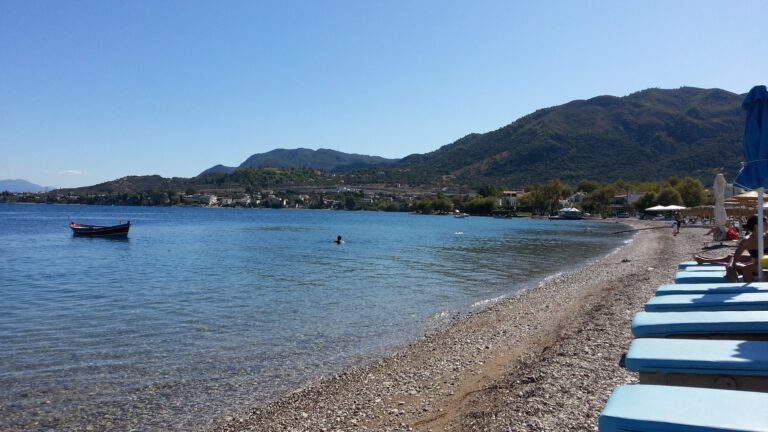
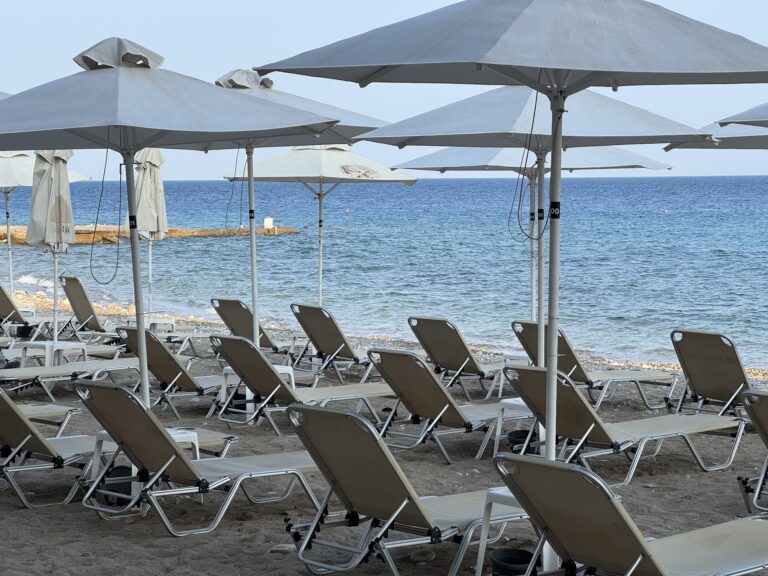
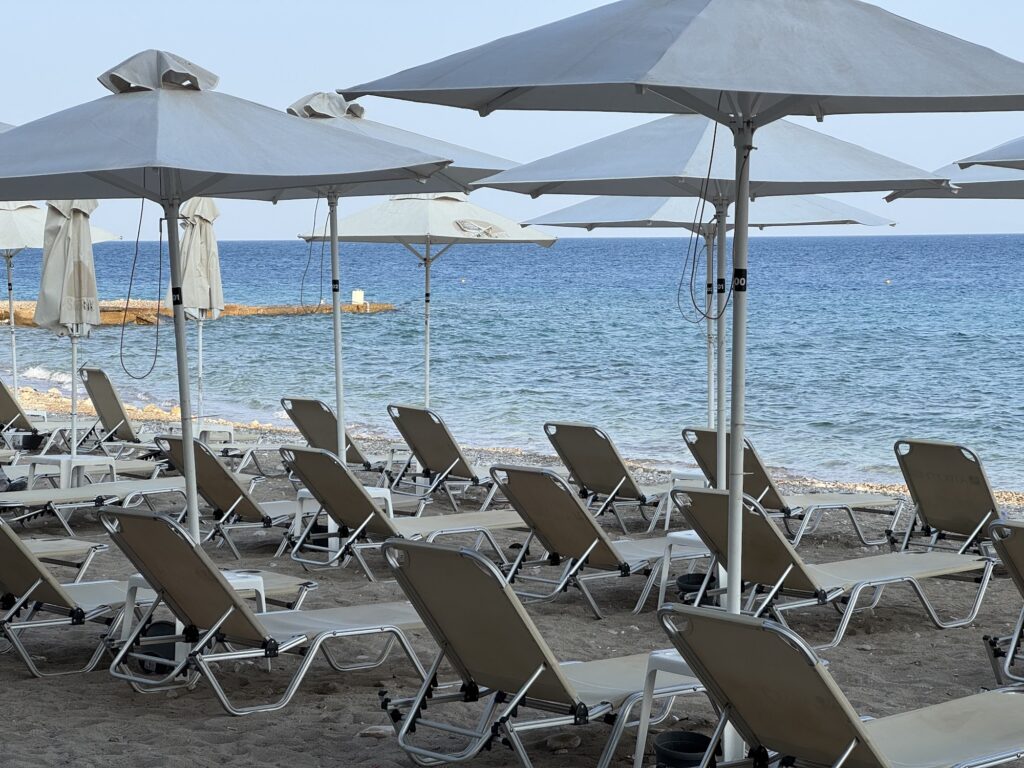
The beach history is specific: Kastelokampos was formerly camping facilities of the Hellenic Tourism Organization (EOT) — the public body that once managed touristic infrastructure across Greece. The facilities have since passed to Patras municipality and function as the city’s closest organised beach. The level of organisation is modest rather than resort-standard; the honest description from the Sandee beach database notes limited basic amenities. The explorepatras.gr municipal site calls it an organised beach. Visitors should calibrate expectations accordingly: a clean, accessible, pebble shore with beach bars nearby rather than a full resort operation.
Getting There: Proastiakos Train From Patras Central (10 Minutes, €1–2, Hourly), or 15-Minute Drive North, Street Parking in Surrounding Residential Streets
The Proastiakos suburban railway of Patras runs from K. Achaia in the west through Patras Central Station and north to Rio, stopping at Kastelokampos en route. From Patras Central Station, the journey takes approximately 10 minutes. Tickets cost €1 to €2. The service connects the beach to the University of Patras and the Rio University Hospital via connecting buses at Kastelokampos station — which is why the station is also used by students and hospital workers, making it a genuinely functional public transport node rather than a tourist-only service.
By car, drive north from Patras city centre on the National Road 8 toward Rio. After 6 kilometres, follow signs for Kastelokampos. Street parking and residential lots are available nearby.
The Beach: Pebble and Mixed Shingle, Gulf of Patras Water, Rio-Antirrio Bridge 3km Ahead, Former EOT Camping Facilities
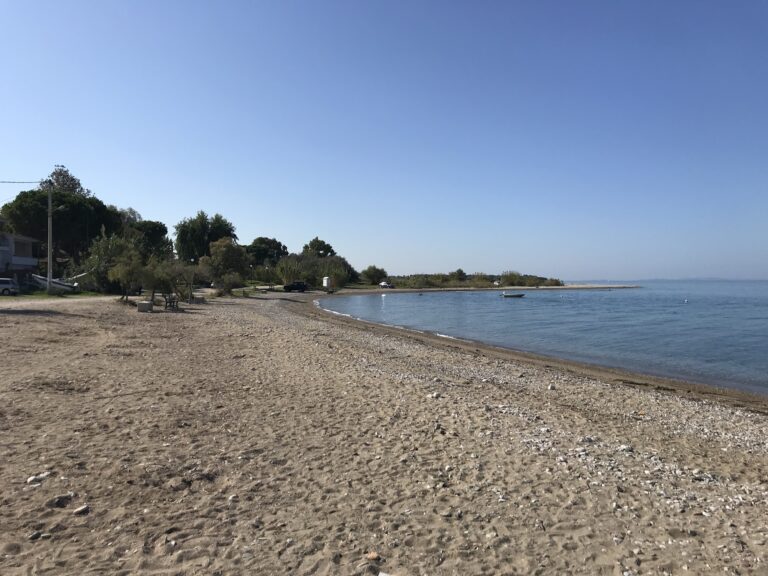
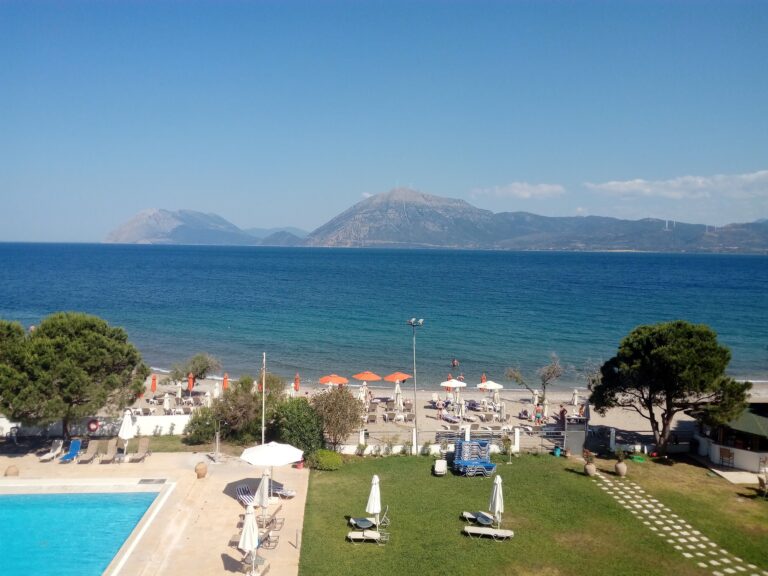
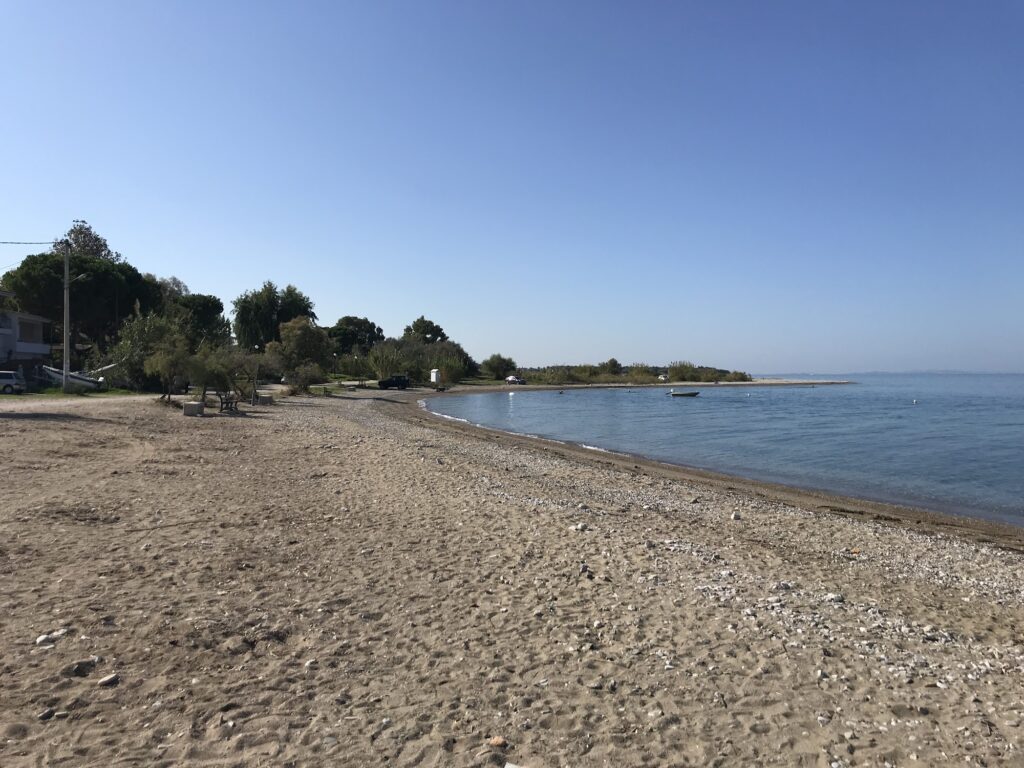
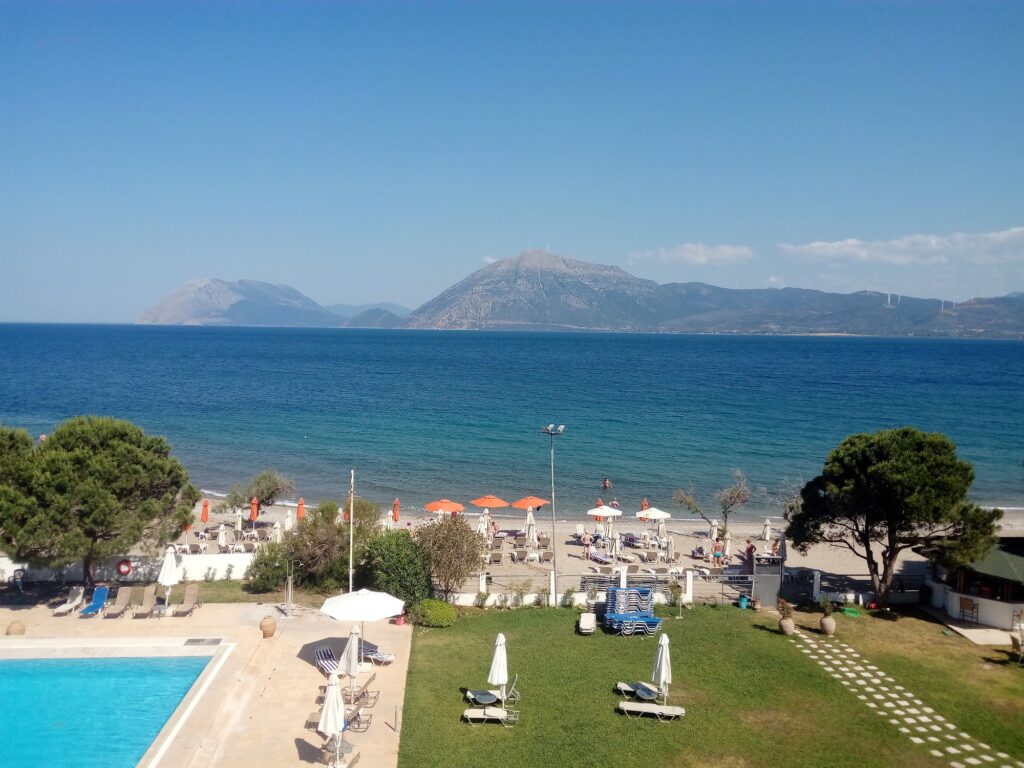
The beach is pebble and fine shingle throughout, with the specific water transparency that the pebble composition produces. The Gulf of Patras at this point faces northwest toward the open Ionian — the waters are consistently described as clear and refreshing. The depth increases at a moderate rate from entry. Water shoes are recommended for comfortable pebble navigation.
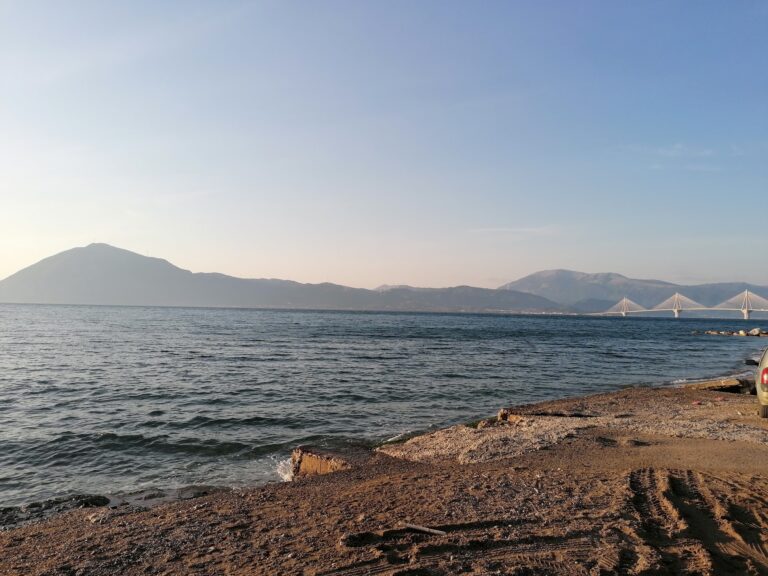
The Rio-Antirrio Bridge is visible 3 kilometres to the north — the four orange cable-stayed pylons and the cable lines visible on the northern horizon from the beach. At night the bridge is illuminated, producing the specific view across the water that Kastelokampos shares with Psani Beach in Nafpaktos on the opposite shore — the same bridge visible from both sides of the gulf, 2.5 kilometres apart at the crossing point.
The Rio Castle: The Venetian Fortress 2.5km North, the Counterpart to Antirrio Across the Strait
The Castle of Rio — historically called the Castle of the Morea — is 2.5 kilometres north of Kastelokampos, at the northern tip of the Rio peninsula where the Rio-Antirrio Bridge begins. The Venetian fortress was built in 1499 by Sultan Bayezid II (the same ruler who built the Fetihe Tzami mosque in Nafpaktos across the water) and served as the primary naval control point for the entrance to the Gulf of Corinth. Its counterpart — the Castle of Antirrio (Castle of Rumelia) — stands directly opposite on the mainland side. The two fortresses together controlled the narrowest point of the gulf entrance; the Rio-Antirrio Bridge crosses the same 2.5-kilometre strait that the castles once guarded.
The Rio Castle now functions as a cultural venue for concerts and events. Entry is free. Walking from Kastelokampos beach to the castle and the bridge viewing point takes approximately 30 minutes along the coastal road.
Patras: The Third City, the Carnival, Saint Andrew, and the Odeon of Patras
Patras warrants a full day beyond the beach. The Carnival of Patras — held in February-March — is the largest in Greece and arguably second only to Rio de Janeiro globally. The Castle of Patras on the hill above the city centre is a Byzantine fortress with panoramic views of the gulf. The Church of Saint Andrew — built on the site where the Apostle was martyred, housing his skull, the silver-decorated cross on which he was crucified, and one of the most significant pilgrimage destinations in the Orthodox world — is 10 minutes from the city centre. The New Archaeological Museum of Patras (opened 2009) houses the most significant finds from the Achaian region and is considered one of the finest regional archaeological museums in Greece.
For a beach experience of a different scale in the same region, Psani Beach Nafpaktos Greece across the gulf in Nafpaktos is 15 minutes by car via the Rio-Antirrio Bridge — the same bridge visible from Kastelokampos. Gribovo Beach Nafpaktos Greece, also in Nafpaktos, is equally accessible from a Patras base.
The Patras Beach Sequence: Kastelokampos in Context
The explorepatras municipal beach guide lists Kastelokampos as the closest organised beach to the city, followed by a series of beaches extending northwest toward Kalogria and southeast toward Aigio along the Gulf of Patras coast. Kastelokampos is specifically identified as the former EOT camping facilities converted to municipal use. Rio Kastro beach is the section near the Rio Castle itself. The full beach circuit along the northern Patras coast is accessible by car along the coastal road, with the train providing the specific alternative for visitors without vehicles.
The Proastiakos as a Beach Tool: 10 Minutes, €1–2, Connects University, Hospital, and Beach in One Line
The Proastiakos connection is the specific feature that makes Kastelokampos different from every comparable city beach in the series. Most urban beaches in Greece require a car or a local bus with limited frequency. The Kastelokampos train stop on the Proastiakos line gives the beach a 10-minute, €1–2, hourly connection to Patras Central Station — making it genuinely accessible for visitors staying anywhere in central Patras without a hire car, including the large student population and the ferry passengers arriving at the port who want a swim before or after their journey.
Kastelokampos Beach at Patras is the closest organised beach to Greece’s third largest city — the former EOT camping facilities converted to a municipal beach, pebble and shingle shore (water shoes comfortable), modest rather than resort-level organisation, the Proastiakos suburban train from Patras Central in 10 minutes (€1–2, hourly), the Rio-Antirrio Bridge visible 3 kilometres north (the longest cable-stayed bridge in Europe), the Venetian Rio Castle 2.5 kilometres north (cultural venue, free entry), the Church of Saint Andrew and the Carnival of Patras in the city, and Psani and Gribovo beaches in Nafpaktos 15 minutes across the bridge.
Take the Proastiakos from Patras Central. Get off at Kastelokampos. Walk 5 minutes to the water.
Map
Sorry, no records were found. Please adjust your search criteria and try again.
Sorry, unable to load the Maps API.
Near by places: