Kavourotrypes: A King's Beach Near Sarti
Profile
Paradise Beach Kavourotrypes: Sand a King Named, Refugees Rebuilt
Greece | Halkidiki | Sithonia | Singitic Gulf
Herodotus records that Xerxes’ fleet passed through ancient Sarti during the Persian king’s invasion of Greece in 480 BC, part of a coastline the historian describes as forcibly recruited into the Persian war effort alongside neighboring towns like Singos and Toroni. The settlement itself, according to local tradition, took its name from a king called Sartios, and it went on to join the Athenian-led alliance against Sparta before Philip II of Macedon destroyed it entirely in 348 BC. By the fourteenth century, a village called “The Sartis” had reappeared on the same ground, this time as a dependency of the Xiropotamou Monastery on Mount Athos, only to be abandoned again in the seventeenth century when pirates made the coast too dangerous to hold. For roughly two centuries after that, nobody lived here at all beyond a handful of monks and monastery workers.
Modern Sarti, the town closest to Paradise Beach Kavourotrypes, only came back to life in 1922, when Greek refugees fleeing Afisia, an island in the Sea of Marmara off the Turkish coast, arrived here after their own community was burned in the chaos following the Greek-Turkish War. They’d been evacuated so hastily that most left everything behind, full shops and houses, assuming they’d return; instead, they rebuilt an entirely new fishing village on ground that had already been abandoned once before.
A Labyrinth of White Granite and Hidden Sand
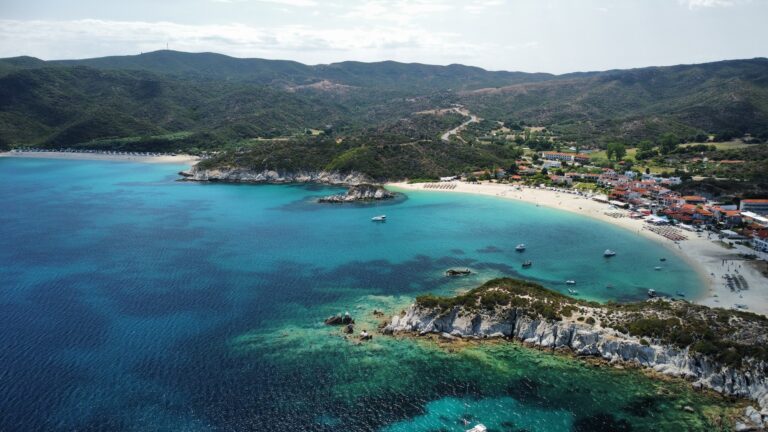
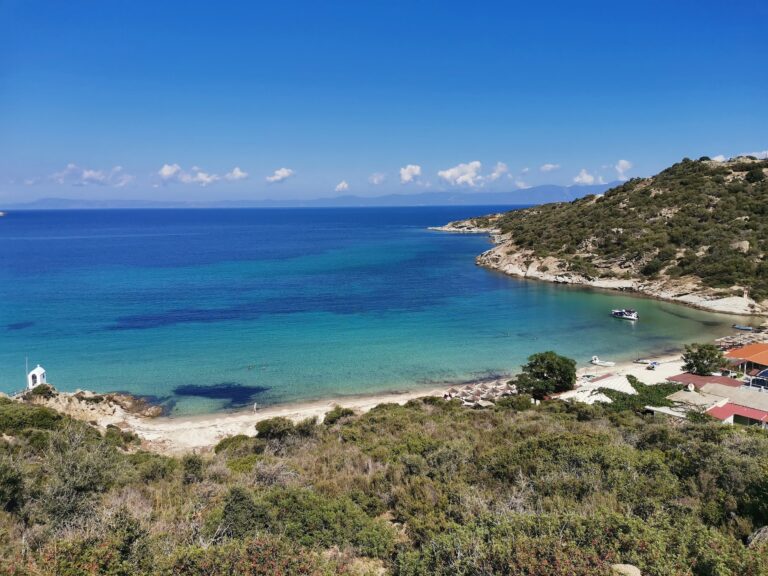
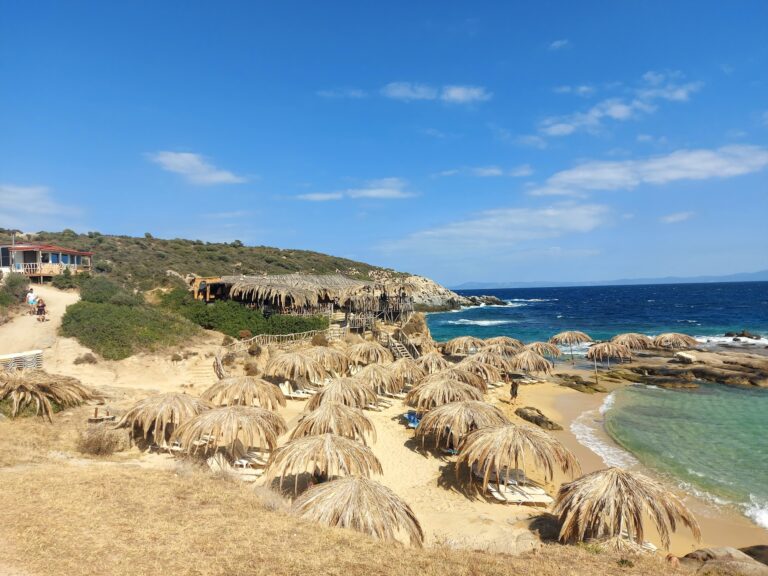
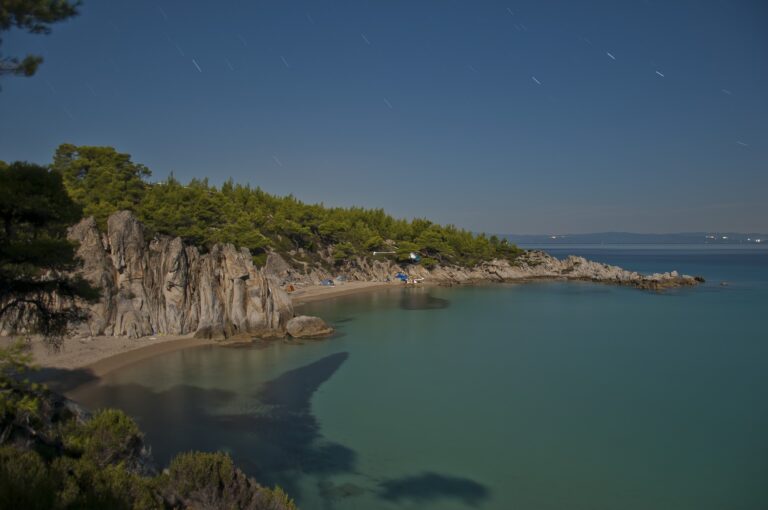
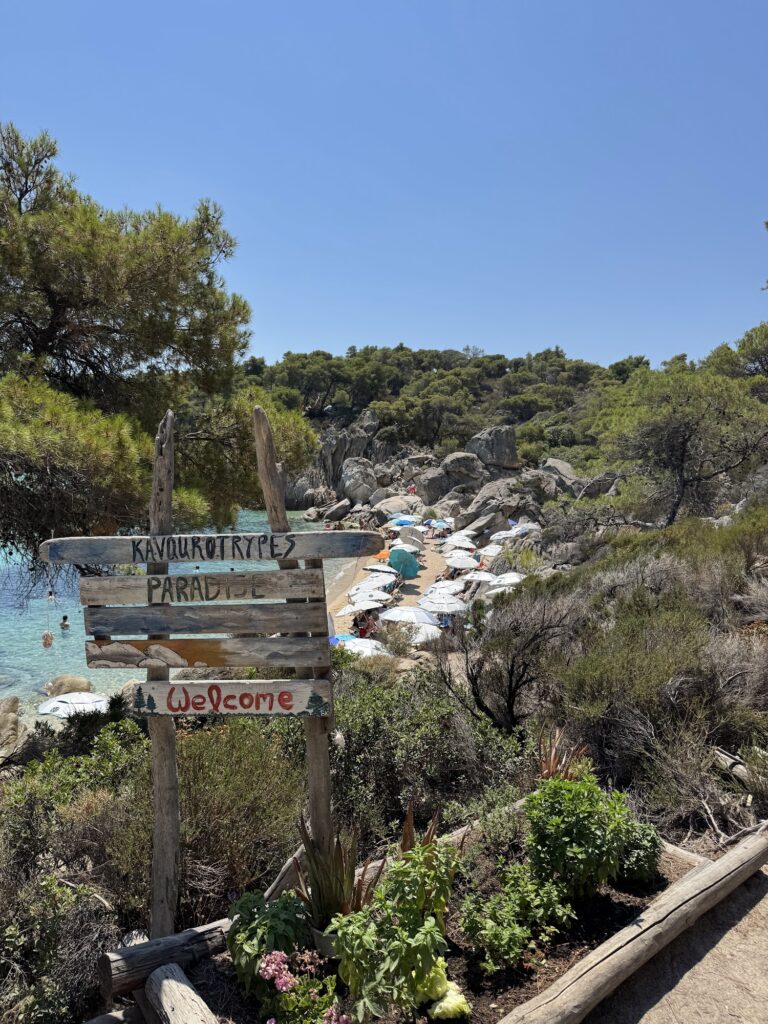
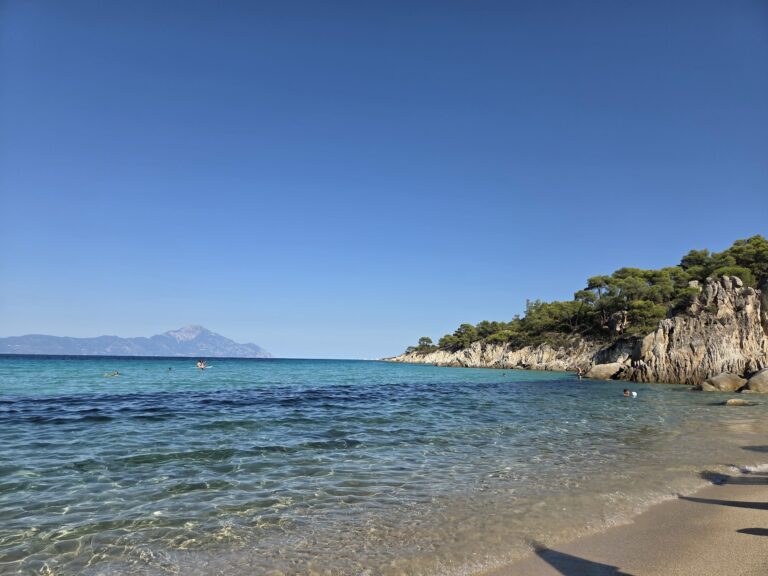
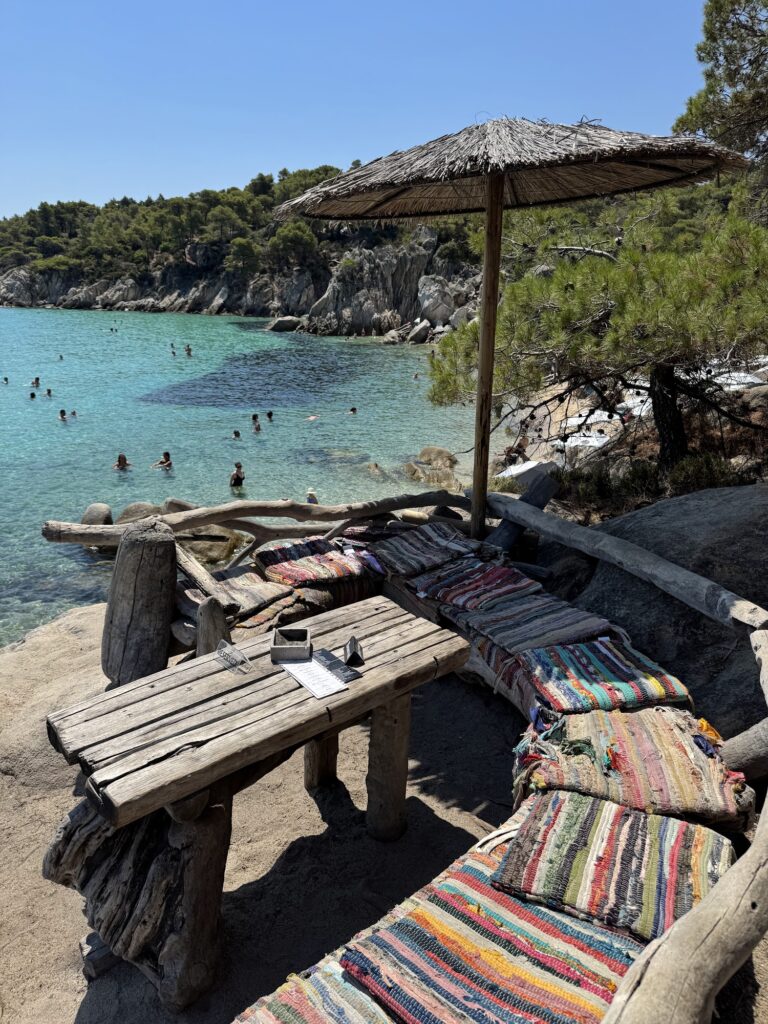
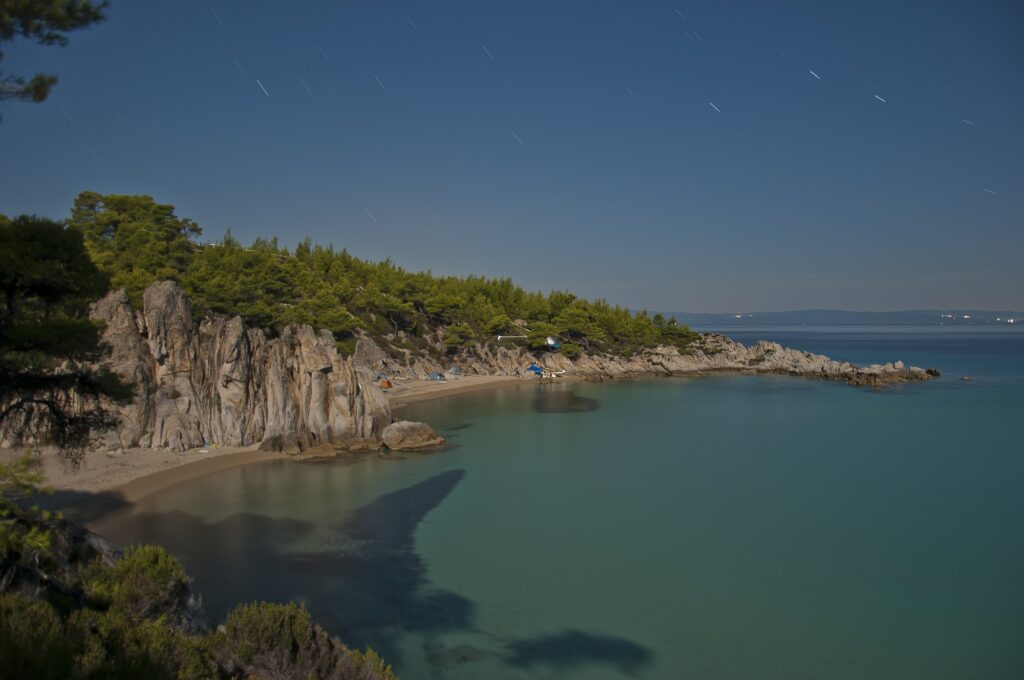
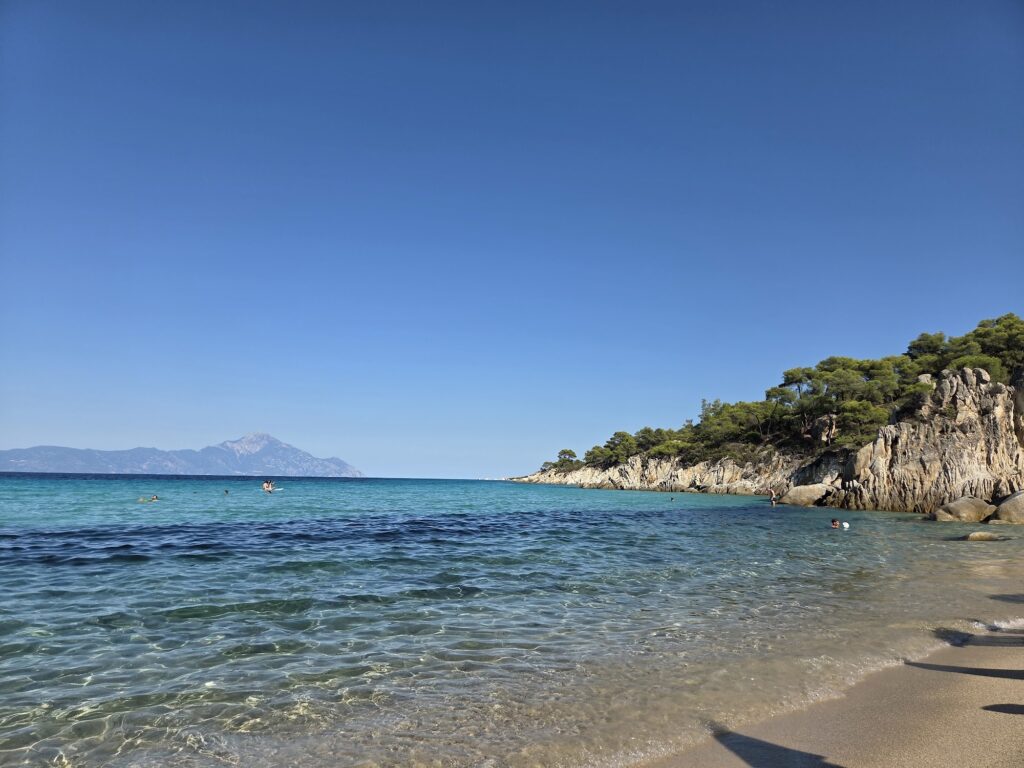
Kavourotrypes translates roughly to “crab holes,” and the name fits once you’ve seen the terrain, small interconnected coves separated by smooth, wind-sculpted white granite that creates natural pockets of sand rather than one continuous shoreline. I found this genuinely different from any beach I’d visited elsewhere in Halkidiki, the rock formations doubling as private lounging platforms even when the more accessible coves filled up during peak summer. The seabed here runs primarily white sand, and I found the water genuinely reflected that brightness back, a pool-like clarity that shifts toward a striking orange-gold near the rocks as the sun drops toward evening, which explains the beach’s popular nickname among locals and regular visitors.
Water Built for Snorkelers Willing to Explore the Rocks
The complex underwater rock structures here support genuinely active marine life, and I found snorkeling among the granite crevices considerably more rewarding than at open, sandy beaches elsewhere on this coast, silver sea bream moving between colorful patches of underwater flora. Given how naturally divided this beach is by rock rather than any organized management, dogs would likely be fine here on a leash following the standard rule for Greek beaches, and I’d call the terrain itself, granite platforms and hidden sand pockets, a genuinely engaging environment for older children willing to scramble a bit, though I’d watch younger kids closely given how quickly the coves shift between shallow and deep water.
Getting There Through the Pine Forest
Reaching Kavourotrypes means following the circular Sithonia road roughly six kilometers north of Sarti toward Vourvourou, watching for small handmade signs or a cluster of parked cars among the pines rather than any official highway exit, since the actual turn-off is an unmarked dirt path into the forest; from the parking area, a five-to-ten-minute walk down winding footpaths, a mix of forest floor and smooth rock, leads to the water, and I’d recommend sturdy shoes over sandals for the descent. Arriving before ten in the morning made a real difference during peak July and August weeks, when the informal forest parking fills quickly enough that a later start meant a considerably longer walk in from wherever space was left.
Standing Where a King’s Name Outlasted His City
By the time I made my way back up through the pines on my last evening, the granite rocks behind me had gone a deep orange in the fading light, and I thought about how strange it is that this exact stretch of coast has been destroyed, abandoned, and rebuilt so many times, by Macedonian kings, by pirates, by an entire population forced to start over after losing everything, the beach itself simply continuing to do what it’s always done regardless of who happened to be living beside it that century.
Map
Sorry, no records were found. Please adjust your search criteria and try again.
Sorry, unable to load the Maps API.
Near by places: