Sarakina, Elaiochori: Near Where Rome's Republic Ended
Profile
Sarakina, Elaiochori: A Village of Olive Trees Beside a Battlefield That Ended the Roman Republic
Greece | Elaiochori | Eleftheres, Kavala
Elaiochori, the village this beach takes its name from, means simply “village of olive trees” in Greek, and it holds a small Olive and Oil Museum that takes the name seriously rather than just decoratively — a real, specific institution in a village of under a thousand people. I find something fitting about a beach named for a place built around something as unglamorous and essential as olive production, rather than a saint or a myth, the way so many other beaches along this coast are named.
The history that actually stopped me, though, sits a short drive inland at Philippi, founded around 360 BC by settlers from Thasos and renamed by Philip II of Macedon, father of Alexander the Great, after he came to the city’s defence against besieging Thracian tribes. The site’s real historical weight comes from 42 AD, when Octavian and Mark Antony faced Brutus and Cassius, the men who had assassinated Julius Caesar, on the plain just outside the city walls. Octavian’s victory effectively ended the Roman Republic and cleared the path toward the empire that followed — a hinge point in Western history decided on ground less than half an hour from where I’d later swim. A few decades after that battle, the Apostle Paul arrived in Philippi and performed what’s recorded as the first Christian baptism in Europe, baptising a woman named Lydia — meaning this same small stretch of countryside hosted both the effective end of the Roman Republic and the documented beginning of organised Christianity on the continent, within about a century of each other.
Getting There: 30 Kilometres West of Kavala, via Elaiochori
I followed the Old National Road (PEO) west from Kavala toward Thessaloniki, watching for signs pointing to Elaiochori and continuing the final five kilometres from the village centre down to the beach. The full drive took twenty-five to thirty minutes.
The regional KTEL Kavalas bus runs frequent routes along the west coast, stopping near the beach entrance for anyone without a car. Free parking sits in organised lots directly behind the beach bars, though I’d arrive before eleven in the morning during peak season, since the closer spots fill quickly.
The Beach: Over a Kilometre of Sand, Blue Flag, Genuinely Spacious
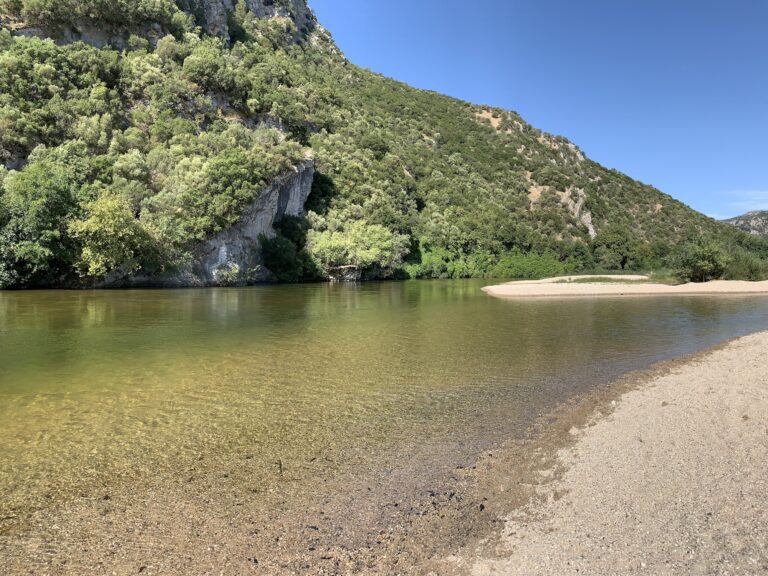
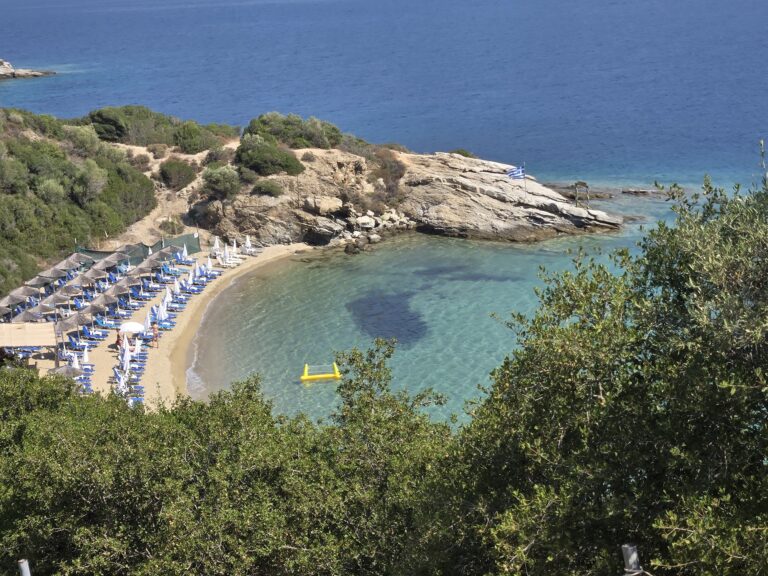
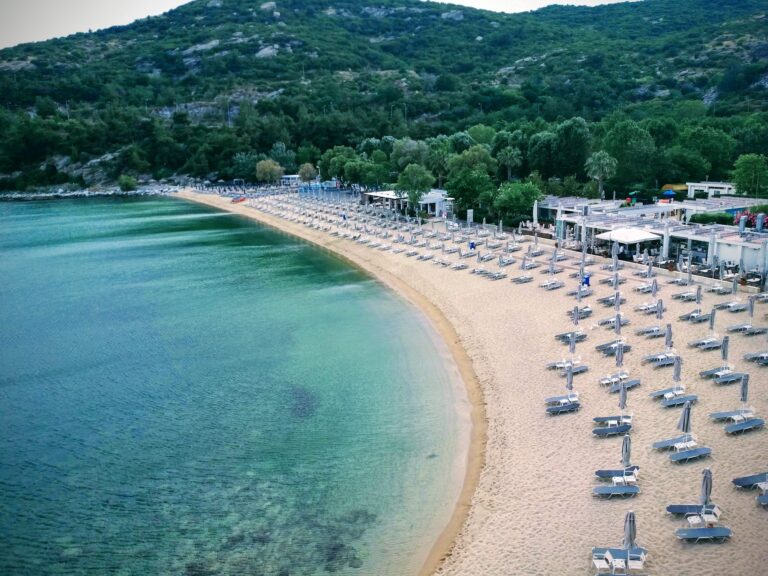
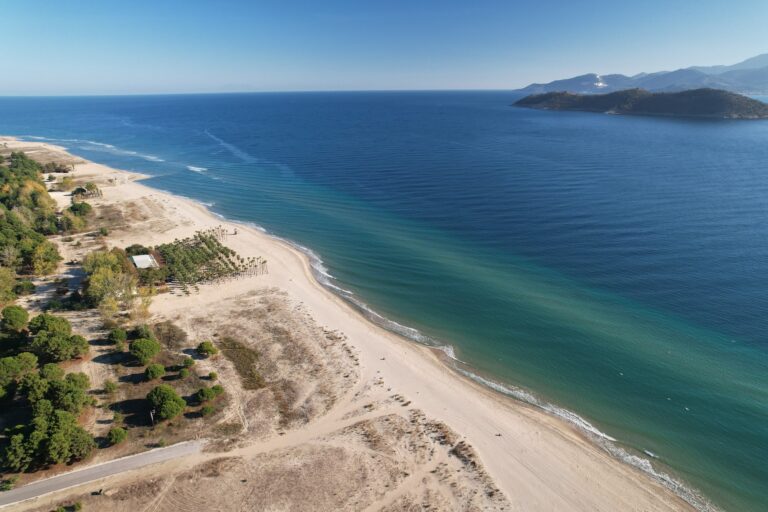
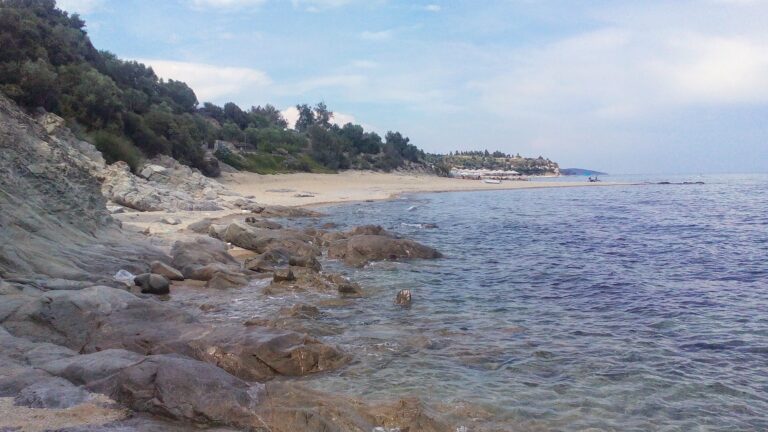
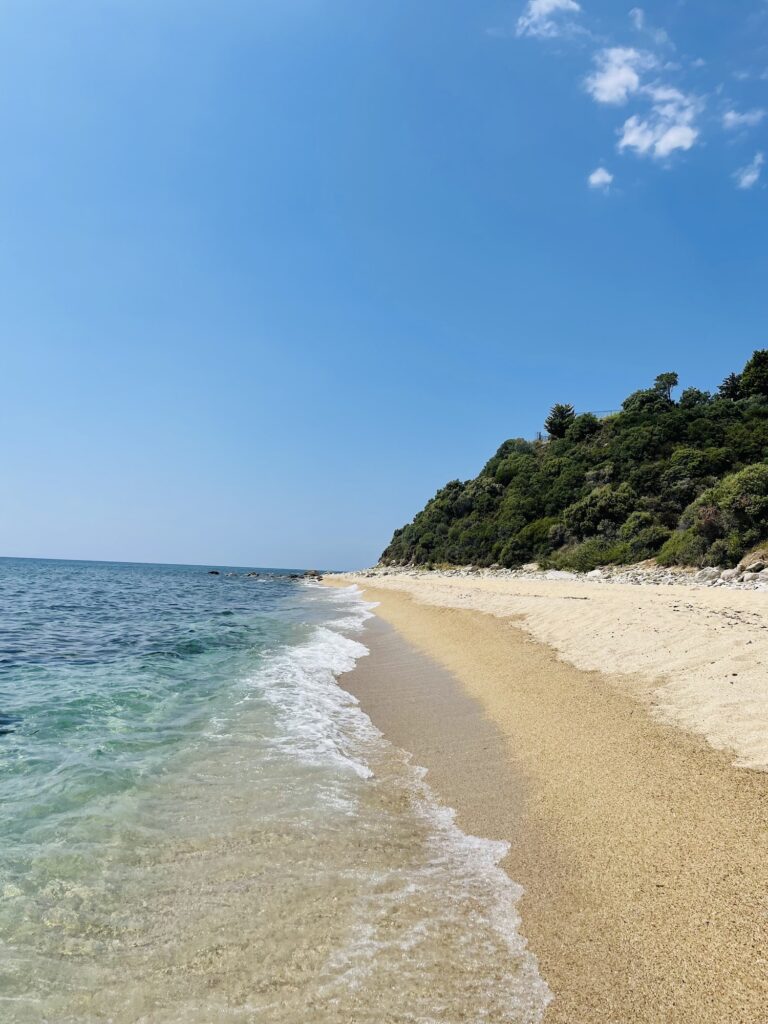
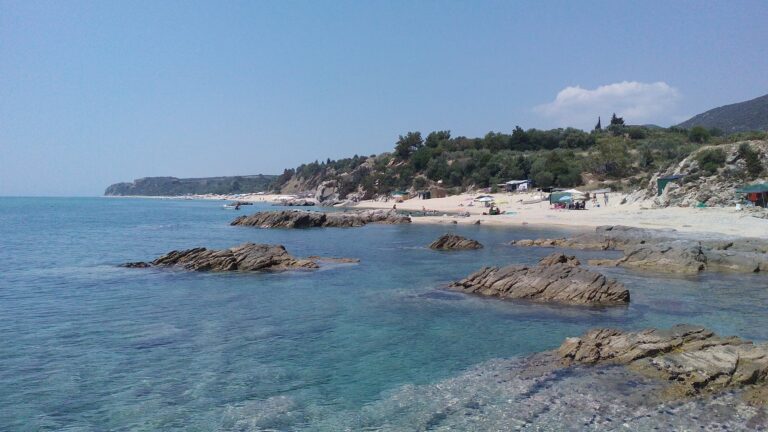
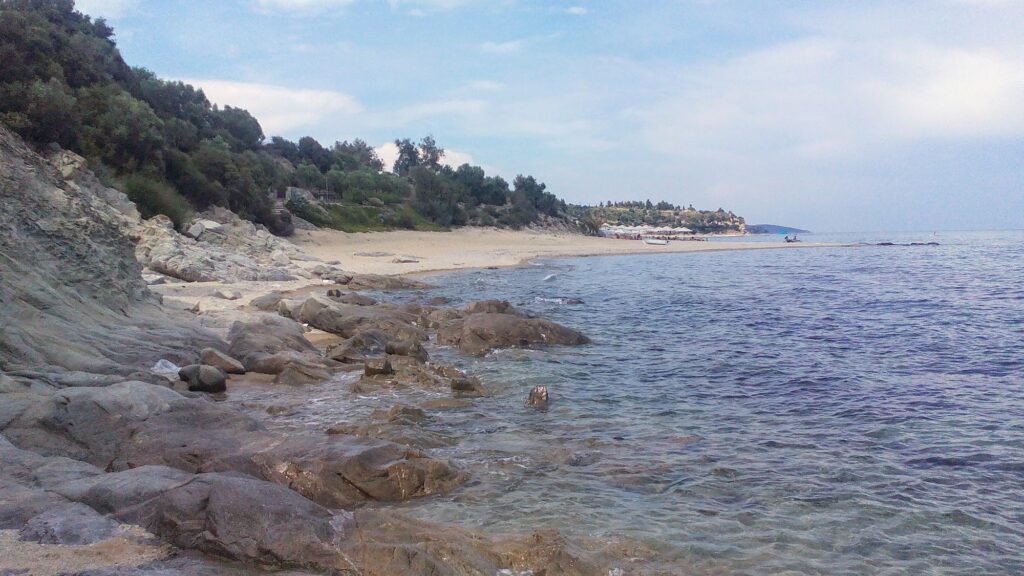
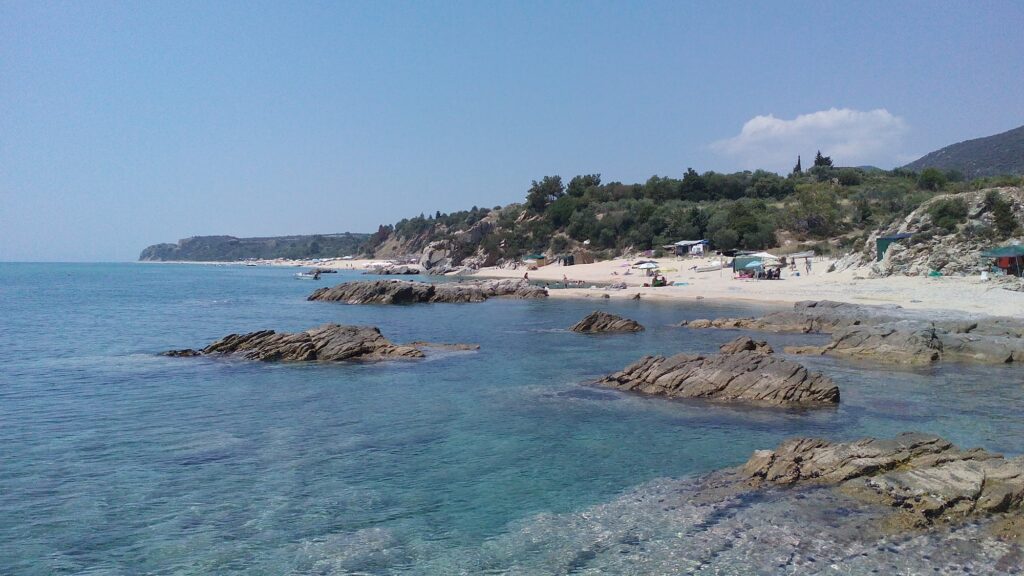
Sarakina runs more than a kilometre, fine golden sand mixed with small, sun-bleached pebbles, the seabed sloping gradually enough for a long, easy swim or a comfortable wade with younger children. The beach holds Blue Flag certification, and its sheer length means that even at the height of summer, finding a quieter stretch away from the busier organised sections isn’t difficult — a genuine point in its favour compared to some of the more cramped beaches further along this coast.
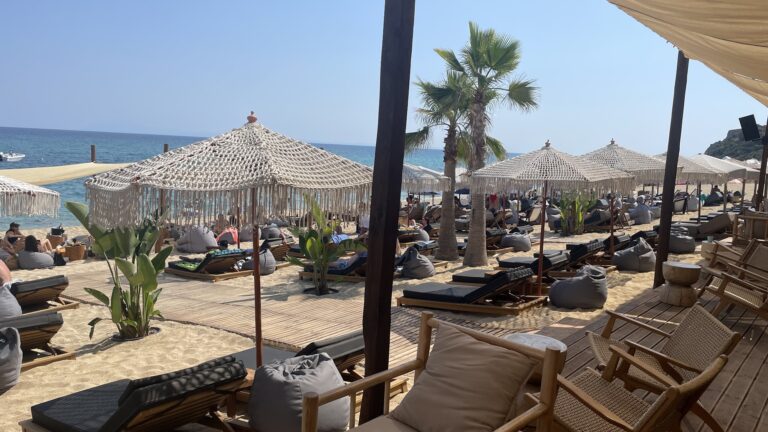
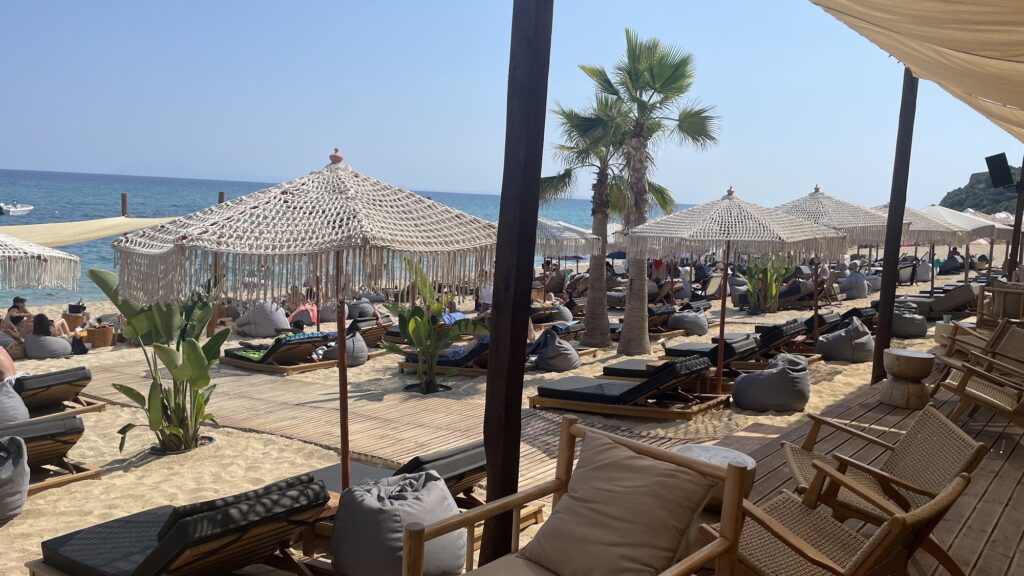
Beach bars including Paloma, right on the sand, offer sunbeds and umbrellas alongside food and drink, and the open exposure to the gulf keeps the water clear and well-circulated rather than stagnant. Showers, changing cabins, and restrooms cover the practical side, and beach volleyball courts give active visitors something beyond swimming.
The Wider Kavala Coast
Sarakina sits within a string of beaches I’ve already covered along this same stretch of the Kavala coast — Nea Peramos Beach Kavala Greece, Ofryniou Beach Kavala Greece, and Glastres Beach Kavala Greece all sit within a relatively short drive, each with its own character, and I’d treat a stay here as an opportunity to sample several of them rather than committing to just one. Elaiochori’s own Olive and Oil Museum and the village’s bakery, supermarket, and taverna make it a genuinely workable, quiet base for a few days rather than purely a beach to drive in and out of.
Sarakina, near Elaiochori in the Eleftheres municipal unit of Kavala, sits a short drive from ancient Philippi, where a 42 AD battle effectively ended the Roman Republic and where the Apostle Paul later performed the first recorded Christian baptism in Europe. Elaiochori itself, “village of olive trees,” holds its own small Olive and Oil Museum. The beach itself runs over a kilometre, Blue Flag certified, sand mixed with fine pebble, genuinely spacious even in peak season. Thirty kilometres west of Kavala, with Nea Peramos, Ofryniou, and Glastres all within easy reach along the same coast.
Take the PEO west from Kavala toward Elaiochori, then follow signs the final five kilometres to the beach. Visit Philippi if ancient history interests you at all — it’s genuinely significant rather than a minor detour. Spread out along the full length of the sand rather than settling for the busiest section near the bars.
Map
Sorry, no records were found. Please adjust your search criteria and try again.
Sorry, unable to load the Maps API.
Near by places: