Nea Peramos Megara: Not the One Near Kavala
Profile
Nea Peramos, Megara: Refugees From the Same Lost Town Split Between Here and Kavala
Greece | Nea Peramos | Megara, West Attica
There are two towns in Greece called Nea Peramos, and I want to be direct about this before describing either one. This is the one in West Attica, within the Municipality of Megara, facing Salamis across the Saronic Gulf — not the smaller seaside resort near Kavala in northern Greece. The two share more than a coincidental name: both were founded by refugees expelled in 1922 from the same lost Asia Minor town, Peramos, modern Karşıyaka near Bandırma in Turkey, following Greece’s defeat in the Greco-Turkish War. Some of the displaced population settled near Kavala; others were given land here, near Megara, by the government of Eleftherios Venizelos, and built this new settlement starting in 1928. Before the 1990s, the town carried a different name entirely — Megalo Pefko, Big Pine — and only later adopted Nea Peramos to honour the original home its founders had lost.
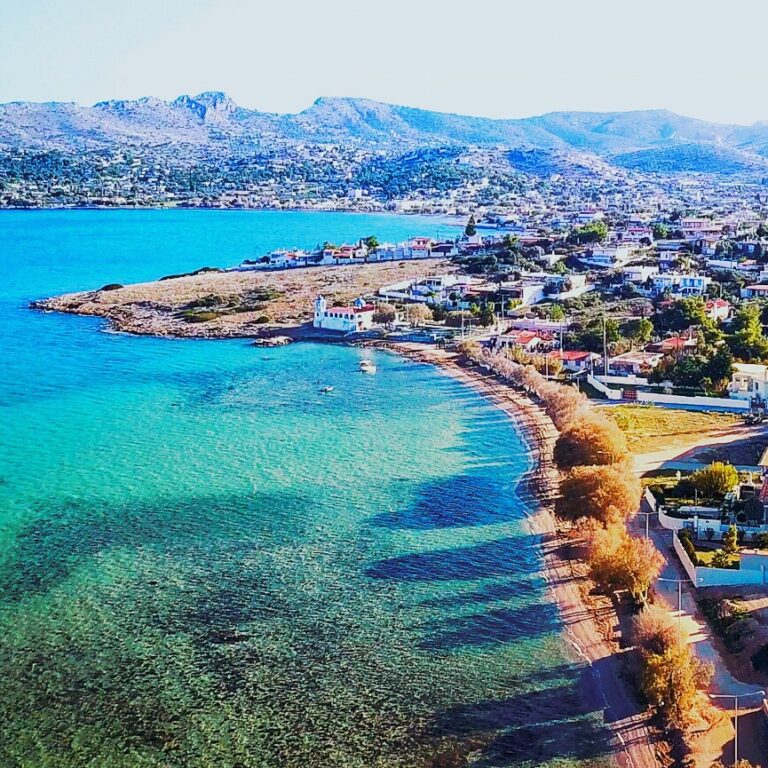
The settlement sits in the eastern part of the Megaris plain, mountains to the north, the Saronic Gulf to the south, with a clear panorama of Salamis from the shore. A small fishing harbour still operates, and a ferry line connects Nea Peramos to Salamis, near the Monastery of Panagia Faneromeni — the same monastery I encountered researching beaches on Salamis itself elsewhere in this series, a genuine and direct maritime connection between the two places rather than a coincidental proximity.
The town’s cultural calendar reflects its founding directly: the Fair of St. George each April, the Klidonas festival around the summer solstice, and Sardine Night in late August — a celebration built around the same fish that sustained the original refugee community’s livelihood. The Association of Peramians Kyzikians, still active, keeps the connection to the lost homeland formally alive nearly a century later.
Getting There: 35 Kilometres From Athens, via the A8 Motorway or the Proastiakos Train
The drive from central Athens follows the A8 motorway toward Corinth, taking the marked exit for Nea Peramos — the route is efficient and well-signposted, the journey taking thirty-five to forty-five minutes. The Proastiakos suburban railway also passes directly through the town, with a station putting the beach within a short walk or quick taxi ride for anyone preferring not to drive.
KTEL buses on the Thiseio or Megara lines connect to the town centre directly. Free parking is generally available along the coastal road behind the beach.
The Beach: Sand and Small Pebble, a Gradual Entry, Calm Water Sheltered by Salamis
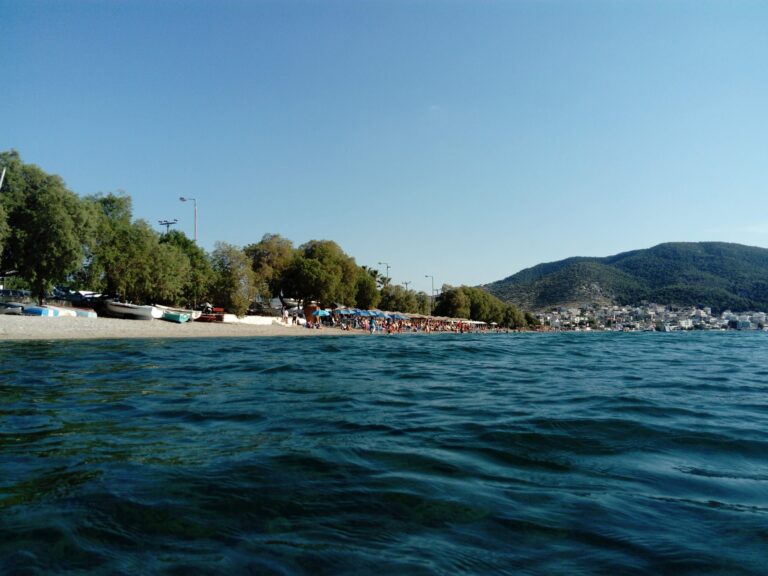
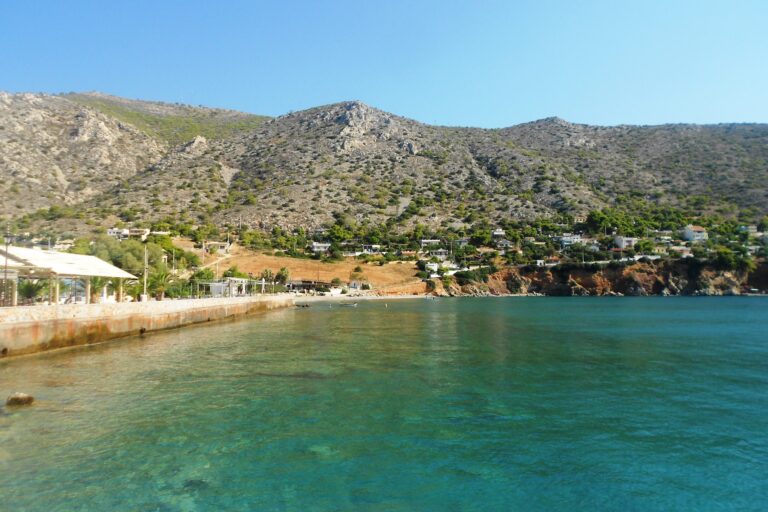
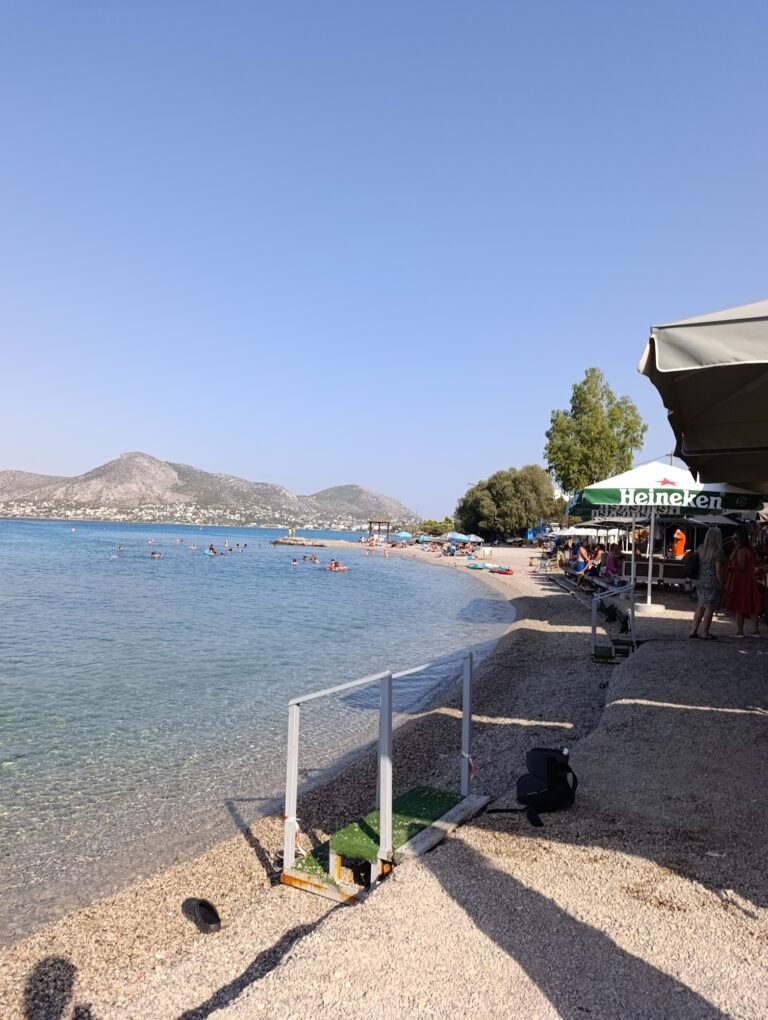
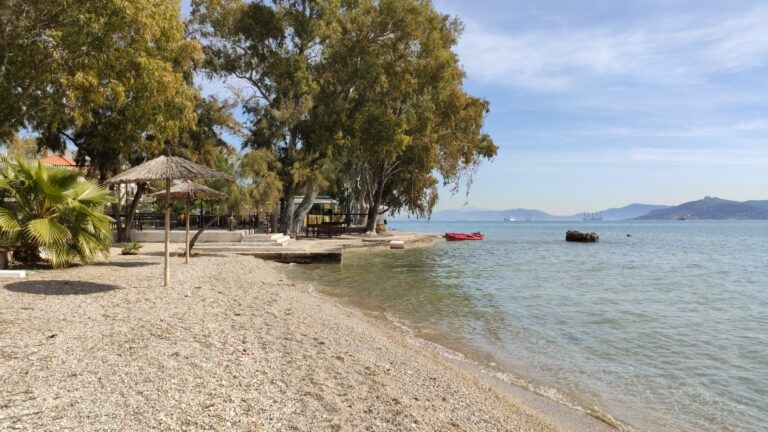
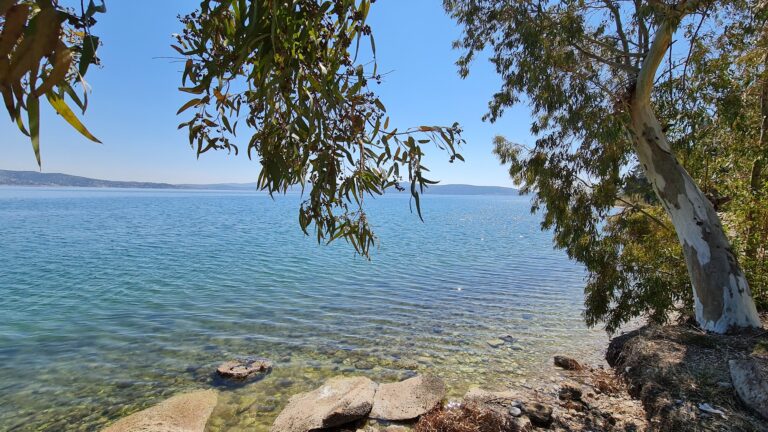
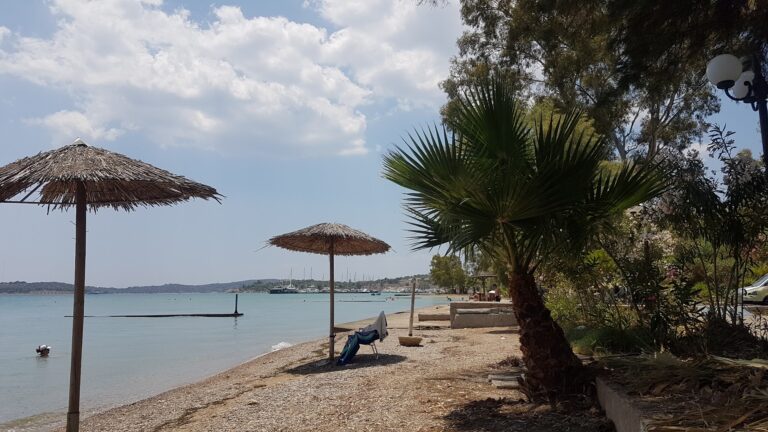
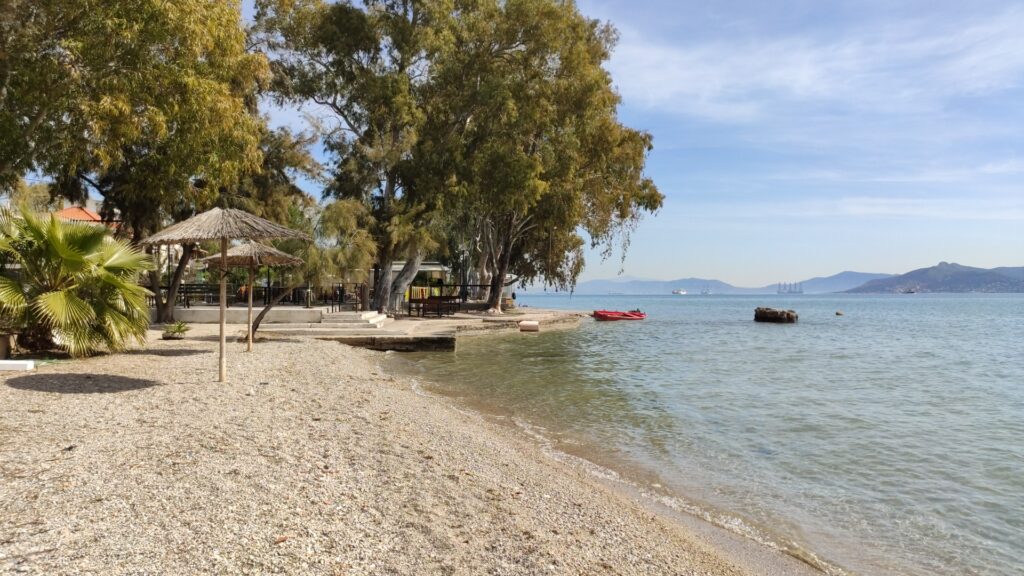
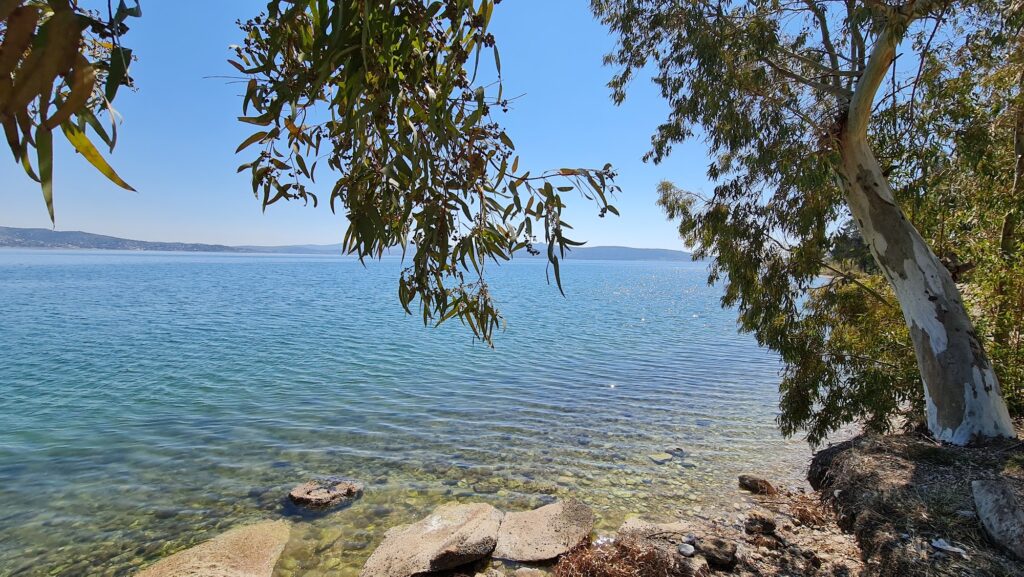
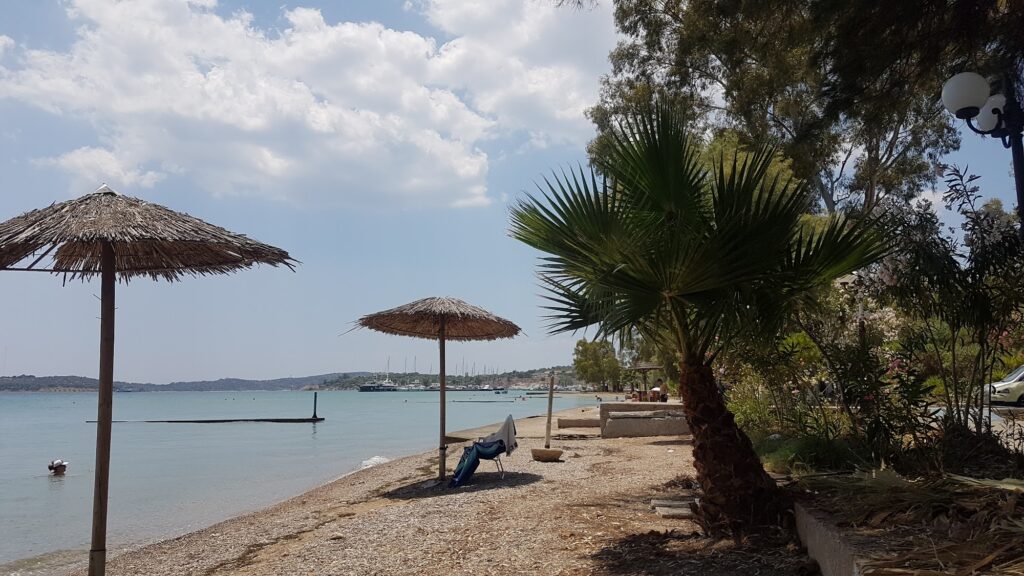
The shore mixes fine sand with small pebbles, the seabed sloping gently enough to suit families and younger swimmers without difficulty. The bay stays notably calm, sheltered by the surrounding hills and by Salamis itself sitting just across the water — the same shelter, in effect, that makes the wider Saronic Gulf one of the more consistently sailable stretches of water in Greece, less exposed to the Meltemi than the open Aegean further east.
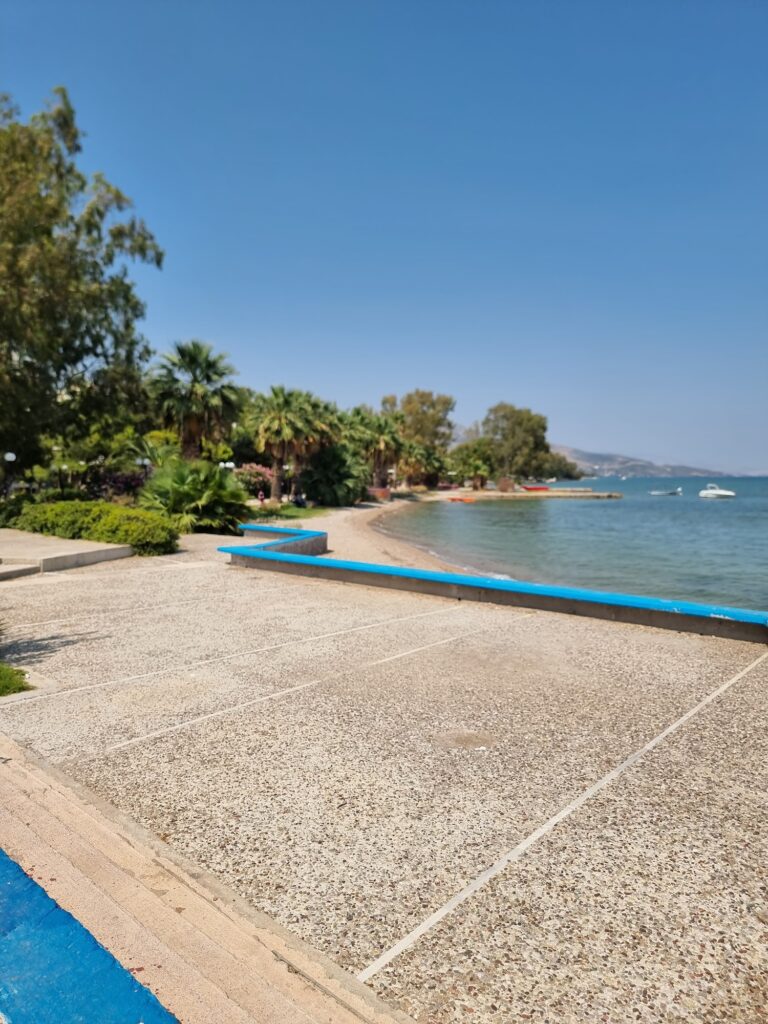
A paved promenade runs the length of the beach, and the town’s fishing tradition is still visible in its tavernas, several specifically known for fresh-caught Saronic seafood and shellfish, alongside contemporary restaurants along the same stretch. Sunbeds and umbrellas are available through organised sections in season, with open space remaining for visitors preferring their own gear.
Nea Peramos, in the Municipality of Megara, West Attica, should not be confused with the differently located Nea Peramos near Kavala in northern Greece — though the two share a genuine historical connection, both founded by refugees from the same lost Asia Minor town, Peramos, expelled in 1922. This Nea Peramos was called Megalo Pefko before the 1990s, founded in 1928 on land granted by Eleftherios Venizelos’s government. Sand and small pebble beach, calm water sheltered by Salamis directly across the gulf, a working fishing harbour with a ferry connection to the island, and a cultural calendar — the Fair of St. George, Klidonas, Sardine Night — that still reflects its founding community. Thirty-five kilometres from Athens via the A8 motorway or the Proastiakos train.
Drive the A8 or take the Proastiakos. Confirm which Nea Peramos you’re headed to before setting out. Eat the sardines if your visit lines up with the August festival.
Map
Sorry, no records were found. Please adjust your search criteria and try again.
Sorry, unable to load the Maps API.
Near by places: