
Ofryniou Beach Kavala: Amphipolis 15 Min, Blue Flag
Profile
Ofryniou Beach (Costa Ofrynio), Kavala: The Strymonic Gulf Resort Created by a Developer Who Built 3,500 Residences Since 1996, Where the Kasta Tomb and the Lion of Amphipolis Are 15 Minutes Inland
Greece | Paralia Ofryniou | Pangaio Municipality, Kavala Regional Unit, Eastern Macedonia
The Kasta Tomb at Amphipolis was discovered in 2012 and excavated between 2014 and 2019. It is the largest known tomb in Greece — a circular tumulus 497 metres in circumference, 3 metres high — and the most significant archaeological discovery in Macedonia in the modern era. The tomb contained five chambers, a sphinx gateway, caryatid columns, and a mosaic floor depicting the abduction of Persephone. The occupant is not definitively identified. The leading theories connect the tomb to Alexander the Great’s family and inner circle — his mother Olympias, his wife Roxana, or another figure of the Macedonian royal court. The mystery has not been resolved, and the excavation is ongoing.
Amphipolis itself — the ancient city founded by Athens in 437 BC, captured by Philip II of Macedon in 357 BC, used as Alexander’s military-administrative base during the Asian campaigns — is 15 kilometres from Ofryniou beach. The Lion of Amphipolis, a 5.3-metre-high marble lion reconstructed from fragments found in the Strymon river, stands at the ancient bridge site on the river’s bank. The Amphipolis Archaeological Museum holds the finds from the Kasta Tomb excavations.
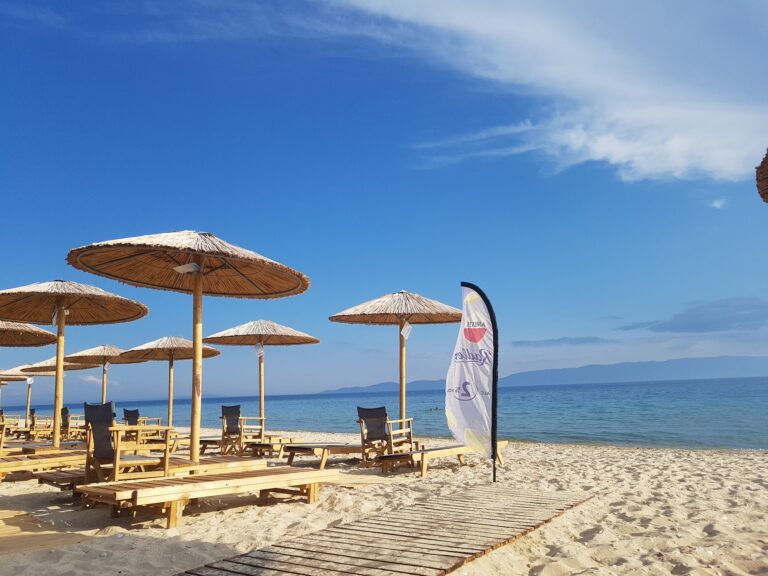
Ofryniou beach — also known as Tuzla, its Ottoman-era name meaning “salt works” in Turkish, a reference to the salt extraction that once characterised this gulf coast — is the holiday resort 15 kilometres west of this archaeology. The beach stretches along the Strymonic Gulf for approximately 17 kilometres of coastline through the Paralia Ofryniou settlement, with an organised central section of 2.5 kilometres wide and 100 metres deep. The resort as it exists today is largely the creation of the Kourtidis Group, a local construction company that has built over 3,500 residences in the area since 1996 and 580 more in Kavala by 2023 — a genuinely unusual example of planned coastal resort development by a single developer in the Greek context.
Getting There: A2 Egnatia Odos Exit Ofryniou, 35 Minutes From Kavala, 47 Minutes From Thessaloniki, KTEL Bus, Free Parking
From Kavala, take the A2 (Egnatia Odos) west and exit at Ofryniou. The drive takes approximately 35 minutes. From Thessaloniki, take the A2 east — approximately 47 minutes. The A2 exit is the direct and fast approach; the older coastal road is slower but more scenic.
KTEL bus services connect Ofryniou with Kavala, Thessaloniki, Drama, and Serres — the position of Paralia Ofryniou at the junction of all four cities’ service radii makes it unusually well-connected by bus for a beach resort. From Drama (40 minutes) and Serres (40 minutes), the beach draws day visitors from two significant inland cities.
Free parking is available along the coastal road and in designated lots throughout the settlement.
The Beach: 2.5km Main Organised Section of a 17km Coastal Strip, Blue Flag, Fine Sand, Shallow Entry, Calm Strymonic Gulf Water
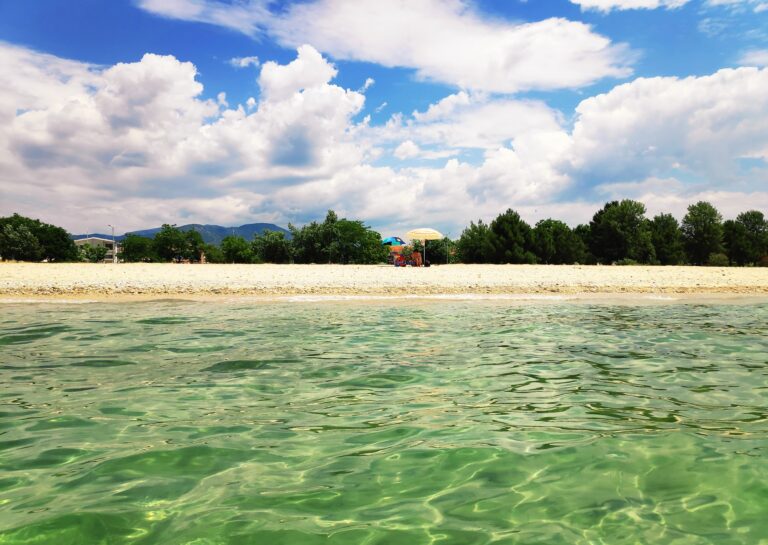
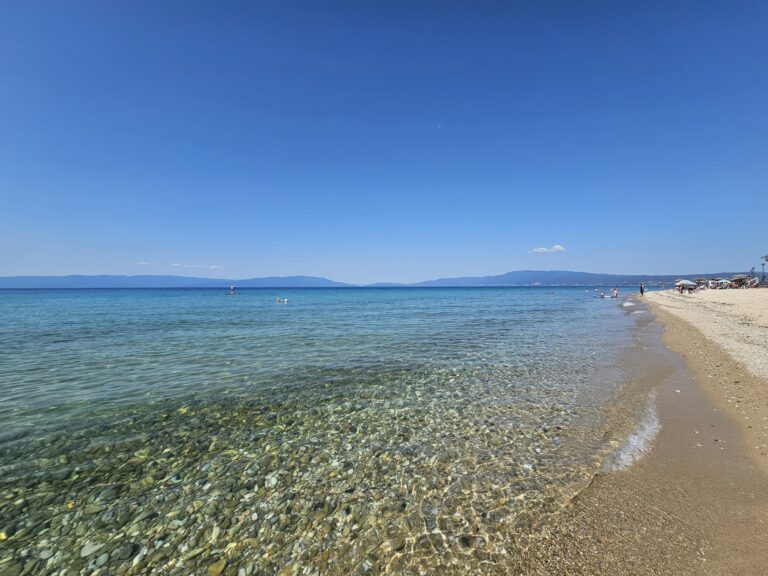
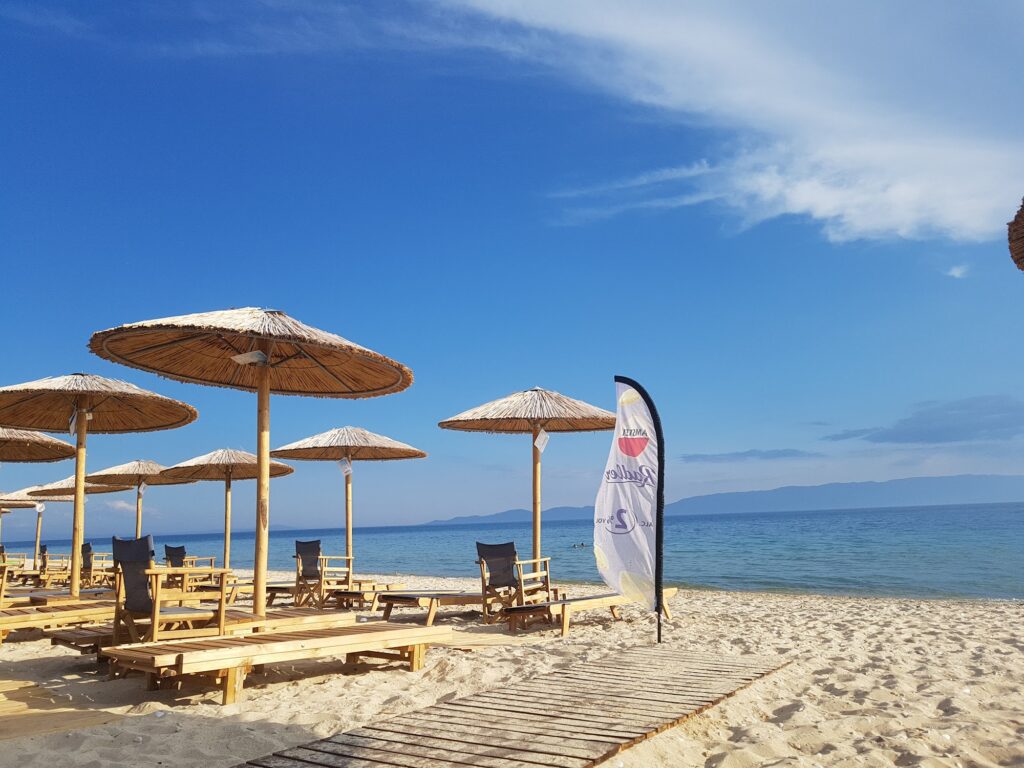
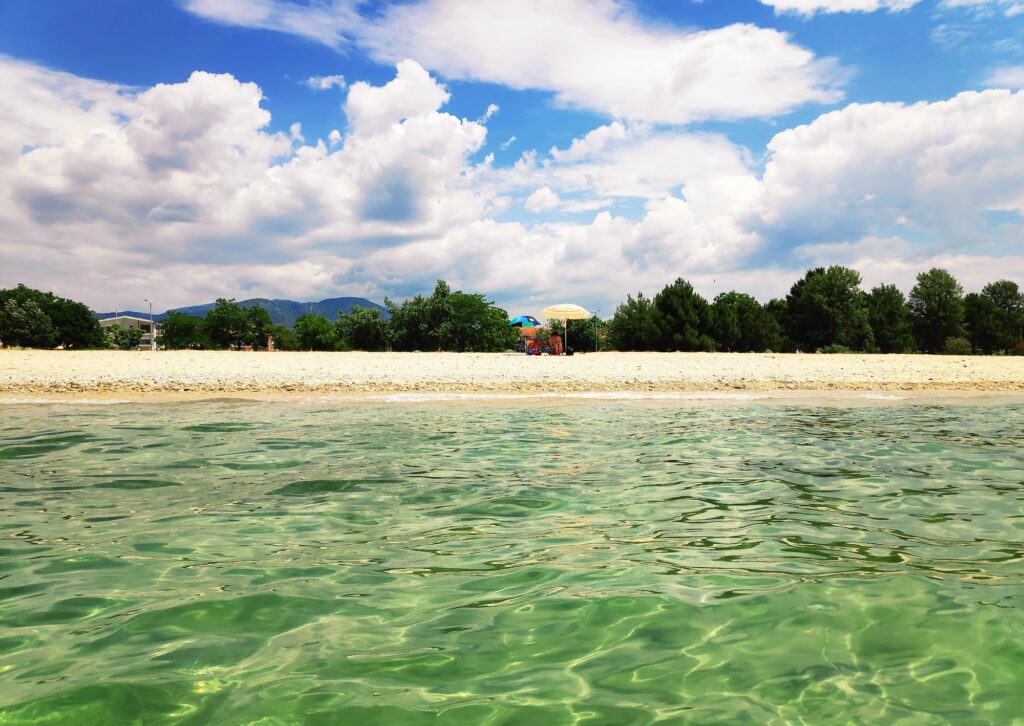
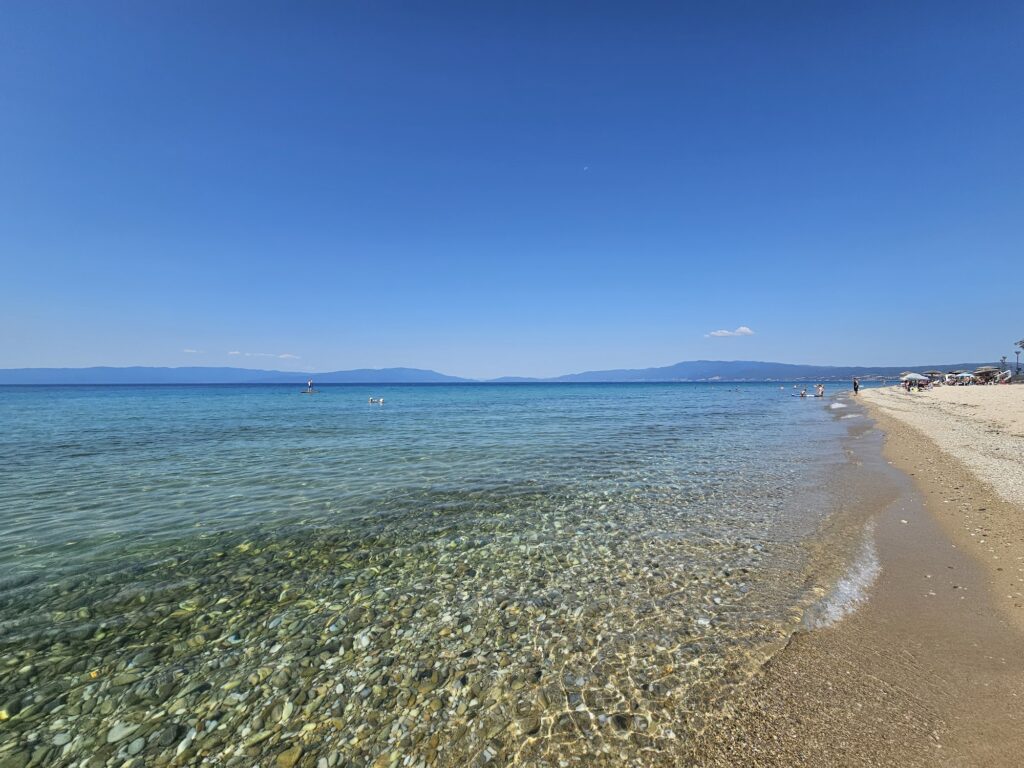
The main beach section is 2.5 kilometres long and approximately 100 metres wide — wide enough that even in peak August the sand is not compressed. The Strymonic Gulf water is calm, warm (22°C in early summer, 27–28°C in August), and consistently Blue Flag awarded. The sandy seabed with gradual depth increase makes it one of the more family-appropriate beaches in the Kavala region. The gulf’s enclosed geometry reduces the wave action that the open Aegean coast to the east produces.
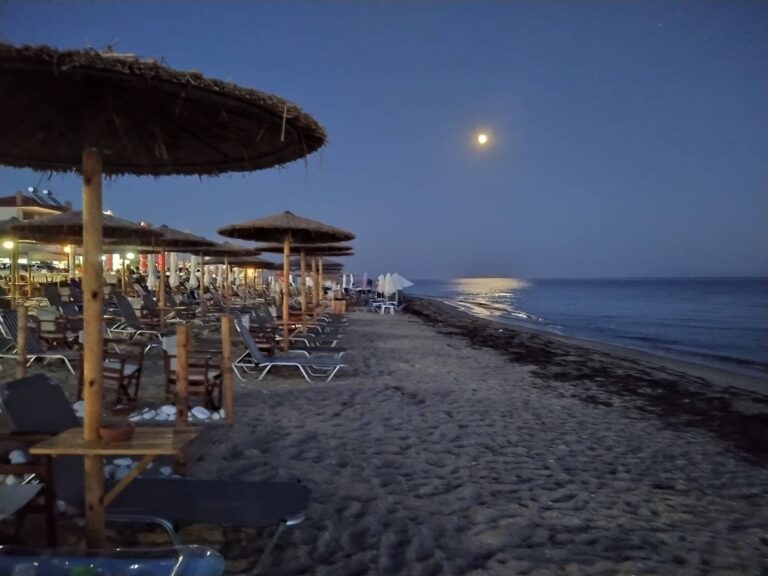
Beyond the organised central section, the 17km coastal strip has sections of varying development density — some quiet and natural, others with beach bars and organised infrastructure. The access road along the coast allows visitors to drive the length and find the section that suits them.
The Kourtidis Development: A Planned Resort Created by a Single Developer
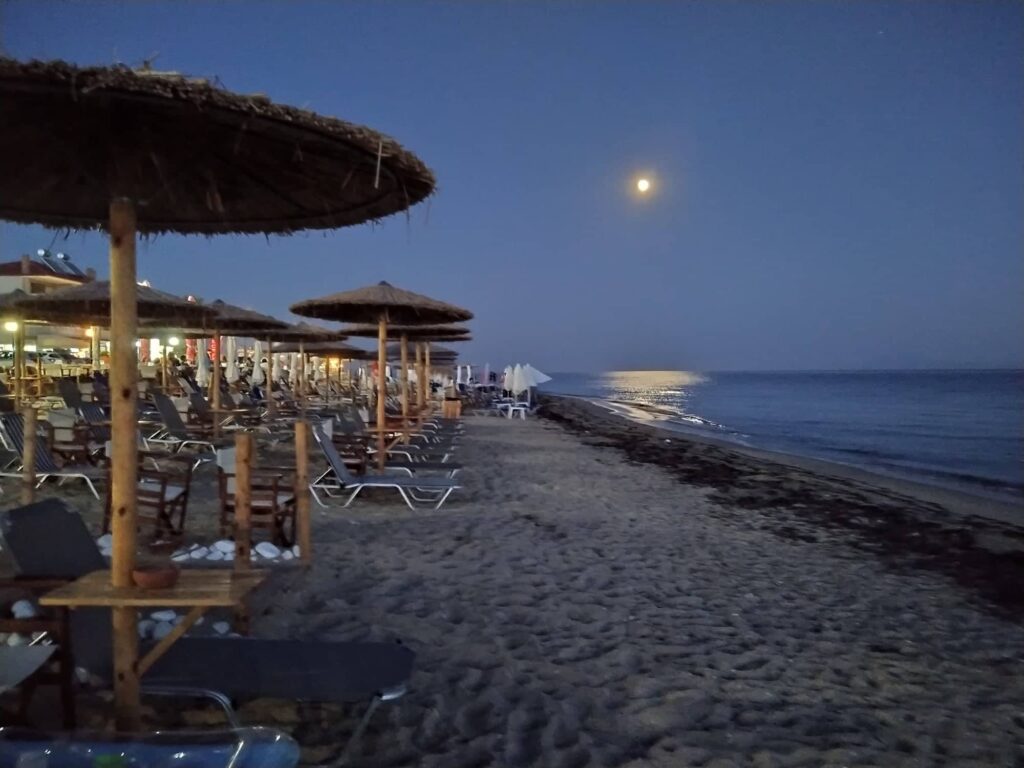
The story of Ofryniou beach as a modern resort is specific: the Kourtidis Group, a construction company based in the area, has systematically invested in the development of Paralia Ofryniou since 1996. Their own materials describe the beach as “the birthplace of the Group” and “the jewel of the Strymonic Gulf.” Over 3,500 residences built in the area since 1996 represents a scale of investment unusual in small Greek coastal settlements. The resort infrastructure — restaurants, cafes, and beach bars operating year-round — reflects the developer’s interest in creating a four-season destination rather than a purely seasonal beach resort.
The result is a coastal settlement that feels more planned and more continuously inhabited than many Greek beach towns, with a property market that attracts buyers from Greece, the Balkans, and central Europe.
Amphipolis: 15 Minutes Inland, the Kasta Tomb, the Lion, the Archaeological Museum
The day programme that every Ofryniou guide recommends: beach in the morning, Amphipolis in the afternoon. The ancient city is 15 kilometres inland from the beach, and the Kasta Tomb excavation site is within Amphipolis municipality. The Archaeological Museum of Amphipolis houses the Kasta Tomb finds — the sphinxes, the caryatids, the mosaic, the skeletal remains from the tomb chambers — in a purpose-built exhibition.
The Lion of Amphipolis stands on the north bank of the Strymon river at the site of the ancient bridge — the crossing point that gave the city its strategic importance for two thousand years.
Mount Pangaio: 1,956m, Directly Behind the Beach, Mountaineering Trails
Mount Pangaio rises to 1,956 metres directly behind the Ofryniou coastline. The Mesoropi Trail reaches the Mati peak at the summit. The mountain was sacred in antiquity — it was the location of the Dionysus oracle, older than Delphi by some accounts, where Orpheus was said to have been torn apart by the Maenads. Herodotus mentions the gold mines of Pangaio that funded Philip II’s military campaigns and ultimately Alexander’s conquests.
The combination of beach, ancient city, and sacred mountain within a 30-kilometre radius makes Ofryniou one of the more historically layered beach destinations in the series. The series has covered the Ammolofoi Beach Nea Peramos Greece 30km east — the other major Kavala region beach on the same A2 axis. Perigiali Beach Kavala Greece is the city-adjacent contrast, 35 minutes east.
Ofryniou Beach (Costa Ofrynio) in Paralia Ofryniou, Kavala regional unit is the 17km Strymonic Gulf coast resort — also called Tuzla (Ottoman for “salt works”), shaped largely by the Kourtidis Group developer since 1996 (3,500 residences), 2.5km main organised Blue Flag section (fine sand, shallow, wide), the Kasta Tomb and Lion of Amphipolis 15 kilometres inland, Mount Pangaio (1,956m, Dionysus oracle, Philip II gold mines) directly behind, 35 minutes from Kavala on the A2, 47 minutes from Thessaloniki, beach bars and restaurants operating year-round.
Take the A2 west from Kavala. Exit at Ofryniou. Swim in the morning. Drive to Amphipolis after lunch.
Map
Sorry, no records were found. Please adjust your search criteria and try again.
Sorry, unable to load the Maps API.