Michaliou Kipos Beach Karpathos: Shells in the Stone
Profile
Michaliou Kipos Beach Karpathos Greece: The Cliff Walls Here Are Full of Shells That Are Several Million Years Old
Greece | Afiartis | Karpathos, Dodecanese
The shells embedded in the cliff walls at Michaliou Kipos Beach are several million years old. When they formed, this part of the southern Dodecanese sat beneath the Aegean Sea, and the sediment of that ancient seabed is what built the tuff cliffs now framing this small bay. Standing at the base of those walls and counting the fossilised bivalves packed into the stone is a specific experience — you are looking at the floor of a sea that predates the island you are standing on, made visible by the particular erosion of the rock around it. The same shells appear on the seabed close to shore, still readable through the clear water, which makes the transition from geological history to active marine life unusually immediate here.
The name translates to Michael’s Garden — kipos in Greek meaning garden — and the low-lying coastal scrub that covers the approach to the beach gives the name a plausible explanation, though the landscape does not look much like a garden in any domestic sense. It is dry, thorny, and exposed to the consistent wind of the southern Karpathos coast, and the garden quality is more in the specific character of the bay itself: enclosed, sheltered relative to the wider coast, with the emerald water sitting flat on calm mornings in contrast to the choppier sea outside.
Getting to Michaliou Kipos Beach Karpathos Greece: West Side of the Airport, the Canyon on Foot
The approach follows the same road used for Diakoftis Beach Karpathos, heading southwest from Pigadia toward the airport in the Afiartis area, approximately 16 kilometres from the capital. The two beaches share an access corridor but diverge: Diakoftis lies on the eastern side of the airport, while Michaliou Kipos lies on the western side, and the turn for Michaliou Kipos comes at the point where the asphalt road ends and the dirt track begins. A small parking area sits adjacent to that point, and from there the descent to the beach is on foot through a short canyon — the passage is narrow enough to register as a transition between the upper terrain and the beach itself rather than a simple path. The canyon opens onto the sand with the bay visible ahead and the tuff cliffs on either side.
The dirt track is manageable with a standard rental car driven carefully rather than a specific 4×4, though the final section should be taken slowly. The beach is described as having very easy access overall despite the canyon section, which reflects the shortness of the walk rather than its simplicity.
Michaliou Kipos Beach Karpathos Greece: Tuff Cliffs, Sand, Emerald Water, and Planes Overhead
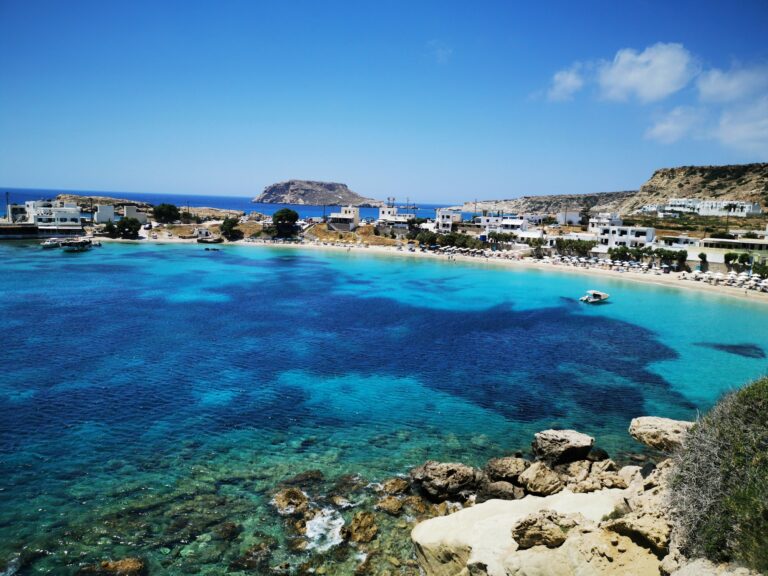
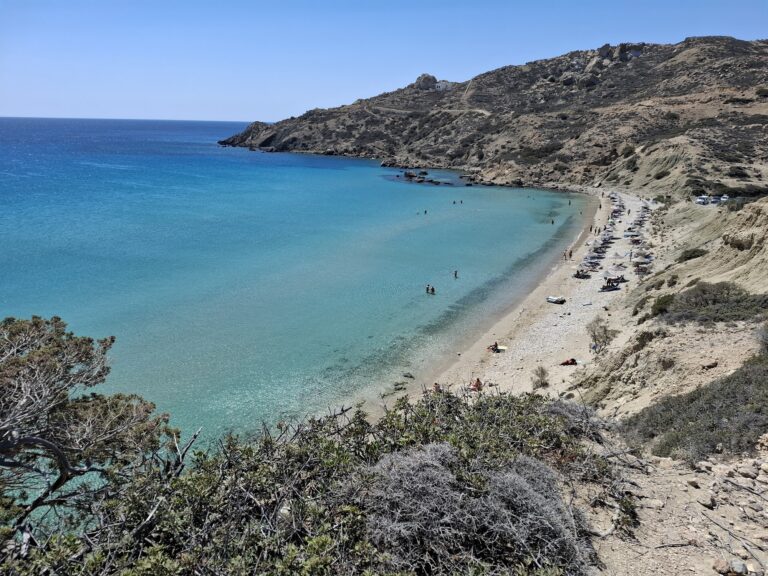
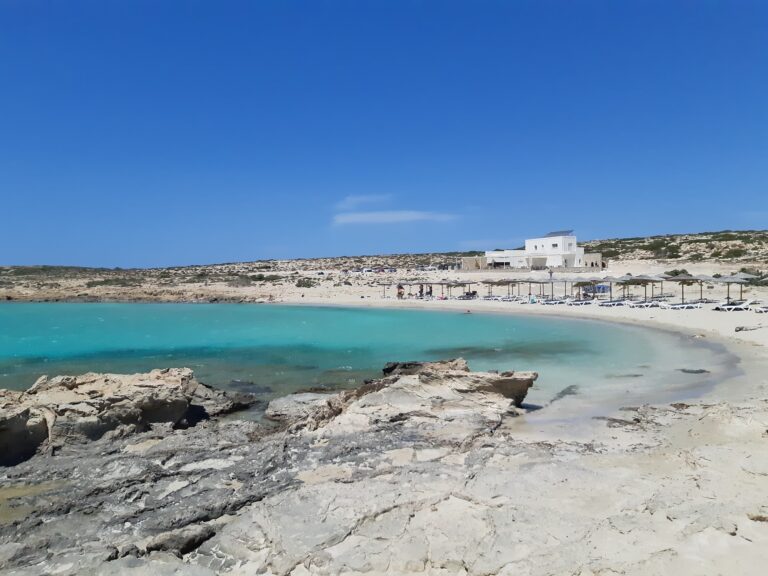
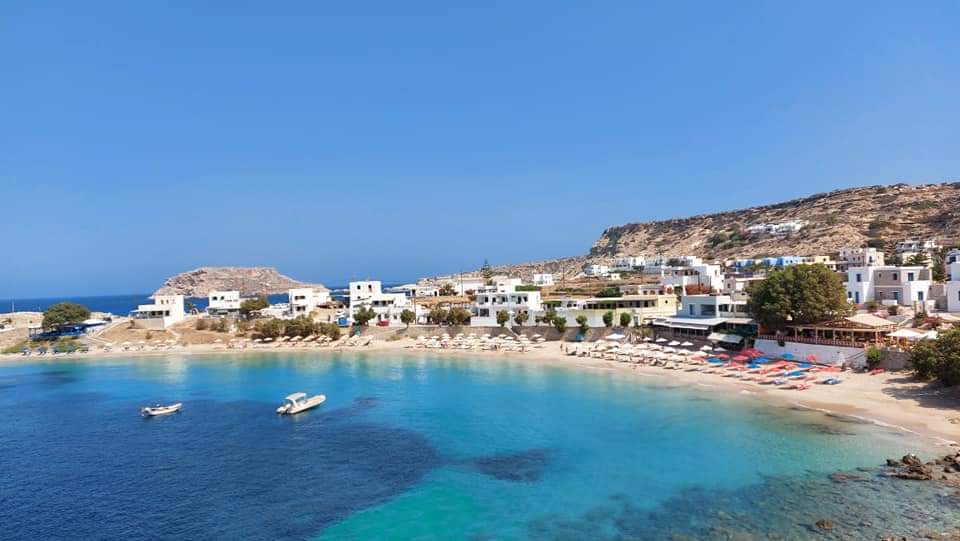
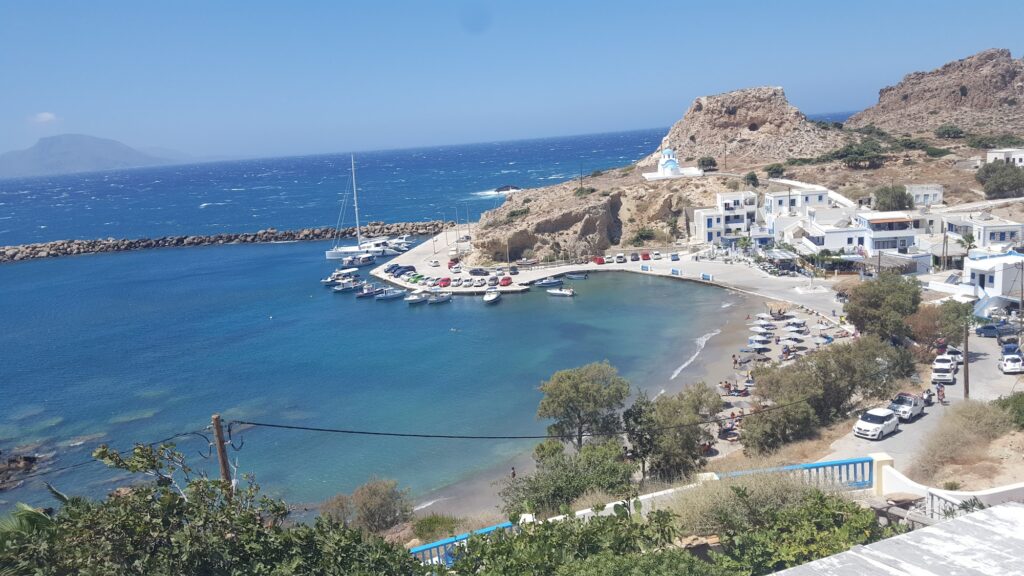
The bay is a small lagoon of sand and fine pebbles, the water a clear emerald-to-turquoise over a gently shelving seabed that remains shallow for a comfortable distance. The tuff cliffs on either side contain the visible fossilised shells, and the caves eroded into the cliff base by wind and water provide natural shade at certain hours — the same caves that shelter Mediterranean monk seals when the beach is quiet, which it is more often than not outside of the peak summer weeks. Sunbeds and umbrellas are available in season, alongside a small beach bar operating at basic capacity, though the beach has historically been unorganised enough that bringing your own water and shade is still sensible advice.
The one distinctive drawback, recorded independently in multiple accounts, is the airport. Karpathos Airport sits immediately adjacent, and planes on final approach pass directly overhead at low altitude. The sound and proximity are notable enough that some visitors record it as the main thing they remember about the beach beyond the geology. For others, the flight path is irrelevant against the quality of the water and the cliffs. It is worth knowing before arriving rather than discovering mid-swim.
Snorkelling at Michaliou Kipos rewards more effort than average because the fossilised shells visible in the cliff walls continue onto the seabed, and the underwater rock formations extend along the reef edges beyond the sandy floor. The combination of shell fossils in the rock, shells on the seabed, and living marine life among the rock formations makes the underwater environment here denser with interest per metre than most Karpathos beaches.
The Southern Karpathos Coast: Afiartis, Wind, and What Lies Around the Airport
The area immediately around Michaliou Kipos is the Afiartis basin, the flat southern section of Karpathos that sits between the central mountains and the sea. It is the island’s windsurfing and kitesurfing territory: the consistent Etesian winds that define this coast from May through mid-October make it one of the premier wind-sport destinations in Europe, and three separate bays around the basin — Chicken Bay for beginners, Gun Bay for intermediate riders, and Vatha (Devil’s Bay) for those who want 40-knot conditions — operate with schools and equipment hire. Agrilaopotamos, the bay two kilometres from Michaliou Kipos, is the main kitesurf spot.
This wind context matters for the beach itself. The southern Karpathos coast is exposed enough that Michaliou Kipos, despite being recessed into its bay, can be hit by strong wind on bad days. The cliff walls provide more protection than an open beach would, but the source material acknowledges that the southern position of the beach is generally windier than the more sheltered eastern coves, and the account of a first visit ending without swimming due to wind conditions is a realistic outcome rather than an anomaly. The practical implication is the same as for most wind-exposed Aegean beaches: mornings typically offer calmer conditions before the thermal wind establishes itself.
Karpathos and What Surrounds Michaliou Kipos: Diakoftis, Pigadia, and the Island’s 100-Plus Beaches
Karpathos is an island with more than a hundred beaches, a mountainous interior that has preserved the traditional village of Olympos in something close to its medieval form, and a history that runs from Bronze Age habitation through siding with the Spartans in the Peloponnesian War to occupation by the Italian administration that built the barracks at Tristomo in the north, ruins now visible from the hiking trail to Avlona. The island appears in Homer, in Pliny, and in the modern itineraries of Italian tourists who form a substantial portion of its summer visitors.
Diakoftis Beach Karpathos is five minutes’ drive from Michaliou Kipos and represents a completely different aesthetic: white sand, a narrow spit of land extending into the water, turquoise shallows, and an organised setup with a beach bar, sunbeds, and umbrellas. The two beaches share a road but almost nothing else in character, and spending time at both in sequence makes the specific qualities of each clearer than visiting either in isolation. Lefkos Beach Karpathos, on the west coast, provides another point of comparison — a longer, more enclosed bay with the structured experience of an established resort beach, distant enough from the airport cluster to feel like a different part of the island’s geography.
Go early in the morning on a calm day. The water at first light before the wind establishes, with the fossilised shells visible in the cliff walls still in shadow and the lagoon surface flat, is the version of this beach that the accounts most worth taking seriously describe. Bring a mask. The shells are also in the sea.
Map
Sorry, no records were found. Please adjust your search criteria and try again.
Sorry, unable to load the Maps API.
Near by places: