Lefkos Beach Karpathos: Three Bays and a Roman Cistern
Profile
Lefkos Beach, Karpathos: Three Bays, a Roman Cistern, a 5th-Century Basilica, and Kali Limni on the Horizon
Greece | Karpathos | Dodecanese
Lefkos — the name means “white” in Greek, and the description fits — is a small seaside village on the west coast of Karpathos that was a fishing settlement until tourism found it. The transition happened gradually and incompletely, which is the specific reason to visit: the development pressure that would have stripped the character from a more accessible location was deflected by the distance and the mountain roads, and Lefkos today is still a place with whitewashed alleys, a small supermarket with basic necessities, a handful of tavernas serving fresh fish from the boats moored in the tiny harbour, and no souvenir shops on every corner. The island’s highest peak, Kali Limni (1,215 metres), is visible from the village, and the sense of being at the base of the mountain while also at the sea’s edge is the specific physical quality of Lefkos that the flat coastal resorts cannot replicate.
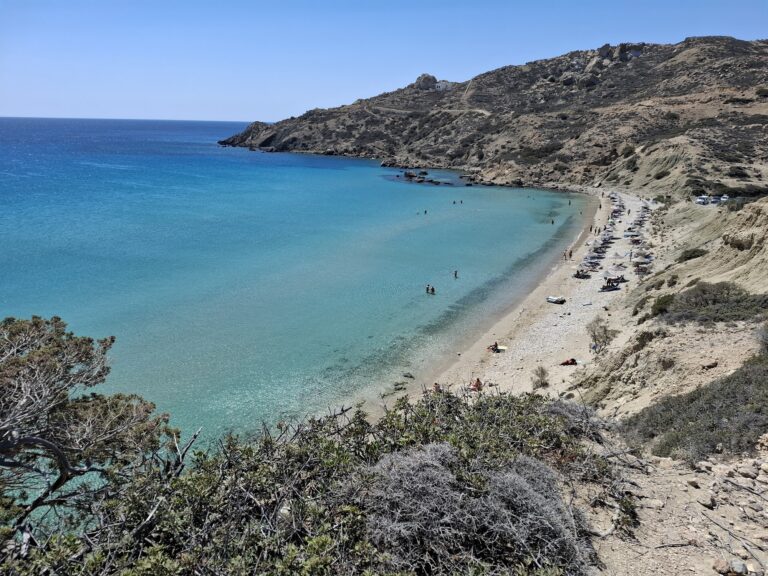
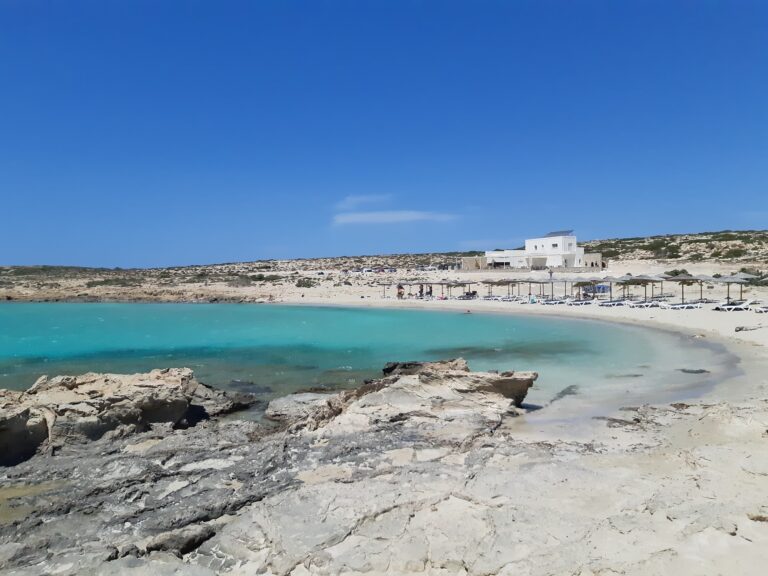
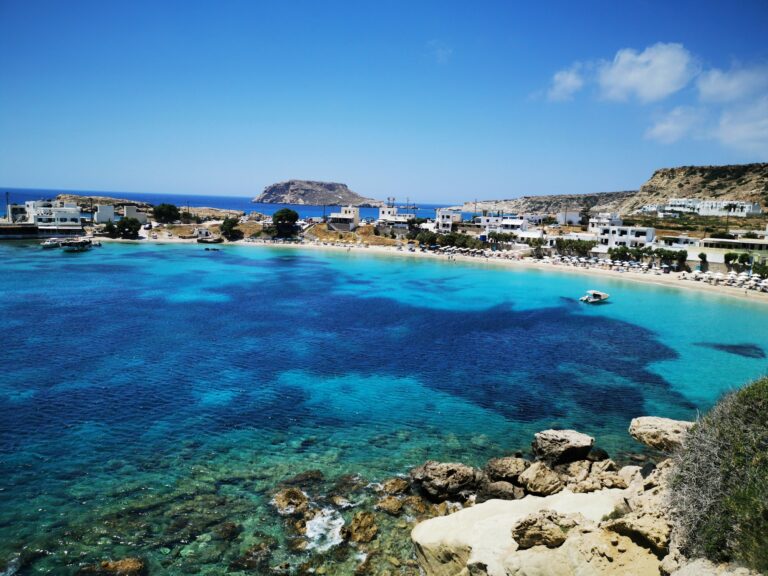
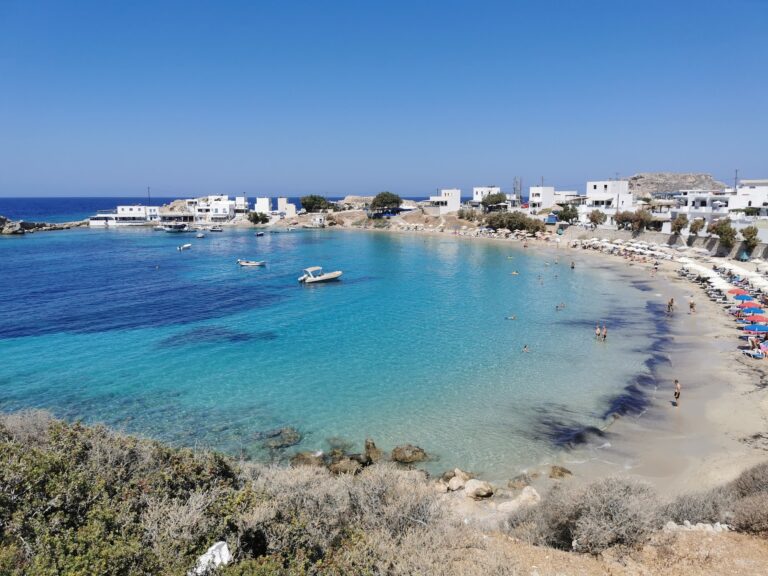
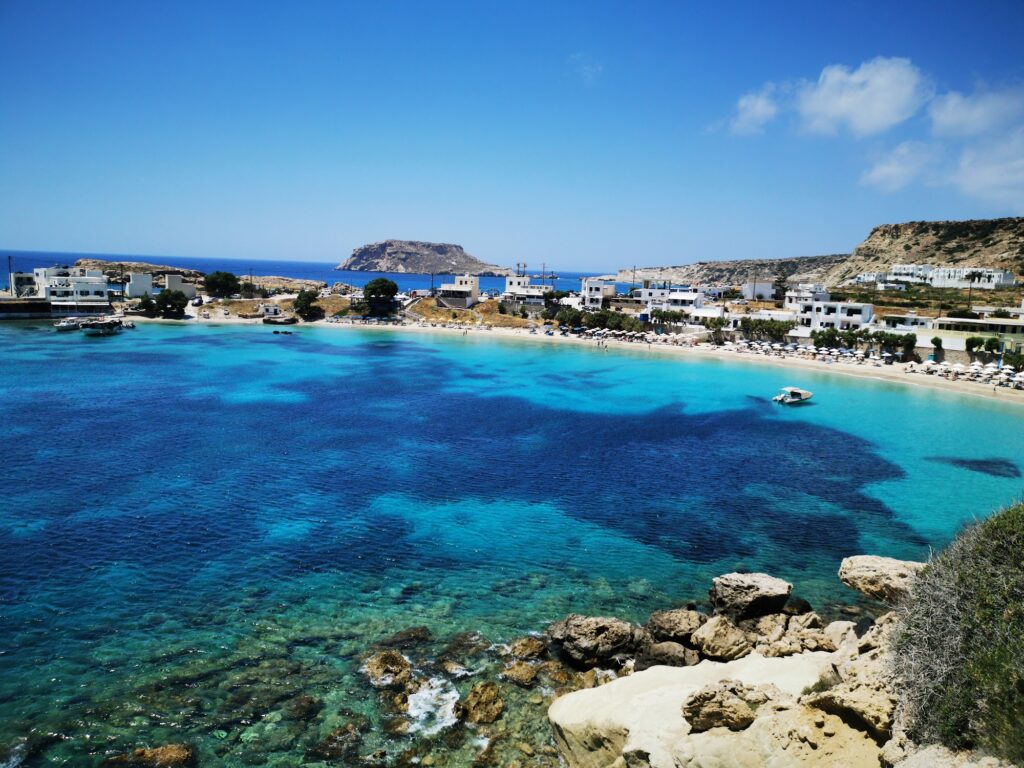
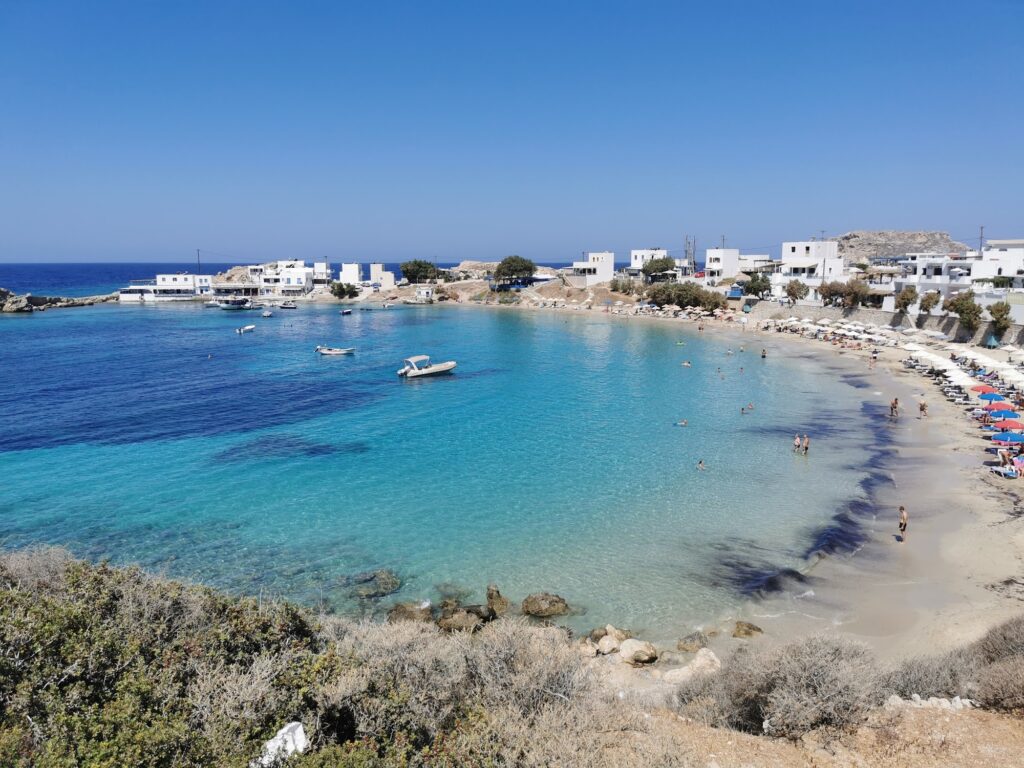
The beaches are three. The three bays are respectively the most known Gialou (main beach), the smallest and most peaceful Panagias Limani, and the largest Frangolimiona. The first two are very suitable and frequented by families with children because of the seabed which descends slowly. The third is much more wild and mainly frequented by windsurfers and kitesurfers because the wind blows more there. The three bays are within a few hundred metres of each other, reachable by short walking paths from the village centre, and the choice between them can be made on arrival based on the daily conditions.
Getting There: 33km from Pigadia, Asphalt Road, Bus or Car
From Pigadia (Karpathos Town), Lefkos is approximately 33 kilometres northwest — a 45-minute drive on the winding mountain road that crosses the island’s forested central spine before descending to the west coast. The road is asphalt throughout and navigable by standard car; the views from the mountain section looking down to the western coast, with Lefkos appearing as a small cluster of white buildings below the peaks, are among the more dramatic approach views on the island.
The KTEL bus runs between Pigadia and Lefkos in high season, providing public transport access for visitors without a hired vehicle. The journey takes approximately one hour by bus. Taxis from Pigadia are available and practical for the one-way trip, though the distance makes a same-day return by taxi costly.
Parking is available in the organised lots at the village entrance and near the beach tavernas. The main street of Kato Lefkos is narrow, and the panoramic view point along the approach road is where photographs of the three bays are taken — the road is too narrow to park on, but the view stop is brief and the walk back from the parking area is short.
The Main Bay: Gialou Beach — 300 Metres, Shallow, Organised, Family-Preferred
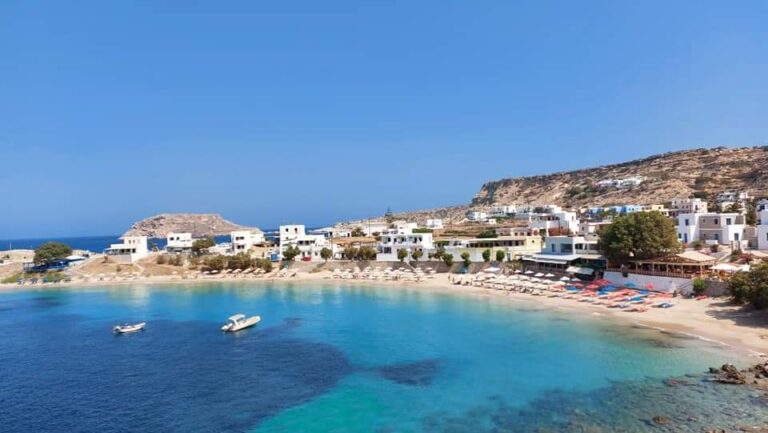
Lefkos beach (the main bay, Gialou) is easily recognised because the views of the bay are so unique, and the sea has incredible colours. The seabed is fine light-grey sand and it is quite shallow — one of the most shallow beaches in Karpathos. It is well protected from winds and waves and especially ideal for families. Most of the seafront is free from stones, pebbles, or rocks. On the western side there can be found the small port of Kato Lefkos, with some fishing boats. The total length of the beach is about 300 metres.
The main bay is the organised one — sunbeds and parasols, the tavernas and coffee bars directly behind the beach, the visual presence of the fishing harbour at the western end. It gets crowded in July and August, and visitor accounts suggest visiting at the end of the day to avoid the peak afternoon pressure. The beach remains peaceful and quiet by the broader Karpathos resort standard even when full — there is no significant nightlife, and the loudest the bay gets is the sound of the waves and the conversations in the taverna terraces.
Panagias Limani: The Smallest and Calmest Bay
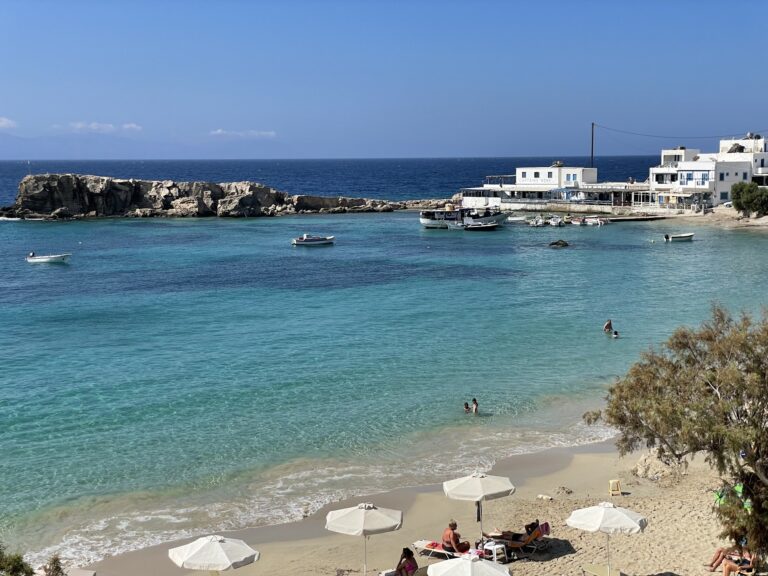
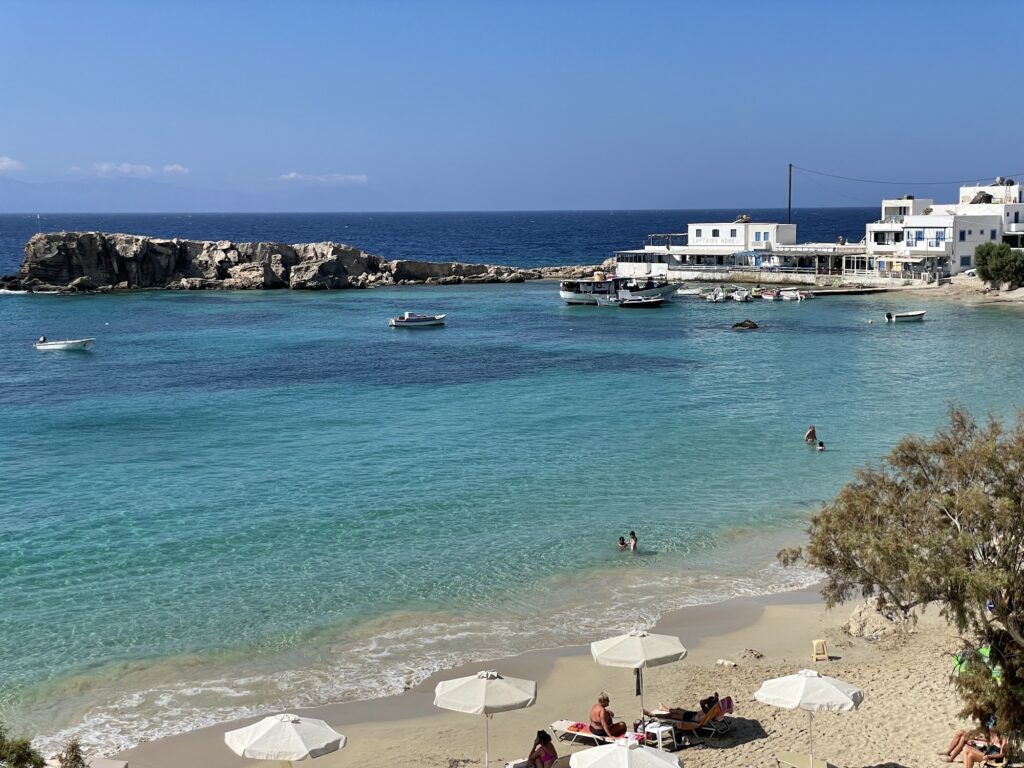
Panagias Limani — named for the Church of the Panagia above the bay — is the smallest of the three inlets, reached by a short walk from the main beach. It is consistently described as the calmest: more sheltered than the exposed Frangolimiona to the north and smaller than the organised Gialou, with the specific tranquillity that comes from being the overlooked middle option between the two more defined alternatives.
The bay has some organisation — parasols and sunbeds at times in high season — but remains less crowded than Gialou. The snorkelling at the rocky margins is productive, and the swimming in calm conditions is the specific quality that visitor accounts identify as the reason to choose it over the main beach on days when Gialou is busy.
Frangolimiona: The Wild, Windy Northern Bay
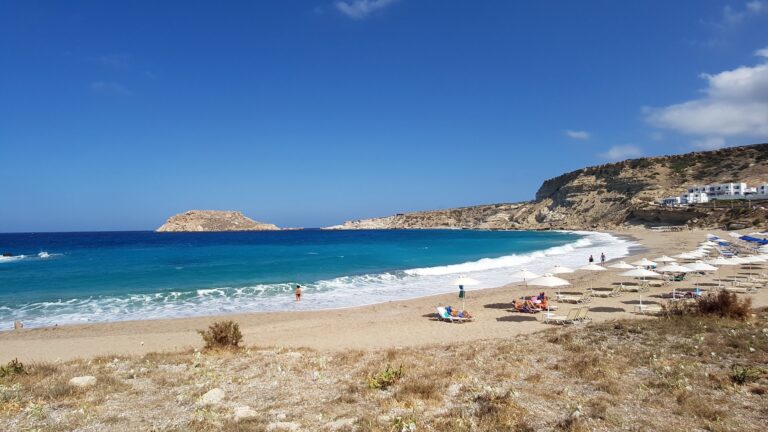
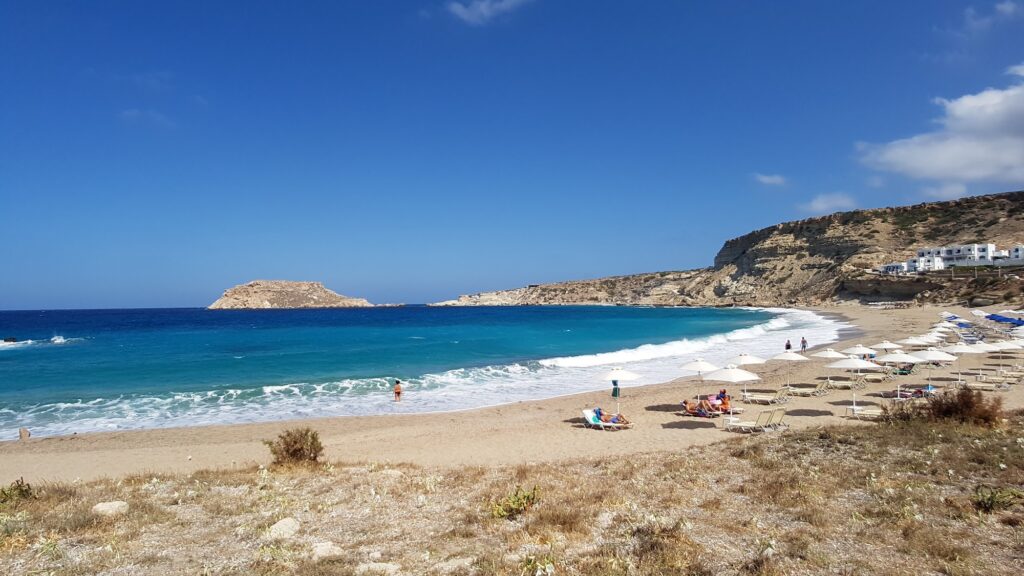
Frangolimiona is the largest and roughest of the three bays — facing more directly northwest, exposed to the winds that the Aegean summer generates, and consequently the bay with waves when the other two are calm. The windsurfers and kitesurfers who use Lefkos as a base work from this bay, and the combination of the wind and the open sea position produces conditions that the families and casual swimmers find uncomfortable but that the wind sports community values.
The landscape here is the most dramatic of the three — larger rocks, wilder vegetation, the coastal profile less sheltered and more irregular. For visitors who want the beauty of Lefkos without the organised sunbed context of the main beach and are comfortable with the wind and the deeper water, Frangolimiona is the option. For families with young children, the shallow main bay is the correct choice.
The Roman Cistern: Underground, Seven Side Galleries, Viewable from Outside
The Roman Cistern on the outskirts of Lefkos is the most accessible archaeological site on the western coast of Karpathos — signposted from the village by brown road signs, reachable by a short drive on an untarred track followed by a brief walk. The cistern is underground, having been cut out of the limestone bedrock. It is made up of a central, rectangular chamber with seven side galleries with three rows of pillars supporting the roof. Water was collected in the galleries from the water table, and the galleries were coated with plaster to prevent seepage. Part of the central chamber is now exposed, the roof blocks having fallen through.
The cistern is fenced off and can be viewed only from outside. A scale model of the cistern and other artefacts from the Greco-Roman period of Karpathos are on display in the island’s main archaeology museum in Pigadia.
The cistern dates to the late Roman period and was part of the water supply infrastructure for the settlement that occupied Lefkos at that time — Kato Lefkos once housed a rich port city from the late Roman period to the 5th century Byzantine, developed over three ports in a south, west, and north-east direction, abandoned probably due to the continuous attacks and Saracen invasions of the 7th century. In 410 AD, the Carpathian fleet passed through Lefkos for the transport of grain between Alexandria and Constantinople — the cistern is the physical evidence of the same infrastructure that made the port strategically significant.
The Early Christian Basilica and the Sokastro Islet
Near the cistern and accessible from the same area, the remains of the Panagia Gialochorafitissas Basilica — an early Christian church dating from the 5th century — include a mosaic floor partially uncovered and partially still covered with sand. The basilica is the half-submerged structure visible at the water’s edge near the beach, and the mosaic floor sections visible at low water are the specific detail that archaeology-interested visitors specifically seek.
The Sokastro islet — visible from Lefkos across a 68-metre strait — was detached from the peninsula by an earthquake and contains Byzantine cistern ruins and traces of settlements from multiple periods, including the crossing point used by crusaders who stopped at the islet’s position to monitor maritime traffic. The islet is accessible by small boat from the harbour.
The Sunset and the Evening at the Taverna
Sitting under the stars at night at a beachside café with the moon reflecting off the nearby waters is so serene and tranquil as you hear the waves gently splashing on the beach. The west-facing orientation of the Lefkos bays makes the village one of the better sunset viewpoints on Karpathos — the sun descends over the open western Aegean with no islands blocking the horizon, and the walk to the western headland of the village as the light changes is the specific evening activity that every account of Lefkos mentions as unmissable.
Lefkos Beach on Karpathos is three bays in a former fishing village 33 kilometres from Pigadia — the shallow, organised, family-preferred Gialou main beach, the calm Panagias Limani, and the windy Frangolimiona where the kitesurfers work. Walk ten minutes from the beach to the underground Roman Cistern with its seven side galleries. Look for the mosaic floor of the 5th-century basilica at the water’s edge. Watch the sunset from the western headland.
Drive over the mountains from Pigadia. The descent view of the three bays from the approach road will be the first photograph you take.
Map
Sorry, no records were found. Please adjust your search criteria and try again.
Sorry, unable to load the Maps API.
Near by places: