Diakoftis Beach Karpathos: Turquoise Lagoon by the Airport
Profile
Diakoftis Beach, Karpathos: The Turquoise Lagoon in a Protected Wildlife Refuge by the Airport Fence
Greece | Karpathos | Dodecanese
The road to Diakoftis Beach runs along the perimeter fence of Karpathos Airport. Visitors arriving from Pigadia follow the main road south toward Arkasa, turn at the junction just before the airport, follow the signs to Diakoftis, and then drive — slowly, on a dirt track in variable and often poor condition — for somewhere between 2 and 6 kilometres depending on which source you consult and which year their account was written. The road condition changes with the seasons, worsened by heavy summer traffic and improved only inconsistently by the municipal road authority. A standard car can navigate it carefully; the visitor consensus is that a quad or 4×4 makes the approach significantly more comfortable.
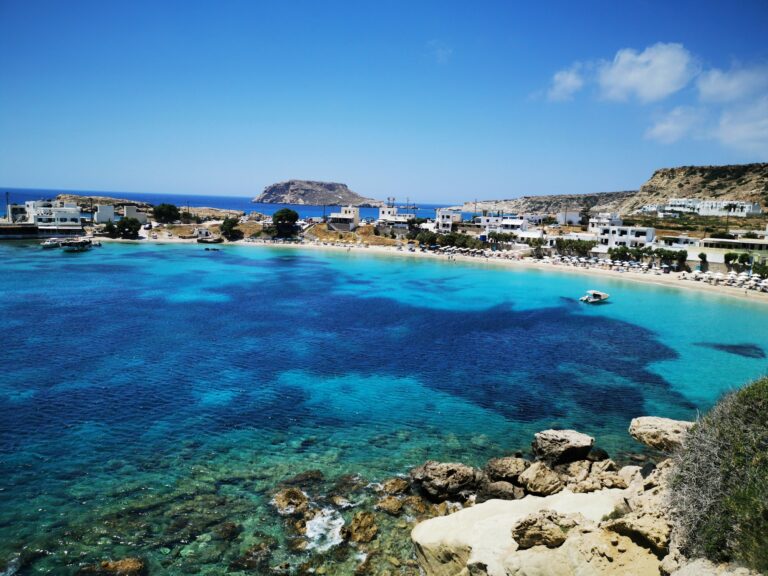
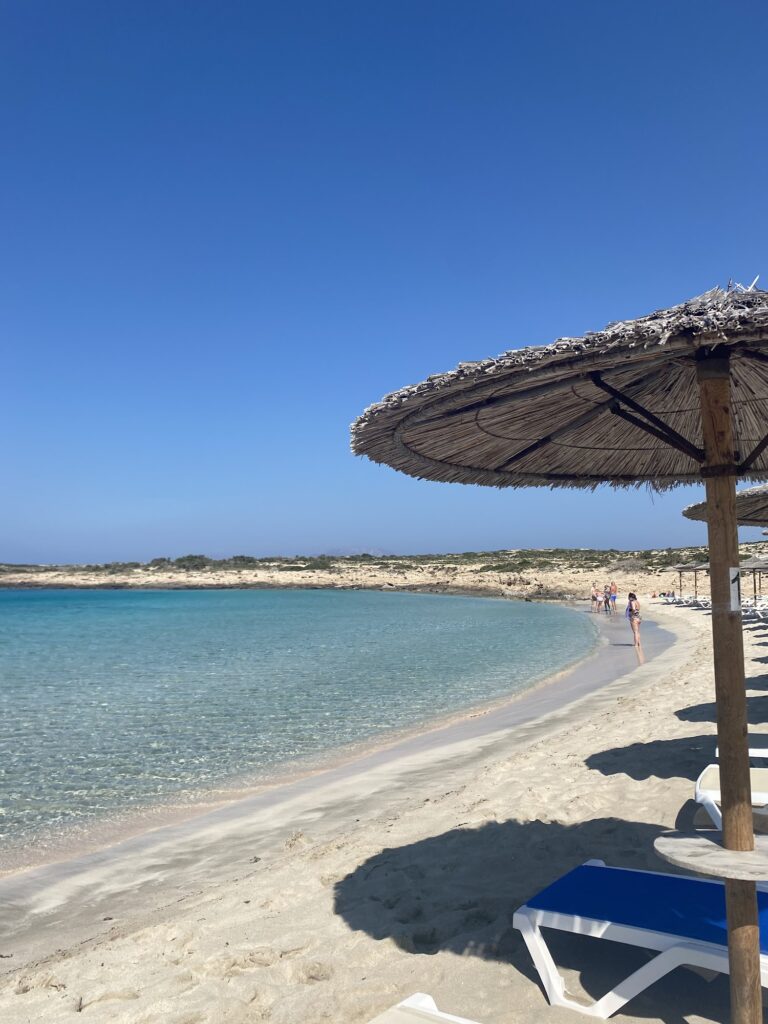
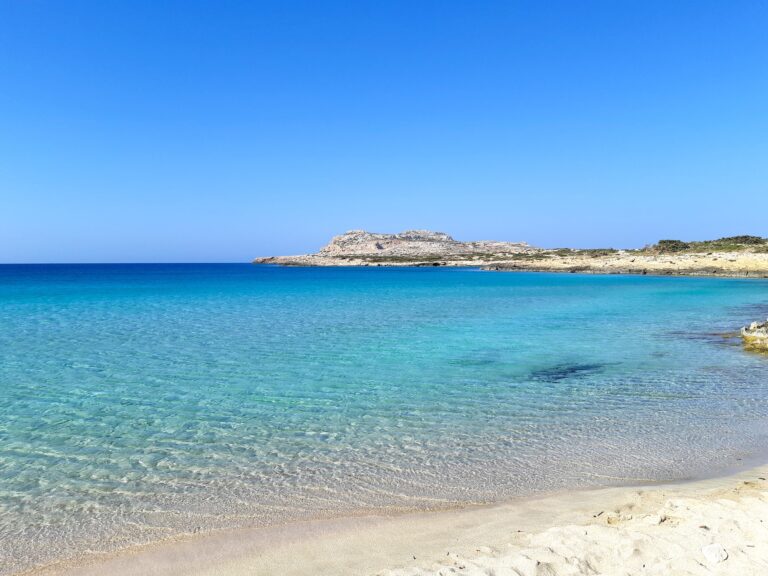
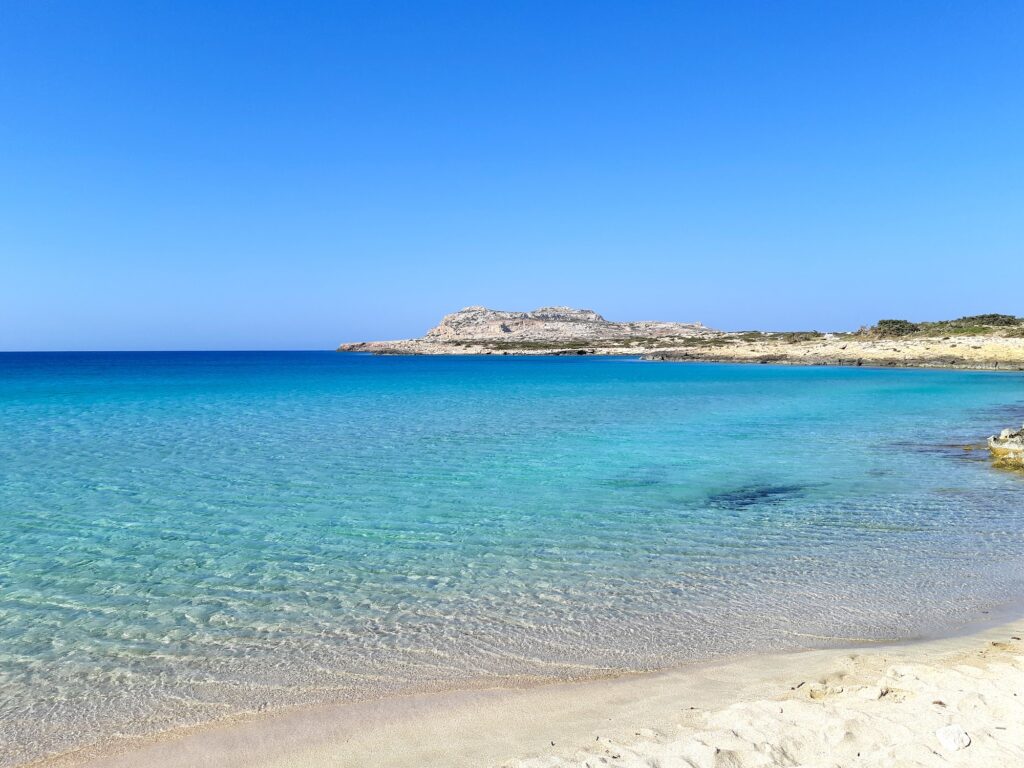
Diakoftis is located 19km south of Pigadia, in the area of Afiartis not far from the airport. The white golden sand gives the water a turquoise colour similar to that of exotic tropical destinations. The crystal-clear, shallow waters make it ideal for families with small children. It is a very popular beach considered one of the most beautiful on the island. You can reach it via a dirt road, about 2km long. Its unique beauty combined with the colours of the water will reward you. There is a second beach on the other side of the bay which is also beautiful, but with classic blue rather than turquoise water.
Diakoftis is located in the area called Afiartis, close to the airport, and is part of the southernmost cape of the island that is a protected wildlife refuge. The protected status is the reason the area remains undeveloped despite the beach’s reputation as one of the most beautiful in the Dodecanese — no resort has been built, no organised tourism infrastructure has expanded, and the small beach bar (Diakoftis Paradise Beach) that was established relatively recently is the only commercial presence on site.
Getting There: Along the Airport Fence, Then a Dirt Road — Car, Scooter, or Quad
From Pigadia, the route south passes through the main island road toward Arkasa and Lefkos, turning at the junction before the airport on the road signed for Diakoftis and Argilaopotamos. The road follows the outer fence of the airport’s western boundary, and at the end of the asphalt — approximately where the fence ends — the dirt track begins. The track passes through flat, sparse, arid landscape typical of the southern Karpathos cape before descending to the beach and the small parking area.
Visitor accounts note that the parking lot fills quickly in high season and that cars left beside the road should watch for thorny plants on the verges. Arriving before 10:30am is the consistent recommendation from multiple sources. The beach fills during the day despite the access difficulty — the turquoise colour and the Caribbean reputation have made it the most talked-about beach on the island, and visitor numbers reflect that.
There is no reliable public bus service to Diakoftis. A taxi from Pigadia or from the airport is the option for visitors without a hired vehicle. Private excursion boats from Pigadia harbour occasionally serve the beach in peak season.
The Beach: 90 Metres, Two Sides, One Turquoise and One Blue
Diakoftis is small — approximately 90 metres of sandy beach forming the main, sheltered bay. The white and pinkish-white sand of the seabed is the specific cause of the water colour: the pale sand reflects the light upward through the shallow water column, producing the turquoise and aquamarine gradient that does not appear at the island’s deeper, rockier beaches. The water is shallow for an extended distance from the shore — visitors consistently describe wading far from the waterline before reaching swimming depth.
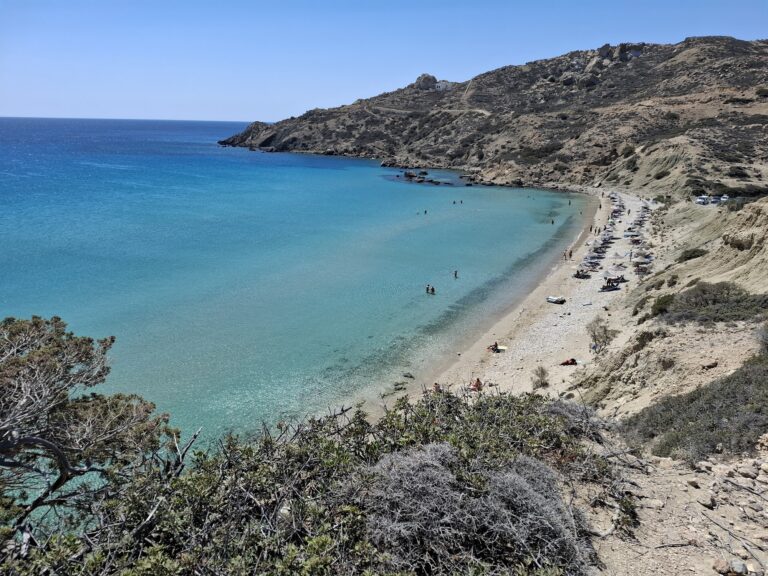
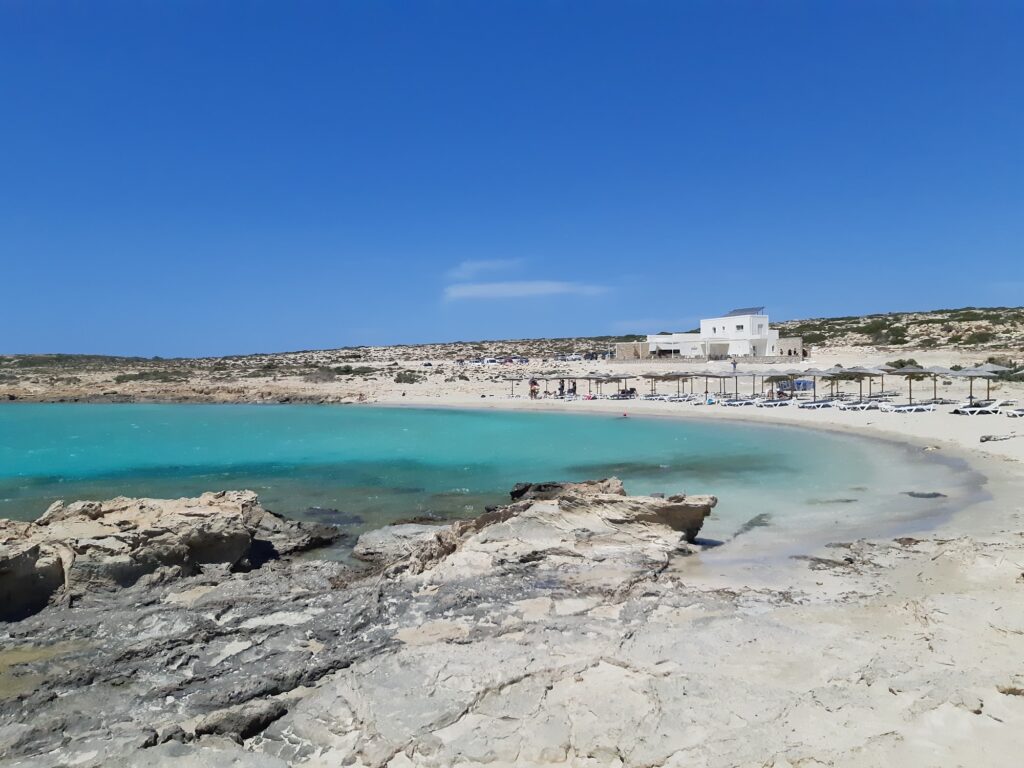
The second beach on the other side of the low promontory that divides the bay is a different experience — the water there is classic deep Aegean blue rather than turquoise, because the seabed is deeper and the light does not reflect in the same way. The swimming quality is equivalent but the colour is different. Most visitors concentrate on the turquoise first beach; the second is quieter and less visited and has rocks at the entry.
The beach of Diakoftis is actually two beaches divided by a low promontory, with a gently sloping seabed suitable for families with children. The left part is the favourite place for naturists. It is also ideal for snorkelling enthusiasts as the seabed is teeming with fauna.
The beach is within a protected wildlife refuge — the southern cape of Karpathos is ecologically significant, and the low cedar vegetation that surrounds and backs the beach is protected. Source article references to “century-old cedar trees” are consistent with the cedar (Juniperus species) that grow in the Afiartis zone; these low, salt-tolerant trees provide the only natural shade near the beach.
Sunbeds: The Most Expensive on Karpathos
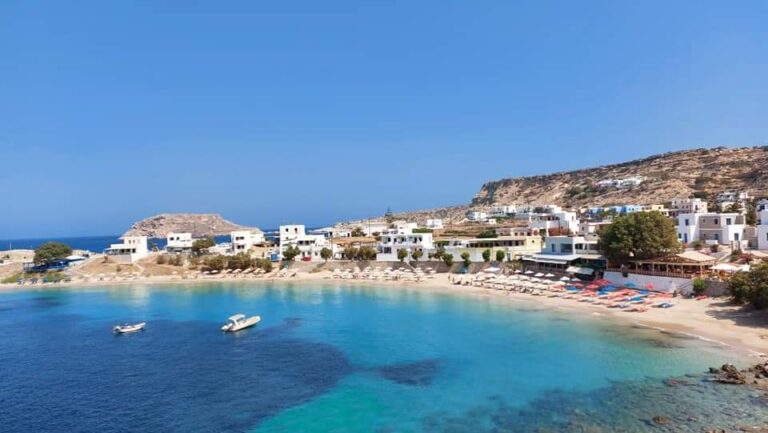
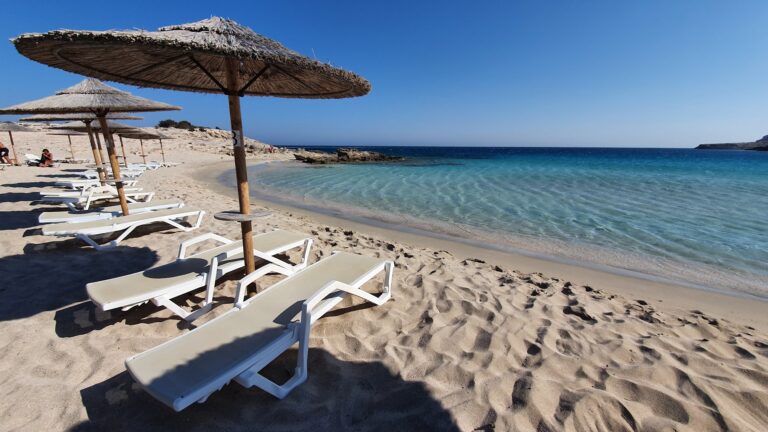
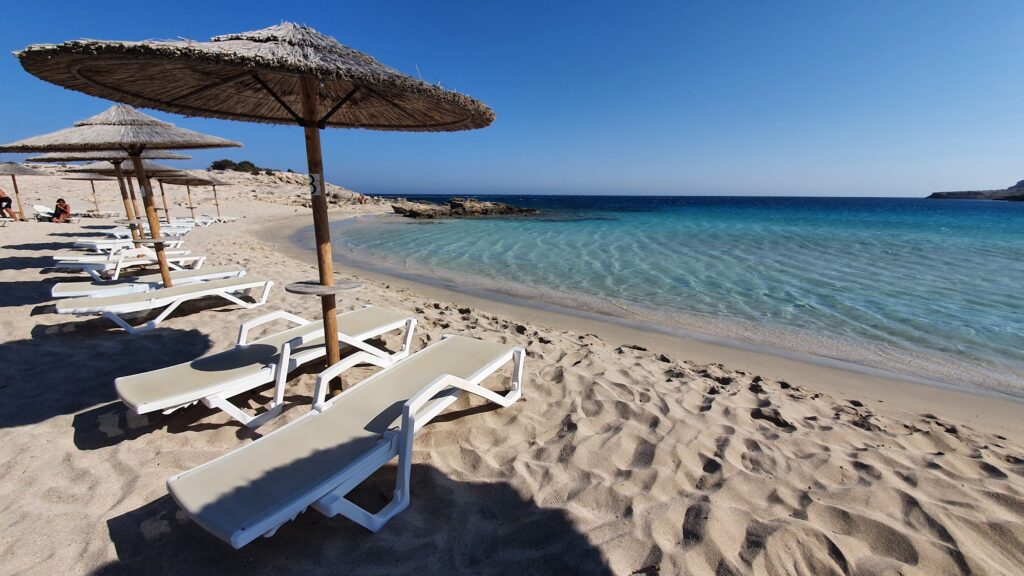
Sunbeds for rent at Diakoftis are priced at €40, €50, and €60 per pair depending on row position — consistently described as the most expensive on Karpathos Island. The wind can make bringing your own umbrella difficult, as gusts prevent it from staying anchored in the sand.
The wind pricing context is worth noting: Diakoftis is in the Afiartis area, which is the premier windsurfing zone of Karpathos — the ION Club and Meltemi Windsurfing centres operate nearby at Agrilaopotamos because the area’s reliable wind is among the best for the sport in the Mediterranean. That same wind affects Diakoftis with enough frequency that visitor accounts consistently warn about it: sand blows, personal umbrellas cannot be staked into the ground effectively, and the wind can make the beach uncomfortable for sunbathing on affected days.
Visitor advice is consistent: bring your own food, water, and shade equipment (accepting that the umbrella may not stay upright), and check the wind forecast before making the drive.
The Airport View: Planes Landing Over the Beach
One specific visual feature that visitor accounts note — not always mentioned in promotional material — is that the beach is close enough to the airport that arriving aircraft on the approach to Karpathos runway are visible and audible from the sand. The airport’s position makes the final approach pass over or near the southern cape, and the planes descending toward the runway are a recurring feature of the Diakoftis skyline on busy arrival days. For some visitors this is a novelty; for others it is a consideration when choosing which Karpathos beach to visit.
Karpathos: Olympos, Apella, and the Southern Wind Beaches
Karpathos is the second largest island in the Dodecanese and one of the least developed significant Aegean islands — its rugged, mountainous terrain and limited road infrastructure in the north (the village of Olympos, in the far north, was accessible only by sea or by a track so rough that most visitors arrived by boat until relatively recently) have preserved a character that the more accessible islands lost decades ago.
Apella is the best-known beach of Karpathos, recognised twice as the most beautiful beach of the Mediterranean Sea — white sand and pebbles with crystal clear waters, pine trees rising above the rocks, 16km north of Pigadia. The contrast between the celebrated Apella in the north and the turquoise lagoon of Diakoftis in the south maps the range of what Karpathos offers as a beach island — dramatic mountain-backed bay in the north, flat Caribbean-coloured lagoon in the south, both requiring some effort to reach, both delivering the specific quality that the effort produces.
Diakoftis Beach on Karpathos is the 90-metre turquoise lagoon in a protected wildlife refuge, 19 kilometres south of Pigadia, along the airport fence and then a dirt road — shallow water on white sand that photographs as the Caribbean, expensive sunbeds, wind that can make the visit uncomfortable, no shade without a sunbed umbrella, and a second blue-water beach on the other side of the promontory that most visitors miss.
Bring your own food and water. Check the wind before you go.
The turquoise will be there when conditions allow.
Map
Sorry, no records were found. Please adjust your search criteria and try again.
Sorry, unable to load the Maps API.
Near by places: