Agios Gordios Corfu: The Ortholithi Beach and Hang-Gliders
Profile
Agios Gordios Beach, Corfu: The 2.5km West Coast Bay Where Hang-Gliders Land on the Sand and the Ortholithi Rock Has Been in Greek Literature Since the 19th Century
Greece | Agios Gordios | Corfu, Ionian Islands
The Ortholithi at the southern end of the beach is mentioned in one of the short stories by the Greek author Iakovos Polylas — a 19th-century Corfiot poet and translator who is best known for preparing the definitive edition of Dionysios Solomos’s works (including the Greek national anthem). That a specific beach rock made it into his fiction is the kind of detail that tells you the Ortholithi has been the defining feature of this bay for longer than tourism has existed.
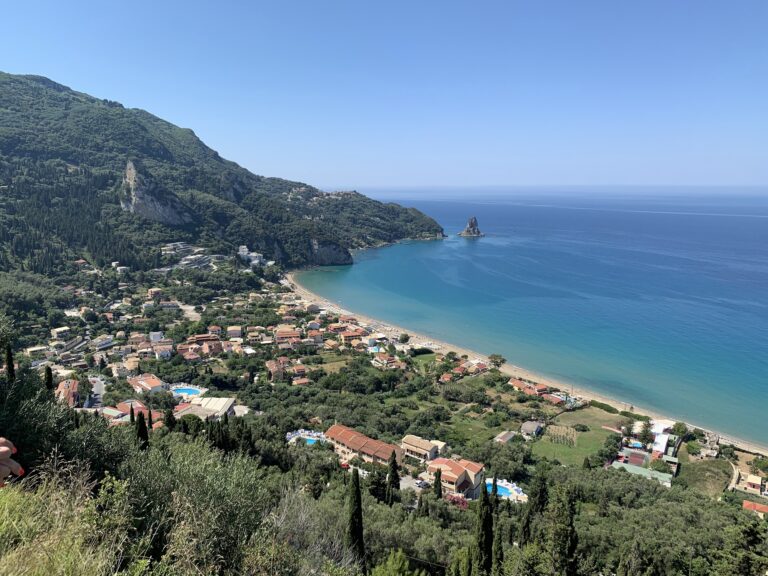
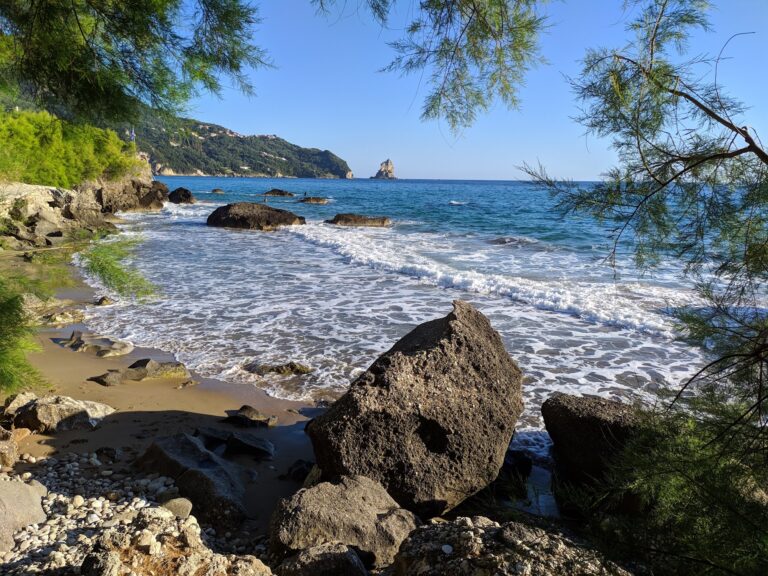
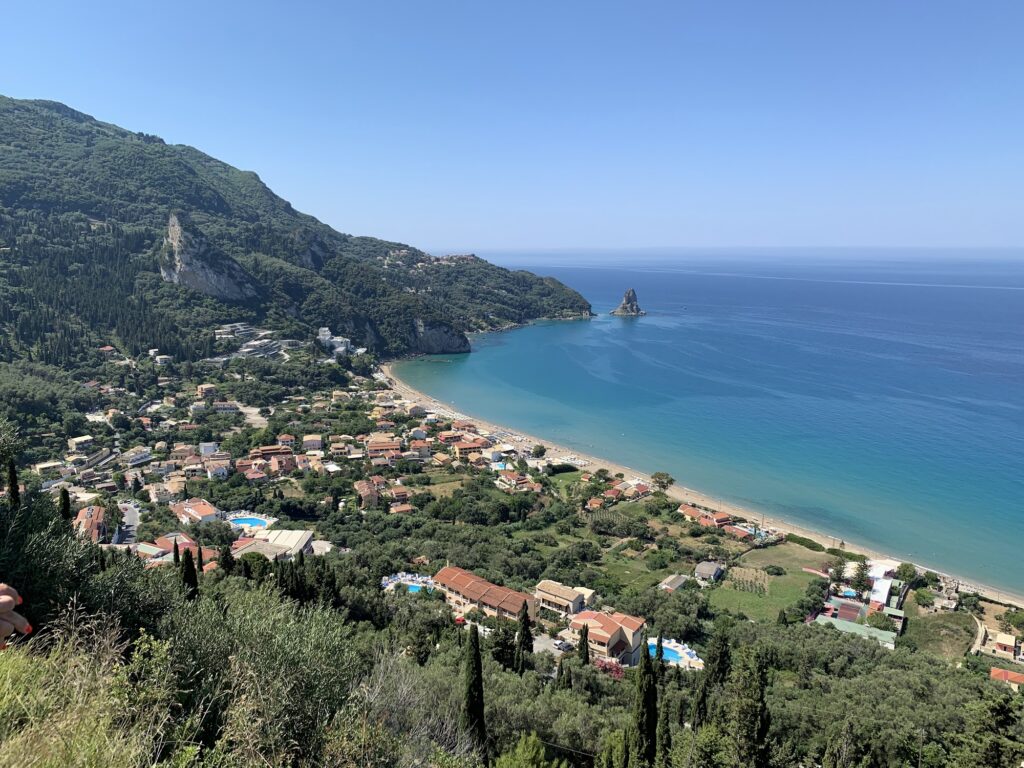
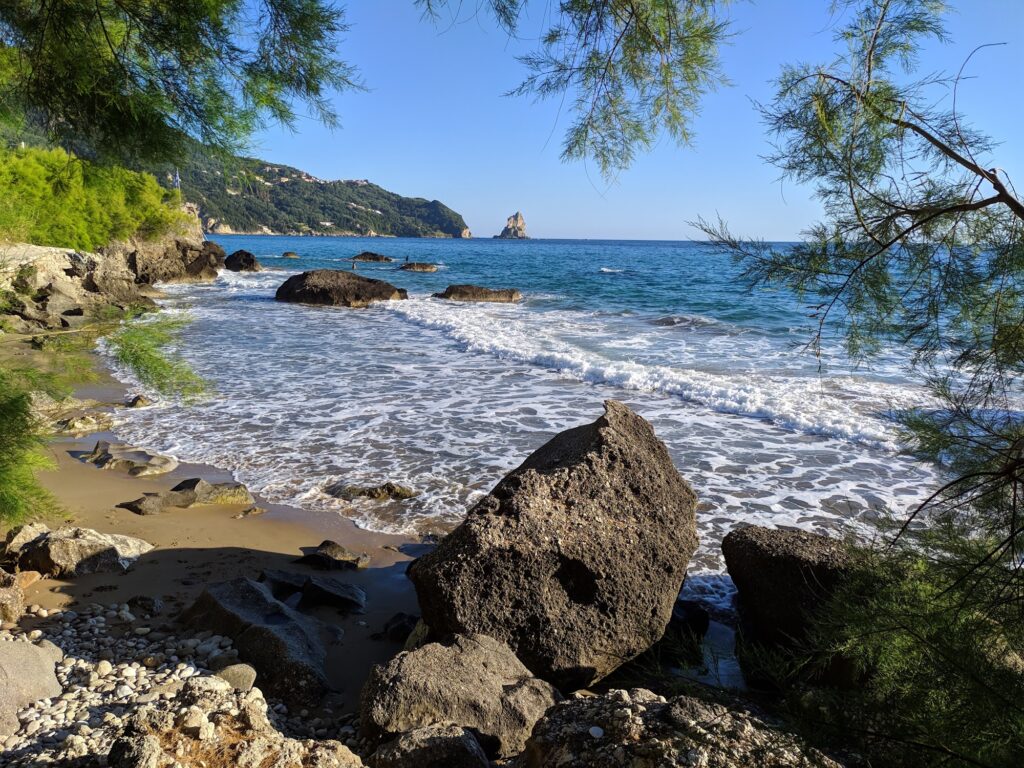
Ortholithi translates to “standing rock” in Greek — which is the exact descriptive name. The most famous natural feature is the imposing Ortholithos, a large rock rising from the sea at the southern end of the beach. The spot is ideal for photography, diving and sunsets.
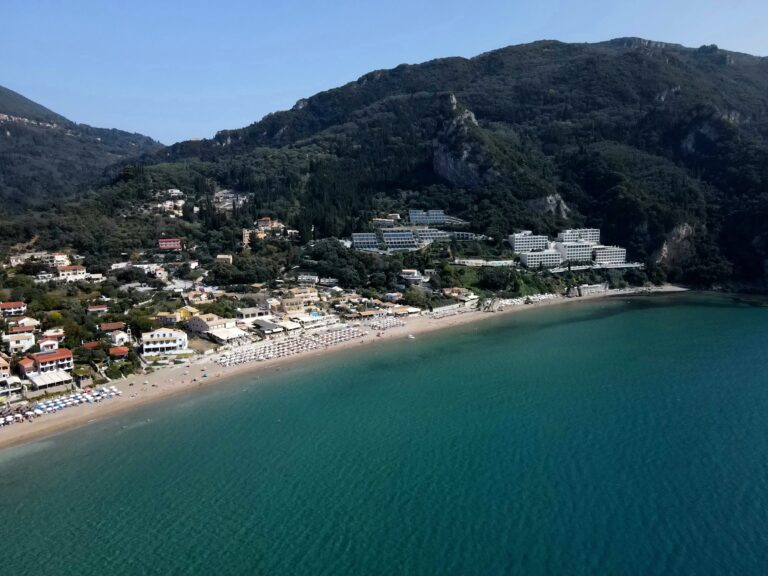
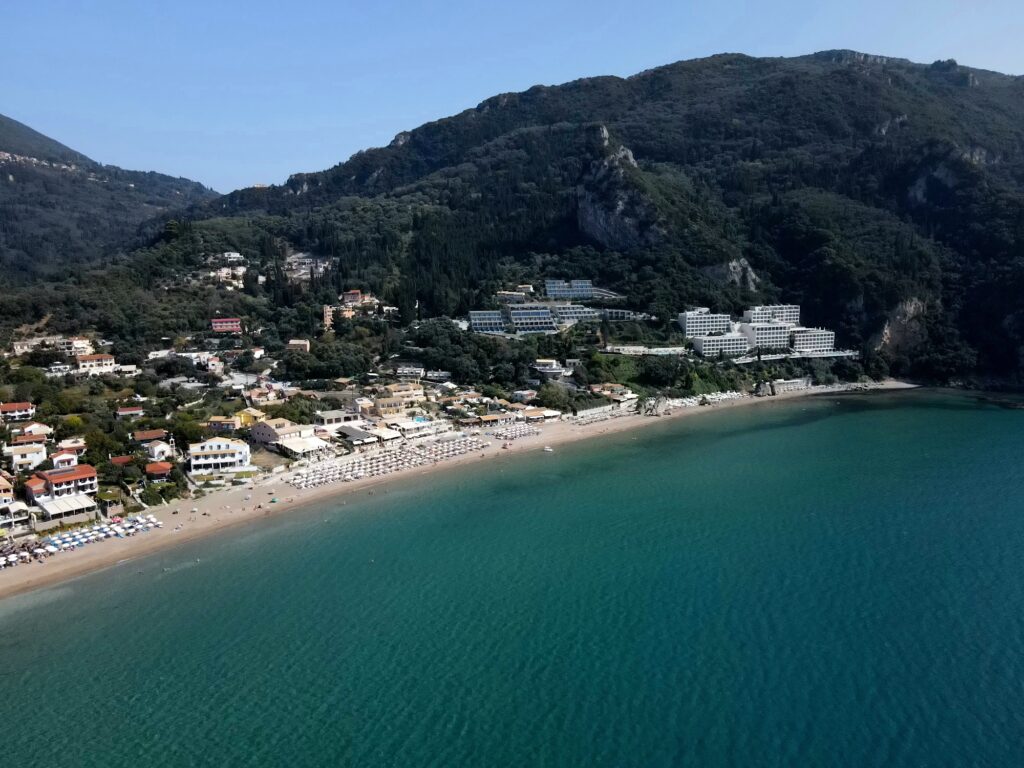
Agios Gordios is a small settlement on the west side of the island, 20 kilometres away from Corfu Town. The large beach of the same name is located in a beautiful natural environment with the Aerostatos rock on the north side — a former observatory — and the Ortholithi on the south side.
The village took its name from the seaside Church of Saint Gordios in the centre of the bay — the small church that sits on the shoreline and gives the resort its slightly formal name that locals often abbreviate to Gordis.
Getting There: B10 Green Bus From Corfu Town, 20km, Winding Mountain Road, Parking Scarce in July–August
Agios Gordios is well-connected by the B10 Green Bus service, providing frequent and reliable connections to Corfu Town. The journey takes approximately 25 to 30 minutes. The bus stop is a short walk from the sand.
By car, follow the main road west from Corfu Town toward Sinarades, approximately 20 kilometres. The road winds through traditional hillside villages and olive groves before descending to the bay. Parking spaces are scarce, particularly during the peak months of July and August — finding a spot to park your vehicle might be a bit of a treasure hunt. Arriving before 11am is the consistent recommendation.
A car is highly recommended for exploring the surrounding west coast beaches and inland villages beyond the resort itself.
The Beach: 2.5km Sandy Arc, Occasional Shingle, Shallow Clear Water, Free Sections Alongside Organised
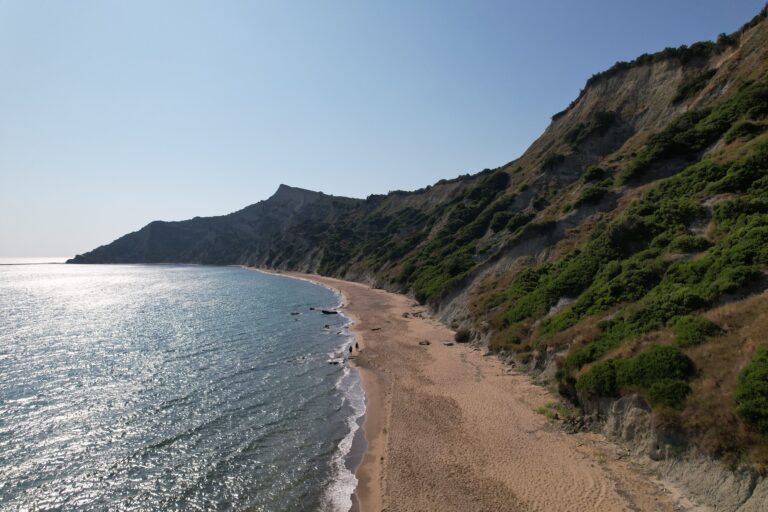
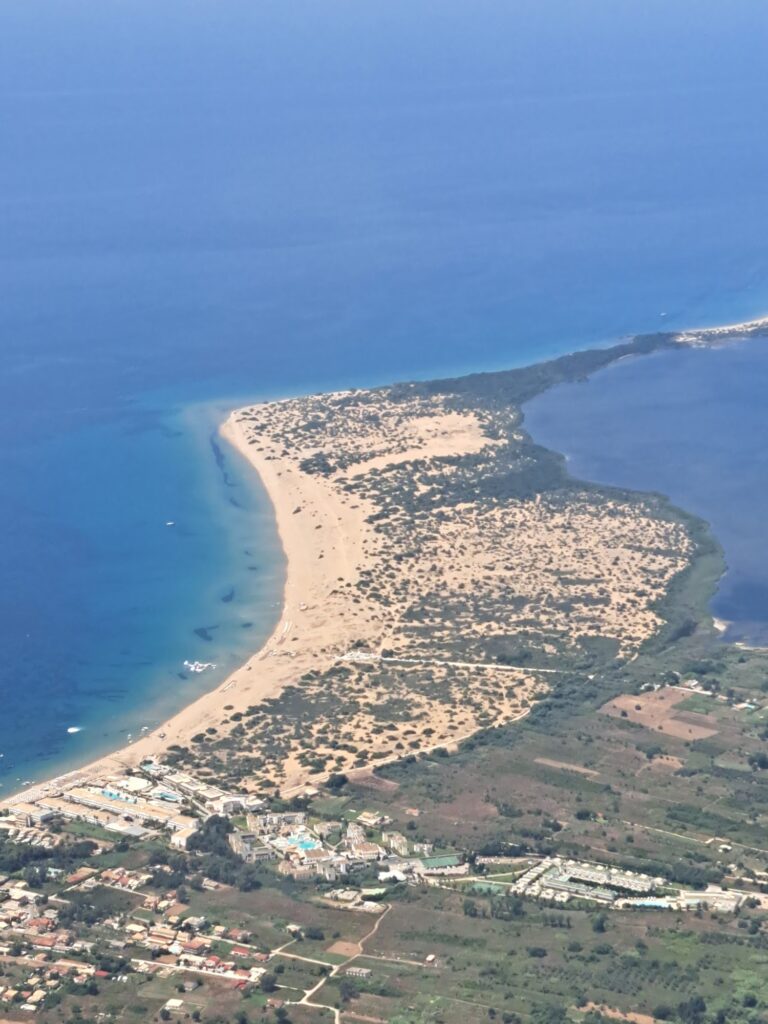
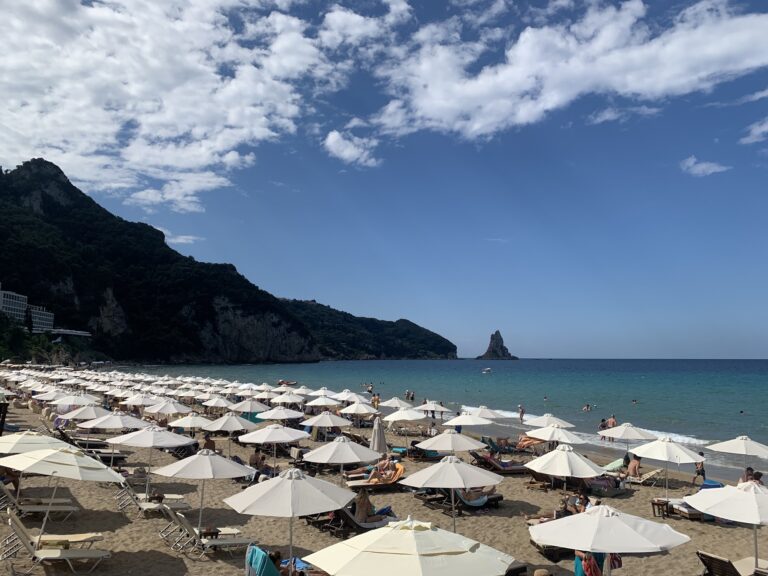
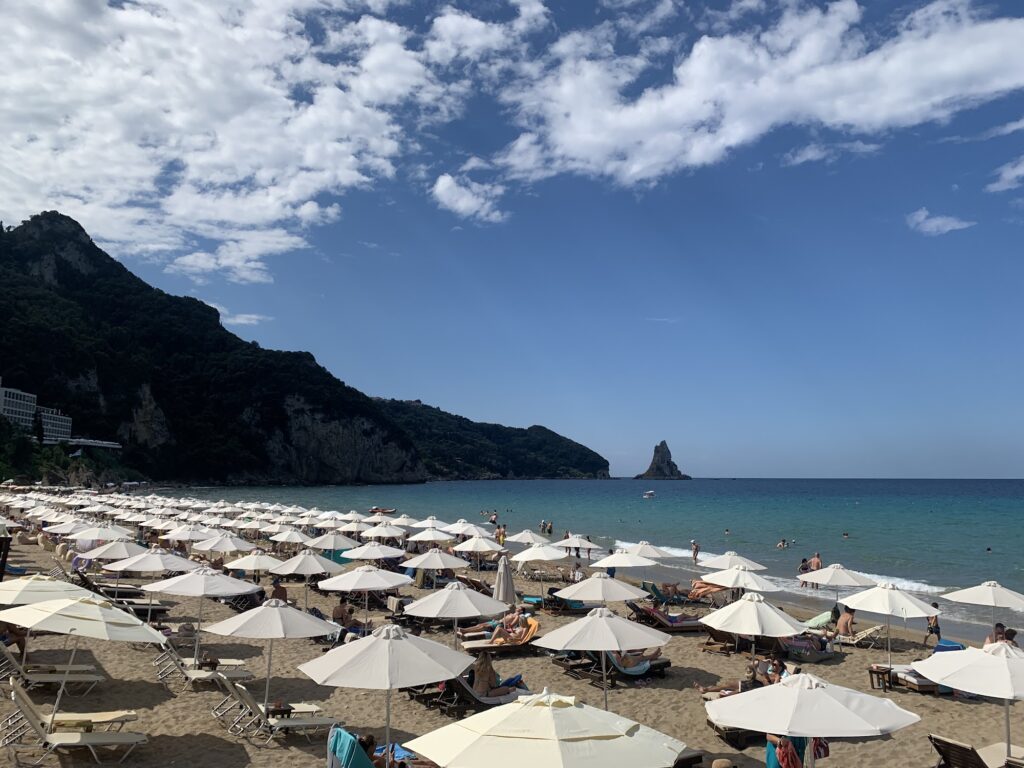
A long and sandy beach, united with adjacent smaller coves to form a 2.5-kilometre almost continuous “golden strand”. Sheer crags rise behind the beach, and the characteristic Ortholithi sticks up from the sea.
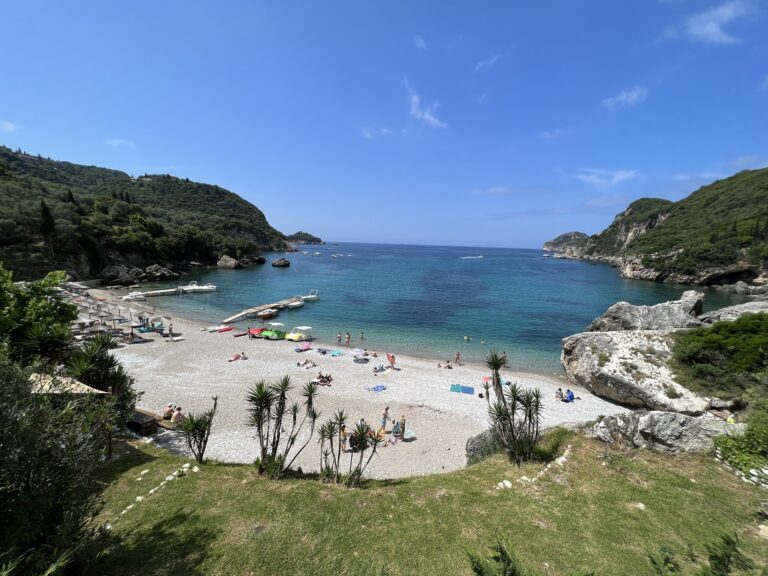
Families will appreciate the gentle shallows, while those seeking comfort can hire sunbeds and umbrellas from the organised sections. For a more natural experience, quieter patches of beach are easy to find. Even during peak summer, there’s usually space to unwind without the crowds.
Compared to the chillier waters up north near Paleokastritsa, Agios Gordios offers a more temperate embrace.
Aerostato Hill: Hang-Gliders Taking Off From the Top to Land on the Beach
Aerostato Hill, beyond the traditional village of Kato Garounas, is very popular with hang-gliding enthusiasts, who take off from its top to land on the beach.
This is the specific Agios Gordios experience that no other Corfu beach offers — watching hang-gliders launch from the hill above and come in over the bay to land on the sand. The hill and the village of Kato Garounas above the resort are accessible by the footpaths that start from the northern end of the beach.
The Ortholithi and the Albanian Mountains
On clear days, the area offers expansive views across the Ionian Sea, with distant Albanian mountains visible on the horizon.
The Albanian coast is approximately 60 kilometres east, visible from the west coast of Corfu on clear days as a low blue mountain line. The Ortholithi in the foreground and the Albanian mountains on the horizon are the specific long-distance geography that the west-facing sunset view incorporates.
Kato Garounas and the Surrounding Villages
The paths that start from the beach lead to neighbouring traditional villages such as Kato Garouna and Pentati, which offer panoramic views of the Ionian Sea and keep their architecture unchanged. Along the paths, visitors can discover old olive groves, stone houses and small churches.
Kato Garounas above the resort is built amphitheatrically amid olive groves and vineyards — the walk up from the beach passes through the agricultural landscape that surrounded the bay before tourism arrived, and returns a sense of what Agios Gordios looked like before the village developed.
Connecting to the Sidari Beach Corfu Northwest: The West Coast Road
The west coast road connecting Agios Gordios northward to Pelekas, Glyfada, Myrtiotissa, and eventually the northwest toward Sidari Beach Corfu Greece is the full west coast programme for visitors with a car. Each beach on the road has a distinct character: Glyfada for the longest sand, Myrtiotissa for the famous nudist cove among olive trees, and Agios Gordios for the Ortholithi and the hang-gliders.
Agios Gordios Beach on Corfu is the 2.5-kilometre west coast bay 20 kilometres from Corfu Town — the Ortholithi standing rock at the southern end (in Greek literature since the 19th century), hang-gliders launching from Aerostato Hill above Kato Garounas to land on the sand, B10 Green Bus from Corfu Town, parking scarce in July and August (arrive before 11am), Albanian mountains on the clear-day horizon, the Church of Saint Gordios in the centre of the bay, and family-run businesses that have kept the village from overdeveloping.
Take the bus or drive. Arrive early for parking. Watch the hang-gliders on the way down.
Map
Sorry, no records were found. Please adjust your search criteria and try again.
Sorry, unable to load the Maps API.
Near by places: