Mouros, Kato Meria: Named for This Exact Water?
Profile
Mouros, Kato Meria: An Island Possibly Named for the Exact Colour of This Water
Greece | Kato Meria | Amorgos, Cyclades
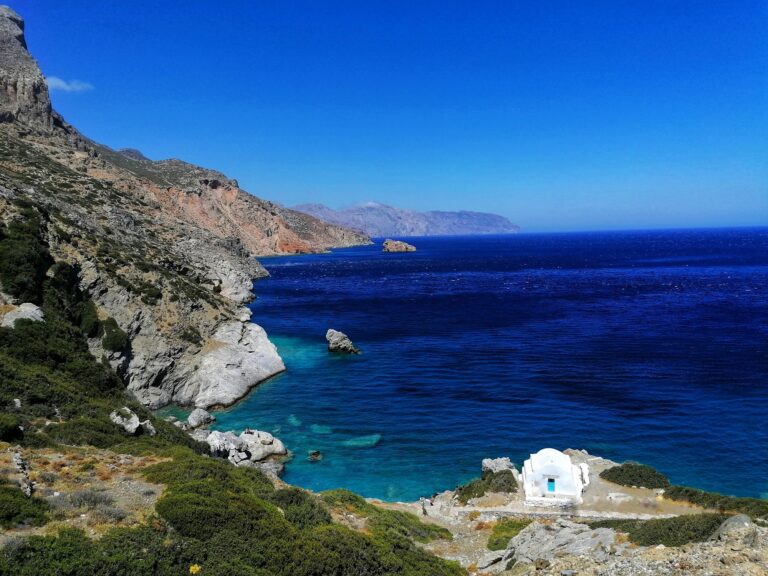
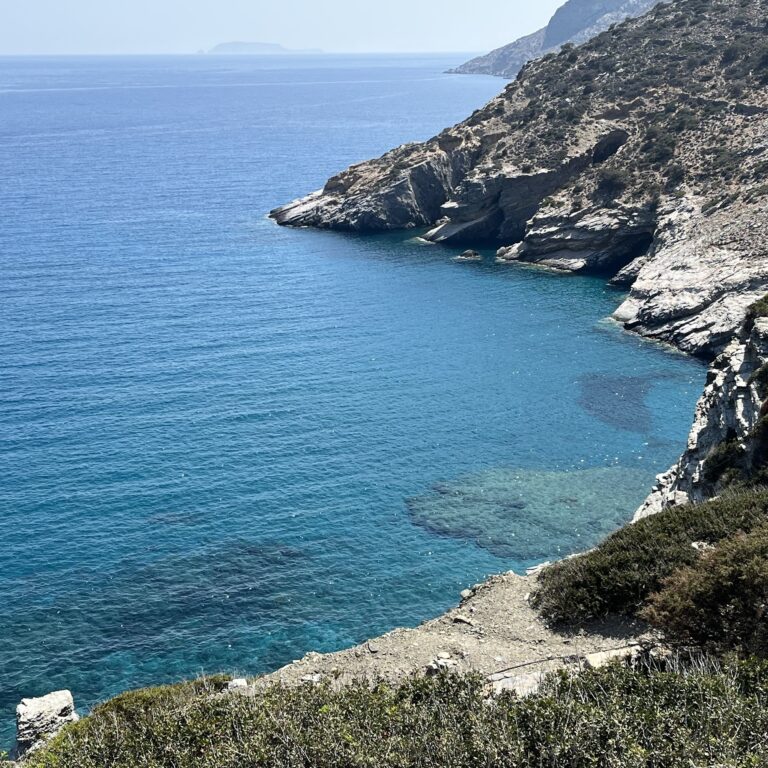
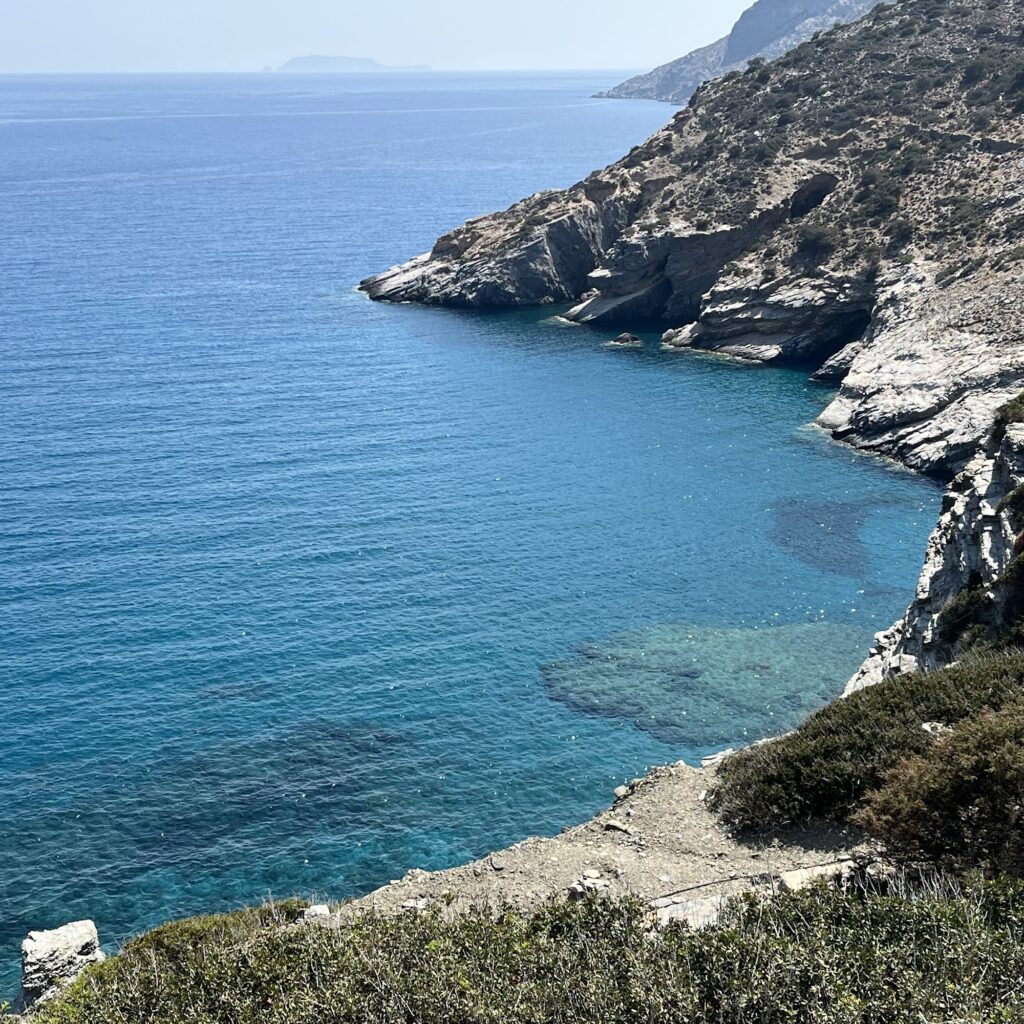
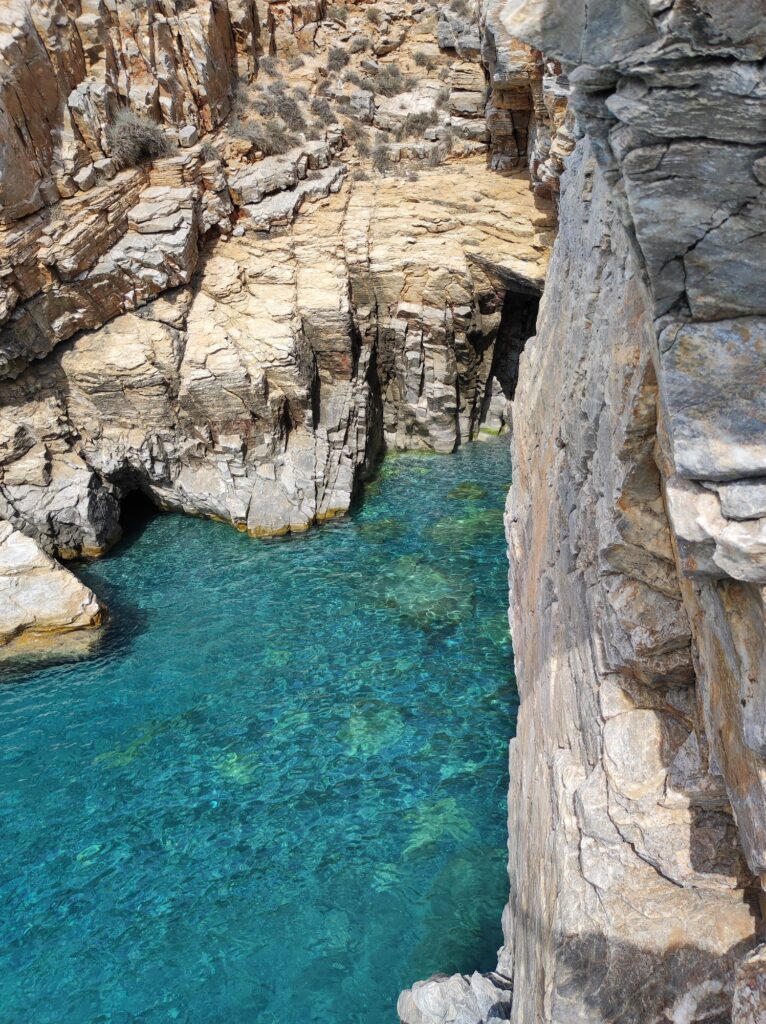
Nobody agrees on where the name Amorgos actually comes from, and one of the two leading theories ties directly to the exact kind of water I swam in at Mouros. Some say the island takes its name from amorgis, a wild plant once used to make tunics; others point to mourga, the word for a dark-coloured oil sediment, used historically to describe waters this deep and richly coloured around parts of the coast. Standing at Mouros, looking down through water dark enough that I lost sight of the bottom only a short way out, I found the second theory considerably easier to believe than the first.
The beach itself sits near the villages of Arkesini and Kamari, in the less touristed southern stretch of the island known as Kato Meria. A short distance away, the Tower of Agia Triada stands at the site of ancient Arkesini, one of the three independent city-states that made up Amorgos in antiquity, alongside Minoa and Aegiali. The tower is considered one of the best-preserved examples of its kind anywhere in the Cyclades, its walls built in the cyclopean style — massive, irregular stone blocks fitted together without mortar, a technique that’s outlasted considerably more modern construction nearby. I find it striking that a beach this quiet and undeveloped sits within easy walking distance of a structure that old.
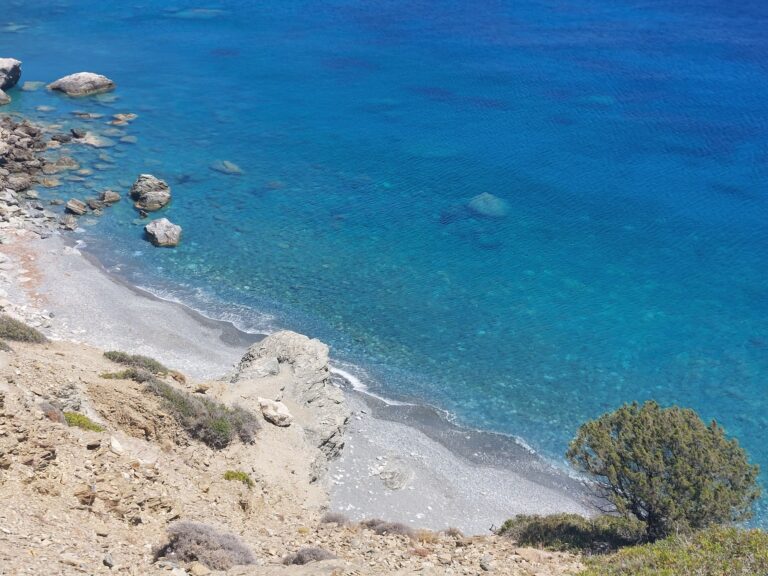
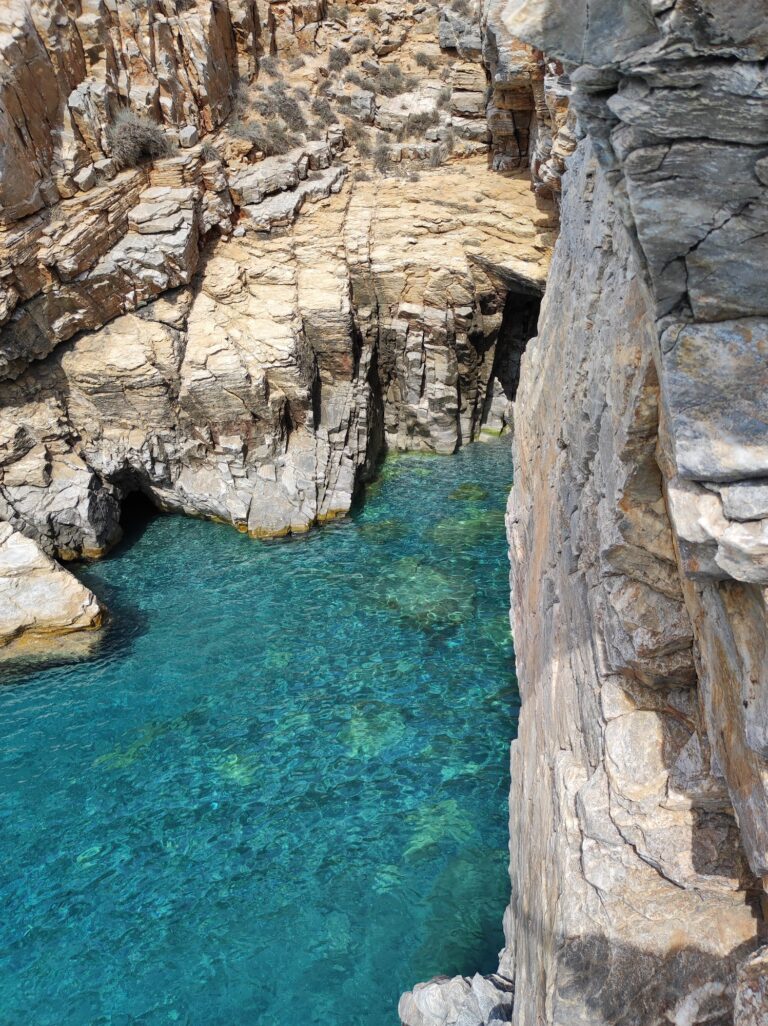
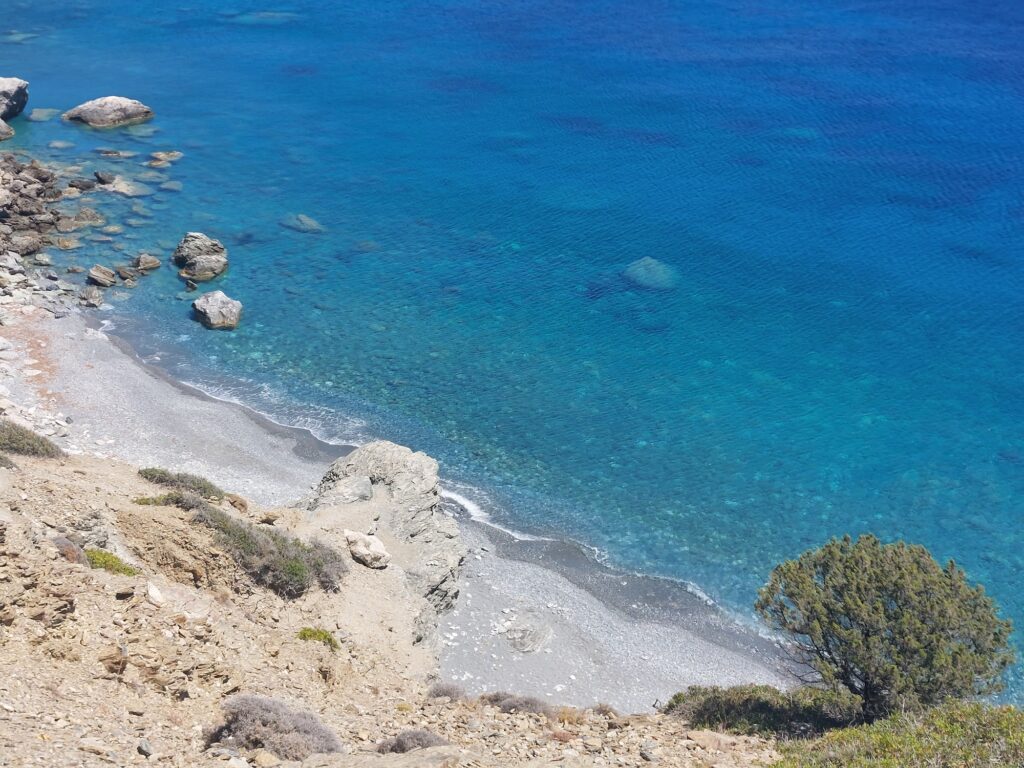
The pebbles at Mouros run dark, almost black in places, and behind the rocks at one end of the cove, two small sea caves cut into the stone, deep enough to swim or snorkel into properly. The light inside shifts between the turquoise of the open water and a deeper, almost indigo shadow the further in I went, the rock overhead cutting the sun into narrow shafts rather than letting it in evenly.
Getting There: About 12 to 15 Kilometres From Chora
I followed the main spinal road south from Chora toward Kato Meria, the road well paved with genuinely good views over the Aegean for most of the drive. A sign points left toward Mouros, and the road continues down to a small parking area near a taverna — cars and motorbikes can get this far, but no further. From there, a footpath takes over, roughly five to ten minutes down to the shore, steep enough in places that I was glad of proper shoes rather than sandals.
A local bus occasionally serves the Mouros junction during peak season, though I’d treat a car or scooter as the practical default given how infrequent that service can be.
The Beach: Dark Pebbles, No Facilities on the Sand, a Taverna at the Top
Mouros is genuinely unorganised — no sunbeds, no umbrellas, nothing beyond what I carried down myself. The rocks scattered along the shore work well enough as makeshift loungers if I arrived early enough to claim a flat one, and there’s no shade at all once the sun is properly up, so I packed my own cover rather than expect to find any.
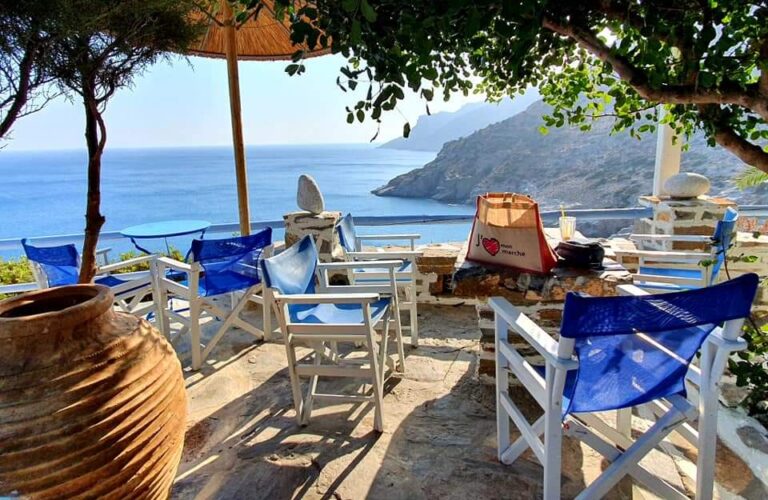
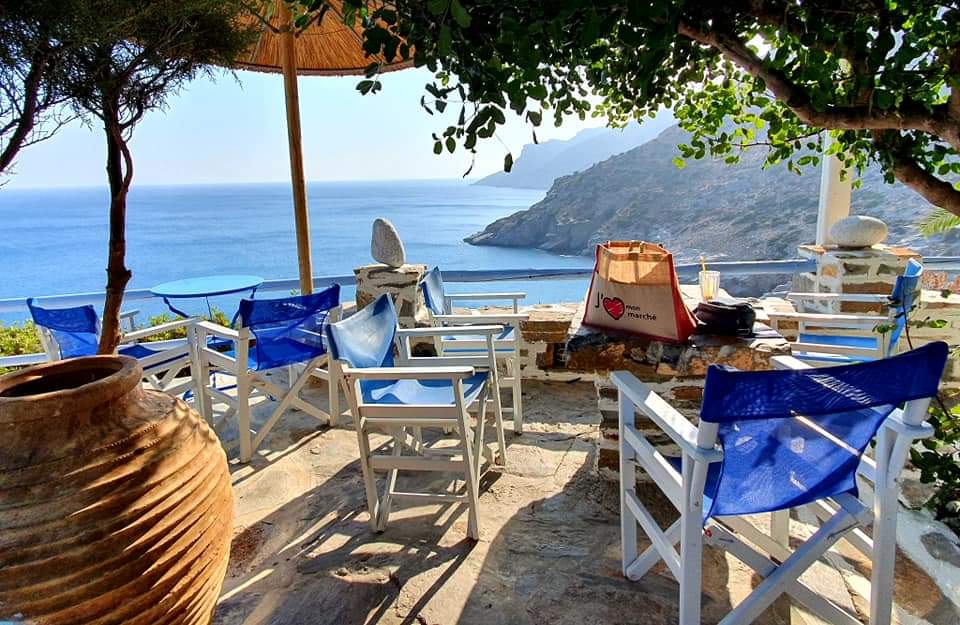
The taverna at the top of the path, right where the parking area sits, serves cold drinks, snacks, and a full menu with a genuinely good view over the wider archipelago — the kind of place I’d happily sit at for an hour after the climb back up, watching the water from above rather than rushing straight back to the car.
The Wider Island
Mouros sits within the same general network of beaches I’ve already covered elsewhere on Amorgos — Maltezi Beach Katapola Amorgos Greece, near the island’s main port, and Agios Pavlos Beach Aegiali Amorgos Greece, facing the island of Nikouria to the north. Each sits in a genuinely different part of Amorgos, and I’d treat a longer stay here as an opportunity to see how differently the island’s coastline behaves depending on which stretch you’re standing on, rather than assuming one beach represents the whole place.
Mouros, near Arkesini and Kamari in southern Amorgos, sits beside two swimmable sea caves and water dark enough to lend weight to one theory of where the island’s own name actually comes from. The Tower of Agia Triada, one of the best-preserved Cycladic towers anywhere, stands a short distance away at the site of ancient Arkesini. The beach itself is dark pebble, entirely unorganised, with a taverna and genuinely good views at the top of a steep five-to-ten-minute footpath down. Twelve to fifteen kilometres from Chora, a car or scooter the practical way to reach it.
Drive south from Chora toward Kato Meria and watch for the Mouros sign. Wear proper shoes for the footpath down. Bring a mask for the sea caves, and stop at the taverna on the way back up.
Map
Sorry, no records were found. Please adjust your search criteria and try again.
Sorry, unable to load the Maps API.
Near by places: