
Maltezi, Katapola: Mycenaean Tombs on the Way There
Profile
Maltezi, Katapola: The Footpath Passes Mycenaean Tombs on the Way to the Sand
Greece | Katapola | Amorgos, Cyclades
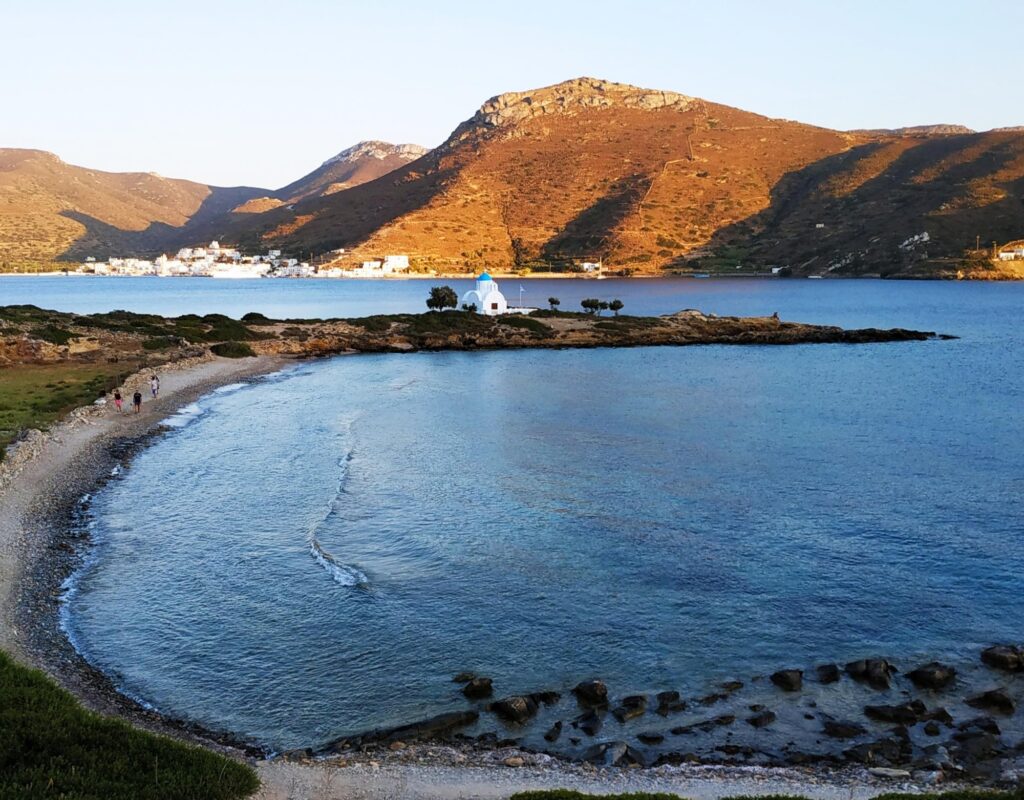
There’s no road to Maltezi, and I think that single fact says more about this beach than anything else I could lead with. You reach it by water taxi from the central pier at Katapola, or by a coastal footpath that takes thirty minutes on foot through the neighbouring settlement of Xylokeratidi — and along that footpath, almost in passing, you walk by genuine Mycenaean-era vaulted tombs and the early Byzantine church of Evangelistria, neither of which gets so much as a sign pointing it out. I found both more or less by accident, walking slowly enough to actually notice the markers worn into the rock rather than rushing toward the water.
Katapola’s bay carries weight that goes well beyond either landmark. Archaeological evidence shows continuous habitation here for over 6,000 years, back to the late Stone Age at the end of the fourth millennium BC, intensifying through the Early Bronze Age a thousand years later. The hill above the bay holds the ruins of ancient Minoa, one of the three independent city-states that made up Amorgos in antiquity, alongside Aigiali and Arkesini. Centuries later, under Ottoman rule, this same protected bay served as a literal pirate base, with no permanent residents at all until Greek independence in 1830 finally drove the pirates from the Aegean. Once the coast was safe, Katapola became something else entirely: the headquarters of Amorgos’s own sea captains, who built and expanded the island’s shipping trade from the late 18th century right through to roughly 1950.
I want to mention one genuine point of confusion I ran into researching this beach, since I’d rather flag it than pretend the picture is perfectly clean. One detailed island guide groups Maltezi under Aegiali, the island’s other, northern port, rather than Katapola — but every other source I found, including the municipal and local tourism sites, places it firmly within Katapola’s own bay, reached specifically via Xylokeratidi. I’ve gone with the Katapola location throughout, since that’s overwhelmingly the consensus, but I mention the discrepancy in case you come across the other version yourself.
Getting There: No Road, Only Water Taxi or a Coastal Walk
The water taxi departs roughly every twenty to thirty minutes from Katapola’s central pier, running from around eleven in the morning until late afternoon, and the short crossing gives a genuinely good view of the cliffs along the way before dropping you directly at the shoreline. I’d take the first boat of the day if claiming a quiet spot matters to you, since the beach fills steadily as the morning goes on.
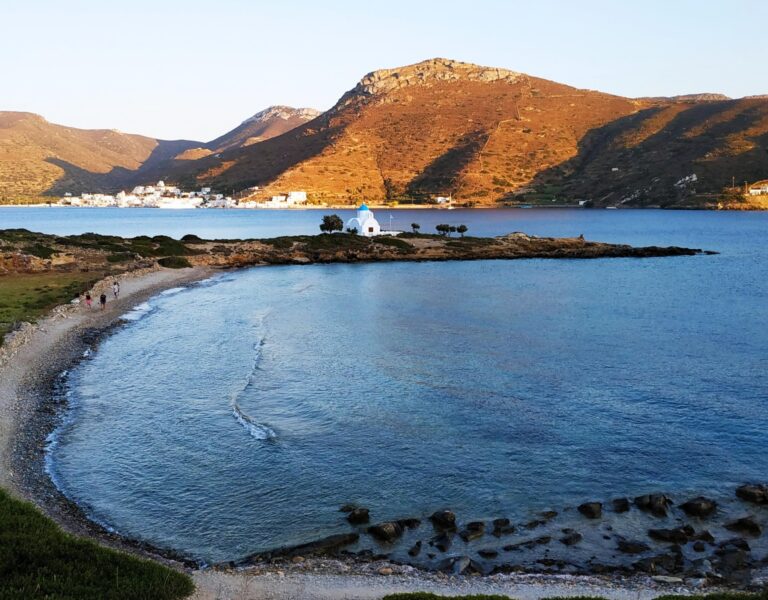
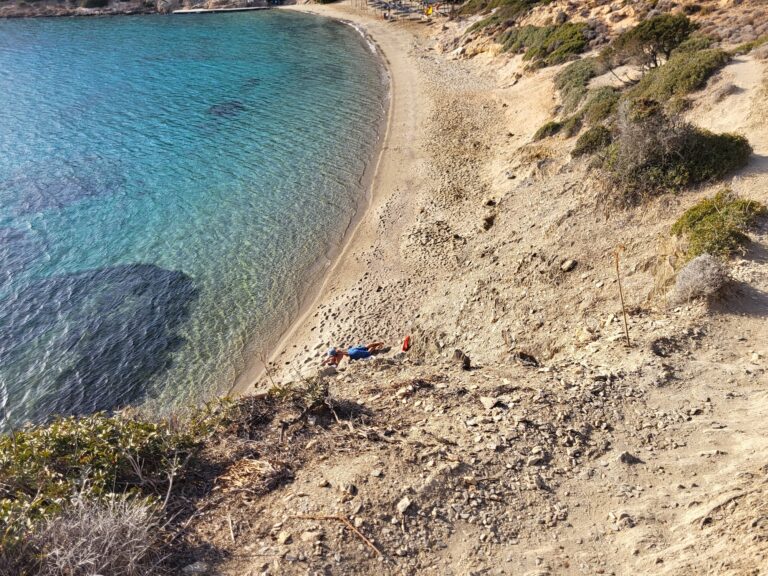
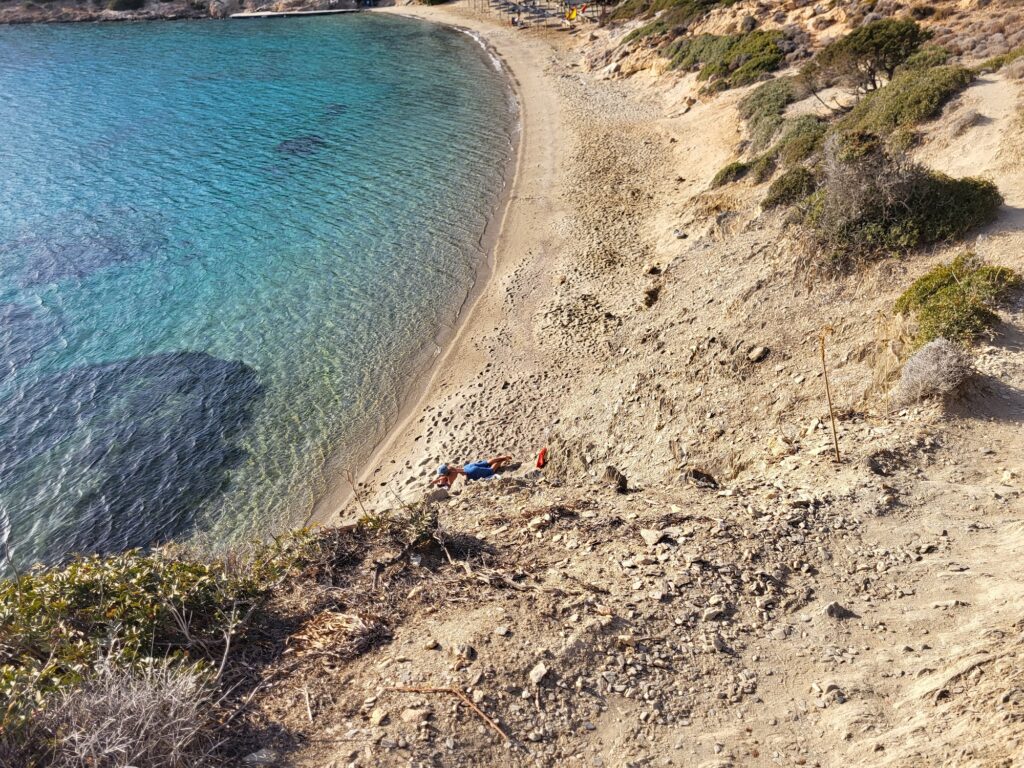
On foot, the route runs along the coastal road past Xylokeratidi, the neighbourhood where Amorgos’s sailing boats were traditionally built and docked, past the chapel of Agios Panteleimon and its own small rocky beach, and on to Maltezi itself — a walk of about thirty minutes, easy underfoot for most of the way but worth sturdy shoes for the final stretch.
Reaching Amorgos at all requires arriving by sea in the first place, since the island has no airport — every visitor, without exception, gets here by ferry, whether from Piraeus or Rafina directly, a crossing of around nine hours, or via a connecting island like Naxos, Paros, or Santorini.
The Beach: Fine Sand, Sheltered From the Meltemi, a View Back to the Harbour
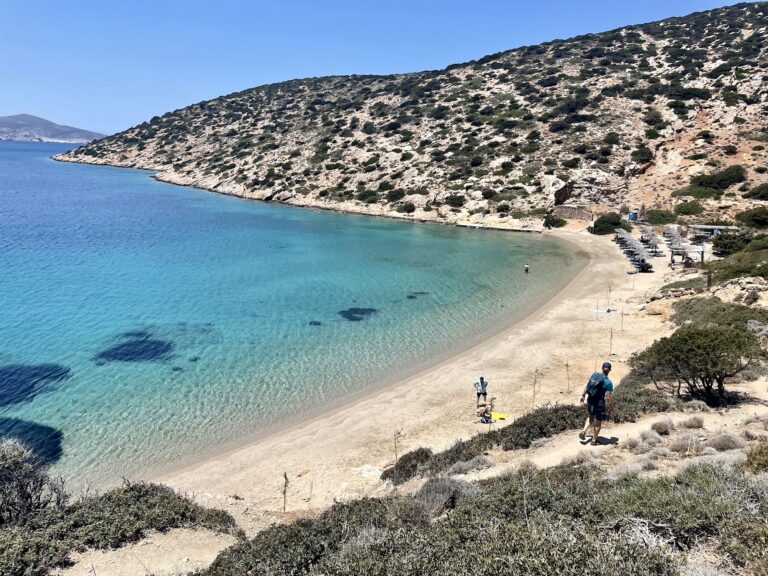
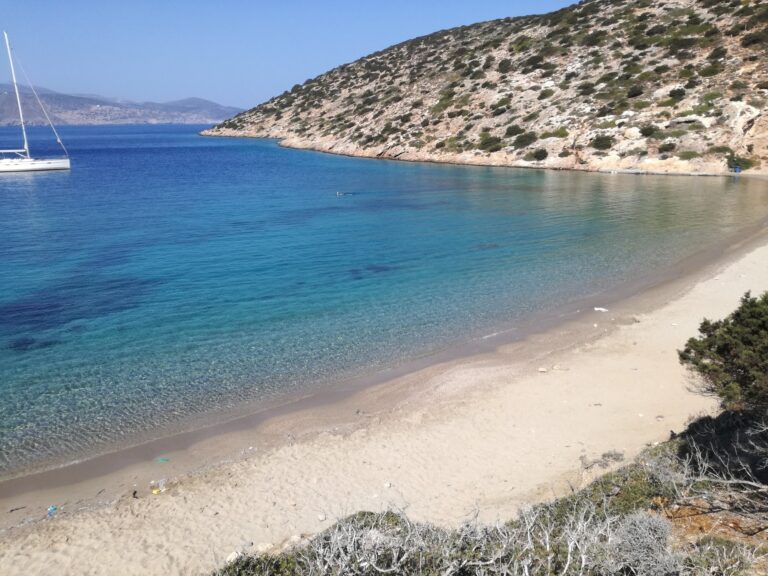
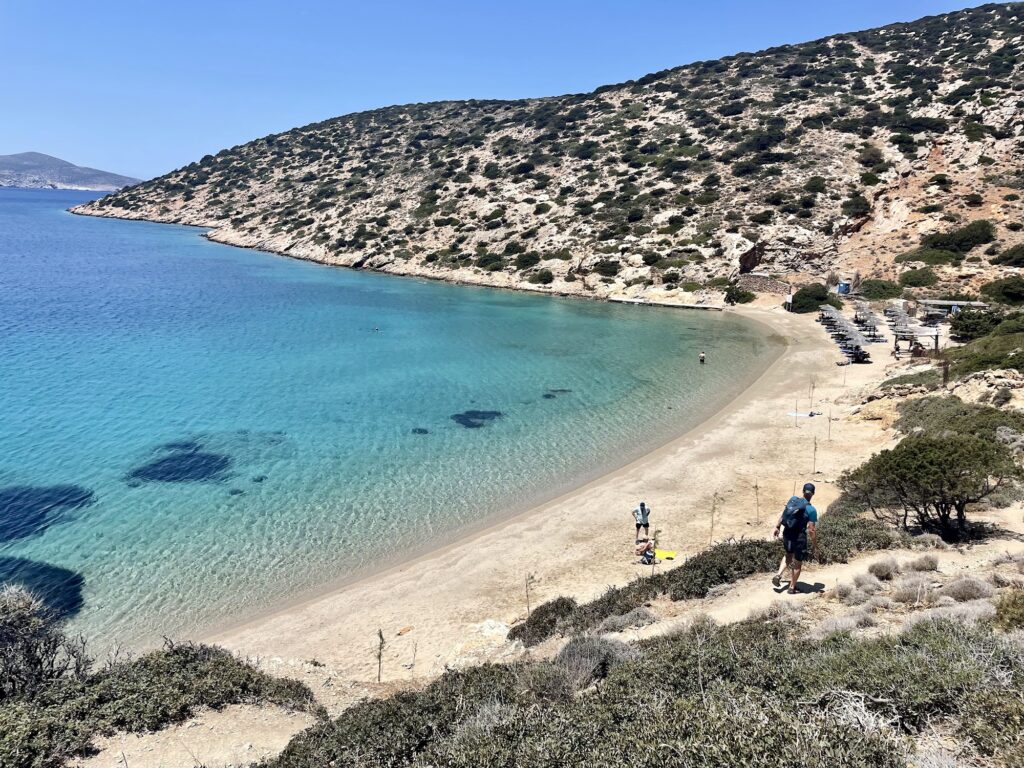
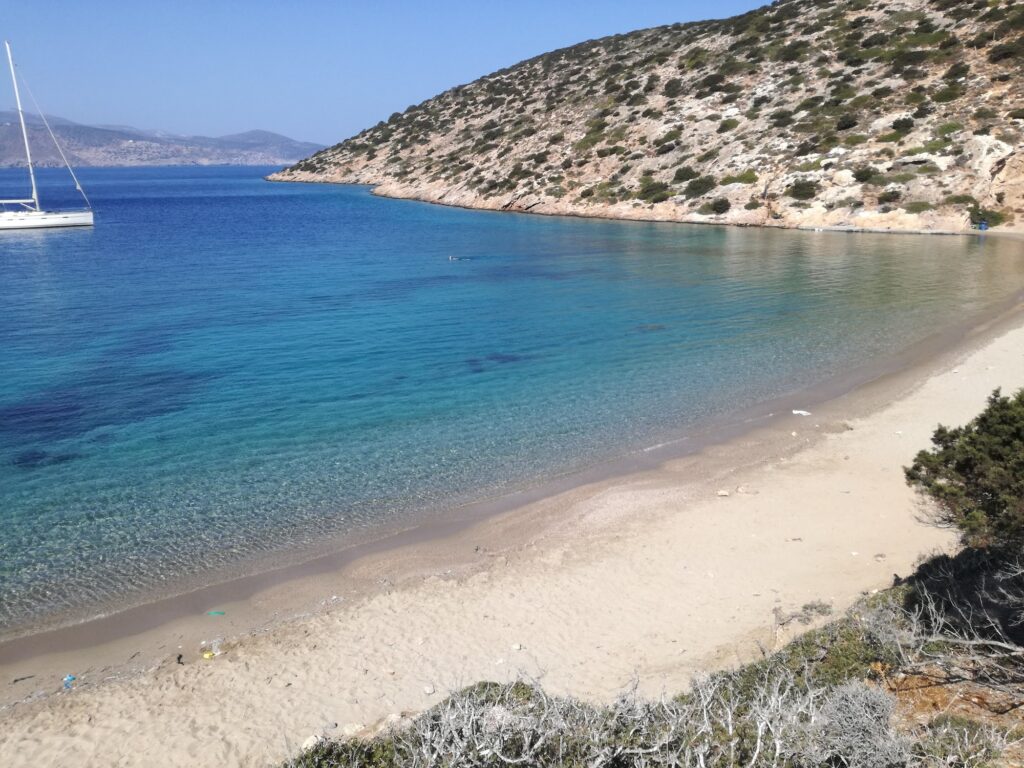
Maltezi’s sand is genuinely fine, the water a vivid bluish-green, and the bay’s position inside Katapola’s own protected harbour means the Meltemi winds that roughen so much of the Cyclades in summer simply don’t reach this particular stretch of water — a real, specific advantage that several independent sources confirm rather than just one. Looking back from the sand, the traditional architecture and fishing boats of Katapola itself sit in clear view, a working harbour rather than a backdrop staged for tourists.
A beach bar and canteen operate on part of the beach, with sunbeds and umbrellas available in season, while the rest of the sand stays free and unorganised for anyone with their own towel. Changing cabins and showers cover the practical side, and I’d treat this as a genuinely comfortable, easy beach for families specifically because of how sheltered the water stays even on a day when wind is troubling the rest of the island.
Maltezi, in Katapola’s bay on Amorgos, has no road access at all — only a water taxi from the harbour or a coastal footpath that passes genuine Mycenaean tombs and an early Byzantine church on the way. Katapola itself sits on ground inhabited continuously for over 6,000 years, home to the ancient city-state of Minoa, later a pirate base under Ottoman rule until 1830, and afterward the headquarters of the island’s own sea captains. The beach itself is fine sand, sheltered enough to stay calm even in the Meltemi, with a beach bar and free sections both available, and a clear view back to Katapola’s own working harbour. Amorgos itself has no airport — every visitor arrives, one way or another, by sea.
Take the water taxi from Katapola’s pier, or walk the coastal path through Xylokeratidi and watch for the Mycenaean tombs along the way. Go early if a quiet spot matters. Remember that getting to Amorgos at all means a genuine sea journey, not a quick flight.
Map
Sorry, no records were found. Please adjust your search criteria and try again.
Sorry, unable to load the Maps API.