Agia Anna, Amorgos: A Monastery, An Icon, The Sea
Profile
Agia Anna, Amorgos: A Monastery Built Where an Icon Washed Up From Palestine
Greece | Chora | Amorgos, Cyclades
The icon at the heart of the Monastery of Hozoviotissa, the building that towers directly above this beach, is said to have arrived here by boat entirely on its own, sent across the sea from Palestine by a devout woman trying to save it from destruction during a period of religious persecution. Local tradition holds that monks first tried building the monastery at a lower spot, only to find the walls collapsed every morning without explanation — until the day they found their tools moved to an inaccessible part of the cliff face, which they took as a sign and built there instead, around 1088. Whatever actually happened, the monastery has stood on that exact cliff ever since, 300 metres above the water, visible only from the sea itself rather than from anywhere on the island.
I climbed the 300 steps up to it once, and the building is genuinely strange to walk through — forty metres tall but only five metres wide, eight floors connected by narrow stone staircases cut directly into the rock, the monks’ cells themselves carved into the cliff rather than built onto it. A monk offered me psimeni raki and loukoumi near the entrance, a small, specific gesture of hospitality that’s apparently extended to most visitors who make the climb. Looking down from the monastery’s edge, Agia Anna sits directly below, the exact spot where the icon supposedly washed ashore centuries ago.
The beach itself became known far beyond Amorgos in 1988, when Luc Besson filmed key underwater scenes for The Big Blue here, the water’s clarity and depth genuinely shaping how the film looked on screen. I’d swum here without knowing that history the first time, and recognising the exact cove from the film on a later visit gave the whole place a slightly different weight — not just beautiful water, but water that had already been seen by millions of people before I ever got in it.
Getting There: About 3 Kilometres From Chora
I drove from Chora toward the Monastery of Hozoviotissa, the road well paved with genuinely good views over the water the whole way, watching for the marked turn toward Agia Anna before the road wound down to a small parking area. From there, a short stone path, no more than five minutes, leads down to the coves themselves — uneven in stretches, worth proper shoes rather than sandals.
The KTEL bus runs from Chora and Katapola directly to the Agia Anna stop through summer, a fare of under two euros. For anyone wanting to combine the beach with the monastery in a single outing, the walking path between the two takes thirty to forty minutes each way, descending through genuinely dramatic scenery rather than functioning as a mere connector.
The Beach: Pebble and Flat Rock, Cold Deep Water, No Facilities
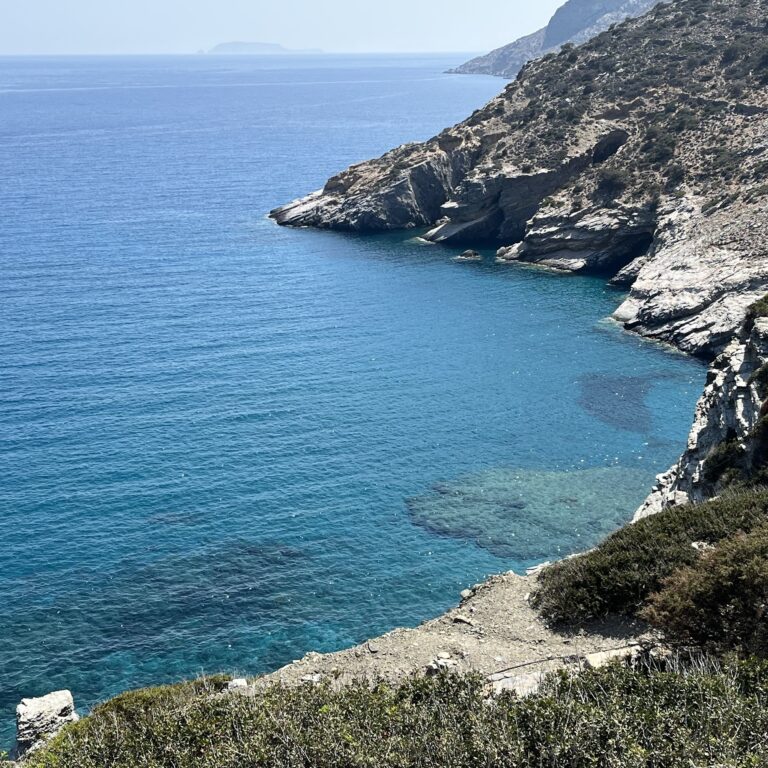
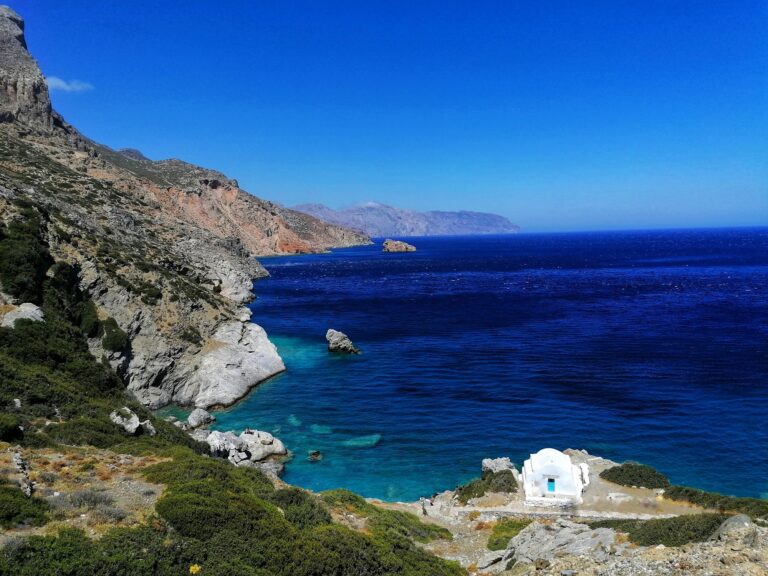
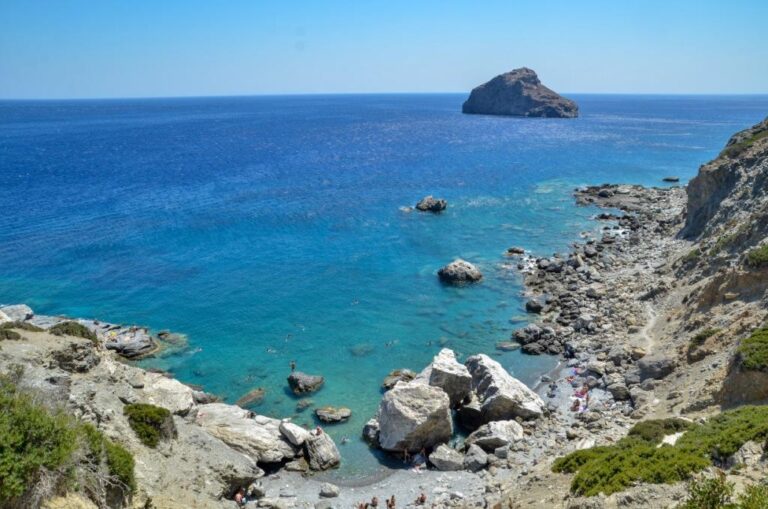
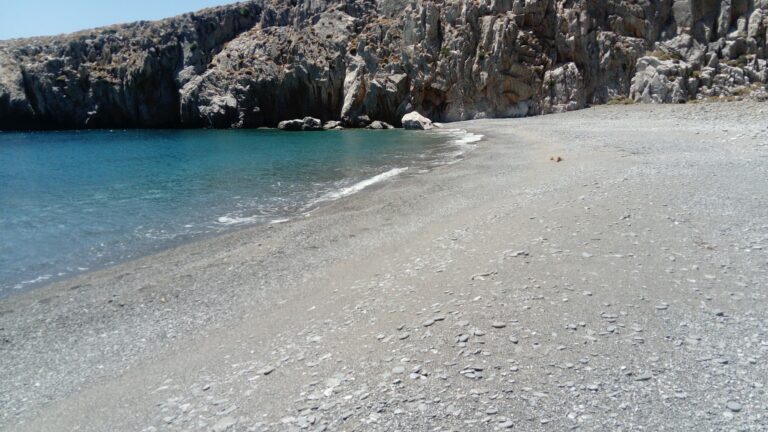
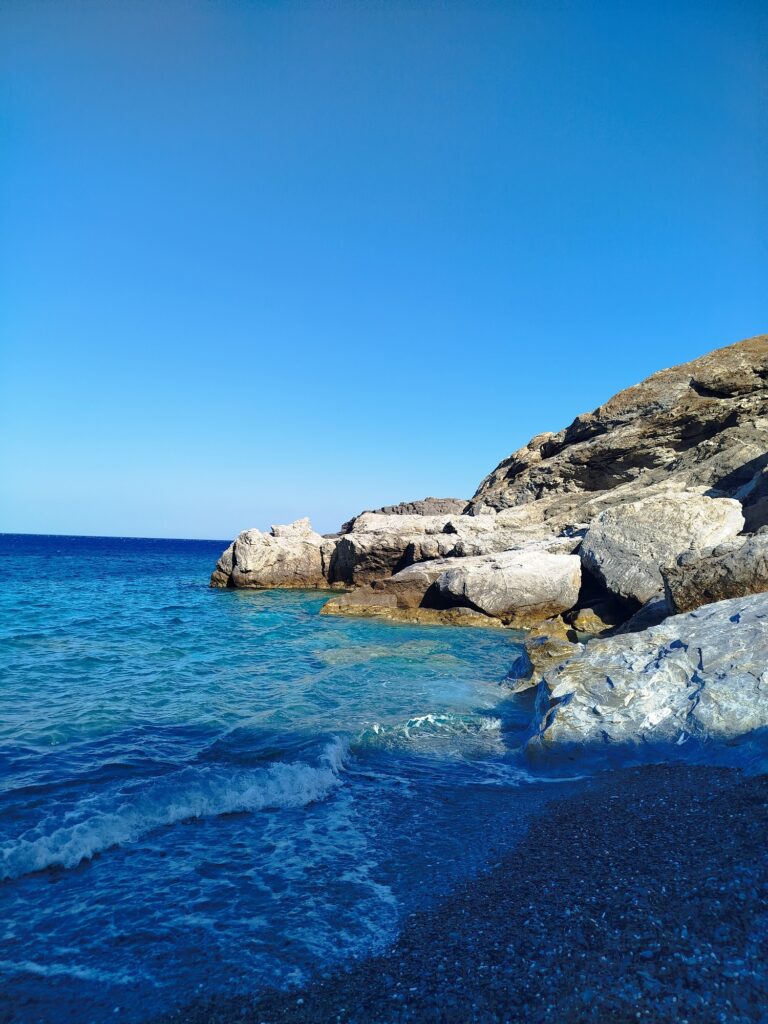
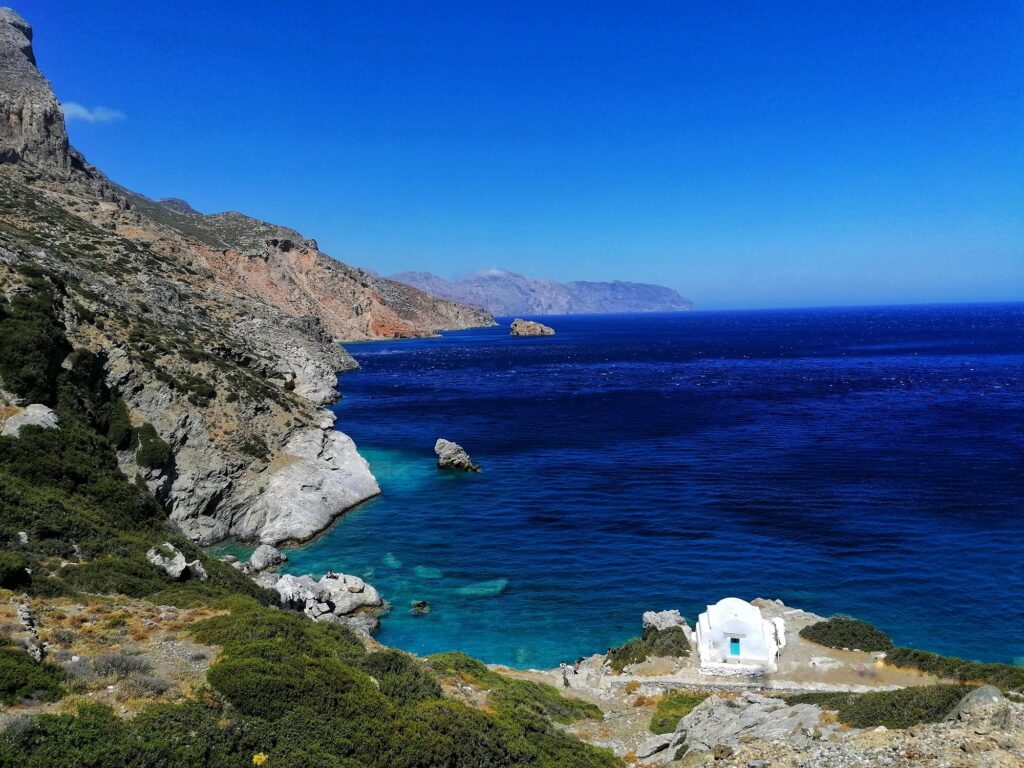
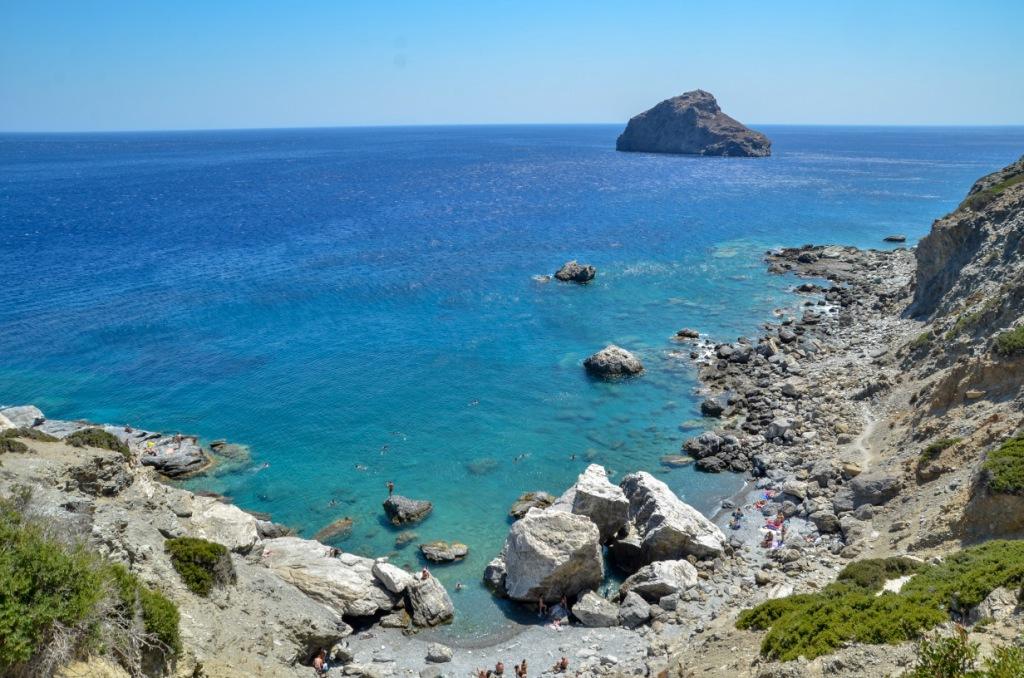
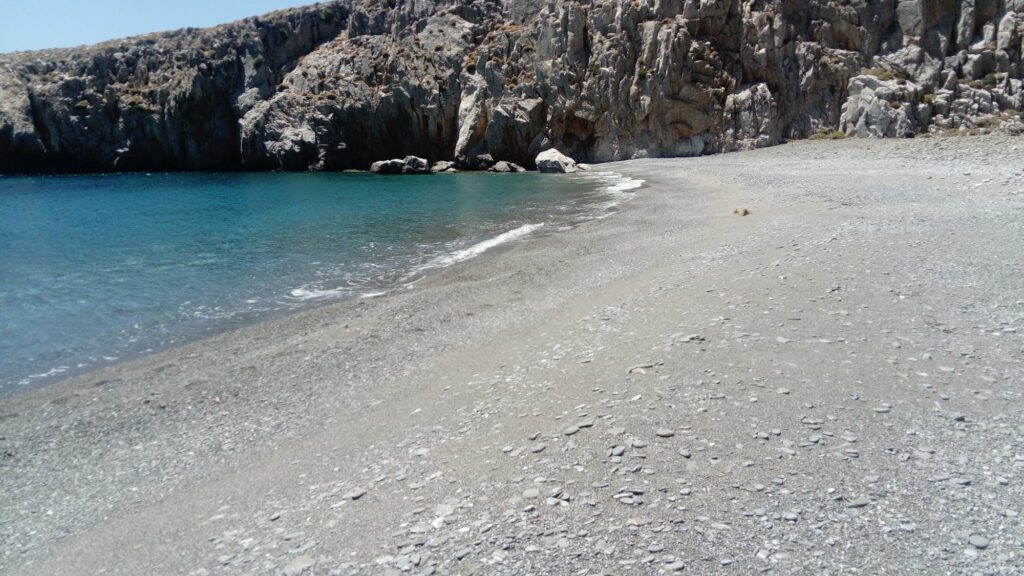
There’s very little actual sand at Agia Anna — small pebbled coves and wide, flat rock platforms instead, the rock itself doubling as a place to sit or sunbathe once you’ve found a comfortable spot. The water runs cold even in summer, deep close to shore, and clear enough that I could watch my own shadow on the seabed a fair distance out. The small whitewashed chapel the beach takes its name from sits right above the rocks, a genuinely popular spot for weddings according to more than one local I spoke to, the chapel and the cliffs behind it forming one of the more photographed views anywhere on the island.
Nothing is organised here — no sunbeds, no umbrellas, no canteen directly on the rocks, though a small traditional café operates near the parking area for anyone wanting refreshment before or after the climb down. I’d bring my own shade, water, and snorkelling gear, since this genuinely isn’t a beach built around convenience.
Agia Anna sits directly below the Monastery of Hozoviotissa, a building forty metres tall and only five wide, carved into a cliff 300 metres above the sea, built around 1088 to mark the spot where a sacred icon is said to have arrived by boat from Palestine. The beach itself became globally recognisable in 1988 through Luc Besson’s The Big Blue, and remains pebble and flat rock rather than sand, the water cold, deep, and genuinely clear. No facilities exist directly on the rocks. Three kilometres from Chora, with Maltezi Beach Katapola Amorgos Greece and Agios Pavlos Beach Aegiali Amorgos Greece, offering very different stretches of the same small island.
Drive or take the KTEL bus from Chora or Katapola. Climb to the monastery if you have the time and the legs for 300 steps — the view down over Agia Anna from the top is worth it on its own. Bring everything you need, since nothing is sold directly on the rocks themselves.
Map
Sorry, no records were found. Please adjust your search criteria and try again.
Sorry, unable to load the Maps API.
Near by places: