Plaka Dilesi: Facing Eretria Across the Water
Profile
Plaka Dilesi, Boeotia: A Beach Looking Straight Across at Eretria’s Lights
Greece | Plaka Dilesi | Tanagra, Boeotia
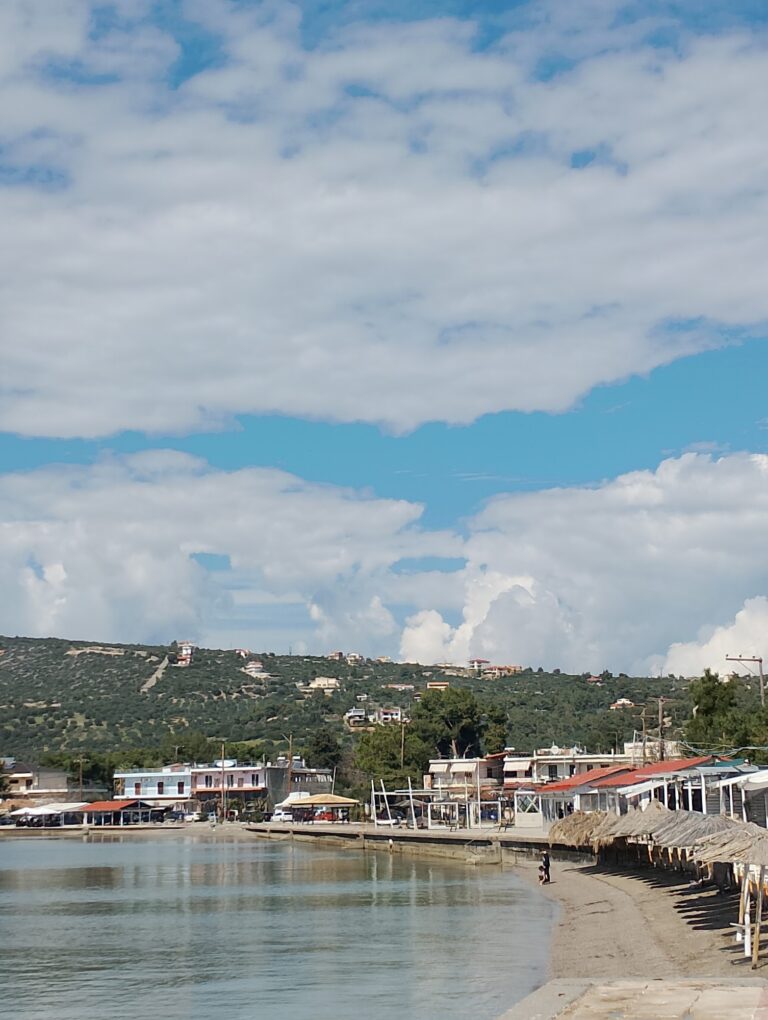
I came to Plaka Dilesi expecting a fairly ordinary stretch of mainland coast, and the thing that actually stuck with me was the view at dusk: the bay sits directly across the South Euboean Gulf from Eretria and, further along, Chalkida, and as the light dropped, both towns lit up across the water close enough that I could pick out individual buildings. Most of the beaches I’d visited on this gulf face out toward open water or toward Evia’s hills; this one faces a working strip of towns instead, and I found that oddly more interesting than a blank horizon would have been.
Plaka Dilesi itself is a fairly young administrative entity, separated out in 2014 from the municipal unit of Schimatari and merged with the neighbouring village of Dilesi to form its own unit within the wider municipality of Tanagra. The two villages, Dilesi and Plaka Dilesi, both sit on this same stretch of coast and are close enough that I walked between them without really noticing where one ended and the other began.
The wider region carries genuine weight in ancient history that’s easy to miss while lying on a beach towel. Tanagra, a short drive inland, gave its name to the Tanagra figurines — small, mass-produced terracotta statuettes that became enormously popular across the ancient world from the fourth century BC onward — and the surrounding plain saw two actual battles fought in its name, the First Battle of Tanagra in 457 BC and a second in 426 BC, both tied up in the long rivalry between Athens and the Boeotian League. Oinofyta, the village just inland from Dilesi, has its own grim footnote in ancient military history too: the Battle of Oenophyta, fought there in 457 BC, gave Athens control of the whole region for a time.
I want to mention something more recent and considerably less comfortable, since I think anyone researching this area properly should know about it: in December 2007, official testing found the drinking water in Oinofyta contaminated with hexavalent chromium, a recognised carcinogen used in steel and dye production, at levels serious enough to make national news. That contamination affected the inland village’s water supply rather than the sea itself, and I didn’t find anything suggesting the beach water at Plaka Dilesi was ever implicated — the beach has carried Blue Flag certification for water quality in multiple recent years running, which tells its own story about the actual swimming conditions today. I’d still rather mention the history plainly than leave it out, since it’s part of the area’s real recent past.
Getting There: Around 20 Minutes From Chalkida, 50 From Athens
From Athens, I took the E75 national road north toward Lamia, exiting at Oinofyta/Dilesi and following the signs through farmland out to the coast — a straightforward drive of about fifty minutes with free parking along the beach road the whole way. Coming from Chalkida instead, the route runs south toward Schimatari before picking up the local coastal road to Dilesi, a drive of around twenty minutes that gave me a good look at the mix of industry and sea this stretch of Boeotia is known for.
By train, the Proastiakos suburban line connects from Athens to Chalkida, and either the Oinofyta or Agios Georgios station puts you within a short taxi ride — about ten minutes — of the beach entrance. Dilesi also has its own dedicated railway station on the same Athens–Chalkida line, which I found out only after already driving in, and would probably use myself on a second visit.
The Beach: Sand and Small Pebbles, a Gentle Slope, Organised Sections
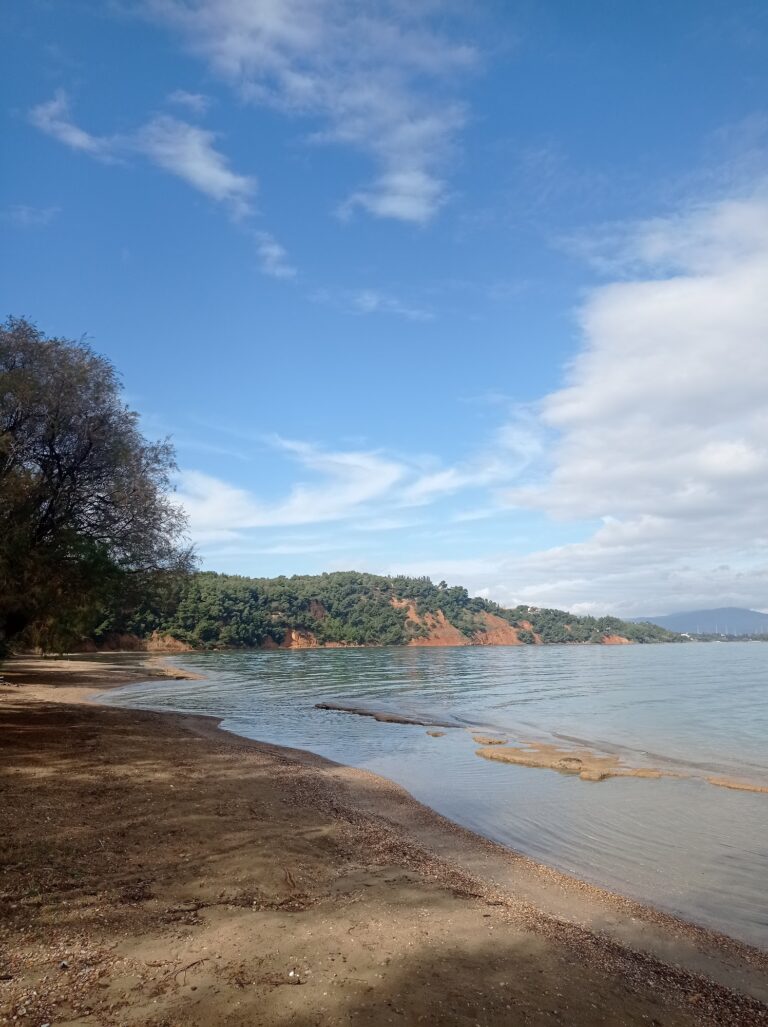
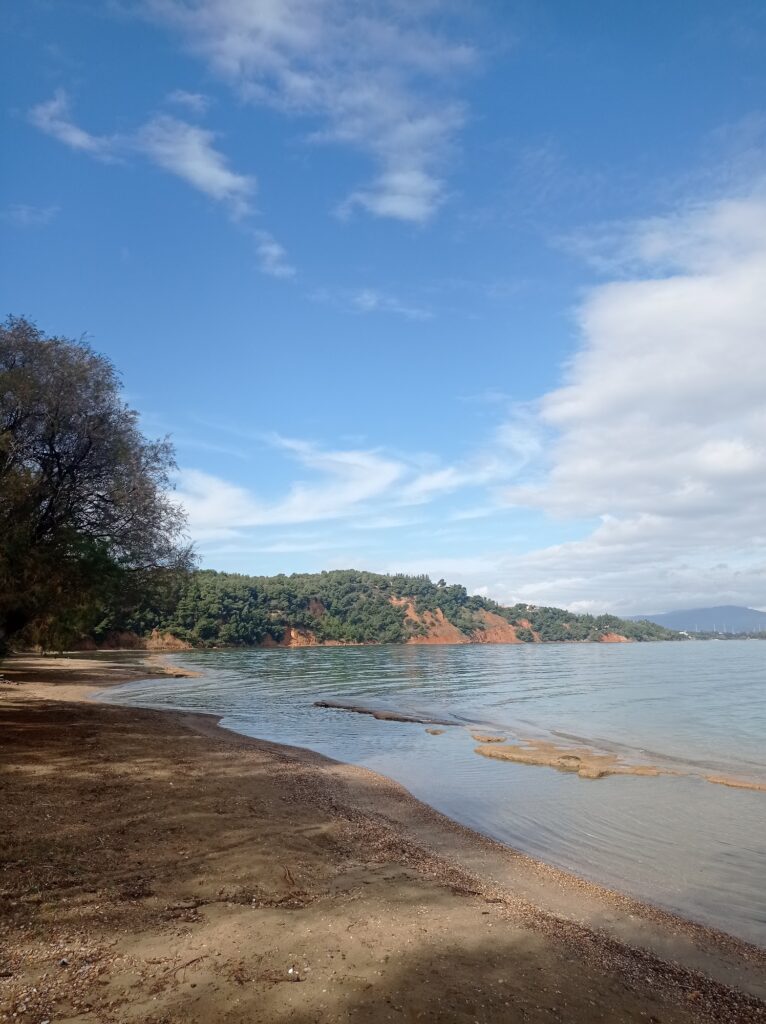
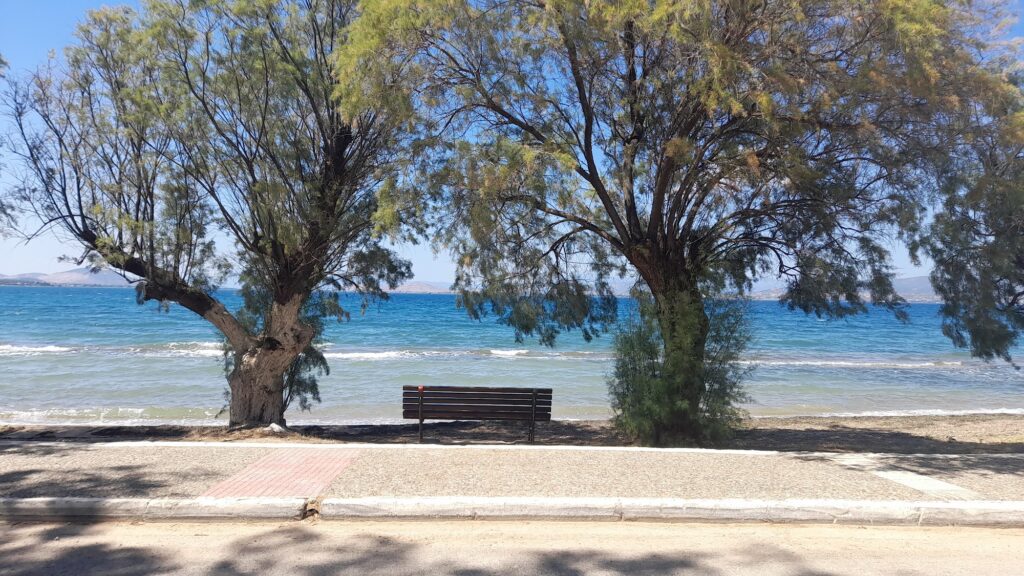
The shore is broad, sand mixed with small, multicoloured pebbles, and the seabed slopes gently enough that I watched several families with toddlers wading comfortably without anyone looking concerned. The water stayed calm and clear the whole time I was there, sheltered by Evia sitting directly across the gulf, and I didn’t notice any of the wind that had roughened up a couple of other mainland beaches I’d visited recently.
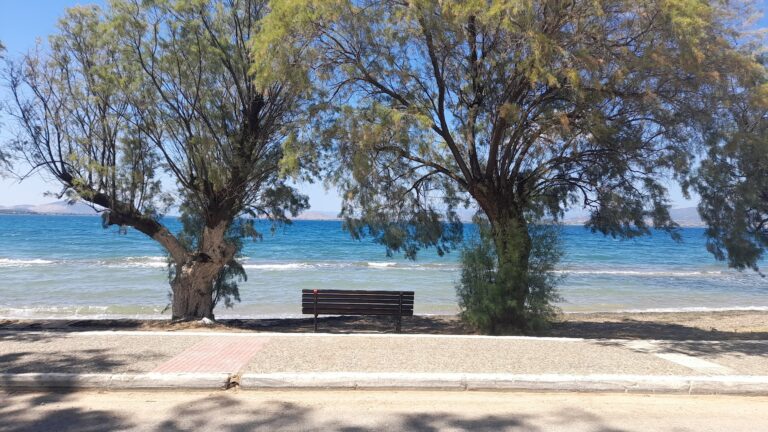
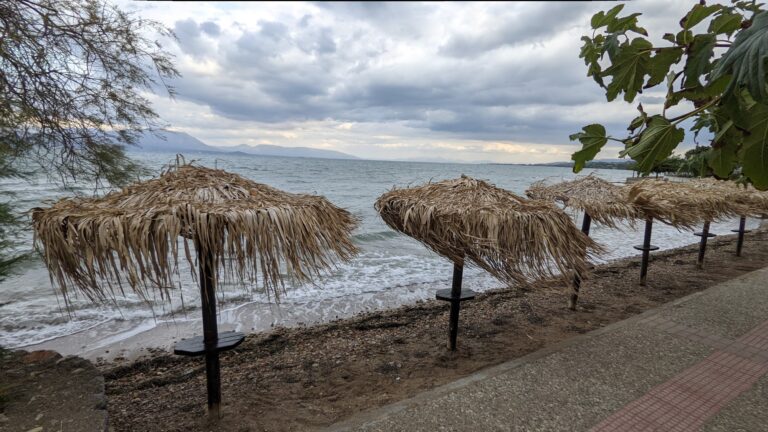
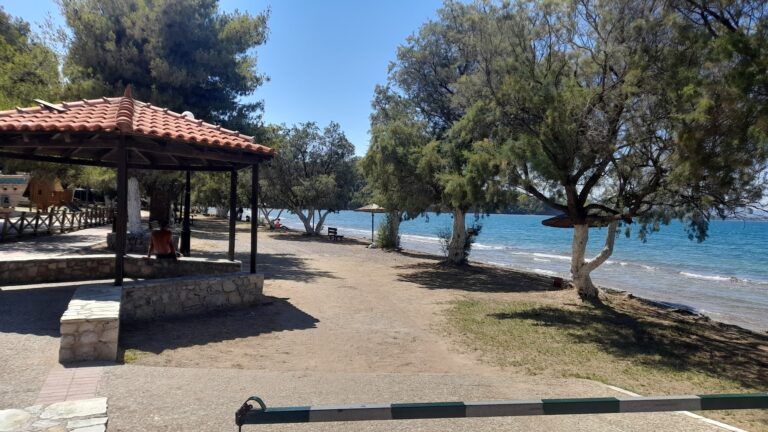
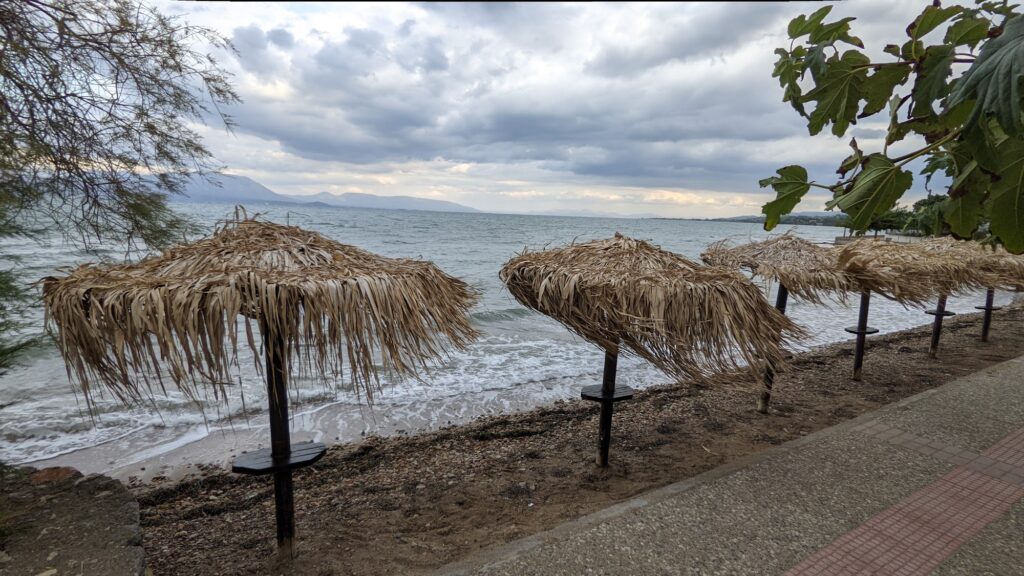
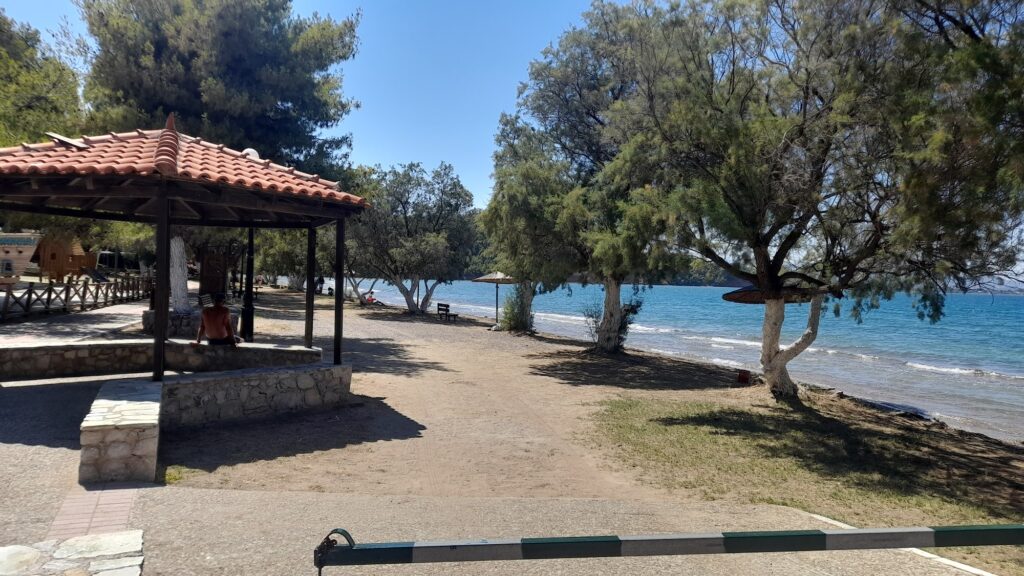
Sunbeds and umbrellas occupy organised sections along parts of the beach, run by the handful of beach bars working this stretch, and tavernas and cafés line the road just behind the sand — close enough that I walked back for lunch without needing the car. Showers, changing cabins, and restrooms are all present, and the village itself, a five-minute walk away, has pharmacies, bakeries, and an ATM if you need any of that during the day.
Plaka Dilesi, on the South Euboean Gulf in Boeotia, is a young administrative village, separated from Schimatari in 2014, sitting directly across the water from Eretria and Chalkida, both visible and lit up after dark. The wider region carries real ancient weight — the Tanagra figurines, two battles fought in the plain inland, and a more recent, sobering chapter involving water contamination in nearby Oinofyta in 2007, unrelated to the beach’s own water quality, which has held Blue Flag status in multiple recent years. The beach itself is sand and small pebble, gently sloping, organised in sections with sunbeds and nearby tavernas. Around twenty minutes from Chalkida, fifty from Athens via the E75.
Drive the E75 and exit at Oinofyta/Dilesi, or come down from Chalkida via Schimatari. Take the train to Dilesi’s own station if you’d rather skip driving. Stay until dusk and watch Eretria’s lights come on across the water.
Map
Sorry, no records were found. Please adjust your search criteria and try again.
Sorry, unable to load the Maps API.
Near by places: