Kourenti, Chalkida: Where Aristotle Allegedly Drowned
Profile
Kourenti, Chalkida: Legend Says Aristotle Drowned Trying to Solve the Water Right Next to This Beach
Greece | Chalkida | Central Greece
A few hundred metres from where I swam at Kourenti, the Evripos Strait narrows to just 39 metres wide, and the water there does something genuinely strange: it changes direction roughly every six hours, like a tide, for most of the lunar month — and then, during the final four or five days before each new moon, it can reverse itself up to fourteen times within a single day, with no predictable pattern at all. Aristotle, who had ancestors from Chalkida, travelled here specifically to study the phenomenon, and a persistent legend, repeated for centuries, holds that he eventually drowned himself in these same waters out of despair at never working out the cause. The more measured truth is that he investigated rather than died here, but the story has outlived the correction by a wide margin, and I find it easy to understand why once I’d actually stood at the old drawbridge and watched the current visibly shift.
Plato, in his dialogue Phaedo, has Socrates use the Evripos tide as a metaphor for unstable thinking — minds that “go up and down” the way the strait’s currents do, never settling on anything fixed. The phenomenon still isn’t fully explained even now. The accepted modern account involves the tidal wave entering the southern and northern Euboean Gulf at slightly different times, around an hour and fifteen minutes apart, creating a brief but real difference in water level between the two ends of the channel that drives the current first one way, then the other — but the more erratic days each month remain genuinely harder to predict with full confidence.
Getting There: A Short Walk From Central Chalkida
I walked it from the Old Bridge in the centre of Chalkida, following the coastal road north — ten to fifteen minutes on foot, or a three-minute drive if I’d brought a car. From Athens, the suburban railway runs from Larissa Station directly to Chalkida, the journey taking around an hour and twenty minutes, with the beach a short taxi ride or an easy walk from the station once I’d arrived. By car, the A1 motorway toward Lamia and the Chalkida exit covers the same distance in about an hour.
Street parking and designated lots sit directly behind the beach, and I didn’t find competing for a space especially difficult even on a busy weekend.
The Beach: Pebble Shore, Sandy Shallow Entry, Genuinely Accessible
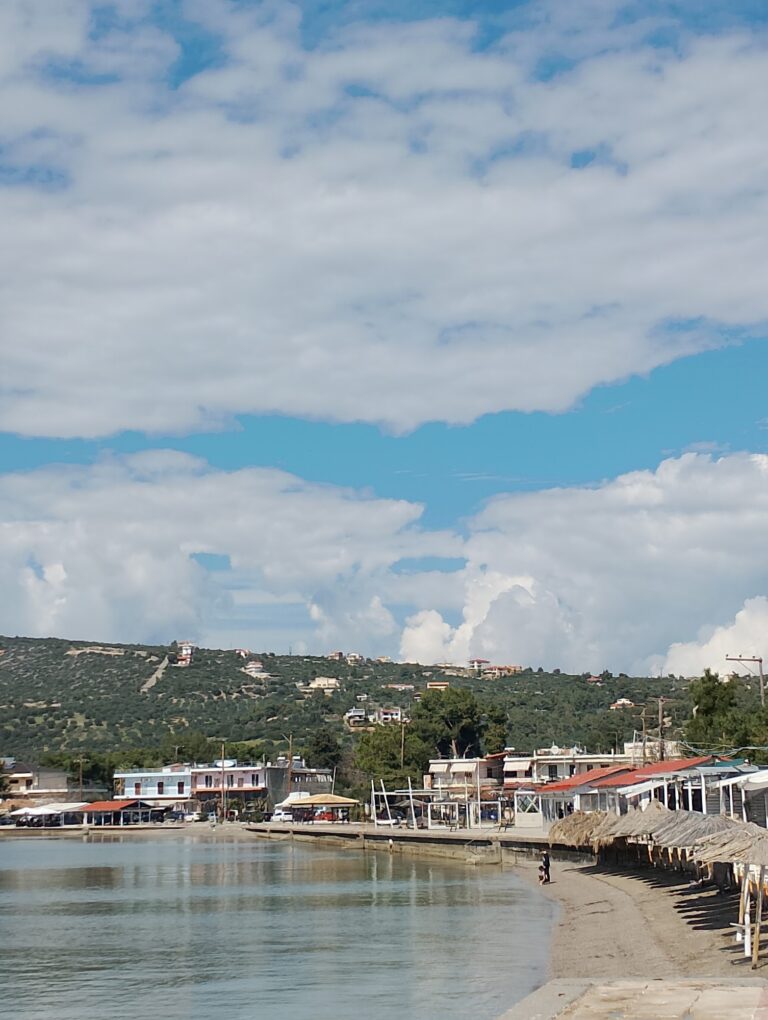
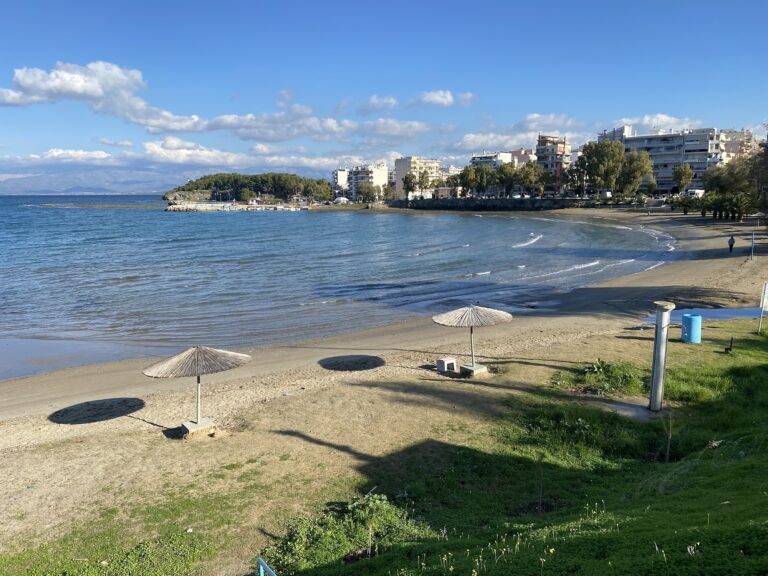
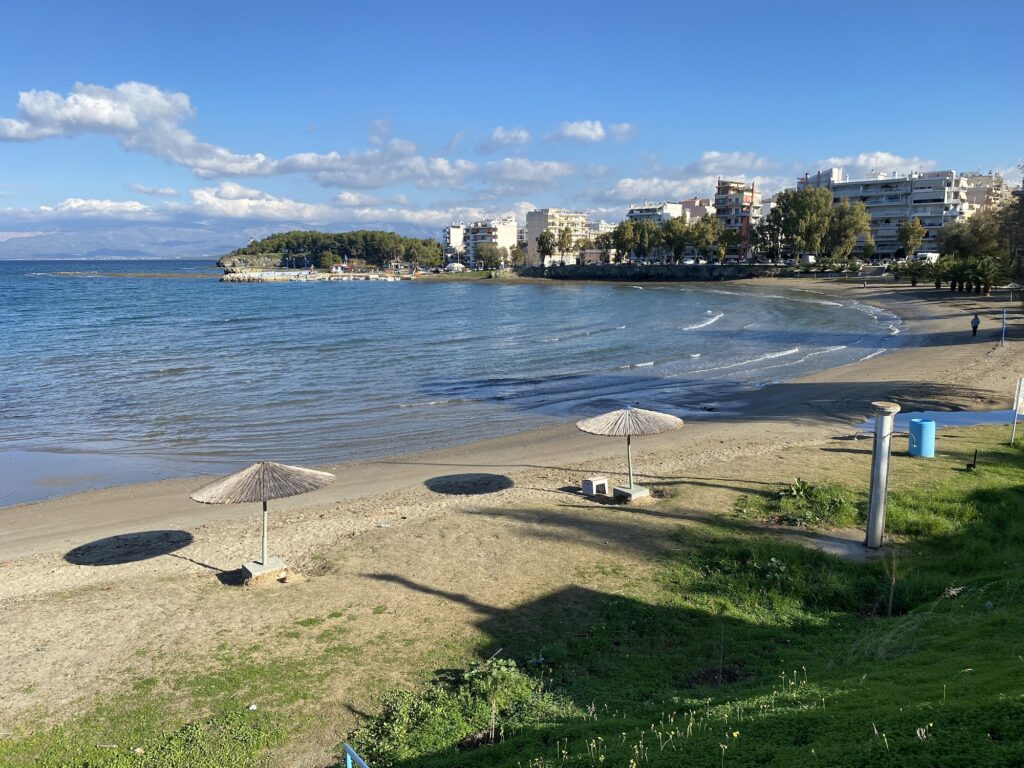
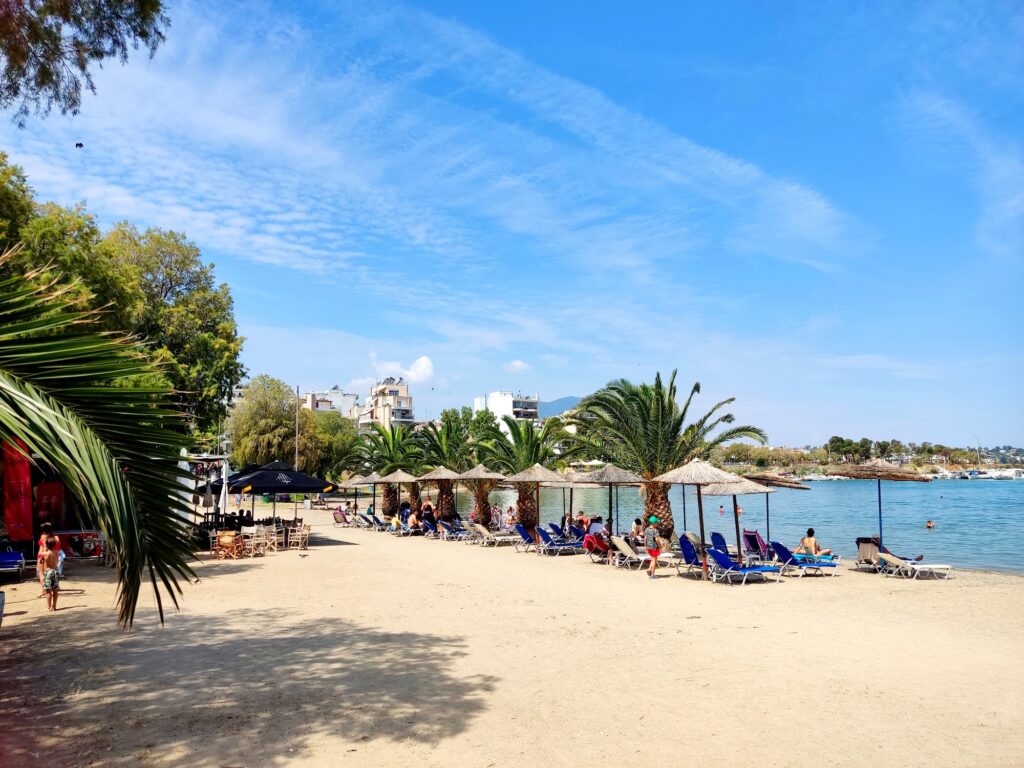
The shore itself is small, smooth pebbles rather than sand, though the seabed turns sandy and shallow once I was actually in the water — a comfortable, gradual entry well suited to children and confident waders alike. Kourenti carries a SEATRAC installation, giving independent sea access for visitors with mobility needs, a detail I appreciated finding here given how few of the wilder beaches further along this coast can offer the same.
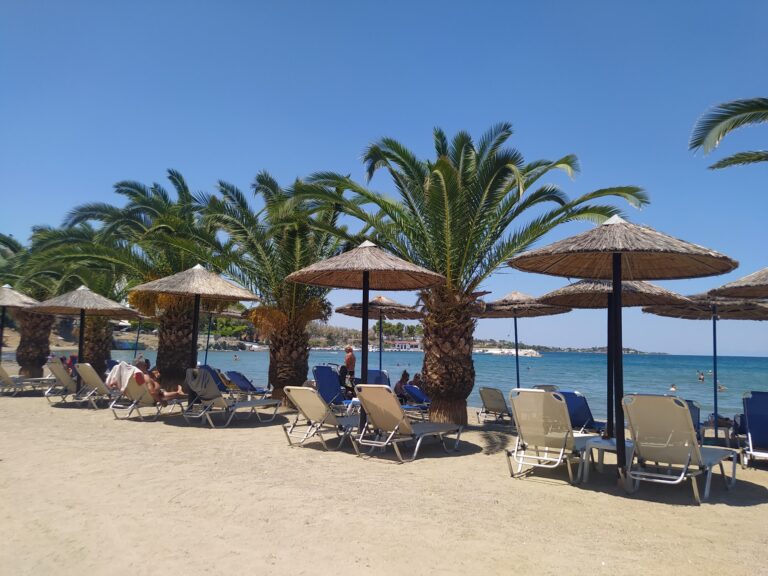
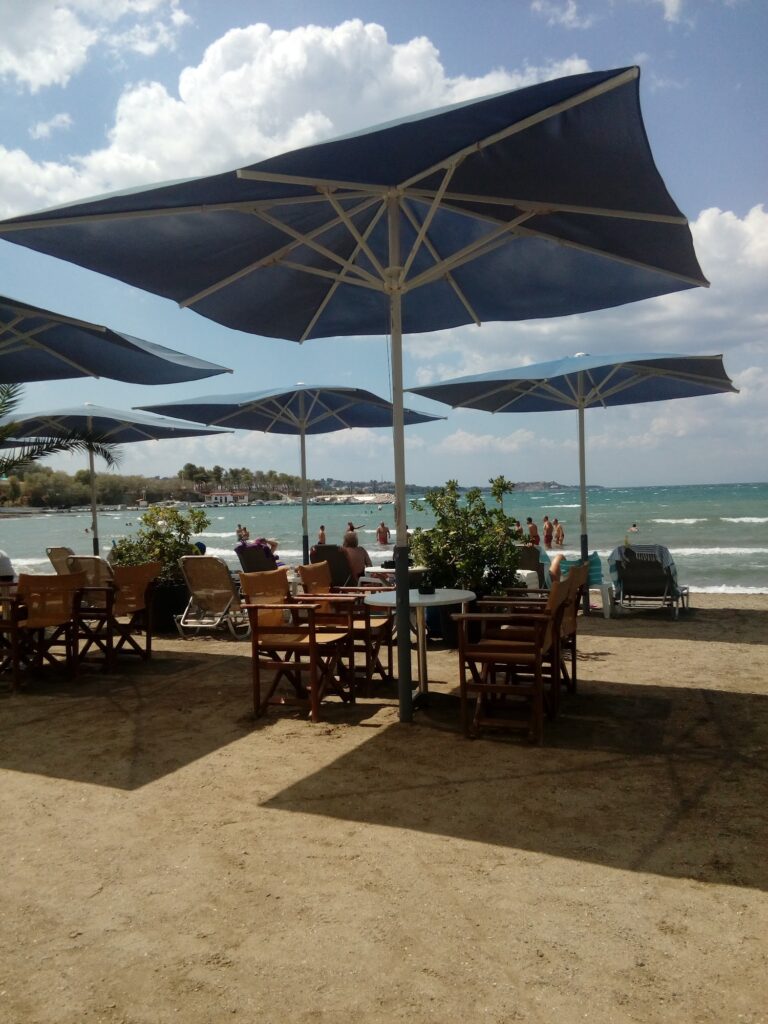
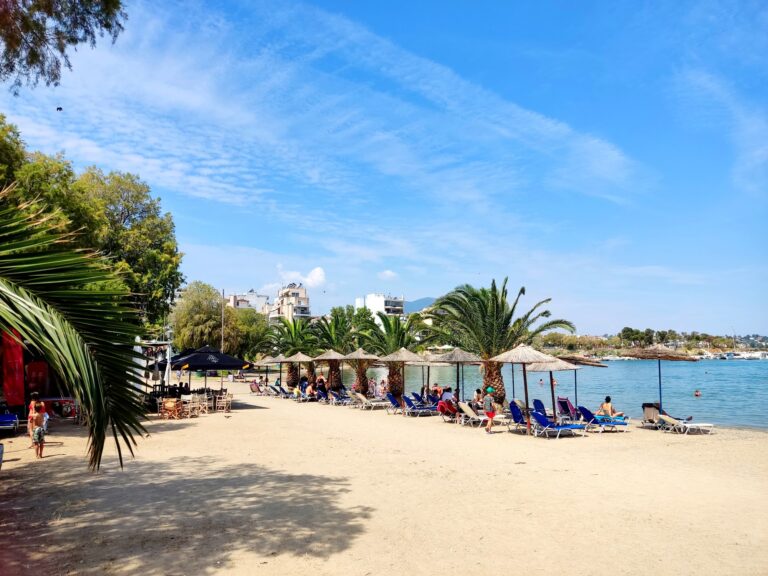
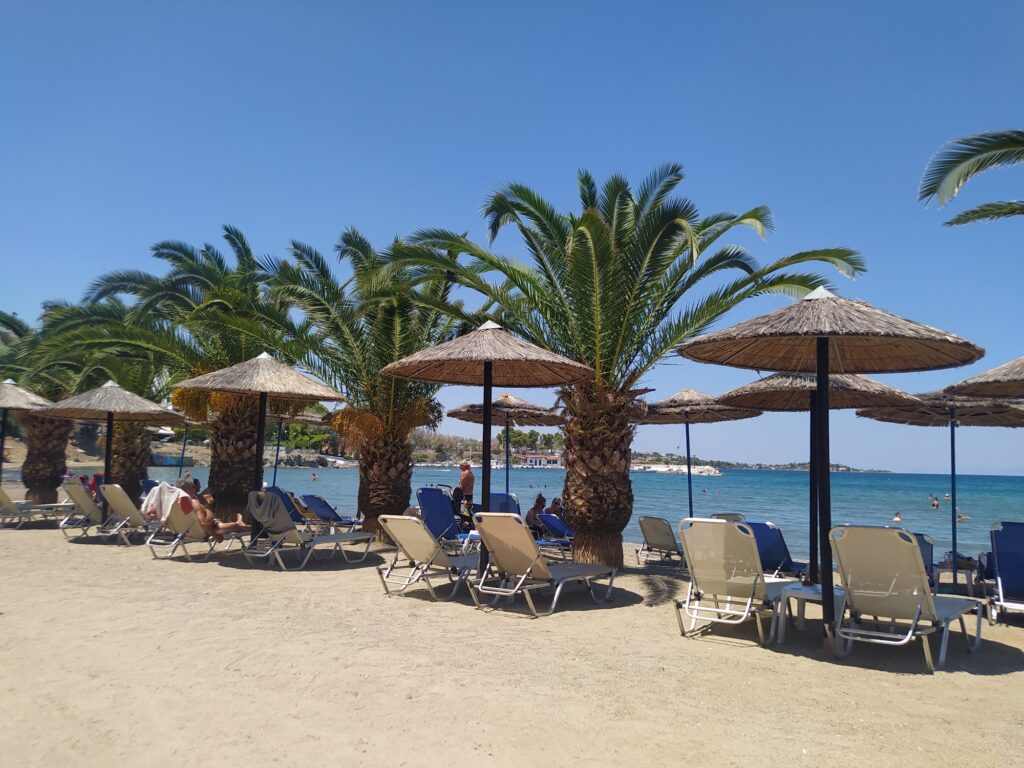
Sunbeds and umbrellas come free with a drink at the beach bars working this stretch, and the view back across the Euboean Gulf takes in the city skyline directly, the light shifting properly once evening sets in and the buildings start reflecting on the water. Showers, changing cabins, and dedicated parking round out the practical side, and the central location means I never had to walk far for anything I’d forgotten.
The Old Bridge and the Castle
The Old Evripos Bridge, right at the narrowest point of the strait, is the best place to actually watch the current change — I’d time a visit specifically around a shift if the phenomenon interests you, since the water genuinely does pause and reverse visibly rather than just shifting gradually. Karababa Castle, on the hill above the city, dates to the Ottoman period and offers a wide view back over Chalkida, the strait, and the gulf beyond, a worthwhile walk for anyone extending the day past the beach itself.
Kourenti, in central Chalkida, sits a short walk from the Evripos Strait, where the current reverses direction roughly every six hours for most of the month and occasionally up to fourteen times in a single day during the days around the new moon — a phenomenon Aristotle travelled here to study, with legend claiming, probably wrongly, that he drowned trying to solve it. The beach itself is pebble with a sandy, shallow entry, SEATRAC accessible, central and easy to reach on foot from anywhere in the city. Ninety minutes from Athens by car or suburban rail.
Walk it from the Old Bridge if you’re staying centrally. Time a visit to the bridge itself around a current change if the tidal phenomenon interests you. Climb to Karababa Castle for the wider view over the strait and the city.
Map
Sorry, no records were found. Please adjust your search criteria and try again.
Sorry, unable to load the Maps API.
Near by places: