Marathon Beach Nea Makri: A Name Older Than the Battle
Profile
Marathon Beach, Nea Makri: A Name That Predates the Battle, Taken From the Fennel That Once Covered the Plain
Greece | Nea Makri | Marathon, East Attica
The name Marathon is generally understood, reasonably enough, as a direct reference to the battle fought here in 490 BC. The actual etymology runs the other way. Marathon derives from the ancient Greek word for fennel — marathon or marathos — and the place was named for the abundance of the plant growing on the plain centuries before any battle gave the name its present association. The battle borrowed the place’s name rather than the reverse, a detail easy to overlook given how completely the historical event has come to define the word in modern usage.
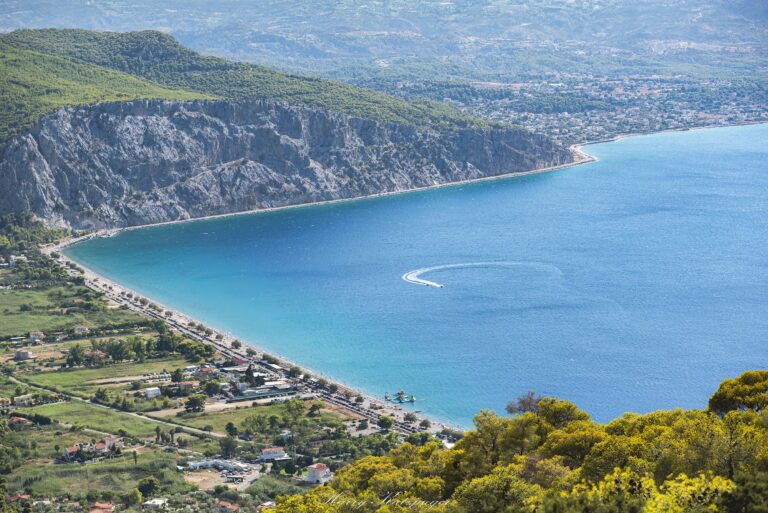
The beach itself runs along the Marathon Gulf at Nea Makri, a coastal town of roughly twenty thousand residents that was, until 1922, known by a different name entirely — Plesti. It was renamed Nea Makri, meaning New Makri, after Greek refugees from the town of Makri in Asia Minor (present-day Fethiye, Turkey) settled here following the population exchange of that period, a pattern of resettlement and renaming that recurs at several points along the Attica coast covered elsewhere in this series. The town’s coastline has since developed considerably, particularly following the opening of Athens’ newer airport some fifteen kilometres away, and now carries a continuous run of hotels, cafés, and beach bars along several kilometres of shore.
Getting There: Forty-Five to Fifty-Five Minutes From Athens via Marathonos Avenue
The drive from central Athens covers the route along Marathonos Avenue, taking forty-five to fifty-five minutes and passing the Marathon Tomb and the Archaeological Museum of Marathon en route — a sequence that allows the historical sites and the beach to be combined within a single day without significant detour. The orange KTEL Attikis bus from Pedion tou Areos in central Athens, labelled for Marathon or Schinias, provides an alternative for those travelling without a car.
Roadside parking is available along the coastal road, supplemented by dedicated lots near the more organised beach bar sections, with both free and paid options depending on the exact stretch.
The Beach: Golden Sand, Shallow and Warm, Limited Facilities Directly on the Sand
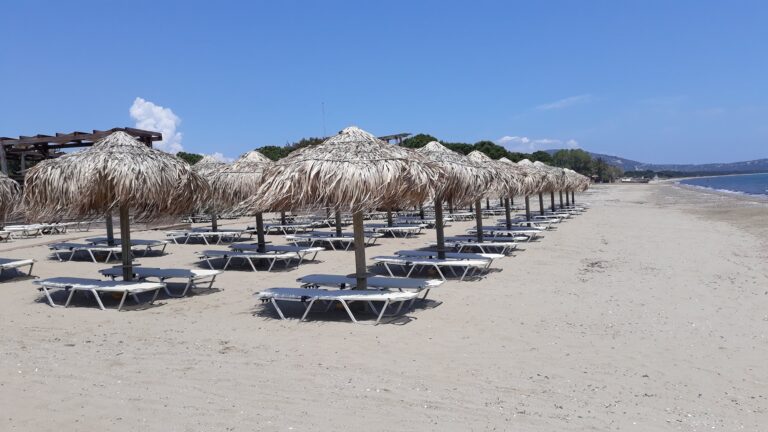
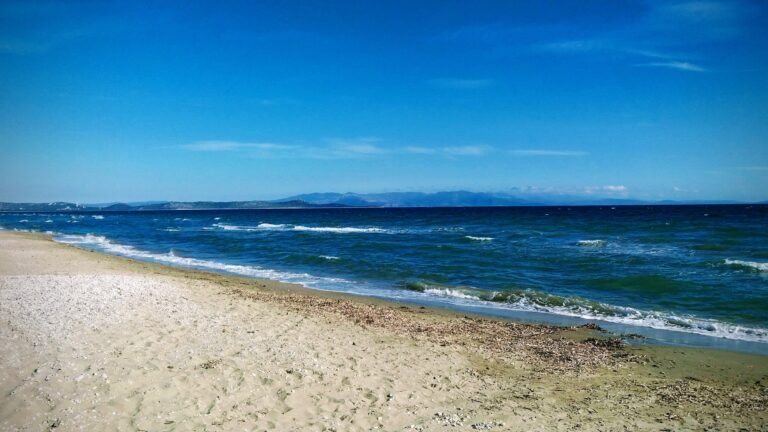
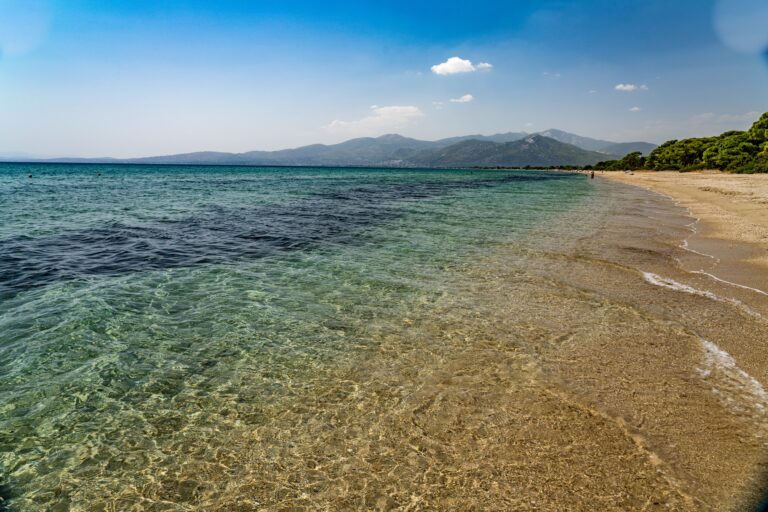
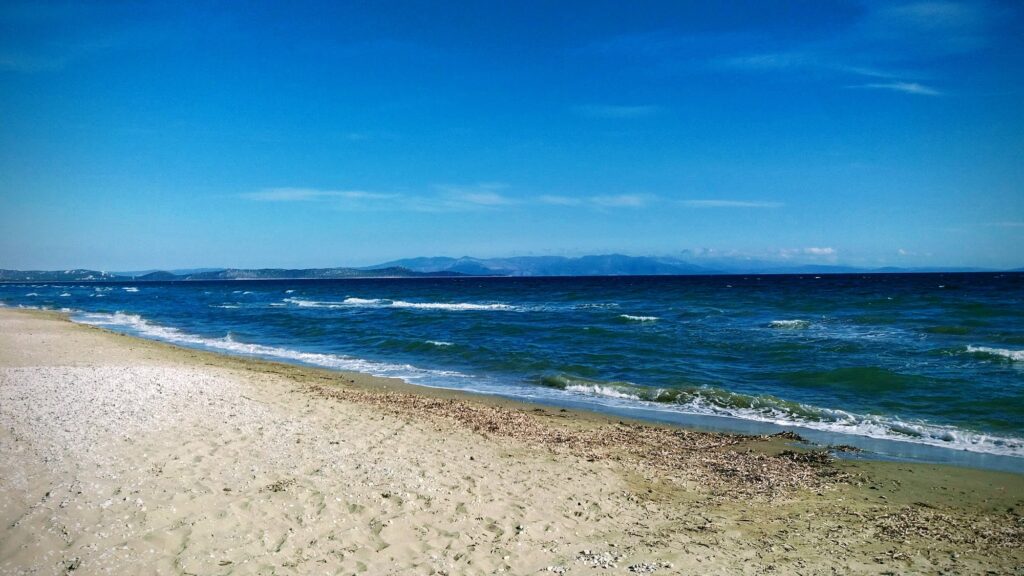
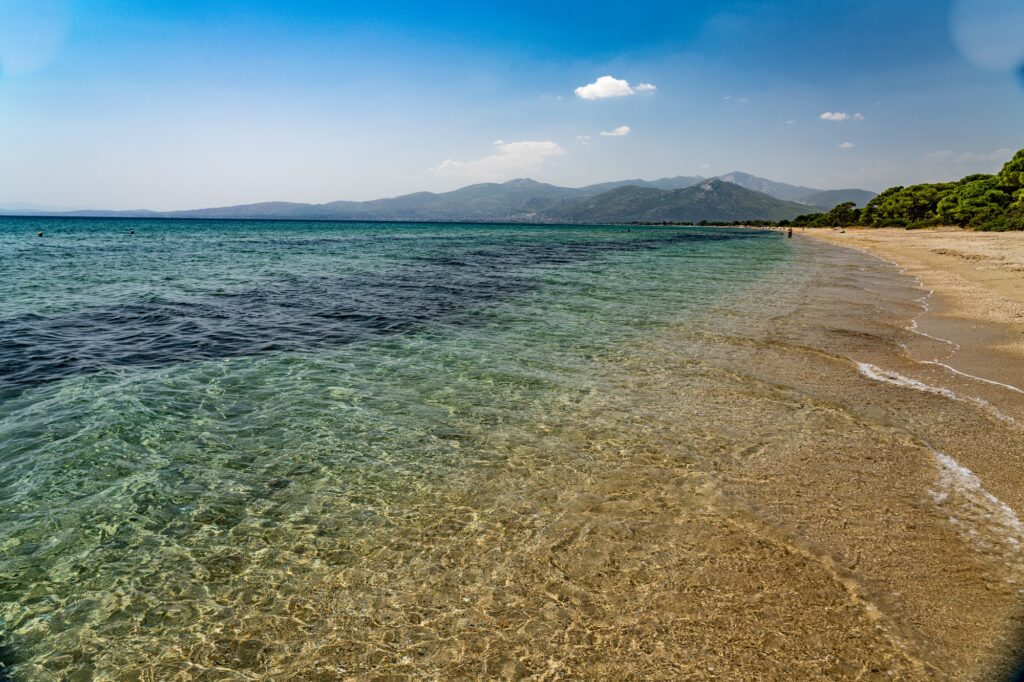
The beach is composed of fine golden sand with small, smooth pebbles in places, the seabed remaining sandy for a considerable distance and the water notably warmer than the open Aegean owing to the shallow, sheltered nature of the Marathon Gulf, making it a reasonable choice for early-season swimming before the wider region warms fully. Several large rocks punctuate sections of the shore.
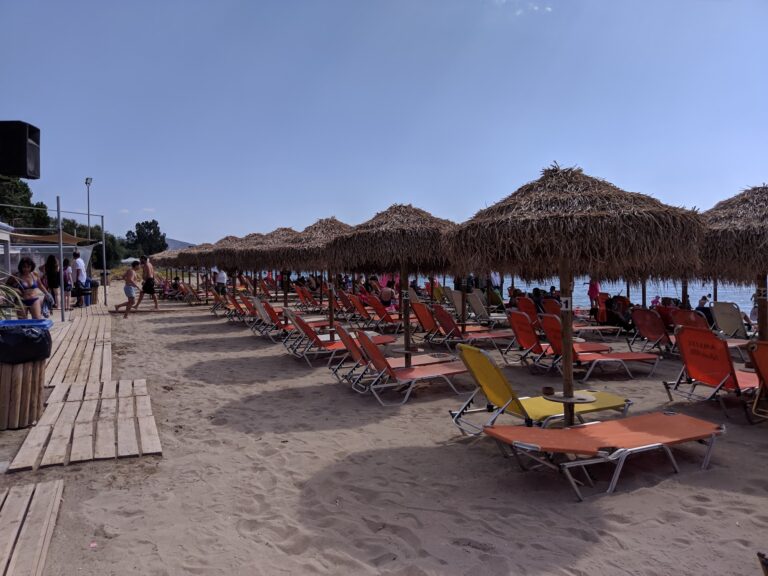
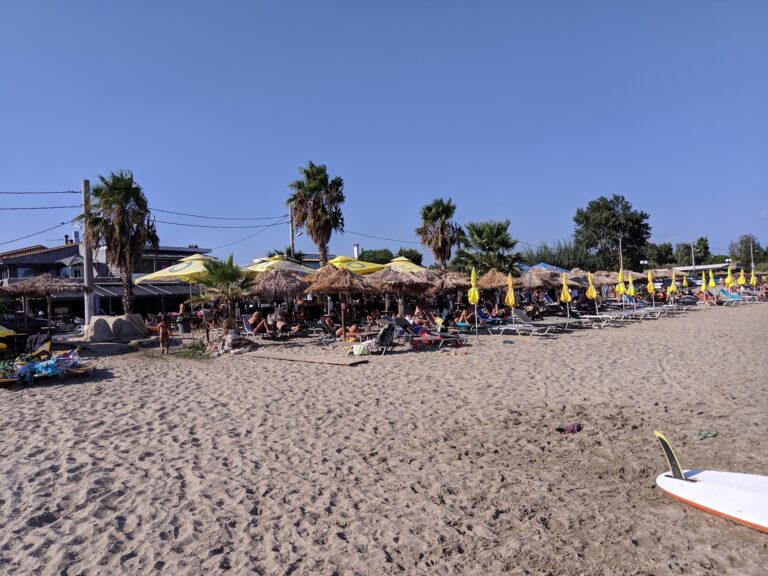
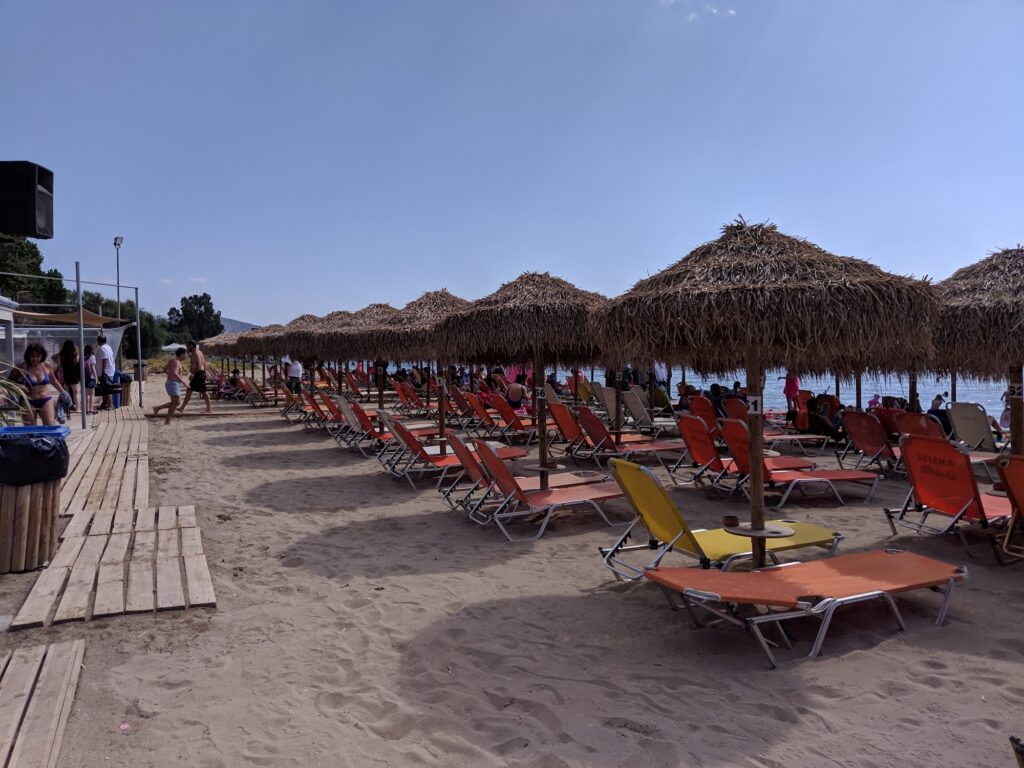
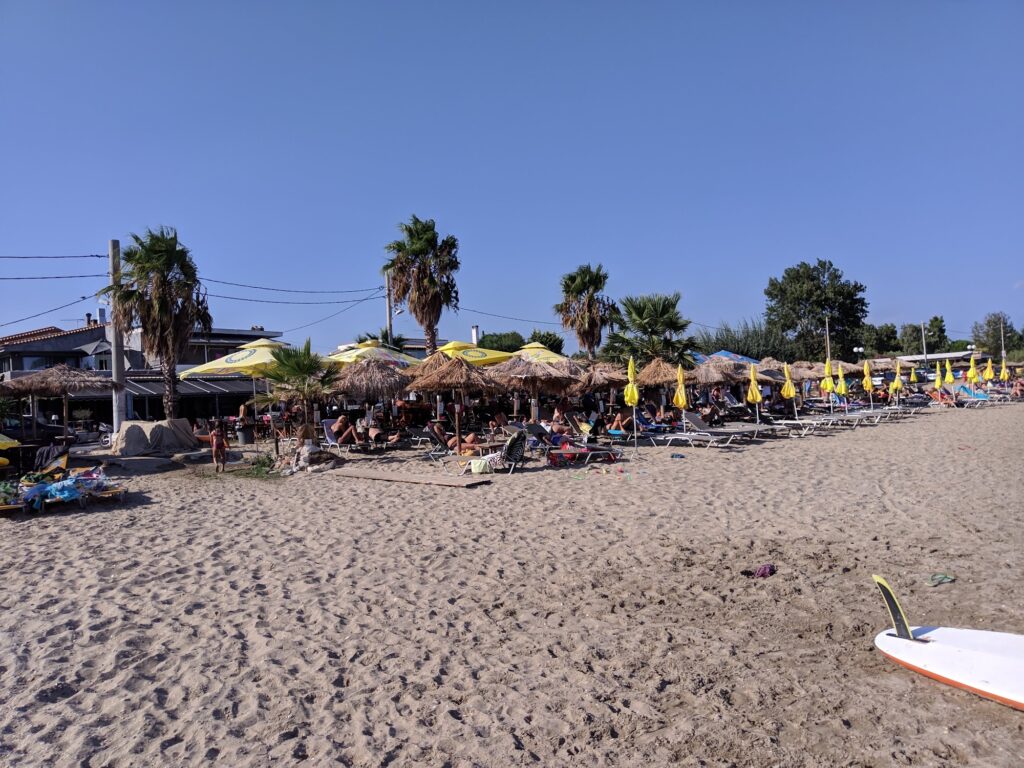
It is worth noting that Marathon Beach itself carries comparatively limited amenities directly on the sand — no restrooms or showers at the beach proper, these being available instead through the hotels and restaurants situated along the coastal road. Umbrella rental is available, lifeguards patrol during the peak season, and the beach supports a range of activities including surfing, volleyball, kayaking, canoeing, and scuba diving, with several hotels along the front offering more comprehensive facilities, including accessible accommodation, for visitors who require it.
The Wider Marathon Coast: Schinias to the North, the Tomb and Museum Inland
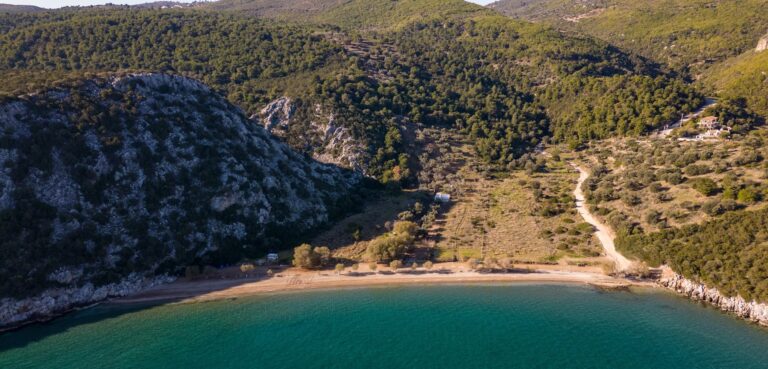
Marathon Beach at Nea Makri sits within a broader coastal stretch that includes Schinias to the north — a five-kilometre national park beach backed by pine forest, covered at El Pouda Beach Dikastika Attica Greece, where the rocky coves near Dikastika offer a markedly different character from the long sandy shore at Schinias proper. The Marathon Tomb, the burial mound of the 192 Athenian soldiers who fell in the battle, and the nearby Archaeological Museum, both lie a short distance inland, alongside the tenth-century Monastery of Saint Ephraim, one of the most visited pilgrimage sites in the wider Athens region.
Marathon Beach at Nea Makri takes its name, like the wider region, from the ancient word for fennel rather than directly from the battle that later made the name famous worldwide. The beach itself offers golden sand, shallow warm water, and a developed coastal town behind it, though direct facilities on the sand remain limited compared to the hotels along the front. Forty-five to fifty-five minutes from Athens via Marathonos Avenue, with the Marathon Tomb, the Archaeological Museum, and the Monastery of Saint Ephraim all within easy reach inland, and the more protected, pine-backed Schinias beach a short distance north.
Drive via Marathonos Avenue. Visit the Tomb on the way. Bring your own towel and expect to use a nearby hotel for the shower afterward.
Map
Sorry, no records were found. Please adjust your search criteria and try again.
Sorry, unable to load the Maps API.
Near by places: