El Pouda Dikastika: Rocky, Deep, Not Sandy — Be Warned
Profile
El Pouda Beach, Dikastika: I Went Expecting Soft Sand and Found Rocks and Startlingly Deep Water Instead
Greece | Dikastika | Marathon, East Attica
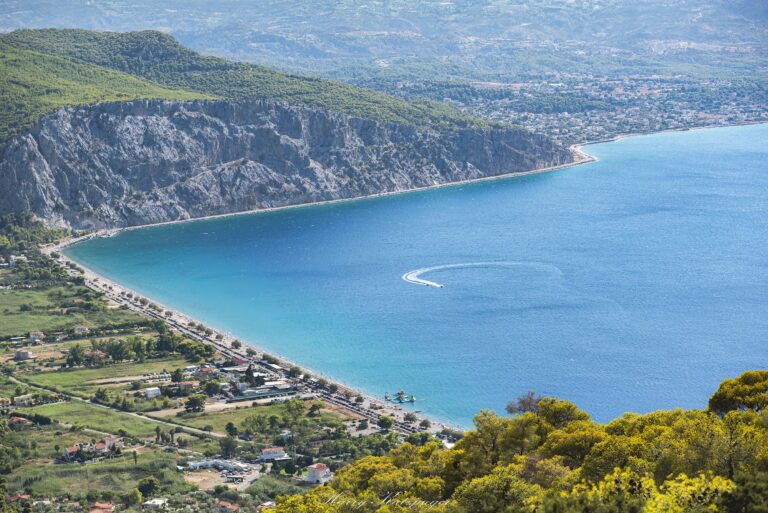
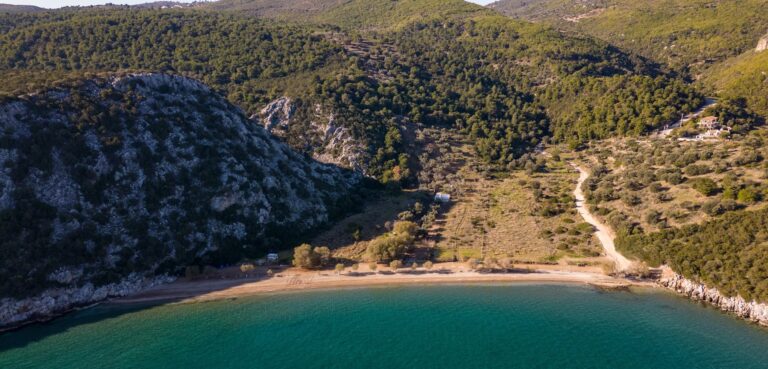
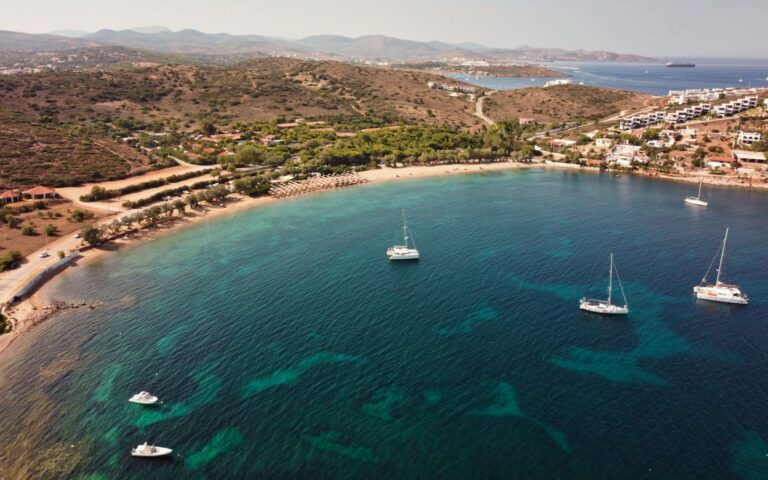
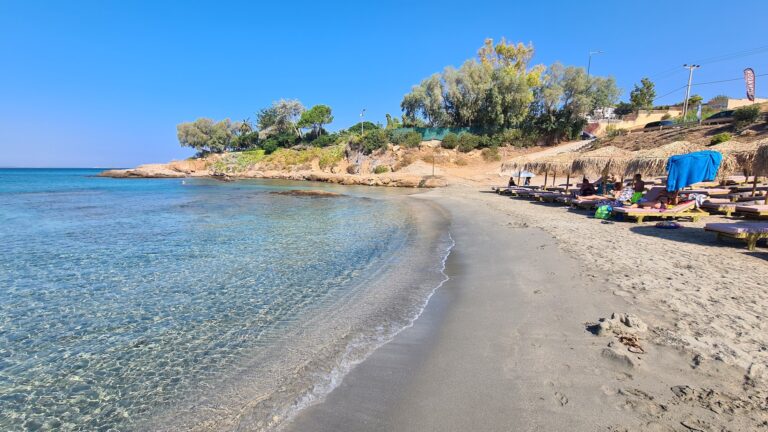
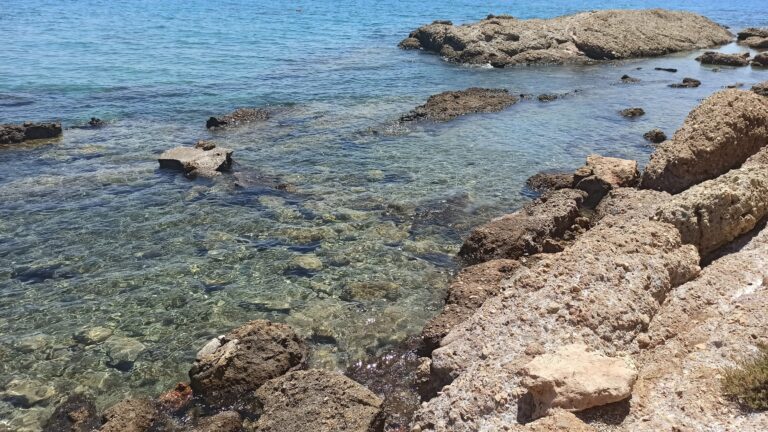
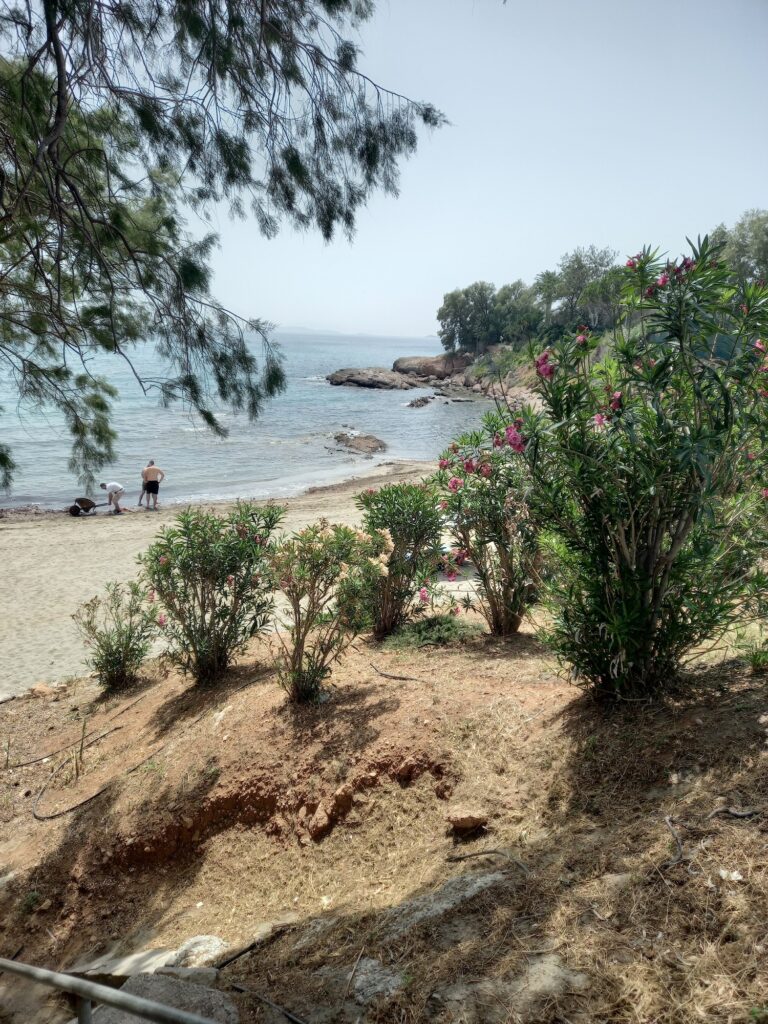
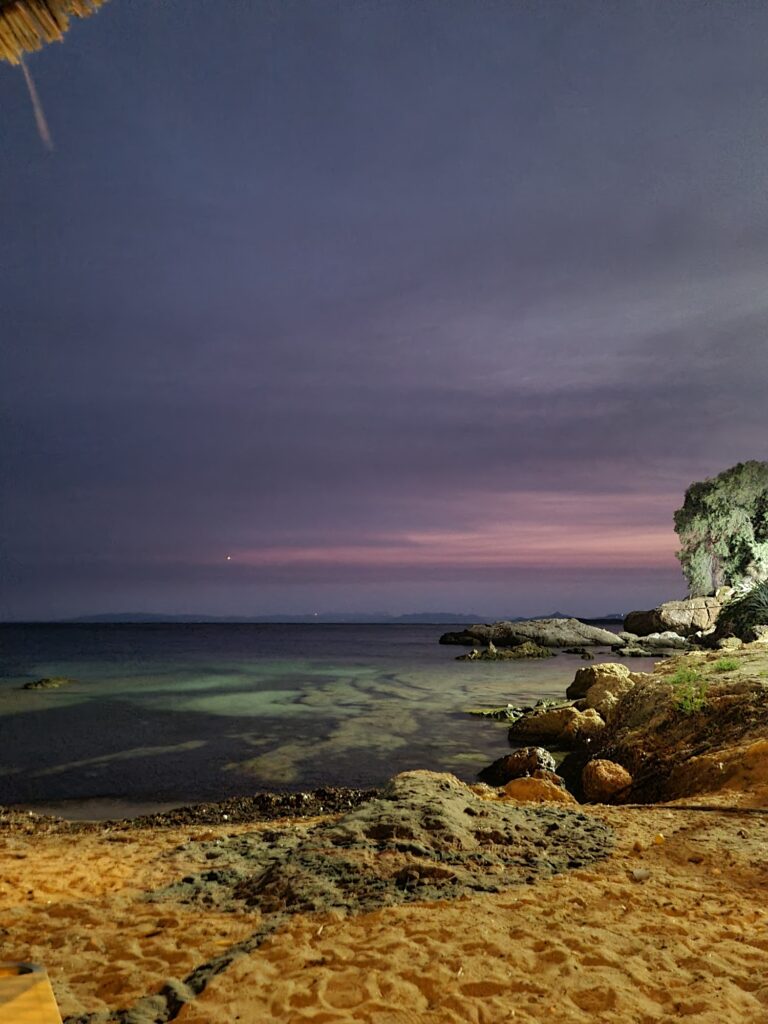
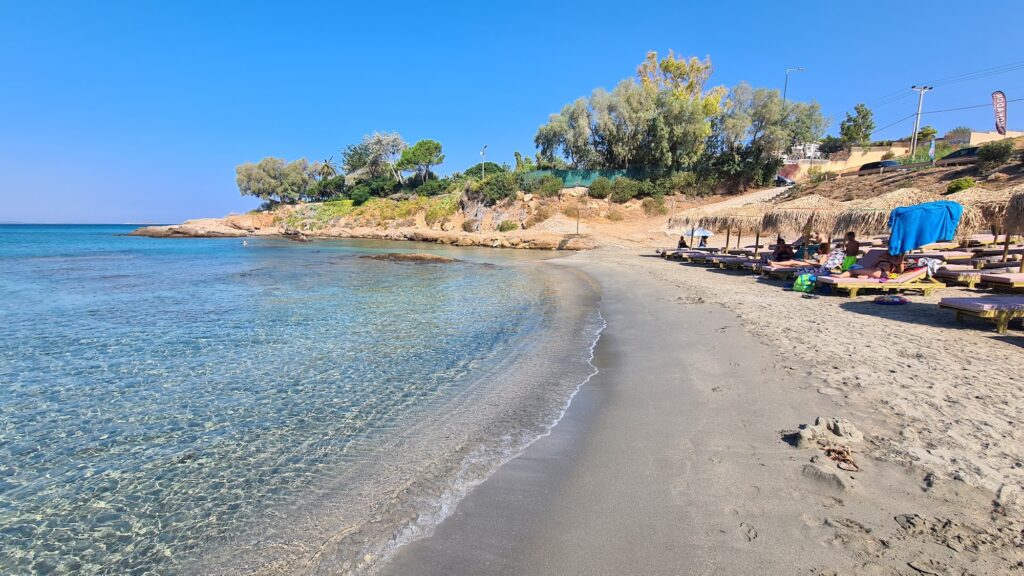
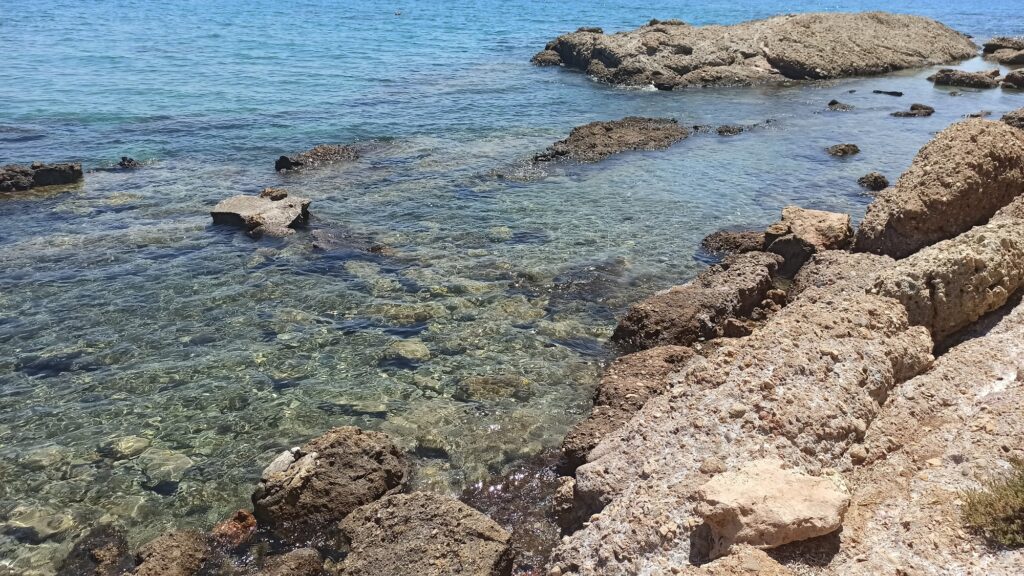
I need to correct something before I describe the rest of the day, because I went to Dikastika expecting the fine golden sand I’d read about and found something quite different waiting for me. The actual coastline here is rocky, not sandy — small private coves where the “beach” is really just flat stretches of stone leading straight into water that drops away abruptly and deep. It’s crystal clear, genuinely beautiful in its own register, and a road locals call El Pouda leads down toward it shortly before the end of Schinias Avenue, with various paths splitting off to private rocky corners along the way. But if you’re picturing soft sand underfoot, you’ll want to adjust your expectations before you make the drive, the way I wish someone had told me.
What’s genuinely not in dispute, and what makes the wider trip worth it regardless of which exact rock you end up swimming from, is the history sitting right next door. This entire stretch of coast is part of Schinias National Park — Natura 2000 protected, 13.84 square kilometres covering a wetland, a coastal pine forest, a freshwater spring, a peninsula, a hill, and the bay itself, and widely considered the most important coastal ecosystem in the whole of Attica. More specifically, this is the actual ground where the Battle of Marathon was fought in 490 BC, when an outnumbered Athenian force stopped the first Persian invasion of Greece and, in doing so, arguably kept the trajectory of Classical Greek civilisation intact. The modern marathon race, run for the first time at the 1896 Olympics, exists because of what happened on this exact plain.
Getting There: 50–60 Minutes From Athens, Toward Marathon, Then Schinias and Dikastika
I drove the route myself: from central Athens, signs for Marathon and then Schinias led me through pine forest and olive groves on a well-paved road, and the whole trip took close to an hour. Shortly before Schinias Avenue ends, the turn for Dikastika branches off, and from there a scatter of unmarked paths lead down to the rocky coves.
Without a car, the orange KTEL Attikis bus from Pedion tou Areos runs toward Marathon/Schinias, but I’d plan on a taxi or a fairly long walk from the drop-off point to actually reach this specific stretch — it isn’t directly on the bus route in any convenient way.
Parking is informal and free along the roadside, with a few unpaved clearings under the trees where I left my car without much trouble.
Dikastika Itself: Rocky Coves, No Sand, Abruptly Deep, No Real Facilities
I’ll repeat the honest version once more because it matters for anyone planning a trip with kids or non-confident swimmers: the water here goes from shallow to genuinely deep within a few steps, and there’s no sand to soften the transition, just flat rock you walk in from. I brought water shoes out of habit and was glad of them. There were no kiosks, no rented sunbeds, nothing beyond what I carried in myself — a few small beach bars exist elsewhere along Schinias Avenue, but not directly at the Dikastika coves themselves.
The water’s clarity made the trade-off worth it for me personally. I swam out a short distance and could still see the rock formations clearly several metres down, and the quiet of the spot — no music, no crowd, just the sound of the sea against stone — was the specific thing I’d come looking for.
Schinias Beach: The Sandy Alternative, Five Kilometres of Pine-Backed Bay
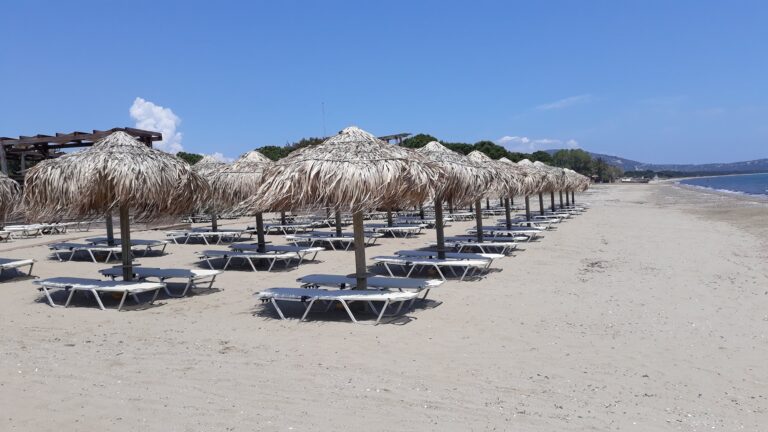
If sand and a gentler entry are what you actually want, the genuine answer is Schinias beach proper, a short distance back along the same road — roughly five kilometres of gently curving bay, fine golden sand, shallow warm water, and pine trees reaching almost to the shoreline in the quieter northern section near the Olympic Rowing and Canoeing Centre. I walked a stretch of it after leaving Dikastika, and the contrast between the two — one rocky and dramatic, one soft and forgiving — made the combination feel like two different days packed into one afternoon.
Marathon Lake and the Battle Site
Nine kilometres from Marathon town, Marathon Lake — an artificial reservoir still supplying water to Athens — is faced in the same Pentelic marble used on the Parthenon, deliberately built to honour the battle fought nearby. The Marathon Tomb, where the ashes of the fallen Athenians are buried, and the Archaeological Museum of Marathon are both within easy reach for anyone who wants the historical context to sit alongside the beach day rather than separate from it.
El Pouda/Dikastika, near Marathon, is rocky rather than sandy — small private coves, water that turns abruptly deep within a few steps, crystal clear, no facilities, the kind of quiet swim that rewards bringing your own gear and low expectations about the shore underfoot. It sits within Schinias National Park, Natura 2000 protected, on the actual ground of the 490 BC Battle of Marathon. The sandy alternative, Schinias beach proper, is a short distance back along the same road if a gentler entry is what you actually want. 50–60 minutes from Athens via Marathon and Schinias Avenue, free informal parking, Marathon Lake and the Marathon Tomb nearby for the history.
Drive to Schinias Avenue. Take the Dikastika turn if you want rock and depth. Walk back to Schinias proper if you want sand instead.
Map
Sorry, no records were found. Please adjust your search criteria and try again.
Sorry, unable to load the Maps API.
Near by places: