
Vlychadia Beach Kalymnos: Sand, Pebbles, and a Pier
Profile
Vlychadia Beach: The Bay That Splits in Two
Greece | Kalymnos | Dodecanese | Aegean Coast
There’s a small pier on Kalymnos that I still think about more than most beaches I’ve visited, mainly because of what it does rather than what it looks like. It splits Vlychadia Beach clean in half, sand on one side, pebbles on the other, and I’ve never quite worked out why more beaches don’t do this. Most force you to pick a shoreline and live with it. Vlychadia lets you change your mind by walking twenty meters.
I came to Kalymnos originally for the climbing, the reason most people end up on this island, and Vlychadia wasn’t on my list until a local suggested it as somewhere to spend a rest day that wasn’t just sitting in a café in Pothia. It turned out to be one of the better rest days I’ve had anywhere in the Dodecanese.
The Pier That Divides Sand From Pebbles
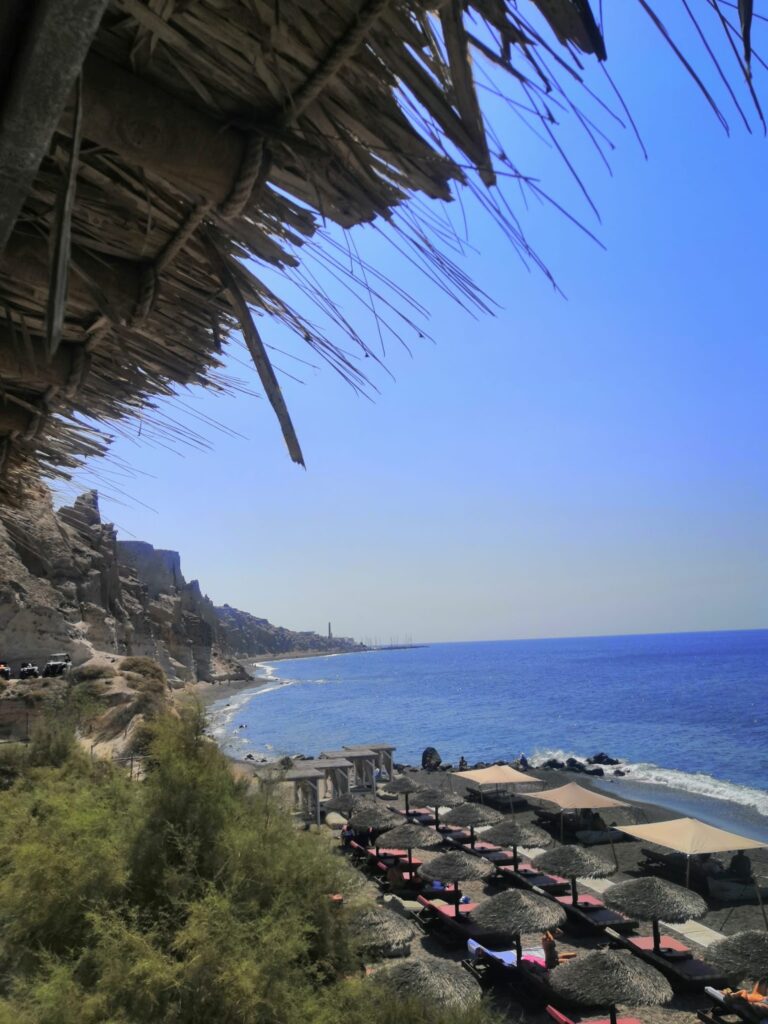
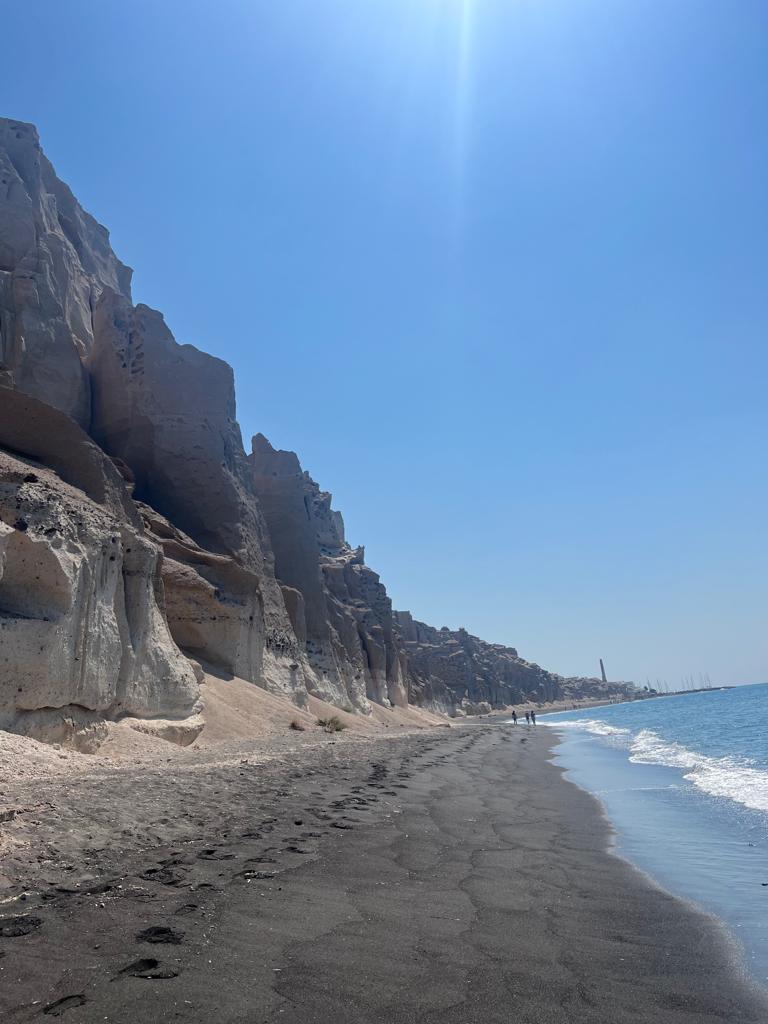
Vlychadia Beach sits on the southern coast of Kalymnos, and its defining feature isn’t the water or the setting so much as the small working pier that splits it into two distinct shores. To one side, the sand runs fine and dark, golden in the right light, the kind of shore I’d point a family with small children toward without hesitation. To the other, the beach turns to smooth, pale pebbles, sun-bleached and comfortable enough underfoot once you’ve adjusted, and this is the side I gravitate to for the clearer sightlines into the water.
I spent one morning testing both sides just to see which I preferred, and I still haven’t settled on an answer. The sand side is easier on bare feet and better for anyone traveling with kids. The pebble side rewards the patience of someone who wants to swim out a little further and watch the seabed the whole way.
Why the Water Stays Still Even When the Meltemi Blows
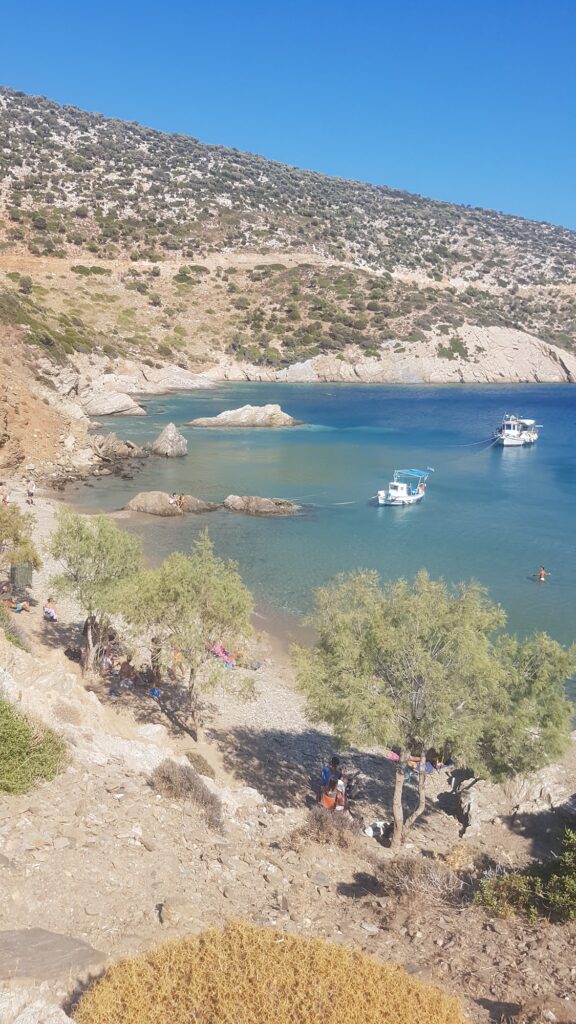
Kalymnos, like most of the Dodecanese, gets hit by the Meltemi through the summer months, and I’ve had plenty of beach days elsewhere on the island cut short by wind that turns swimming into an ordeal. Vlychadia is different. The bay sits deep and naturally sheltered from the prevailing northern wind, and I’ve sat here on afternoons when the western shores of the island were whipped up and choppy while Vlychadia stayed close to mirror-still.
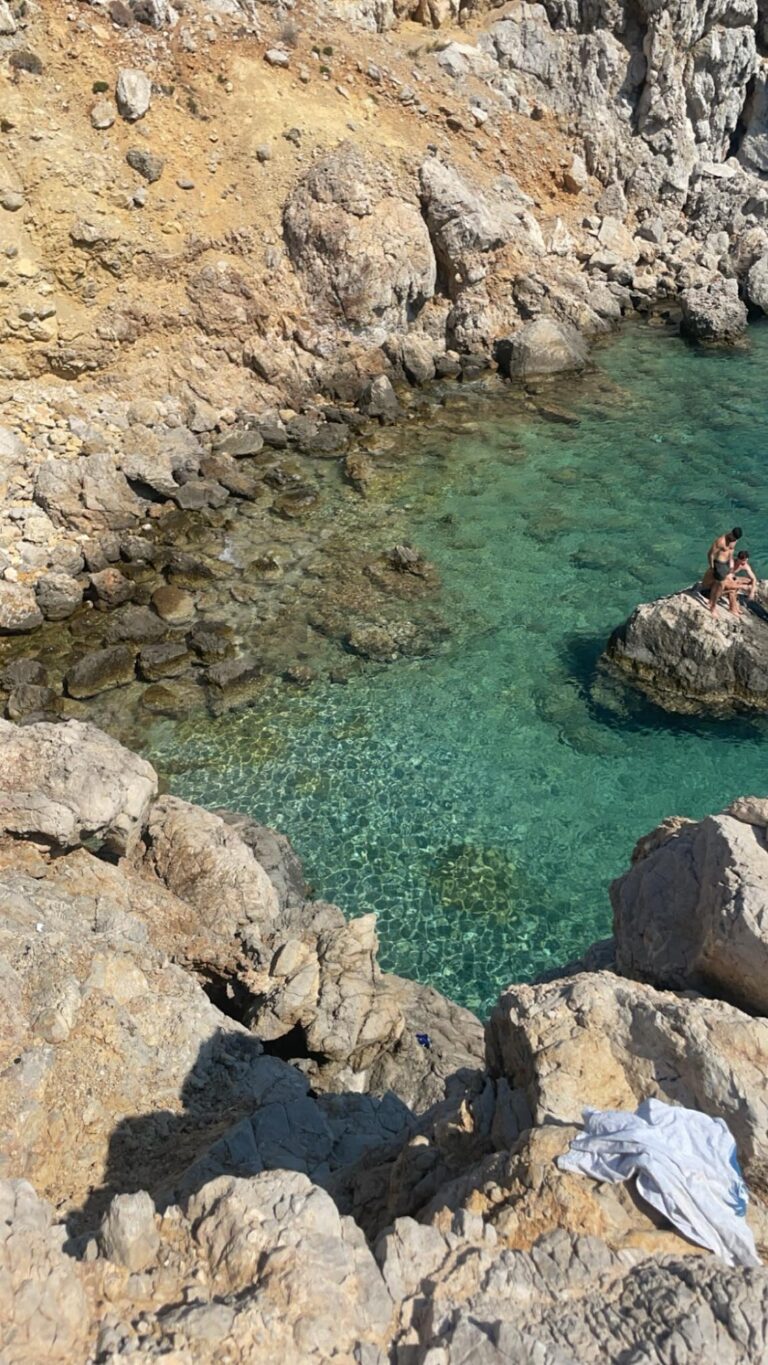
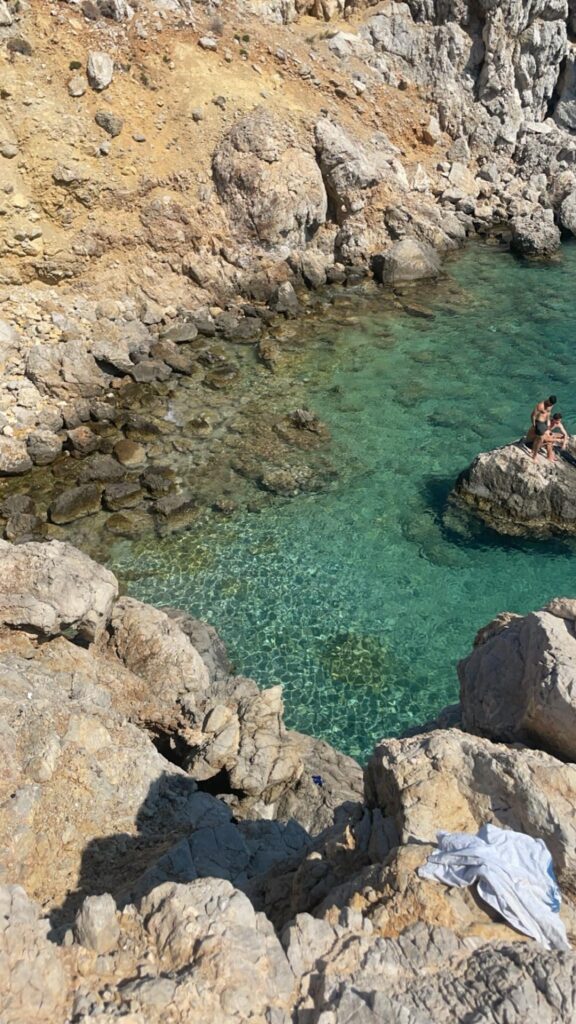
That stillness changes the color of the water as much as the texture. The gradient here runs from a pale turquoise near the shore into a deeper indigo further out, and on a clear day I’ve been able to track the shift almost meter by meter as I swam. It’s the kind of clarity that makes the pebble side worth the extra effort, since the visibility rewards anyone willing to swim past the first few rows of sunbeds.
Fishing Boats and the Sea World Museum on the Waterline
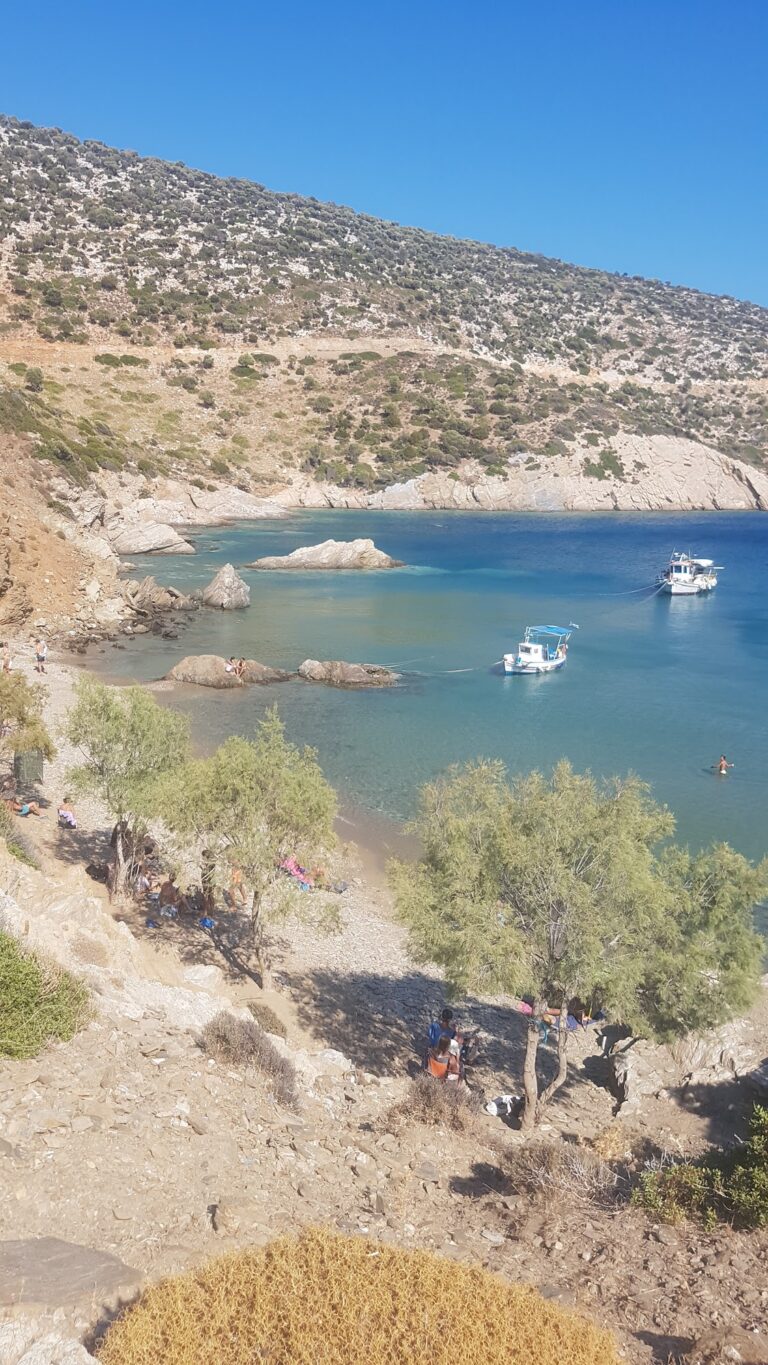
What separates Vlychadia from a straightforward swimming beach is the working life still visible along its edges. Local fishing boats sit moored close to shore, and I’ve watched more than one head out at dawn while I was still finishing coffee at a taverna table. It’s a small detail, but it keeps the beach tied to the island’s actual economy rather than feeling built purely for visitors.
The Sea World Museum Valsamidis sits just off the beach, and I’d treat it as close to essential if you’re spending a full day at Vlychadia. It’s a private collection built around the island’s sponge-diving history, with marine specimens, diving equipment, and artifacts pulled from wrecks around Kalymnos over the decades. I hadn’t planned to spend more than twenty minutes there and ended up staying closer to an hour, mostly because the sponge-diving story is central to how this island understands itself, and the museum tells it with more specificity than I’d expected from a small private collection.
Tavernas Along the Sand and the Local Salad Worth Ordering
A handful of tavernas line the shore directly behind the beach, close enough that I’ve eaten lunch with my feet still sandy from the water. The seafood leans heavily on the day’s catch, which makes sense given the boats moored a short walk away, and I’ve had good luck ordering whatever the kitchen suggests rather than working from a fixed menu. Mermizeli, a local salad built around rusks, tomato, and olive oil, showed up on more than one table near me, and I’d recommend it as a starting point if you haven’t had it before.
The sunbeds and umbrellas along both shores are arranged in organized rows, and the atmosphere has stayed low-key on every visit I’ve made, more suited to a quiet afternoon than the beach-club energy I’ve found on more heavily trafficked islands further north in the Aegean. I’d put it closer in spirit to Lambi Beach Kos, which shares a similar unhurried pace, than to anything busier.
Getting There: The Coastal Road South From Pothia
Vlychadia Beach sits roughly 5 kilometers from Pothia, the island’s main port and capital, a drive of ten to twelve minutes along a fully paved road that runs south through a valley cut into Kalymnos’ mountainous interior. I’ve made the drive at different times of day, and the early morning version, with the light still low over the hills, is worth doing at least once even if you’re planning to stay at the beach until evening.
Taxis from the main square in Pothia are easy to find and reasonably priced for the short distance, and during high season a municipal bus also runs to the Vlychadia settlement with reasonable frequency. I’ve used both depending on the day, and neither involved much waiting around.
Walking From Pothia: The Hour-Long Route Through the Hills
For anyone who prefers to arrive on foot, it’s roughly a sixty-minute walk from Pothia to Vlychadia, following the road as it climbs briefly before descending into the bay. I did this once, mostly out of curiosity, and found it worth the effort mainly for the closer look at the island’s scrubland and the dry-stone terracing that lines parts of the route. It’s not a demanding walk by any measure, but it’s slower than the drive by design, and I wouldn’t recommend it if the goal is simply to get to the water as fast as possible.
Parking and the Best Time to Arrive
Parking at Vlychadia is organized in lots and along the coastal road directly behind the tavernas, and I’ve never had trouble finding a spot, even in the middle of summer. Arriving before eleven in the morning has consistently worked best for me, both for securing a spot close to the beach and for getting into the water before the afternoon sun is at its strongest. By early afternoon, the lots fill in with day-trippers from Pothia and the tavernas start their lunch service in earnest, so the earlier window is also the quieter one.
Comparing Vlychadia to the Rest of Kalymnos’ Coastline
Kalymnos doesn’t have the beach density of islands like Kos or Rhodes, and Vlychadia stands out partly because there isn’t much competing with it on the island’s southern coast. Most of the climbing routes Kalymnos is known for sit closer to the western shores, where beaches tend to be more exposed to the Meltemi and less suited to a full lazy day in the water. Vlychadia offers the calmer alternative, and I’ve recommended it more than once to climbers looking for a rest-day beach that doesn’t cost them half the day fighting wind and chop.
Further east in the Dodecanese, Therma Beach Kos shares something of the same appeal, a beach built around a slower rhythm rather than an organized beach-club scene, though Therma’s draw is its thermal springs rather than a working pier and a museum. If you’re island-hopping through this part of the Aegean and want a throughline, both are worth building a half-day around rather than treating as a quick stop.
What a Full Day at Vlychadia Actually Looks Like
The beach is equipped with changing cabins, outdoor showers, and clean restroom facilities on both the sand and pebble sides, and the local community keeps the whole stretch noticeably well maintained. I’ve spent full days here without needing to leave for anything beyond a change of scenery between the two shores, the museum, and lunch at one of the tavernas.
If I were planning a single day around Vlychadia now, I’d arrive early on the pebble side for the clearest swimming, cross the pier around midday to the sand side for shade and lunch, and save the museum for the early afternoon lull when the light outside is flattest anyway and a dim room full of sponge-diving relics starts to feel like the right place to be.
By late afternoon, the fishing boats that left at dawn start drifting back into the bay, and I’ve made a habit of watching from the pier as they come in, sponges or nets still stacked on deck, the whole working half of the island’s day quietly wrapping up around the same time mine does.
Map
Sorry, no records were found. Please adjust your search criteria and try again.
Sorry, unable to load the Maps API.