Chelidoni: A Cave, a Climb, and a Centuries-Old Fort
Profile
Chelidoni: A Cave, a Climb, and a Fort That Watched This Coast for Centuries
Greece | Paliokastro | Heraklion, Crete
I want to mention the cave first, because it’s the thing that stayed with me longest. Between the beach and the cliffs below Paliokastro fort, a tall, narrow passage of rock runs back into the stone, genuinely dark once you’re a few steps in. Local tradition ties it to the fortress above — the idea being that this might once have been a tunnel running down from the castle to the sea, a possible escape route for whoever held it during a siege. Nobody can confirm that, and I like the story better for it. An unverified legend attached to a real, physical piece of rock has a different weight than a story invented purely for the brochure.
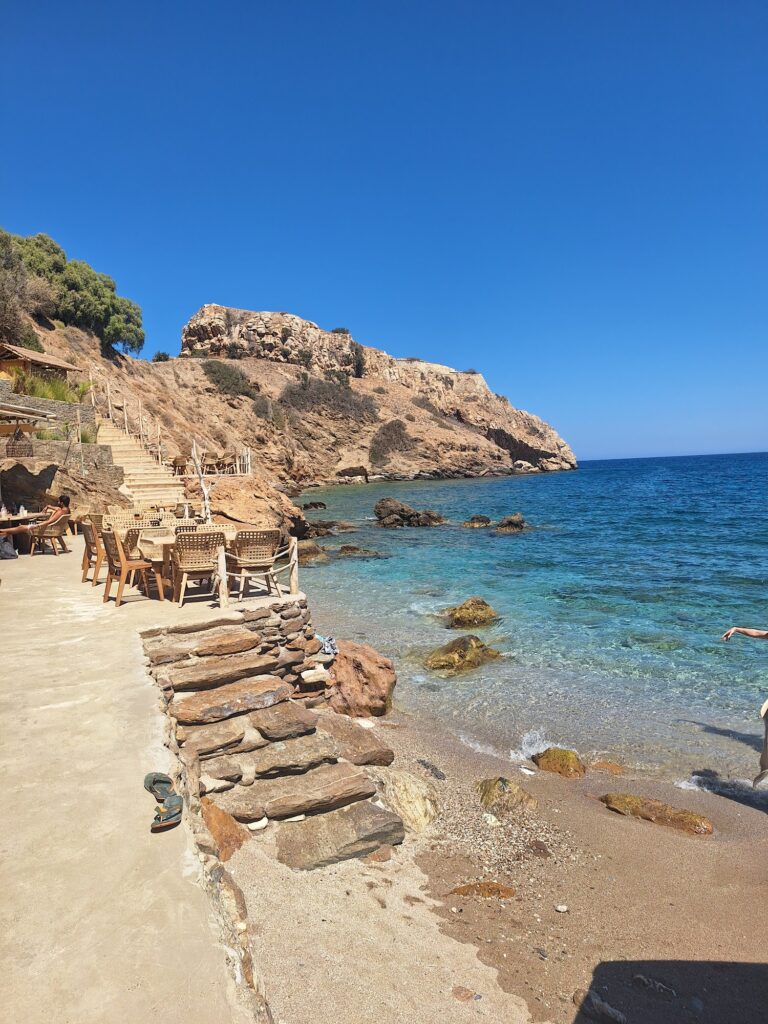
The fort itself stands on a tall limestone outcrop directly above the cove. It was built originally around 1206 by the Genoese commander Enrico Pescatore, one of fourteen fortresses he raised along the coast. When the Venetians later took control of Crete, they kept only this one standing and rebuilt it between 1573 and 1595 as pressure from the Ottomans grew, positioning its cannon to cross fire with the Saint Andrew ramparts back in Heraklion’s own walls. Some historians believe the rock served as the acropolis of an older settlement, Kytaeon, long before either the Genoese or the Venetians ever arrived.
Getting There: Nine Kilometres West of Heraklion, Down 129 Steps
I followed the New National Road (E75) west toward Rethymno, watching for the small turn-off near Paliokastro, just past Ellinoperamata and before the main Paleokastro exit. The drive from Heraklion took well under fifteen minutes — one of the closer beaches to the city covered anywhere in this series.
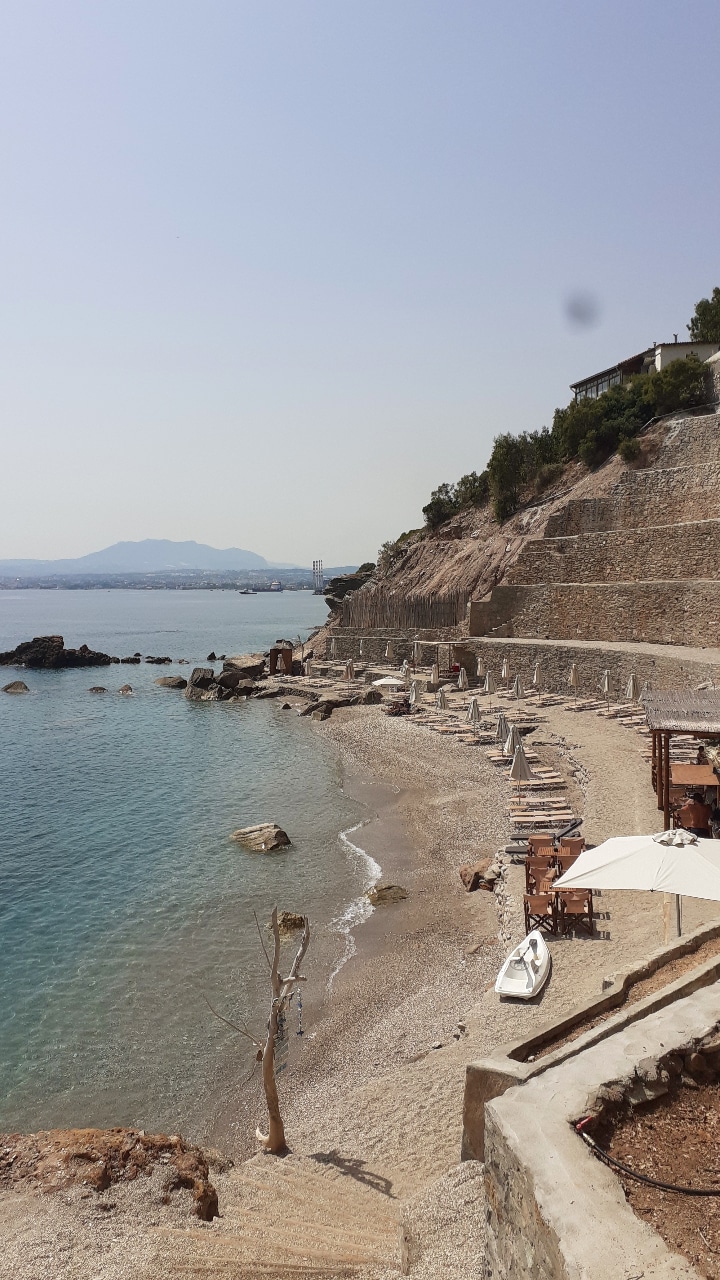
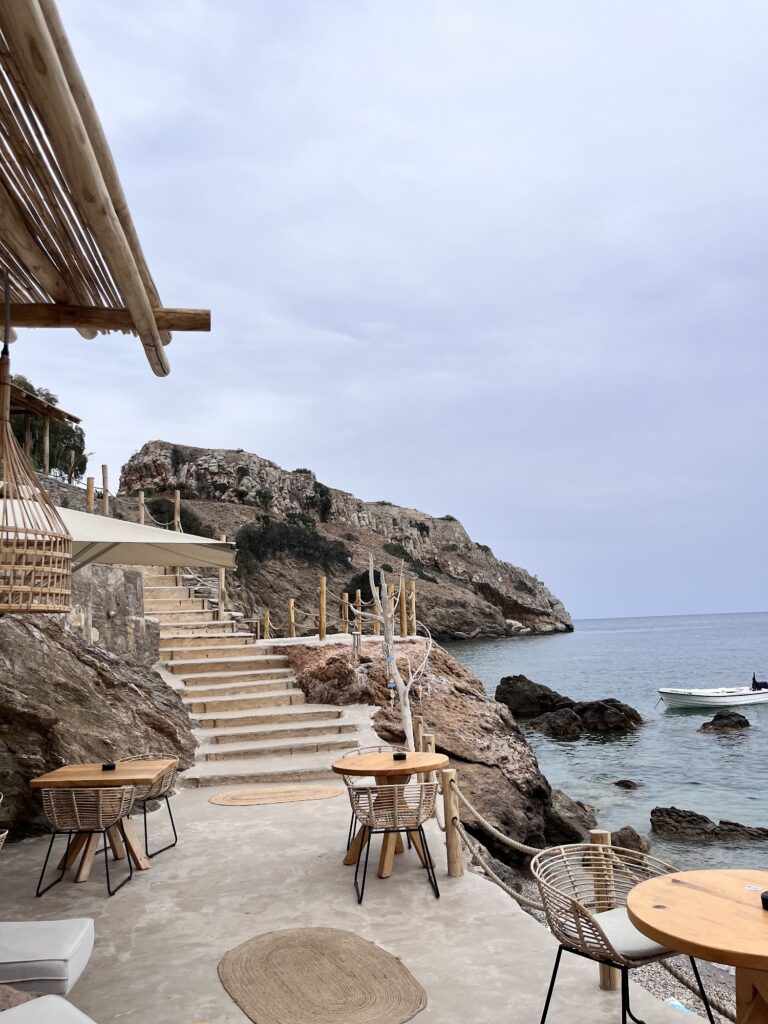
Parking is informal and limited along the road near the entrance rather than a proper lot, so I’d arrive earlier in the day if having a guaranteed space matters. From there, the descent runs the full 129 steps cut into the cliff face down to the sand. The climb back up is the part I’d plan around — steep enough that I took it slowly, and I’d avoid doing it in the full heat of early afternoon if I had any choice in the matter.
The Beach: Small, Calm, Clear, East-Facing
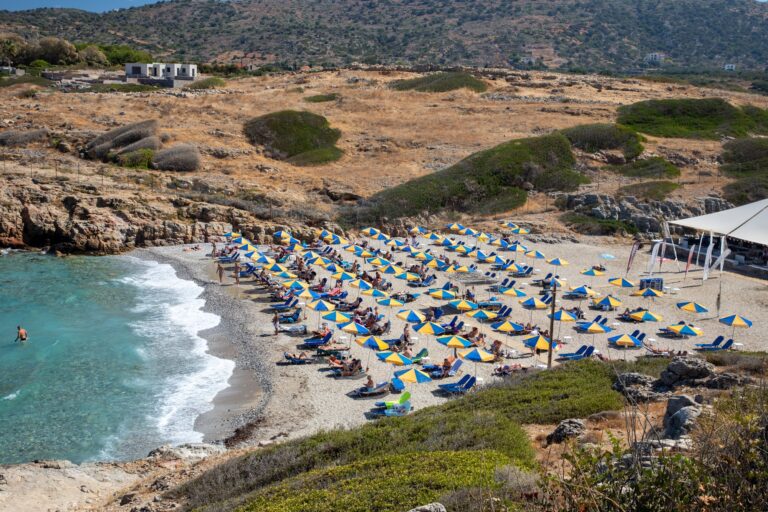
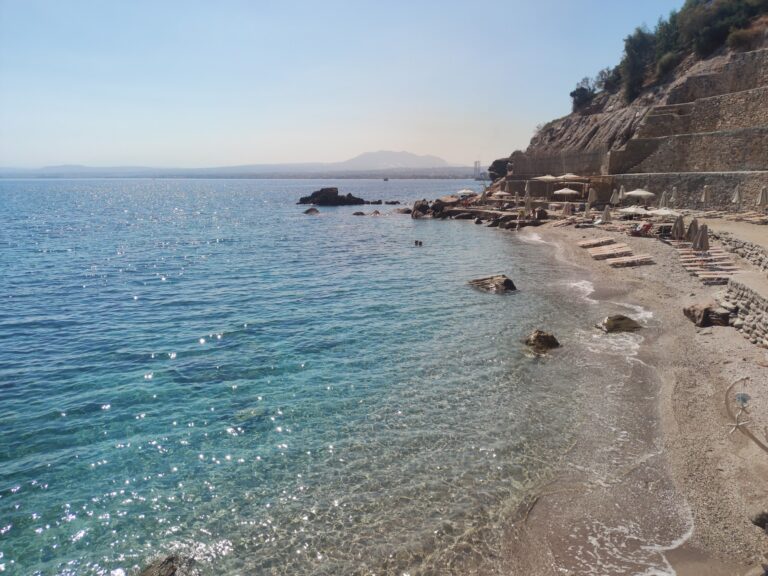
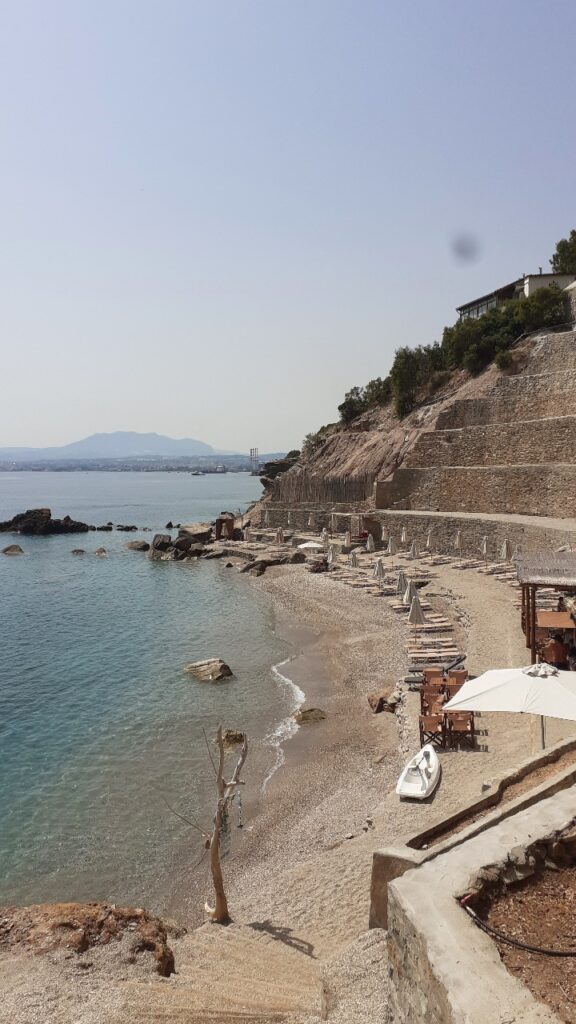
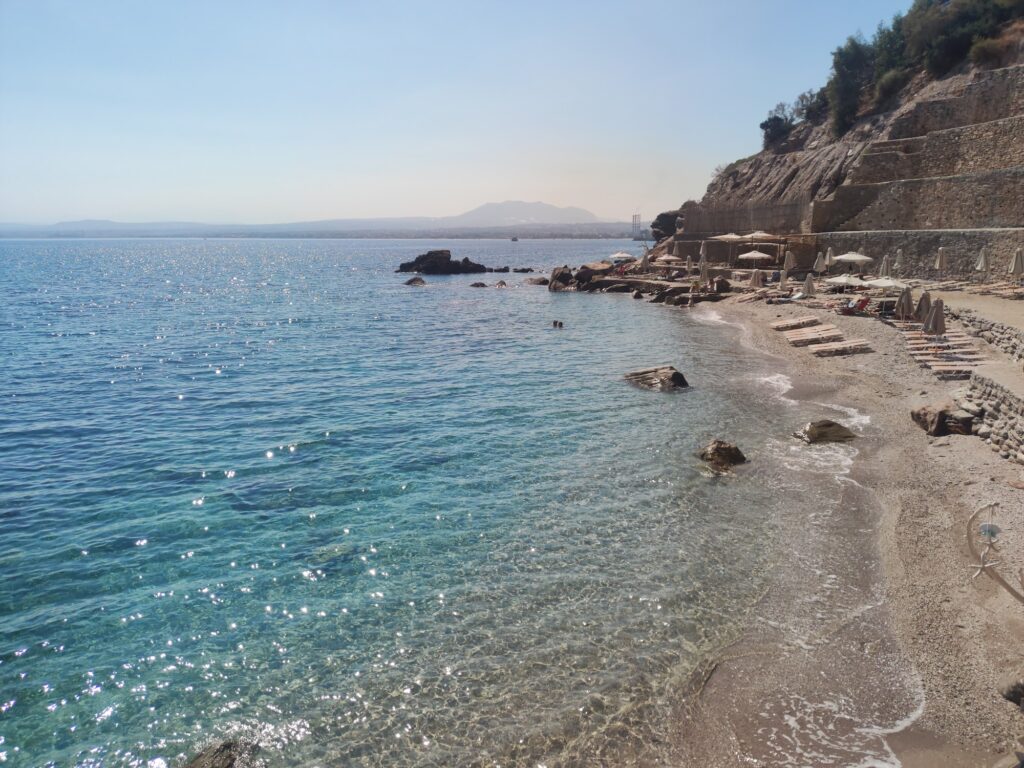
The cove itself is genuinely tiny, fine pebble mixed with patches of sand, tucked beneath the cliffs and facing east, which keeps the water calm through most of the day. The clarity is real — I could see straight down to the rocky bottom even a fair distance from shore, and the colour shifted from pale turquoise close in to a deeper blue further out.
The rocks below the fort form natural ledges and platforms, and I watched people using them as diving points, jumping from various heights into deep water just offshore. I didn’t try it myself, but I understood the appeal watching others do it — the rock face here lends itself naturally to exactly that kind of afternoon.
Chelidoni, below the Venetian fort of Paliokastro west of Heraklion, pairs a small, clear, east-facing cove with a genuinely old piece of military history standing directly above it. A dark cave between the rocks and the sand carries an unconfirmed local legend tying it to the fortress, and the 129 steps down the cliff face are the price of admission, manageable on the way down and a real climb on the way back up. Nine kilometres from Heraklion, calm water, natural diving platforms on the rocks for anyone inclined to use them.
Take the small turn-off near Paliokastro, just past Ellinoperamata. Pace yourself on the climb back up, especially in the heat. Look for the dark cave between the rocks and decide for yourself whether you believe the old story about where it leads.
Map
Sorry, no records were found. Please adjust your search criteria and try again.
Sorry, unable to load the Maps API.
Near by places: