Livadi Beach Bali Crete: The Outermost of Four Bays
Profile
Livadi Beach Bali Crete: The Longest Bay in a Village Built Around Four of Them
Greece | Bali | Rethymno, Crete
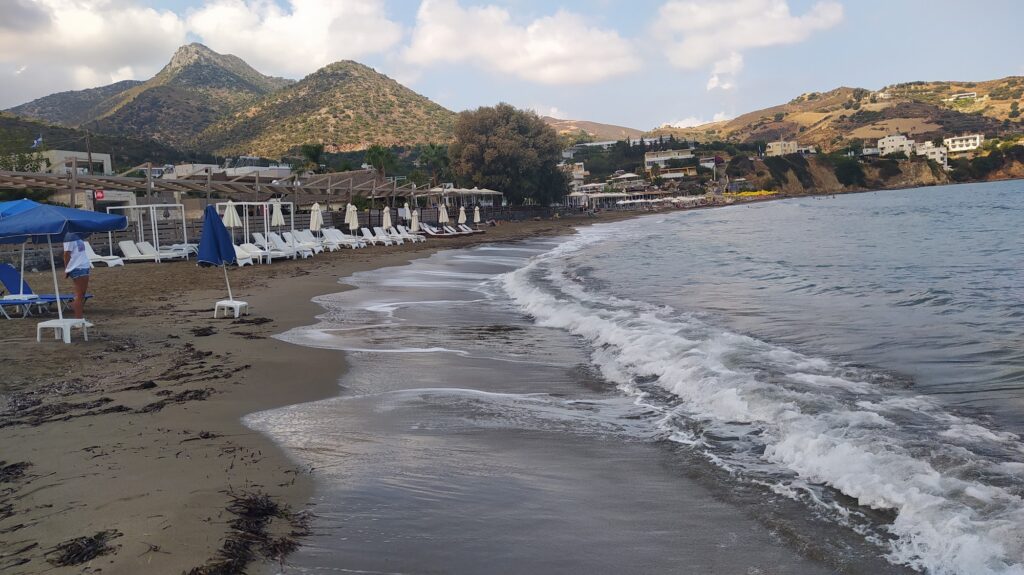
Bali is structured around four enclosed bays, each with its own beach, its own character, and its own relationship to the wind. Livadi Beach Bali Crete is the outermost and largest of the four — the one you reach first when arriving from the direction of Rethymno — and its position at the open western end of the village means it behaves differently from the more sheltered bays deeper into the cove. When the meltemi blows steadily from the north in July and August, Livadi picks it up more directly than its neighbours, and the surface of the water can turn choppy while the inner bays remain flat. This is not a failing so much as a physical fact, and it shapes who chooses this beach over the alternatives and when they choose it.
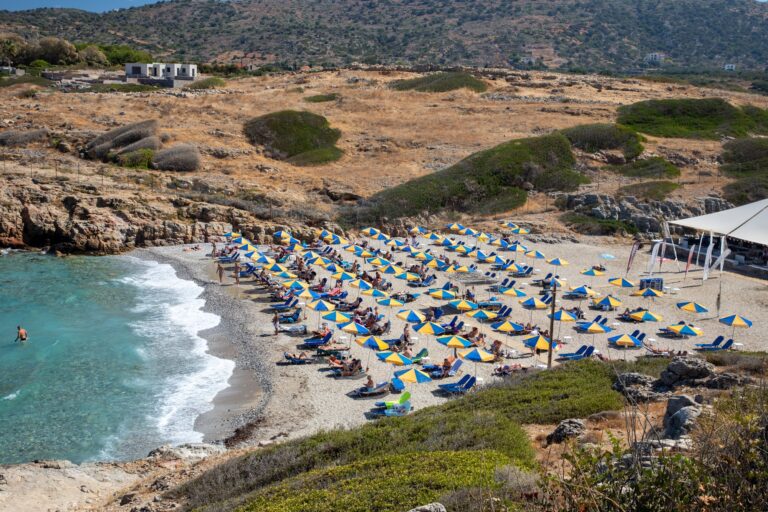
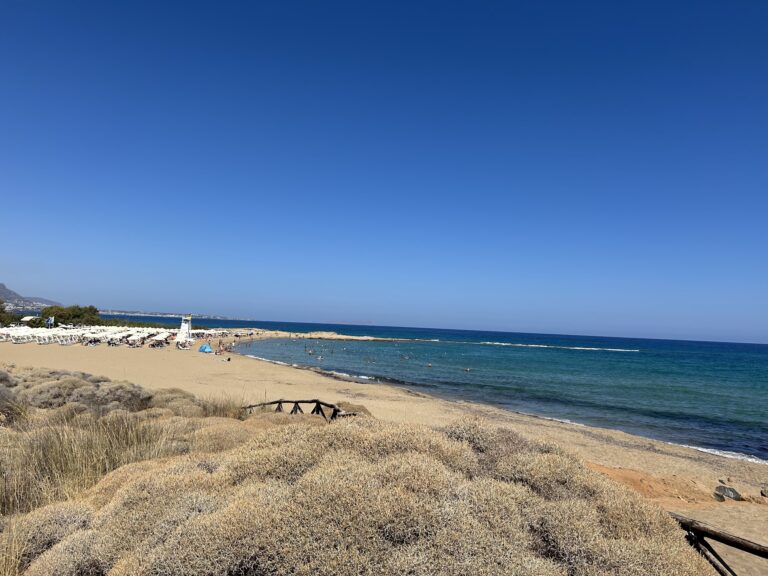
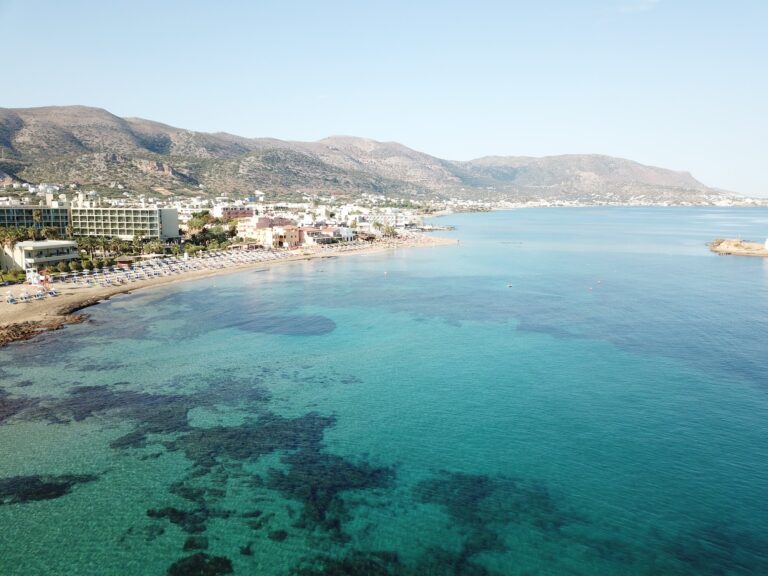
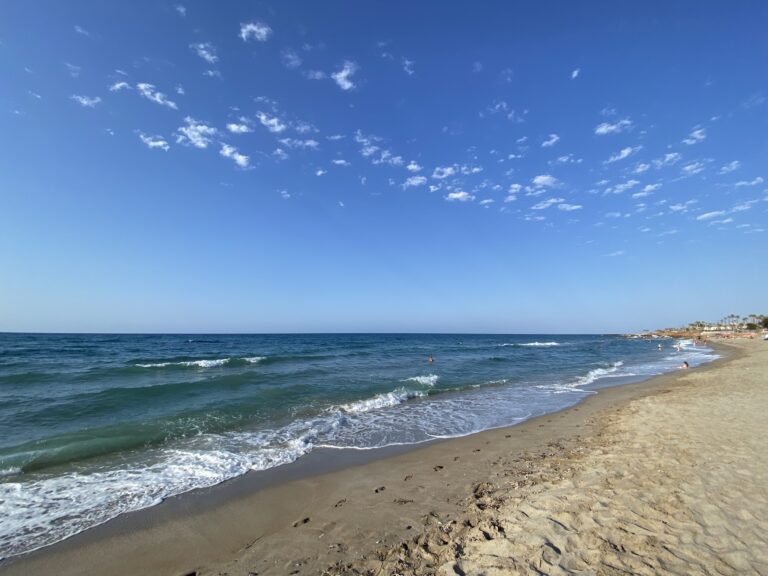
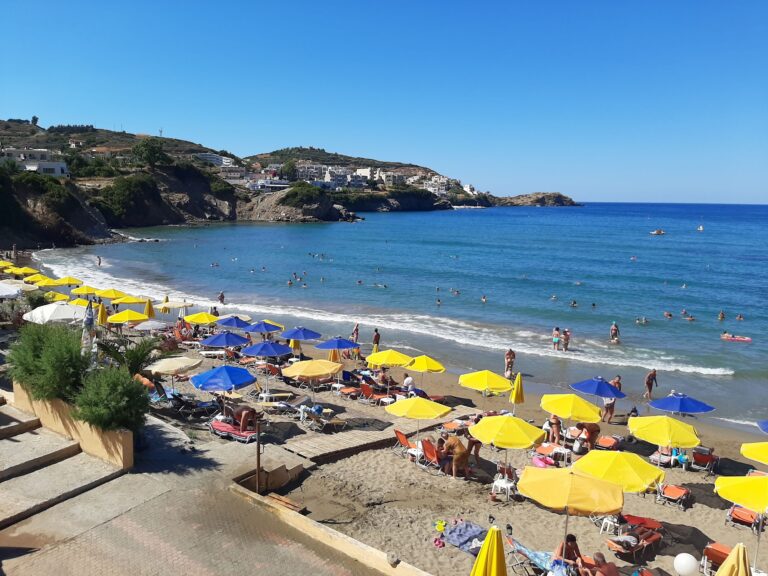
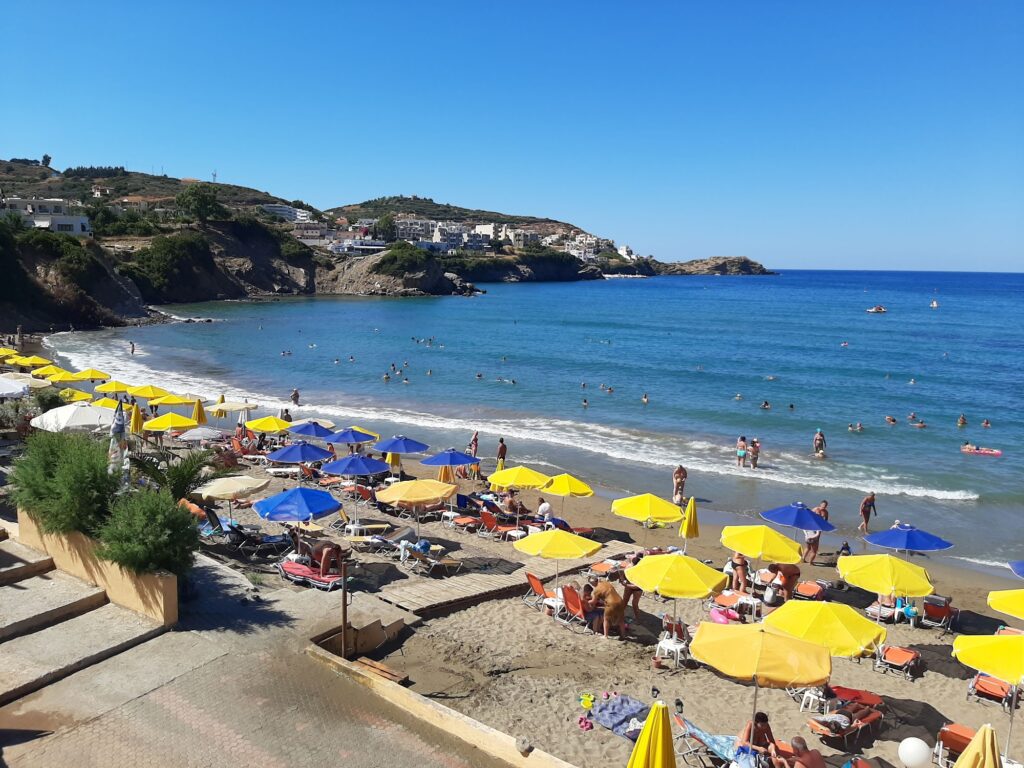
The bay itself is a long arc of golden sand sitting in front of a backdrop of terraced hillsides and the white buildings of the village above. The water runs greenish over the shallower sections close to shore and deepens toward a clearer blue further out, the colour partly explained by the freshwater springs draining from the Psiloritis Range into the sea along this stretch of coast — the springs keep the water measurably cooler here than at many other north-coast Cretan beaches, an effect that swimmers notice when they first wade in and then come to appreciate through the heat of an afternoon.
Getting to Livadi Beach Bali Crete: Off the E75, Signposted at the Village Entrance
Bali sits 30 kilometres east of Rethymno and 43 kilometres west of Heraklion, directly on the E75 national road that links the two cities along Crete’s northern coast. The exit for Bali is clearly marked, and the descent into the village passes above the bays before arriving at the coastal road running through the settlement. Livadi is the first beach you reach, before the village centre and before the smaller bays, which means drivers arriving from the west can park without having to navigate through the busier parts of Bali at all.
Bus services on the Heraklion–Rethymno route stop at the Bali junction on the national road, from where it is a short walk or a brief taxi into the village. The journey from Heraklion takes around 45 minutes; from Rethymno, approximately 35 minutes. There is no direct service into the village itself on most connections, so anyone arriving by bus should confirm the stop in advance. Rental cars are the most practical option for anyone based elsewhere on the island and wanting to spend the day.
Parking runs along the coastal road near Livadi, with spaces typically available in the early morning and increasingly pressured through the late morning in high season. Arriving before ten in the morning on a summer weekend is not excessive caution.
Livadi Beach Bali Crete: Sand, Shallow Entry, Blue Flag Water
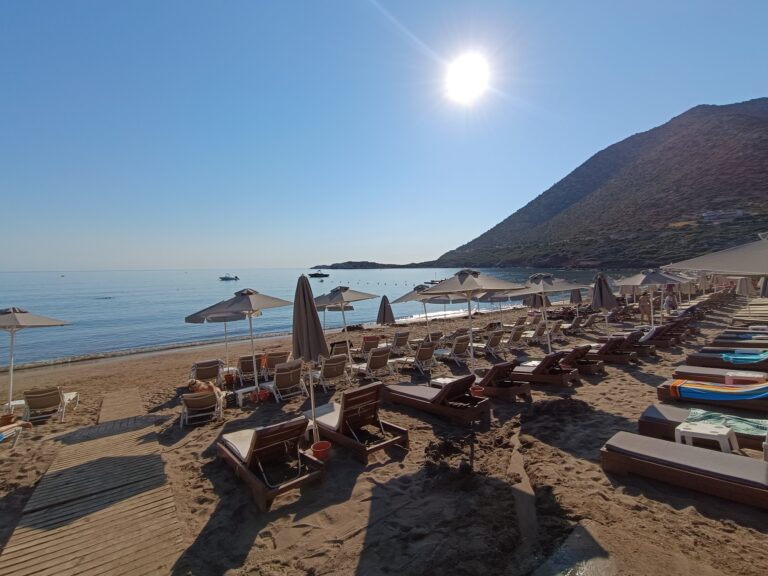
The beach is sandy with a gradually sloping seabed, shallow enough near shore to make it comfortable for children and for swimmers who prefer a long, gradual entry rather than an abrupt drop. The water holds the Blue Flag designation for quality, and the transparency in calm conditions allows a clear view of the bottom some distance from shore. The snorkelling along the rockier margins of the bay, away from the central swimming area, is rewarding enough that bringing a mask is worthwhile even without specific ambitions.
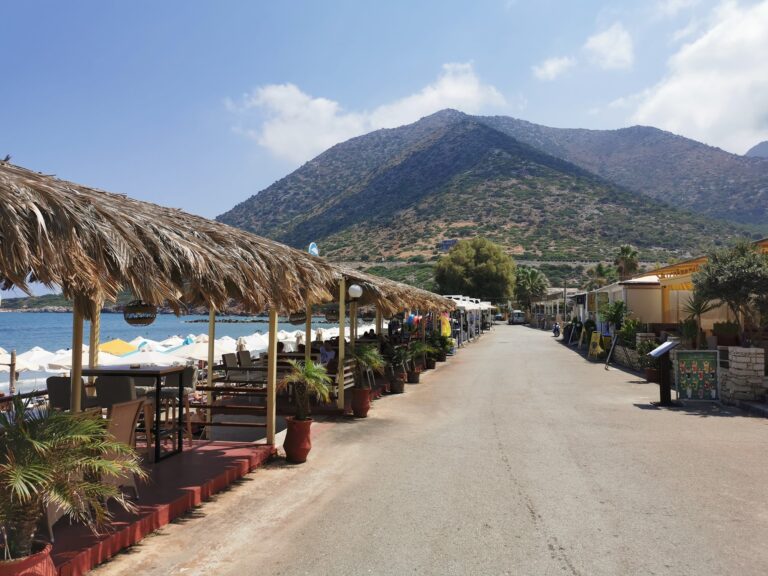
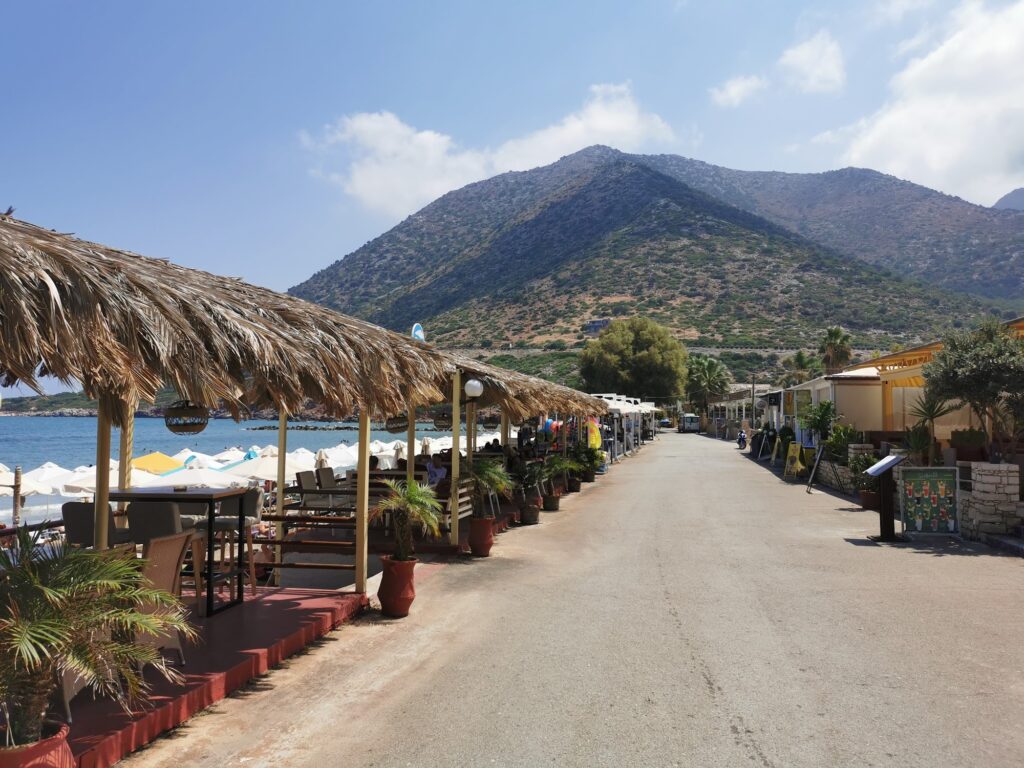
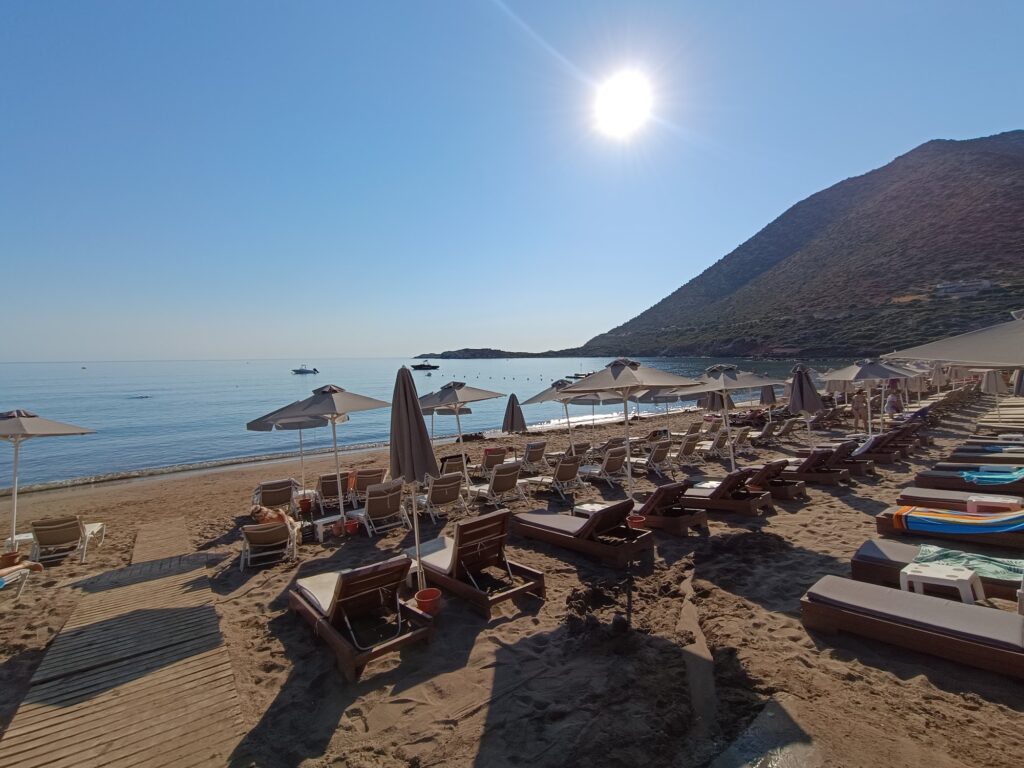
Sunbeds and umbrellas are available throughout the organised sections, and the beach is served by tavernas, cafés, and bars along the promenade behind the sand. The range of options here is wider than at the smaller bays — Limani near the port and Varkotopos further east are more intimate — which makes Livadi the practical choice for anyone who wants a full-service beach day without walking through the village to find it. Water sports are available to rent from operators working directly on the beach.
The Other Bays: Varkotopos, Limani, and Karavostasi
The four beaches of Bali are close enough together that visiting more than one in a day is straightforward. Varkotopos, immediately east of Livadi, is smaller and slightly more sheltered, with rock formations along its edges that suit families with children who want more variety than open sand. Limani, the central bay near the port, is the most socially active, surrounded by the tavernas and shops of the village proper. Karavostasi Beach Bali Crete, the northernmost bay, is the quietest and most protected of the four, set apart from the others by a short walk that most day visitors don’t bother to make — worth making, as it turns out, specifically because of that.
The springs that feed cool freshwater into the sea around Bali are most noticeably felt at the calmer, deeper bays, but Livadi’s length and its organised character mean it draws the larger crowds. On a busy August afternoon, Varkotopos or Karavostasi will feel significantly quieter, and the water temperature in those more sheltered spots sits noticeably warmer than Livadi’s wind-cooled surface.
Bali Village Above the Beach: Psiloritis Views and a Pace That Slows Down
Walking up from the beach into the village brings a different register from the coastal strip. Bali is not a large settlement — it has the scale of a fishing village that expanded into tourism rather than a resort built from scratch for it — and the narrower streets above the harbour carry a pace that the beachfront doesn’t quite share in high season. The view from the higher parts of the village over all four bays simultaneously is one of those vantage points that repays the climb, particularly in the early morning when the light comes in from the east and the bays below are not yet full.
The mountains behind the village belong to the southern approach of the Psiloritis massif — Mount Ida, the highest point on Crete — and the view inland on a clear day is substantial, the scale of the range considerably larger than the immediate surroundings of a coastal village suggest. The springs running off these mountains into the sea account for the specific quality of the water at all four Bali bays, and knowing that makes the coolness feel less like a surprise and more like a feature of the geology.
A Note on Timing at Livadi Beach Bali Crete
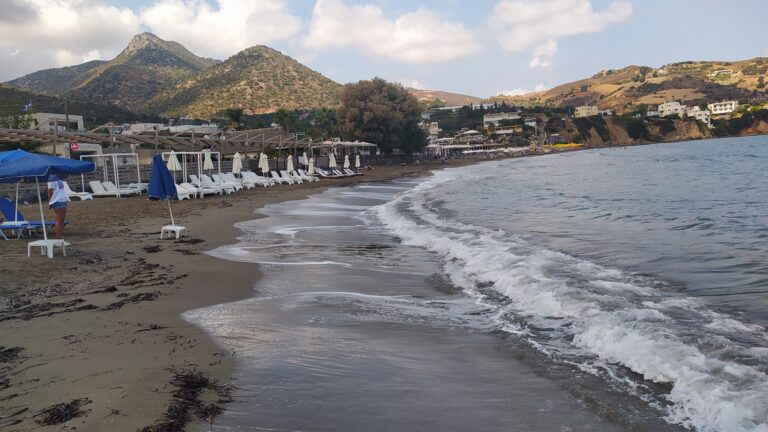
The wind question shapes the decision about when to visit. In May, June, and September, the meltemi is absent or light, and Livadi’s openness to the north is irrelevant — the bay is calm, the water warm, and the beach operates at comfortable capacity. In July and August, the wind can arrive with enough force to make the water rougher than the source text’s “mirror-still” framing suggests, and the practical response is either to move east to one of the more sheltered bays or to accept the choppiness as part of the day. The beach is still swimmable in wind; it is simply different, and the difference is more pronounced here than anywhere else in Bali.
The first boat that arrives — the first swim before the organised sections fill — is the version of Livadi Beach Bali Crete that makes the most specific impression: the greenish water over the sandy floor, the Psiloritis outline in the far distance, and the relative quiet before the umbrellas are out and the tavernas have opened.
Map
Sorry, no records were found. Please adjust your search criteria and try again.
Sorry, unable to load the Maps API.
Near by places: