Fodele Beach: A Birthplace Claim Most Scholars Doubt
Profile
Fodele: A Village Built Its Identity Around a Painter Who Probably Wasn’t Born There
Greece | Fodele | Heraklion, Crete
Most scholars actually believe the painter known as El Greco was born not here, but in Candia, the Venetian-era name for modern Heraklion, seventeen miles away. The strongest documentary evidence is a 1606 trial transcript, recorded when the painter was 65, which points to Candia as his birthplace. Fodele’s claim rests on considerably softer ground — a letter the painter wrote in 1606 describing his birthplace as “surrounded by orange trees, springs of drinking water, and a Byzantine church,” a description that matches the house now serving as the Fodele museum and the small 11th-century church of Panagia standing nearby. The village president has acknowledged that Spanish academics declared Fodele the birthplace roughly a century ago, a relatively recent designation rather than an unbroken local tradition.
Fodele, a farming village of orange groves, has built a genuine identity, a restored childhood home turned museum, gift shops, and a steady flow of tour buses around a claim that most serious historians treat with real skepticism. The village president’s own defence, when pressed, wasn’t really historical at all: “This is what generations of people here have lived and died knowing… why should some document erase that?” I think that’s a genuinely honest answer, and I’d rather pass it along directly than pretend the matter is settled either way.
The painter himself never fully resolved the question. He left Crete around 1567, signed his paintings throughout his life with the Greek suffix Kres, Cretan, and referred to the whole island as his homeland without ever naming a specific town. Whatever the truth, the Pantomantris river still splits the village in half on its way down to the beach, much as it presumably did in his own childhood, wherever exactly that childhood actually took place.
Getting There: 25 to 27 Kilometres West of Heraklion
I followed the New National Road (E75) west toward Rethymno and Chania, taking the Fodele exit roughly twenty-five kilometres out and arriving directly at the beach — the village itself sits a further three kilometres inland, reached by a winding local road that the beach doesn’t actually pass through on the way. The full drive from Heraklion took about twenty-five minutes.
The KTEL bus toward Rethymno or Chania departs Heraklion’s central station hourly, stopping at the Fodele junction directly. Organised parking lots sit near the hotel and taverna entrances right at the beach.
The Beach: Golden Sand at a River Mouth, Sheltered to the West, Exposed to the East
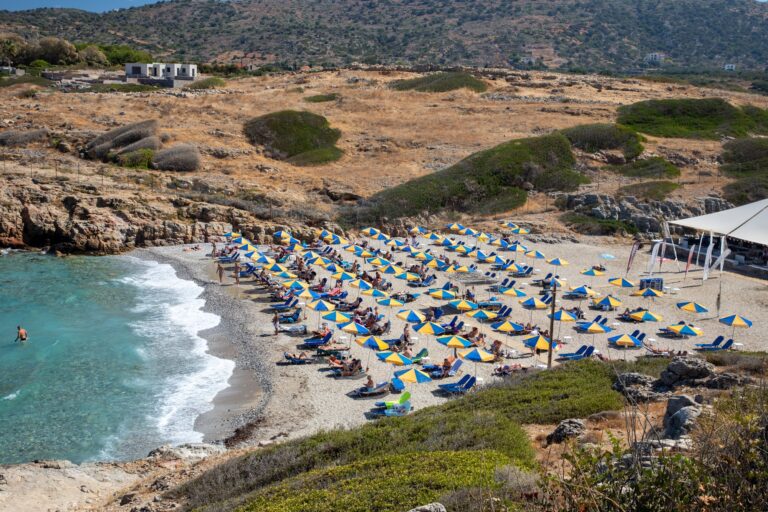
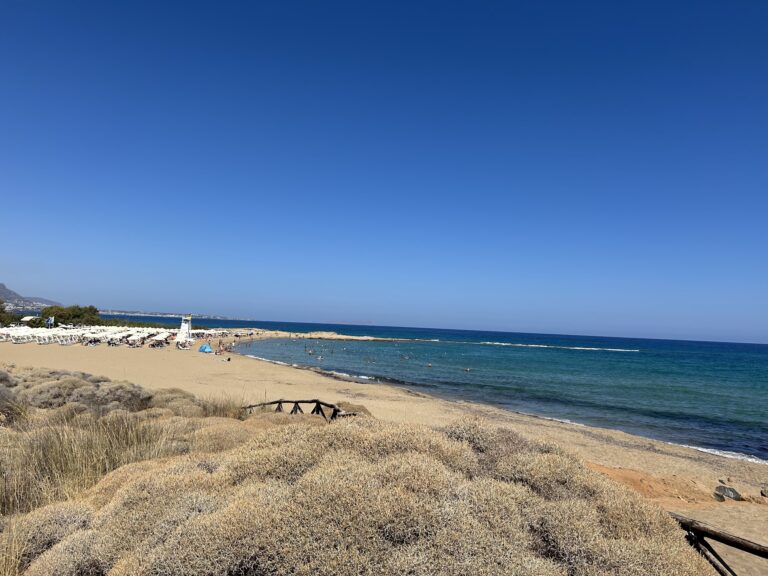
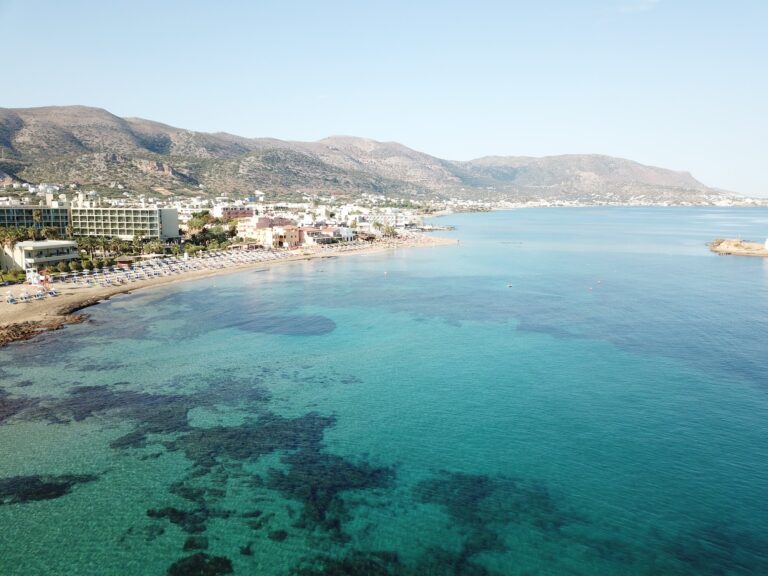
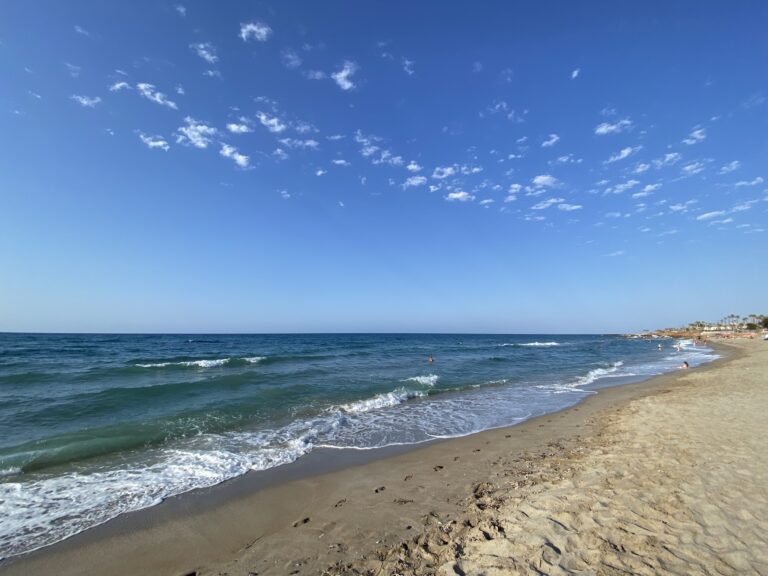
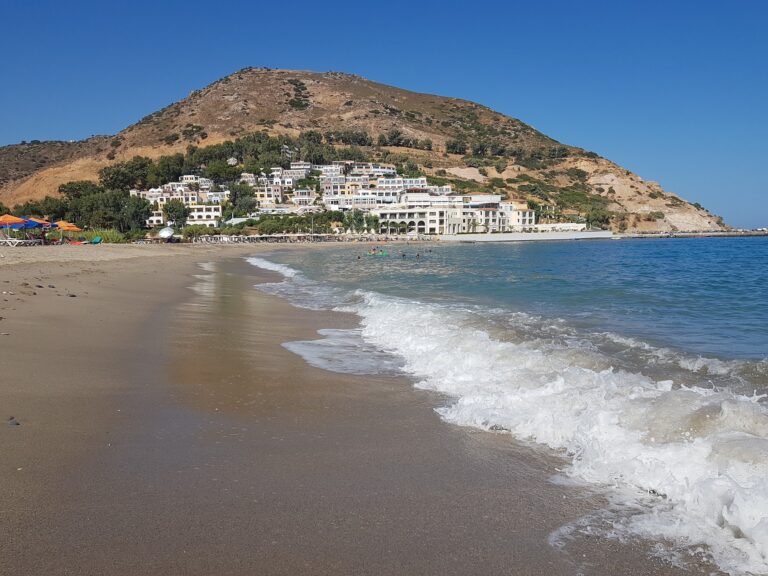
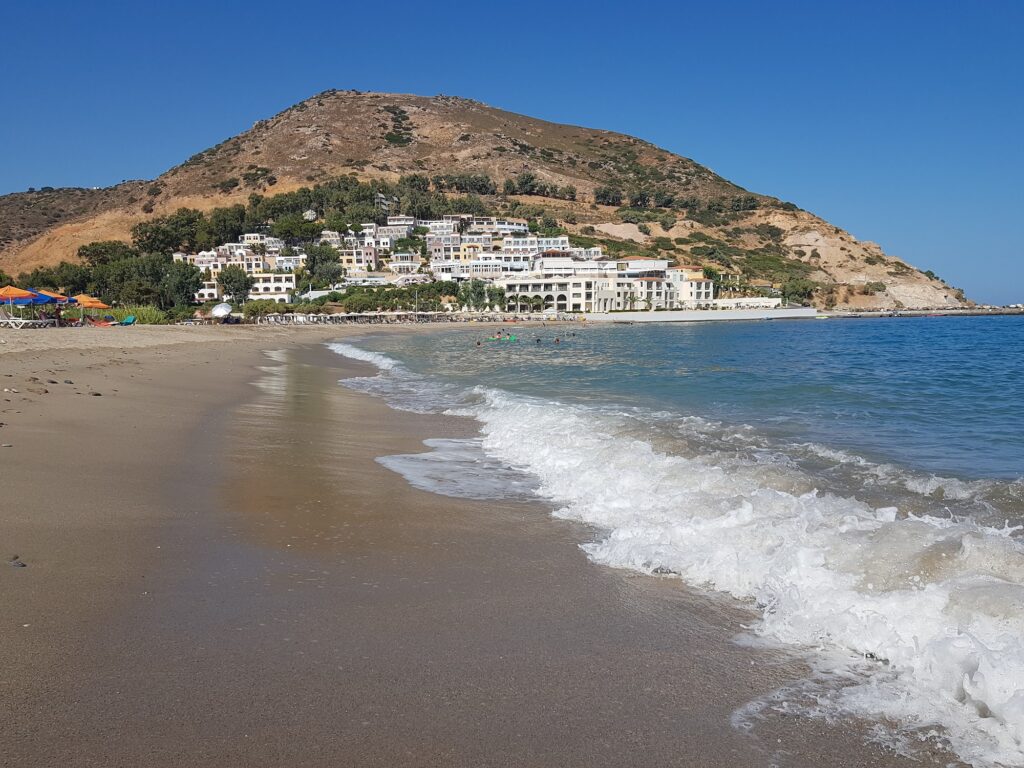
The Pantomantris river, also called the Fodelianos, empties into the sea at the centre of the beach, and I noticed the air here genuinely felt fresher than at some of the more enclosed coves further along this coast — a real microclimate effect rather than just a pleasant coincidence. The beach sits protected on its eastern side by Cape Stavros and on the west by the Kastellos hill, atop which the ruins of the old fort Kastelos are visible.
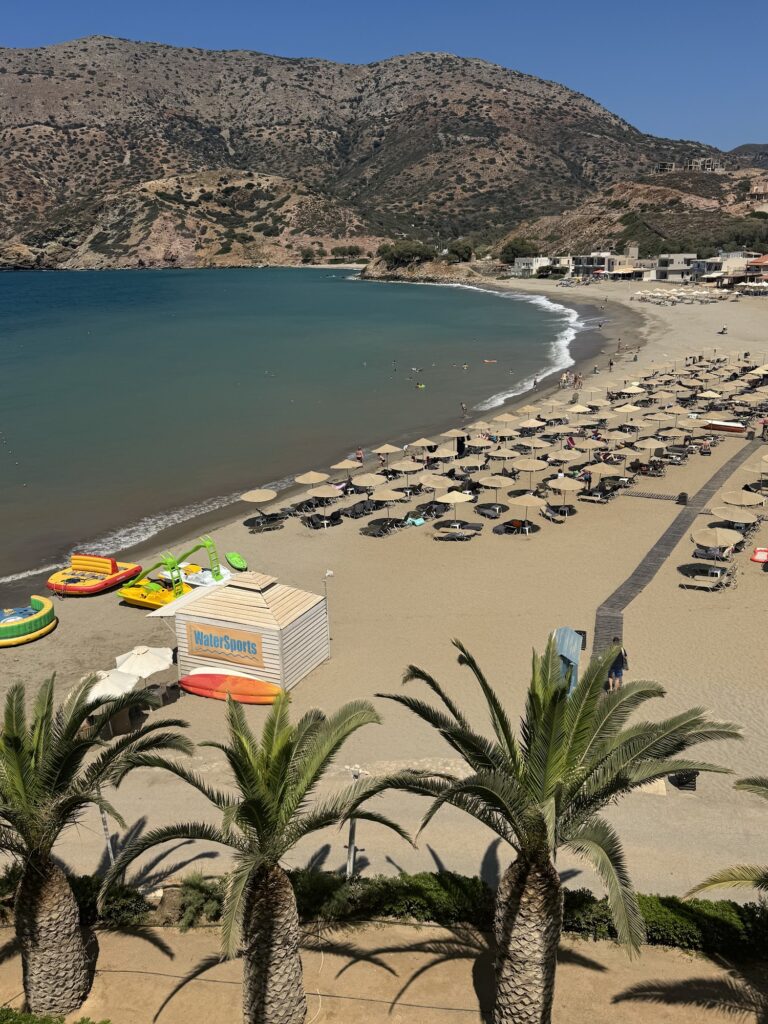
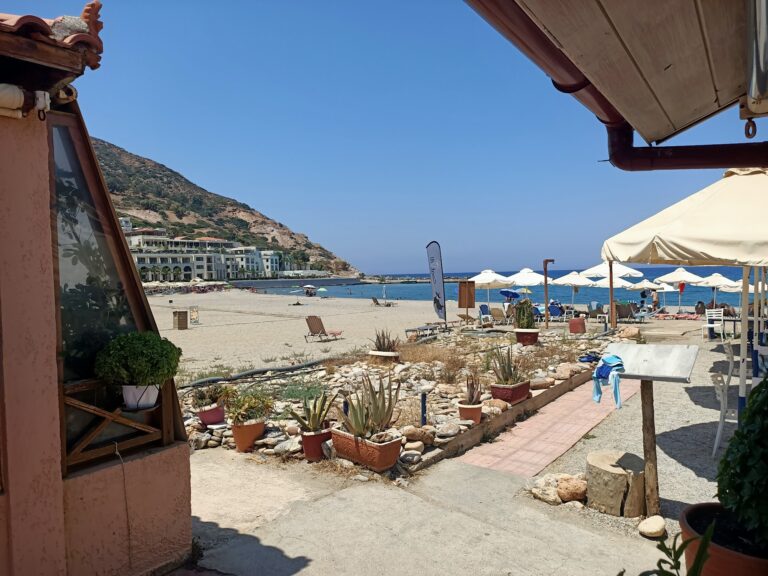
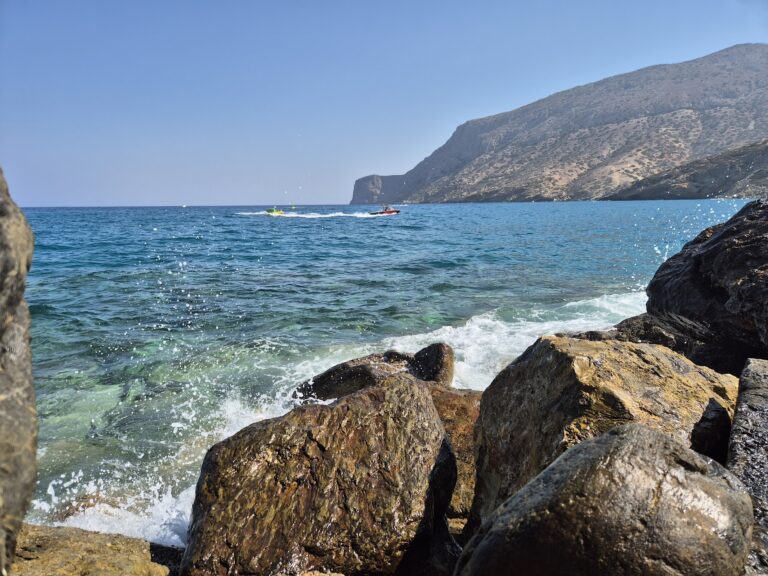
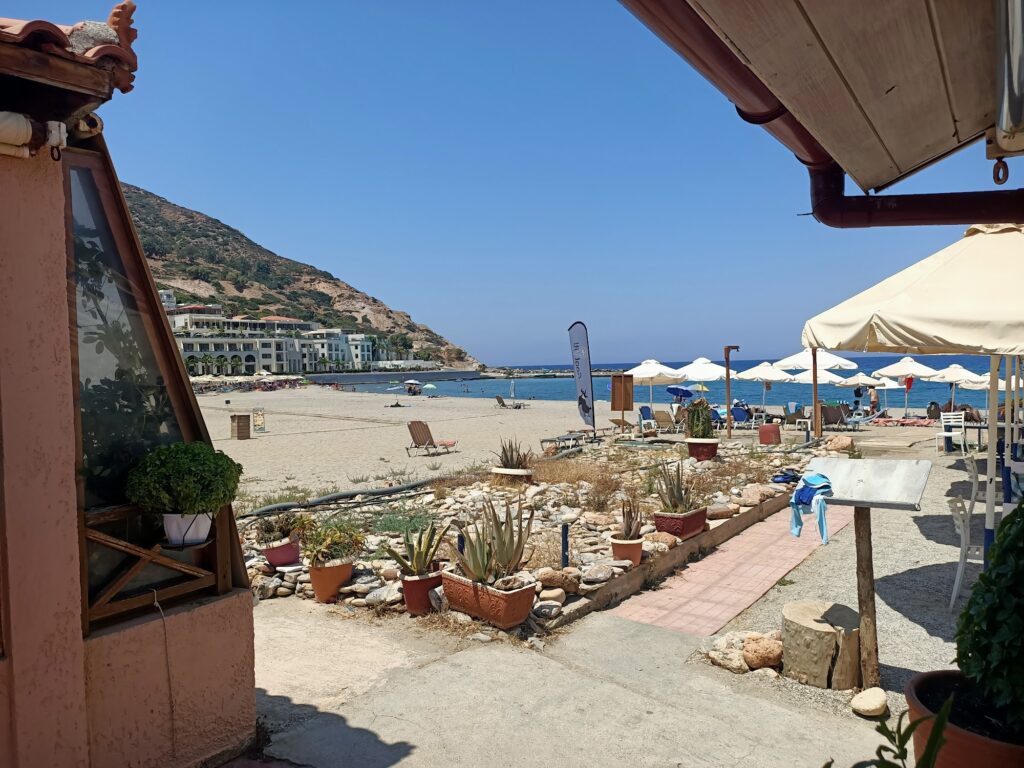
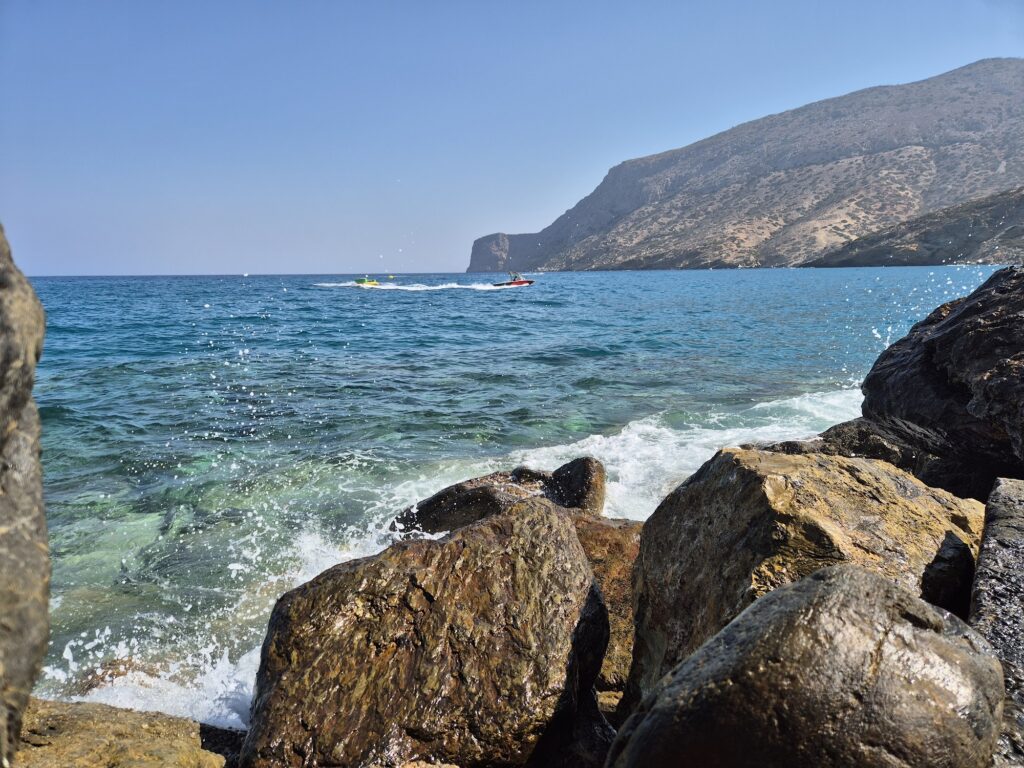
The western section, organised with sunbeds, umbrellas, showers, cafés, and tavernas, benefits from a small pier protecting swimmers near a grand hotel on the slope above — genuinely calmer water than the open, more exposed eastern stretch near the area’s petrol station, which I’d choose specifically if solitude matters more than convenience. Water sports operators offer jet skiing, paddleboarding, and pedal boats, and the adjacent water park provides an inland alternative for anyone wanting slides and pools rather than open sea.
The Museum, the Church, and the Village Itself
The Museum of El Greco, regardless of where one lands on the birthplace question, holds genuine value as a restored period building with reproductions of the painter’s major works, open daily from April through October for a modest entrance fee. The small Church of Panagia, just steps from the museum gates, is a real 11th-century Byzantine building, predating the entire dispute by half a millennium. The village square itself, lined with tavernas and craft shops along an idyllic stream, has genuinely become what one account calls a modern “boomtown,” whatever the historical accuracy of the claim that built it.
Fodele, west of Heraklion, has built a tourism identity around the claim that El Greco was born here — a claim most scholars actually doubt, favouring Candia, modern Heraklion, based on stronger documentary evidence. Whatever the truth, the village’s restored museum and the 11th-century Church of Panagia are worth visiting in their own right. The beach itself sits at the mouth of the Pantomantris river, golden sand sheltered to the west near a small protective pier, more exposed and quieter to the east, with a water park inland for anyone wanting more than the sea. Twenty-five to twenty-seven kilometres from Heraklion.
Take the Fodele exit off the E75. Choose the western section for calmer, more organised swimming, or the eastern stretch for solitude. Visit the museum and church inland, and form your own view on the birthplace question rather than taking either side as settled.
Map
Sorry, no records were found. Please adjust your search criteria and try again.
Sorry, unable to load the Maps API.
Near by places: