Pantanassa: A Bishop's Charity That Never Finished
Profile
Pantanassa: A Bishop’s Unfinished Charity, a Beach Split in Half by Its Own Harbour
Greece | Pantanassa | Gazi, Heraklion, Crete
Bishop Nikolaos Xenos founded the monastery above this beach in 1972 with real ambition: an orphanage, a nursing home, a kindergarten, a nursery, a working charitable institution rather than simply another place of worship. He died in 1984 without managing to build most of it, and the monastery that survives today operates instead as a straightforward nunnery — a charitable vision that never quite became what its founder intended. I find unfinished plans like this more interesting than completed ones, somehow; there’s a specific kind of history in a building that exists as the partial shadow of something larger that was meant to be there.
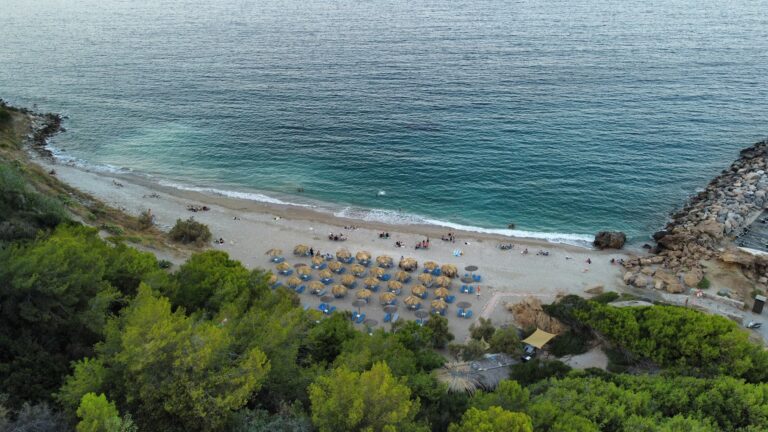
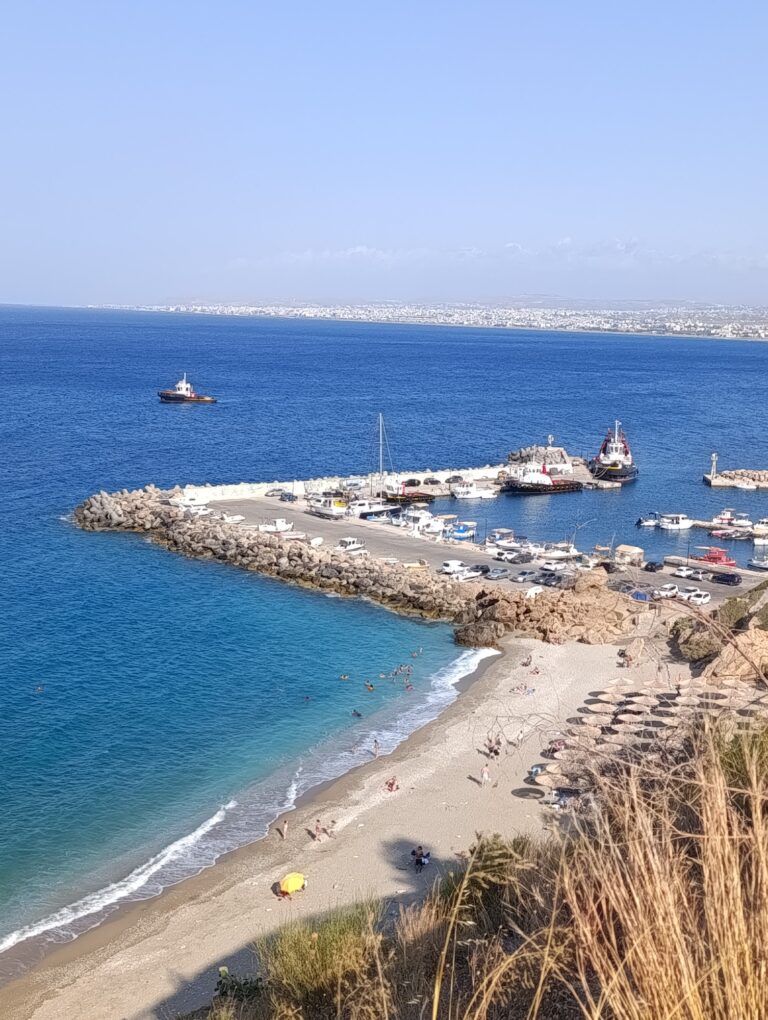
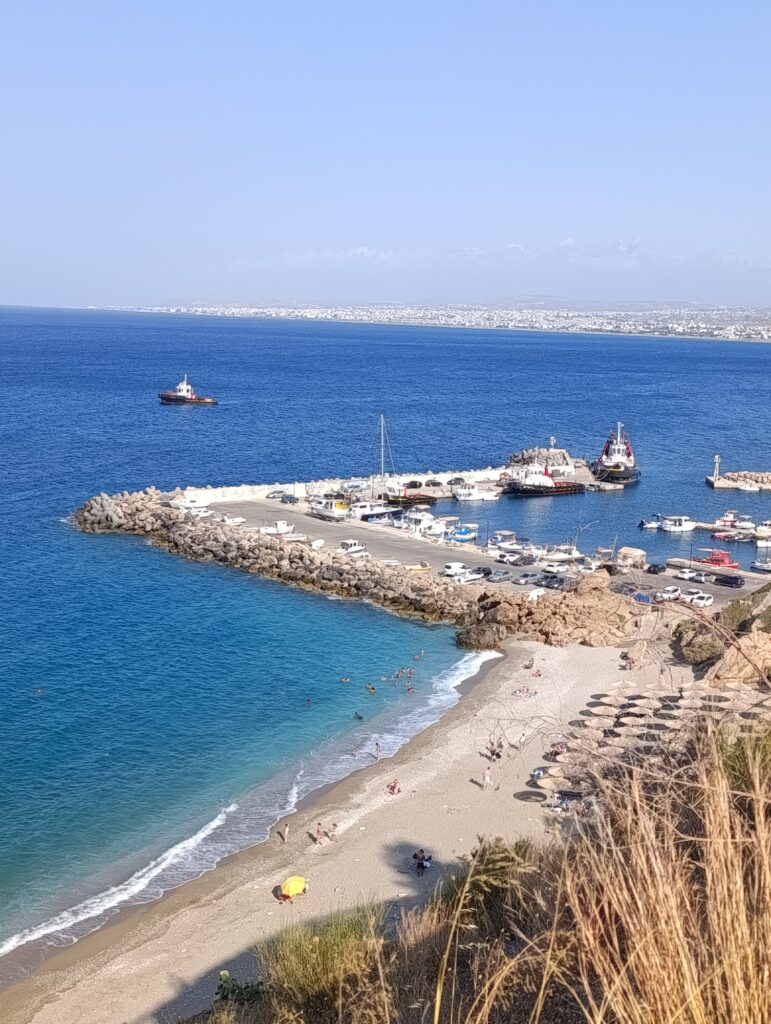
Pantanassa used to be considerably better before the small port was built. Older accounts describe a beach hidden by pine forest, with crystal-clear water and a genuinely secluded feel; the harbour construction effectively cut that beach in half, and what remains, while still pebbly and clear, has lost some of whatever made the earlier version special. I’d go in with that adjusted expectation rather than picturing the untouched cove some older write-ups still nostalgically describe.
Getting There: 12 to 14 Kilometres West of Heraklion, via the Old National Road
I followed the Old National Road west toward Rethymno and Agia Pelagia, passing through Ammoudara and Ellinoperamata before watching for signs pointing toward Pantanassa Port and the monastery, then turning toward the sea. The drive from Heraklion took about fifteen minutes.
Urban Line 6 buses run to nearby Ammoudara, and regional KTEL services toward Agia Pelagia or Fodele can drop passengers at the main Pantanassa junction, though I’d treat a car as the more practical option given how the connections work out. Buses also run to the nearby village of Rogdia, from which it’s roughly a twenty-minute walk down to the beach. Free parking sits in an organised lot right beside the harbour entrance.
The Beach: Pebble and Sand, Split by the Port, Genuinely Clear Water
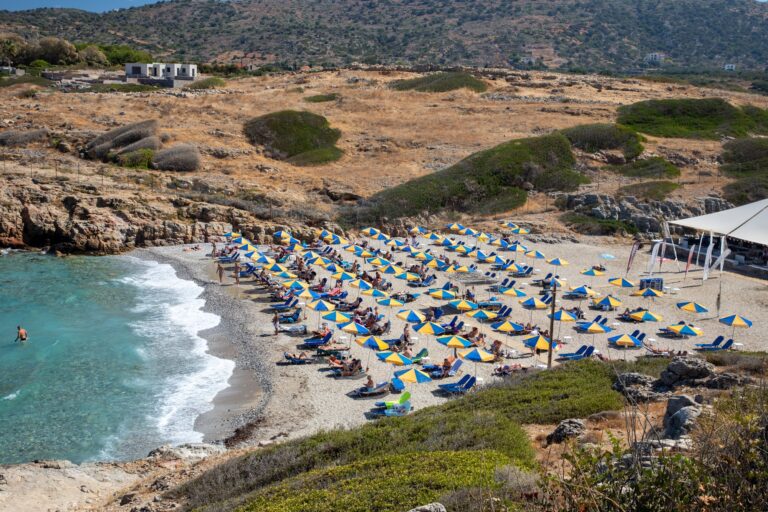
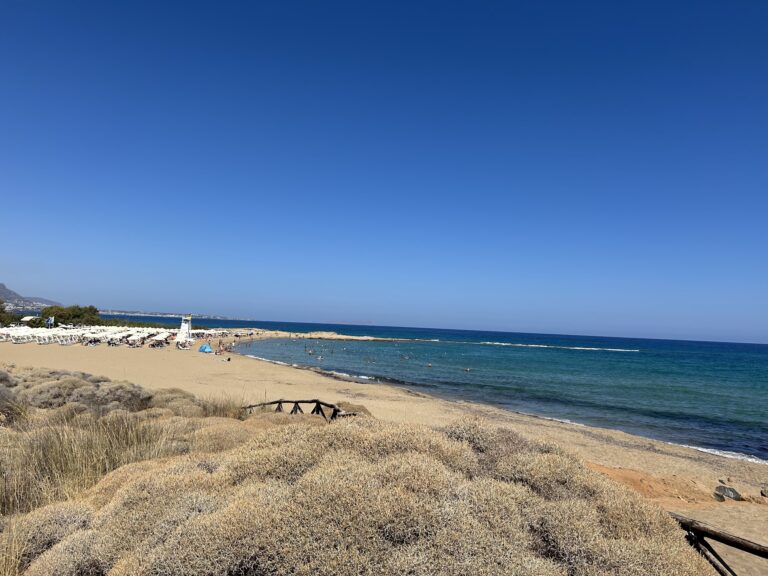
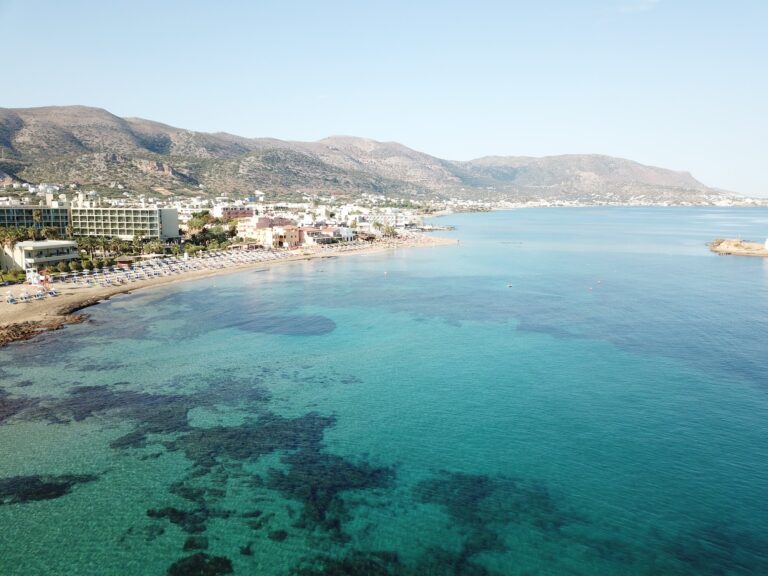
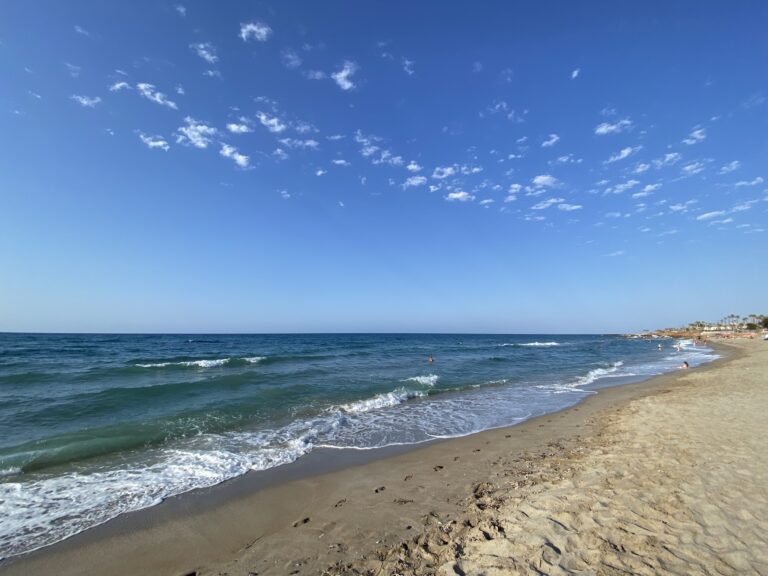
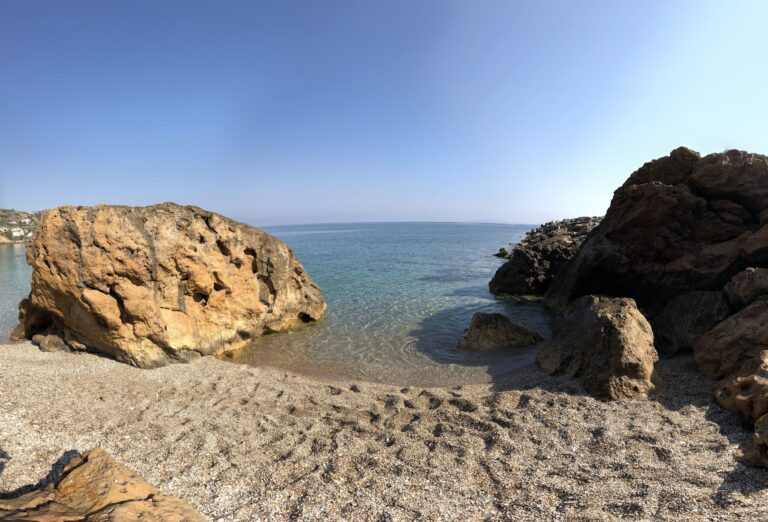
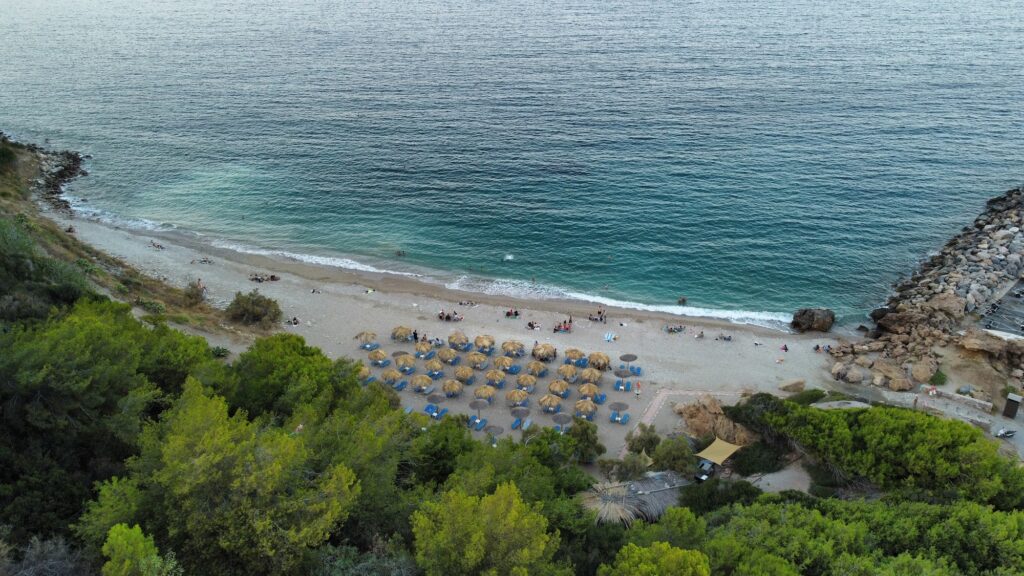
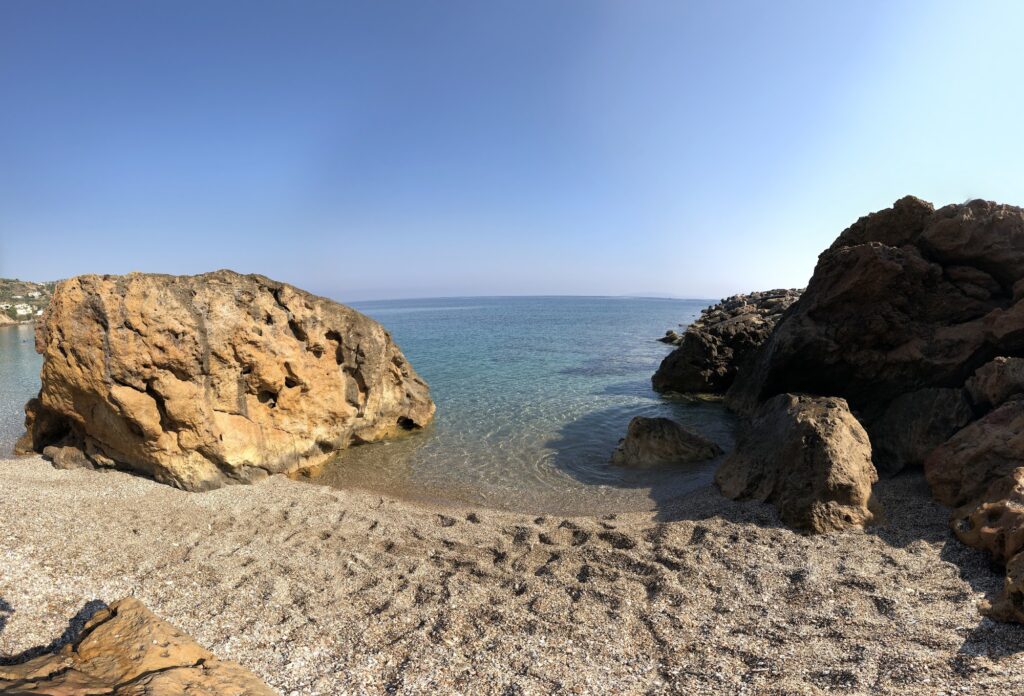
The shore mixes pebbles with patches of sand, the water holding a clarity that made snorkelling along the rocky edges genuinely worthwhile — I brought my own gear, since nothing rents on site, and spent a good half hour just exploring close to shore. The western section, on the far side of the port from the main approach, keeps more of a secluded, natural feel than the busier eastern stretch, and I’d head that way specifically if quiet matters more to you than easy access.
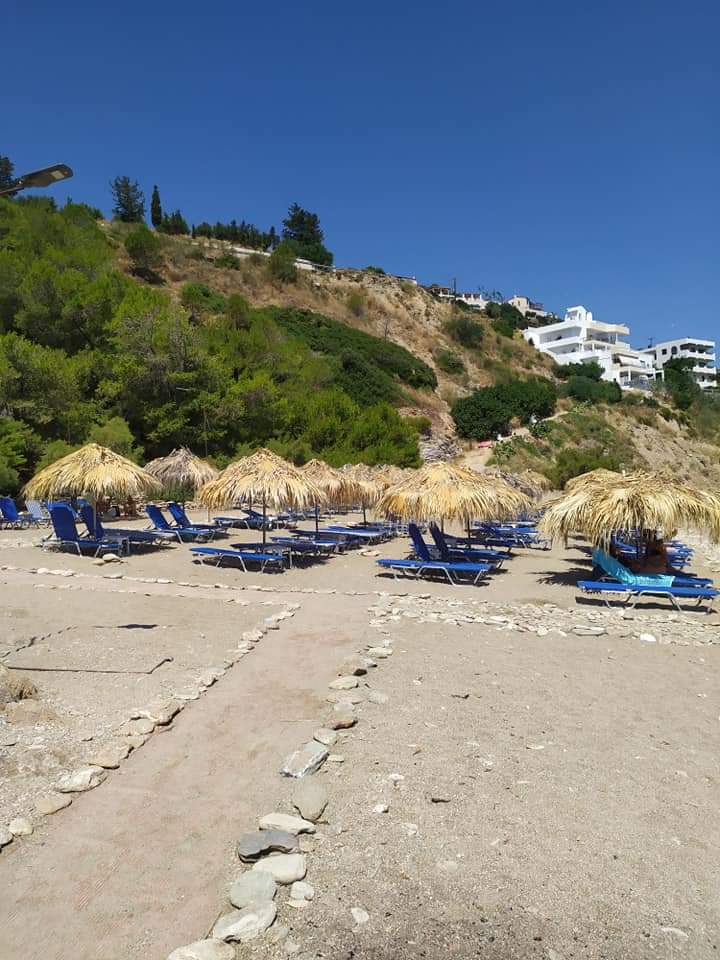
Pine trees still cling to the cliffs around parts of the beach, sunbeds and umbrellas are available in the organised sections, and tavernas in the small port serve fresh seafood and local Cretan dishes within easy walking distance. I should mention that access involves some uneven ground and the odd set of steps from the parking area, genuinely difficult for anyone with mobility concerns — I’d look elsewhere along this coast if that’s a factor.
Lefkadia, Helidoni, and a Walk Up to the Monastery
West of Pantanassa, two secluded bays collectively known as Lefkadia sit almost entirely unknown to most Heraklion locals, reachable now by a recently opened trail and served by a small, newly established beach bar. Further along, Helidoni beach offers sand and pebble over a mostly rocky seabed, well suited to snorkelling, with the ruins of the old Paliokastro castle visible to the west — a genuine extension of the day for anyone willing to keep walking rather than stopping at Pantanassa alone.
The climb up to the Pantanassa Monastery itself, on the pine-covered hill directly above the beach, takes only a few minutes and rewards the effort with a genuinely good view back over the water — I’d combine the two rather than treating either as a separate outing.
Pantanassa, west of Heraklion, takes its name from a monastery founded in 1972 by Bishop Nikolaos Xenos, whose plans for an orphanage, nursing home, and kindergarten went unrealised after his death in 1984, leaving the institution as a straightforward nunnery rather than the charitable complex he’d envisioned. The beach itself was genuinely better before its small harbour was built, now divided into a busier eastern section and a quieter western one, pebble and sand with clear, snorkel-worthy water. Pine trees, organised sunbeds, port tavernas, and a short climb to the monastery round out the visit, with the lesser-known bays of Lefkadia and Helidoni a short walk further west. Twelve to fourteen kilometres from Heraklion.
Drive the Old National Road via Ammoudara and Ellinoperamata. Head to the western section past the port for a quieter swim. Climb up to the monastery while you’re there, and keep walking west to Lefkadia or Helidoni if you want more.
Map
Sorry, no records were found. Please adjust your search criteria and try again.
Sorry, unable to load the Maps API.
Near by places: