Agios Spiridonas: The Statue That Wasn't a Tailor
Profile
Agios Spiridonas, Porto Rafti: The Statue That Gave This Bay Its Name Was Never Actually a Tailor
Greece | Porto Rafti | Markopoulo Mesogaias, East Attica
I want to tell the story of the statue that gave this whole bay its name before describing the beach itself, because I think it’s a better reason to visit than the swim alone. Out at the harbour entrance stands a weathered marble figure that 18th-century travellers genuinely believed was a tailor — ráftis in Greek — and the story they told themselves was that Apollo had granted some particularly skilled tailor this statue as an honour, supposedly once holding a pair of golden scissors that have long since gone missing. That belief is exactly where Porto Rafti’s name comes from, even though it’s almost certainly wrong.
An older account, from a traveller who passed through in 1395, tells a completely different story: two young lovers, the girl uninterested and fleeing, the boy in despair during the chase, both turned to marble by the gods and set up on two separate islets — Raftis and Raftopoula, the tailor and his little tailoress. Modern archaeology has since landed somewhere else entirely. The statue is now identified as a genuine 2nd-century Roman carving, a seated female figure over two metres tall, most likely representing a goddess — Rhea, Demeter, or Cybele are the names that come up most. I find it strange and slightly wonderful that a single piece of weathered stone has carried three completely different identities across just a few centuries, none of which agree with each other, and all of which felt completely certain to the people who believed them at the time.
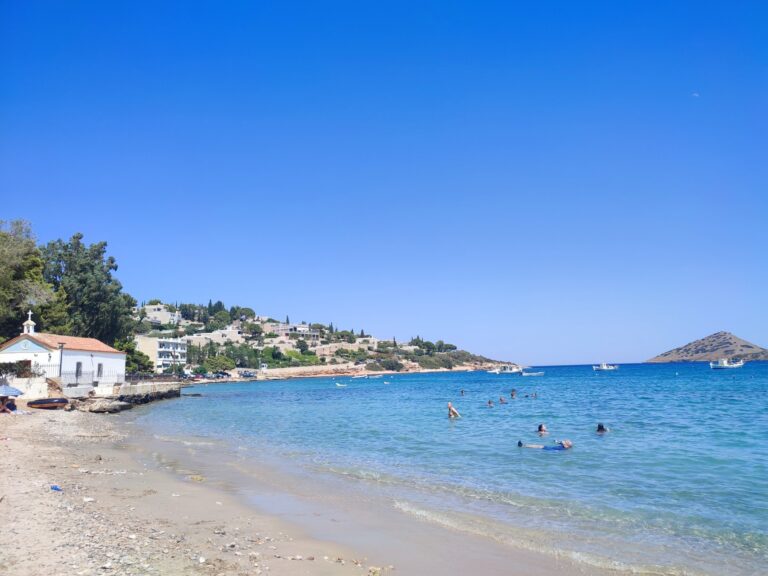
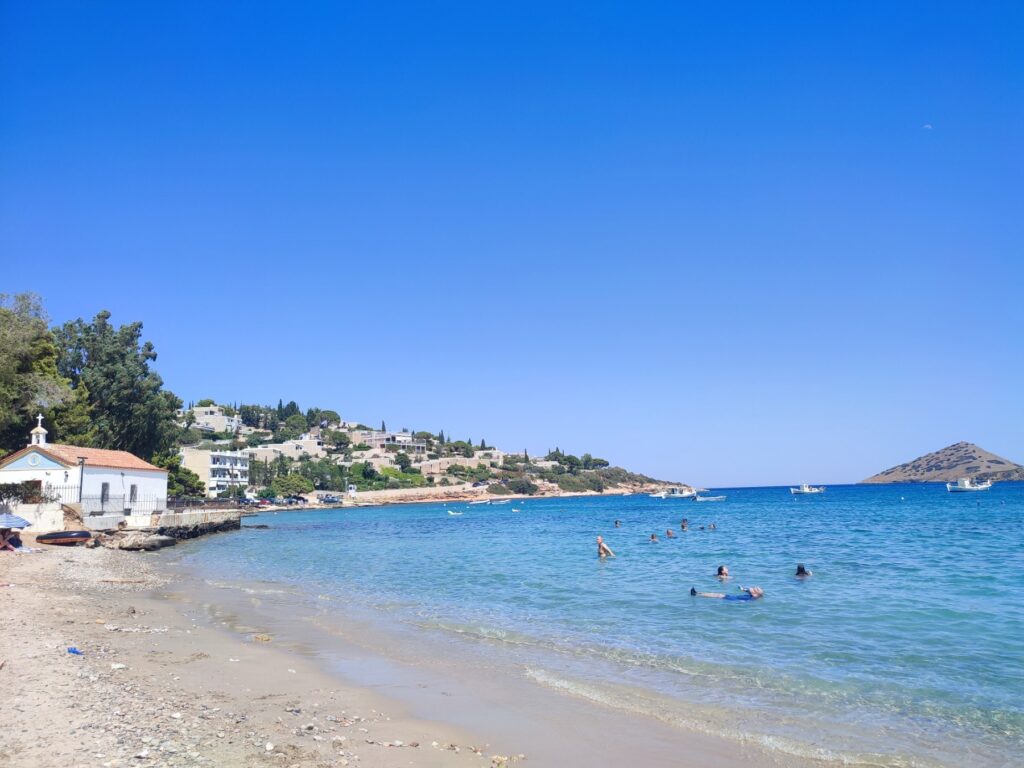
The chapel this beach takes its name from, Agios Spyridonas, stands right on the opposite side of the bay from where the statue sits, in a genuinely striking spot directly by the sea — and the beach itself is named for the chapel rather than the other way around.
Getting There: 35 to 40 Kilometres From Athens, the Easiest Beach in the Whole Bay to Reach
I drove the Attiki Odos toward Markopoulo, then followed signs into Porto Rafti itself and along the coastal road to the northern side of the harbour. Parking here was genuinely easy compared to some of the other beaches I’d visited nearby — a large lot sits close behind the sand, and even when that filled, a slightly further spot was only a three-minute walk away.
By bus, this is about as convenient as Attica beaches get: the KTEL Attikis stop sits within about fifteen to twenty metres of the sand itself, one of the closest bus-to-beach distances I found anywhere on this stretch of coast. From Athens International Airport, the drive is short, around fifteen kilometres, making this an easy stop either right after landing or shortly before a flight.
The Beach: Golden Sand, a Rocky Seabed, Genuinely Unorganised
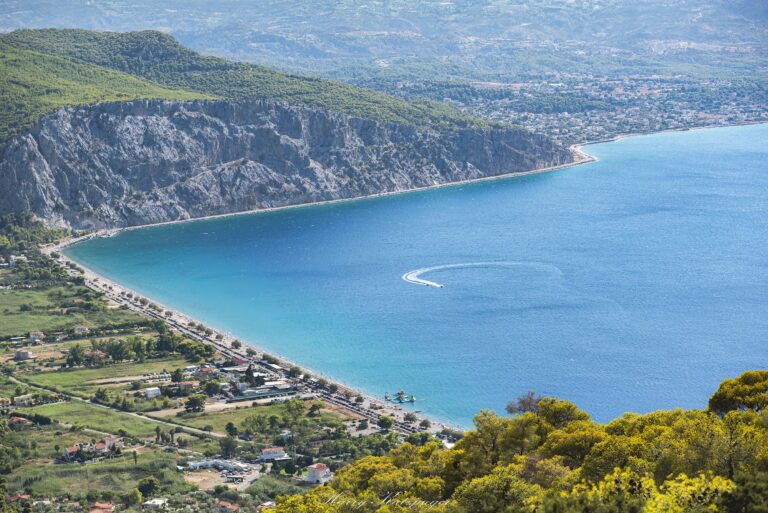
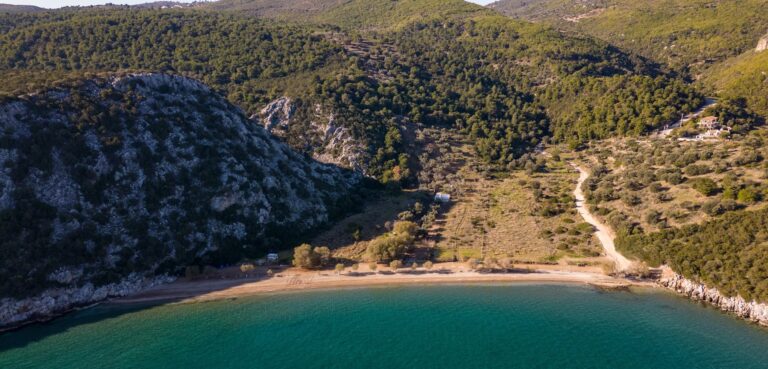
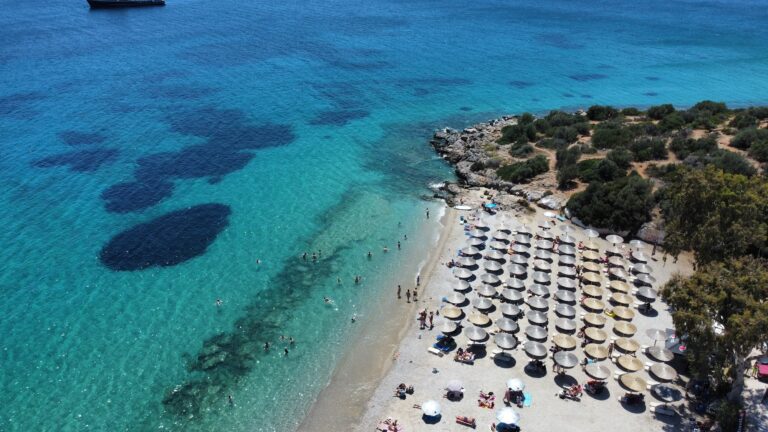
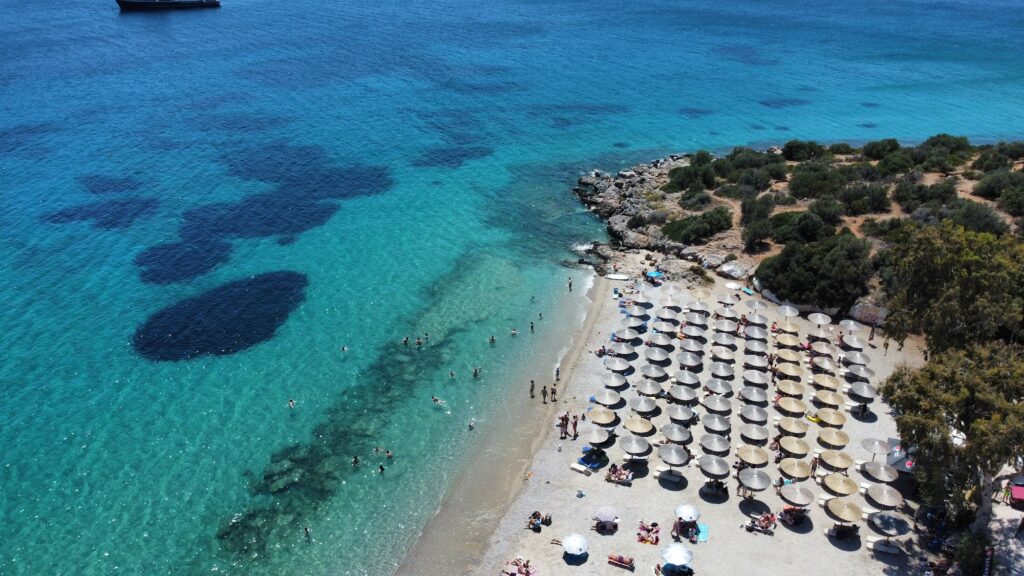
The sand here really is a warm gold colour, and the water takes on a light green tint that looked clean and inviting every time I came back to it. I should flag the one practical catch directly: the seabed is scattered with rocks close to shore, and more than one account specifically warns that swimming here without water shoes is a bit of a gamble. I went in barefoot the first time and regretted it within a few steps; I brought sandals the second time and had no trouble at all.
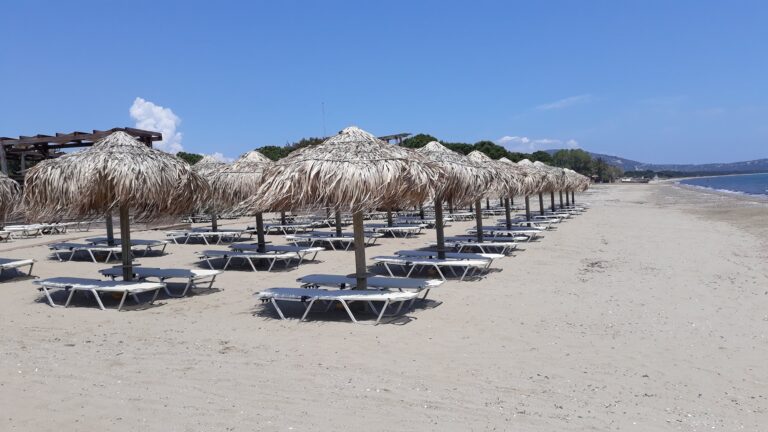
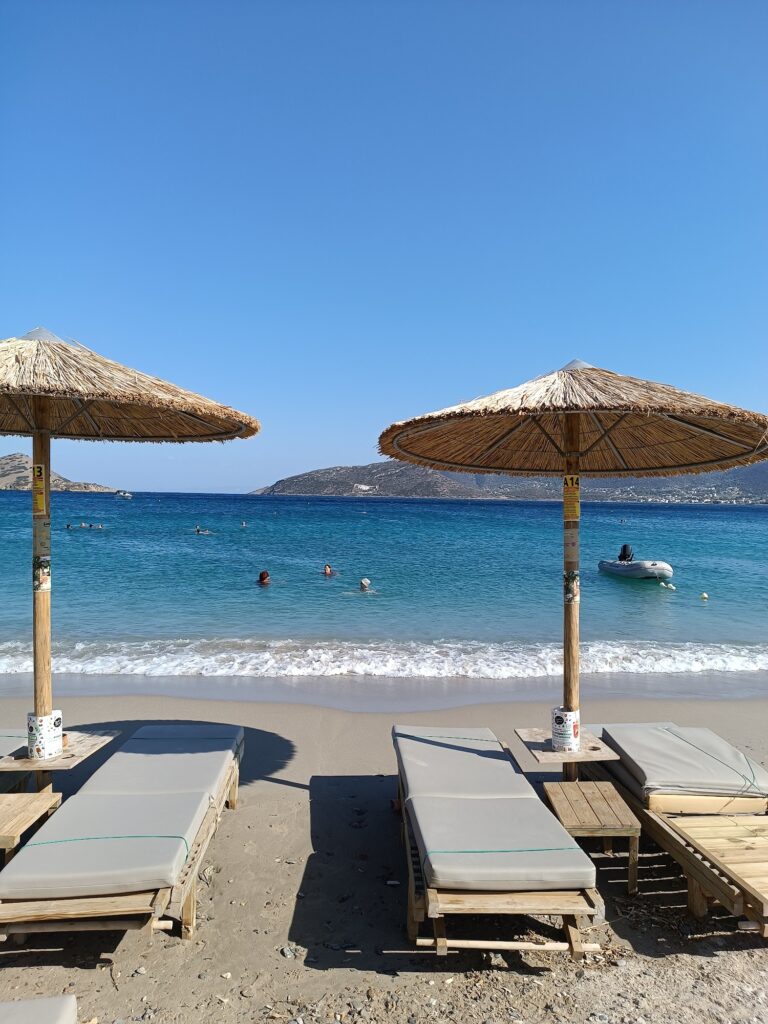
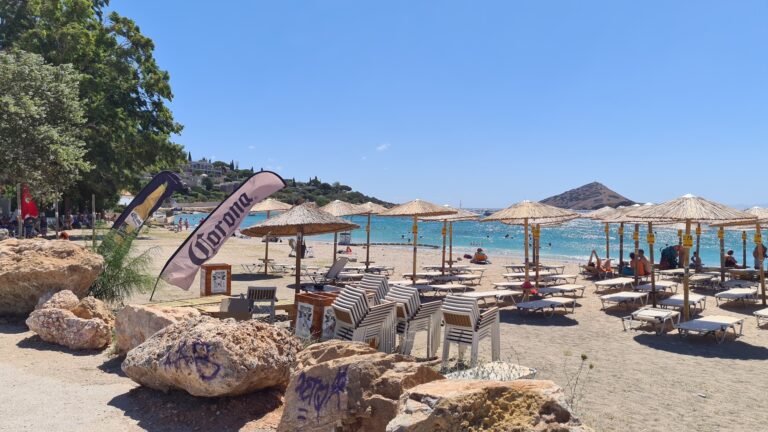
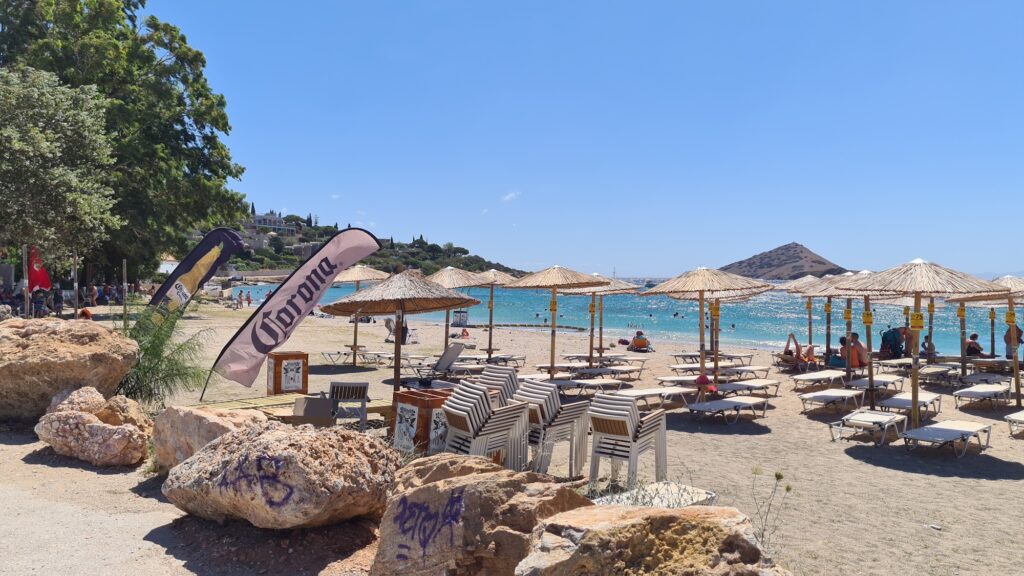
Most of this beach stays unorganised, and I’d count that as a point in its favour rather than a gap — a handful of sunbeds and straw umbrellas are available to rent in one or two spots, but plenty of free space remains for anyone happy with their own towel. A kiosk sits nearby for drinks and snacks, and a small fish taverna, Psarotaverna Agios Spyridonas, operates just a short walk from the sand.
Despite what some tourism listings promise about lifeguards and disability access, the more detailed, ground-level account I trusted most states plainly that there’s no lifeguard on duty and no dedicated facilities for visitors with mobility needs — closer to a simple, free, unorganised beach than a fully staffed municipal one. I’d swim with normal caution here rather than assume professional supervision is watching.
Erotospilia and Avlaki, a Short Walk Either Way
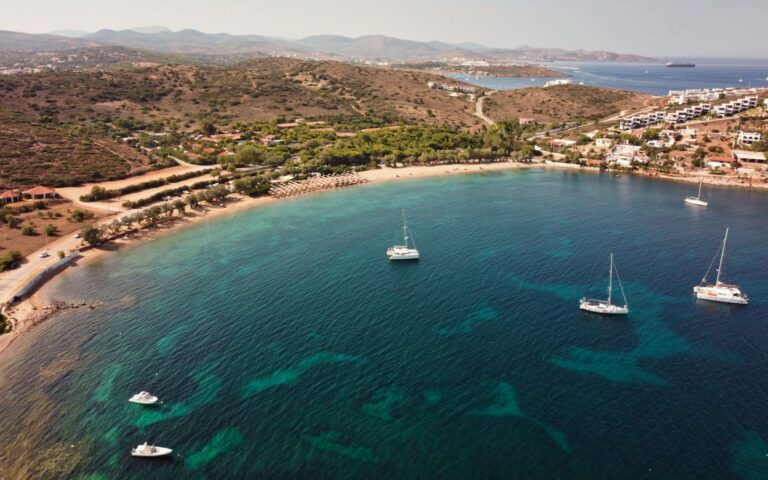
This beach sits conveniently between two others. Erotospilia Beach Porto Rafti Attica Greece, the small rocky cove with its own love-cave legend, sits a short distance south, while Avlaki EOT Beach Markopoulo Porto Rafti Attica Greece, the larger, ticketed, fully organised Blue Flag beach, sits further along the coast. I found myself treating Agios Spiridonas as the natural middle ground between the two — freer and less developed than Avlaki, but with a bit more passing infrastructure than Erotospilia offers.
Agios Spiridonas sits across the bay from the Raftis statue that gave Porto Rafti its name — mistaken by 18th-century travellers for a tailor, the subject of an older legend about two lovers turned to marble, and identified by modern archaeology as a genuine 2nd-century Roman goddess. The beach itself is golden sand with a rocky seabed best approached in water shoes, mostly free and unorganised, with a kiosk and a fish taverna nearby. Despite some listings claiming otherwise, there’s no lifeguard or dedicated accessibility facility here. Thirty-five to forty kilometres from Athens, with one of the most convenient bus stops of any beach I’ve covered in this series.
Drive into Porto Rafti and follow the coastal road north. Bring water shoes for the rocky seabed. Walk a little further to Avlaki if you want the fully organised version, or to Erotospilia if you want something smaller and rockier still.
Map
Sorry, no records were found. Please adjust your search criteria and try again.
Sorry, unable to load the Maps API.
Near by places: