Vromopousi: "Dirty Well," Politely Renamed "Good Well"
Profile
Vromopousi, Keratea: Literally “Dirty Well,” Now Politely Called “Good Well” Instead
Greece | Kalopigado | Keratea, East Attica
I want to get the name story right, because I found it more specific and more interesting than the vague “peculiar traditional name” framing some descriptions give it. Vromopousi comes from an old Arvanite dialect term — pousi meaning well, borrowed originally from Albanian — and the full name translates plainly as Dirty Well. At some point, locals softened it to Kalopigado, Good Well, and that’s the name you’ll hear used far more often now, even though the older, blunter name hasn’t entirely disappeared either. I asked someone locally why the well was ever called dirty in the first place and got a shrug rather than an answer, so I’ll leave that part unresolved rather than inventing an explanation.
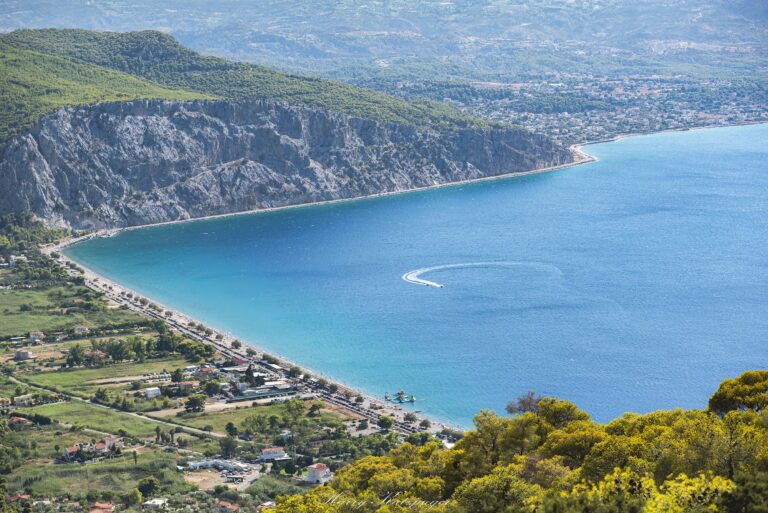
The beach itself sits specifically between the villages of Kalopigado and Spiliazeza, close to a small working port, and I’d treat the two names — Vromopousi and Kalopigado — as referring to the same general stretch of coast rather than two separate places, even though I’ve seen them used slightly differently depending on which exact bit of sand someone means.
Getting There: Around 55 to 60 Kilometres From Athens, via Keratea
I drove the Attiki Odos toward Markopoulo, then continued on Lavrio Avenue through the town of Keratea, watching for signs pointing down toward the coast for either Kalopigado or Vromopousi — both names appear on signage, which I found mildly amusing given how differently they translate. The descent from Keratea down toward the sea offers genuinely good views the whole way, and the full drive from central Athens took me close to an hour.
Parking is informal but plentiful, in open spaces behind the beach and along the coastal road, and I never had trouble finding a spot even on a weekend, which several other beaches on this same stretch of coast couldn’t say for themselves. The KTEL Attikis bus toward Lavrio stops at the Keratea junction, with a short taxi covering the remaining distance to the shore.
The Beach: Sand and Small Pebbles, Genuinely Shaded, Partly Organised
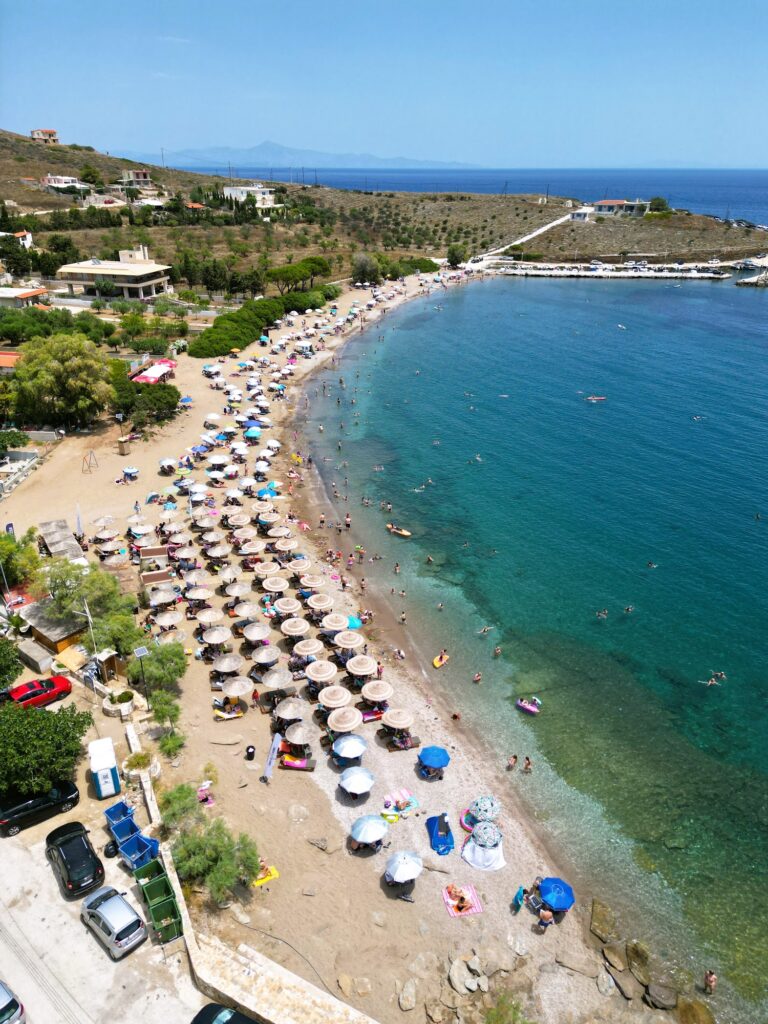
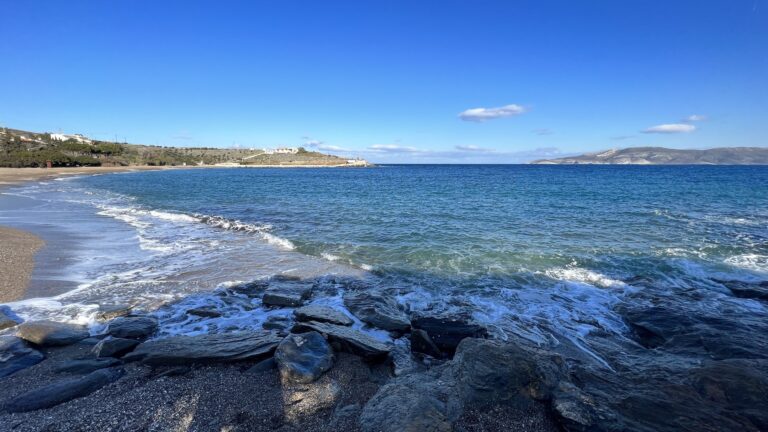
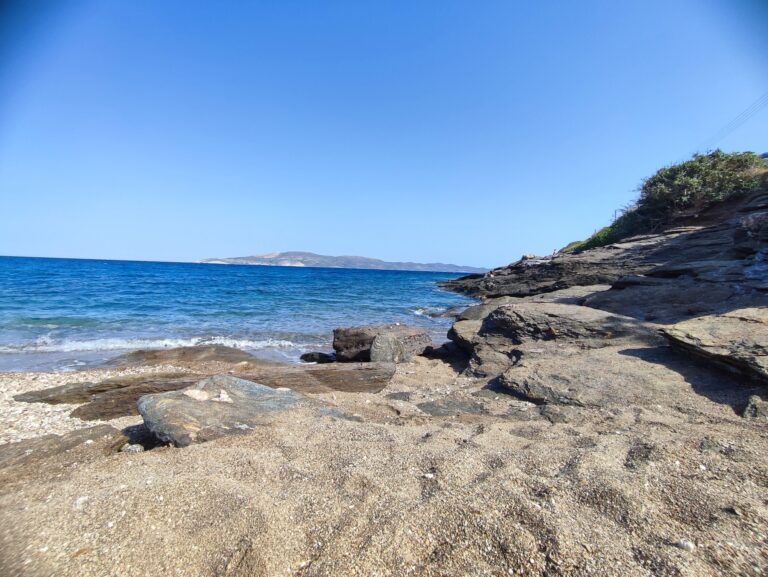
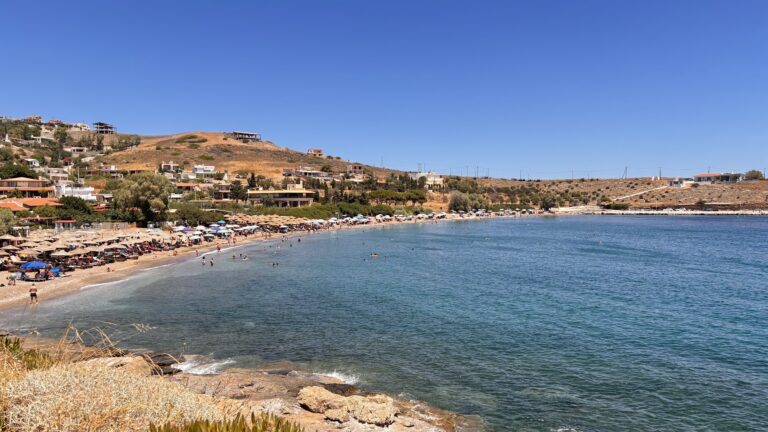
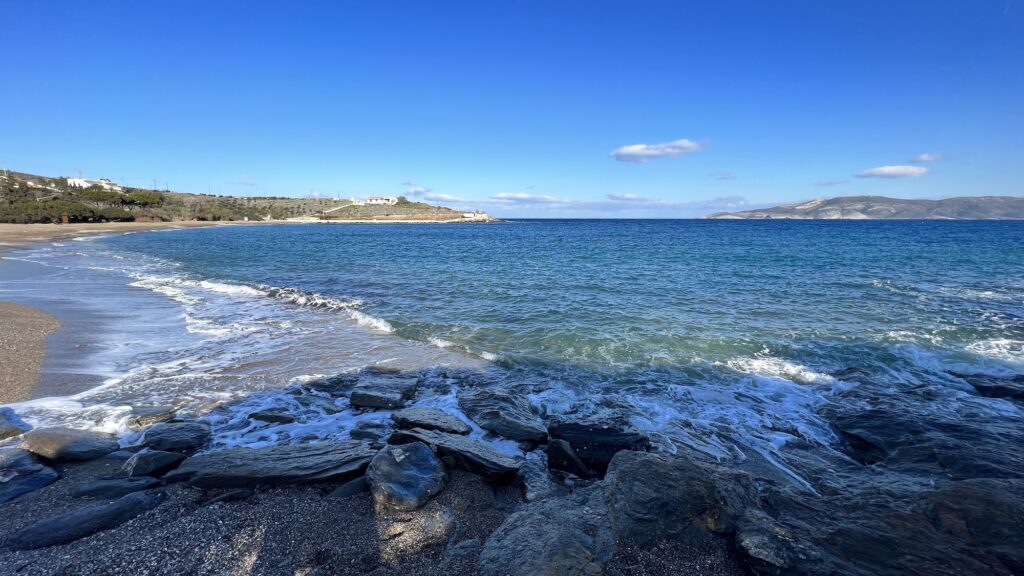
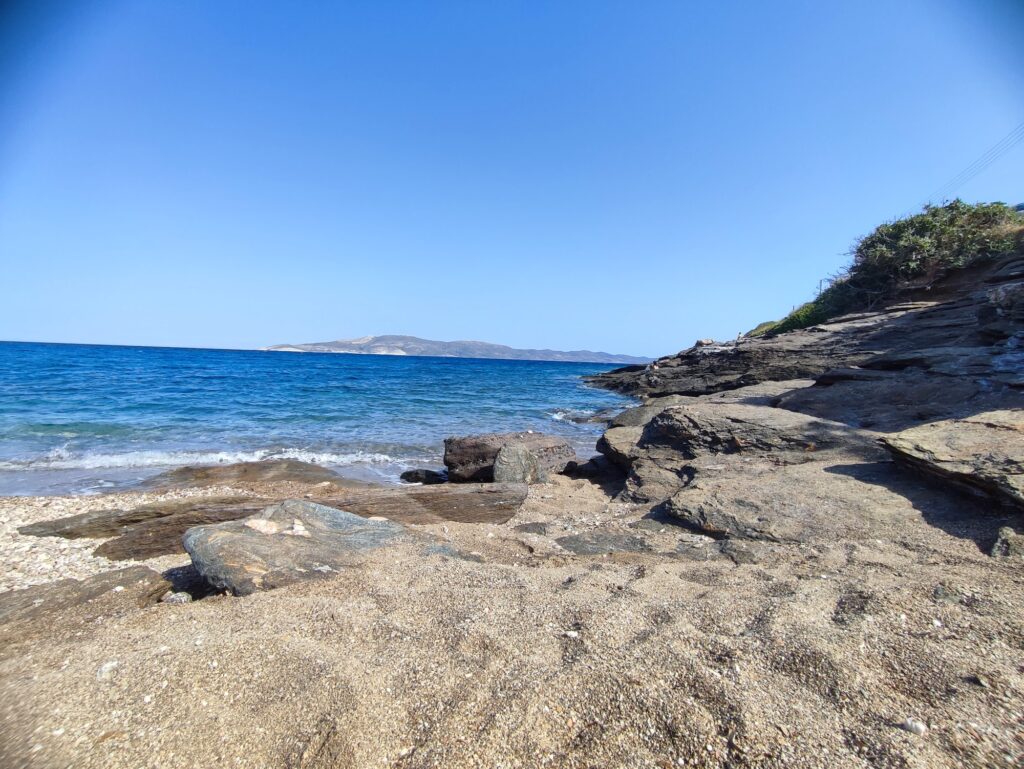
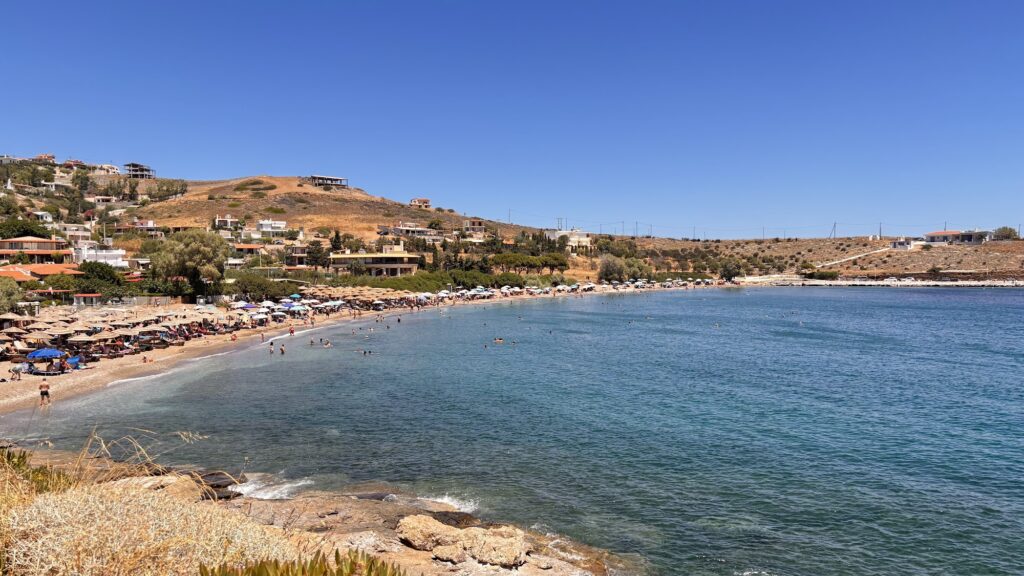
The shore mixes sand with small pebbles and a touch of seaweed close to the water’s edge, the sea itself staying calm and clear thanks to the rocky headlands sheltering the bay. Tamarisk trees line much of the beach, and I found genuine, useful shade here without needing to rent an umbrella — a detail several accounts specifically praise, and one I’d agree with after spending an afternoon under one of the larger trees rather than fighting for a spot closer to the water.
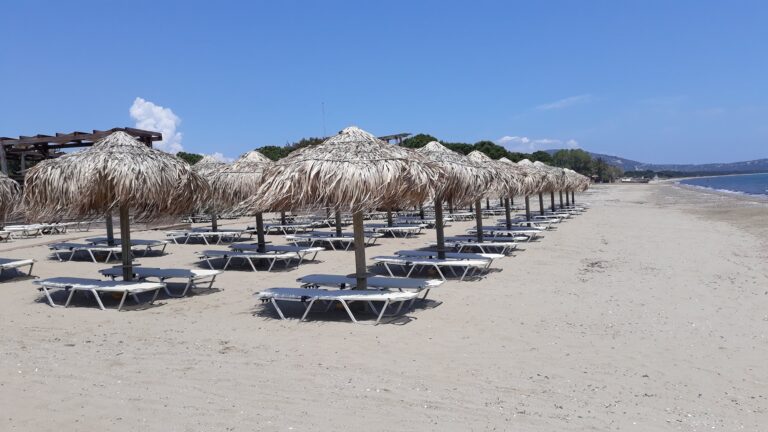
Most of the beach remains free, with a more organised section on one side offering sunbeds and straw umbrellas in front of a beachside bar, and a small playground for younger children nearby. A taverna and a beach bar both operate on site, and the view back toward the small port of Kalopigado after sunset is worth staying for if you’re not in a hurry to leave.
I want to pass along one practical complaint I found repeated, because it’s worth knowing in advance: there’s no trash bin on this beach. I carried my own rubbish back to the car rather than leaving it, and I’d recommend doing the same — the beach stays as clean as it does specifically because most visitors take this seriously rather than because anyone’s collecting after them.
Crowds: Quiet on Weekdays, Genuinely Busy on Weekends
More than one account, and my own visit, agree on this: Vromopousi gets properly crowded on Saturdays and Sundays through summer, enough that I’d specifically recommend arriving early or choosing a weekday if a quieter beach day matters to you. On a weekday morning, I had a genuinely easy time finding shade and space; returning on a Sunday afternoon out of curiosity, I found the whole beach considerably fuller and the parking noticeably tighter.
Vromopousi, between the villages of Kalopigado and Spiliazeza near Keratea, takes its name from an Arvanite dialect word for well — the original Dirty Well, softened over time to the more commonly used Kalopigado, Good Well. The beach itself is sand and small pebble, genuinely shaded by tamarisk trees, partly organised with a beachside bar and taverna, and free of charge throughout most of its length. There’s no trash bin, so carry your rubbish out. Genuinely quiet on weekdays, properly crowded on summer weekends. Around 55 to 60 kilometres from Athens via Keratea.
Drive via Keratea, following signs for either name. Bring shade umbrellas only if you don’t want to rely on the tamarisk trees. Visit on a weekday morning if you want the quiet version of this beach rather than the crowded one.
Map
Sorry, no records were found. Please adjust your search criteria and try again.
Sorry, unable to load the Maps API.
Near by places: