Kaki Vigla, Salamis: The Bad Watchtower Mystery
Profile
Kaki Vigla, Salamis: A Village Called “Bad Watchtower,” Though Nobody Is Entirely Sure Why
Greece | Kaki Vigla | Salamis, Saronic Gulf
Kaki Vigla translates as Bad Watchtower, or in some renderings Bad View, and I went looking for the ruined fortification that would obviously explain a name like that. There isn’t one here. Kaki Vigla the village, near Aianteio on Salamis’s southern coast, was only founded in 1960, and no tower or watchtower ruins exist in its immediate vicinity at all. A genuine Frankish tower carrying a related name does exist elsewhere on the island, roughly at its centre — a 13th- or 14th-century structure, modest in scale, more likely the residence of a local landlord than a primarily defensive fortification, its entrance originally reached by a wooden ladder to the first floor for safety. Even the specialist archive cataloguing this tower admits the connection is uncertain, speculating only that this central tower might have been “the original bad vigla” the newer coastal village eventually borrowed its name from. I find this kind of unresolved etymology more honest than a confident folk explanation invented after the fact, and I’d rather pass along the genuine uncertainty than make up a tidier story.
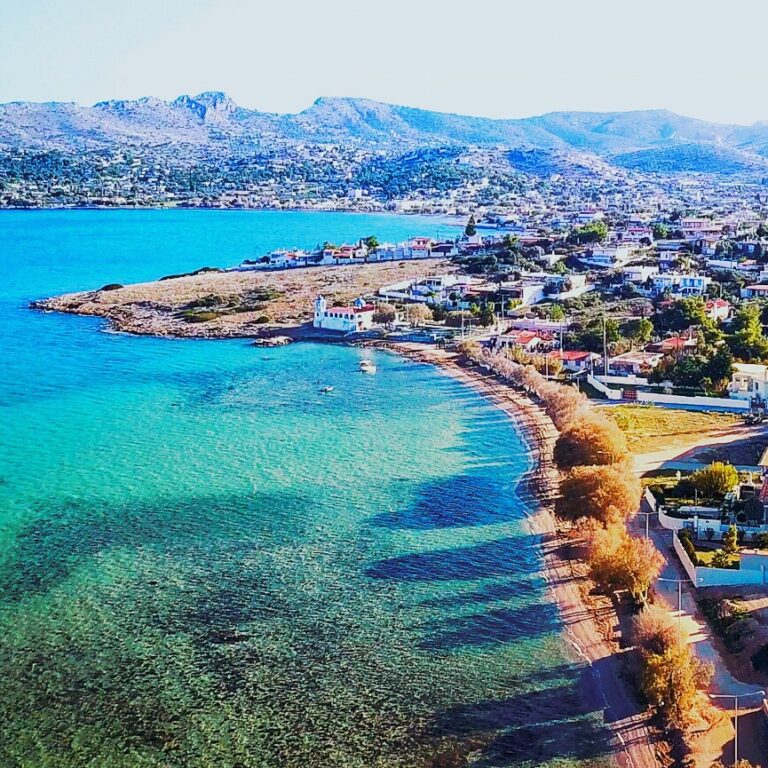
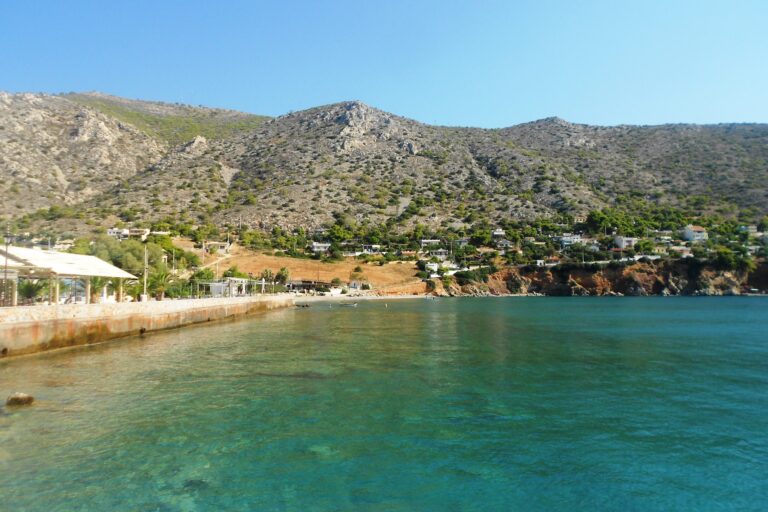
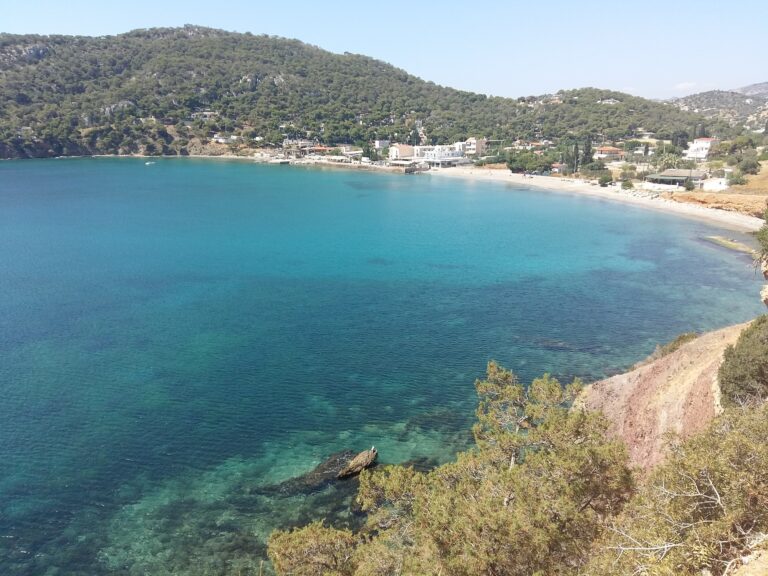
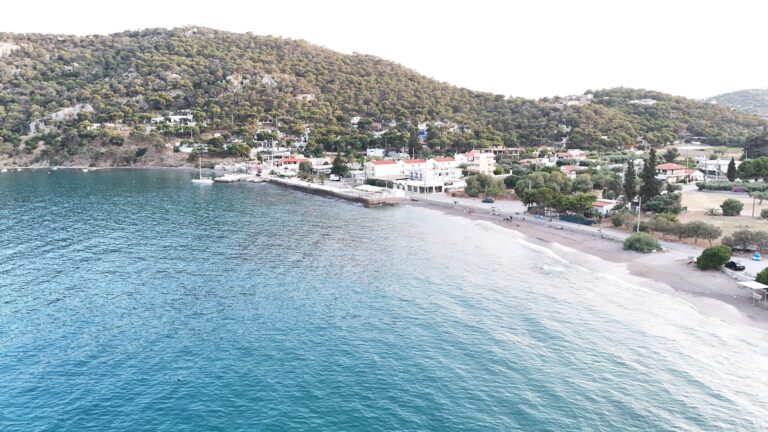
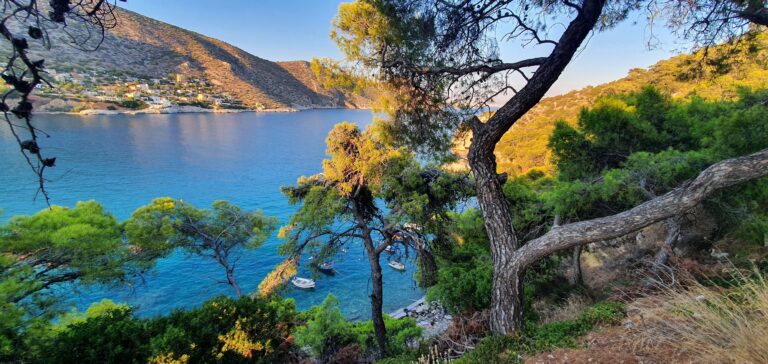
Whatever the reason for the name, the beach itself has a consistently good reputation among the various accounts I found, several specifically describing Kaki Vigla alongside Faneromeni, Saterli, Selinia, Kanakia, and Peristeria as among the best and cleanest beaches on Salamis’s southern coast — less developed than the busier northern beaches, and genuinely quieter as a result. Pine and olive trees grow close to the shore, and at least one older guide specifically recommends the stretch between Agios Nikolaos and Kaki Vigla for camping.
Getting There: Via Perama-Paloukia, Then a Drive Toward Aianteio
The standard route uses the Perama-Paloukia ferry, the same fifteen-minute, round-the-clock crossing I’ve described reaching Kanakia Beach Salamis Greece, Aias Club Beach Maroudi Salamis Greece, and NATO Beach Aianteio Salamis Greece. From Paloukia, the drive south toward Aianteio and on to Kaki Vigla covers the remaining distance, the total journey from central Athens running 60 to 90 minutes depending on traffic and exactly which route is taken.
Local buses, including Line 7, connect Paloukia port to the southern settlements, with a Kaki Vigla stop putting the beach within a short walk of the road. As with most of Salamis’s southern coast, I’d treat a car or a reliable taxi as the more practical default given how spread out the bus network can leave visitors relative to actual departure frequency.
The Beach: Fine Gravel and Coarse Sand, a Gradual Slope, Pine and Olive Trees
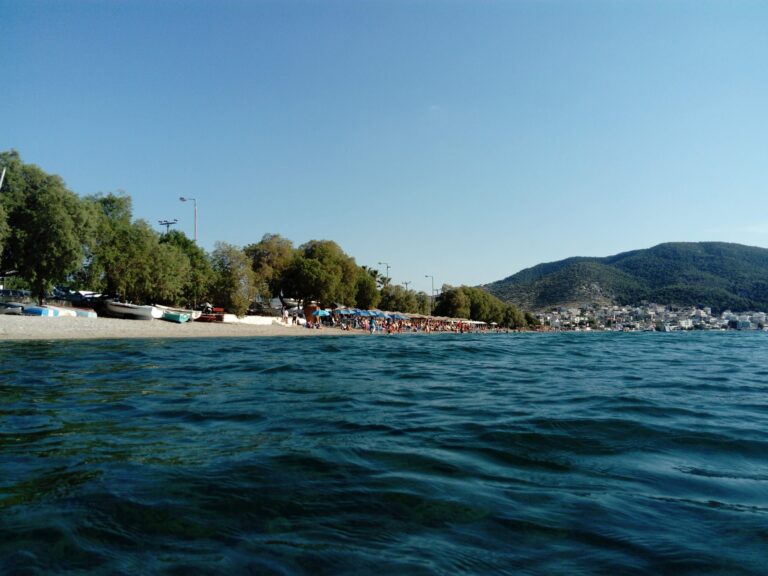
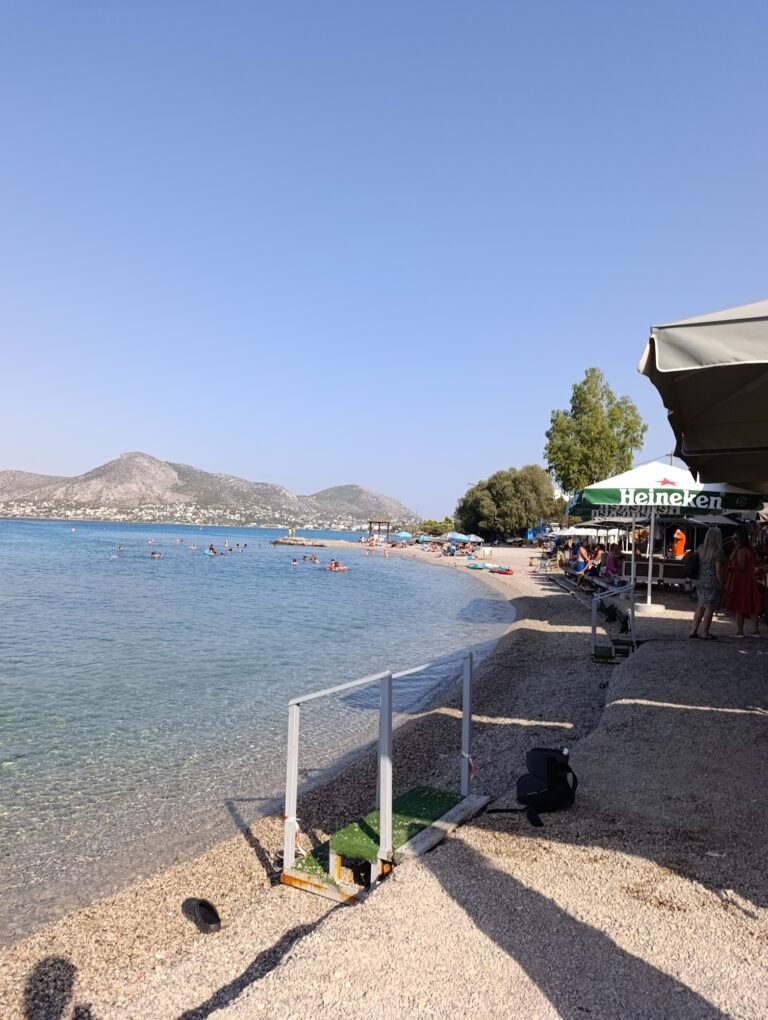
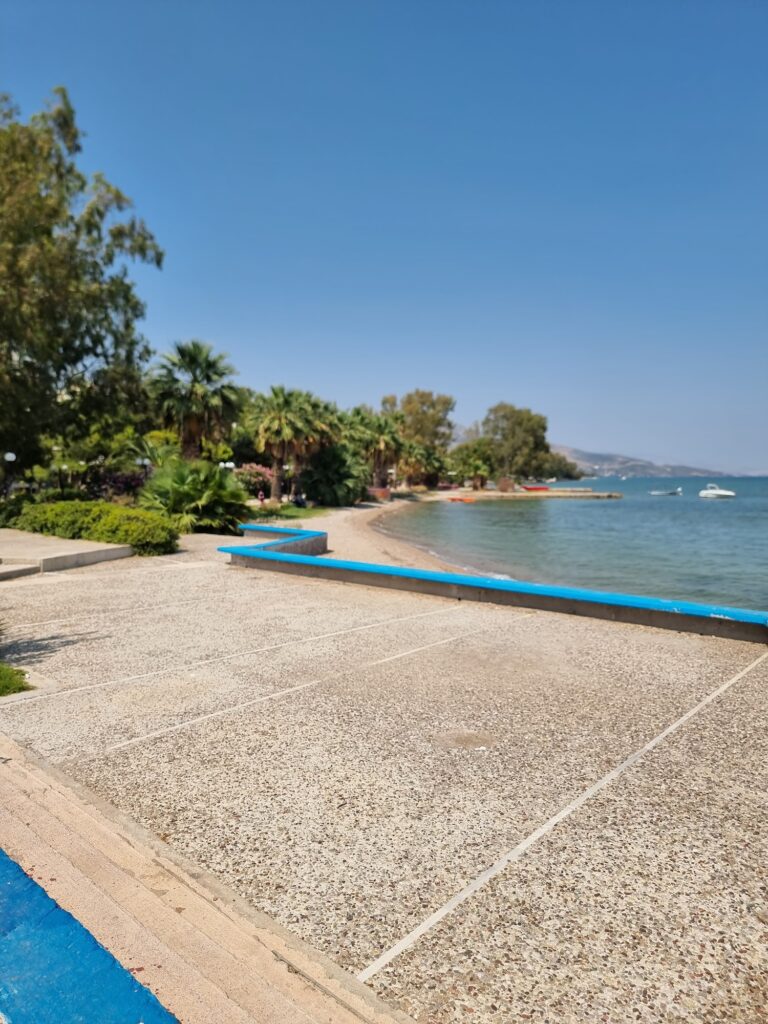
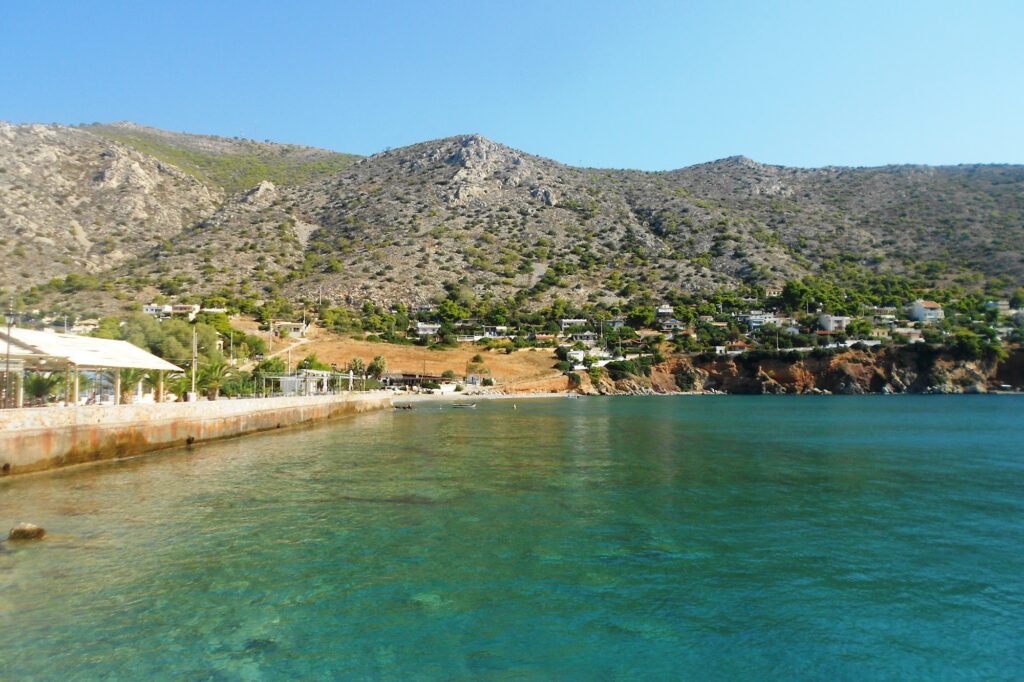
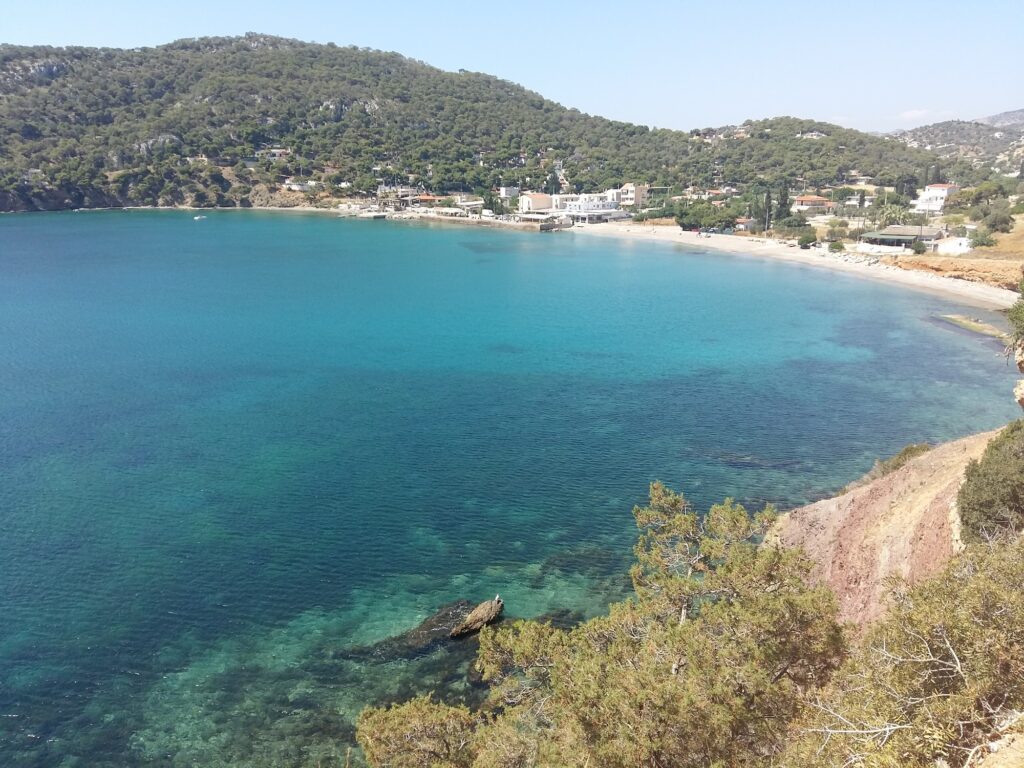
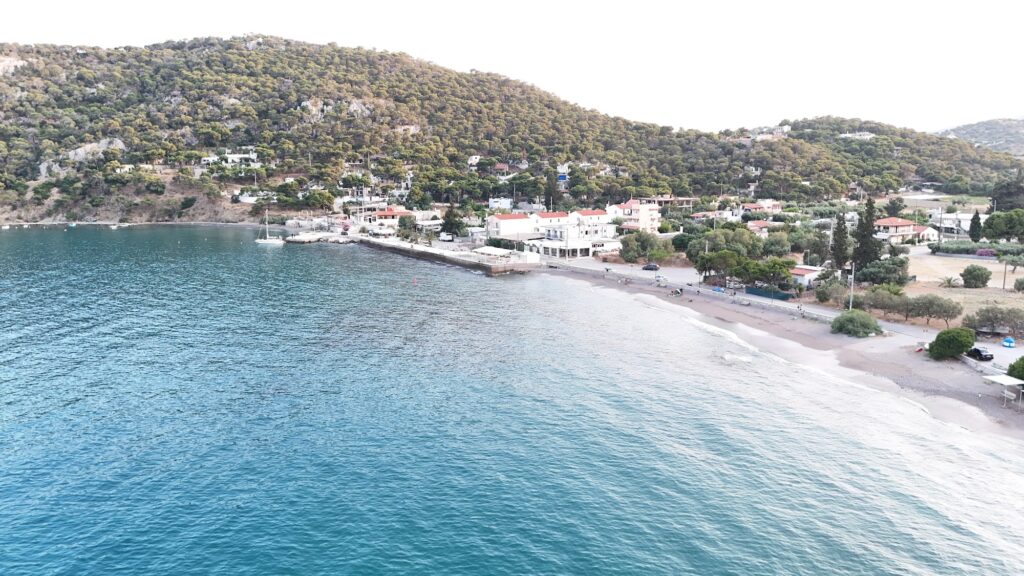
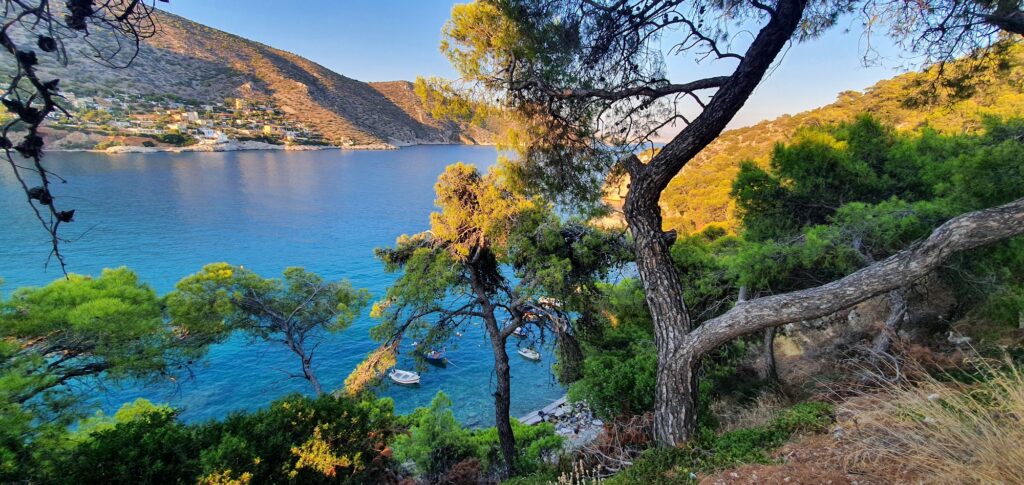
The shore mixes fine gravel with coarse sand, the seabed sloping gently enough to suit families without difficulty, the water staying calm in a bay sheltered by the surrounding hills. Pine and olive trees fringe the coast, providing genuine natural shade alongside whatever organised sunbeds and umbrellas operate in season. The settlement itself carries shops, mini-markets, and cafés within walking distance, along with traditional tavernas — one older account specifically recommends a particular restaurant, Notis, for good food and stout retsina, a small, specific recommendation that has outlasted whatever else has changed about the village since it was written.
Kaki Vigla, near Aianteio on Salamis’s southern coast, carries a name meaning Bad Watchtower despite having no ruined tower of its own — the connection to a separate Frankish tower elsewhere on the island remains genuinely unclear even to the specialists who study it. The village itself, founded only in 1960, sits among some of the cleanest and least developed beaches on Salamis, fine gravel and coarse sand, pine and olive trees, organised tavernas and shops within walking distance. Reachable via the Perama-Paloukia ferry and a drive toward Aianteio, roughly 60 to 90 minutes from central Athens.
Take the ferry from Perama. Drive or take Line 7 toward Aianteio. Ask locally about the name’s actual origin — I found genuine uncertainty rather than a settled answer.
Map
Sorry, no records were found. Please adjust your search criteria and try again.
Sorry, unable to load the Maps API.
Near by places: