Kanakia Beach Salamis: A Mycenaean Palace Above
Profile
Kanakia Beach, Salamis: A Mycenaean Palace Stands on the Hill Above the Sand
Greece | Salamis | Saronic Gulf
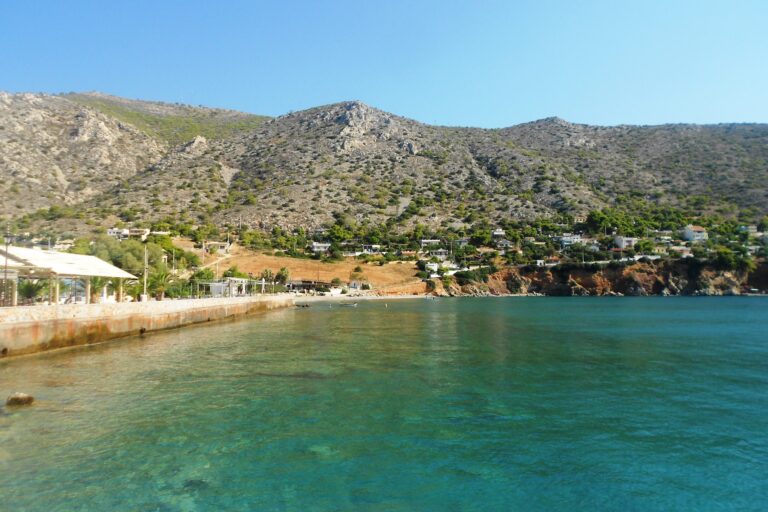
Above Kanakia beach, on the hill that rises directly behind the sand, archaeologists have confirmed a genuine Mycenaean acropolis and palace complex dating to the 13th century BC — fortifications and settlement structures significant enough to mark the site as a major regional centre tied to the wider Mycenaean palace economy, the same civilisation that produced the legends later recorded in Homer. The site remains under active study: a 2025 international workshop brought volunteers and locals together specifically to improve hiking access to the acropolis while working toward its sustainable long-term management, a sign that this is a living archaeological project rather than a static, fenced-off ruin.
A short distance along the forest path toward the beach, a 2,500-year-old olive tree still stands, old enough, by one account I found genuinely moving, that Euripides himself may have walked past it — the tragedian is traditionally said to have been born on Salamis, and a cave on the island’s southern coast still carries his name. Further into the same pine forest, the Monastery of Agios Nikolaos, also called Lemonion, served as a place of refuge and hospitality during the 1821 Greek War of Independence and through the wider period of Ottoman rule, its presence in this remote stretch of forest a deliberate choice given how difficult the area was to reach for anyone not already familiar with it.
I should mention one small, almost comic detail about the wider area, since it explains a name visitors will encounter on signs without context: nearby, an area is locally called NATO — not in reference to the military alliance, but from the Greek exclamation na to, meaning “there it is,” a phrase that apparently stuck as a place name through ordinary repetition rather than any deliberate naming decision.
Getting There: A 10-to-15-Minute Ferry, Then a Drive Through Pine Forest
The most direct route to Salamis uses the small car ferry between Perama, a suburb of Piraeus, and Paloukia on the island, a crossing of roughly ten to fifteen minutes that runs every fifteen to twenty minutes around the clock — genuinely the only Greek island, by most accounts, where checking a ferry schedule in advance is largely unnecessary. From Paloukia, the drive south toward Aianteio and then on through dense pine forest to Kanakia takes the bulk of the remaining journey, the total time from central Athens running close to ninety minutes including the crossing.
Salamis is heavily car-dependent for reaching its southern and western beaches, and I would not plan on walking or relying on irregular local transport to get to Kanakia specifically — a car or a reliable taxi arrangement is genuinely necessary. Free parking exists in the open ground behind the tree line at the beach itself.
The Beach: Pebble and Coarse Sand, Pine Shade to the Water’s Edge, Partly Organised
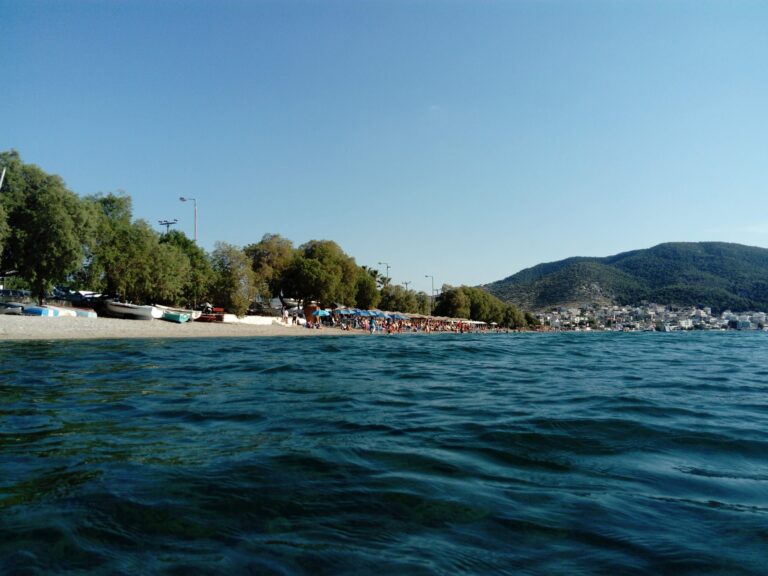
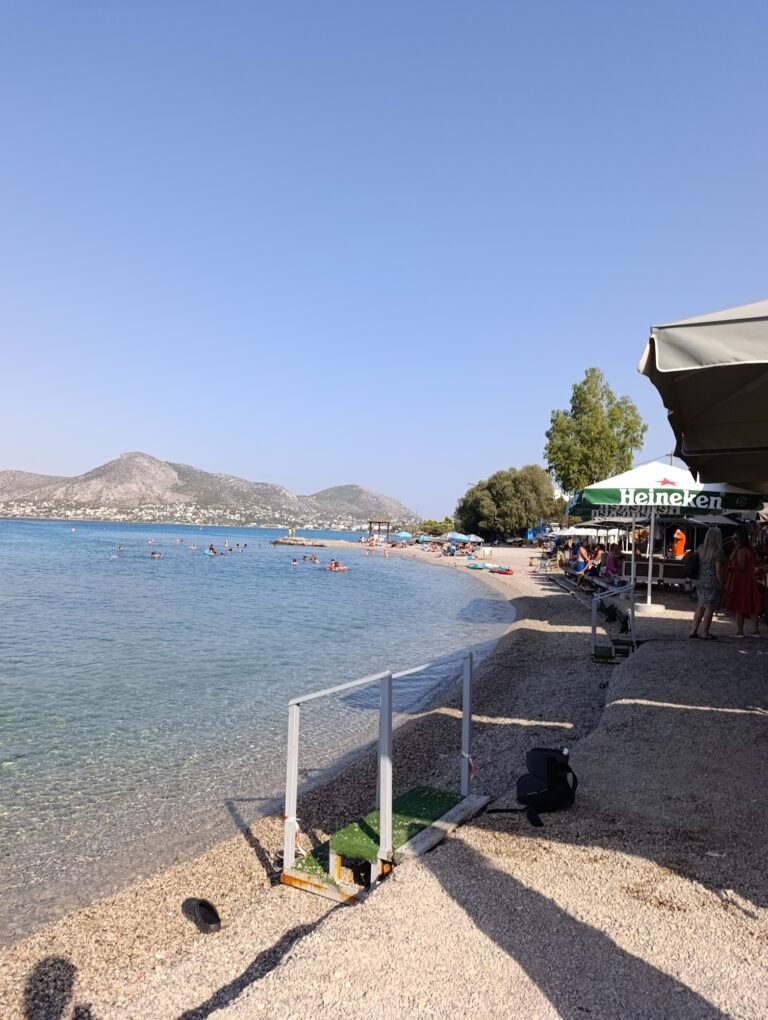
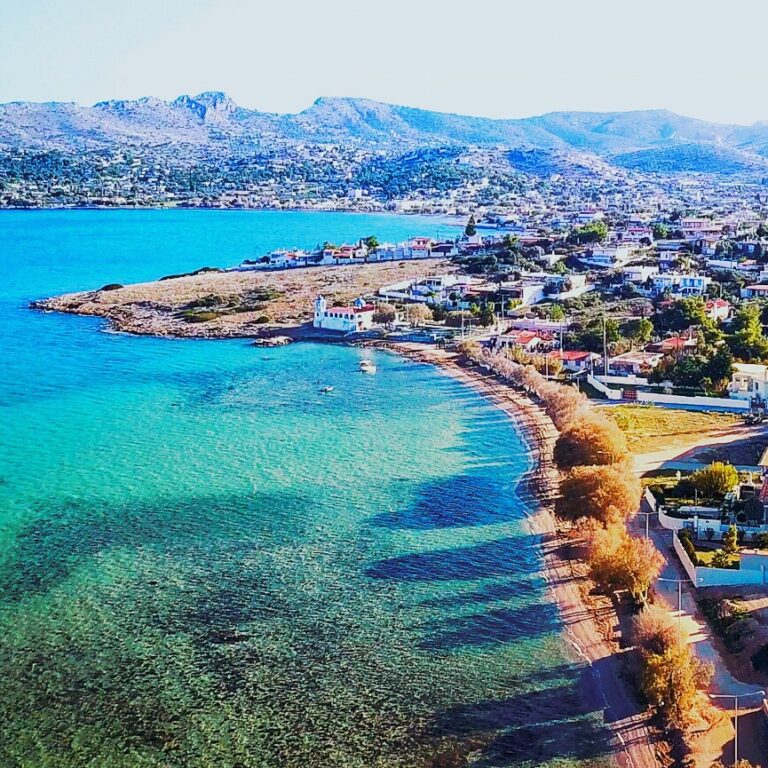
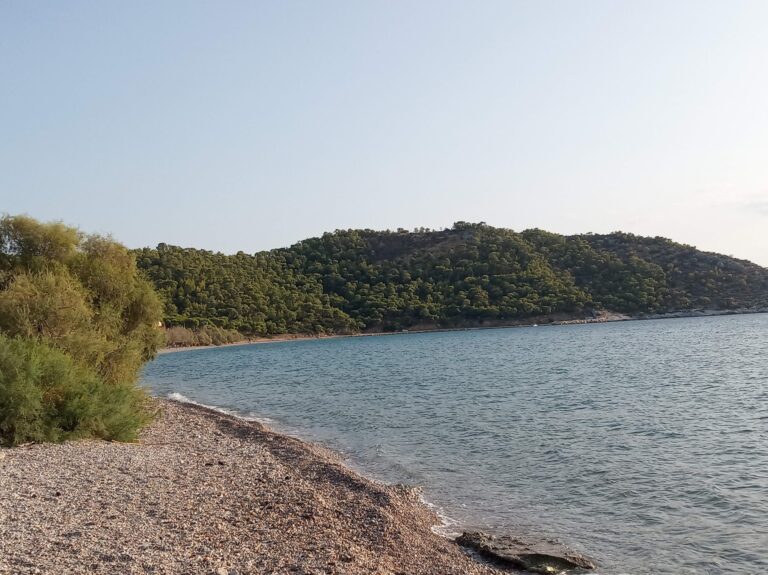
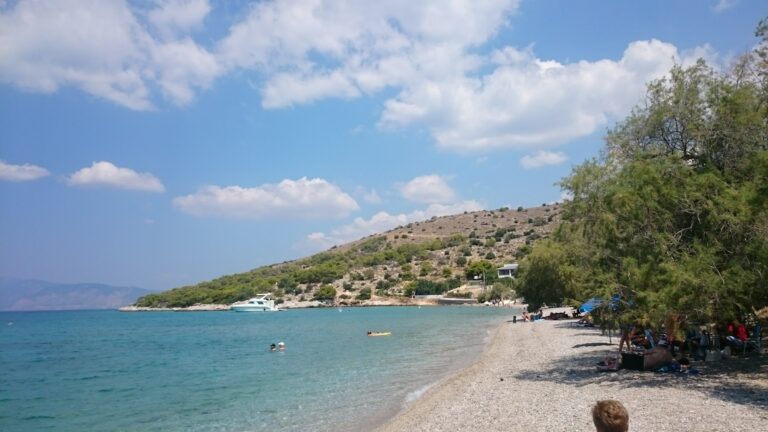
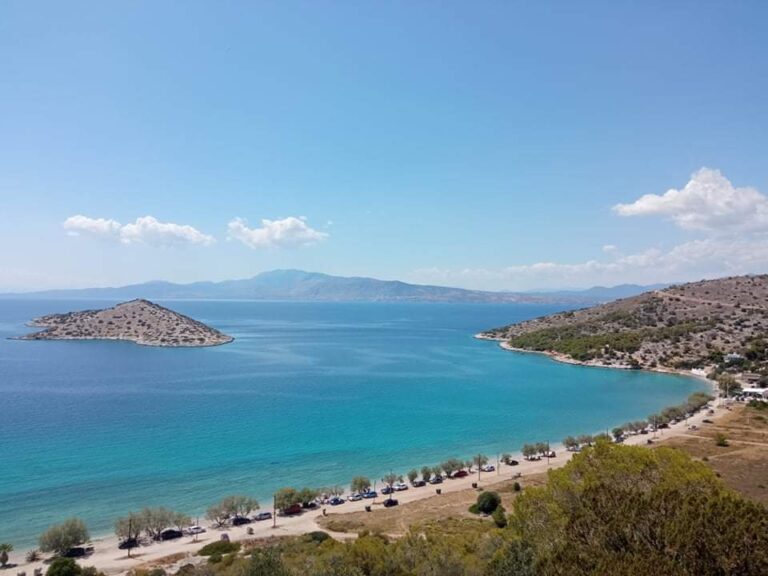
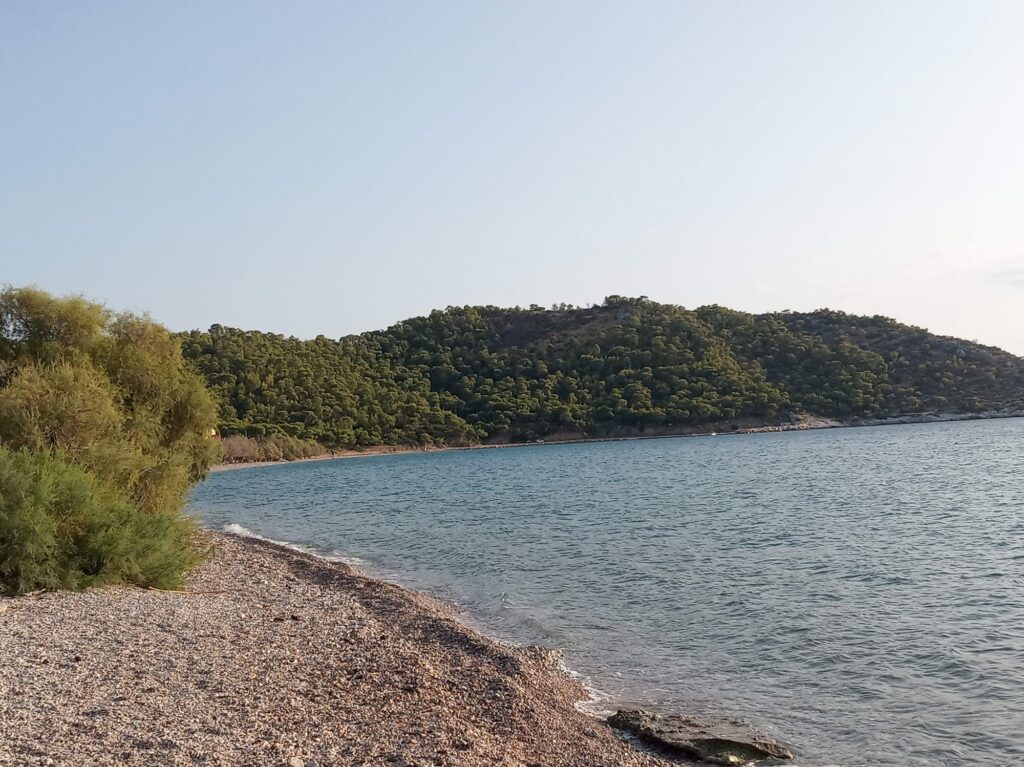
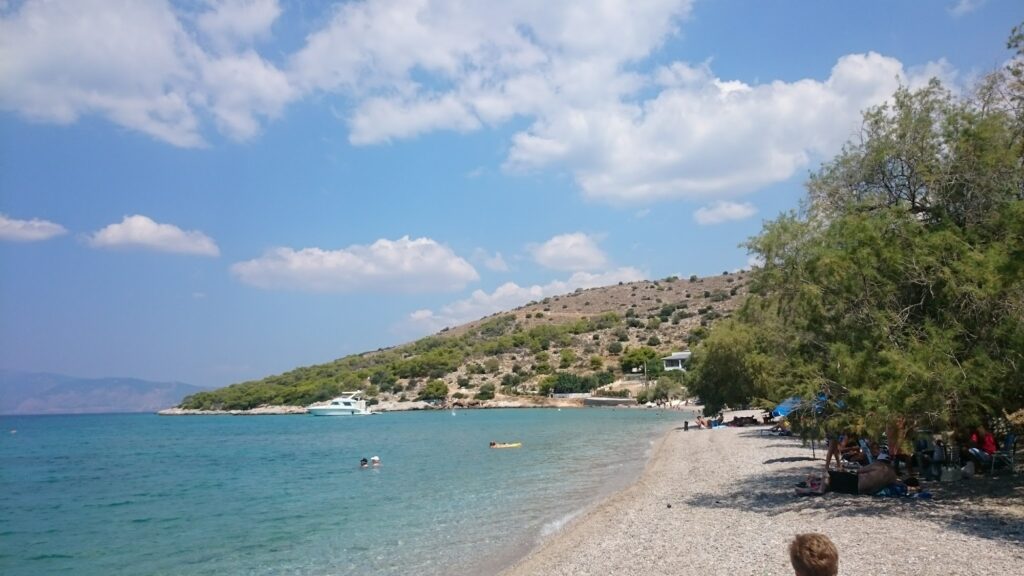
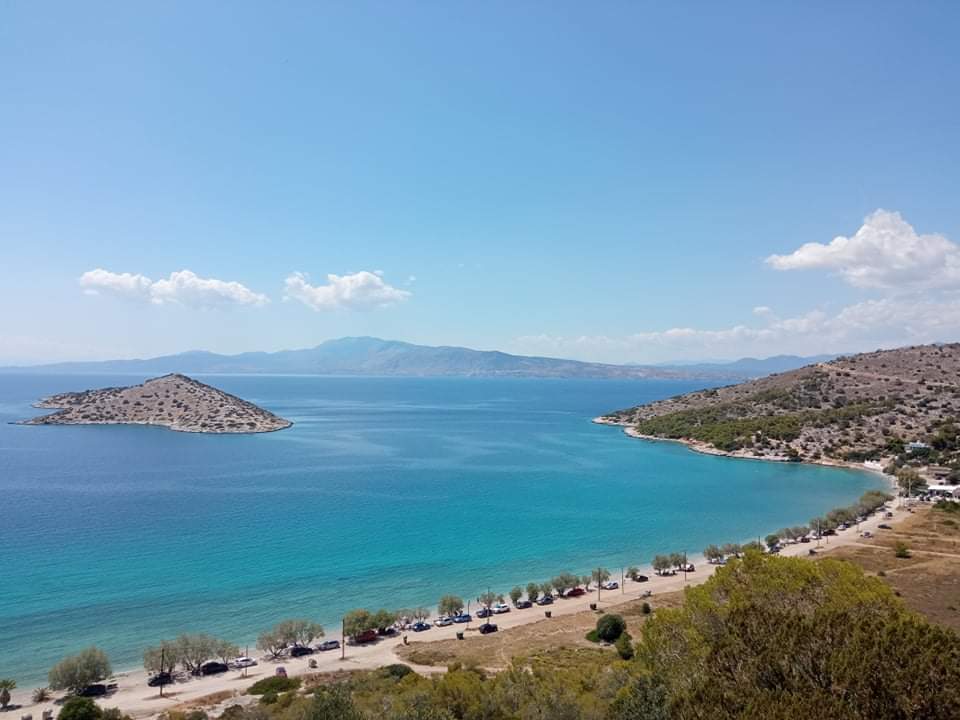
The shore at Kanakia is small, clean pebbles mixed with coarse sand, the water calm and clear, sheltered by the surrounding mountains and the small offshore islet that shares the beach’s name. Massive pine trees grow almost to the waterline, providing the kind of natural shade that’s genuinely rare on more exposed Greek beaches, and the bay looks out toward Aegina across the water. A small bar operates during summer with a modest number of sunbeds, though the beach retains a quiet, distinctly local character rather than the commercial intensity found at busier Saronic destinations — weekend visitors here are largely Athenians and islanders themselves rather than international tourists.
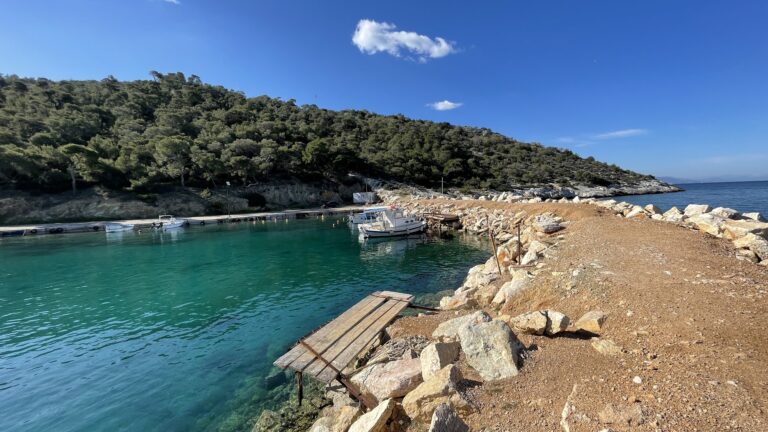
The surrounding forest carries marked trails for hiking and mountain biking, and the rocky edges of the cove reward casual snorkelling. One visitor account I came across mentioned encountering baby jellyfish in the water on a particular visit, apparently stirred up by specific wind conditions — not a constant hazard, but worth checking before committing to a long swim on any given day.
Kanakia Beach, on the southwestern coast of Salamis, sits below a confirmed Mycenaean acropolis and palace complex dating to the 13th century BC, currently the subject of active conservation work. A 2,500-year-old olive tree stands nearby, possibly old enough for Euripides to have seen it himself, and the Monastery of Agios Nikolaos Lemonion in the same pine forest served as a wartime refuge during the 1821 revolution. The beach itself is pebble and coarse sand, shaded by pine trees reaching to the water, partly organised with a small seasonal bar, and consistently quiet and local in character. Reached via the near-constant Perama-Paloukia ferry and a drive through pine forest, roughly ninety minutes from central Athens in total.
Take the ferry from Perama. Drive through the pine forest via Aianteio. Look up at the hill above the beach and picture the Mycenaean palace that once stood there.
Map
Sorry, no records were found. Please adjust your search criteria and try again.
Sorry, unable to load the Maps API.
Near by places: