Freatida Beach Piraeus: 2,400-Year-Old Walls Nearby
Profile
Freatida Beach, Piraeus: Fragments of a 2,400-Year-Old Wall Sit in the Entrances of Ordinary Apartment Buildings
Greece | Piraeus | Peiraiki Peninsula, Attica
A resident who grew up in Piraeus told me, plainly, that people swim at Freatida but that she wouldn’t recommend it herself — a piece of local knowledge I would not have found in any promotional description of the beach, and one I think is worth passing along honestly rather than glossing over. I went anyway, mostly for the history rather than the swim, and found exactly what she’d described: a strange, genuinely beautiful stretch of coast where ancient stone and modern apartment blocks sit closer together than almost anywhere else I’ve walked in Attica.
The stone in question belongs to the Conon Walls, rebuilt in 393 BC after the original Themistoclean fortifications were demolished following Athens’s defeat by Sparta in the Peloponnesian War. Conon, the Athenian general responsible for the reconstruction, also founded the temple of Aphrodite Euploia and the sanctuary of Zeus Sotiros and Athena nearby. What struck me most, walking the coastal road, was finding pieces of this same wall built directly into the entrances of ordinary apartment buildings — fragments of 5th- and 4th-century BC fortification incorporated, seemingly without much ceremony, into 20th-century residential construction. The Hellenic Maritime Museum, a short walk along the coast, takes this further still: its own entrance physically incorporates a surviving section of the Conon wall, founded in 1949 and housed in its current building since 1970, with more than 2,500 exhibits charting Greek maritime history from prehistory to the present across 1,700 square metres.
The Peiraiki peninsula itself, the original ancient name simply meaning Coast, remained barren and rocky until the decades after the Second World War, when the asphalt road connecting Freatida and Pasalimani was finally built. Before that, the coves here sat outside the protection of the ancient walls and were largely unused for shipping, exposed to the southern winds in a way that made them unsuitable harbours even in antiquity.
Getting There: Metro to Piraeus, Then Bus 904, or a Ten-Minute Walk From Pasalimani
I took Metro Line 1 to Piraeus station and continued on Bus 904, which follows the scenic coastal route through Peiraiki, getting off at the Freatida stop directly above the beach. If you’re already at Votsalakia Beach Piraeus Greece, the small cove between Mikrolimano and Marina Zeas, Freatida sits a short distance further along the same coastline, and walking between the two is entirely practical in a single afternoon.
By car, Syngrou Avenue leads toward Piraeus and on to Marina Zeas, with street parking generally available along the Peiraiki coastal road, though I’d arrive before ten on a weekend given how popular the walk along this stretch has become. From Marina Zeas or the Maritime Museum, the walk south to Freatida takes about ten minutes.
The Beach: Pebble and Coarse Sand, a Quick Drop-Off, Ancient Walls Overhead
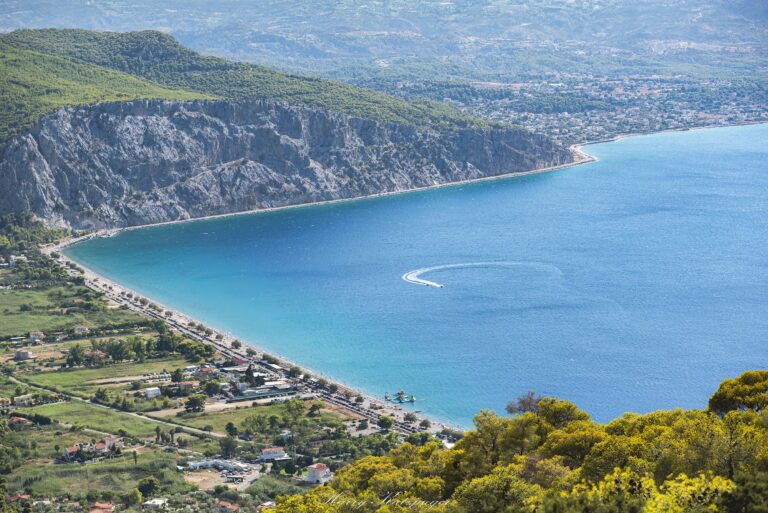
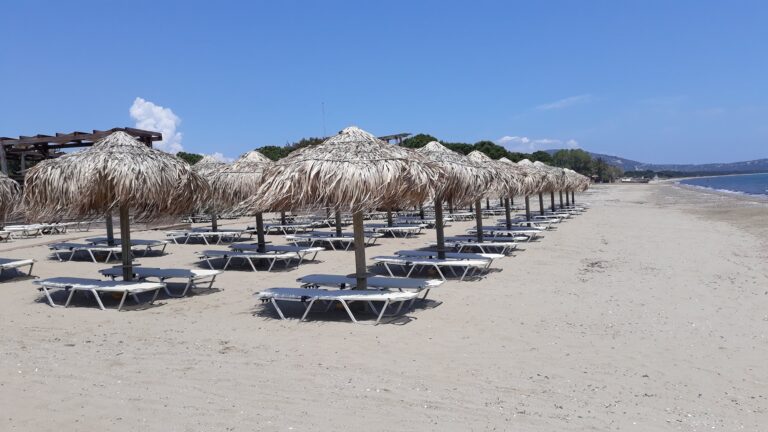
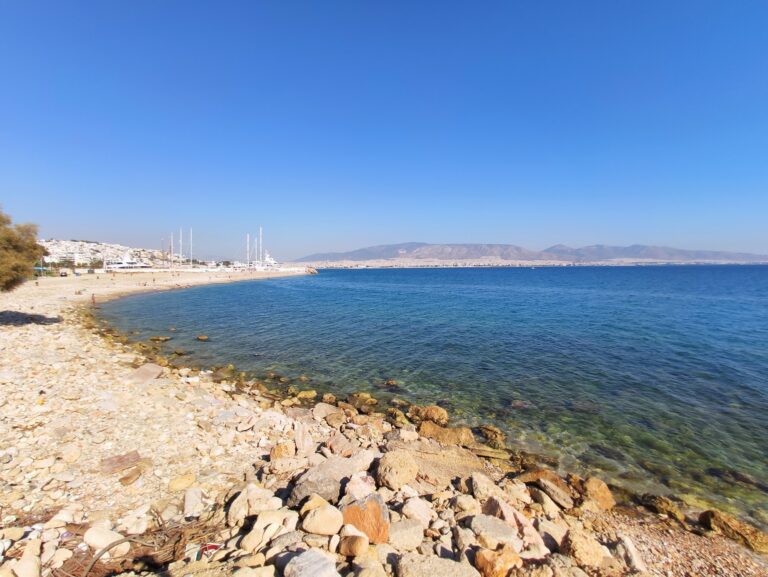
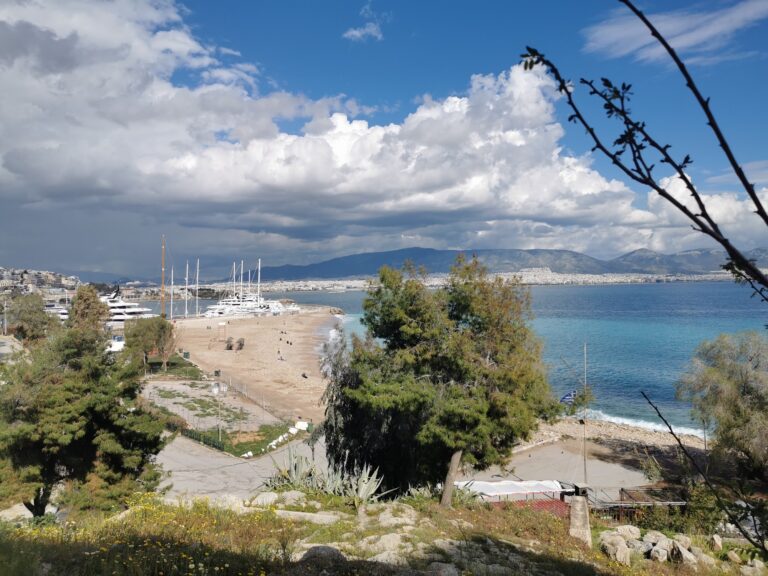
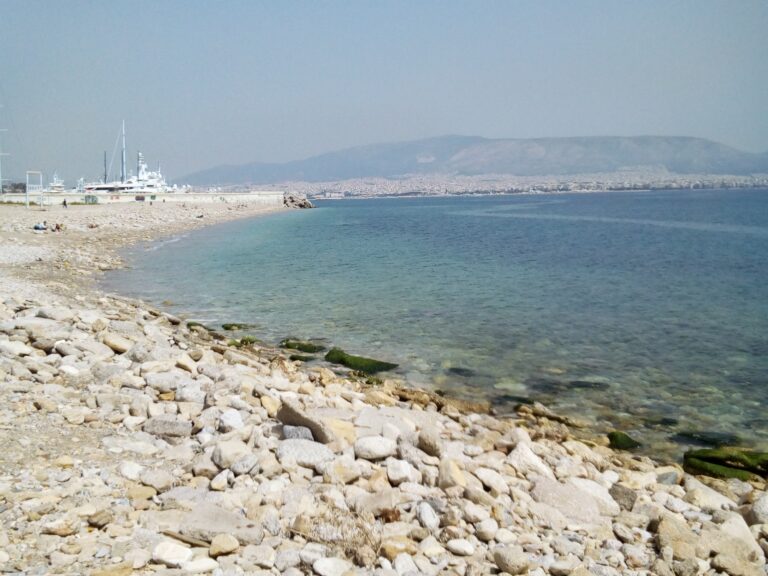
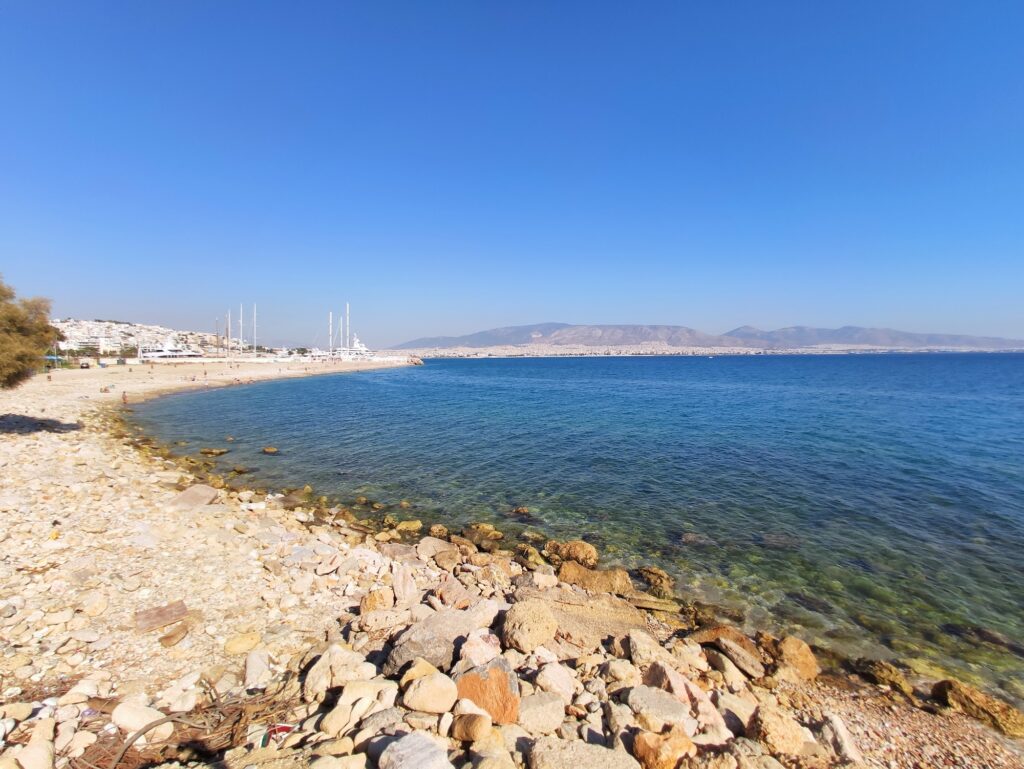
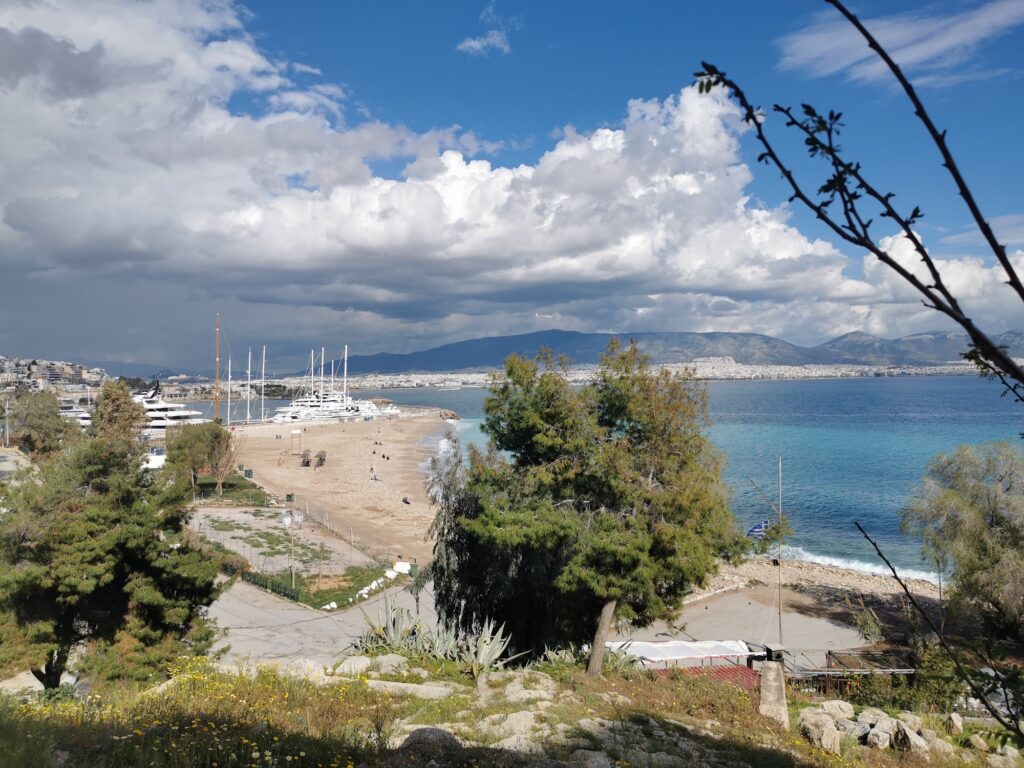
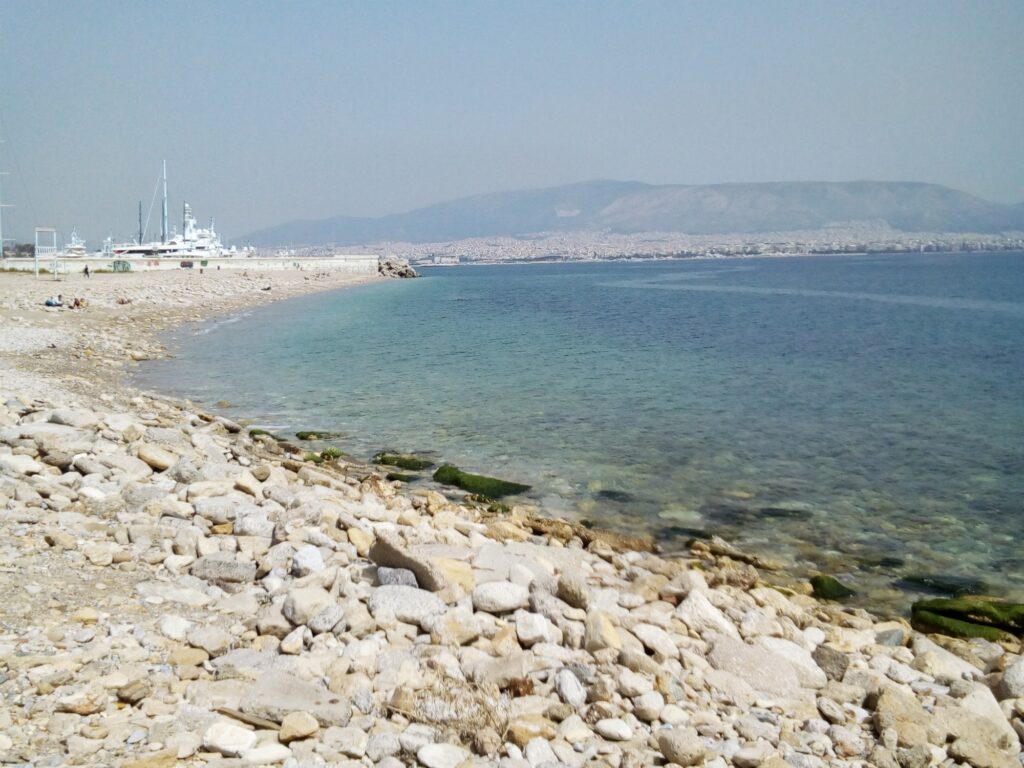
The shore is small pebbles mixed with coarse sand, and the water deepens noticeably faster here than at the gentler suburban beaches further south along the Athens Riviera — part of why I’d treat Freatida as a place to look at rather than necessarily to swim from, in line with the caution I’d been given beforehand. Looking up while in the water, the ancient maritime walls are directly visible from the sea, stones that have stood in roughly this position for close to two and a half thousand years.
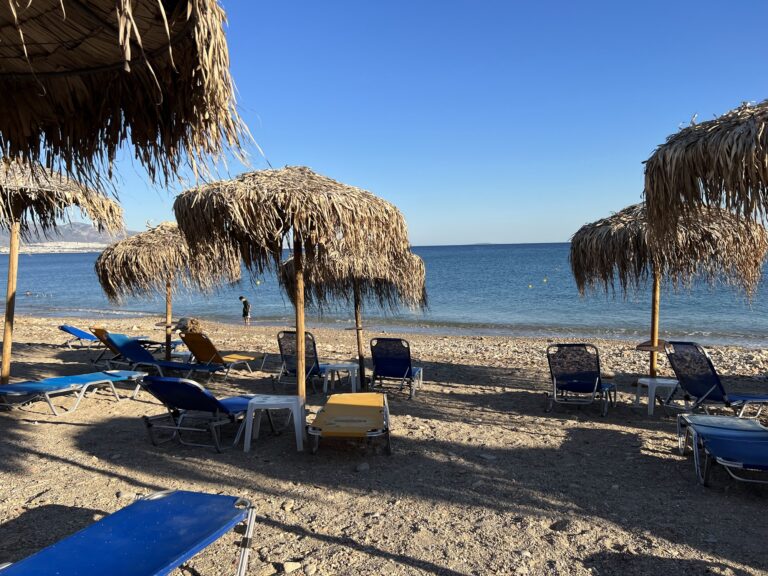
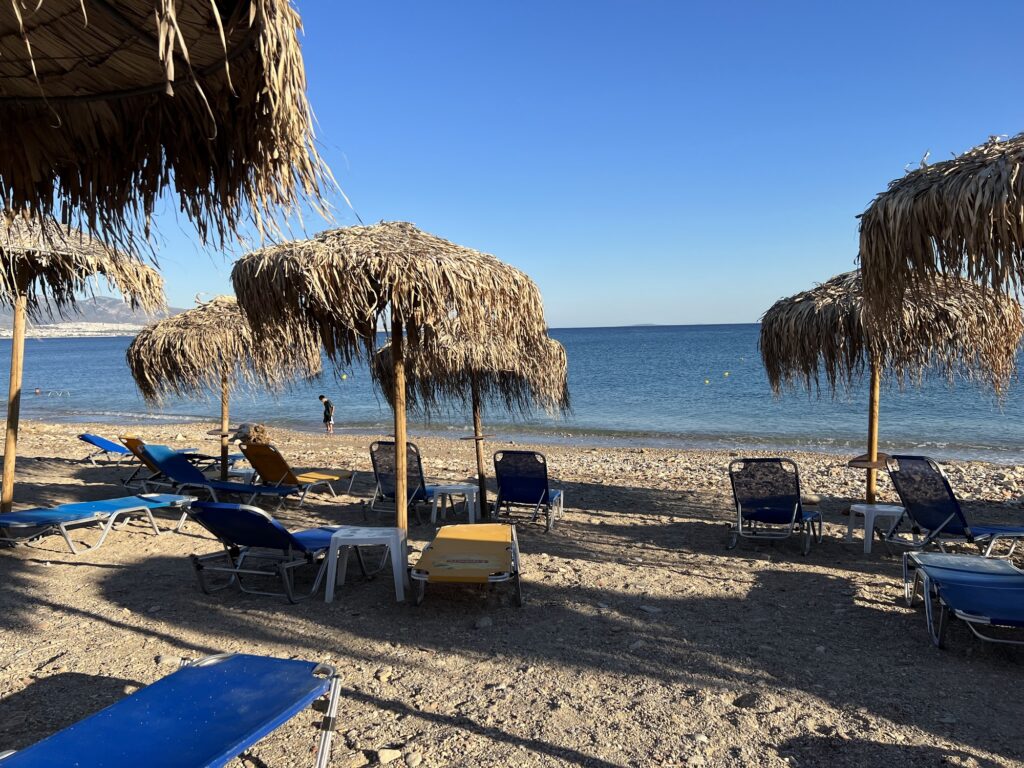
A handful of seaside canteens and fancier bars, including one called Pisina, sit along the coastal road above the beach, serving coffee and drinks with a direct view over the water. Restaurants and ouzeris cluster more thickly toward Marina Zeas, where the yachts moored in the harbour add a different, more polished character to the same stretch of coast.
Freatida Beach in Piraeus sits among fragments of the Conon Walls, rebuilt in 393 BC after Athens’s defeat in the Peloponnesian War, visible both at the entrances of ordinary apartment buildings along the coastal road and incorporated directly into the entrance of the Hellenic Maritime Museum nearby. The beach itself is pebble and coarse sand, the water deepening quickly enough that a long-time local resident specifically told me she wouldn’t recommend swimming here, despite people doing so regularly. Cafés and bars line the coastal road above, with restaurants thickening toward Marina Zeas. Reachable by Metro to Piraeus and Bus 904, or a ten-minute walk from Pasalimani, close to Votsalakia.
Take the metro and bus, or walk from Pasalimani. Look for the wall fragments at the apartment entrances along the way. Treat the water as a place to look from more than necessarily to swim in.
Map
Sorry, no records were found. Please adjust your search criteria and try again.
Sorry, unable to load the Maps API.
Near by places: