Agia Marina Aegina: A Temple Older Than the Parthenon
Profile
Agia Marina, Aegina: A Temple Older Than the Parthenon Sits Ten Minutes Above the Sand
Greece | Agia Marina | Aegina, Saronic Islands
Ten minutes by road above Agia Marina stands a temple older than the Parthenon, and the two share a more direct connection than simple chronology. The Temple of Aphaia, completed around 500 BC, forms part of a documented “Sacred Triangle” alongside the Parthenon in Athens and the Temple of Poseidon at Sounio — an alignment of three sanctuaries plotted on the map that several sources describe as deliberate, an expression of harmony and proportion the ancient builders apparently intended to be felt across the landscape rather than confined to any single site. On a clear day, the view from the temple’s pine-covered hilltop reaches as far as Athens, Cape Sounio, and even the Peloponnese.
The goddess Aphaia herself was worshipped exclusively at this sanctuary, and the myth behind her name is specific and a little strange. According to the story, she was a nymph from Crete, pursued by King Minos, who threw herself into the sea to escape him. Fishermen caught her in their nets and brought her to Aegina, where one of them tried to claim her for himself; she fled into the sacred grove of Artemis and vanished there entirely, giving her the name Aphaia — the vanished one, or the invisible one. The temple built where she was last seen suggests, somewhat paradoxically, that she became more visible to history precisely by disappearing.
The pedimental sculptures from the temple’s earlier, late-Archaic phase — depicting the exploits of Aeginetan heroes in two separate wars against Troy — were removed and now sit in the Glyptothek in Munich, restored there by the Danish Neoclassical sculptor Bertel Thorvaldsen. That restoration work went on to shape the local character of Neoclassicism in Munich itself, visible in the architecture of Leo von Klenze — a direct line running from a hillside above a Greek beach to the built environment of a Bavarian capital, which I found a genuinely unexpected piece of cultural transmission to trace.
Getting There: A Direct Ferry From Piraeus, or via Aegina Town and a Short Drive
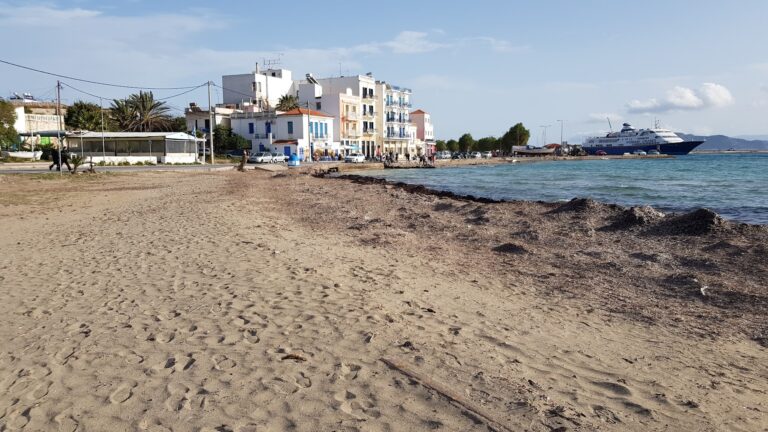
During the high season, a direct ferry runs from Piraeus to the small port of Agia Marina itself, the most convenient route since it deposits passengers within easy walking distance of the sand. Alternatively, ferries and hydrofoils to the main port of Aegina Town run more frequently year-round, from which Agia Marina is roughly a 25-minute drive across the island’s interior, passing the Temple of Aphaia directly along the way — buses and taxis are both readily available at the port for this leg of the journey.
From Agia Marina itself, the temple is no more than a ten-minute drive, and the walk from Aegina Town, for those without transport, takes around an hour through pleasant countryside.
The Beach: Aegina’s Longest Sandy Shore, Shallow and Blue Flag, Fully Organised
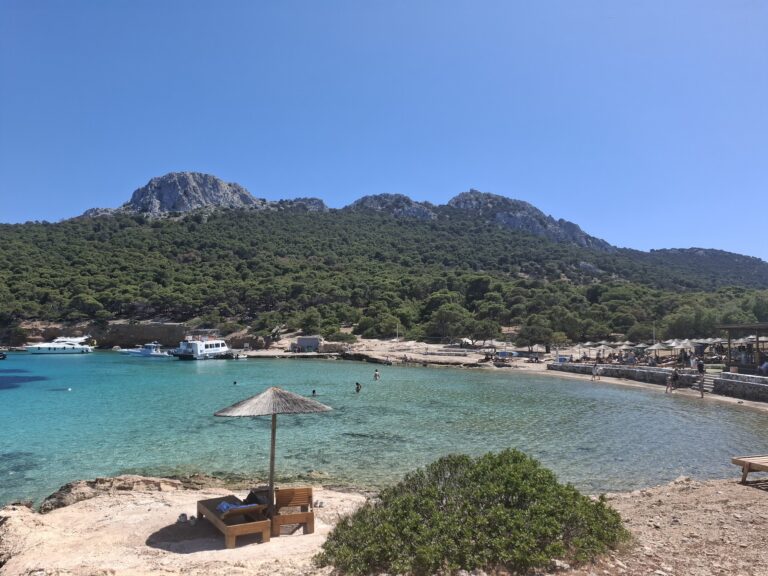
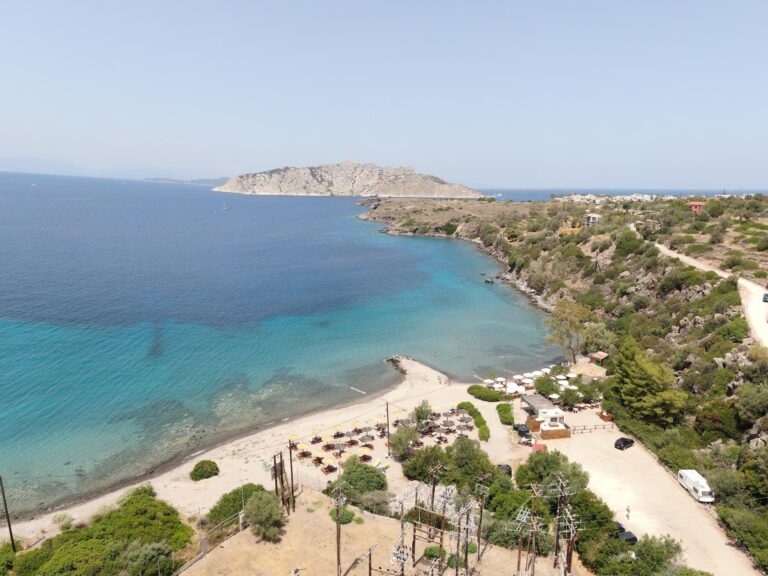
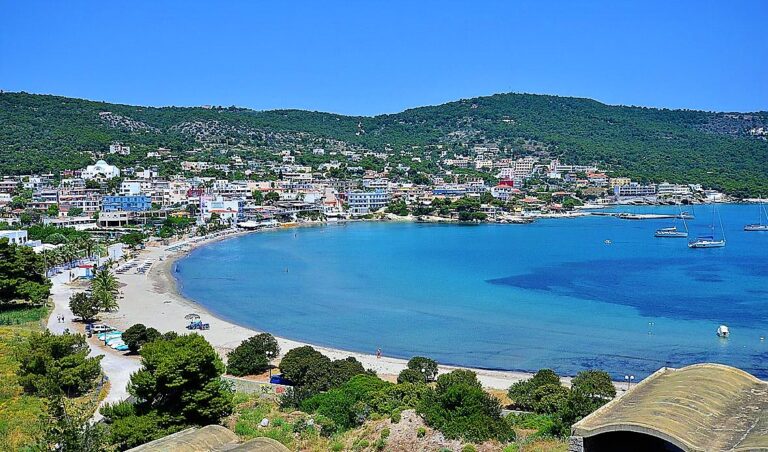
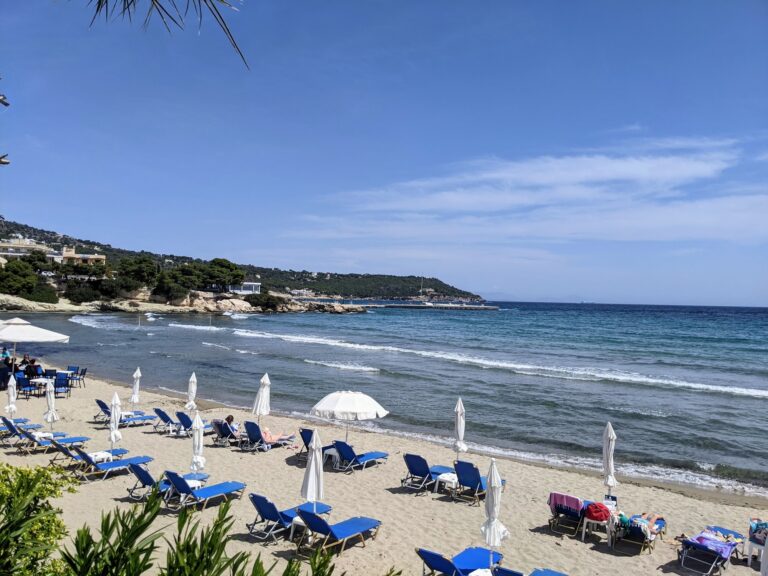
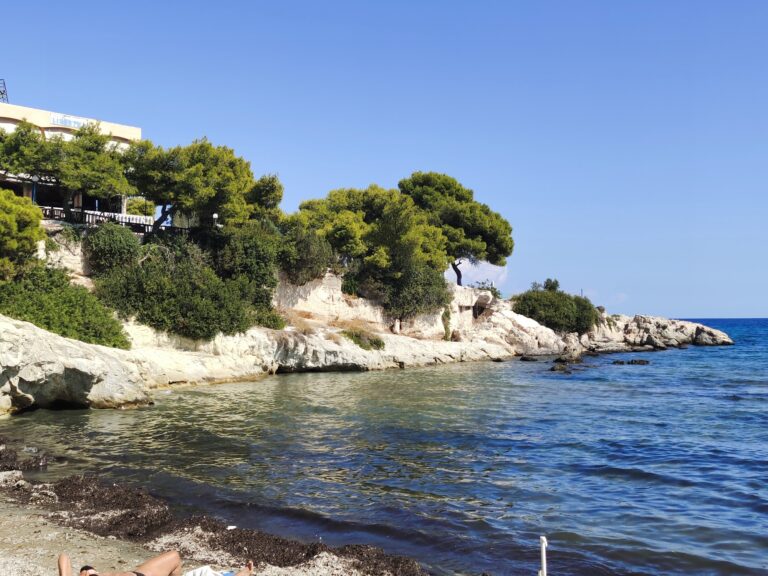
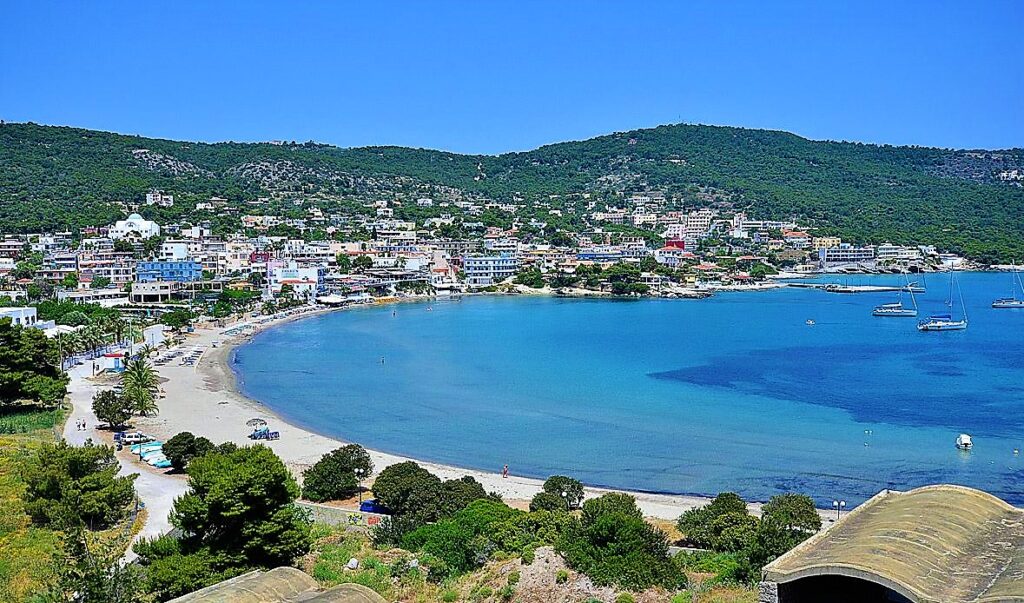
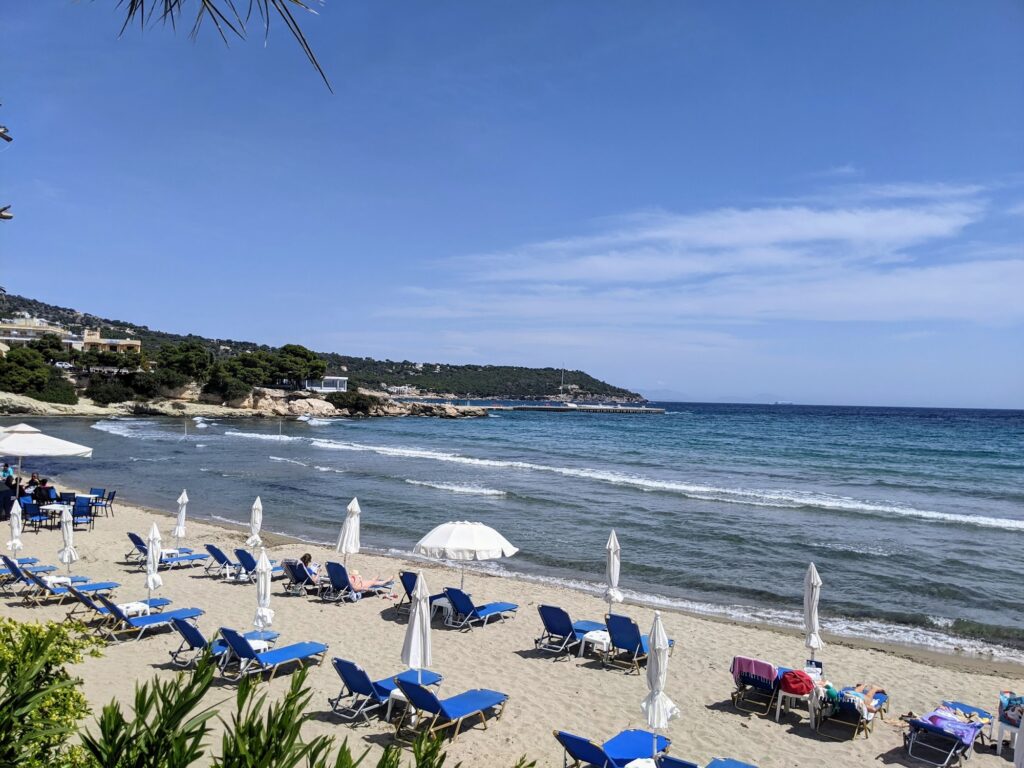
Agia Marina is the longest sandy beach on Aegina, the sand fine and golden rather than the pebble found at several other points along the island’s coast, and the bay shallow enough that the water stays knee-deep for a considerable distance from shore — a quality that makes it a consistently recommended choice for families and hesitant swimmers. The beach holds Blue Flag certification, and the water’s clarity allows the sandy bottom to remain visible well out from the shoreline on a calm day.
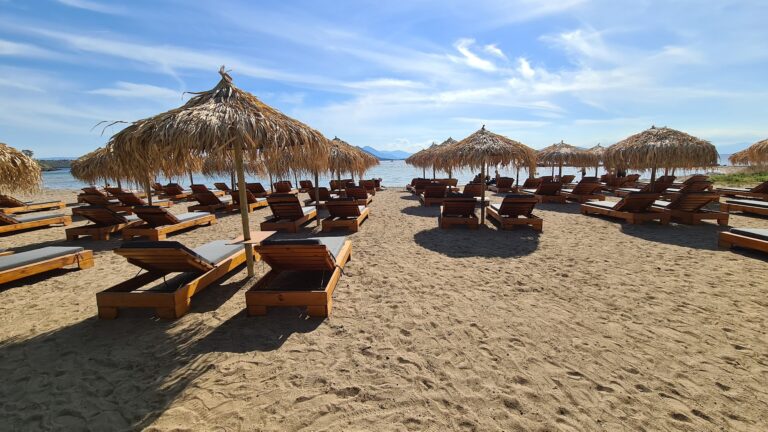
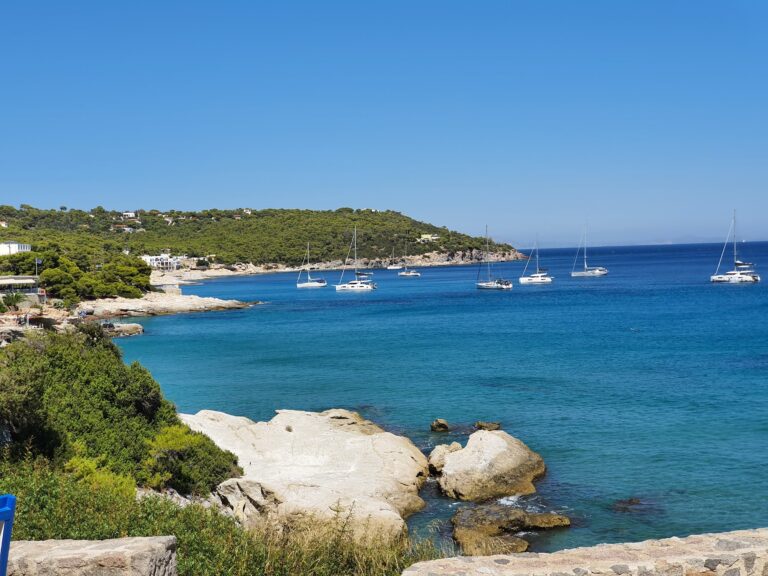
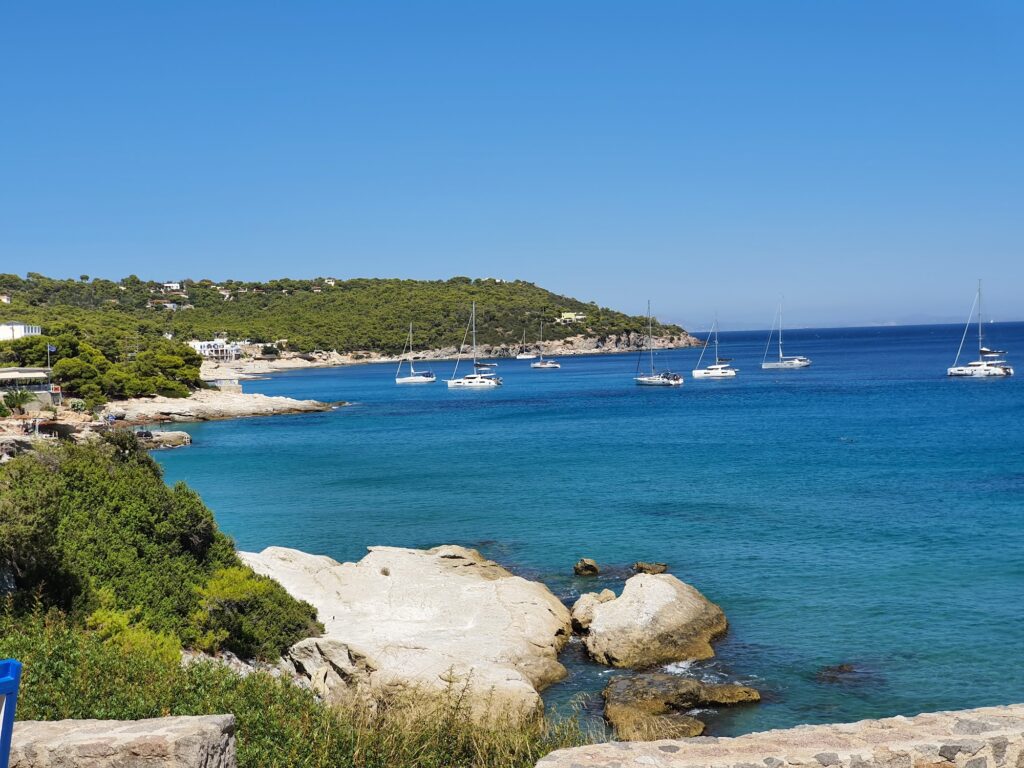
Sunbeds and umbrellas line the shore, managed by the hotels and beach bars along the front, generally available for a modest fee or included with a drink order, in keeping with the arrangement I have encountered at several other organised beaches across this series. Pedal boats, canoes, and stand-up paddleboards are available to rent, the shallow water making the bay particularly suited to beginners trying paddleboarding for the first time. Sailors favour the bay too, for its sandy bottom and shelter from the western winds, often choosing it as an anchorage point in its own right.
Agia Marina, Aegina’s longest sandy beach, sits ten minutes below the Temple of Aphaia — a sanctuary older than the Parthenon, forming part of a documented Sacred Triangle with it and the Temple of Poseidon at Sounio, its myth involving a nymph who fled King Minos and vanished entirely, and its pedimental marbles now restored in Munich, where they shaped local Neoclassical architecture. The beach itself offers fine golden sand, shallow Blue Flag water, full organisation with sunbeds and water sports, and a direct seasonal ferry from Piraeus. For the rest of the island, I have also covered Souvala Beach Aegina Greece on the northern coast and Sarpa Beach Perdika Aegina Greece near the southern village of Perdika.
Take the direct ferry if it runs in season, or via Aegina Town and a short drive. Visit the temple before or after the beach — it sits directly above you the whole time. Look for Athens and Sounio on a clear day from the hilltop.
Map
Sorry, no records were found. Please adjust your search criteria and try again.
Sorry, unable to load the Maps API.
Near by places: