Avra Beach Aegina: Swimming Above a Hidden Fleet
Profile
Avra Beach, Aegina: Swimmers Float Directly Above a Concealed Military Harbour That Helped Defeat the Persians
Greece | Aegina Town | Aegina, Saronic Islands
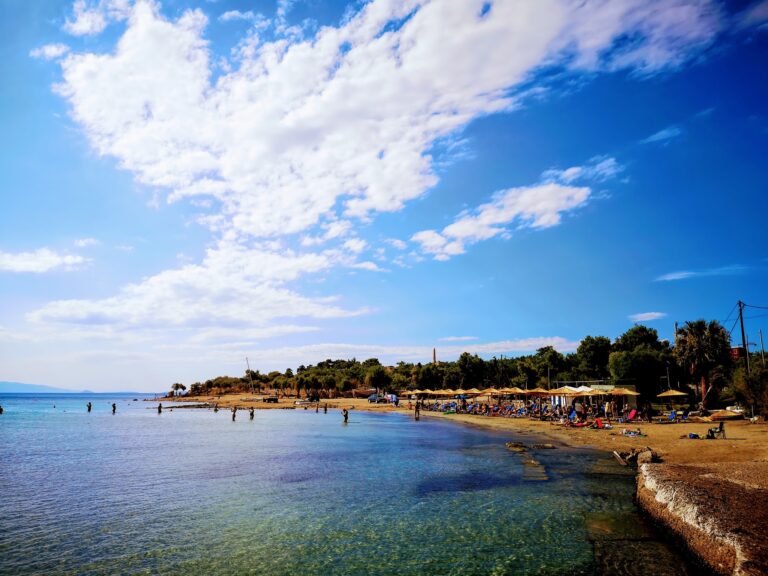
I read about this only after I’d already been swimming there, which made the discovery sting a little more than it might have otherwise: the shallow water at Avra, the beach closest to Aegina’s ferry port, sits directly above the semi-submerged remains of one of ancient Greece’s most significant military harbours. The ruins are visible from the surface down to about two metres, or three metres beyond the submerged wall, and bathers can see them simply by swimming or snorkelling with a mask. Two stone turrets that once blocked the harbour entrance with a chain are still partly visible, protruding slightly above the water in places. Pausanias, writing in the 2nd century AD, referred to this as the secret harbour — kryptos, concealed — because Aegina’s triremes were hidden here rather than left exposed in the open commercial port nearby.
That fleet mattered. According to Herodotus, Aegina contributed 30 manned triremes to the Battle of Salamis in 480 BC, the decisive naval engagement of the Persian Wars, and was honoured afterward by the Oracle of Delphi for its bravery — one of the largest naval city-states of its time, and a maritime power of real consequence centuries before Athens rose to prominence. I found it strange and oddly moving to learn this only after the fact, having spent an unremarkable afternoon paddling above the exact spot where that fleet had once been concealed from view.
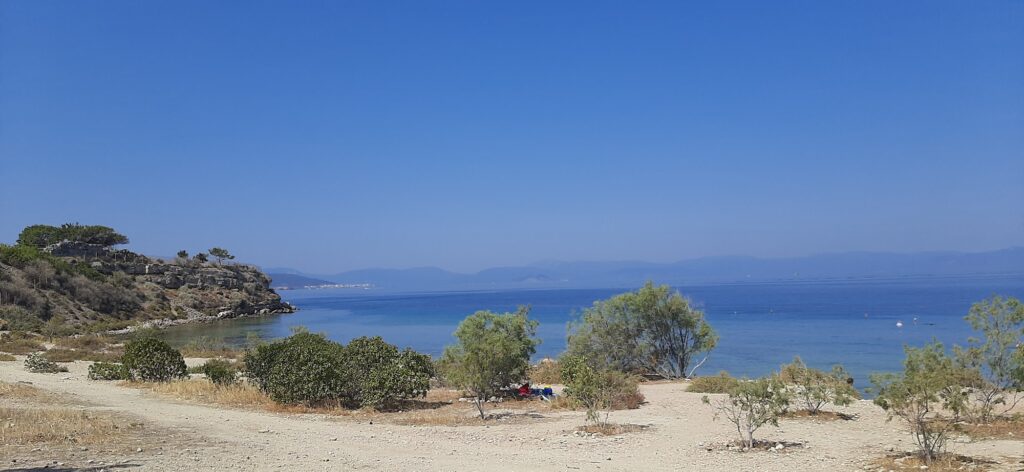
Above the beach, on the hill of Kolona, a single standing column is all that remains of the Temple of Apollo, built around 520 BC of local Aeginetan sandstone — older than the Parthenon, and once part of a complex that included eleven columns along its length and six along its width, with pediments of Parian marble depicting the legendary battles of the Amazons. The hill itself served as the island’s acropolis from prehistoric times, with excavations revealing settlement layers stretching back to 3000 BC, predating the temple by millennia. Venetian sailors are said to have used the surviving column for navigation centuries after the temple itself had fallen into ruin.
Getting There: Five Minutes’ Walk From the Ferry, No Vehicle Required
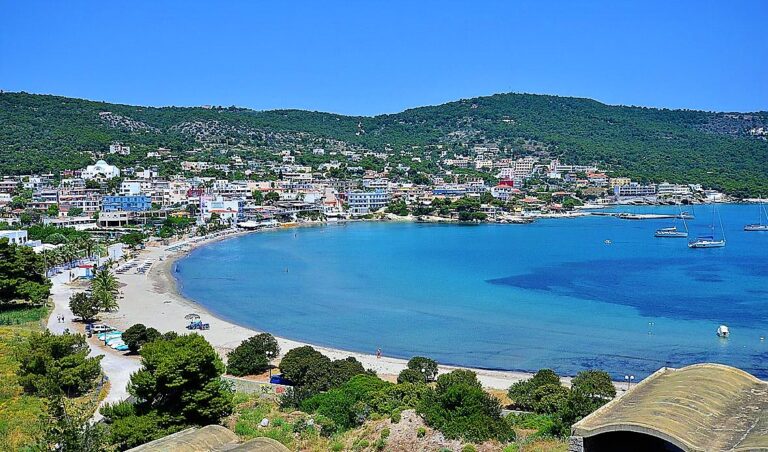
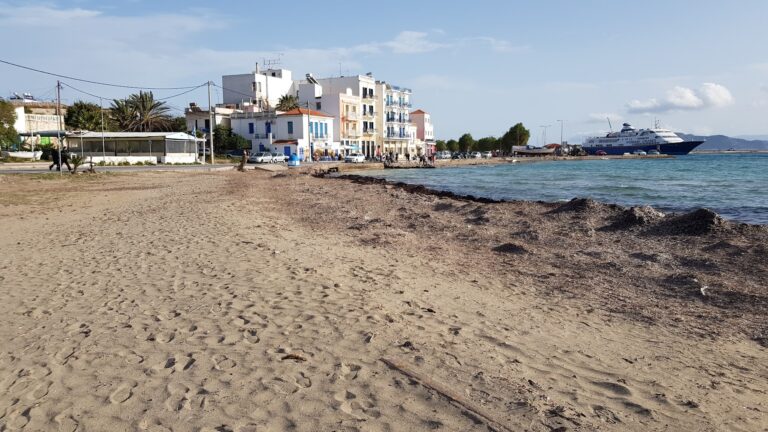
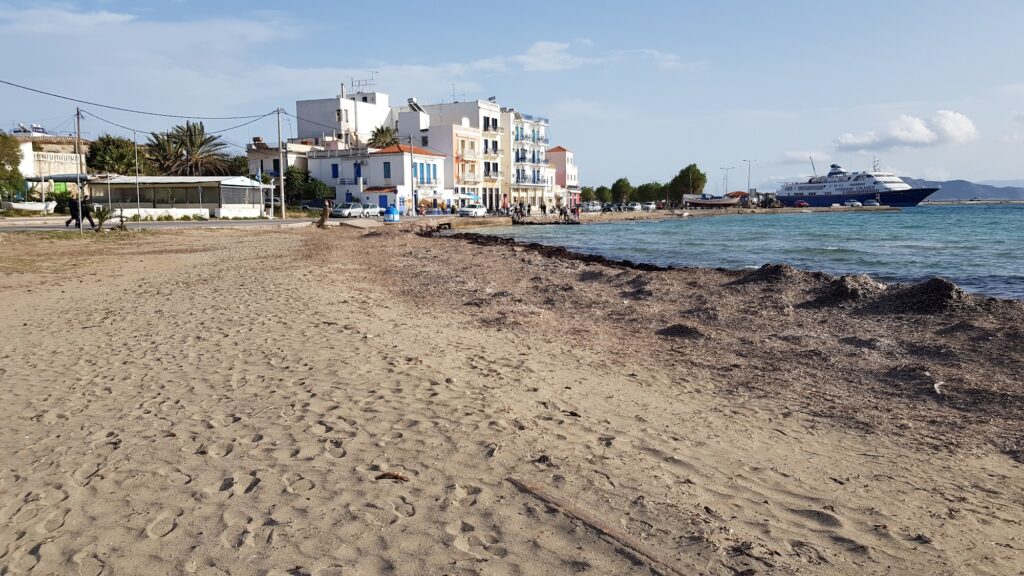
Avra is about as straightforward to reach as any beach covered in this series. From Piraeus, the ferry or Flying Dolphin crossing takes forty to ninety minutes depending on the vessel. On arrival at Aegina Town, I turned left along the waterfront, passed the small Chapel of St. Nicholas, and reached the sand at the base of Kolona hill within about five minutes, with the archaeological site and its single column visible the entire way.
No car or bus is necessary given how central the beach sits, though public parking lots exist within a few hundred metres for anyone arriving by vehicle. The archaeological site itself, with its small museum, charges a modest entrance fee, roughly five to ten euros depending on the season, and sits directly beside the beach with a separate entrance.
The Beach: Sand and Small Pebbles, a Long Gradual Shallow, a Working Boatyard
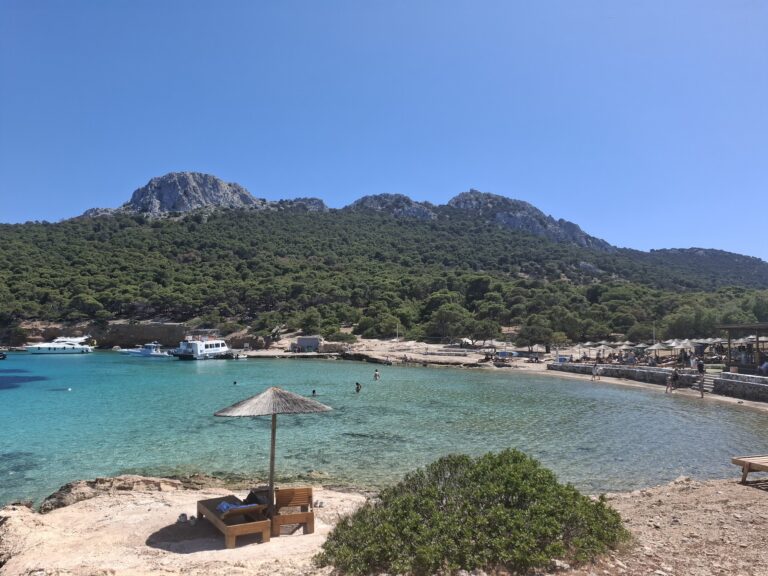
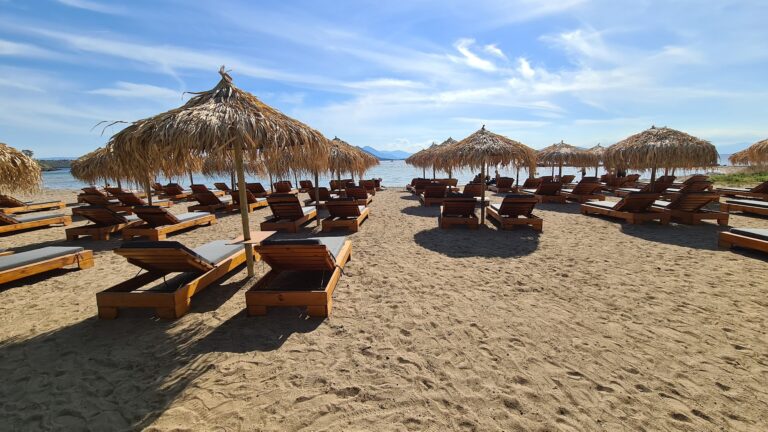
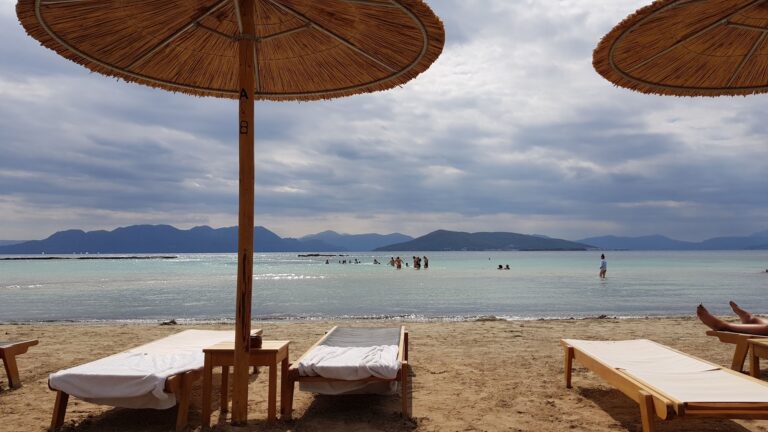
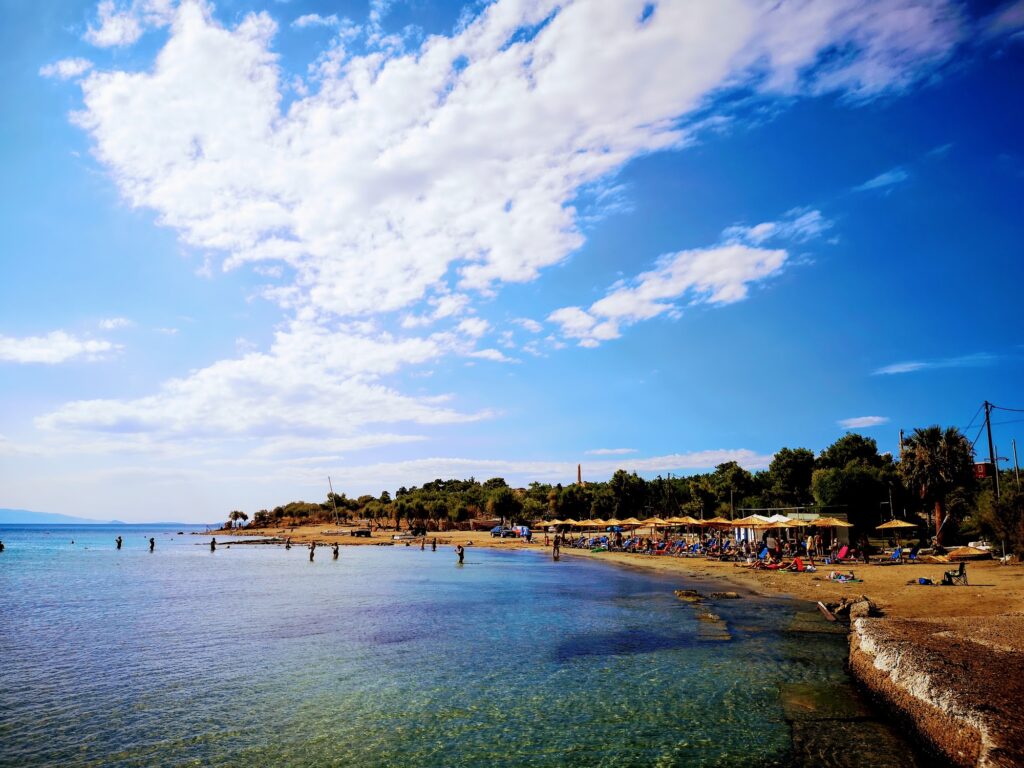
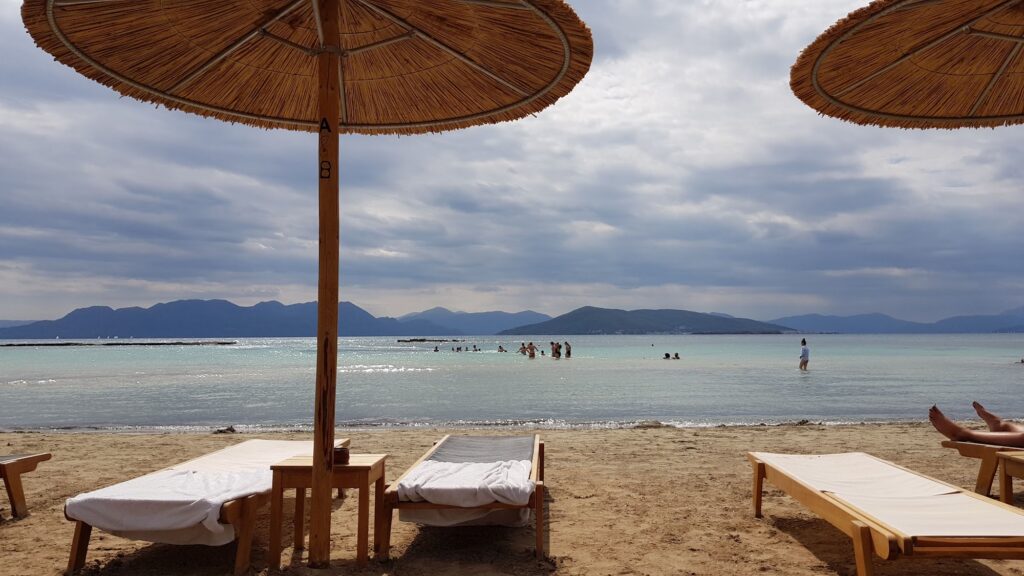
The shore is fine brown sand mixed with small pebbles, the water staying shallow for a considerable distance — comfortable and safe for children and older swimmers alike, the gradual slope continuing well past where I expected the bottom to drop away. A beach bar and canteen sit on the sand, sunbeds and umbrellas available for around ten euros a set, and tavernas including the Avra Hotel & Restaurant line the shore nearby, serving the local seafood and pistachio-influenced dishes that Aegina’s cuisine is known for.
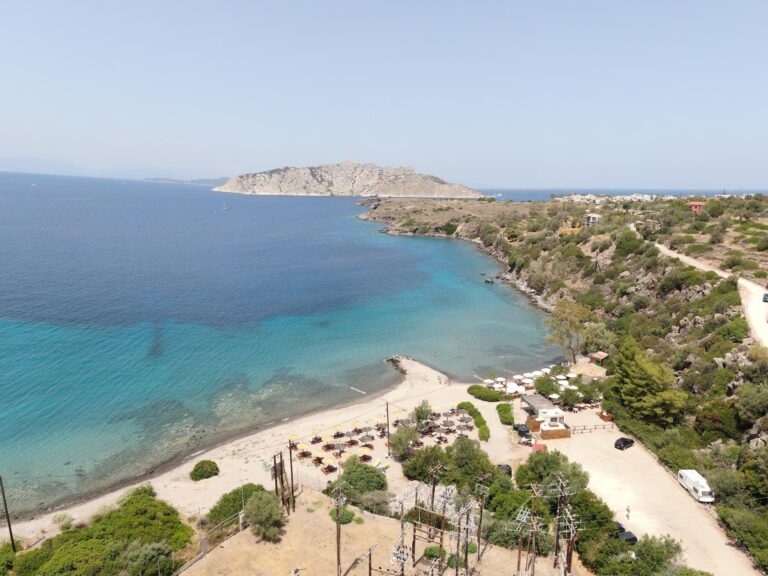
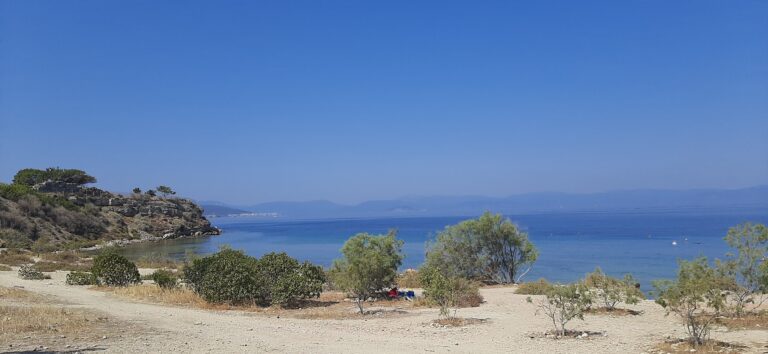
A small boatyard operates on the beach side, where traditional wooden fishing boats are still built and maintained using older techniques — a working detail that sits unusually close to both the sunbathers and the submerged ruins, three different timescales of the same harbour visible within a few hundred metres of each other. A children’s playground sits opposite the beach, and the view out to sea takes in Agistri, Methana, and the Peloponnese beyond, the sunsets here regularly described as some of the best on the island.
Avra Beach, the closest swimming spot to Aegina’s ferry port, sits beside Kolona, the single column remaining from a Temple of Apollo older than the Parthenon, itself standing on an acropolis hill inhabited since 3000 BC. Beneath the shallow water lie the semi-submerged remains of an ancient concealed military harbour, visible from the surface, where Aegina’s fleet of 30 triremes once sheltered before contributing to the 480 BC victory at Salamis. Sand and small pebbles, a long gradual shallow slope, a beach bar and nearby tavernas, a working traditional boatyard, and a five-minute walk from the ferry with no vehicle required. For more of Aegina’s ancient history, including the Temple of Aphaia and its place in the Sacred Triangle with the Parthenon and Sounio, I have also covered Agia Marina Beach Aegina Greece.
Walk left from the ferry along the waterfront. Bring a mask if you want to see the turrets and the submerged wall. Visit Kolona itself before or after the swim.
Map
Sorry, no records were found. Please adjust your search criteria and try again.
Sorry, unable to load the Maps API.
Near by places: