Moni Island Aegina: Wildlife Stocked for Hunting
Profile
Moni Island, Aegina: A Tourist Club Stocked This Island With Wildlife for Hunting, Then the Church Took It Over
Greece | Moni Islet | Aegina, Saronic Islands
Local folklore on Aegina tells one story about Moni: a small post-Byzantine friary once stood on its peak, the landowners wanted to abandon it and turn the island into a dairy farm, the monks refused, and a fire — widely suspected, in hushed tones over coffee in the old kafeneia, to have been deliberate — burned the monastery down and cleared the way for commercial use. The documented history tells something closer but different: from 1960 to 1990, the island was managed by the Hellenic Touring Club (sometimes called the Greek Trekking Club), which established trails and camping facilities and deliberately introduced the wildlife that now defines Moni entirely — Rhodian deer, kri-kri wild goats brought from Crete, squirrels, peacocks, reportedly even falcons. Pygmy horses and rabbits were tried too, and simply didn’t take. Part of the original purpose, by at least one specialist account, was to manage the population for hunting, a detail that sits oddly against the island’s current identity as a protected wildlife sanctuary where the same animals now approach visitors on the beach without fear. In 1990, ownership passed to the Monastery of Chryssoleontissa on Aegina, which still holds it — moni simply means monastery in Greek, and the name has outlasted whatever building originally earned it.
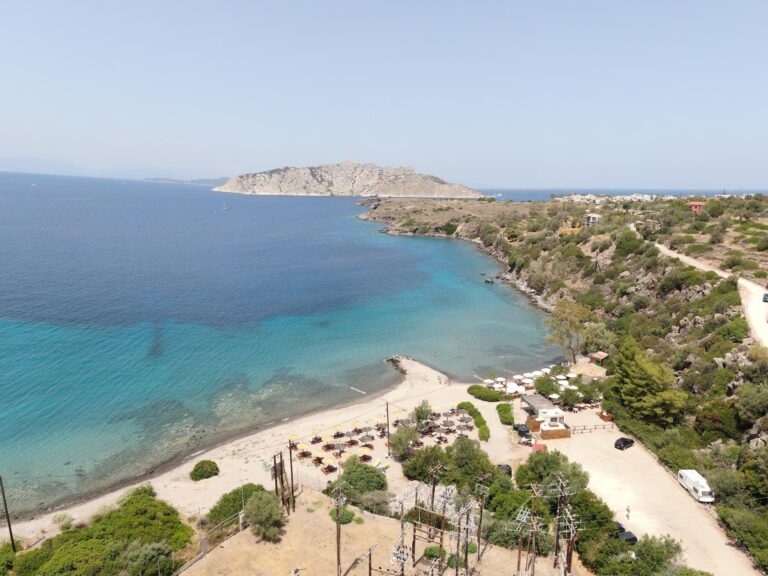
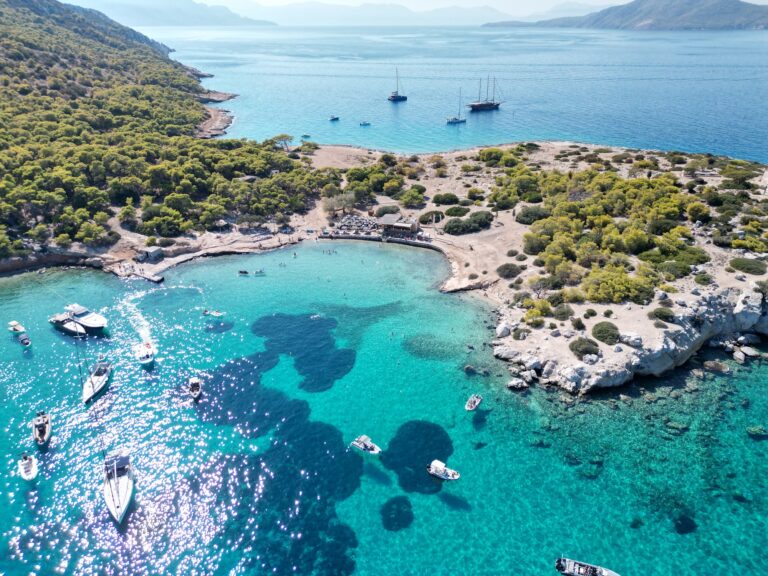
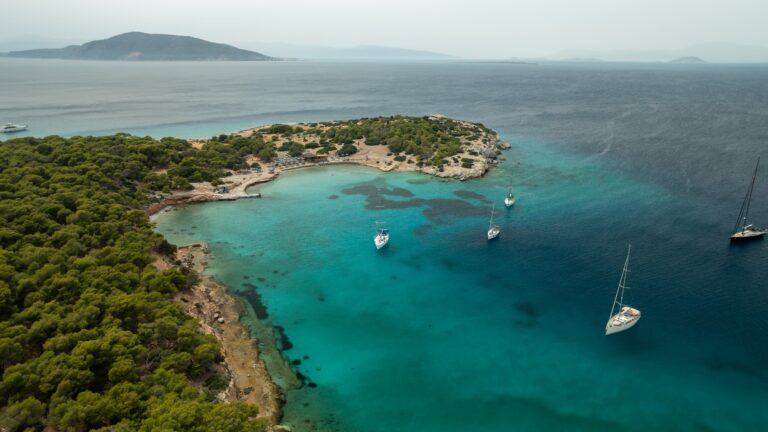
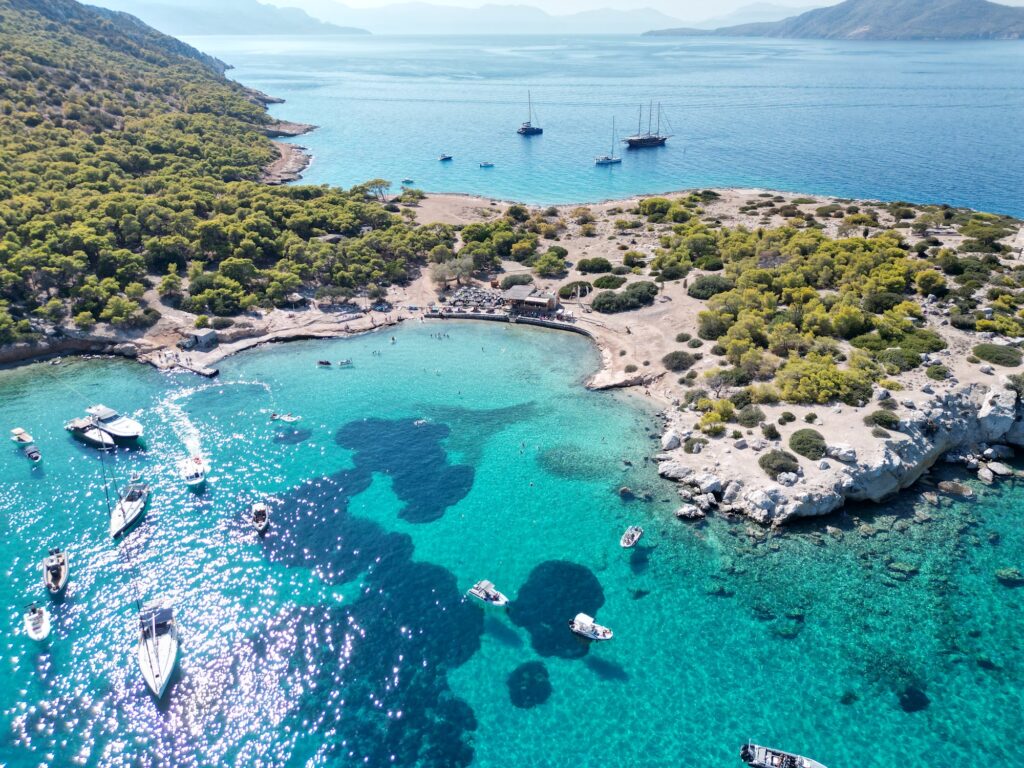
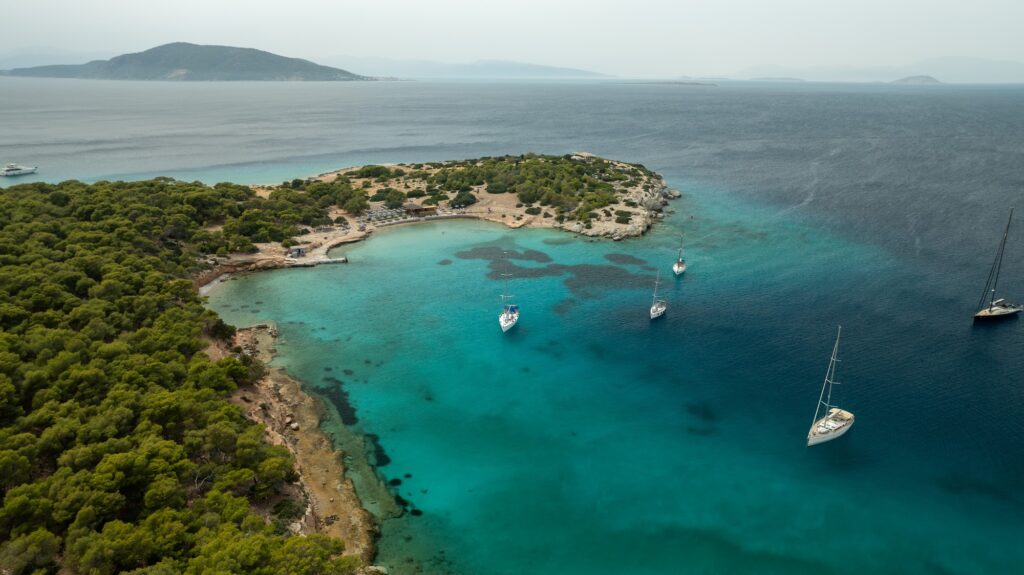
The island itself is small, roughly two kilometres long and a kilometre across at its widest, conical and limestone, split visibly in two: the southeastern half barren and rocky, the northwestern half thick with pine forest reaching almost to the waterline. At the highest point, a crumbling stone structure, reached only by a genuinely strenuous scramble over boulders and shrubs, is identified as a German watchtower from the Second World War, built to monitor the approach to Piraeus against Allied incursion. The roof has long since collapsed, but the rocky heights still shelter visitors who make the climb, and the view from the top takes in Aegina, Agistri, and Methana simultaneously.
No one lives on Moni, and no one is permitted to stay overnight — there is no source of drinkable water, and the island exists today purely as a seasonal destination, visited by day and left empty by evening except for its animal residents.
Getting There: Ten Minutes From Perdika, Pay-as-You-Board, No Fixed Schedule
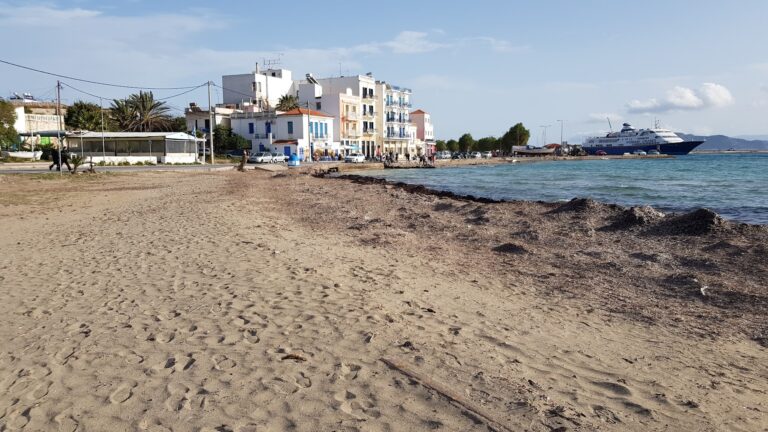
The most common route runs from Perdika, the fishing village at the southern tip of Aegina, where small boats moor at the first wooden jetty in the harbour and depart roughly every thirty minutes once enough passengers have gathered — there is no strict timetable, and I found this oddly appealing once I’d adjusted my expectations, rather than frustrating. The fare, paid at the start of the journey and covering the return trip, runs around five to seven euros depending on the year. The crossing itself takes about ten minutes.
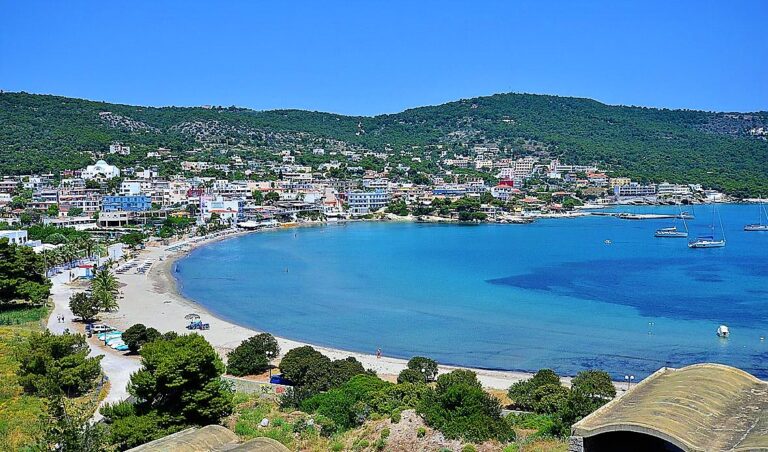
During the summer months, a boat with a fixed schedule also runs directly from the Aegina Town boulevard, a slightly longer journey offering a wider view of the coastline on the way. Off-season, reaching the island generally requires arranging the crossing in advance rather than simply turning up at the harbour. For visitors already at Sarpa Beach Perdika Aegina Greece, on Aegina’s southern coast, Moni is the natural extension of the same day, the boats departing from the same village.
The Beach: An Organised Sandy Cove on the North Coast, a Quieter Rocky Alternative Behind
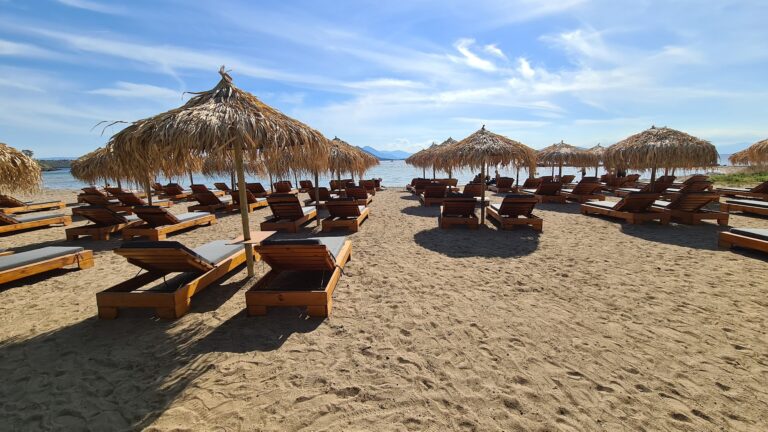
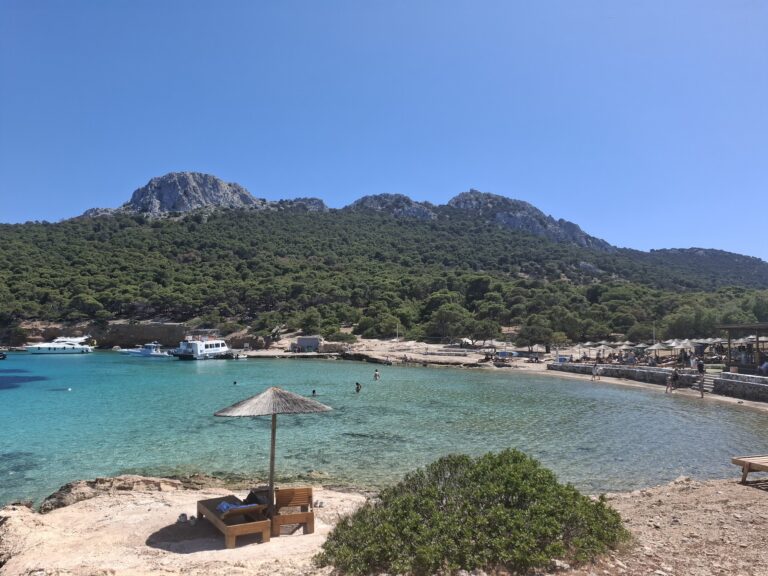
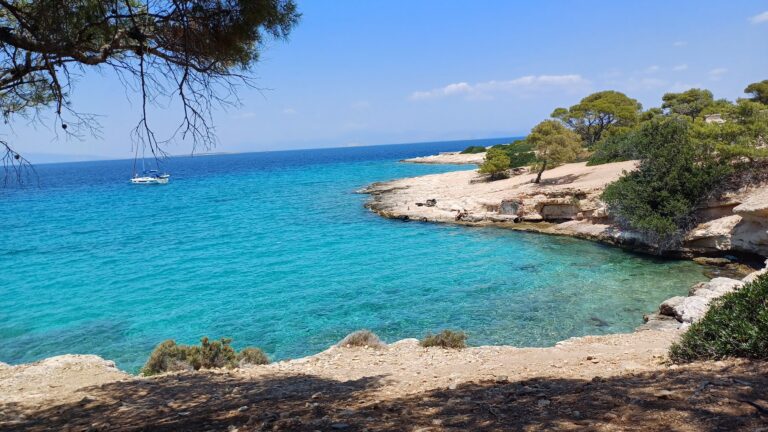
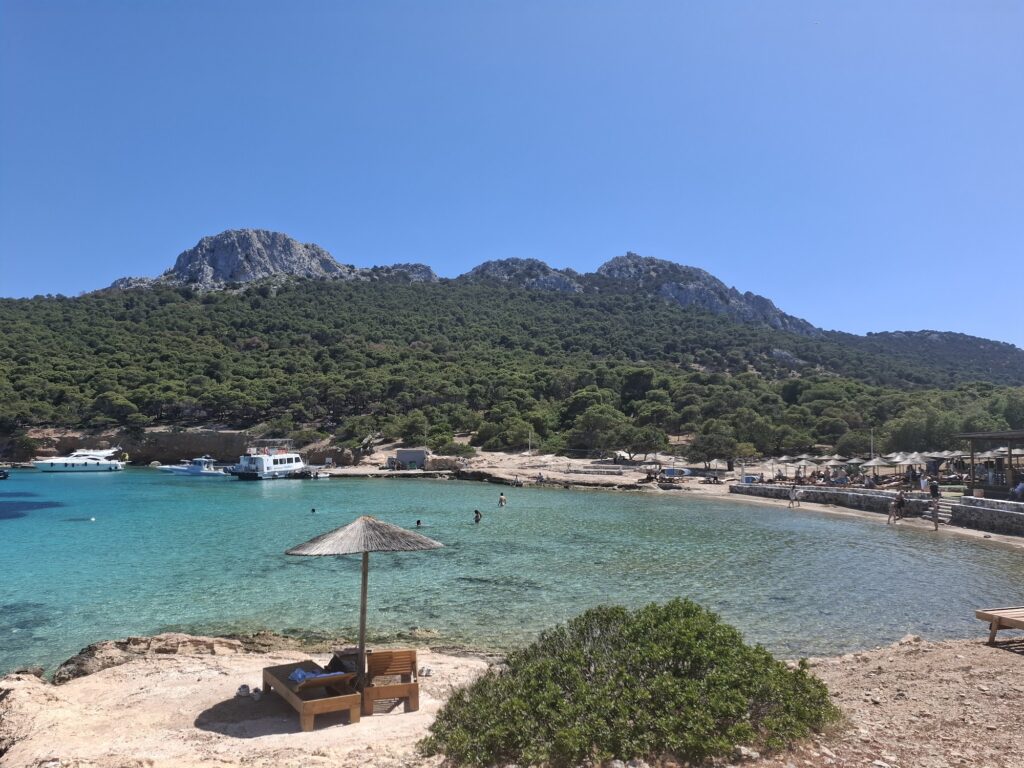
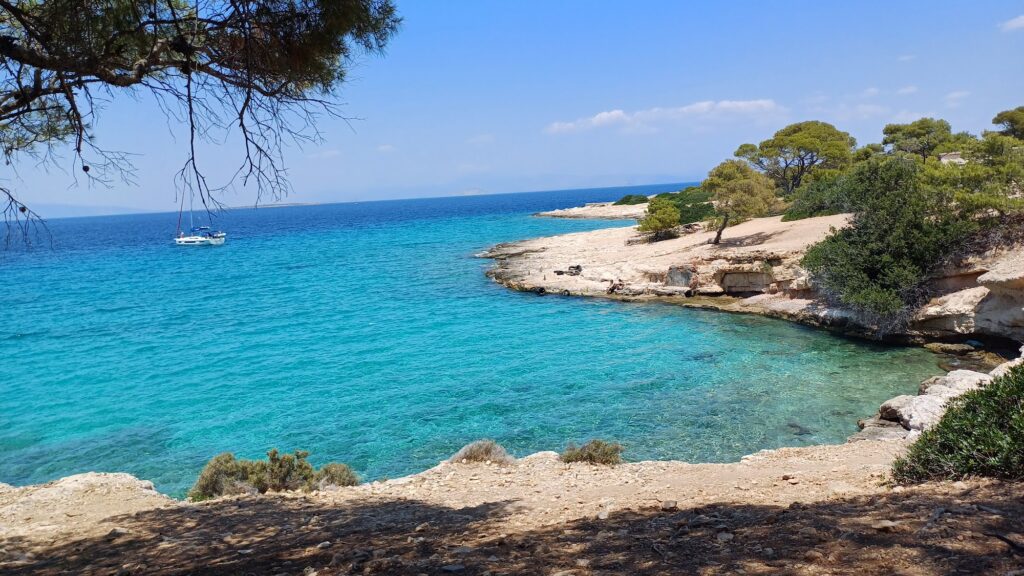
The boats disembark at an organised sandy beach on a sheltered cove on the island’s north coast, equipped from late May through the end of August with sunbeds, umbrellas, and a beach bar that doubles as a restaurant, serving simple food and drink to visitors who arrive without their own supplies. A second, rockier beach exists on the back of the island, with no sunbeds or umbrellas, for those who prefer privacy over convenience.
The water here is consistently described as exceptionally clear, and the pine forest behind the sand provides shade that the open, rockier southeastern half of the island entirely lacks. One visitor account specifically warned of stinging sea urchins close to shore, worth keeping in mind before wading in barefoot.
Moni Island, off Perdika on Aegina’s southern coast, was managed for three decades by the Hellenic Touring Club, which deliberately introduced the deer, kri-kri goats, peacocks, and other wildlife now wandering freely across the island, partly, by some accounts, to manage the population for hunting before that purpose gave way entirely to its current identity as a protected sanctuary. Ownership passed to the Monastery of Chryssoleontissa in 1990. A crumbling German watchtower from the Second World War crowns the conical peak, reachable by a strenuous scramble. An organised sandy beach with sunbeds and a beach bar occupies the sheltered north coast cove, with a quieter rocky alternative on the back of the island, and boats run from Perdika roughly every thirty minutes in season, the crossing taking about ten minutes. No overnight stays are permitted.
Take the boat from Perdika. Bring water and good shoes if you intend the climb. Let the deer and peacocks approach you rather than the other way around.
Map
Sorry, no records were found. Please adjust your search criteria and try again.
Sorry, unable to load the Maps API.
Near by places: