Artemida Beach Loutsa: Named for the Goddess, Sanctuary Nearby
Profile
Artemida Beach, Loutsa: A Town Named for the Goddess of the Hunt, a Few Kilometres From the Sanctuary Where She Was Worshipped
Greece | Artemida | East Attica
The name Artemida refers directly to Artemis, the goddess of the hunt, the wilderness, and childbirth, and the connection is not incidental. A short distance inland from the modern coastal town lies the Sanctuary of Artemis at Brauron, also known as Vravrona, one of the more significant religious sites of ancient Attica and a major centre of worship dedicated to the goddess. The remains of a Doric temple still stand there, alongside a sacred spring once used for ritual purification. The town’s older and still widely used name, Loutsa, is the one most locals and longtime visitors continue to favour in everyday speech, a naming pattern I have encountered elsewhere along the Greek coast, where an informal local name persists alongside a more formal designation drawn from antiquity.
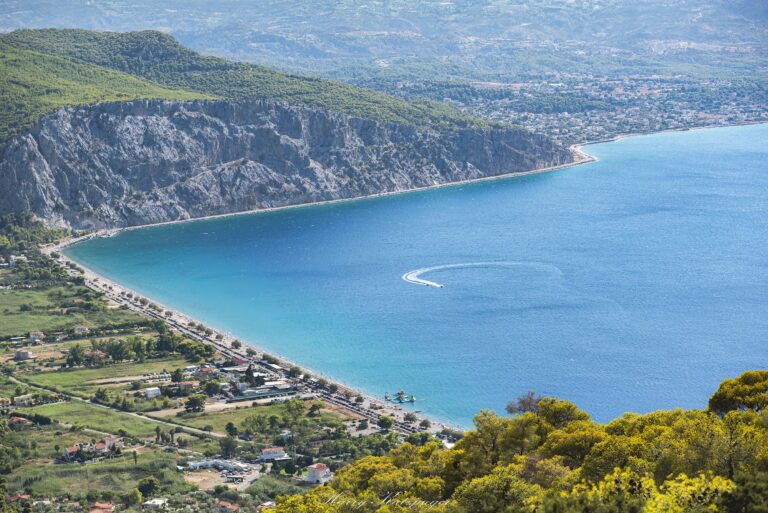
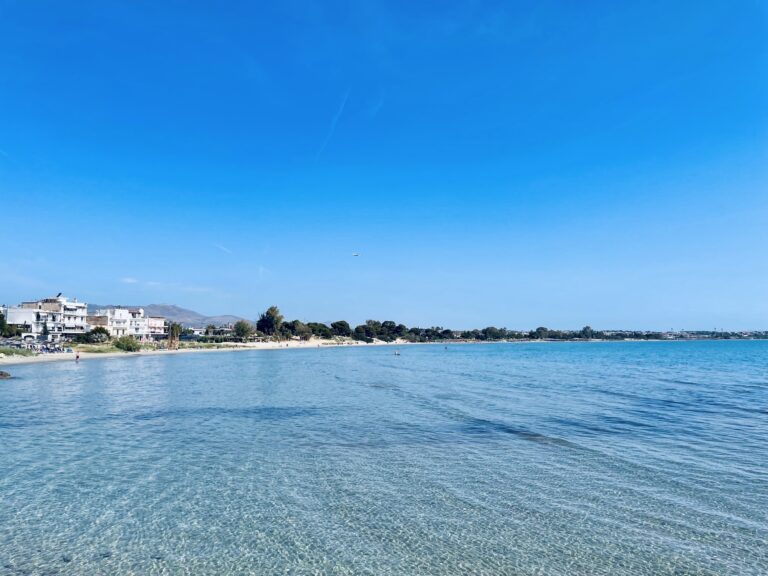
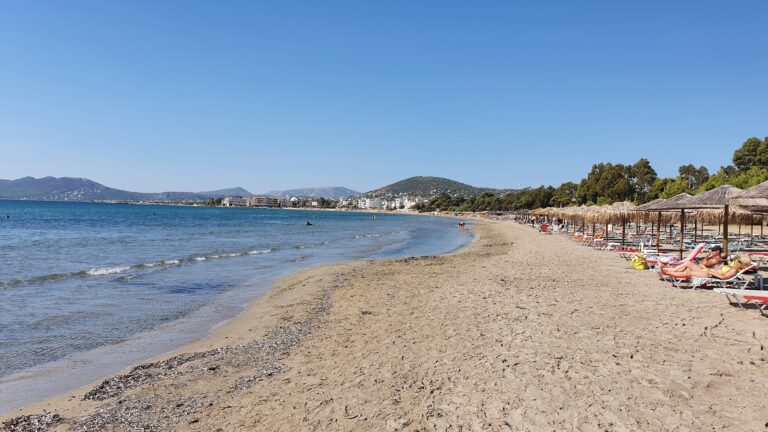
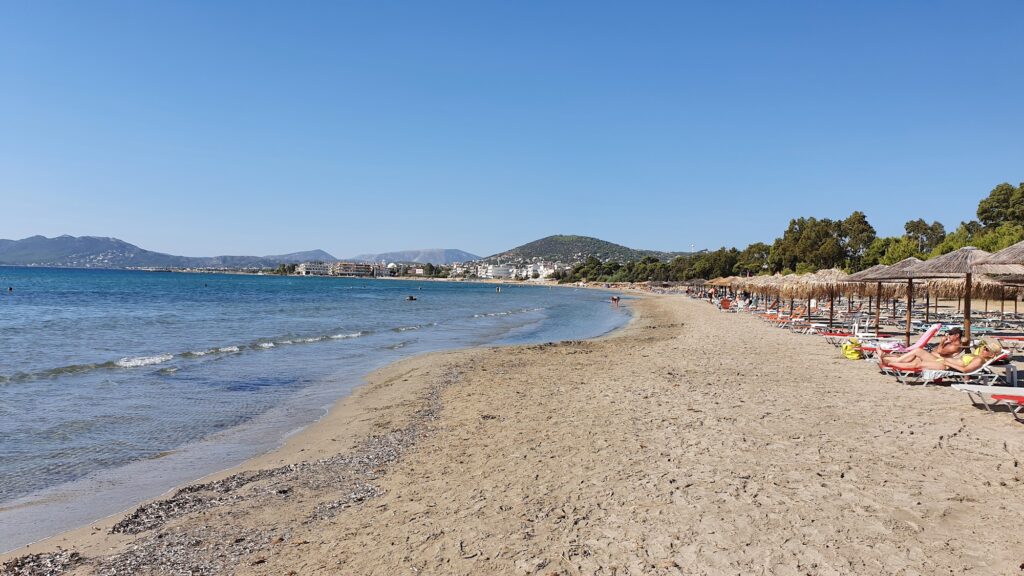
The beach itself runs for several kilometres along the open coast facing the Aegean, divided informally into northern, central, and southern sections, each carrying a distinct character. Two of these sections, Diastavrosi and Limni, have held Blue Flag certification consistently over recent years, a reflection of the water quality that the beach’s open exposure and natural currents help sustain, in contrast to more enclosed bays elsewhere on this coast that can stagnate during the hottest months.
A specific landmark sits a mile offshore: two small islets known collectively as Kokkinonisia, meaning Red Islands, one holding a chapel dedicated to Agios Nikolaos, built in 1882, and the other a lighthouse. The islets mark the northern end of the bay and are visible from much of the central beach on a clear day.
Getting There: Fifteen Minutes From the Airport, Thirty-Five to Forty Minutes From Central Athens
Artemida’s position relative to Athens International Airport is, by most accounts, its single greatest practical advantage. The drive from the airport covers a short distance and takes approximately fifteen minutes by taxi, rideshare, or rental car, making the beach a genuine option for a final swim before a flight or a first stop immediately after landing. From central Athens, the journey via Attiki Odos takes thirty-five to forty minutes.
Buses 304 and 305 run regularly from the city centre and from the airport area, stopping at points including Tounta, Dimotika Iatreia, and the Terma terminus, the latter offering the largest and most accessible free parking lot along the coast. Several other large free parking areas sit at intervals along the beach road for those arriving by car.
The Beach: Fine Sand, Extended Shallow Water, a Significant Windsurfing Destination
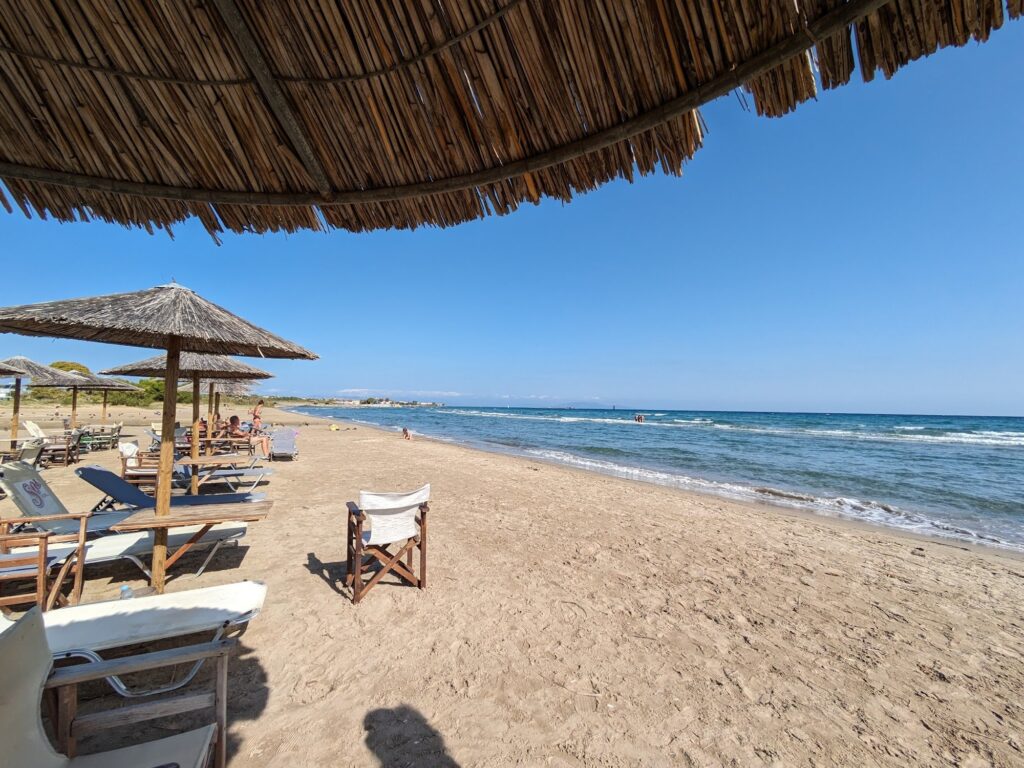
The sand is fine and, in places, mixed with small pebbles near the waterline, the seabed staying shallow for a considerable distance — accounts describe a standing area extending nearly seventy metres from shore in calmer conditions, a quality that has made this one of the more consistently recommended beaches in the wider Athens area for families with young children. The water reaches a comfortable temperature through the height of summer, owing to the shallow depth and the bay’s open exposure.
The same exposure makes Artemida one of the more significant windsurfing and kitesurfing locations on the Greek mainland, drawing practitioners of every level for conditions that range from flat, mirror-calm water suitable for beginners to genuine wave action favoured by more advanced surfers, particularly when the Meltemi wind builds from the north through summer. Windsurfing schools operate along the shore, including established centres offering year-round instruction. Visitors should note that the area immediately north, around Nissakia, is specifically the more advanced and crowded surfing zone, while the central beach sections remain calmer and better suited to swimming.
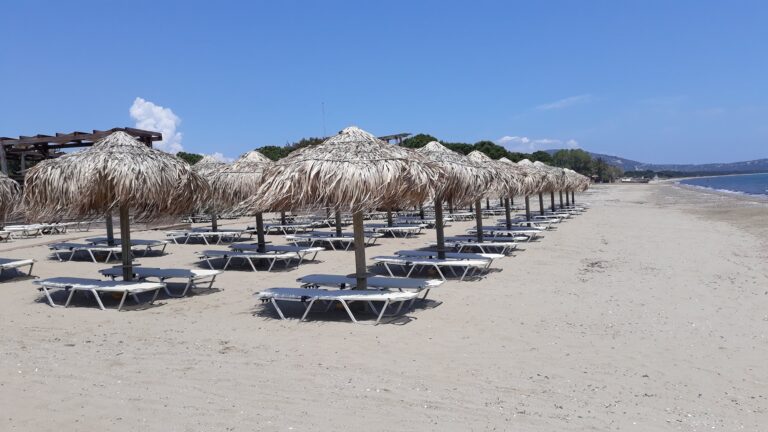
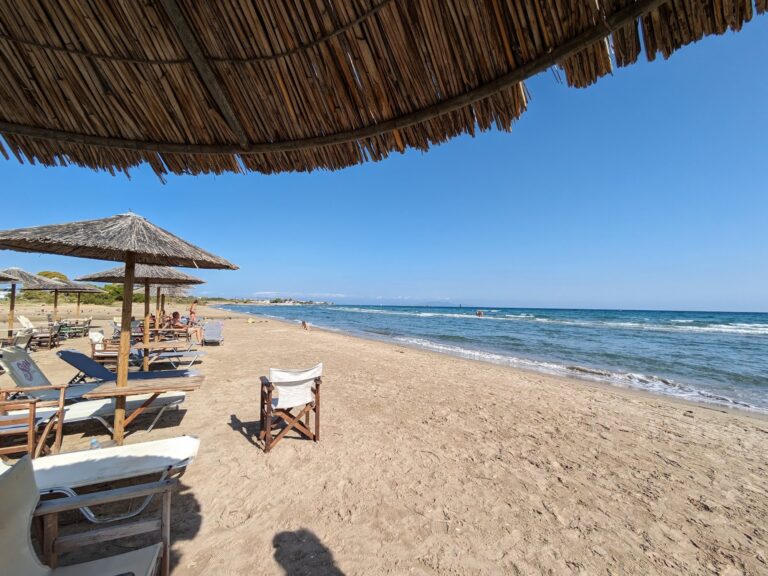
Facilities are extensive: sunbeds and umbrellas for rent, showers, changing cabins, a lifeguard tower during the season, and a children’s playground near the central section. The promenade behind the sand carries a long run of tavernas, cafés, and beach bars, with fresh seafood a consistent feature of the local menus.
Artemida Beach, more commonly called Loutsa, takes its formal name from the goddess Artemis, worshipped at the nearby Sanctuary of Brauron, an ancient site that predates the beach’s modern identity by many centuries. The coastline runs for several kilometres along the open Aegean, with the Diastavrosi and Limni sections holding consistent Blue Flag certification, shallow water extending a considerable distance from shore, and the Kokkinonisia islets marking the northern end of the bay. The beach is among the more significant windsurfing destinations on the Greek mainland, and its position fifteen minutes from Athens International Airport makes it a genuinely practical choice for a swim immediately before or after a flight.
Drive via Attiki Odos, or take the bus from the airport or city centre. Visit the Sanctuary at Brauron if time allows. Choose the central sections for swimming, Nissakia to the north for serious wind.
Map
Sorry, no records were found. Please adjust your search criteria and try again.
Sorry, unable to load the Maps API.
Near by places: