Divari Beach Gialova: Golden Sand, Sphacteria Walk
Profile
Divari Beach, Gialova: I Walked Toward Sphacteria Until the Water Reached My Chest, Past a Lagoon That’s the Only Place in Europe With This One Species of Chameleon
Greece | Gialova | Pylos-Nestor Municipality, Messenia, Peloponnese
I’d read the name as Divari everywhere, but it turns out the actual root is Latin, not Greek — vivarium, meaning fishery or enclosure for keeping fish, which fits exactly with what the lagoon behind the beach was historically used for. Most signs along the road call it Golden Beach instead, and I only worked out they were the same place because a local pointed at the same stretch of sand and used both names in the same sentence without seeming to notice the inconsistency.
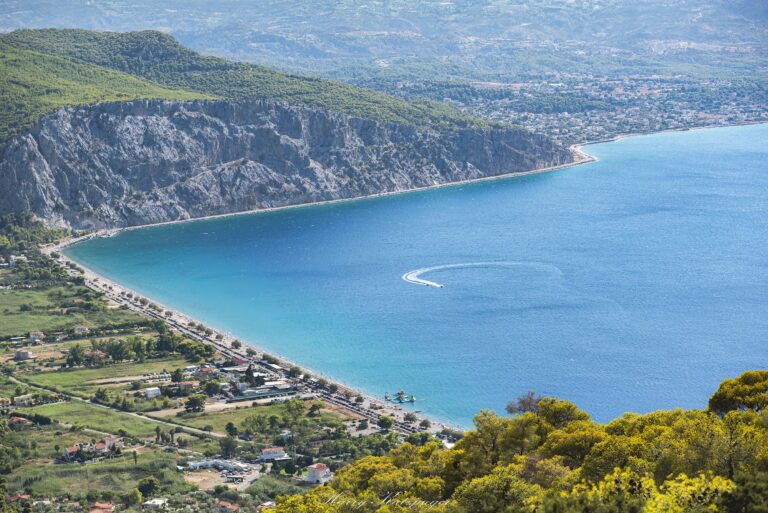
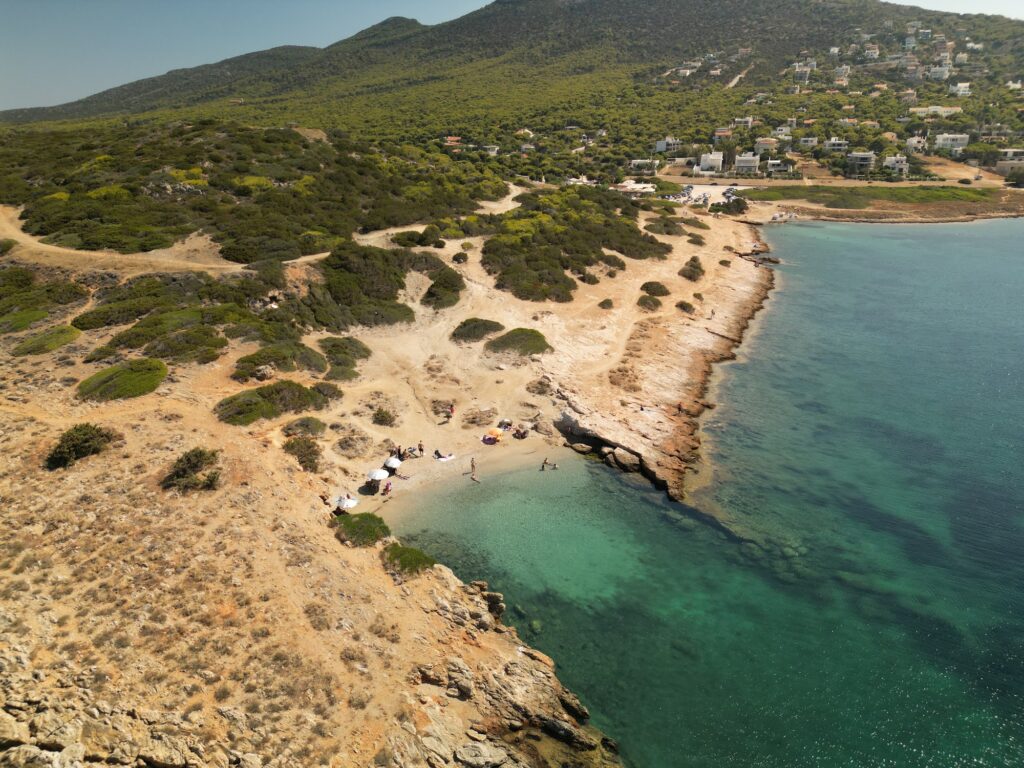
The beach itself is a narrow sandbar, somewhere between 1.5 and 4 kilometres long depending on which account you read, separating the open seawater of Navarino Bay from the brackish Gialova Lagoon behind it. That lagoon is a genuinely significant wetland — part of the Natura 2000 network, one of the most important stopover points in Europe for migratory birds travelling between Africa and northern Europe, and, I was told, the only place on the entire continent where the African chameleon is still found in the wild. I didn’t go looking for one myself, but knowing it was theoretically possible changed how I looked at the bushes behind the dunes for the rest of the walk.
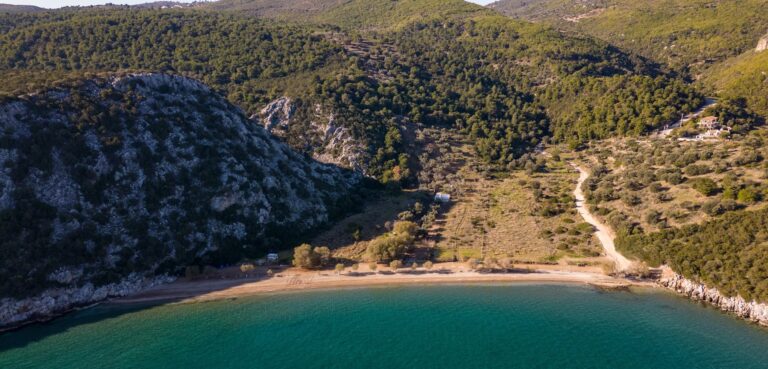
At the far end of the beach, a narrow water passage called Sykia — meaning fig tree — separates the mainland from the island of Sphacteria, the site of a real battle during the Peloponnesian War. Several people told me the same thing independently: the water there is shallow enough that you can walk most of the way across, swimming only the final stretch, until it reaches roughly chest height. I did it myself, slowly, and made it to the island’s own small beach on the other side without much difficulty.
Getting There: 10 Minutes From Pylos, Just Past Gialova Village, or via Voidokilia and Romanos
From Pylos, the drive north to Gialova and then Divari took me about 10 minutes. Past Gialova village, I kept driving for roughly 400 to 700 metres before a sign on the left pointed toward the beach — easy to miss if you’re not actively watching for it. I’d already spent the previous day at Voidokilia Beach Pylos Greece, the omega-shaped crescent a short drive further on, and at Romanos Beach Pylos Greece near Costa Navarino, so by the time I reached Divari I had a reasonable sense of how the whole bay fits together — Romanos to the north, Divari running along the middle, Voidokilia and the old Navarino castle at the southern end where the bay closes.
Parking was informal, along an unpaved road running parallel to the beach behind the dunes, with enough shade from the trees that I didn’t think twice about leaving the car for a few hours.
The Beach: Shallow Sand, Most of It Free, One Loud Beach Bar in Season
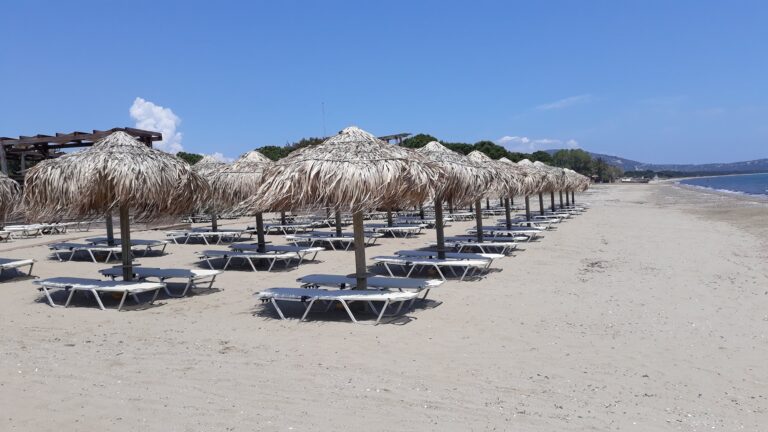
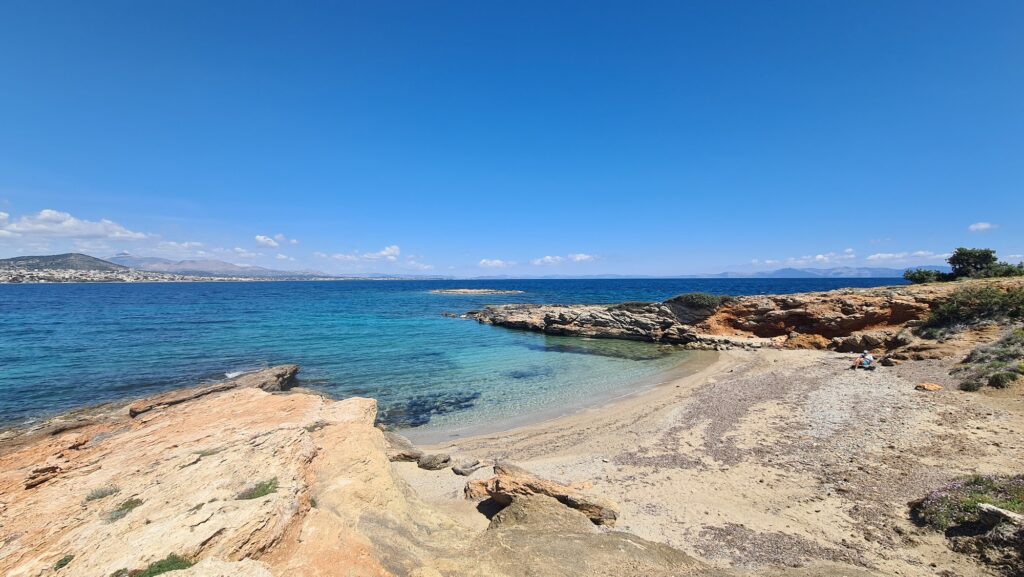
The water stayed shallow for a genuinely long way out, calm enough that I watched toddlers wading comfortably well beyond where I expected the bottom to drop away. Most of the beach was entirely unorganised — I walked maybe ten minutes from the central section and had a long stretch of sand entirely to myself, with nothing but a towel and the view across to Pylos on one side and Sphacteria on the other.
I should be honest about the one part that didn’t match the peaceful framing I’d read beforehand. The single beach bar that operates in the busier middle section, in high season, runs loud bouzoukia-style music and felt, by the time I left, closer to a small club than a relaxed beach bar — one direct account I read afterward described the staff there as outright rude, and while my own experience was more neutral than that, I’d agree the atmosphere right at that specific spot was louder and busier than the rest of the beach by a wide margin. Walking five minutes in either direction solved it completely.
Divari Beach (Golden Beach) at Gialova is the narrow sandbar separating Navarino Bay from the Gialova Lagoon — the name from the Latin vivarium rather than anything Greek, the lagoon behind it the only place in Europe with a wild African chameleon population, the Sykia passage at the far end shallow enough to walk most of the way to Sphacteria island. Mostly unorganised sand, one genuinely loud beach bar in the busy central section (avoid it if you want quiet), 10 minutes from Pylos, a short drive from both Voidokilia and Romanos.
Drive past Gialova village. Walk away from the one loud bar. Wade toward Sphacteria until the water reaches your chest.
Map
Sorry, no records were found. Please adjust your search criteria and try again.
Sorry, unable to load the Maps API.
Near by places: