Vouliagmeni Lake Athens: Thermal Spa, Doctor Fish
Profile
Vouliagmeni Lake, Athens: I Floated Above a Cave System Where Seven Divers Have Lost Their Lives, and Stayed Firmly on the Surface
Greece | Vouliagmeni | Athens Riviera, Attica
I want to separate two things clearly before I describe the part of Vouliagmeni Lake that any visitor actually experiences, because they get blurred together in a lot of what I read beforehand. There’s the lake itself — warm, swimmable, organised, entirely safe for the thousands of people who float in it every year. And then there’s the cave system underneath it, which is a different matter altogether, and one I think deserves to be discussed soberly rather than as some kind of spooky selling point.
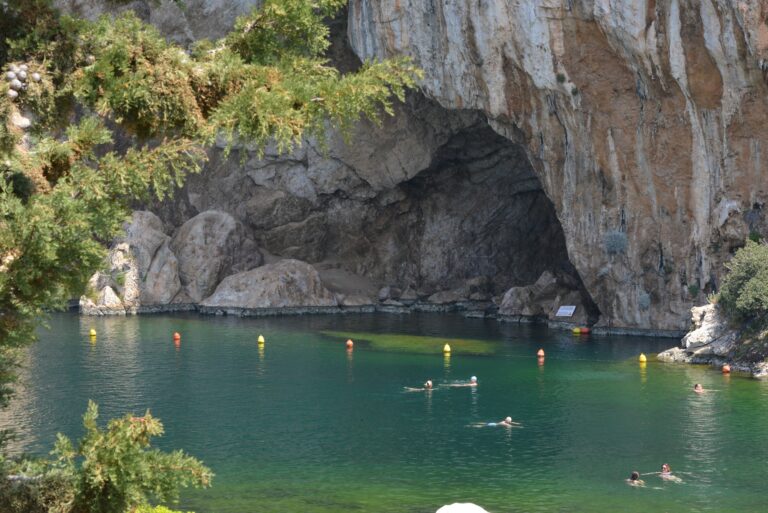
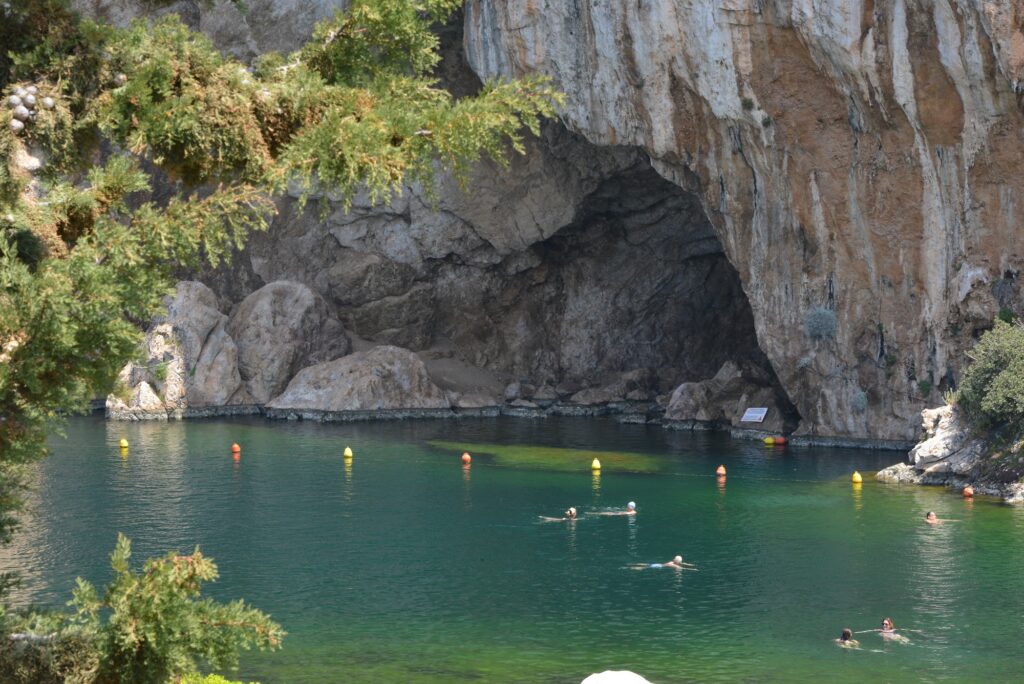
The lake formed roughly two thousand years ago when a massive underground cavern collapsed, likely after an earthquake, leaving the open thermal pool that exists today. At the edge of that pool, a narrow underwater passage leads into a genuine labyrinth — explored to a documented length of 3,123 metres so far, with the actual end of the system still unknown. Official research into the cave began in 1988, led by the Swiss diver Jean-Jacques Bolanz, who on his first dive found an underwater chamber large enough to hold 1.2 million cubic metres of water. Since the 1970s, seven divers have lost their lives exploring that cave system, including three American divers who went missing in 1978; parts of their equipment were only recovered decades later, in 2018, after a dedicated recovery mission. The currents inside are reportedly strong and the geography genuinely disorienting, which is why specialist cave-diving certification, not standard scuba qualifications, is required for anyone attempting it today, and why guided cave diving here is offered seasonally to properly certified divers only.
None of that touched my actual visit. I came to swim on the surface, in water that’s a completely different proposition from what lies beneath it.
Getting There: 35–45 Minutes by Car, Metro Plus the 122 Bus, or a €25–35 Taxi
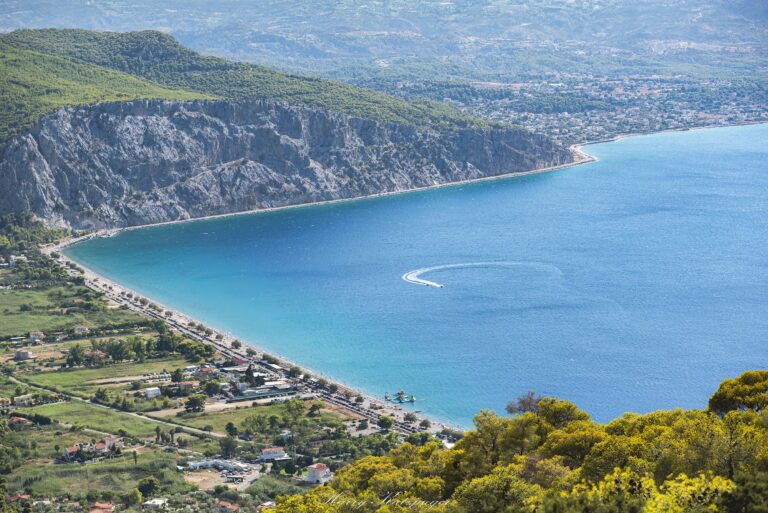
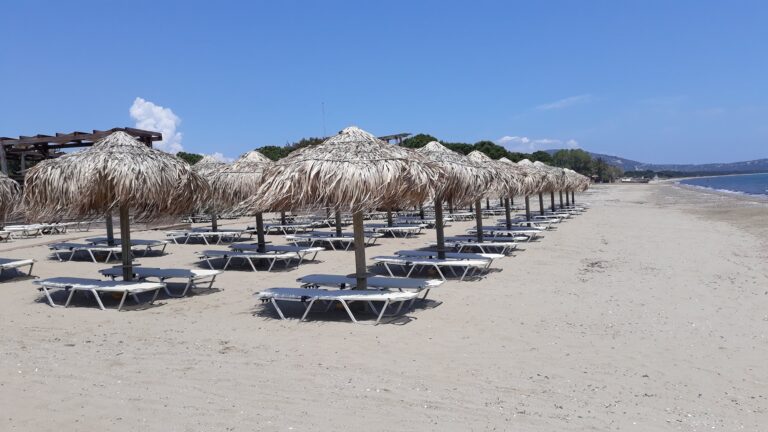
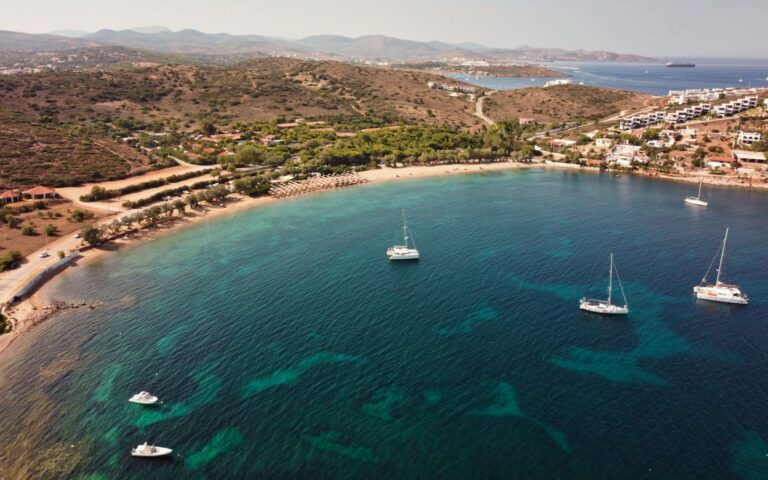
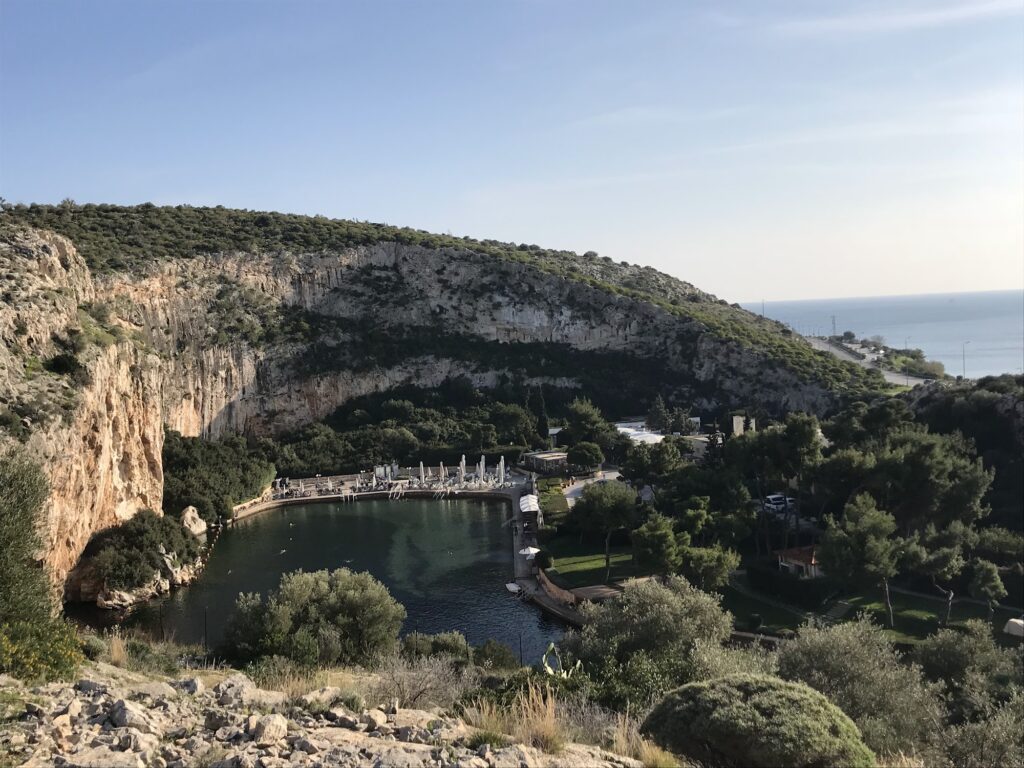
I drove down Posidonos Avenue from central Athens, and the trip took about 40 minutes, with genuinely good views of the Saronic Gulf along the way. There’s free dedicated parking right at the entrance, which I hadn’t expected given how upscale everything else about the place felt. The route passes within a few minutes of the Vouliagmeni beach club peninsula, so if you wanted to combine the lake with a sea swim, Asteras Astir Beach Vouliagmeni Greece sits just down the same stretch of coast, and Zen Beach Niriides Vouliagmeni Greece is a similarly short drive away on the same peninsula.
By public transport, Metro Line 2 to Elliniko, then the 122 bus, stops directly outside. A taxi from the centre cost me around €30, in line with what most people quote.
The Water: 22–25°C Year-Round, Brackish, Mineral-Rich, and the Doctor Fish
The water never drops below roughly 22°C, even in winter, fed continuously by underground thermal springs mixing with seawater through channels deep beneath the lake. It’s brackish rather than fully salt or fresh, carrying potassium, sodium, lithium, and calcium in concentrations that have made this a recognised therapeutic spot for skin and joint conditions for generations of Athenians, long before it became a more general leisure destination.
The detail I hadn’t quite believed until it happened to me: tiny Garra Rufa fish, the so-called Doctor Fish, genuinely do nibble gently at the skin if you stay still in the water for more than a few seconds. It’s harmless and, once I got past the initial surprise of it, oddly pleasant — a natural exfoliation I hadn’t paid extra for and didn’t expect.
The Facilities: Wooden Decks, a Prive Section, and the Lakeside Restaurant
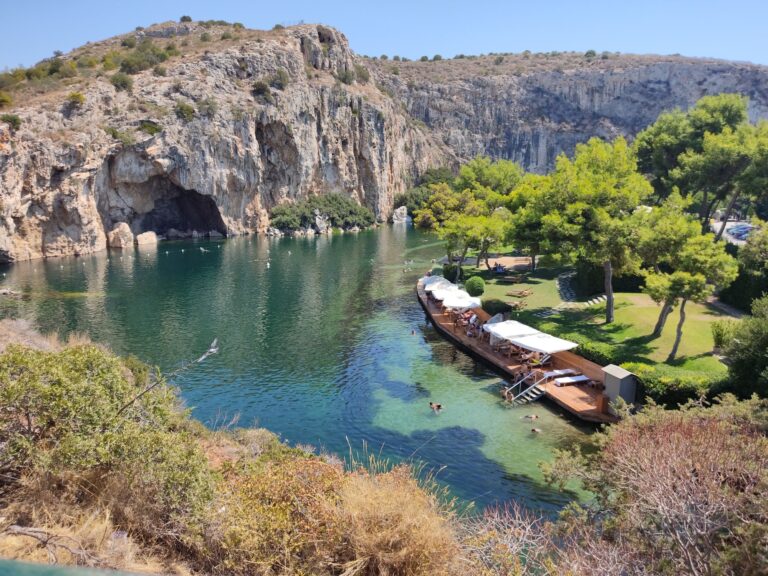
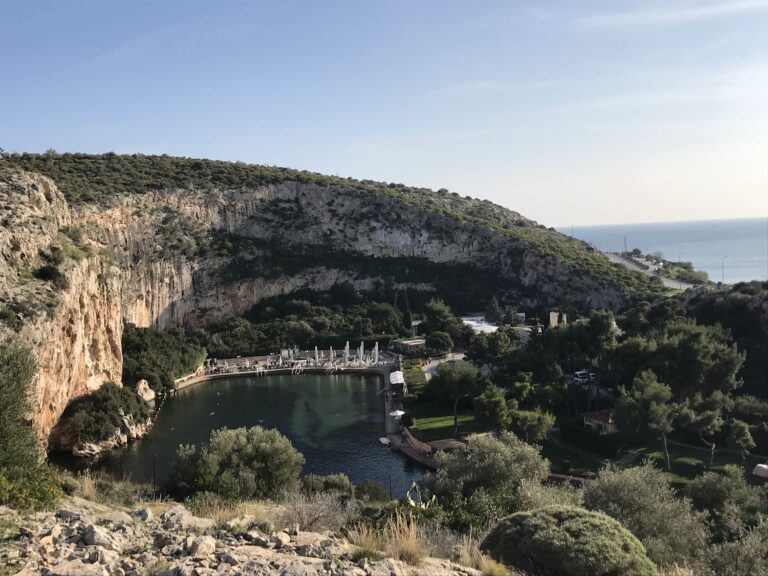
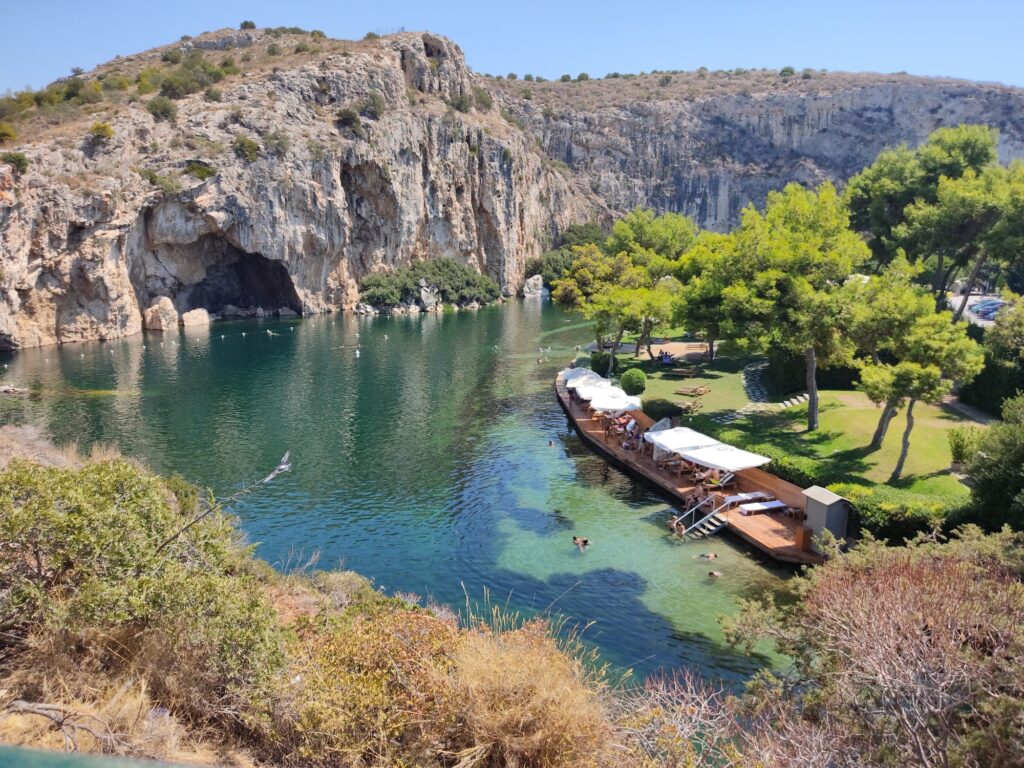
There’s no traditional sand here — instead, wooden decks and paved stone platforms run along the water’s edge beneath the 50-metre limestone cliff face that encloses the whole lake. Sunbeds and umbrellas are arranged in organised rows, with a dedicated Prive section offering more secluded seating and additional service for anyone wanting it. Lifeguards were stationed and visibly attentive the whole time I was there, watching a lake that’s genuinely deep in places despite how calm the surface looks.
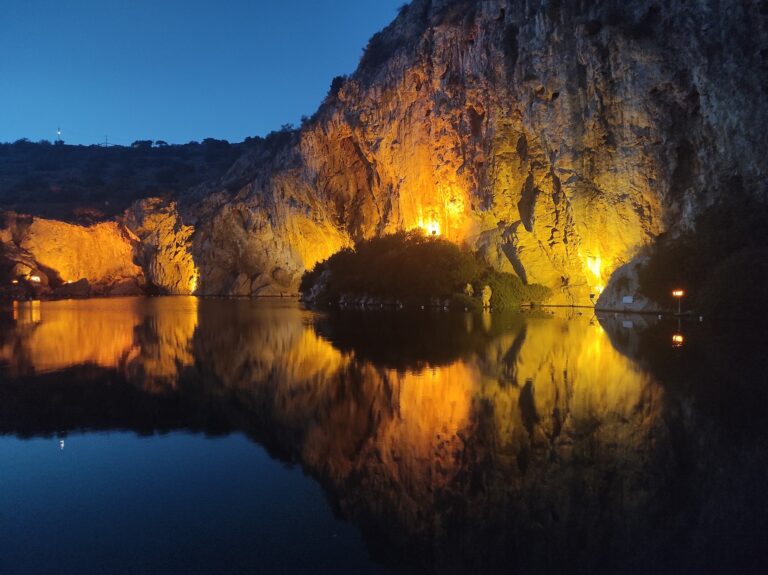
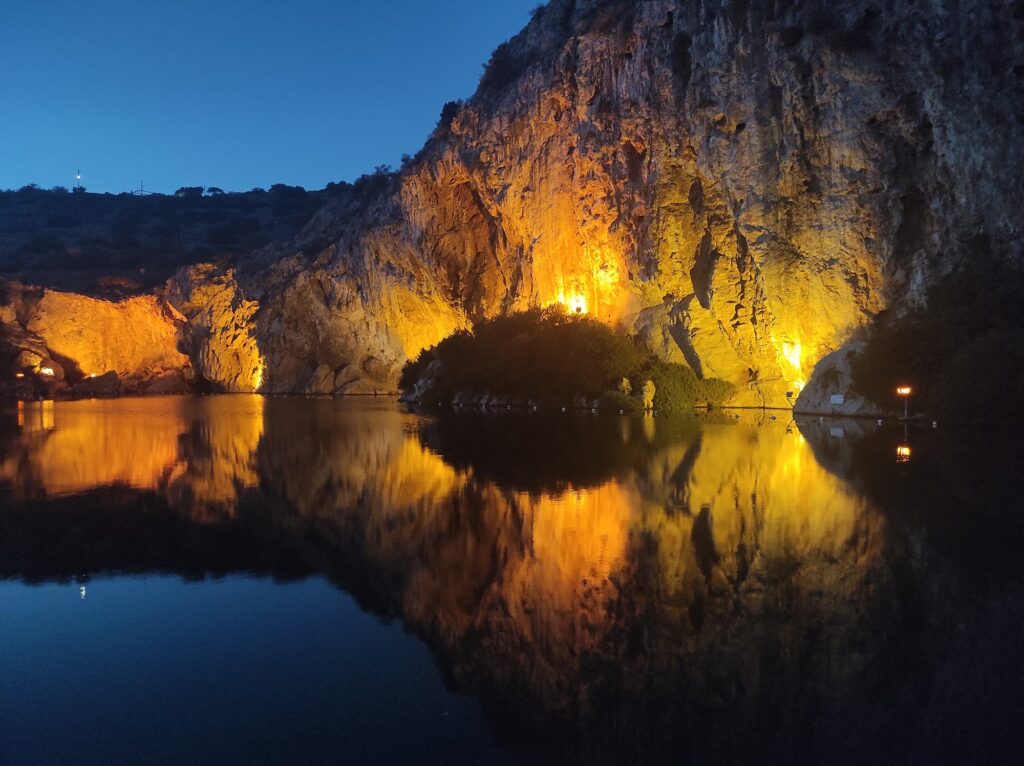
I ate at the on-site Nero Restaurant, which sits with a direct view over the water — good seafood, a properly made coffee, and in the evening, I’m told, the lake is lit in a way that makes the whole setting considerably more romantic than the daytime crowd suggests.
Vouliagmeni Lake is a thermal spa lake formed by an ancient cavern collapse, fed continuously by underground springs that keep the water between 22 and 25°C year-round, brackish and mineral-rich, home to the Doctor Fish that nibble gently at your skin. Wooden decks rather than sand, organised sunbeds, a Prive section, lifeguards on duty, the Nero Restaurant lakeside. Beneath all of that sits a genuinely dangerous, still only partially mapped cave system, explored since 1988 and the site of seven diver deaths since the 1970s — a serious technical diving environment entirely separate from the safe surface swimming that draws most visitors. 35–45 minutes from central Athens by car, Metro plus the 122 bus, or a €25–35 taxi, with both Astir Beach and Zen Beach a short drive further along the same peninsula if you want the sea as well as the lake.
Float on the surface. Let the Doctor Fish do their work. Leave the cave to the certified specialists.
Map
Sorry, no records were found. Please adjust your search criteria and try again.
Sorry, unable to load the Maps API.
Near by places: