Astir Beach Vouliagmeni: Onassis, Sinatra, Ancient Temple
Profile
Asteras (Astir) Beach, Vouliagmeni: Orphanage Children Dug Up an Ancient Temple Here in 1924, Decades Before Onassis and Sinatra Made It Famous
Greece | Vouliagmeni | Athens Riviera, Attica
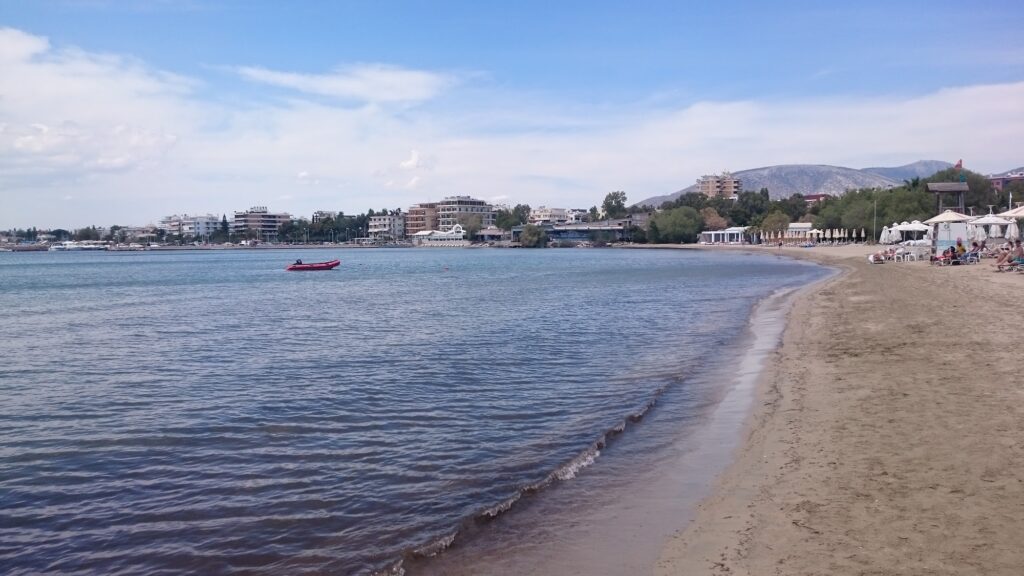
I made the mistake almost everyone makes before visiting: I typed “Astir Beach” into the map and nearly ended up at the wrong one. There are two beaches in Athens carrying some version of that name — one in Vouliagmeni, one in Glyfada, sitting roughly 8 kilometres apart — and when people in Greece say “Asteras” or “Astir” without specifying further, they almost always mean the Vouliagmeni one, the original, the famous one. I’d recommend double-checking the pin before you commit to a taxi, because I watched someone at the entrance arguing with their driver about exactly this confusion.
What struck me once I was actually inside wasn’t just the obvious polish — though there’s plenty of that — but the layered history underneath it. Long before Astir existed as a beach club at all, in 1924, children from the local Vouliagmeni orphanage were playing in the sand here and dug up fragments of marble columns and an inscription. The excavation that followed in 1926 and 1927 uncovered the Temple of Apollo Zoster, a 6th-century BC limestone sanctuary tied to a specific piece of mythology: Leto, pregnant by Zeus and pursued by a jealous Hera, went into labour somewhere above this exact site while fleeing toward Delos, and loosened her belt — zoster, in ancient Greek — to ease the pain. The name stuck to the sanctuary that was later built here, and the modern beach now sits a short walk from temple ruins that predate every celebrity who ever sunbathed on it by roughly two and a half thousand years.
The celebrity part of the story starts properly in 1959, when the beach opened, and accelerates from 1966 with the arrival of the first water-ski school in Athens. After that, the guest list reads like a fairly serious slice of twentieth-century history: Aristotle Onassis and his daughter Christina, Frank Sinatra, Brigitte Bardot, Marlon Brando, Paul Newman, John Wayne, The Beatles, and on the political side, John F. Kennedy, Margaret Thatcher, Jimmy Carter, François Mitterrand, Mikhail Gorbachev, and Helmut Kohl all passed through at one point or another, alongside a long list of Greek stars from the same era. I’m not in a position to verify every name on every list I read, but the pattern across multiple independent sources is consistent enough that I believe it.
Getting There: 30 Minutes by Car, the Metro-Plus-Bus Route, or a Taxi for €25–35
I drove down Poseidonos Avenue from central Athens, and the trip took about 30 to 40 minutes depending on traffic, following the signs for Vouliagmeni and the Astir Palace complex. There’s secure paid parking at the entrance, and I noticed a valet option for anyone who wanted to skip the walk entirely.
For public transport, the Metro Line 2 to Elliniko, followed by the 122 bus, gets you close to the Laimos peninsula entrance, with a short walk from there to the beach gate. A taxi from the centre, which is what I’d actually recommend if you’re not driving yourself, ran me about €30, comfortably within the €25–35 range most people quote.
Booking and Entry: Reserve Your Spot Online, Don’t Just Show Up
Since 2021, Astir has run an electronic reservation system, and I’d genuinely recommend using it — tickets.astir.gr — rather than turning up and hoping for the best, especially on a summer weekend. Entry is ticketed, parking is charged separately, and I noticed the booking system also offers a fast-track entrance for anyone who’s pre-reserved, which saved me a noticeably longer queue at the gate than the people arriving without a booking had to deal with.
The Beach: Fine Sand, Calm Sheltered Bay, Three Canteens, Five Courts, 23 Consecutive Years of Blue Flag
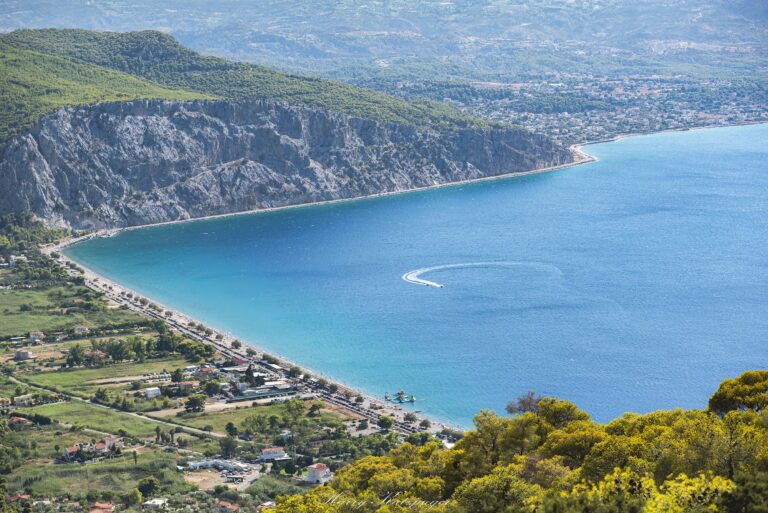
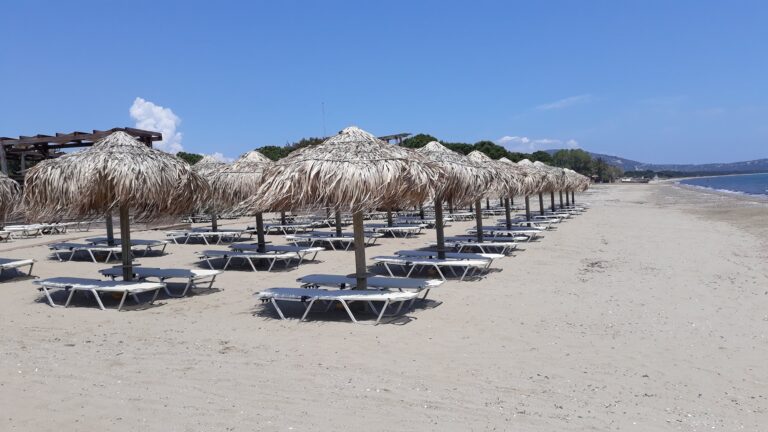
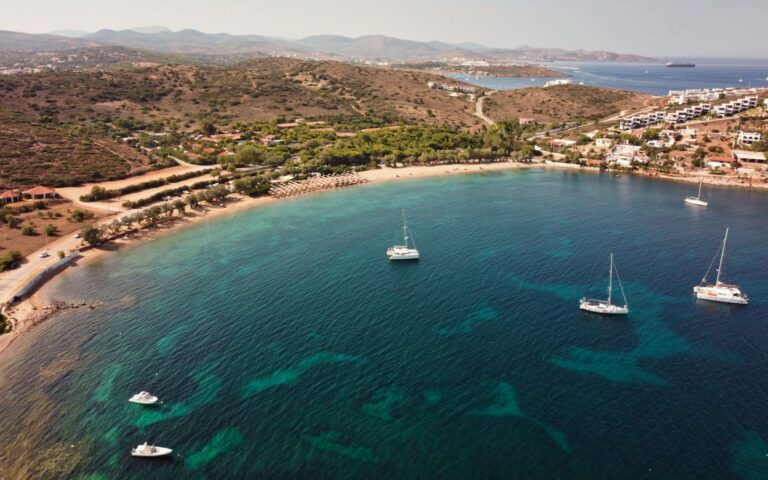
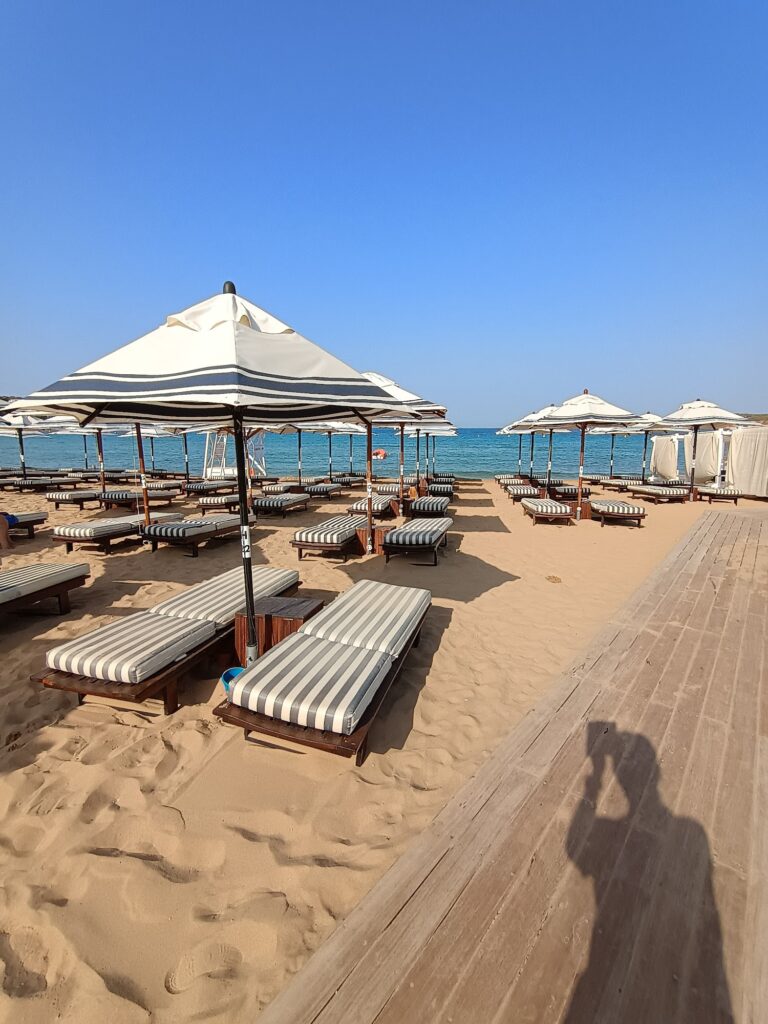
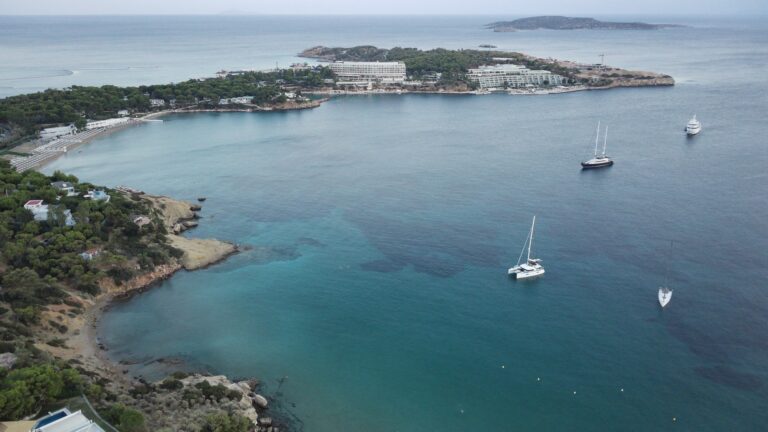
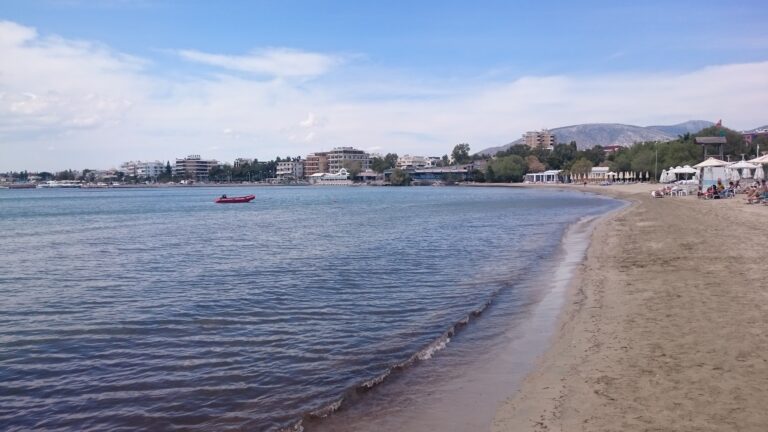
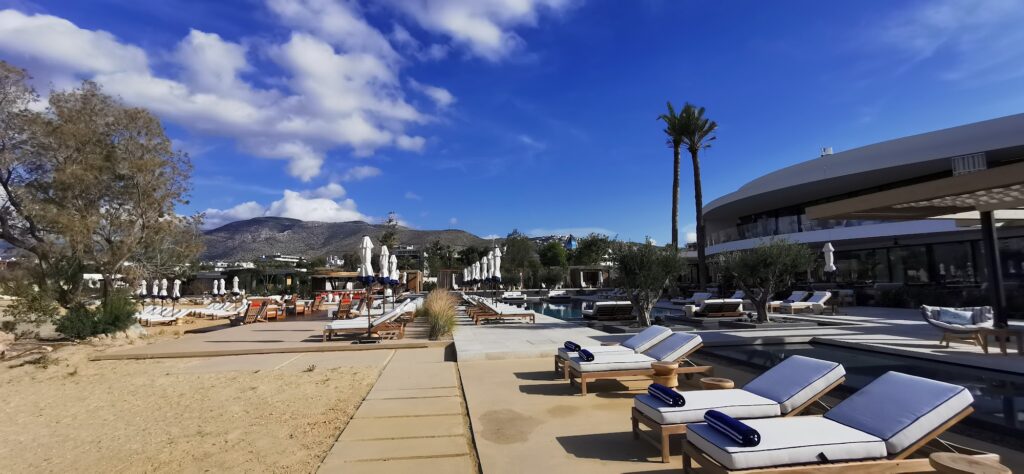
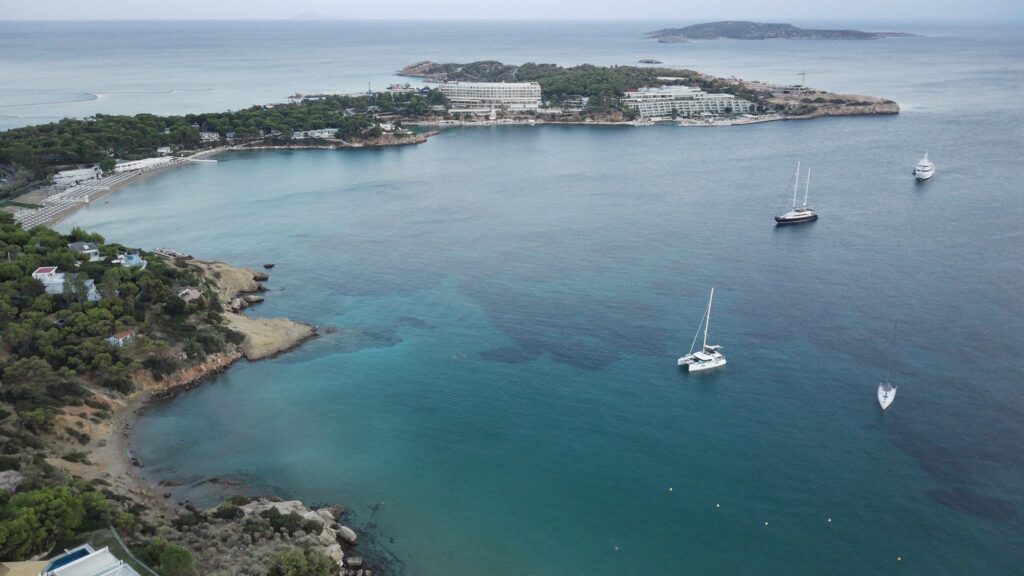
The beach itself sits in a genuinely sheltered position on the southern side of the peninsula, and I could see why it stays calm even on days when I’d watched the wind picking up elsewhere along the coast that morning. The sand was as fine and well-maintained as every description promised, the water clear enough that I could see straight down past my own feet well out from shore.
I counted three canteens along the stretch, changing rooms, and five separate sports courts — tennis, volleyball, basketball — plus dedicated beach volleyball and beach football areas, all spread across roughly 4,500 square metres of organised facility. The beach has now held Blue Flag certification for 23 consecutive years, which is the kind of sustained environmental consistency that’s harder to fake than a single good season.
The Temple of Apollo Zoster and the Four Seasons Astir Palace
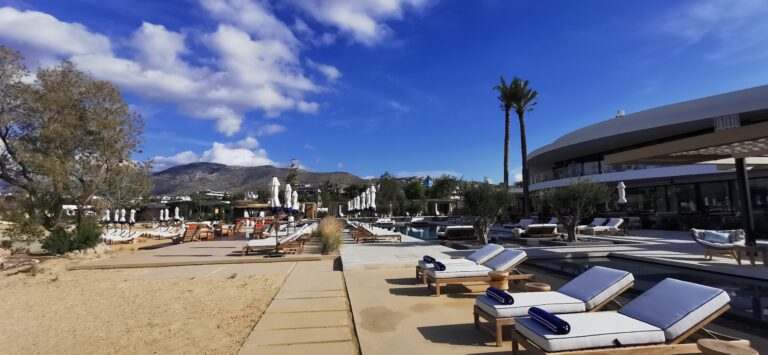
Right beside the beach, the ruins of the Temple of Apollo Zoster are still visible, a quiet rectangular limestone footprint that’s easy to walk past without noticing if you don’t already know the story behind it. The Four Seasons Astir Palace Hotel now occupies the broader site, and the architectural language across the whole peninsula — the white surfaces and natural wood that the visitor literature specifically highlights — was designed decades ago by Kostas Voutsinas, including the colourful umbrellas and the distinctive seagull-shaped beach shades that I noticed are still the visual signature of the place today.
Asteras (Astir) Beach at Vouliagmeni is the Athens Riviera’s original celebrity beach, open since 1959 — the Temple of Apollo Zoster discovered by orphanage children digging in the sand in 1924, decades before Onassis, Sinatra, and a roster of world leaders made the place internationally famous from 1966 onward. Ticketed entry (book online in advance), separate parking charge, fine sand in a calm sheltered bay, three canteens, five sports courts, 23 consecutive years of Blue Flag. Roughly 30 minutes by car from central Athens, Metro to Elliniko then the 122 bus, or a €25–35 taxi. Don’t confuse it with the other Astir beach in Glyfada, 8 kilometres away.
Book your spot online before you go. Double-check you’re heading to Vouliagmeni, not Glyfada. Walk past the temple ruins before you leave.
Map
Sorry, no records were found. Please adjust your search criteria and try again.
Sorry, unable to load the Maps API.
Near by places: