Palea Fokea Beach: A Village Built by Refugees
Profile
Palea Fokea Beach, Attica: The Village Founded by 18,000 Refugees Who Named Their New Coast After the Home They’d Lost in Asia Minor
Greece | Palaia Fokaia | Saronikos Municipality, East Attica
I asked at one of the tavernas why the village was called Palaia Fokaia — Old Phocaea — when I couldn’t find anything old about it on the map, and the woman serving me explained it plainly: the village itself isn’t old at all, only the name is. It was founded in 1924, by around 18,000 Greek refugees forced out of the actual Phocaea, on the Asia Minor coast, during the population exchange that followed the Greco-Turkish War of 1923. That original Phocaea still exists today as Foça in modern Turkey. The refugees who arrived here found a barren stretch of coast near Anavyssos, marked by salt flats and marshland, and the Greek authorities chose it deliberately because it resembled what they’d lost — proximity to the sea, the same potential for salt extraction that had defined their old home for centuries. They carried their fishing and seafaring traditions with them and built a new town around the same livelihood, just on different sand.
That history isn’t loud here. Nobody pointed me toward a monument or a museum. It came up only because I asked a direct question over lunch, and I think that’s roughly how it should be experienced — as something you uncover by talking to people rather than something packaged for you at the entrance to the village.
Getting There: 50–60 Minutes From Athens via the Sounio Coastal Road, KTEL Bus, or a Direct Taxi
I drove down from central Athens along the coastal road toward Sounio — Leoforos Poseidonos — and the trip took just under an hour, winding past one cove after another in a way that made the drive itself feel like part of the day rather than just the means of getting there. Free parking lined the coastal road and the lots near the harbour, and I didn’t have any trouble finding a spot even on a fairly busy afternoon.
Without a car, the orange KTEL Attikis bus on the Sounio route runs from Pedion tou Areos, and stops right in the village, a short walk from the sand. A taxi from the city centre is the other obvious option for groups, and from what I gathered, typically takes under an hour depending on traffic.
The Beach: Wide Golden Sand, Gentle Slope, Calm and Family-Friendly
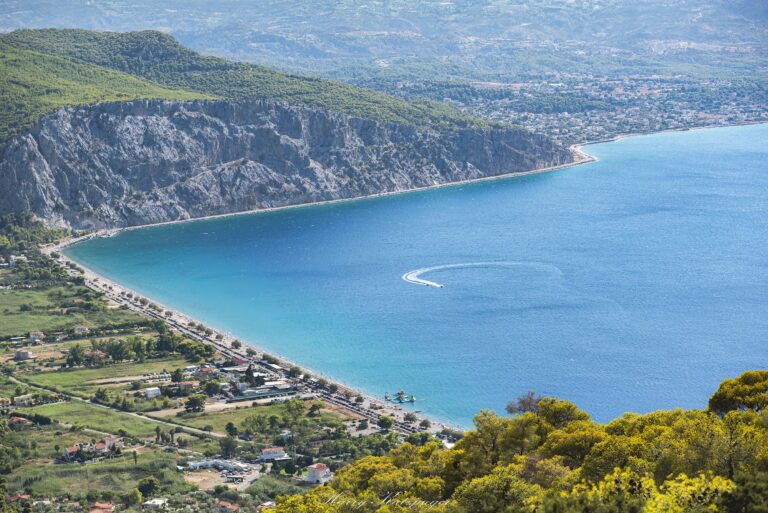
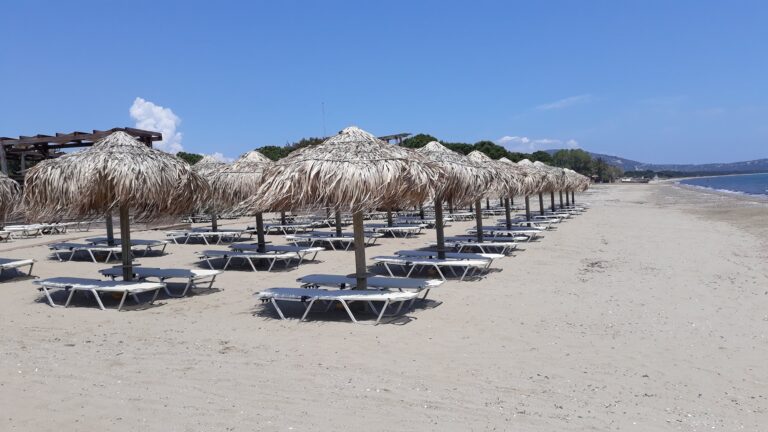
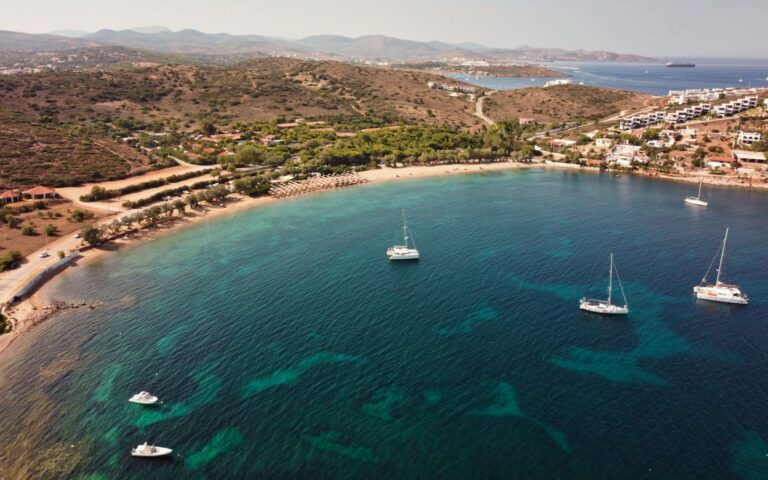
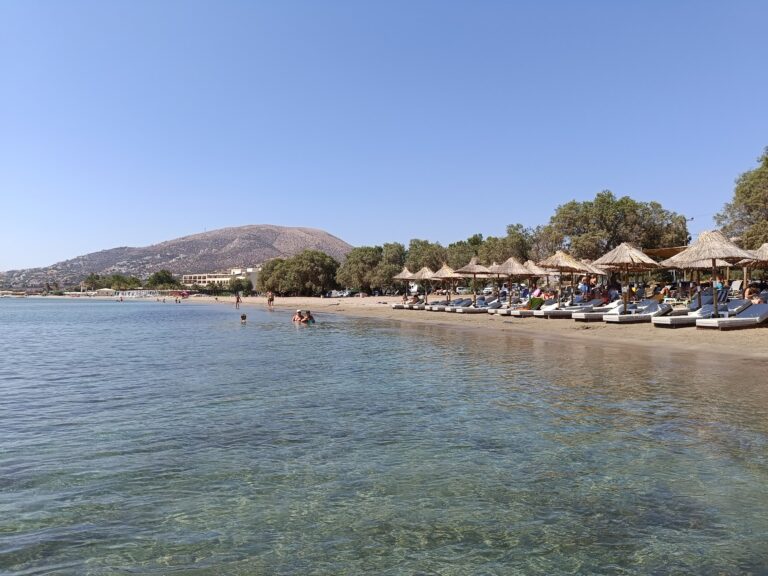
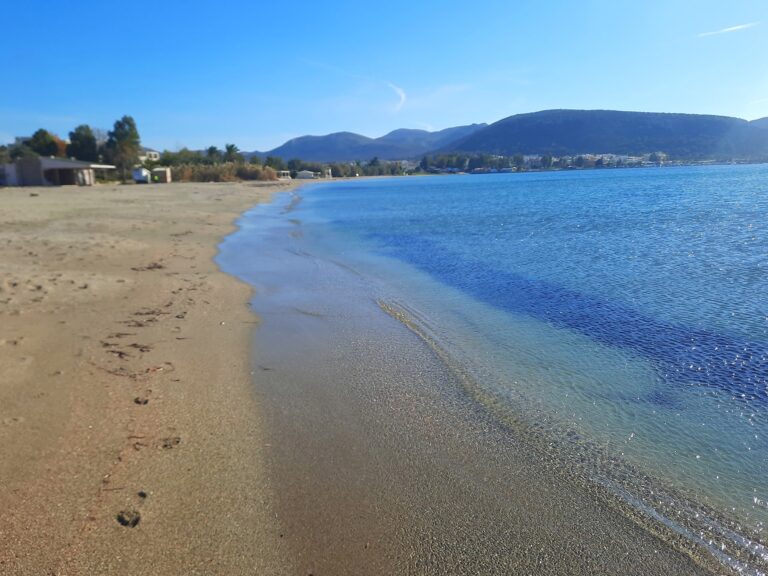
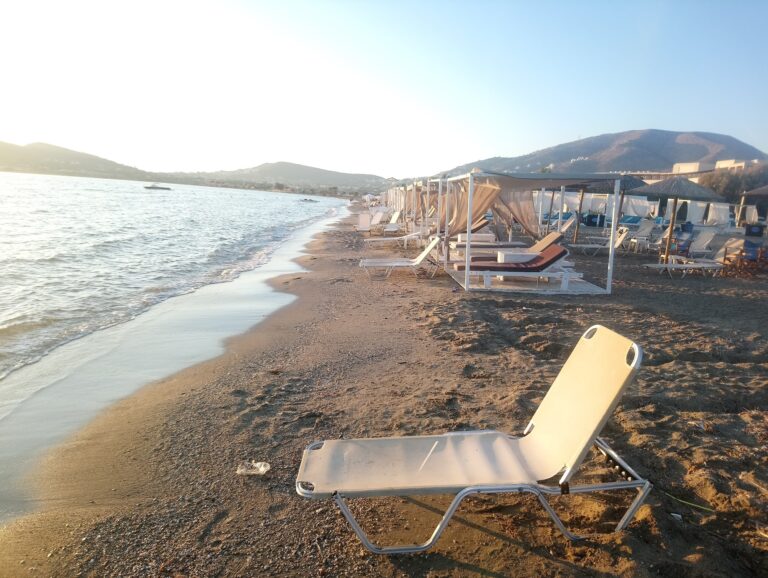
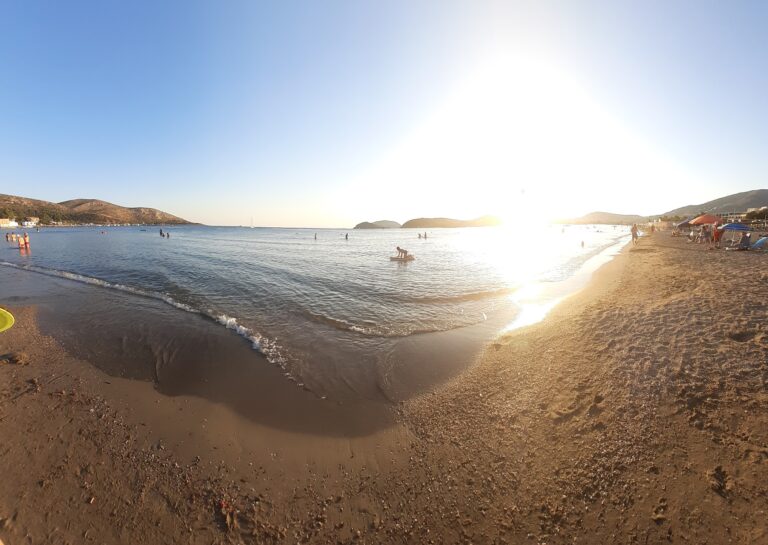
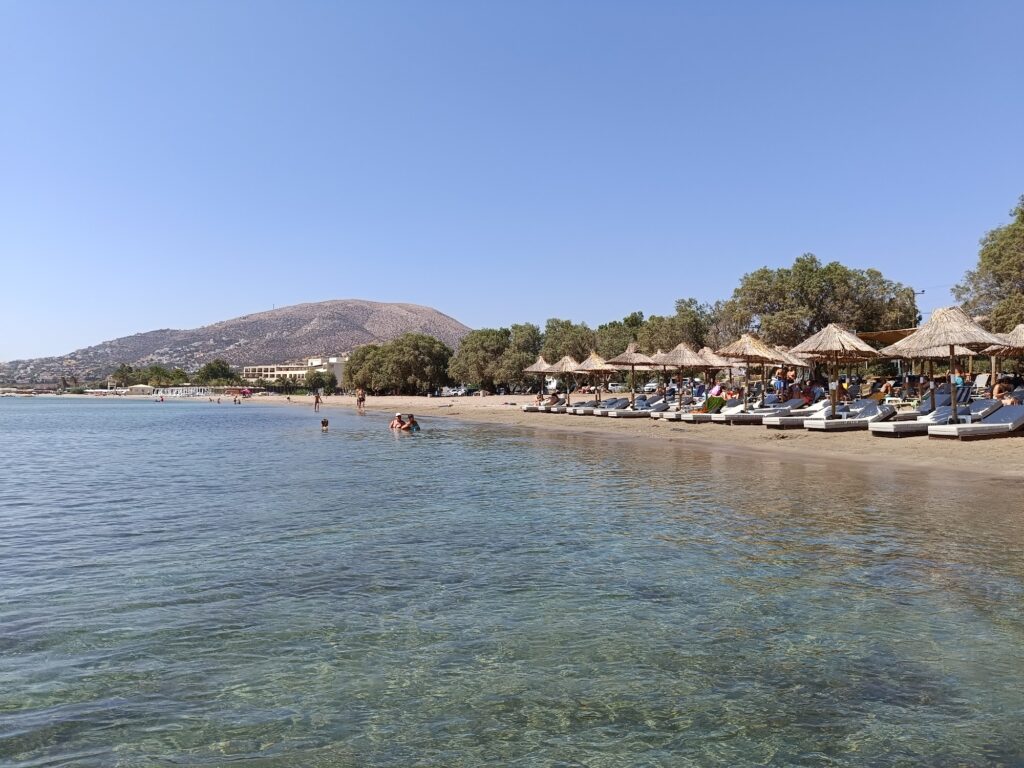
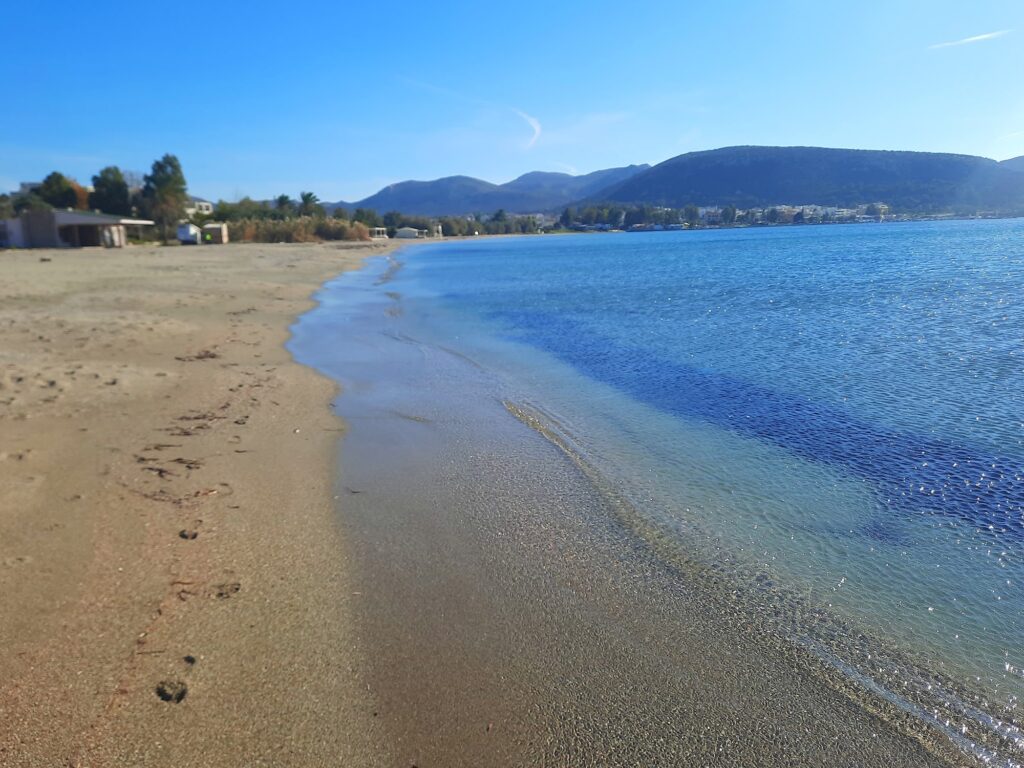
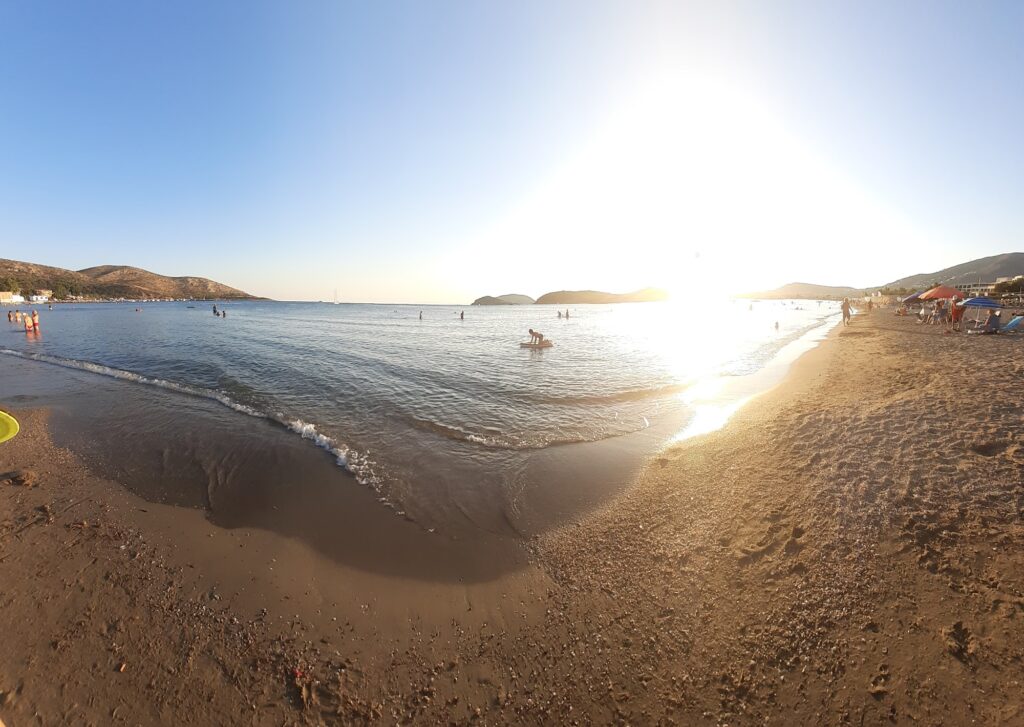
The beach itself is genuinely wide — wide enough that even with a reasonable crowd, I found a stretch of sand to myself without much searching. The sand is fine and golden, mixed with very small pebbles, and the entry into the water is gentle enough that I watched young children walking out a long way before the water got past their knees. The colour shifts from a pale shimmering turquoise close to shore into a deeper cobalt further out, and the whole bay stayed calm the entire time I was there, sheltered enough from the open Saronic Gulf to function as the kind of safe swimming spot families clearly return to year after year.
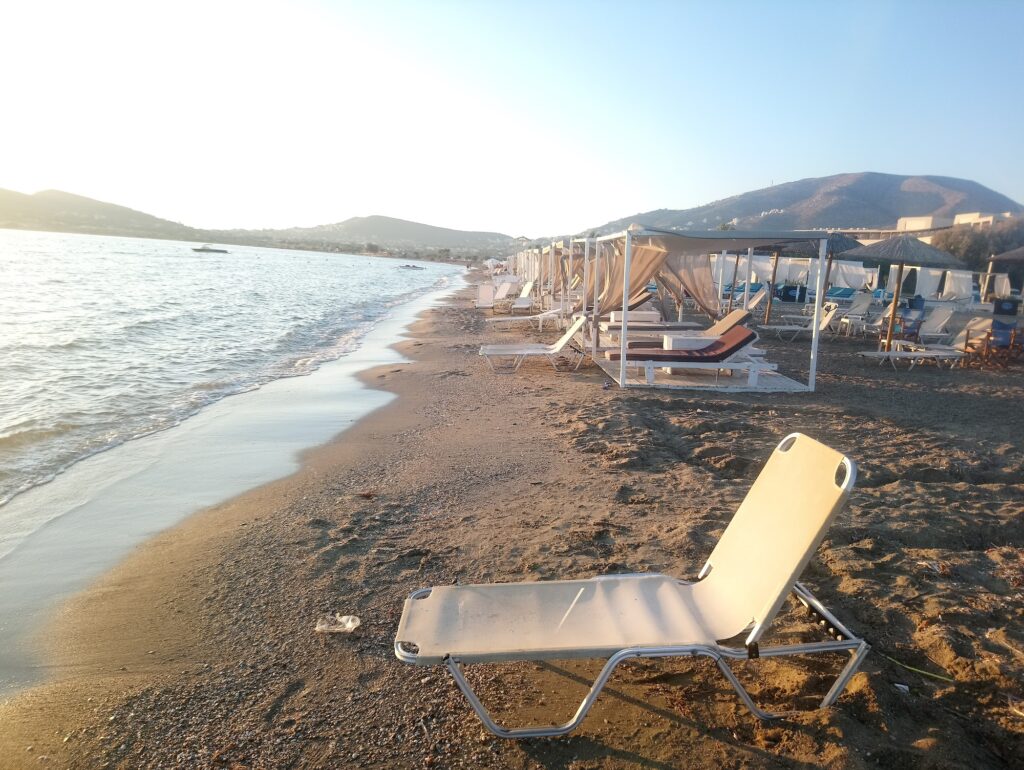
Sunbeds and umbrellas were available from a few beach bars along the sand, with iced coffee and light snacks delivered straight to the lounger if you wanted that level of service, though plenty of the beach stayed free for anyone happy with just a towel. A watersports centre offered boat rentals and windsurfing lessons when conditions allowed, and lifeguards were stationed for the season.
The Tavernas and the Salt-Production Heritage
The fishing and seafood tradition that the original refugees brought with them is still the village’s defining feature. I ate at one of the harbourside tavernas — grilled octopus and a whole sea bream, simply prepared — and the standard of the fish across the handful of restaurants I walked past suggested this wasn’t a fluke. The orthodox church in the centre of the village was quiet when I passed it, the kind of modest community building that exists because a displaced population needed somewhere to gather, not because anyone built it for visitors.
Patroklos Island: 12km South Near Cape Sounio
About 12 kilometres south, near Cape Sounio, sits Patroklos Island — a small uninhabited rocky islet roughly 3 kilometres offshore, reachable by boat, with ancient remains including what’s thought to be an early aquaculture facility dating to Classical times. I didn’t make it out there myself on this trip, but it’s the kind of detour that’s easy to combine with a day already heading toward Sounio and the Temple of Poseidon further along the same coastal road.
Palea Fokea Beach in Palaia Fokaia is the wide sandy shore of a village founded in 1924 by around 18,000 Greek refugees from Phocaea in Asia Minor, chosen specifically for its resemblance to the home they’d lost — salt flats, sea access, the same fishing and seafaring traditions transplanted onto a new coast. Wide golden sand, gentle calm entry, family-friendly, fishing tavernas with genuinely good seafood, a watersports centre, Patroklos Island with its ancient aquaculture remains 12km south near Cape Sounio, 50–60 minutes from Athens via the Sounio coastal road.
Drive the coastal road from Athens toward Sounio. Ask someone in the village about the name. Eat the fish.
Map
Sorry, no records were found. Please adjust your search criteria and try again.
Sorry, unable to load the Maps API.
Near by places: