Marikes Beach Rafina: 5,000-Year-Old Acropolis
Profile
Marikes Beach, Rafina: I Found a 5,000-Year-Old Acropolis Next to the Sand, Named After a Monk Who Showed Up Thousands of Years Later
Greece | Rafina | Eastern Attica
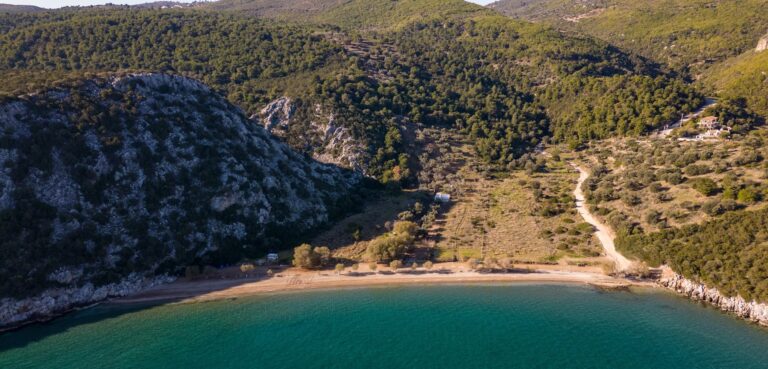
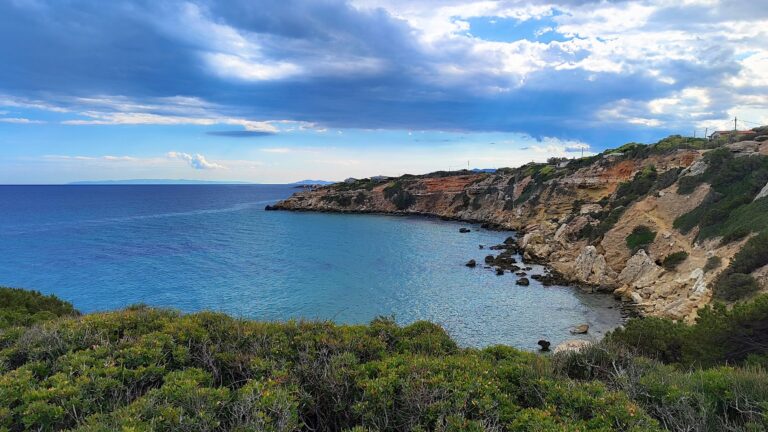
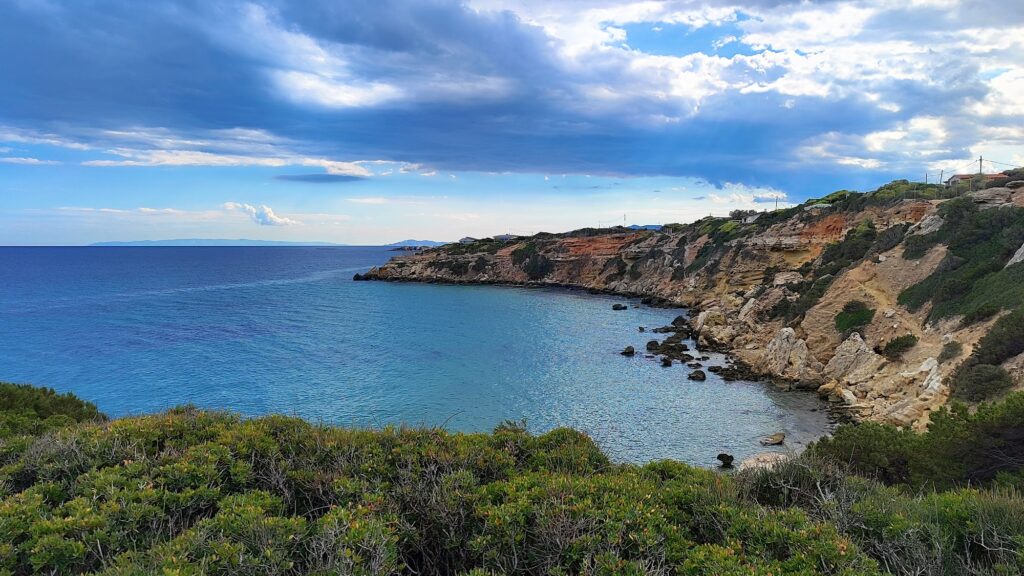
I almost didn’t bother walking up to the headland at the western edge of Marikes beach, because I assumed the name Askitario referred to whatever ancient settlement was up there. It doesn’t, and the actual story is a little more interesting than I expected. The name comes from a much later monk — from the Penteli Monastery, long after the Bronze Age — who turned a cave on that same cape into his personal hermit’s retreat. Asketis is the Greek word for ascetic, and the name simply outlived the settlement it now describes, attaching itself centuries after the fortified acropolis it sits on top of had already been abandoned for thousands of years.
That acropolis is genuinely old. Archaeologists date the fortified settlement at Askitario to roughly 3200 to 2000 BC, the Early Bronze Age, which means I was standing on ground that had been inhabited for something close to five thousand years before I got there. The excavation, carried out by Dimitrios Theocharis in the early 1950s, uncovered around eleven houses with central hearths and small storerooms, a fortification wall up to two metres thick along the only side not protected by sheer cliffs, and evidence of early copper and silver metallurgy — kilns, slags, moulds — that places this small headland among the earliest metal-working sites in this part of Greece. One of the finds, a storage jar carrying one of the oldest known depictions of a dog anywhere, is now in the National Archaeological Museum in Athens, which I went and looked at afterward, partly just to connect the object back to the exact spot I’d stood on.
At the foot of the same hill, alongside the unexcavated cemetery from the same prehistoric period, there are also concrete pillboxes the Germans built during the wartime Occupation — a jarring but honest reminder that this small headland has been considered worth fortifying more than once, separated by roughly five thousand years.
Getting There: 1.5km From Rafina, 45–55 Minutes From Athens, or a Bus to the Port Then a Short Taxi or Walk
I drove from central Athens via the Attiki Odos and then Marathonos Avenue toward Rafina, following the signs for Marikes or Askitario once I got close — the whole trip took just under an hour. There’s a small dedicated parking area at the end of the access road, and I’d genuinely recommend getting there before midday on a weekend, because by the time I was leaving around noon, cars were already circling for the spaces I’d seen empty a few hours earlier.
Without a car, the KTEL Attikis bus runs from the Mavromateon station near Pedion tou Areos straight to Rafina port. From there, Marikes is either a five-minute taxi ride or a pleasant 20-minute walk along the coastal path, which I’d choose myself if the weather wasn’t too hot, since the path itself has decent sea views the whole way.
The Beach: 700m Sand and Shingle, Sheltered From the South, Exposed to the North Wind
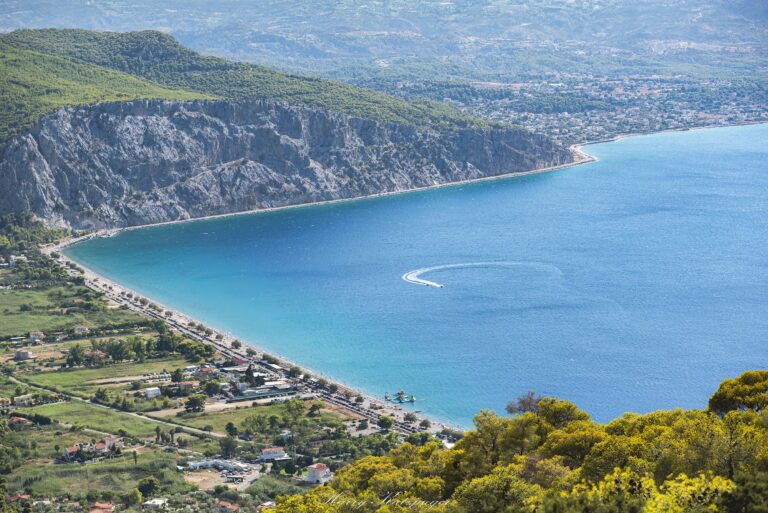
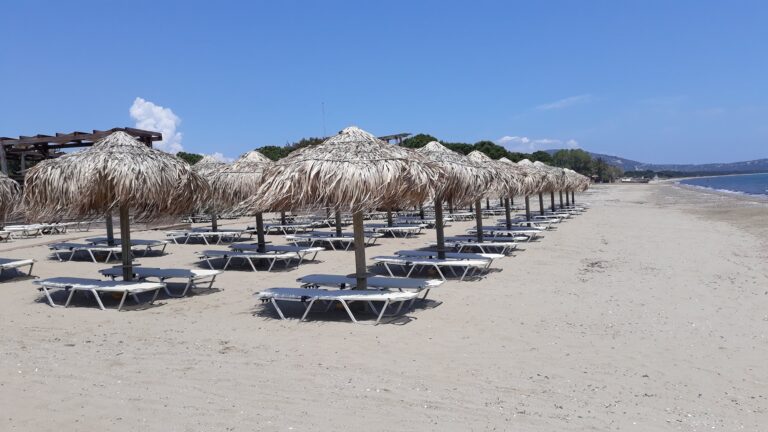
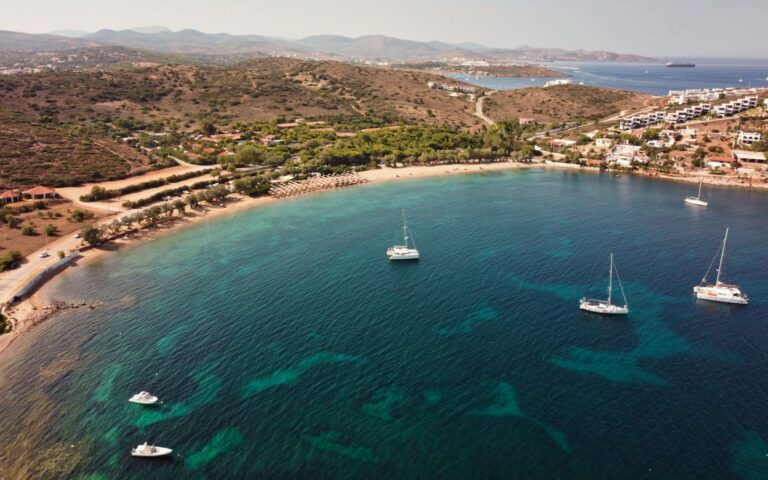
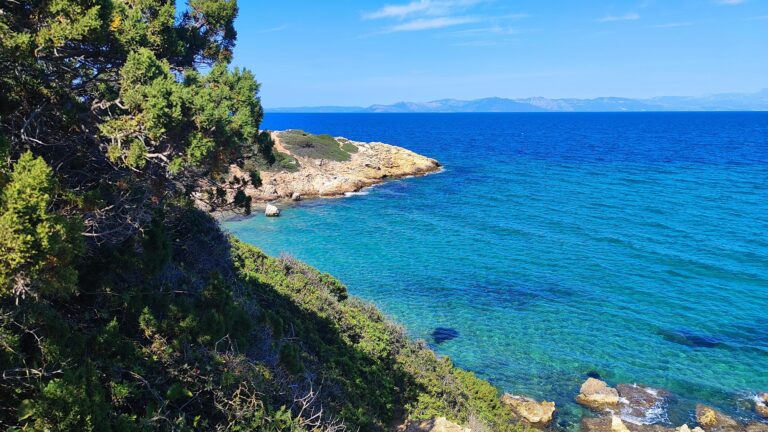
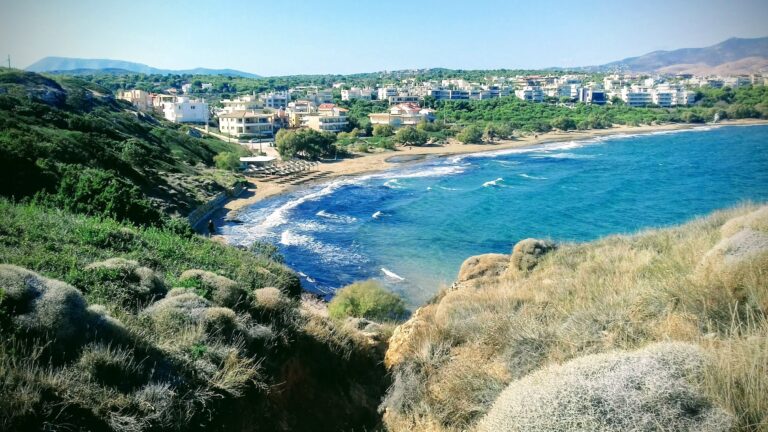
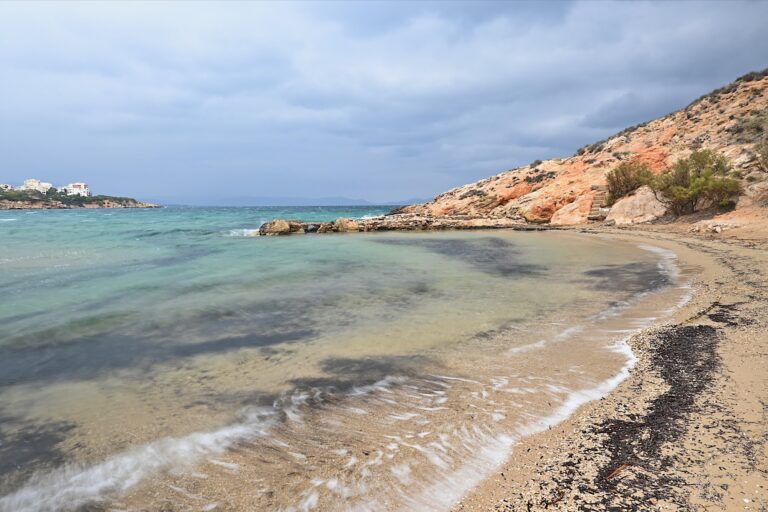
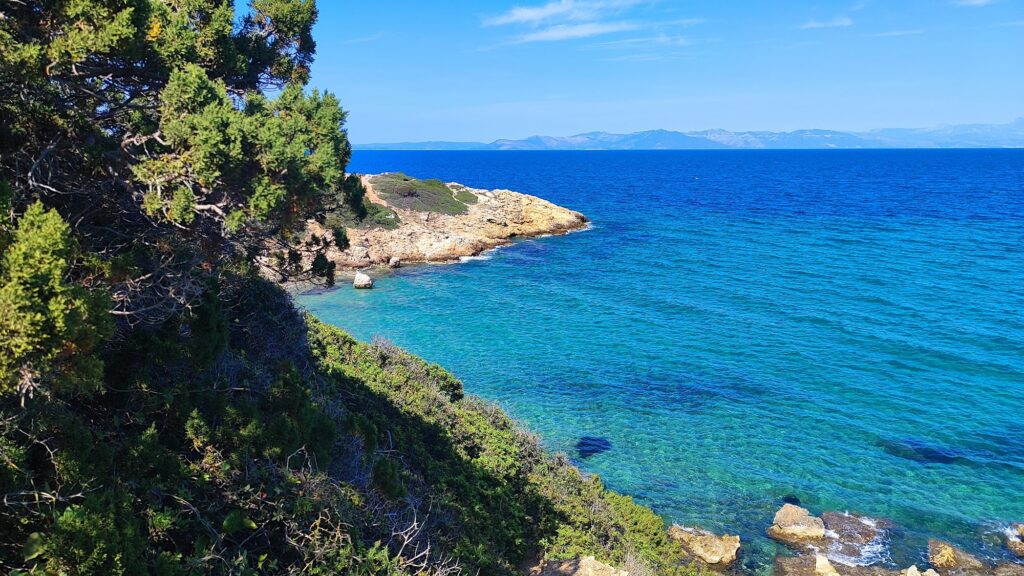
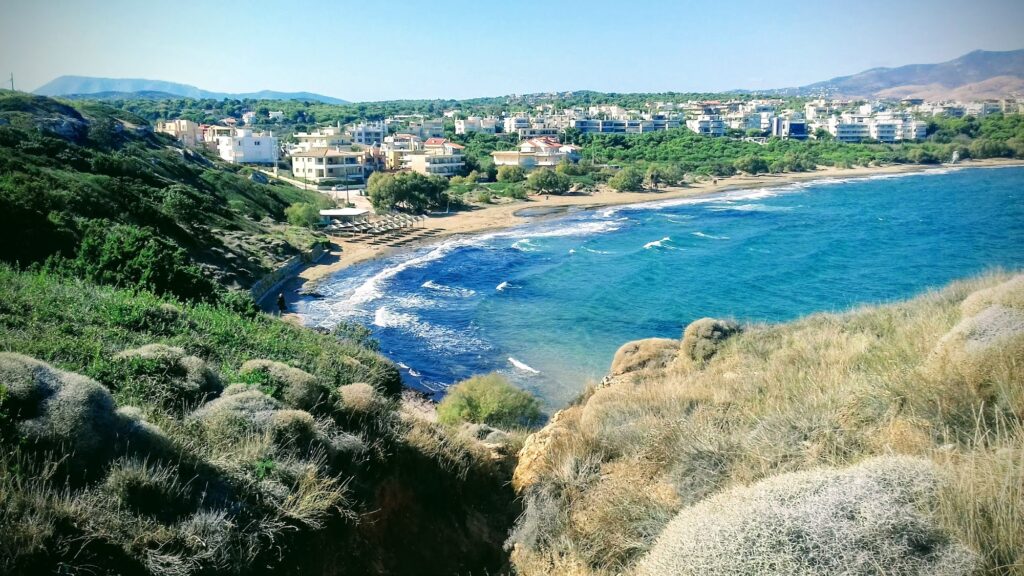
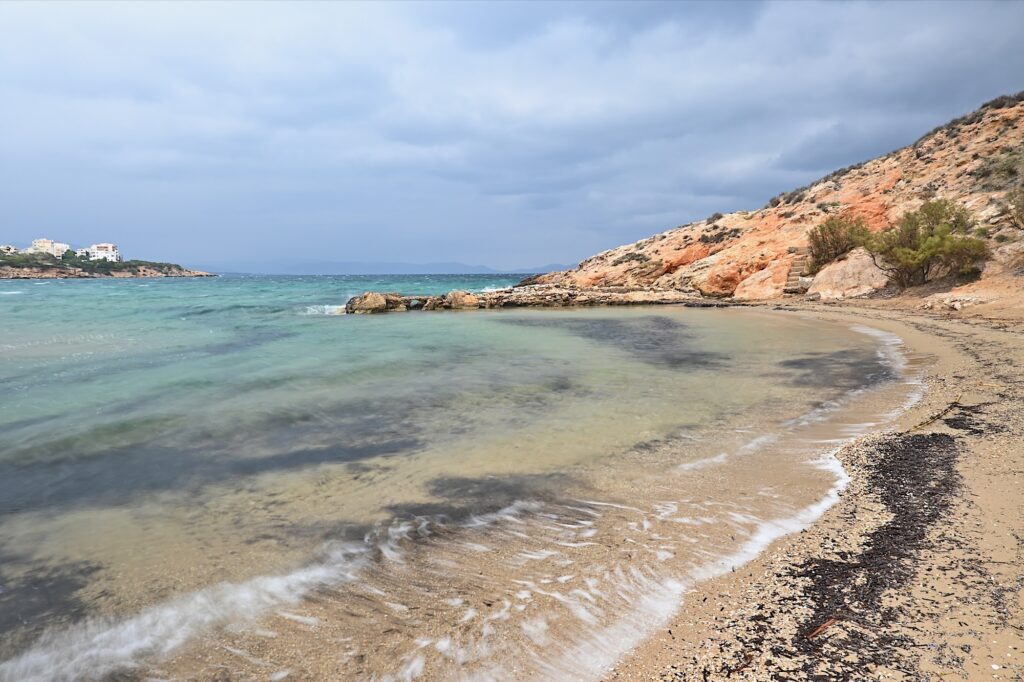
The beach itself runs about 700 metres along the bay, sand mixed with fine shingle underfoot, and the rocky headland at Askitario does genuinely shelter it from southern swell — though I noticed, and later read confirmed elsewhere, that the same geography leaves it more exposed when the wind comes from the north. The water stayed clear and calm the whole time I was there, with rock formations near the edges of the cove that made for decent snorkelling, though nothing as dramatic as I’d find on one of the islands.
Most of the beach was free space rather than rented sunbeds — I found a spot under a tamarisk tree and didn’t pay for anything beyond a coffee at the small kiosk near the entrance. A lifeguard was on duty, and the bay’s shallow, generally calm character made it feel like a sensible place to bring kids, though I’d still keep half an eye on conditions if the wind had picked up.
Marikes Beach near Rafina is the 700-metre sandy bay 1.5km from the port, sitting directly beside the Bronze Age acropolis of Askitario — fortified and inhabited from roughly 3200 to 2000 BC, excavated by Dimitrios Theocharis in the 1950s, the source of one of the earliest known depictions of a dog anywhere (now in the National Archaeological Museum), named not for the prehistoric settlement itself but for a much later hermit monk from Penteli. WWII German pillboxes sit at the base of the same hill. Sand and shingle shore, sheltered from the south but exposed to the north, mostly free space under tamarisk trees, a lifeguard on duty, 45–55 minutes from Athens by car or a bus-plus-short-taxi from Rafina port.
Drive via Marathonos Avenue. Arrive before noon. Walk up to the headland and look for the wall before you swim.
Map
Sorry, no records were found. Please adjust your search criteria and try again.
Sorry, unable to load the Maps API.
Near by places: