Souvala Beach Aegina: Spa History, Honest Update
Profile
Souvala Beach, Aegina: The Thermal Spa Whose Springs I Was Told Dried Up in 1996, Though the Tourists Still Come Looking
Greece | Souvala | Aegina, Saronic Islands
I have to be honest about something before I describe the rest of Souvala, because I almost made the trip specifically for the thermal springs and would have been disappointed if I hadn’t asked around first. A long-term visitor I spoke with at one of the village cafés told me the spring water that gave Loutra beach its name and its centuries-old reputation dried up back in 1996. I went looking afterward and found at least one detailed account from another traveller saying the same thing — that the authorities have never made much effort to correct the impression, and that tourists, Greek and foreign alike, still drive out to Souvala specifically hunting for a spa experience that, by most accounts, no longer exists in any functioning form. I’m passing this along not to discourage anyone from visiting, but because every other description I’d read beforehand made it sound like the magic water was still flowing, and I’d rather know the truth before I go somewhere expecting a soak that isn’t on offer.
What’s certainly still true is the history behind the name. The water storage containers cut into the rocks near the eastern edge of the village gave Souvala its name, and the mineral springs themselves — known since antiquity, and at their peak considered among the most celebrated in Europe for treating rheumatism, arthritis, and skin conditions — sat right where the beach is now. The village itself was called Aegena before this, and for nine hundred years, from roughly 900 to 1800 AD, pirate raids along this stretch of coast were frequent enough that the island’s population retreated inland to the hillside village of Palaiochora, leaving Souvala to function purely as the working port handling sea traffic for a capital that had moved uphill out of necessity. For the first half of the twentieth century, this same small harbour was Aegina’s main export point for grapes, sponges, and carob.
Getting There: Direct Ferry From Piraeus (About 1 Hour), or 20 Minutes by Bus From Aegina Town
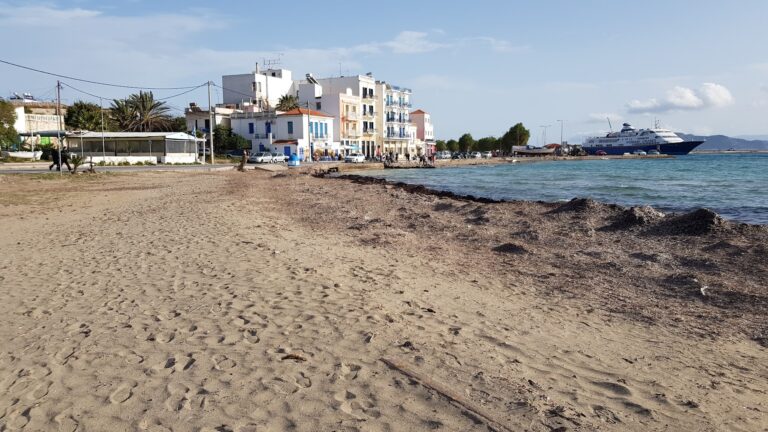
I took the direct ferry from Piraeus — there are a couple of operators running this route, and the crossing took close to an hour, putting me on Souvala’s own pier rather than the island’s main port. From there, the beach was a five-minute walk, no transfer needed.
If you’re already on Aegina and based near the main town, the bus north along the coastal road takes about 20 minutes, or a taxi covers the same distance in roughly 7 minutes for around €10. The coastal drive itself was worth the trip on its own — well-paved, hugging the shoreline, with good sea views most of the way. By car, parking in the village was easy enough that I didn’t think twice about it.
The Beach: Soft Sand and Small Pebbles, Shallow and Gradual, Calm Bay, Sunbeds for the Price of a Coffee
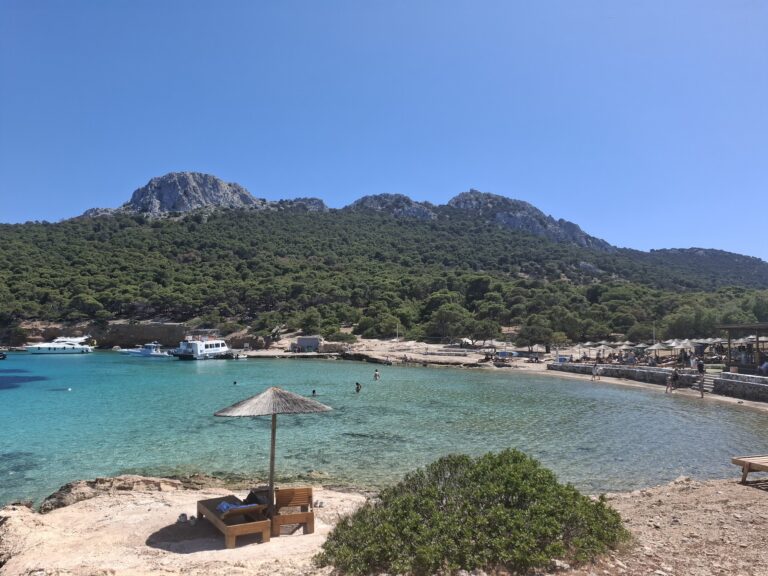
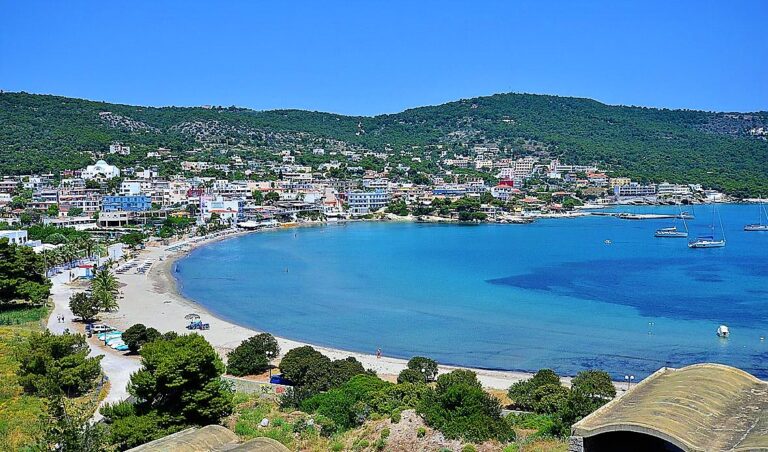
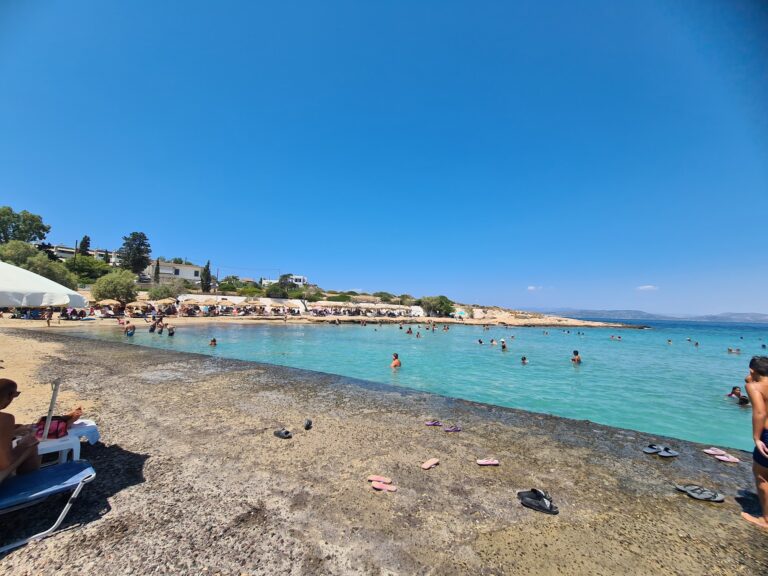
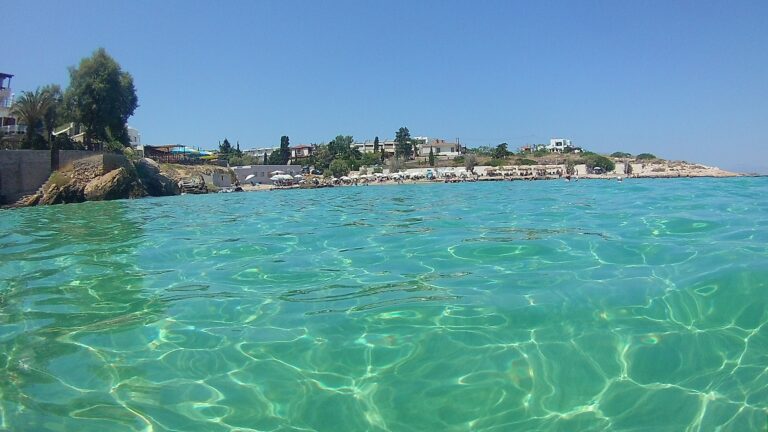
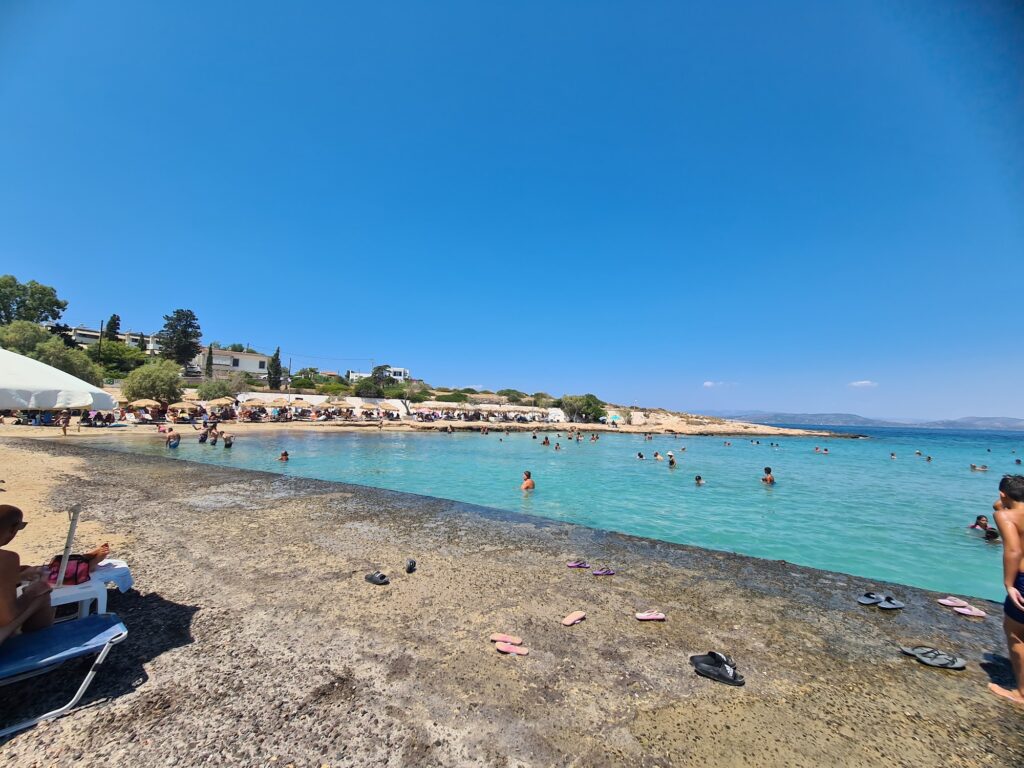
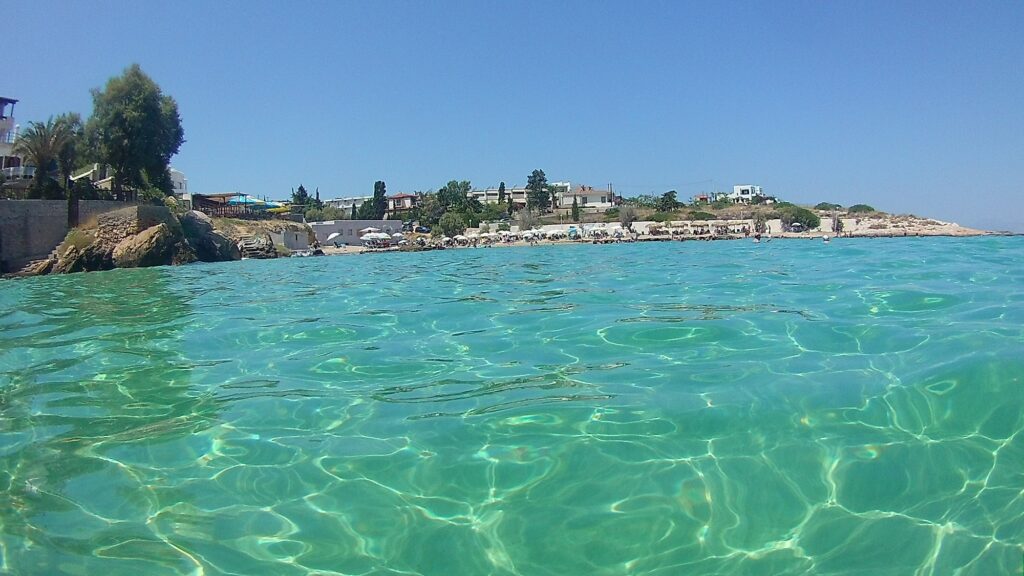
Whatever’s happened to the thermal water underground, the beach itself is genuinely pleasant for exactly the reason most guides emphasise: the depth increases so gradually that I waded out a long way before the water reached my waist, which made it obvious why families with small children and older visitors gravitate here over the island’s more dramatic coves. The sand was soft and pale, mixed with small pebbles, and on the calm afternoon I visited the water sat flat enough to see straight down to the seabed.
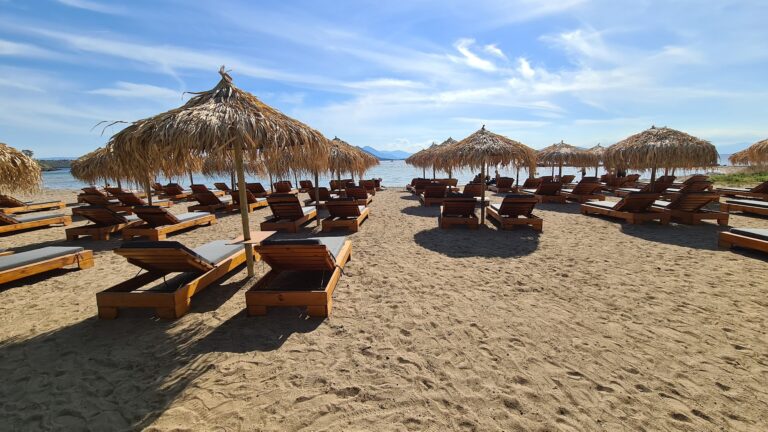
I rented a sunbed at one of the beach bars and was specifically told I didn’t need to pay for it separately if I just ordered a drink — a small, locally known arrangement that saved me a few euros and meant I didn’t feel rushed to leave once I’d finished my coffee.
The Tavernas and the View Across to Salamina
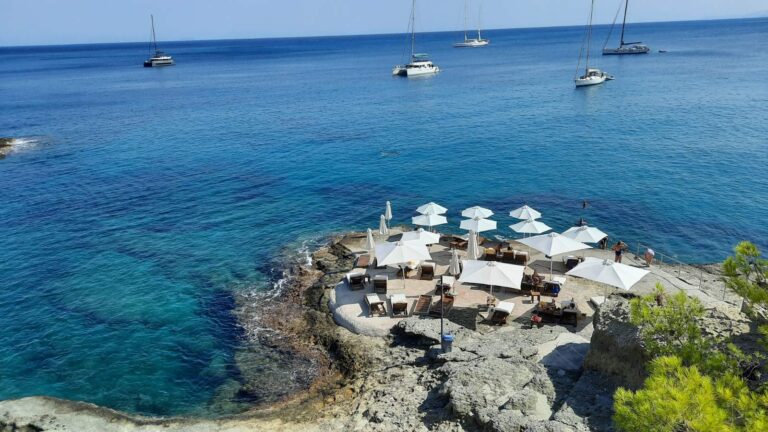
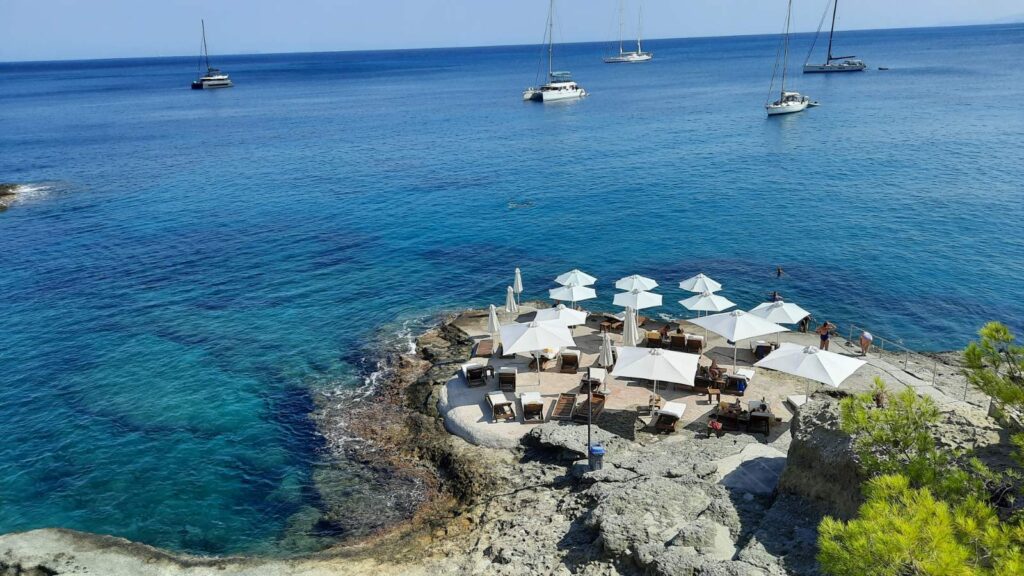
The port itself is lined with fish tavernas and ouzo bars, and I ate fresh octopus at one of them with a view that stretched across the water toward Salamina and the Athenian coast, the lights starting to flicker on as the evening came in. One bar in particular, set slightly higher above the beach, had the same view and a relaxed, unhurried atmosphere that made it easy to stay for a second drink longer than I’d planned.
Walks From Souvala: Palaiochora, Agios Nektarios, the Temple of Aphaia
If you’re staying in Souvala rather than just passing through for the day, the village makes a decent base for walking the small mountains around Agii, or making the climb up to Palaiochora — the old hillside capital that the pirate centuries forced into existence — and from there on to the monastery of Agios Nektarios or further to the ancient Temple of Aphaia. I didn’t have time for all three on a day trip, but the option was clearly there for anyone basing themselves on this side of the island for longer.
Souvala Beach on Aegina is the historic port and former spa village 10 kilometres from the main town — the famous Loutra thermal springs reportedly dried up in 1996, a detail worth knowing before you go looking for a soak that may no longer be there, though the village’s pirate-era history (900 years of coastal raids forcing the population inland to Palaiochora) and its later life as the island’s main 20th-century export port are both genuinely intact. Soft sand and pebbles, gradual shallow entry, calm bay, sunbeds free with a drink at some bars, fish tavernas with views across to Salamina, direct ferry from Piraeus (about an hour) or a short bus or taxi ride from Aegina town.
Take the direct ferry from Piraeus. Don’t go expecting the thermal water. Stay for the gradual shallow swim and the octopus at sunset.
Map
Sorry, no records were found. Please adjust your search criteria and try again.
Sorry, unable to load the Maps API.
Near by places: